
食品安全

Search documents
山东省武城县食品安全监督抽检信息通告(2025年第2期)
Zhong Guo Zhi Liang Xin Wen Wang· 2026-01-24 03:13
Overall Situation - The total number of food samples tested in Wucheng County was 845, with 828 passing, resulting in a compliance rate of 97.99% [2][3]. Food Categories - **Edible Oils and Fats**: 4 samples tested, all passed [3]. - **Food Additives**: 1 sample tested, passed [3]. - **Dairy Products**: 43 samples tested, all passed [3]. - **Beverages**: 68 samples tested, 1 failed [3]. - **Starch and Starch Products**: 21 samples tested, all passed [3]. - **Edible Agricultural Products**: 352 samples tested, 11 failed [3]. - **Grain Products**: 19 samples tested, all passed [3]. - **Frozen Foods**: 8 samples tested, all passed [3]. - **Confectionery**: 52 samples tested, all passed [3]. - **Convenience Foods**: 8 samples tested, all passed [3]. - **Vegetable Products**: 1 sample tested, passed [3]. - **Catering Foods**: 22 samples tested, 5 failed [3]. - **Meat Products**: 10 samples tested, all passed [3]. - **Egg Products**: 21 samples tested, all passed [3]. - **Pastries**: 19 samples tested, all passed [3]. - **Canned Foods**: 30 samples tested, all passed [3]. - **Alcoholic Beverages**: 80 samples tested, all passed [3]. - **Condiments**: 86 samples tested, all passed [3]. Non-compliance Cases - **Orange-flavored Soda**: Tested at 0.83 times the required CO2 capacity (standard ≥ 1.5 times) [2]. - **Cucumber**: Detected 0.25 mg/kg of chlorpyrifos (standard ≤ 0.02 mg/kg) [4]. - **Dish**: Detected anionic synthetic detergent at 0.0086 mg/100 cm² (standard ≤ not detected) [4]. - **Bowl**: Detected anionic synthetic detergent at 0.0096 mg/100 cm² (standard ≤ not detected) [4]. - **Plate**: Detected coliforms (standard ≤ not detected) [4]. - **Potato**: Detected chlorpyrifos at 0.047 mg/kg (standard ≤ 0.02 mg/kg) [5]. - **Cucumber**: Detected chlorpyrifos at 0.049 mg/kg (standard ≤ 0.02 mg/kg) [5]. - **Cucumber**: Detected chlorpyrifos at 0.045 mg/kg (standard ≤ 0.02 mg/kg) [6]. - **Cucumber**: Detected thiamethoxam at 0.69 mg/kg (standard ≤ 0.5 mg/kg) [6]. - **Orange**: Detected bifenthrin at 0.18 mg/kg (standard ≤ 0.05 mg/kg) [6]. - **Jelly Orange**: Detected bifenthrin at 0.17 mg/kg (standard ≤ 0.05 mg/kg) [6]. - **Dish**: Detected coliforms (standard ≤ not detected) [7]. - **Bowl**: Detected coliforms (standard ≤ not detected) [7].

老坛酸菜再暴雷,比315“臭脚门”还炸裂!
Xin Lang Cai Jing· 2026-01-23 18:23
Core Viewpoint - The re-emergence of the "old坛酸菜" scandal highlights a severe decline in food safety standards, leading to a renewed loss of consumer trust in the brand and the broader industry [1][32]. Group 1: Incident Overview - The "old坛酸菜" brand has faced renewed scrutiny after a recent media investigation revealed unsanitary production practices, including the use of "土坑法" (pit method) for fermentation [4][7]. - Disturbing footage showed workers engaging in unhygienic behaviors, such as smoking and spitting near the food, raising serious concerns about food safety [6][7]. - Consumers have reported finding foreign objects, such as a piece of medical gauze, in their products, further damaging the brand's reputation [10]. Group 2: Impact on Companies - The previous scandal had a devastating impact on major brands like 康师傅 (Master Kong) and 统一 (Uni-President), causing significant sales declines and forcing price increases to recover lost profits [21][22]. - The current scandal is expected to further erode consumer confidence, compounding the challenges faced by these companies in a competitive market filled with alternative fast-food options [22][24]. - The negative perception surrounding "old坛酸菜" has also affected related food categories, such as "酸菜鱼" (sour cabbage fish), leading to brand shifts in the industry [24][26]. Group 3: Consumer Response - Consumers are expressing frustration and disappointment, with some opting to stop purchasing "酸菜" products altogether or even resorting to making their own [15][16]. - The ongoing issues have led to a broader crisis of trust in the food industry, prompting consumers to seek out reputable brands and consider self-sufficiency [27][28]. - The situation underscores the need for a more robust regulatory framework to ensure food safety and rebuild consumer trust in the industry [30].

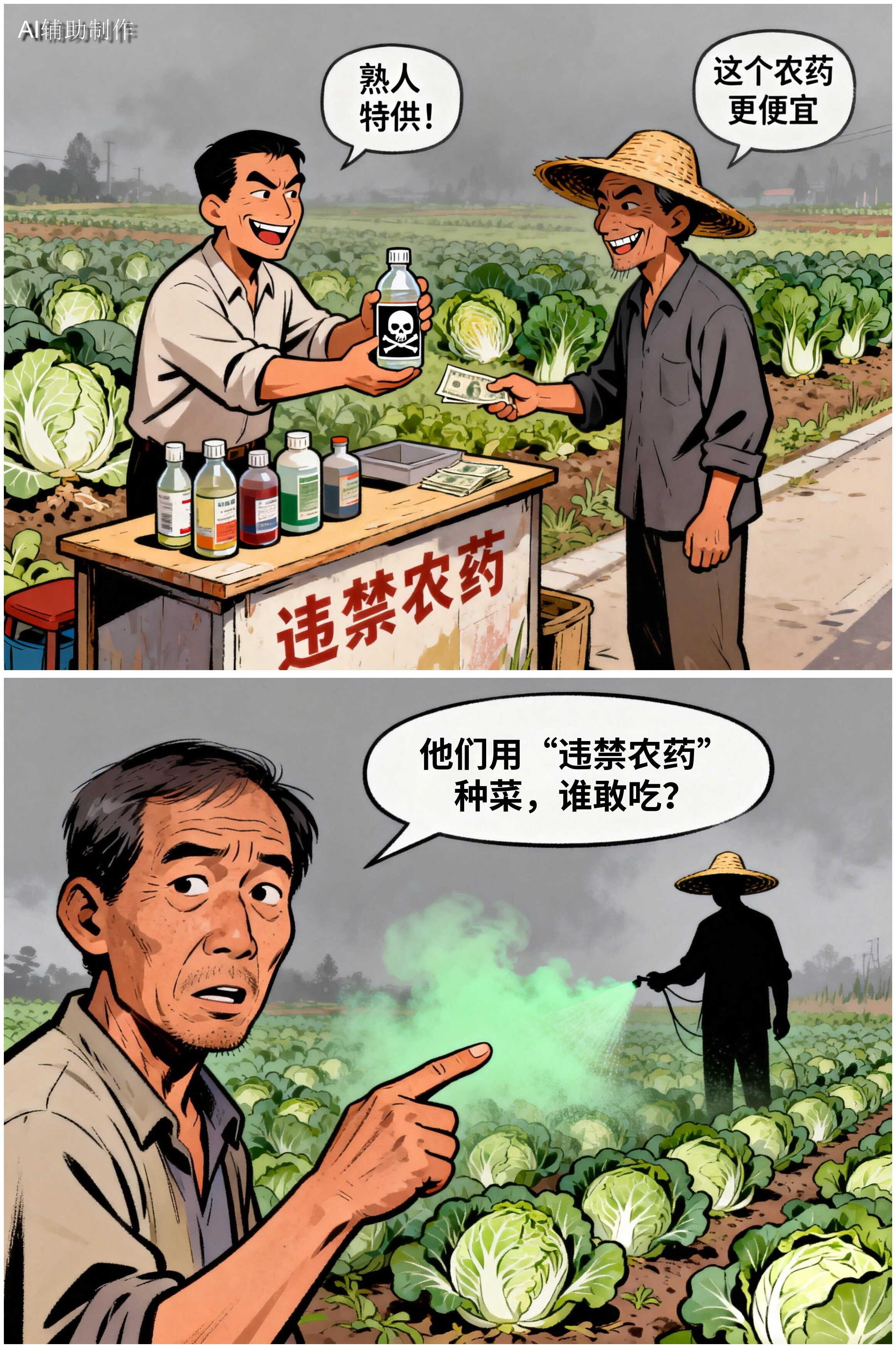
漫画|当地村民都不敢吃,怎能让违禁农药流入农田?
Zhong Guo Jing Ji Wang· 2026-01-23 12:26
Group 1 - The article highlights alarming issues regarding the illegal sale of banned and restricted pesticides by certain merchants and companies, who use methods such as falsifying production dates and changing packaging to covertly sell these harmful substances [4] - These illegal pesticides are reportedly being used in vegetable cultivation, raising significant food safety concerns among local villagers, who express distrust in consuming locally grown vegetables [4] - The article calls for regulatory authorities to strengthen control and inspection measures, and to impose severe penalties on the black market industry to ensure food safety [4]
法国乳企启动奶粉召回牵动产业链,国内ARA龙头嘉必优面临大考
Huan Qiu Wang· 2026-01-23 07:49
登录新浪财经APP 搜索【信披】查看更多考评等级 来源:环球网 【环球网消费综合报道】继雀巢之后,法国乳制品企业拉克塔利斯也启动了大规模奶粉召回,这两起相 继发生的国际食品安全事件迅速波及国内产业链,将国内最大的ARA(花生四烯酸)供应商嘉必优 (688089.SH)推向了风口浪尖。 据央视新闻报道,1月21日,法国乳企拉克塔利斯公司宣布,在18个国家和地区召回多个批次的婴幼儿 奶粉,原因是相关产品可能含有蜡样芽孢杆菌毒素,存在引发腹泻和呕吐等风险。此前在1月初,雀巢 也因供应商提供的一款ARA油脂原料存在质量问题,在欧洲多国对一批婴儿配方奶粉实施了预防性召 回。英国食品标准局指出,蜡样芽孢杆菌具有高度热稳定性,可能在冲调过程中存活,引发食源性疾 病。 针对雀巢的召回事件,国务院食安办、市场监管总局高度重视,已督促雀巢(中国)有限公司落实主体 责任,召回在中国境内销售的相关批次产品。在这一背景下,作为雀巢等国内外知名婴幼儿配方奶粉企 业的ARA供应商,嘉必优受到市场广泛关注。1月13日,嘉必优收到上交所监管工作函,督促其依法履 行信息披露义务,市场普遍认为这与雀巢奶粉召回事件高度相关。 图片来源 于海关总署进 ...

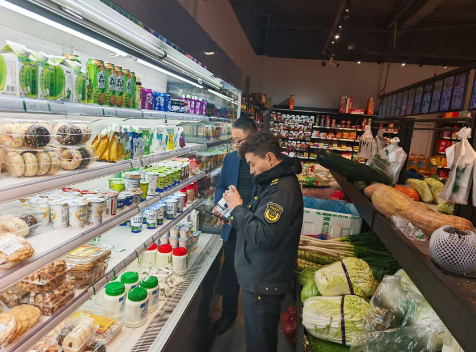
新疆乌苏市市场监管局开展过期食品专项排查整治 筑牢食品安全防线
Zhong Guo Shi Pin Wang· 2026-01-23 07:34
1月20日,新疆维吾尔自治区乌苏市市场监管局强化党建引领,积极践行"实干争先"理念,组织开展过 期食品专项排查整治行动,筑牢食品安全防线。 下一步,该局将持续强化过期食品监管力度,突出重点部位和关键环节,全力消除食品安全隐患,坚决 打击各类违法行为,牢牢守住食品安全底线,切实保障人民群众"舌尖上的安全"。(杜志锋 伊斯坎得 尔 刘燕) 此次行动,该局聚焦发布专项公告,全面摸清批发商底数,召开农贸市场、大型商超及批发商经营主体 集体行政约谈、开展跟踪检查、集中监督销毁等活动,全力筑牢节日食品安全"防护网"。 检查过程中,该局执法人员通过塔通办·扫码检查方式,坚持"边扫码、边宣贯、边检查"。一是在微信 公众号、政府网站、农贸市场、商超及批发商经营场所等显著位置发布过期食品排查整治专项公告,充 分发择 "12315" 热线及平合作用,鼓动社会各界和消费者举投涉及过期食品的违规违法行为,依法及时 处理投诉举报,营造社会共治氛围。二是全面摸清批发商底数。成立五个小组,分片区对辖区内食品批 发商开展专项排查,逐户登记主体信息,建立健全批发商管理台帐。对辖区内食品批发商及大型超市集 中开展行政约谈,明确经营主体责任,督促其 ...
食品安全进乡村 安全守护暖民心——额敏县市场监督管理局开展“科技之东”食品安全宣传活动
Zhong Guo Shi Pin Wang· 2026-01-23 07:34
Group 1 - The core viewpoint of the articles emphasizes the importance of food safety in rural areas and the proactive measures taken by the E'min County Market Supervision Administration to ensure the safety of food products for local communities [1][2] Group 2 - The E'min County Market Supervision Administration conducted a food safety publicity event on January 22, focusing on educating rural residents about food safety laws, regulations, and common safety knowledge [1] - The event included distributing materials, policy promotion, and on-site Q&A sessions, which helped participants learn to identify counterfeit products and avoid purchasing unsafe food items [1] - Over 60 business entities participated in the event, with more than 120 informational materials distributed and 8 questions answered on-site, indicating a positive response from the community [1] Group 3 - The E'min County Market Supervision Administration plans to continue regular food safety publicity activities, aiming to strengthen food safety supervision and management, and to prevent food safety risks [2] - The administration is committed to reinforcing the food safety responsibility system to protect the public's food safety [2]
陕西省岐山县市场监管局开展食品安全专项检查
Xin Lang Cai Jing· 2026-01-23 04:26
本次专项检查聚焦商场超市、农贸市场等流通领域重点消费场所,针对粮油、肉蛋奶、蔬菜、水果等节 日热销食品品类,加大监督检查力度,全面排查食品安全风险隐患,切实保障群众"米袋子""菜篮 子""果盘子"安全。同时,重点加强对大中型餐饮服务单位及外卖平台的监管,督促其严格落实进货查 验、餐饮具消毒、从业人员健康管理等制度规范,确保食品安全各项措施落实到位。截至目前,已检查 246家食品生产经营单位,发现并整改风险隐患13处。(来源:陕西省宝鸡市市场监管局) 中国质量新闻网讯 近日,陕西省岐山县市场监督管理局组织开展食品安全专项检查,切实筑牢食品安 全防线。 ...
广电计量涨2.00%,成交额8182.14万元,主力资金净流入53.00万元
Xin Lang Cai Jing· 2026-01-23 02:50
Core Viewpoint - Guangdian Measurement has shown a positive stock performance with a year-to-date increase of 13.54% and significant growth in revenue and net profit for the first nine months of 2025 [1][2]. Group 1: Stock Performance - As of January 23, Guangdian Measurement's stock price increased by 2.00%, reaching 24.99 CNY per share, with a total market capitalization of 14.573 billion CNY [1]. - The stock has experienced a 1.46% increase over the last five trading days, a 17.10% increase over the last 20 days, and an 18.94% increase over the last 60 days [1]. Group 2: Financial Performance - For the period from January to September 2025, Guangdian Measurement reported a revenue of 2.416 billion CNY, reflecting a year-on-year growth of 11.86% [2]. - The net profit attributable to shareholders for the same period was 239 million CNY, marking a year-on-year increase of 26.51% [2]. Group 3: Shareholder Information - As of September 30, 2025, the number of shareholders for Guangdian Measurement was 29,200, a decrease of 0.72% from the previous period [2]. - The average number of circulating shares per shareholder increased by 2.76% to 18,508 shares [2]. Group 4: Dividend Distribution - Guangdian Measurement has distributed a total of 607 million CNY in dividends since its A-share listing, with 481 million CNY distributed over the last three years [3]. Group 5: Institutional Holdings - As of September 30, 2025, Hong Kong Central Clearing Limited was the fourth largest circulating shareholder, holding 9.6675 million shares, a decrease of 3.6515 million shares from the previous period [3]. - New institutional shareholders include Guangfa Multi-Factor Mixed Fund and Guangfa Balanced Growth Mixed Fund, which entered the top ten circulating shareholders [3].
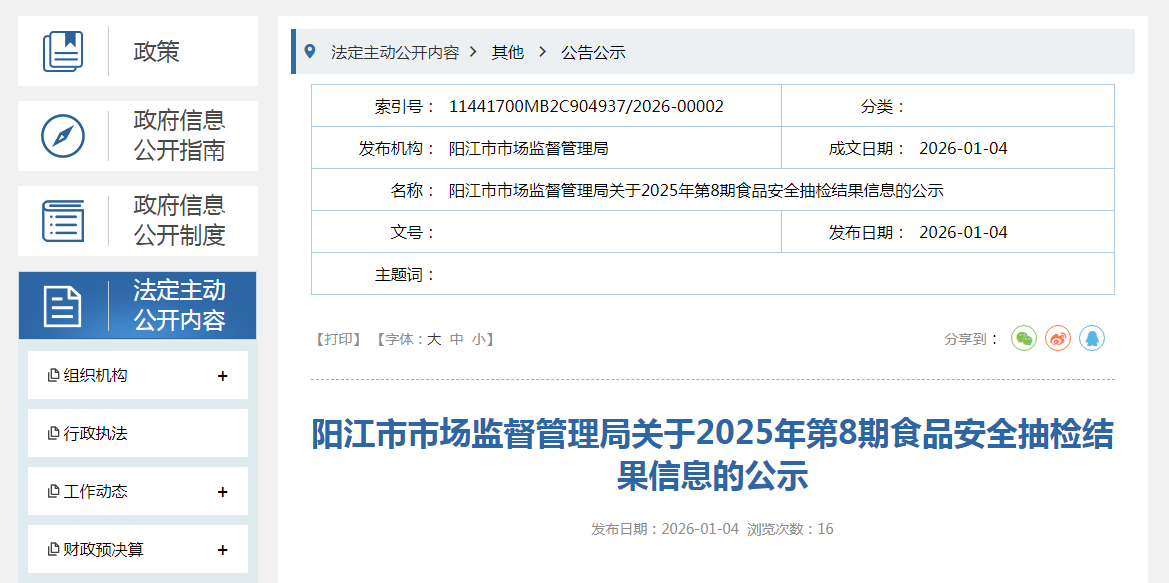
广东省阳江市市场监督管理局关于2025年第8期食品安全抽检结果信息的公示
Zhong Guo Zhi Liang Xin Wen Wang· 2026-01-22 08:25
Core Viewpoint - The Yangjiang Market Supervision Administration conducted a food safety inspection, revealing a non-compliance rate of 2.41% from 1452 samples tested, with 35 batches found to be unqualified [1]. Group 1: Inspection Results - A total of 1452 samples were collected from food business units in Yangjiang [1]. - 35 batches of products were identified as non-compliant, resulting in a non-compliance rate of 2.41% [1]. - The details of the unqualified products are documented in an attached summary table [1]. Group 2: Regulatory Actions - The Yangjiang Market Supervision Administration mandated local regulatory bodies to investigate and address the non-compliant products and their producers [1]. - Legal actions will be taken against any violations in production and operation, with the results recorded in the food safety credit archives of the businesses involved [1]. - The investigation outcomes will be publicly disclosed by the respective local market supervision departments [1].
重构鸡蛋价值:为什么越来越多人选高品质可生食蛋
Zhong Guo Jing Ji Wang· 2026-01-22 07:04
Core Insights - The value of eggs is being redefined as consumers shift focus from price and freshness to high-quality, safe-to-eat eggs driven by health awareness and upgraded consumption demands [1][2] Group 1: Health and Nutritional Demand - The traditional perception of eggs being "good" is evolving from just "fresh" and "cheap" to a focus on nutritional content, particularly the benefits of egg yolk for specific demographics such as pregnant women, children, and the elderly [2] - High-quality, safe-to-eat eggs meet the growing demand for nutritional density, with examples like Huang Tian E eggs containing up to 35% of the daily required choline for adults, which is significant for cognitive development in children and cognitive protection in the elderly [2] Group 2: Safety and Production Standards - Safety concerns regarding eggs, particularly the risk of Salmonella infection, are being addressed through stringent production processes that minimize risks, especially for vulnerable populations [3] - Huang Tian E's production system includes multiple rounds of Salmonella testing and purification, strict health checks for chicks, and controlled environments to prevent contamination, establishing a safety "moat" for safe-to-eat eggs [3] Group 3: Market Dynamics and Consumer Choices - The market for "sterile eggs" is currently chaotic, with some sellers misleading consumers about safety standards, emphasizing the need for consumers to choose products that meet strict Salmonella testing and production standards [4] - Huang Tian E is positioned as a leading brand in the safe-to-eat egg market, contributing to the establishment of industry standards through collaboration with organizations to define testing requirements for pathogens, providing consumers with traceable quality assurance [4]