AI搜索

Search documents
百度再推AI搜索,布局“AI+短剧”,对比阿里、抖音、360的AI搜索如何?
3 6 Ke· 2025-07-21 02:30
Group 1 - Baidu has launched a new AI search application called "Tizzy.AI," which is positioned as an "AI intelligent search product" with the slogan "Simple search, one touch to reach" [1] - The main features of Tizzy.AI include AI search, film, and short drama [1][19] - The application interface is designed to be very simple, featuring a search box, recommended search phrases, and a navigation bar [3] Group 2 - The search box supports both text and voice search, with two modes: automatic mode (smart recognition, quick answers) and deep mode (enhanced reasoning, in-depth thinking) [6] - The film section includes a scrolling recommendation bar and allows users to filter films based on genre, country, and time [8] - The short drama section features a hot drama chart and a recently added list, also allowing for genre filtering [15] Group 3 - Tizzy.AI is compared with similar products from ByteDance, Alibaba, and 360, highlighting its minimalist design and functionality [16][18] - All four applications, including Tizzy.AI, allow switching to a deep thinking mode for AI search, but Tizzy.AI and AI Douyin maintain a simpler functionality compared to others [18] - Tizzy.AI's unique features include a focus on film and short drama, while competitors offer additional functionalities like AI image generation and writing [19] Group 4 - Tizzy.AI's ad-free model aims to address user pain points associated with excessive advertising in traditional search engines [26] - The film and short drama features may attract users, but there are concerns regarding copyright compliance and competition from existing free short drama products [27] - Despite challenges, Baidu's historical expertise in AI and search positions it as a formidable competitor in the AI search market [27][28]



百度集团-SW(09888):AI搜索改造下百度核心广告业务承压,萝卜快跑继续领跑Robotaxi行业
Soochow Securities international· 2025-07-18 14:00
Investment Rating - The report maintains a "Buy" rating for Baidu Group [2][7] Core Views - Baidu's core advertising business is expected to face pressure due to AI search transformations, with a projected revenue decline of 16.3% year-on-year in Q2 2025 [7] - Baidu's Robotaxi service, "Luobo Kuaipao," is leading the global market, with a significant increase in order volume, up 75% year-on-year to 1.44 million in Q1 2025 [7] - The company's intelligent cloud business is experiencing rapid growth driven by the demand for generative AI and large language models, with Q1 2025 cloud service revenue expected to grow by 42% year-on-year [7] - The overall revenue forecast for 2025-2027 has been adjusted to reflect a decline of 5.2% in 2025, followed by growth of 4.4% and 4.8% in 2026 and 2027, respectively [7] - The target price for Baidu has been revised down to HKD 95.15 based on DCF valuation [7] Financial Projections - Revenue projections for Baidu are as follows: - 2024: 133,125 million CNY - 2025: 126,265 million CNY - 2026: 131,853 million CNY - 2027: 138,172 million CNY [2][12] - Net profit projections are: - 2024: 23,760 million CNY - 2025: 18,324 million CNY - 2026: 20,200 million CNY - 2027: 22,172 million CNY [2][12] - The P/E ratio is projected to be 10.9 in 2024, increasing to 14.1 in 2025, and then decreasing to 11.7 by 2027 [2][12] Business Segments - The core online marketing service revenue is expected to decline by 15.3% in 2025, while cloud service revenue is projected to grow by 22.2% [8] - The iQIYI segment is expected to see a slight revenue decline of 1.0% in 2025 [8] Valuation Metrics - The report provides a DCF valuation breakdown, indicating a total enterprise value of approximately 370.45 billion CNY, with equity value at 287.44 billion CNY [9][10]
中国成为微软必应全球第一大市场,这绝非偶然
Tai Mei Ti A P P· 2025-07-17 06:00
Core Insights - Bing has achieved a significant milestone in the Chinese market, capturing a 40.23% market share in desktop search as of June 2025, marking its position as the leading search engine in China for 12 consecutive months [2][4] - Microsoft's investment of nearly $100 billion in Bing over the years has finally paid off, particularly benefiting from the digitalization and globalization trends among Chinese enterprises [3][6] - The rise of AI-driven search capabilities has transformed Bing from a mere alternative to a formidable competitor in the search engine landscape, with a notable increase in user engagement and interaction [12][15] Market Position and Growth - Bing's user base in China has surged by 12 times over the past five years, with China contributing 28.25% of Bing's global traffic, surpassing the United States [6][9] - Despite a temporary resurgence of Bing in the U.S. market in May 2025, the alternating leadership in both markets indicates a promising future for Bing in China [9][11] - The integration of Bing into Microsoft's ecosystem, particularly with the launch of Bing Chat Enterprise, has enhanced its presence in enterprise productivity scenarios [10][11] AI and Product Innovation - The introduction of the "New Bing" powered by AI models has redefined the search experience, allowing for more natural interactions and deeper understanding of user intent [15][16] - Bing's advertising model has evolved, with AI enabling more precise targeting and significantly reducing cost-per-click for advertisers, enhancing overall commercial viability [17][19] - The localized features and innovations, such as accurate weather forecasting and tailored marketing strategies, have further solidified Bing's appeal in the Chinese market [10][19] Competitive Landscape - The ongoing AI search battle is intensifying, with major players like Google and emerging startups vying for market share, indicating a long-term competitive environment [20][21] - Microsoft's strategy of integrating Bing into a broader ecosystem, including Windows 11 and Microsoft 365, enhances user engagement and retention [22] - Despite Bing's impressive growth, challenges remain, including reliance on desktop usage and the need to navigate local regulatory landscapes [23]


花旗:百度广告收入下半年可能仍将面临压力 维持买入评级
news flash· 2025-07-17 02:36
Core Viewpoint - Citigroup's report indicates that Baidu's advertising revenue may continue to face pressure in the second half of the year due to the company's rapid enhancement of AI search capabilities and weak advertising spending sentiment [1] Revenue Forecast Adjustments - Citigroup has lowered its core advertising revenue forecasts for Baidu by 6.1% for Q2 and 8.9% for Q3 [1] - The negative impact on core operating profit estimates has also been significant, with a reduction of 21% for Q2 and 24% for Q3 [1] Investment Rating and Price Target - Despite the downward adjustments, Citigroup maintains a "Buy" rating on Baidu and has raised its ADR target price from $138 to $140 [1]
秘塔AI也终于悄悄上线了DeepResearch。
数字生命卡兹克· 2025-07-14 22:11
Core Viewpoint - The article discusses the new feature of Metaso AI's DeepResearch, highlighting its advanced capabilities in conducting in-depth research and analysis, particularly in the context of the competitive landscape of food delivery services in China. Group 1: Introduction of DeepResearch - Metaso AI has introduced a new feature called DeepResearch, which enhances its research capabilities beyond previous modes [5][6][7] - The author expresses a strong preference for using Metaso AI for research tasks, indicating a shift from other AI search products [3][4] Group 2: Functionality and User Experience - The new DeepResearch feature offers a game-like experience, making the research process engaging and intuitive [10] - The interface provides visual representations of the research process, including token usage, sources found, and time spent, enhancing user interaction [25][43] - The system allows for a comprehensive analysis of competitive dynamics, integrating both vertical and horizontal analyses of companies like JD, Meituan, and Taobao [18][19][20] Group 3: Research Output and Quality - The reports generated by DeepResearch are extensive, often exceeding 10,000 words, and are structured into clear chapters, providing detailed insights [52][60] - The analysis of the food delivery market reveals that the underlying cause of competition is "high frequency attacking low frequency," with Meituan being the primary aggressor [54][55][59] - The quality of the reports is noted to be comparable to that of OpenAI's DeepResearch, with precise and relevant findings [48][60] Group 4: Additional Features and User Control - Users can generate interactive visual reports, catering to preferences for visual data representation [66] - The platform allows users to manage source preferences, enhancing the customization of research outputs [67] - Metaso AI offers a generous daily search quota, making it accessible for frequent use compared to other paid services [69]

BAT的搜索框与浏览器之争
3 6 Ke· 2025-07-11 08:58
Core Viewpoint - The article discusses the evolution of search engines and browsers in the context of the AI era, highlighting the emergence of AI-driven tools that are reshaping the competitive landscape among major players like Baidu, Tencent, and Alibaba [1][3][20]. Group 1: AI Transformation of Search Engines - Baidu announced its largest upgrade in a decade, transforming its search box into a "smart box" capable of handling long text searches and multi-modal queries [2][4]. - Google and Baidu, once leaders in traditional search, are now integrating AI capabilities to enhance user experience and maintain their market positions [9][20]. - The introduction of AI-driven search models has led to a significant increase in user engagement, as seen with Microsoft's Bing, which surpassed 100 million daily active users shortly after integrating ChatGPT [4][20]. Group 2: Browser Evolution and AI Integration - Browsers like Alibaba's Quark and Tencent's QQ Browser are redefining their functionalities through deep integration of AI technologies, moving towards a "borderless" era [10][16]. - Quark's "AI Super Box" and QQ Browser's QBot feature allow for more interactive and efficient user experiences, enabling users to engage in multi-modal searches [13][16]. - The shift towards AI-enhanced browsers aims to reclaim the traffic entry points previously dominated by traditional search engines [16][20]. Group 3: New Competitive Landscape - The competition between search engines and AI browsers is intensifying, with both established giants and emerging startups vying for market share [17][20]. - AI technology is not only enhancing user interaction but also challenging traditional business models, potentially leading to a decline in traffic for conventional websites [20]. - The future of search engines and browsers will heavily depend on the successful integration of AI technologies, with platforms that understand user needs likely to emerge as winners in this evolving landscape [20].


百度搜索,终于舍得改版了!
第一财经· 2025-07-07 06:09
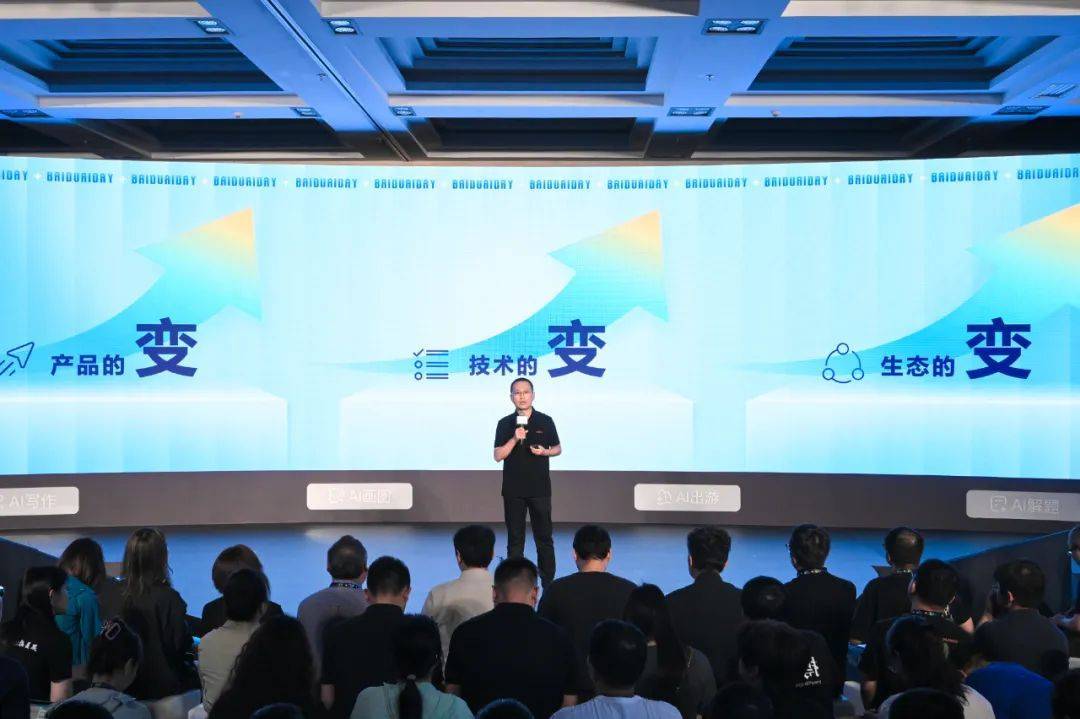
Core Viewpoint - Baidu announced its largest search engine overhaul in a decade during AI Day, aiming to transform the traditional search model into an AI-driven experience, emphasizing a shift from merely providing links to delivering comprehensive answers and services [3][5]. Group 1: Search Engine Transformation - Baidu is upgrading its search box to an "intelligent box," allowing users to input natural language queries without the previous character limit, enabling complex and creative requests [5]. - The search results page will not only provide links but also generate content results, including charts and videos, and integrate services like travel bookings directly within the search results [5][6]. - Baidu has established a "search open platform" with 18,000 MCP services available for integration, which may evolve into a new revenue stream through potential fees for service placements [6]. Group 2: Competitive Landscape - Traditional search engines, including Baidu and Google, are cautiously transitioning to AI search and Q&A formats due to concerns over declining ad revenues from traditional bidding systems [7]. - Baidu faces greater competitive pressure in the domestic market compared to Google, with various AI-native chatbots and search engines rapidly changing user information retrieval habits [11][12]. - Other companies, such as Alibaba and Tencent, have already implemented significant upgrades to their search products, further intensifying the competition for Baidu [11][12].
百度搜索大改版,AI赋能下的搜索新纪元来了吗?
Sou Hu Cai Jing· 2025-07-07 02:31
Core Insights - Baidu is undergoing a significant transformation in its search engine capabilities, marking its largest overhaul in a decade with the introduction of innovative features and products during the AI Day event on July 2 [1] Group 1: AI Integration and User Experience - The concept of AI search has evolved from traditional search methods, focusing on personalized and efficient service experiences rather than merely aggregating information [2] - The new intelligent search box allows for long text inputs and file uploads, integrating AI writing and image generation capabilities, thus redefining the boundaries of search [4] - Users can now receive detailed answers to complex queries with minimal input, enhancing the overall search experience [4] Group 2: Ecosystem and Technological Advancements - The transformation represents a comprehensive upgrade of Baidu's ecosystem, with the intelligent search box serving as a super entry point connecting various AI applications [5] - Baidu has introduced the MuseSteamer video generation model, which allows for high-quality video content creation from minimal images, lowering the barriers for video production [5] - This innovation enriches the format of search results and provides users with a more vivid and intuitive way to access information [5] Group 3: Strategic Vision and Market Position - Baidu is proactively seeking change in response to the generational shift in search engines, emphasizing the importance of user feedback and continuous improvement [7] - The company views search as a major distribution channel for intelligent agents, enhancing its appeal as a content platform through the integration of internal technologies and external resources [9] - This transformation not only solidifies Baidu's position as a national-level product but also provides a competitive edge in the new era [9]
搜索十年蝶变,藏着百度最大的决心
Sou Hu Cai Jing· 2025-07-06 02:16
Core Insights - Baidu is undergoing a significant transformation in its search capabilities, marking the largest update in a decade, with a focus on integrating AI technologies to enhance user experience and functionality [2][4][12] Group 1: Search Functionality Enhancement - The new search interface features an expanded input box that can accommodate over a thousand characters, allowing users to express complex queries without length limitations [4][5] - The AI-powered search can now understand and respond to nuanced questions, providing accurate answers to vague or complex requests [4][5] - Multi-modal input capabilities have been enhanced, enabling users to upload images, videos, and audio for more interactive search experiences [4][14] Group 2: Output and User Experience - The search results page has been restructured to provide direct answers rather than just links, improving the efficiency of information retrieval [5][7] - Baidu's new "Baidu Baikan" feature delivers structured content in various formats, including text, images, and videos, enhancing the way information is presented to users [7][21] - The integration of AI assistants allows for a more personalized and interactive user experience, with features like real-time video calls and intelligent content generation [14][16] Group 3: AI Integration and Ecosystem - Baidu aims to merge AI and search technologies deeply, moving beyond traditional search paradigms to create a more comprehensive service [11][12] - The company has established an open ecosystem, collaborating with developers and content creators to enhance the search experience and provide diverse applications [21][23] - Baidu's AI capabilities are being leveraged to create tools that simplify complex tasks, such as generating videos from simple text prompts [17][19] Group 4: Strategic Vision and Market Position - Baidu is committed to evolving its search capabilities in response to the changing landscape of AI and search engines, emphasizing the need for continuous innovation [26][28] - The company recognizes the importance of user feedback in shaping its development strategy, aiming to create a seamless and effective search experience [26][30] - Baidu's established user base of over 700 million provides a unique platform for testing and deploying new AI applications, reinforcing its competitive position in the market [30]

最重要的搜索阵地,百度想誓死守住
Sou Hu Cai Jing· 2025-07-04 16:41
Core Insights - Baidu has announced its largest search engine overhaul in a decade, transitioning from providing links to delivering answers, supported by AI capabilities [1][2][6] - The company aims to integrate various AI functionalities, including AI writing and multimedia generation, into its search platform to enhance user experience and engagement [1][8][13] - Baidu is facing challenges in its traditional advertising revenue as the shift to AI-driven search may undermine its existing bidding ad model [3][19][21] Group 1: Transformation and Features - The search box has been redesigned to support up to 1,000 characters, allowing for more comprehensive user queries [1][8] - Baidu's AI search differentiates itself through multi-modal content generation, enabling users to receive visually rich answers and access various AI services [9][13] - The integration of AI functionalities aims to lower the barrier for users to engage with AI, allowing for input through images, videos, and audio [13][16] Group 2: Commercialization and Challenges - Baidu is exploring new advertising models, such as intelligent agent ads, which integrate product recommendations directly into search results [6][24] - Despite the growth in AI search capabilities, Baidu's advertising revenue has declined, with a reported 6% drop in Q1 [19][24] - The company has seen a significant increase in the number of advertisers using intelligent agents, with a 30-fold increase in revenue generated by these ads [23][24]