可控核聚变

Search documents
A股突发!002278“地天板”,603903“天地板”
Zheng Quan Shi Bao· 2025-10-27 09:06
Market Overview - The A-share market opened high and continued to rise, with the Shanghai Composite Index reaching a 10-year high, approaching 4000 points, and the ChiNext Index surpassing 3200 points [1] - The market turnover exceeded 2 trillion yuan, marking a new high in nearly two weeks [1] - Key sectors that saw significant gains included consumer electronics, rare metals, storage chips, and controllable nuclear fusion, while sectors like gaming, engineering consulting services, wind power equipment, and beverage dairy experienced declines [1] Fund Flow Analysis - The electronic industry attracted over 13.9 billion yuan in net inflow from major funds, while the non-ferrous metals sector saw over 6.2 billion yuan [1] - Other sectors such as telecommunications and machinery also received over 5 billion yuan in net inflows, while media, power equipment, and real estate experienced net outflows [1] Company-Specific Developments - ShenKong Co., Ltd. (神开股份) opened at the limit down price but quickly rebounded to close at the limit up price, achieving an 8.5-year high with a trading volume of 2.82 billion yuan and a turnover rate of 57.16% [2] - ShenKong Co. expressed interest in participating in post-war reconstruction projects in Russia, highlighting its historical presence in the market despite recent challenges due to international financial settlement issues [4] - Zhongzhi Co., Ltd. (中持股份) experienced a contrasting performance, opening at the limit up price but closing at the limit down price, with a trading volume of 668 million yuan and a turnover rate of 16.95% [4][6] - Zhongzhi announced that its major shareholder, Changjiang Environmental Group, plans to transfer its entire stake of 63.13 million shares, representing 24.73% of the total share capital [6] Stock Performance - Nongxin Technology (农心科技) saw significant volatility, initially dropping 8.37% before surging to a limit up, marking its third consecutive day of gains and reaching a three-year high with a trading volume of 436 million yuan and a turnover rate of 34.48% [6] - Nongxin Technology stated that it had not identified any undisclosed significant information affecting its stock price and that its operational conditions remained normal [8]


沪指续刷十年新高逼近4000点,5G通信ETF、5GETF涨超5%
Ge Long Hui· 2025-10-27 08:57
Market Overview - A-shares indices collectively rose, with the Shanghai Composite Index reaching a ten-year high, closing at 3996.94 points, up 1.18% [1] - The total market turnover was 2.36 trillion yuan, an increase of 365 billion yuan from the previous trading day, with over 3300 stocks rising [1] Sector Performance - The storage market experienced unprecedented price increases, leading to significant gains in semiconductor stocks, with companies like Zhaoyi Innovation and Demingli hitting the daily limit [1] - The controllable nuclear fusion sector also saw gains, with stocks such as Antai Technology and Xiamen Tungsten hitting the daily limit [1] - The CPO concept remained active, with Jingwang Electronics reaching the daily limit [1] - Breakthroughs in the photoresist field led to a surge in related stocks, with Wanrun Technology hitting the daily limit [1] - Other sectors with notable gains included PCB, AIPC, and shipbuilding [1] ETF Performance - 5G communication ETFs and related funds saw increases of over 5% [1] - Other ETFs, including 5G50 ETF, communication ETF, and semiconductor ETFs, rose by over 4% [1] Investment Outlook - Huaxi Securities indicated a return to a "slow bull" trend, with a focus on "big technology" as a long-term investment theme [2] - The upcoming earnings reports from A-share companies and US tech giants are expected to be pivotal, particularly in the context of the global AI arms race [2] - Shenwan Hongyuan expressed optimism about the technology growth sector leading the market in Q4, noting that the current adjustment phase has reached a sufficient level [2] - Investment in emerging industries such as low-altitude economy, quantum technology, and nuclear fusion is highlighted as a key area for future growth [2][3] Strategic Focus - Industrial strategies should align with the "Fifteen Five" plan, emphasizing domestic priorities and technology growth opportunities [3] - Key areas of focus include AI, military industry, and innovative pharmaceuticals, with a particular emphasis on the global computing power supply chain and domestic semiconductor industry [3]
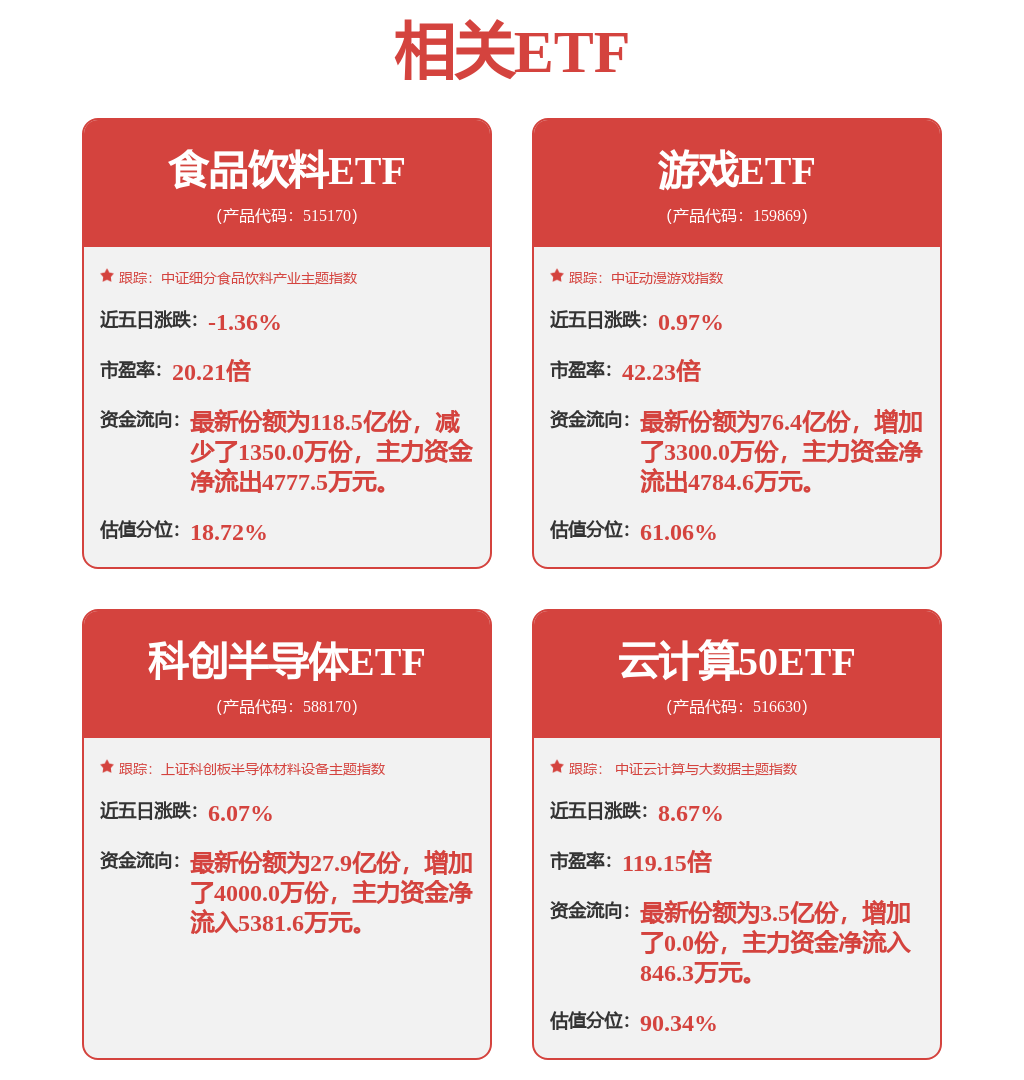
ETF收评 | A股盘中站上3999点!AI硬件涨势不止,5G通信ETF、5GETF涨5%
Ge Long Hui· 2025-10-27 08:51
Core Points - The three major A-share indices collectively rose today, with the Shanghai Composite Index increasing by 1.18%, reaching a peak of 3999.07 points, close to the 4000-point mark [1] - The Shenzhen Component Index rose by 1.51%, and the ChiNext Index increased by 1.98%, while the North Stock 50 Index fell by 0.2% [1] - The total trading volume in the Shanghai and Shenzhen markets was 23.566 billion yuan, an increase of 3.65 billion yuan compared to the previous day [1] - Over 3300 stocks in the market experienced gains, with notable increases in sectors such as storage chips, small metals, controllable nuclear fusion, steel, and computing hardware [1] - Conversely, sectors such as wind power equipment, gaming, Hainan Free Trade Zone, Shenzhen, and cultural media saw declines [1] ETF Performance - The AI communication sector continued its upward trend, with the Huaxia 5G Communication ETF and the Yinhua 5G ETF both rising by 5% [1] - The Bosera 5G 50 ETF and the Guotai 5G Communication ETF increased by 4.88% and 4.86%, respectively [1] - The storage chip sector saw a comprehensive rally, with the Huatai Bairui China-Korea Semiconductor ETF, Huaxia Semiconductor Materials ETF, and Guotai Semiconductor Equipment ETF rising by 4.58%, 3.99%, and 3.99% respectively [1] - The Nikkei 225 ETF from Huazhang Fund rose by 3.77%, as Japanese stocks reached a historical high above 50,000 points [1] Sector Declines - The gaming sector experienced significant declines, with the Gaming ETF and Huatai Bairui Gaming ETF falling by 1.77% and 1.57%, respectively [1] - Gold weakened, leading to a 0.4% drop in gold ETFs and gold fund ETFs [1]
可控核聚变概念涨2.32% 主力资金净流入这些股
Zheng Quan Shi Bao Wang· 2025-10-27 08:42
Core Insights - The controllable nuclear fusion concept sector saw a rise of 2.32%, ranking 8th among concept sectors, with 83 stocks increasing in value [1] - Major gainers included An Tai Technology, Xiamen Tungsten, and Dongfang Tantalum, which hit the daily limit, while the biggest losers were Hekang New Energy, Guoli Electronics, and Jianyan Design [1] Market Performance - The controllable nuclear fusion concept sector attracted a net inflow of 3.459 billion yuan, with 55 stocks receiving net inflows and 10 stocks exceeding 100 million yuan in net inflow [1] - Xiamen Tungsten led the net inflow with 777.3 million yuan, followed by An Tai Technology, China Nuclear Power, and Dongfang Tantalum with net inflows of 719.4 million yuan, 583.0 million yuan, and 259.0 million yuan respectively [1] Stock Performance - The top stocks by net inflow ratio included An Tai Technology (20.60%), Xiamen Tungsten (19.48%), and Dongfang Tantalum (18.60%) [2] - The stock performance for the controllable nuclear fusion concept showed significant gains, with An Tai Technology and Xiamen Tungsten both increasing by 10.01% and 10.00% respectively [2][3] Sector Comparison - Other notable sectors included storage chips with a rise of 3.49%, while the horse racing concept saw a decline of 1.06% [1] - The AI PC sector increased by 3.20%, indicating a broader interest in technology-related investments [1]


10月27日主题复盘 | 指数逼近4000点关口,福建自贸、光刻胶大涨,核聚变再度表现
Xuan Gu Bao· 2025-10-27 08:37
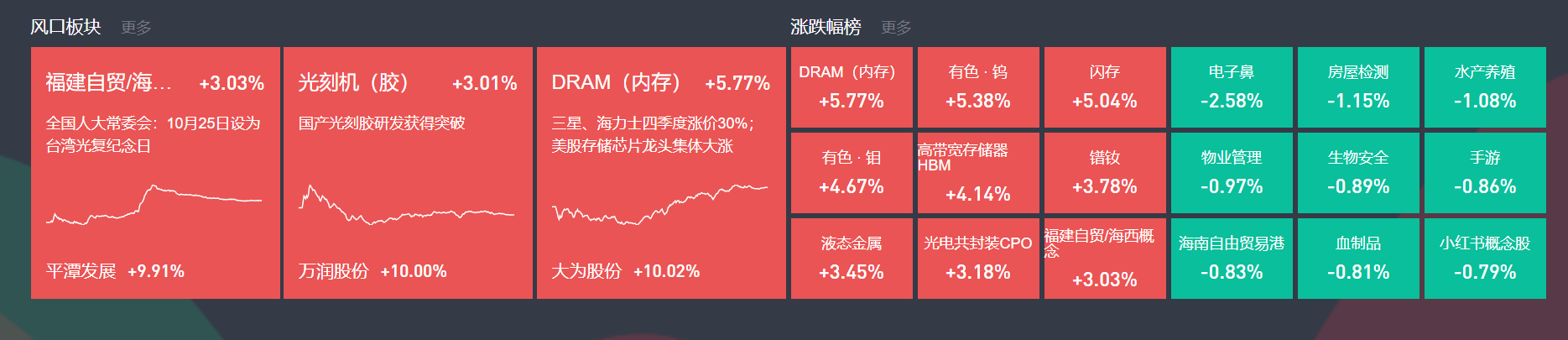
Market Overview - The market showed strong fluctuations throughout the day, with the Shanghai Composite Index approaching the 4000-point mark, continuing to refresh its yearly high, while the ChiNext Index rose nearly 2% [1] - The storage chip sector experienced a collective surge, with stocks like Zhaoyi Innovation and Demingli hitting the daily limit and reaching new highs [1] - The controllable nuclear fusion concept remained active, with stocks like Dongfang Tantalum and Antai Technology hitting the daily limit [1] - The trading volume reached 2.36 trillion yuan, with over 3200 stocks in the Shanghai and Shenzhen markets showing gains [1] Hot Topics 1. Fujian Free Trade Zone - The Fujian Free Trade Zone concept continued to perform well, with stocks like Pingtan Development and Xiamen Tungsten hitting the daily limit [4][5] 2. Photoresist - The photoresist sector was active, with Wanrun Co. and Antai Technology hitting the daily limit, and Jingrui Electric Materials rising over 15% [6] - A recent breakthrough in photoresist technology was reported, which could significantly reduce defects in semiconductor manufacturing [6] - The Chinese semiconductor photoresist market size grew from 2.78 billion yuan in 2019 to 6.42 billion yuan in 2023, with a compound annual growth rate of 23.3% [8] 3. Nuclear Fusion - The nuclear fusion sector saw renewed strength, with stocks like Dongfang Tantalum and Wan Energy hitting the daily limit [9] - China is expected to complete its "artificial sun" project by 2027, which could be the first device to achieve fusion power generation [9] - The investment in controllable nuclear fusion projects is expected to enter a capital expenditure phase during the 14th Five-Year Plan period [10] Other Notable Performances - Other sectors such as optical modules, storage, PCB boards, and robotics performed well, while the pharmaceutical and energy storage sectors faced declines [11]
刚刚,大涨原因找到了!
天天基金网· 2025-10-27 08:30
Market Overview - The A-share market experienced a significant rise on October 27, with the Shanghai Composite Index approaching the 4000-point mark, closing up 1.18%, while the Shenzhen Component Index rose by 1.51% and the ChiNext Index increased by 1.98% [3][12] - A total of 3361 stocks rose, with 63 hitting the daily limit, while 1862 stocks declined [4][5] Sector Performance - The storage chip sector saw a collective surge, with stocks like Zhaoyi Innovation and Demingli hitting the daily limit and reaching new highs [5][6] - The controllable nuclear fusion concept stocks were also active, with Dongfang Tantalum and Antai Technology experiencing significant gains [6][7] - CPO and computing hardware stocks maintained strong performance, with Huylv Ecological achieving a new high after four consecutive days of increases [7][8] International Market Influence - The Japanese and South Korean stock markets both rose over 2%, with the Nikkei 225 index surpassing the psychological barrier of 50,000 points, and the Seoul index breaking through 4000 points for the first time, marking a nearly 70% increase year-to-date [9][12] - Positive signals from Sino-U.S. trade negotiations contributed to the market's upward momentum, as both sides reached preliminary consensus on several key trade issues [12][13] - The expectation of a potential interest rate cut by the Federal Reserve also fueled market optimism, following the release of the U.S. Consumer Price Index (CPI) which came in below market expectations [14][15]



“十五五”规划重点布局,可控核聚变概念股掀涨停潮
Sou Hu Cai Jing· 2025-10-27 08:00
Group 1: Market Reaction - The A-share controllable nuclear fusion sector experienced a significant surge, with stocks such as Antai Technology, Xiamen Tungsten, and Dongfang Tantalum hitting the daily limit, reflecting positive market sentiment towards nuclear fusion energy development [1][4] - The market's response indicates strong investor interest and optimism regarding the future potential of nuclear fusion as a key area for economic growth [4] Group 2: Policy and Industry Development - The 24th Central Committee of the Communist Party of China approved a proposal for the 15th Five-Year Plan, emphasizing the strategic importance of industries like quantum technology, biomanufacturing, hydrogen energy, and nuclear fusion [1][3] - The clean energy transition is crucial for achieving China's dual carbon strategy, with hydrogen and nuclear fusion energy identified as complementary solutions for deep decarbonization [3][4] Group 3: Company Highlights - Western Superconducting Technologies, a leader in low-temperature superconductors, is a core supplier for major nuclear fusion projects, with significant contracts and a 65.75% year-on-year revenue growth in its superconducting business [5] - Yongding Co., a pioneer in high-temperature superconductors, reported a staggering 917.66% increase in net profit, driven by substantial orders from nuclear projects [5] - Lianchuang Optoelectronics, a global leader in high-temperature superconducting magnets, secured a 5 billion yuan order for a hybrid reactor system, showcasing its innovative technology [5][6] Group 4: Technological Advancements - Since 2025, China's nuclear fusion sector has entered a rapid development phase, marked by significant technological breakthroughs and the establishment of key companies like China Fusion Energy Co. [4] - Shanghai Electric has emerged as a comprehensive supplier for fusion equipment, successfully delivering critical components for international projects, demonstrating its manufacturing capabilities [6]


智能制造行业周报:Optimus量产节奏调整,关注前臂与手部集成演进的增量机会-20251027
Shanghai Aijian Securities· 2025-10-27 07:54
Investment Rating - The report rates the mechanical equipment industry as "Outperform the Market" [3][57]. Core Insights - The mechanical equipment sector outperformed the CSI 300 index with a weekly increase of 4.71%, compared to the CSI 300's 3.24% [3][13]. - The best-performing sub-sector was abrasives and grinding materials, which rose by 10.42% [3][21]. - The overall PE-TTM valuation for the mechanical equipment sector is 37.7x, with the highest valuations in robotics (185.6x), other automation (153.1x), and machine tools (99.4x) [20][21]. Summary by Sections Industry Performance - The mechanical equipment sector ranked 4th out of 31 in the Shenwan industry rankings for the week [3][13]. - The top five companies by weekly increase included ShenKai Co. (+55.94%), DeShi Co. (+46.41%), and DingTai High-Tech (+39.98%) [18][19]. Valuation Changes - The PE-TTM for the mechanical equipment sector increased by 4.58% this week [21]. - The sub-sectors with the highest PE-TTM increases were abrasives and grinding materials (+10.42%), laser equipment (+8.74%), and other automation (+6.78%) [21]. Investment Recommendations - Focus on platform semiconductor equipment manufacturers that are expanding product categories and streamlining processes, such as North Huachuang, Zhongwei Company, and TuoJing Technology [5]. - Attention is recommended for leading robot manufacturers and their core component suppliers, including DeChang Electric and ZhongDa LiDe [5]. - In the nuclear fusion industry, investment should target companies with clear performance timelines and established customer validation, such as HeZhu Intelligent and GuoJi Heavy Industry [5].
新锦动力(300157.SZ):暂未涉及核电、可控核聚变领域的技术及产品
Ge Long Hui· 2025-10-27 07:20
格隆汇10月27日丨新锦动力(300157.SZ)在投资者互动平台表示,目前,公司主要聚焦于透平机械装备 的生产制造、技术升级、满足国内外市场对高效、节能、环保透平机械装备的需求,为客户提供定制 化、一体化解决方案,推动能源化工领域装备的绿色低碳发展。公司成功研制了国内首台套超临界CO2 循环发电压缩机和透平机组,为我国超临界CO2循环发电提供关键设备支持,公司的产品和技术具有较 高延展性。目前暂未涉及核电、可控核聚变领域的技术及产品。 ...

存储芯片板块大爆发
财联社· 2025-10-27 07:18
Market Overview - The A-share market experienced a volatile upward trend, with the Shanghai Composite Index rising over 1% and approaching the 4000-point mark, reaching a ten-year high [1] - The total trading volume in the Shanghai and Shenzhen markets was 2.34 trillion yuan, an increase of 365.9 billion yuan compared to the previous trading day [1] Sector Performance - Storage chip concept stocks showed strong performance throughout the day, with companies like Demingli achieving consecutive gains and hitting new highs, while Jiangbolong and Xiangnong Chip Innovation also reached record levels [3] - Computing hardware concept stocks maintained their strength, with Huylv Ecological achieving four gains in six days and reaching a new high, while companies like Xinyisheng and Zhongji Xuchuang also hit historical highs [3] - The nuclear power sector was active, with Dongfang Tantalum achieving two gains in three days, and several stocks, including Antai Technology, hitting the daily limit [3] - Conversely, the wind power sector saw a collective decline, with Haili Wind Power experiencing a significant drop [3] Index Performance - By the end of the trading session, the Shanghai Composite Index rose by 1.18%, the Shenzhen Component Index increased by 1.51%, and the ChiNext Index gained 1.98% [3]