
数字化转型

Search documents
陈李济:一片陈皮背后的“老字号”战略升维
Nan Fang Nong Cun Bao· 2025-11-25 03:00
Core Viewpoint - The article discusses the strategic transformation of Chen Li Ji, a 425-year-old traditional Chinese medicine brand, focusing on its integration of Chen Pi (dried tangerine peel) into the health industry, digital transformation, and rural revitalization efforts [1][2][4]. Group 1: Strategic Initiatives - Chen Li Ji launched the Chen Pi Cultural Festival themed "Sailing Against the Wind, Living Forever," marking its 425th anniversary and announcing the "Chen Pi Health" strategic plan [3][4]. - The company aims to leverage Chen Pi as a pivotal element to drive its growth in the health industry, digital transformation, and rural revitalization [5][12][54]. Group 2: Industry Context - The Chen Pi industry is experiencing unprecedented growth opportunities, with the New Hui district reporting a planting area of approximately 143,000 acres and a fresh fruit output of 180,000 tons in 2024 [16][17]. - The total output value of the Chen Pi industry is estimated at 26.018 billion yuan, providing employment and income increases for over 70,000 people, with farmers seeing an average income increase of about 22,000 yuan [18]. Group 3: Policy Support - The Chinese government has issued policies to promote the inheritance and innovation of traditional Chinese medicine, which supports the development of the Chen Pi industry [20][21][28]. - Chen Li Ji's new Chen Pi industrialization planting base was included in the second batch of Guangdong Province's traditional Chinese medicine industrialization base list in 2021, reflecting direct benefits from these policies [28][30]. Group 4: Consumer Trends - There is a notable shift in consumer demographics towards younger generations, with individuals under 35 years old making up 35.9% of the traditional health demand group [33]. - The health service industry is projected to reach a total scale of 16 trillion yuan by 2030, with the health and wellness market already valued at 708.2 billion yuan in 2022 and continuing to grow [34][35]. Group 5: Product Development - Chen Li Ji has expanded its product line from traditional Chinese medicine to include various health products such as aged Chen Pi, Chen Pi tea, and other health foods, catering to modern consumer preferences [54][78]. - The company has established a digital platform for the Chen Pi industry, integrating blockchain technology for traceability and quality assurance, addressing long-standing trust issues in the industry [68][76]. Group 6: Cultural Integration - Chen Li Ji is promoting cultural integration through events like the Chen Pi Cultural Festival and creative cultural projects, transforming traditional Chen Pi culture into appealing elements for younger consumers [80][83]. - The company has created an immersive cultural experience at its museum in Guangzhou, allowing urban consumers to engage with Chen Pi culture in a familiar setting [86][90].


B2B电子商务系统推荐 | 数商云:技术驱动下的全链路数字化革新者
Sou Hu Cai Jing· 2025-11-25 02:56
在数字经济与实体经济深度融合的2025年,中国B2B电子商务市场规模已突破18万亿元,企业间交易场景的复杂度呈指数级增长。传统SaaS模 式因功能固化、数据孤岛、迭代滞后等问题,逐渐难以满足中大型企业全球化供应链协同、智能风控、合规运营等核心需求。在此背景下,数 商云凭借其源码交付模式、微服务架构、AIoT智能引擎三大技术底座,成为制造业、快消品、跨境电商等领域头部企业的首选数字化伙伴。 本文将从技术架构、核心功能、行业实践、生态协同四大维度,深度解析数商云如何重构B2B交易的价值链条。 一、B2B电子商务系统技术架构:从"单体封闭"到"弹性智能"的范式革命 1.1 分布式微服务架构:支撑千亿级交易规模 数商云采用Spring Cloud Alibaba框架构建的微服务架构,将系统拆解为商品管理、订单处理、供应链金融等30余个独立服务模块。每个模块具 备独立数据库、部署单元和API网关,支持单集群千节点级横向扩展。例如,某头部汽车零部件企业在2024年"双11"大促期间,通过动态扩容 订单处理服务,实现每秒5000+订单处理能力,系统响应时间稳定在200ms以内,较传统单体架构性能提升12倍。 传输层:SSL ...

汇川技术(300124) - 投资者关系活动记录表(2025年11月10日-11月21日)
2025-11-25 01:24
Group 1: Investor Relations Activities - The company conducted multiple investor relations activities from November 10 to November 21, 2025, including phone conferences and broker strategy meetings, with participation from various asset management firms and investment companies totaling over 200 individuals [2][3][4][5][6][7][8]. Group 2: Business Growth and Strategy - The company has made significant breakthroughs in the process industry market, which is expected to be a key growth area, focusing on digitalization and intelligent transformation [5][6]. - The company’s PLC products, particularly mid-to-large PLCs, have gained a market share of approximately 5.1%, ranking sixth in China, with expectations for continued growth [5][6]. - The newly established Digital Energy Division aims to leverage digital technology to create new business models, focusing on energy management solutions for high-energy-consuming enterprises [6][7]. Group 3: Product Development and Market Trends - The InoCube-FEMS platform, launched this year, has already reduced annual electricity costs by approximately 4 million yuan for the company’s park, demonstrating its effectiveness in energy management [7]. - The company’s sales revenue from the new energy vehicle and rail transit sectors reached about 14.8 billion yuan, reflecting a year-on-year growth of approximately 38%, with rail transit contributing around 2.2 billion yuan, accounting for about 1% of total revenue [8][9]. - The humanoid robot components were showcased at the China International Industry Fair, indicating progress in the company's robotics development [9][10]. Group 4: Financial Performance and Market Challenges - The gross margin for the new energy vehicle segment remains low due to intense competition, although long-term improvements are anticipated as market dynamics evolve [8][9]. - The general servo system sales revenue showed strong growth in the first three quarters, driven by demand recovery in certain industries and the company's ongoing expansion in downstream applications [10].

小菜园20251124
2025-11-25 01:19
Summary of the Conference Call for Xiaocaiyuan Company Overview - **Company**: Xiaocaiyuan - **Industry**: Casual dining restaurant chain in China Key Points and Arguments Revenue Structure Optimization - Xiaocaiyuan plans to reduce the proportion of takeout orders to 35% while increasing dine-in traffic, with dine-in customer flow growth exceeding store growth in October [2][3] - The company has implemented measures such as cash vouchers and free fruit giveaways to enhance dine-in conversion rates, achieving a 21% year-on-year increase in customer flow during the first seven days of the National Day holiday [2][5] Profitability and Financial Metrics - The store profit margin for the first half of 2025 is approximately 20%, an increase from last year's 17%, with a gross margin of 70.5% [2][15] - The company aims to maintain a net profit margin between 12% and 13% while slightly lowering the gross margin through consumer discounts [2][15] Store Expansion Plans - Xiaocaiyuan targets 800 stores by the end of 2025, with a net increase of 200 stores in 2026, aiming for a long-term goal of 3,000 stores primarily in mainland China [2][3][6] - The company plans to focus on regions like Anhui, Jiangsu, and East China for expansion, with a strategy to open stores in shopping malls [6][7] Digital Transformation and Efficiency - The company is advancing its digital transformation, with a new factory in Ma'anshan expected to be operational by mid-2026, serving 3,000 stores with a total investment of 450 million yuan [3][11][12] - Xiaocaiyuan has introduced cooking robots in over 200 stores to standardize flavors and improve operational efficiency, handling 30% of SKUs [3][10] Supply Chain Management - The company emphasizes long-term partnerships with quality suppliers, ensuring high-quality ingredients for its home-style dishes [2][16] - Xiaocaiyuan's supply chain includes centralized factories for standardized production, supported by a self-owned logistics team [17] Market Position and Competition - Xiaocaiyuan positions itself in the casual dining segment, focusing on home-style dishes with a price range of 50-60 yuan, aiming to be the consumer's first choice in this price band [19][22] - The company does not see direct competitors in its niche, as it caters to a broad consumer base with diverse dining scenarios [19][22] Response to Market Challenges - In response to the competitive takeout market, Xiaocaiyuan has adjusted its revenue structure, reducing the takeout proportion and ceasing additional subsidies to enhance dine-in experiences [20][21] - The company aims for a 70:30 ratio of dine-in to takeout in the future to reduce reliance on delivery platforms [21] Employee Management and Incentives - Xiaocaiyuan maintains a high salary structure for its grassroots managers, with salaries exceeding industry averages by over 30%, and offers a promotion path to become shareholders [2][10][9] Future Outlook - The company anticipates continued growth driven by new store openings, with a focus on maintaining profitability and operational efficiency [5][6][8] This summary encapsulates the key insights from the conference call, highlighting Xiaocaiyuan's strategic initiatives, financial performance, and market positioning within the casual dining industry.
工信部征集14类典型案例,工业绿色低碳典型等由多部门联合开展
Huan Qiu Wang· 2025-11-25 01:08
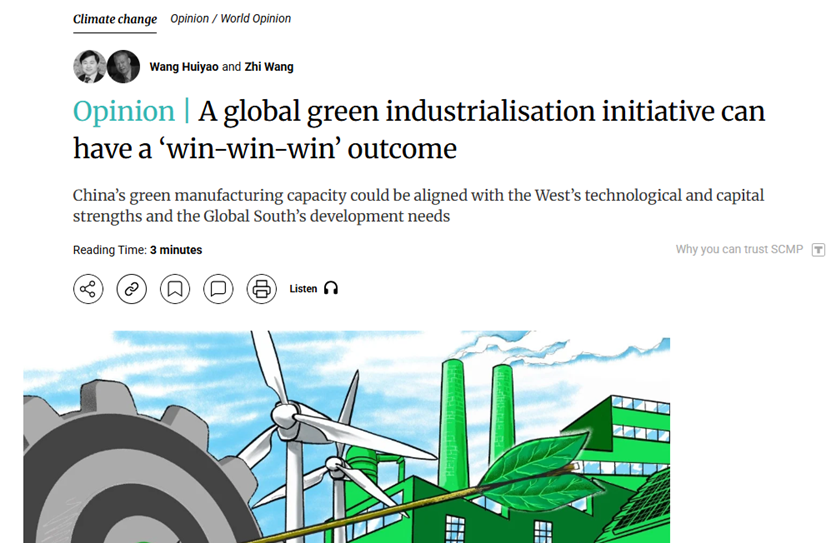
Group 1 - The Ministry of Industry and Information Technology of China has initiated a collection of typical case studies, covering 14 categories including artificial intelligence and digital transformation [1] - Three categories, including industrial green low-carbon typical cases, will be jointly organized by multiple departments, with specific application requirements to be clarified in future joint announcements [1] - The global green industrialization initiative aims to address the challenges between climate crisis, geopolitical issues, and industrial development needs, combining China's green manufacturing with Western technology and capital advantages [1] Group 2 - The initiative is driven by the development needs of the Global South, promoting capital flow through technology transfer, joint ventures (such as electric vehicles), and green financial mechanisms like RMB loans and localized financing [1] - The goals include not only promoting green industry exports but also facilitating knowledge transfer and capacity building to support the development, emission reduction, and job creation in Global South countries [1]
防范化解金融风险 推进中小金融机构转型发展
Xin Lang Cai Jing· 2025-11-24 23:02
Core Insights - The article emphasizes the importance of risk prevention and the transformation of small and medium-sized financial institutions in China, highlighting the need for a balanced approach to financial stability and institutional development [2][30]. Group 1: Progress and Achievements in Risk Management - The risk monitoring and early warning system for small and medium-sized financial institutions has been continuously improved, enabling timely identification and management of risks [4][3]. - The risk disposal mechanism has matured, with differentiated measures implemented based on the risk levels of institutions, ensuring the protection of depositors and creditors [5][6]. - The capital replenishment mechanism has been optimized, with local government special bonds becoming a significant source of capital for small banks, totaling 2,183 million yuan issued in 2023 [7]. Group 2: Challenges Faced by Small and Medium-Sized Financial Institutions - The operating environment remains challenging, with pressures from interest rate marketization, increased competition, and rising credit risks affecting asset quality [10][11]. - Capital constraints are a significant issue, as smaller institutions face difficulties in capital replenishment compared to larger banks [11]. - Risk management capabilities need enhancement, with many institutions lacking comprehensive risk management systems and facing challenges in asset disposal [12][13]. Group 3: Policy Support for Reform and Transformation - A differentiated regulatory framework is essential for the healthy development of small and medium-sized financial institutions, considering their unique characteristics [17]. - Expanding capital replenishment channels through innovative financial instruments is crucial to address capital constraints [18]. - Mergers and acquisitions, along with market-based exits, are necessary to manage high-risk institutions effectively [19][20]. Group 4: Pathways for Transformation - Institutions must clarify their differentiated development positioning, focusing on specialized services for small and micro enterprises and local economic integration [24]. - Optimizing business structures and risk management is vital for sustainable growth, requiring a comprehensive risk management system [25]. - Continuous digital transformation is necessary to enhance competitiveness and service efficiency, with a focus on developing a robust digital service framework [26][27]. Group 5: Enhancing Talent and Service Capabilities - Building a skilled workforce is critical, necessitating innovative talent acquisition and training mechanisms to attract and retain professionals [28]. - Improving service capabilities and customer experience is essential, with a focus on personalized financial services and efficient service delivery [29].
推动城市治理智慧化精细化(专题深思)
Ren Min Ri Bao· 2025-11-24 22:31
Core Insights - The article emphasizes the importance of integrating smart and refined governance in urban management to enhance efficiency and public service quality [1][2][3] Group 1: Smart Governance - Smart governance leverages technologies such as big data, cloud computing, and the Internet of Things to improve urban operational efficiency and public service quality [1][2] - The complexity of modern cities necessitates smart governance to address high-frequency, unexpected, and cross-domain challenges [2] - Smart governance provides multi-source data, algorithm analysis, and dynamic feedback mechanisms, enabling precise judgment and rapid response [2][3] Group 2: Refined Governance - Refined governance focuses on scientific management and human-centered care, ensuring that governance processes are detailed and equitable [1][2] - The goal of refined governance is to enhance the sense of gain, happiness, and security among the populace [1][4] - By breaking down governance into smaller units, refined governance aims to create a warmer and more precise approach to urban management [2][4] Group 3: Digital Transformation - Digital transformation is essential for enhancing systemic governance capabilities, breaking down departmental barriers, and creating an efficient urban governance system [3] - The establishment of a unified digital platform is crucial for data integration and effective collaboration in urban governance [3] - Examples include the integration of over 4.5 billion data points in cities like Foshan to improve responsiveness to public needs [3] Group 4: People-Centric Approach - The governance model must prioritize the needs and expectations of the people, ensuring that urban development benefits all citizens [4] - Data-driven approaches are being utilized to identify public service needs and enhance community governance [4] - Initiatives like Shanghai's platform for collecting public suggestions aim to incorporate citizen input into urban planning [4] Group 5: Collaborative Governance - Collaborative governance is essential for effective urban management, requiring participation from various stakeholders [5][6] - The establishment of mechanisms for public participation in decision-making processes enhances governance effectiveness [6] - Examples include community consultation initiatives in Beijing that integrate citizen feedback into governance strategies [6]
协同创新赋能产业链(走企业,看高质量发展)
Ren Min Ri Bao· 2025-11-24 22:31
Group 1: Financial Performance - Midea Group reported total revenue of 364.72 billion yuan, a year-on-year increase of 13.8% [1] - The net profit attributable to shareholders reached 37.88 billion yuan, growing by 19.5% year-on-year [1] - Research and development investment exceeded 12.9 billion yuan, with a year-on-year growth rate of approximately 14% [1] Group 2: Supply Chain and Ecosystem - Midea Group has over 5,000 upstream suppliers, with more than 1,000 core suppliers and 100,000 downstream distribution service enterprises [1] - The company emphasizes the importance of the development of ecosystem enterprises alongside its own innovation and market share [1] Group 3: Technological Advancements - Zhejiang Sanhua Intelligent Control Co., Ltd. is advancing new valve and pipe technologies, replacing copper with stainless steel to enhance energy efficiency and reduce thermal losses [2] - Midea and Sanhua have collaborated on product integration projects, leading to the mass production of new components for commercial central air conditioning systems [2][3] Group 4: Digital Transformation - Guangdong Zhongshan Dayang Motor Co., Ltd. has implemented digital transformation across its production lines, improving order completion rates by 25% and equipment efficiency by 10% [5] - The collaboration with Midea has provided comprehensive digital solutions, enhancing management and business coordination capabilities [4][5] Group 5: International Expansion - Wuhan Honghai Technology Co., Ltd. has established a factory in Thailand, achieving a monthly output value of up to 100 million yuan [6] - The company has grown from an initial sales figure of 5 million yuan to 1.2 billion yuan in 2024, thanks to Midea's support in internationalization efforts [6][7]

深化数字金融实践 助力数字重庆建设
Jing Ji Ri Bao· 2025-11-24 22:26
做好数字金融大文章,加快金融业数字化转型,高质量服务数字经济和促进数实融合,对于建设金融强 国、巩固和拓展我国数字经济优势具有重要意义。党的二十届四中全会审议通过的"十五五"规划建议明 确提出,加快建设金融强国的战略目标与大力发展数字金融的部署要求,为银行业数字化转型注入强劲 动能。 近年来,中国农业银行重庆市分行(以下简称"农行重庆市分行")始终坚守金融工作的政治性、人民 性,立足区域优势,持续深入推进数字化转型,打造智慧金融生态,以数字金融支持实体经济、助力乡 村全面振兴、赋能民生改善与美好生活。 重塑经营模式 赋能实体经济高质量发展 企业经营资金有缺口怎么办?近日,重庆市某汽车零部件生产加工小微企业在农业银行重庆市分行的支 持下,仅用2天就通过经营数据在农行系统上快速获得了一笔161万元的"渝惠e贷"。 线下开展实地贷款调查,现场通过移动营销PAD为企业发起线上办贷流程,调取企业的内外部数据信 息,由系统自动计算企业授信额度,线上完成审批和发放全部流程。这笔贷款的办理过程,是农行重庆 市分行深入推进数字经营战略,以线上线下协同服务实体经济高质量发展的生动体现。 近年来,农行重庆市分行紧扣高质量发展主题, ...
美的集团推动数智化转型—— 协同创新赋能产业链(走企业,看高质量发展)
Ren Min Ri Bao· 2025-11-24 22:06
Group 1: Company Performance - Midea Group reported total revenue of 364.72 billion yuan, a year-on-year increase of 13.8% [1] - The net profit attributable to shareholders reached 37.88 billion yuan, up 19.5% year-on-year [1] - R&D investment exceeded 12.9 billion yuan, with a growth rate of approximately 14% [1] - Midea operates in over 200 countries and regions, with a total of 63 global manufacturing bases [1] Group 2: Supply Chain Collaboration - Midea has over 5,000 upstream suppliers, including more than 1,000 core suppliers, and 100,000 downstream distribution service enterprises [1] - The collaboration with Sanhua Intelligent Controls has led to the development of new technologies, such as stainless steel valves, which are more energy-efficient and environmentally friendly [2] - The partnership has resulted in the successful mass production of integrated components for Midea's commercial central air conditioning systems [2] Group 3: Digital Transformation - Dalian Electric has implemented a digital transformation project with Midea, enhancing production line management across 11 dimensions [4] - The first phase of the project involved building a digital middle platform, improving management efficiency and business collaboration [4] - Dalian Electric has seen a 25% increase in order completion rates and a 10% improvement in equipment operational efficiency [5] Group 4: International Expansion - Honghai Technology has established a factory in Thailand, benefiting from Midea's global experience and support since their partnership began in 2005 [6] - The company's sales have grown from 5 million yuan to 1.2 billion yuan in 2024, demonstrating significant growth [6] - Midea provided comprehensive assistance in setting up the factory, including technical support and operational guidance [7]