关税政策

Search documents
再挥关税大棒 美政府将对多类进口产品实施高额关税
Zhong Guo Xin Wen Wang· 2025-09-26 00:32
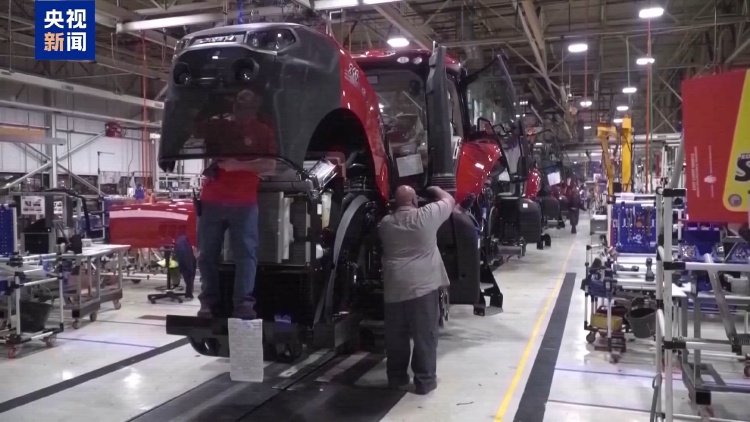
Group 1 - The core point of the article is the announcement by President Trump regarding the implementation of high tariffs on various imported products starting October 1 [1] - The measures include a 50% tariff on kitchen cabinets, bathroom sinks, and related products [1] - A 30% tariff will be imposed on upholstered furniture [1] - A 100% tariff will be applied to patented or branded pharmaceuticals [1] - Additionally, a 25% tariff will be added to all imported heavy trucks [1]
25%,30%,50%,100%!特朗普将对这些产品实施新一轮高额关税
Mei Ri Jing Ji Xin Wen· 2025-09-26 00:27
Group 1 - The U.S. will impose new high tariffs on various imported products starting October 1, including 50% on kitchen cabinets and bathroom sinks, 30% on imported furniture, and 100% on patented and branded drugs [1] - Heavy trucks will also face a 25% tariff, and a previously agreed 15% tariff on EU imported cars and products will be implemented [1] - Goldman Sachs' chief economist noted dissatisfaction within the EU regarding the new trade agreement, suggesting that U.S. consumers may ultimately bear the burden of increased prices due to tariffs [1] Group 2 - Morgan Stanley's chief economist indicated that U.S. economic growth is slowing, attributing this to tariff policies, with expectations of weak growth in Q4 2023 and Q1 2024 [2] - The forecast for U.S. economic growth in 2026 is only 1.25%, significantly lower than the projected 2.8% for 2024 [2] - There are signs of weakness in the U.S. labor market, with new job additions expected to be only half of initial projections for the period from March 2024 to March 2025 [2] Group 3 - Concerns were raised by major bank CEOs regarding the impact of tariffs on the U.S. economy, predicting inflation, slowed industrial growth, and decreased consumer spending [4] - The International Monetary Fund (IMF) highlighted pressures on the U.S. economy, including slowing domestic demand and job growth, with a discussion planned for November regarding these issues [5] - The IMF noted that the downward adjustment of U.S. employment data is greater than historical averages, indicating potential inflation risks primarily driven by tariffs [5]

特朗普宣布将对进口建材、家具及药品实施高额关税,美联储降息,大消息!
Sou Hu Cai Jing· 2025-09-26 00:12
Group 1 - The U.S. will impose new high tariffs on various imported products starting October 1, including a 25% tariff on all imported heavy trucks [1] - The U.S. stock market experienced a collective decline, with the Dow Jones down 0.38%, Nasdaq down 0.5%, and S&P 500 down 0.5%, while major tech stocks mostly fell [1] - The Nasdaq Golden Dragon Index, which tracks Chinese stocks, rose by 0.42%, with notable gains in companies like Kingsoft Cloud and NIO [1] Group 2 - Federal Reserve officials expressed mixed views on interest rate adjustments, with some suggesting further rate cuts may be necessary [2] - The probability of a 25 basis point rate cut by the Federal Reserve in October is 85.5%, with varying probabilities for cumulative cuts by December [2] - Silver prices experienced volatility, with a significant rise followed by a notable decline after the announcement of potential rate cuts [2] Group 3 - Tariffs of 50% will be imposed on kitchen cabinets, bathroom sinks, and related building materials [3] - A 30% tariff will be applied to imported furniture [3] - A 100% tariff will be levied on patented and branded pharmaceuticals [3]
特朗普称将对品牌和专利药品征收100%关税,美股期货小幅震荡
Hua Er Jie Jian Wen· 2025-09-25 23:45
Core Viewpoint - Starting from October 1, 2025, U.S. President Trump will impose a 100% tariff on any brand or patented pharmaceutical products unless companies are establishing their manufacturing facilities in the U.S. [1] Group 1 - The announcement indicates a significant shift in U.S. trade policy towards the pharmaceutical industry, aiming to incentivize domestic manufacturing [1] - U.S. stock futures experienced slight fluctuations following the announcement, while the U.S. dollar index saw a minor increase [1]
Trump announces 100% tariff on imports of branded or patented pharmaceuticals from October 1
Reuters· 2025-09-25 23:39
Core Viewpoint - The United States will implement a 100% tariff on imports of branded or patented pharmaceutical products starting October 1, unless the pharmaceutical company is establishing a manufacturing facility in the U.S. [1] Group 1 - The tariff is aimed at encouraging pharmaceutical companies to invest in U.S. manufacturing [1] - This policy reflects the administration's broader strategy to promote domestic production and reduce reliance on foreign imports [1] - The announcement was made by President Donald Trump, indicating a significant shift in trade policy towards the pharmaceutical industry [1]
特朗普赚翻了,关税每年赚3500亿美元,美联储降息后,分歧加大!
Sou Hu Cai Jing· 2025-09-25 20:48
Group 1 - The core argument of the article highlights that the $350 billion annual tariff revenue under Trump's administration is essentially a transfer from American consumers to the government, rather than a true economic gain [1] - The U.S. Treasury reported that tariff revenue reached $165 billion by the end of August, a significant increase of $95 billion compared to the previous year, indicating that this burden falls primarily on American consumers and businesses [2] - The increase in tariffs has led to an average annual expenditure increase of over $1,500 for American households, disproportionately affecting low-income groups who spend a larger share of their income on consumer goods [2] Group 2 - The new H-1B visa regulation, which raises fees to $100,000, is expected to generate approximately $8.5 billion annually, but it poses a significant financial burden on tech companies, potentially leading to job cuts and a shift of positions overseas [3] - The policy is criticized for potentially stifling innovation in the tech sector, as many companies rely on H-1B visa holders to fill skill gaps, and the increased costs may deter hiring [3] - The majority of H-1B visas are issued to Indian nationals, complicating the situation amid ongoing trade tensions between the U.S. and India [3] Group 3 - The Federal Reserve's recent interest rate cut of 25 basis points to a range of 4.00%-4.25% reflects a split in economic perspectives, with some members concerned about inflation while others focus on employment [4] - The conflicting views highlight the challenges posed by tariffs, which have contributed to rising prices (with the August CPI at 2.9%) while the job market shows signs of cooling [4] - The ongoing debate within the Fed underscores the broader economic uncertainty created by tariff policies and their impact on inflation and employment [4] Group 4 - The short-term revenue gains from tariffs and visa fees come with long-term consequences, as historical precedents suggest that such protectionist measures can lead to economic downturns and reduced GDP growth [5] - Companies are shifting supply chains to countries like Vietnam and Mexico to avoid tariffs, while the increased H-1B visa costs may accelerate talent migration back to countries like China [5] - The political pressure on the Federal Reserve to lower interest rates further complicates the economic landscape, leading to increased uncertainty for investors [5]
欧洲消费者在关税不确定性中背弃美国产品
Shang Wu Bu Wang Zhan· 2025-09-25 17:47
彭博社9月22日报道,欧洲央行的一份调查显示,因为美国总统特朗普的关税政策 使经济前景变得更加不确定性,欧元区消费者已减少支出并转向非美国产品。贸易争 端正显著影响该地区家庭的实际消费行为与未来经济预期。在调查问卷参与者中,约 25%的人表示正在转向非美国产品,16%的人表示已减少消费支出。欧洲央行报告指 出,关税政策通过改变通胀与增长预期,引发支出行为变化,这种不确定性既影响个 体家庭决策,也可能波及整体经济发展轨迹。 (原标题:欧洲消费者在关税不确定性中背弃美国产品) ...
扩大关税调查范围 美国再挥“232大棒”
Bei Jing Shang Bao· 2025-09-25 15:07
Group 1 - The Trump administration has initiated Section 232 investigations into imported robots, industrial machinery, and medical devices, aiming to encourage domestic manufacturing by increasing import costs [1][2][4] - The investigations are based on the Trade Expansion Act of 1962, which allows the U.S. Department of Commerce to investigate imports that threaten national security, with a deadline of 270 days for policy recommendations [2][3] - The new investigations expand the range of industries potentially facing tariffs, including robots, CNC machining centers, and personal protective equipment (PPE) [2][3] Group 2 - The Trump administration's tariffs on steel, aluminum, and copper have generated significant revenue, with July 2023 tariff income reaching $28.44 billion, a 273% increase year-over-year [4] - Despite the increase in tariff revenue, the core objectives of the tariffs are to reduce the trade deficit and promote the return of manufacturing jobs to the U.S. [4][5] - The manufacturing sector has faced challenges, with job growth in manufacturing being negative since April 2023, indicating difficulties in bringing manufacturing back to the U.S. [5][6] Group 3 - Legal challenges to the Trump administration's tariff measures have emerged, with a ruling stating that the use of the International Emergency Economic Powers Act to impose tariffs was unlawful [6][7] - The ruling may impact the administration's ability to implement tariffs under this act, while Section 232 tariffs could be more enduring despite a longer implementation process [7][8] - The National Economic Council has suggested that if the Supreme Court does not support the Trump administration, other legal bases for imposing tariffs may still be pursued [7]
【世界说】国际组织研究:关税已成美国通胀主要“推手”及美企首要担忧 多方承压
Sou Hu Cai Jing· 2025-09-25 12:51
Core Viewpoint - The tariff policy of the Trump administration is identified as a key factor driving up prices in the U.S. and may hinder economic growth for years to come [1][2]. Group 1: Impact on Inflation - Approximately one-third of price increases this year for U.S. companies are attributed to tariffs, with inflation potentially dropping to the Federal Reserve's target of 2% without these tariffs [2][3]. - By 2026, tariffs are expected to account for about 25% of the factors driving price increases for businesses [3]. Group 2: Business Costs and Consumer Impact - U.S. companies anticipate an average cost increase of 4.4% this year, with 1.7 percentage points driven by tariffs. Consequently, prices are expected to rise by 3.9%, with 1.3 percentage points attributed to tariffs [3]. - Tariffs and trade policies have become the top concern for CFOs for three consecutive quarters, with those identifying tariffs as a primary risk being notably more pessimistic about economic and business prospects [3]. Group 3: Real-World Price Increases - Coffee prices surged by 4% between July and August due to a 50% tariff on Brazil, marking the largest monthly increase in 14 years. Similarly, a 17% tariff on Mexican tomatoes resulted in a 4% price increase in August [4]. Group 4: Long-term Economic Consequences - The OECD predicts a 1% decline in U.S. economic growth in 2024, with potential losses amounting to trillions of dollars in goods and services by 2035 if the slowdown continues [5]. - As companies exhaust their ability to buffer against tariff impacts, the U.S. may face a stagnation risk characterized by slowing growth, a weak labor market, and rising inflation, with average inflation expected to reach 3% by 2026 [7]. - Evidence of economic impact is already visible, with 60% of Texas retailers and 70% of manufacturers reporting negative effects from tariffs. John Deere has incurred losses of approximately $300 million due to steel and aluminum tariffs, with further losses expected by year-end [7].

法媒:受美国关税政策影响 法国化妆品行业正“遭受重创”
Sou Hu Cai Jing· 2025-09-25 10:27
Core Insights - The French cosmetics industry is significantly impacted by the U.S. tariff policy, facing multiple pressures including export obstacles, rising costs, and supply chain restructuring [1][3]. Group 1: Industry Overview - Approximately 85% of the French cosmetics industry consists of small and medium-sized enterprises, which are particularly vulnerable to the high U.S. tariffs [3]. - In 2024, the total export value of French cosmetics is expected to approach €3 billion, with the U.S. being the largest overseas market [3]. Group 2: Tariff Impact - Each cosmetic product exported to the U.S. incurs a 15% tariff, with additional tariffs of up to 50% on certain packaging products like aerosol spray cans [3]. - The high tariffs have forced the French cosmetics industry to reassess and adjust its production bases, logistics, and supply chains [3]. Group 3: Employment and Economic Consequences - The French cosmetics sector employs approximately 55,000 people, with potential threats to 1,500 direct jobs and 3,500 indirect jobs due to the impact of U.S. trade agreements [7]. - A projected loss of €300 million could result from these trade challenges [7]. - French customs data indicates a 12% decline in cosmetics exports to the U.S. in the first half of 2025 [7]. Group 4: Company Challenges - The proportion of companies entering judicial reorganization has notably increased since the beginning of the year, with many facing payment halts or even closures [5]. - More than half of the cosmetics produced in France rely on exports, and the industry is currently experiencing its worst situation [5].