全球化

Search documents
奇瑞汽车(09973):深耕出海,多品牌协同拓展增长边界
Soochow Securities· 2026-02-05 09:38
Investment Rating - The report assigns a "Buy" rating for Chery Automobile (09973.HK) for the first time [1]. Core Insights - Chery Automobile is transitioning towards globalization and intelligence, with a focus on multiple brands to meet diverse market demands. The company has established a clear equity structure involving state-owned assets, strategic investors, and management, which enhances operational efficiency and strategic alignment [8][13]. - The financial outlook is positive, with significant revenue growth driven by the expansion of new energy vehicles and increasing overseas sales. The report forecasts a substantial increase in net profit from 11.95 billion yuan in 2023 to 25.38 billion yuan by 2027 [1][17]. - Chery's brand strategy includes five distinct brands: Chery, Jetour, Exeed, iCAR, and Zhijie, each targeting different market segments and customer needs [38][39]. Summary by Sections 1. Basic Information - Chery Automobile was founded in 1997 and has evolved from a local manufacturer to a global technology-driven automotive enterprise. The company has a clear equity structure that balances state ownership, strategic investments, and management control [13][14]. - The company has seen rapid revenue growth from 2022 to 2024, primarily due to the increasing contribution of new energy vehicles and sustained overseas revenue growth [17][18]. 2. Existing Brand System - Chery's main brand targets the mainstream market with a focus on high cost-performance and diverse powertrain options. Jetour emphasizes family travel and off-road capabilities, while Exeed targets high-end users. iCAR is aimed at younger consumers with a focus on personalization, and Zhijie leverages collaboration with Huawei for smart experiences [38][39]. 3. Export Strategy - Chery has a well-established export strategy that began in developing markets and is now expanding into key markets like Russia and Europe. The company has adapted its product offerings and distribution channels to suit local market conditions [55][60]. - The Tiggo series is central to Chery's product strategy, with a focus on multiple brands and energy types to cater to different regional markets [65]. 4. Technological Foundation - Chery is enhancing its platform-based manufacturing capabilities and pursuing a dual-track strategy of self-research and collaboration with leading technology partners. The company aims to consolidate its R&D efforts to improve efficiency and innovation [8][34]. 5. Profit Forecast and Investment Advice - The report projects Chery's net profit to reach 18.41 billion yuan in 2025, with a corresponding P/E ratio indicating a favorable valuation compared to peers. The strong momentum in new energy development and solid export positioning justify a higher valuation for the company [1][17].
股东减持+存货激增+流动性承压:绿联赴港上市的三重雷区
Xin Lang Cai Jing· 2026-02-04 05:09
Core Viewpoint - The consumer electronics accessories industry is highly competitive, with globalization and capital platform upgrades being key paths for leading companies to overcome growth bottlenecks. Ugreen Technology, as an industry benchmark, is set to launch an "A+H" dual listing strategy to enhance R&D and overseas expansion, but faces significant risks including shareholder reductions, inventory surges, and liquidity pressures [1] Group 1: Macro Environment and Overseas Layout Risks - Ugreen Technology's operations are heavily reliant on overseas markets, with overseas revenue accounting for 59.6% in the first three quarters of 2025, primarily from Europe and the US [4] - The global consumer electronics demand is experiencing fluctuations, with a notable decline in sales revenue in Germany by 2.2% in 2023, reflecting a broader trend of weakened demand in Europe and the US [4] - The company's gross profit margin decreased from 36.9% to 36.5% from 2023 to 2025, indicating potential challenges if overseas demand continues to decline [4] Group 2: Industry Competition and Technological Iteration Risks - The consumer electronics industry is characterized by rapid technological iteration and severe homogenization, posing challenges for Ugreen Technology despite its leading position in certain product categories [6] - The accelerated pace of technological updates requires high responsiveness in R&D, with the risk of user attrition if the company fails to adapt [6] - Price competition and market saturation are compressing profit margins, with the company's gross margin expected to decline in 2024 due to increased competition [7] Group 3: Operational Governance and Compliance Risks - Internal governance and compliance management are critical for the success of the dual listing, with higher standards for information disclosure and corporate governance [8] - The concentration of shareholding raises governance concerns, as the controlling shareholder holds 45.27% of the shares, potentially leading to a lack of decision-making diversity [8] Group 4: Financial Health and Performance Growth Risks - Ugreen Technology's revenue grew from 4.8 billion to 6.2 billion yuan from 2023 to 2024, but the quality of this growth is questioned due to rising inventory and liquidity risks [9] - The company's cash flow from operating activities dropped by 89.2% in the first three quarters of 2025, indicating increasing liquidity pressure [10] - Inventory surged by 82.4% from the end of 2023 to September 2025, raising concerns about potential depreciation risks [10] Group 5: IPO Execution and Market Pricing Risks - The IPO process for the Hong Kong listing involves multiple challenges, including regulatory approvals and pricing risks, which could impact the success of the listing [11] - The tightening liquidity in the Hong Kong IPO market may lead to lower investor enthusiasm, increasing the risk of delayed or failed listings [11] - The company faces a time-sensitive window for its IPO, with potential costs accumulating if the listing is not completed in a timely manner [11]

主导权交接之后:2025汽车产业的核心命题与答案
Xin Lang Cai Jing· 2026-02-04 01:13
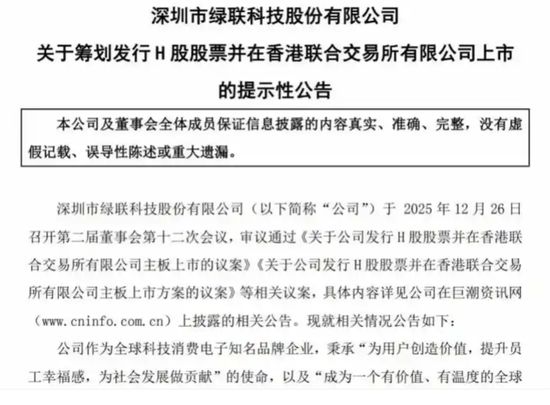
Group 1 - The core point of the article is that the Chinese automotive industry underwent significant transformation in 2025, marked by the integration of electrification and intelligence, leading to a restructured global competitive landscape [2][3][40] - The penetration rate of new energy vehicles (NEVs) in China surpassed 50% for the first time, indicating a shift from optional to mainstream status, driven by policy support, corporate efforts, and consumer acceptance [4][41] - The automotive export volume reached 7.098 million units in 2025, a year-on-year increase of 21.1%, reflecting a structural change in the export market towards higher-end models and a focus on established markets like Europe [7][44] Group 2 - The issuance of L3 autonomous driving licenses marked a transition from technical demonstrations to commercial availability, indicating that L3 technology is now accessible to consumers [10][49] - The establishment of the new Changan Automobile Group represents a significant milestone in the Chinese automotive industry's evolution, aimed at enhancing global competitiveness and driving high-quality development [12][52] - The trend of internal restructuring among automotive companies signifies a shift from expansion to efficiency, focusing on resource optimization and reducing redundancy in operations [14][55] Group 3 - The rapid growth of the six-seat SUV market in 2025, with monthly sales increasing from 25,000 to nearly 100,000 units, reflects changing family travel needs in China [22][68] - The decline of the range-extended electric vehicle (EREV) market, with a cumulative sales growth of only 10.2% compared to 34.2% for battery electric vehicles (BEVs), indicates a clear shift towards pure electric vehicles as the dominant technology [30][75] - The introduction of new battery safety standards emphasizes the importance of safety in the development of new energy vehicles, marking a maturation of the industry [21][65][66]
黄金还能涨多久,真是牛市吗,背后藏着全球大变局
Sou Hu Cai Jing· 2026-02-03 15:42
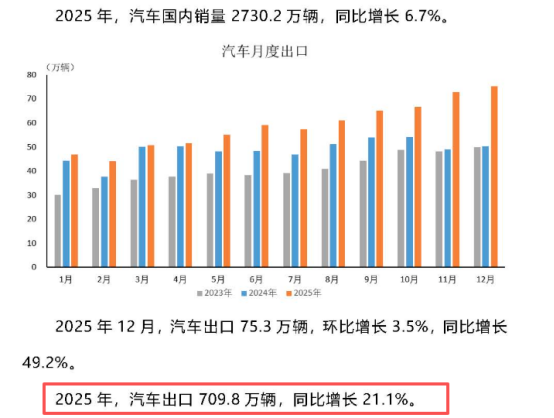
Core Viewpoint - The article discusses the potential for a long-term bull market in gold from 2025 to 2040, driven by structural changes in globalization, the erosion of dollar hegemony, and a renewed trust in physical assets like gold and silver [5][9][10] Group 1: Economic Context - The article highlights that 2025 will not just be about economic data but a public test of global order, with frozen foreign reserves and weaponized dollars leading to intertwined financial sanctions and military actions [3] - Since 2010, various crises such as the European debt crisis, quantitative easing, and geopolitical tensions have created fractures in the global system, indicating a shift from globalization to a "winter" phase [3][5] Group 2: Gold and Silver Market Dynamics - Gold is described as the ultimate measure of value, with its price expected to rise as global order deteriorates, reflecting a response to uncertainty rather than just inflation [5] - The article predicts that gold will experience a long-term bull market, supported by three main factors: the structural breakdown of the globalization system, the erosion of dollar dominance due to "monetary sanctions," and a renewed trust in physical assets [5][9] - Silver is also expected to see significant price increases due to its dual role as both an industrial and precious metal, which could amplify its price movements during market stress [5] Group 3: Investment Strategy and Policy Implications - Investment strategies should shift from short-term trading to structural allocation, focusing on asset stability, liquidity flexibility, and diversification of hedging tools in an era of uncertainty [9] - There is a call for stronger institutional responses to global credit restructuring, emphasizing the need for a balance between financial sovereignty, trade security, and resource reserves [9][10] Group 4: Public Awareness and Education - The article stresses the importance of public financial education to help individuals make informed decisions during market volatility, as many may panic and incur losses without proper knowledge [10] - It concludes that while the bull market in gold may be lengthy, there will always be opportunities for market reconstruction, urging stakeholders to understand trends and manage risks effectively [10]
Ashland(ASH) - 2026 Q1 - Earnings Call Transcript
2026-02-03 15:02
Financial Performance and Key Metrics - Sales for the quarter were $386 million, down 5% year-over-year, with the Avoca divestiture accounting for approximately $10 million of the decline [18] - Adjusted EBITDA was $58 million, down 5% year-over-year, reflecting lower volumes and modest pricing pressure, with adjusted EBITDA margins holding steady at 15% [19][21] - Adjusted EPS, excluding intangible amortization, was $0.26, down 7% from the prior year [22] - The company ended the quarter with total liquidity of approximately $900 million and net debt of $1.1 billion, maintaining a net leverage of 2.7x [23] Business Segment Performance - Life Sciences sales were $139 million, up 4% year-over-year, driven by resilient pharma demand and strong performance in injectables and tablet coatings [24][25] - Personal Care sales were $123 million, down 8% year-over-year, primarily due to the Avoca divestiture, with organic sales declining 1% [32] - Specialty Additives sales were $102 million, down 11% year-over-year, with coatings and construction driving the decline, particularly in China [38] - Intermediates sales were $31 million, down 6% year-over-year, with captive BDO sales declining due to lower volumes and pricing [30] Market Conditions - Demand in coatings and construction remained soft, particularly in China and select export markets, while personal care showed stable demand overall [8][10] - The company noted that the coatings market is expected to recover gradually, with mixed demand conditions anticipated [49][90] Company Strategy and Industry Competition - The company is focused on executing its strategic priorities, including innovation and global expansion, to drive growth and improve margins [15][46] - Cost actions and operational efficiencies are expected to support margin durability and position the company for stronger leverage as demand recovers [15][44] Management Commentary on Operating Environment and Future Outlook - Management expressed cautious optimism regarding demand recovery in the second quarter, with expectations for improved order volumes [68][70] - The company anticipates that operational challenges, including delays in the Calvert City unit startup, will impact performance but remain manageable [51][52] Other Important Information - The company is on track to achieve total cost savings of approximately $30 million for fiscal 2026, with ongoing productivity improvements expected [42][44] - Innovation remains a key driver of long-term growth, with several new product launches and advancements in technology platforms [54][61] Q&A Session Summary Question: Impact of customer outages on personal care demand - Management confirmed that customer outages were temporary and recoverable, with expectations to regain lost volumes in the second quarter [72][73] Question: Outlook for personal care volumes - Management indicated that with the Avoca divestiture now lapped, positive volume growth is expected as the year progresses [77] Question: China coatings demand outlook - Management noted that while the coatings market in China has faced challenges, there are signs of stabilization, and the company is well-positioned to capitalize on future opportunities [90][92] Question: Risks around global trade issues - Management highlighted Europe as a key area of focus regarding potential trade pressures, with ongoing discussions but no clear decisions yet [97]

Ashland(ASH) - 2026 Q1 - Earnings Call Transcript
2026-02-03 15:02
Financial Data and Key Metrics Changes - Sales for the quarter were $386 million, down 5% year-over-year, with the Avoca divestiture accounting for approximately $10 million or about 2% of the decline [18] - Adjusted EBITDA was $58 million, down 5% year-over-year, including a $1 million impact from the Avoca divestiture [19] - Adjusted EPS, excluding intangible amortization, was $0.26, down 7% from the prior year [22] - The company ended the quarter with total liquidity of approximately $900 million and net debt of $1.1 billion, with a net leverage of 2.7x [23] Business Line Data and Key Metrics Changes - Life Sciences sales were $139 million, up 4% from the prior year, driven by resilient pharma demand and strong performance in injectables and tablet coatings [24] - Personal Care sales were $123 million, down 8% year-over-year, primarily due to the Evoca divestiture, with organic sales declining 1% [32] - Specialty Additives sales were $102 million, down 11% year-over-year, with coatings and construction driving the decline [38] - Intermediates sales were $31 million, down 6% year-over-year, with captive BDO sales declining due to lower volumes and transfer prices [30] Market Data and Key Metrics Changes - Coatings demand was particularly weak in China and select export markets, while construction softness reflected broader market conditions [10] - The company experienced stable demand in consumer-oriented categories at the start of the second quarter [50] - Foreign exchange contributed a favorable $9 million or 2% to sales versus the prior year [19] Company Strategy and Development Direction - The company is focused on executing its strategic priorities, including innovation and globalized initiatives, to drive growth and margin improvement [15][46] - The total cost savings target of approximately $30 million for fiscal 2026 remains on track, with ongoing network optimization and productivity improvements [42][44] - The company aims to deliver structural cost improvements and enhance systems and processes to strengthen planning and performance [64] Management's Comments on Operating Environment and Future Outlook - Management noted ongoing demand softness in coatings and construction but expressed optimism about improving momentum in Life Sciences and Personal Care [8][50] - The company anticipates a gradual recovery in coatings demand, particularly in China, but expects muted demand to persist for a while [90] - Repairs to the Calvert City unit are taking longer than anticipated, impacting the second quarter outlook [51] Other Important Information - The company is advancing several innovative technology platforms that are expected to drive long-term growth across multiple end markets [54][61] - The company is focused on maintaining uninterrupted customer supply while managing production and inventory with discipline [54] Q&A Session Summary Question: Can you talk about the customer outage impacting demand in Personal Care? - Management confirmed that the outages were on the customer side and not related to supply issues from the company. Most outages have been resolved, and recovery is expected in Q2 [72][73] Question: Should we see volumes start to turn the corner in Personal Care? - Management indicated that with the Evoca divestiture now lapped, they expect to see positive volume growth as the year progresses [77] Question: What is the outlook for coatings demand in China? - Management noted that while the market has been challenging, they expect to see easing in the second half of the year, with efforts focused on commercial discipline and innovation [89][90] Question: Where are the most significant risks around global trade issues? - Management highlighted Europe as a key area of focus due to ongoing discussions about cost competitiveness and plant consolidations [97]
Ashland(ASH) - 2026 Q1 - Earnings Call Transcript
2026-02-03 15:00
Financial Data and Key Metrics Changes - Sales for the quarter were $386 million, down 5% year-over-year, with the Avoca divestiture accounting for approximately $10 million or about 2% of the decline [10] - Adjusted EBITDA was $58 million, down 5% year-over-year, including a $1 million impact from the Avoca divestiture [11] - Adjusted EPS, excluding intangible amortization, was $0.26, down 7% from the prior year [12] Business Line Data and Key Metrics Changes - Life Sciences sales were $139 million, up 4% from the prior year, driven by resilient pharma demand and strength in high-value cellulosic excipients [14] - Personal Care sales were $123 million, down 8% year-over-year, primarily due to the Evoca divestiture, with organic sales declining 1% [18] - Specialty Additives sales were $102 million, down 11% year-over-year, with coatings and construction driving the decline [23] Market Data and Key Metrics Changes - Coatings demand was particularly weak in China and select export markets, while construction softness reflected broader market conditions [5] - Life Sciences continued to grow, supported by steady demand and ongoing innovation momentum [10] - Specialty Additives faced muted demand, particularly in coatings and construction [5] Company Strategy and Development Direction - The company is focused on executing its strategic priorities, including innovation and globalized initiatives, to drive growth and improve margins [4] - The total cost savings target of approximately $30 million for fiscal 2026 remains on track, with ongoing efforts in network optimization and productivity improvements [25] - The company aims to deliver structural cost improvements and enhance systems and processes to strengthen performance [26] Management's Comments on Operating Environment and Future Outlook - Management noted ongoing demand softness in coatings and construction but expressed optimism about improving momentum in Life Sciences and Personal Care [4] - The outlook for fiscal 2026 has been narrowed to an adjusted EBITDA range of $400 million to $420 million, reflecting a prudent view of market conditions [28] - Temporary impacts from operational challenges, including delays in the Calvert City unit startup and weather-related disruptions, are expected to affect the second quarter [30] Other Important Information - The company reported strong cash generation with $125 million from operating activities and $26 million of ongoing free cash flow [12] - Total liquidity at the end of the quarter was approximately $900 million, with net debt at $1.1 billion and net leverage at 2.7x [12] Q&A Session Summary Question: Can you talk about the customer outage impacting demand in Personal Care? - Management confirmed that the outages were on the customer side and not related to supply issues from the company. Most outages have been resolved, and recovery is expected in Q2 [43][44] Question: Should we see volumes start to turn the corner in Personal Care? - Management indicated that with the Evoca divestiture now lapped, they expect to see positive volume growth as the year progresses, with most customers indicating flat to low single-digit growth [48] Question: On the China coatings demand, is there a line of sight to the bottom? - Management noted that while the market has been challenging, they expect to see easing in the second half of the year, with efforts focused on commercial discipline, productivity, and innovation [61][62]
吉利的公告有点狂
Xin Lang Cai Jing· 2026-02-03 12:47
Core Viewpoint - Geely Auto has shown significant growth in January 2023, with a total sales volume of 270,167 units, marking a 1% year-on-year increase and a 14% month-on-month increase, making it the only company among 13 major listed automakers to achieve both year-on-year and month-on-month growth [3][4][16]. Sales Performance - Geely Auto's January sales reached 270,167 units, ranking second after SAIC Motor's 327,413 units and surpassing BYD's 210,051 units [4][16]. - The Geely brand sold 217,438 units in January, although this represents a slight decline of 3% year-on-year [19]. - The Zeekr brand achieved sales of 23,852 units, reflecting a remarkable 100% year-on-year growth [17][19]. Electric Vehicle Sales - Geely's sales of pure electric vehicles (BEVs) totaled 68,012 units, while plug-in hybrid electric vehicles (PHEVs) reached 56,240 units, showing a year-on-year increase of 37% [17][19]. - Export sales for Geely reached 60,506 units, a significant increase of 121% compared to the previous year [17][19]. Market Position and Strategy - Geely is positioned as a leading player in the automotive industry, with a focus on AI technology, energy diversification, product premiumization, and globalization [20]. - The company is set to launch 1-2 new models each quarter in 2026, including new hybrid models and next-generation hydrogen energy vehicles, aiming for an annual target of 3.45 million units [24]. Industry Outlook - The automotive industry in China is expected to undergo significant restructuring, with Geely emerging as a benchmark enterprise capable of navigating market fluctuations and policy changes [20][25].

重构“利润引力”:福田汽车如何用战略引力拉动1551%增长
Mei Ri Jing Ji Xin Wen· 2026-02-03 09:25
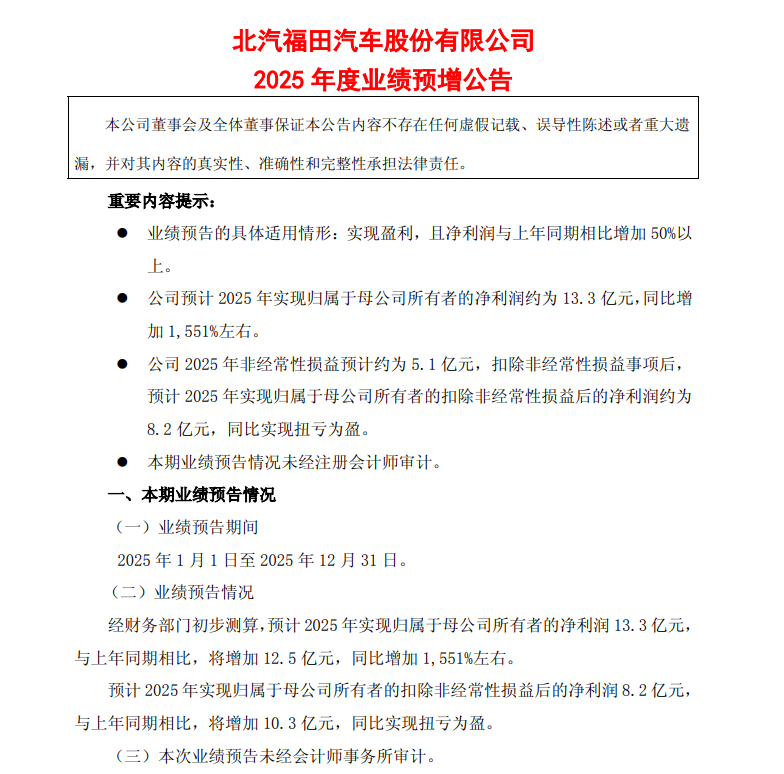
Core Viewpoint - Foton Motor is expected to see a profit increase of 1551% and a non-recurring net profit of 820 million yuan by 2025, showcasing its strong performance amid a mild recovery in the commercial vehicle industry. This financial success is attributed to the company's strategic focus on "comprehensive internationalization, comprehensive electrification, and comprehensive intelligence" rather than just industry trends [1][4]. Financial Performance - The profit explosion for Foton Motor in 2025 is driven by a significant restructuring of internal growth quality and a strategic shift towards high-value segments, including heavy trucks, high-tech new energy vehicles, and profitable overseas operations [4][7]. - Heavy truck sales reached 142,000 units, doubling year-on-year with a growth rate exceeding the industry average. The "Ouman Galaxy" series has enhanced brand premium through technological upgrades [4][7]. - The new energy segment saw sales surpassing 100,000 units, with an impressive year-on-year increase of 87.21%. The sales of new energy heavy trucks grew over 300%, reflecting both volume growth and technological value realization [7][10]. - Overseas sales reached 164,500 units, with product prices 15%-20% higher than domestic counterparts, indicating a successful transition from merely exporting products to enhancing brand and value globally [7][10]. Strategic Execution - Foton Motor's impressive financial results stem from years of strategic commitment and effective execution across R&D, product development, global operations, and cost control [8][10]. - The company has consistently invested more in R&D than the industry average, focusing on core areas such as new energy systems and intelligent technologies, leading to competitive advantages [8][10]. - A diverse product matrix has been developed, with new launches covering a wide range of vehicle types and technologies, allowing the company to avoid price competition and achieve reasonable value returns [8][10]. Industry Insights - Foton Motor's unique growth serves as a model for the Chinese commercial vehicle industry, indicating a shift in competitive focus from manufacturing and sales to technology-driven scenarios and ecosystem creation [11][13]. - The core logic of competition is evolving from "cost-performance" to "value chain cost-performance," emphasizing the importance of the total cost of ownership (TCO) for users [13][15]. - The role of companies is transitioning from "equipment manufacturers" to "solution and ecosystem service providers," expanding profit sources from one-time sales to ongoing services and operations [13][15]. - Globalization is moving beyond mere market expansion to localizing capabilities and ecosystems, as demonstrated by Foton's practices in Brazil and Thailand, which integrate into regional economic cycles for sustainable premium and risk resilience [15].

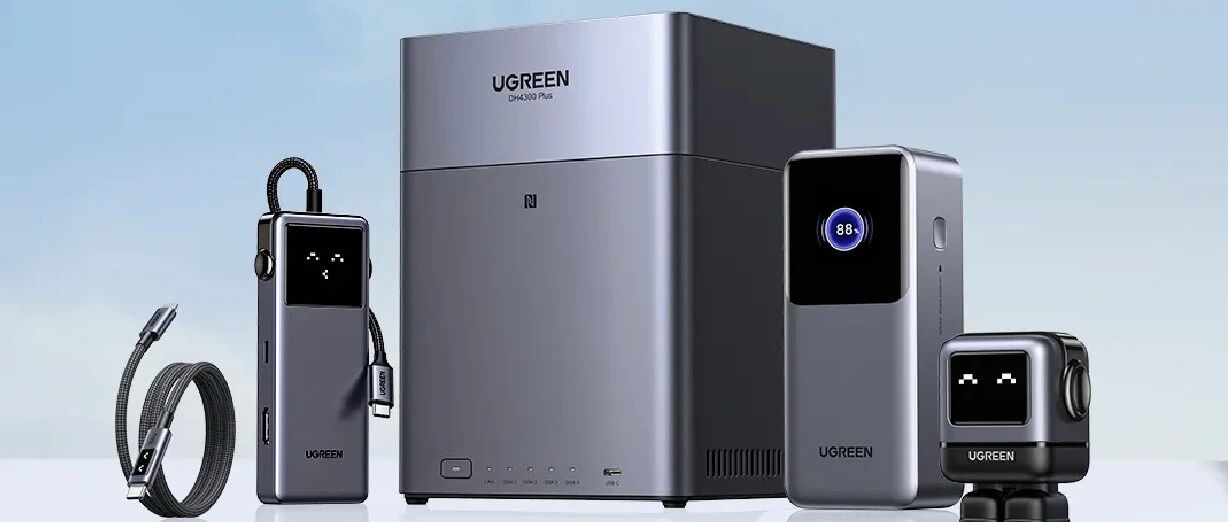
绿联科技冲刺港交所:在全球拥有超3亿用户,自A股上市以来股价上涨235%
IPO早知道· 2026-02-02 14:51
Core Viewpoint - Shenzhen Ugreen Technology Co., Ltd. is set to list on the Hong Kong Stock Exchange, aiming for an "A+H" dual listing, with a strong focus on global market expansion and significant revenue growth from overseas markets [2][4]. Group 1: Company Overview - Ugreen Technology, established in 2012, is a global consumer electronics brand specializing in charging, smart office, smart audio-visual, and smart storage products, covering various daily application scenarios [3]. - The company has achieved a market-leading position in the global technology consumer electronics sector, ranking first in shipment volume for 2025 and second in retail sales in the global charging products market [3]. Group 2: Financial Performance - Ugreen's revenue for 2023 and 2024 was 4.801 billion and 6.166 billion respectively, reflecting year-on-year growth of 25.3% and 28.4%. For the first three quarters of 2025, revenue reached 6.361 billion, a 47.8% increase, surpassing the total revenue for 2024 [5]. - The net profit for 2023 and 2024 was 394 million and 461 million respectively, with year-on-year growth of 19.3% and 17.0%. In the first three quarters of 2025, net profit grew by 45.8% to 467 million, also exceeding the total profit for 2024 [5]. Group 3: Market Expansion Strategy - Ugreen's revenue from customers outside mainland China increased from 2.42 billion in 2023 to 3.544 billion in 2024, a growth of 46.5%, and from 2.424 billion in the first three quarters of 2024 to 3.78 billion in the first three quarters of 2025, a 56.3% increase [4]. - The company has established localized service subsidiaries in key markets such as Hong Kong, the USA, Germany, Japan, South Korea, Singapore, Vietnam, Malaysia, and the UAE, implementing a "1+N" service framework to better capture local consumer preferences [4]. Group 4: IPO and Future Plans - Ugreen plans to use the net proceeds from the Hong Kong IPO primarily for enhancing R&D and product development, brand building, deepening sales channel construction, upgrading business processes, and general corporate purposes [6].