
智能网联汽车

Search documents
北京经开区 22 个重点项目集中签约 阿尔特 AI 研发基地等助力汽车产业创新升级
Quan Jing Wang· 2026-01-06 08:29
Group 1 - On January 4, Beijing Economic-Technological Development Area (BDA) held a high-quality development conference, signing 22 key projects, with over 80% focused on future industries, injecting strong momentum into the region's high-end industrial development [1] - Major companies such as ZTE Corporation and Cloudwalk Technology are establishing a presence in BDA, focusing on AI and 6G, with ZTE having set up six companies in the area [1] - Aneng Group is accelerating its emergency industry layout in BDA, establishing a research company aimed at creating a leading emergency technology enterprise in China, which is seen as a key move to build a modern emergency industry system [1] Group 2 - The signing of projects includes partnerships with top capital firms like China National New Group and China International Capital Corporation, indicating strong investment interest in the region [1] - Alter Technology's AI strategic platform aims to build an AI innovation platform in BDA, focusing on deep applications of AI in automotive design and simulation, aligning with the region's smart driving and AI industry ecosystem [1] - During the 14th Five-Year Plan, BDA's GDP grew at an average annual rate of 10%, leading among national economic development zones, and the current period presents significant opportunities for high-end industrial cluster development [1]

研判2025!中国汽车网关行业产业链、市场规模及未来趋势分析:架构跃迁与服务化转型叠加,奠定智能网联神经中枢地位[图]
Chan Ye Xin Xi Wang· 2026-01-06 01:24
Industry Overview - The automotive gateway serves as the core data interaction hub in the vehicle's electronic architecture, acting as the "nervous system" or "translator" for different networks [2] - The automotive gateway market in China is projected to reach approximately 7.7 billion yuan in 2024, with a year-on-year growth of 22.22% [1][5] - The industry is transitioning from a traditional distributed ECU architecture to a domain-centralized/area architecture, driven by the evolution of automotive electronic and electrical architecture [1][5] Industry Chain - The upstream of the automotive gateway industry chain includes essential components such as chips, microprocessors, and communication modules [4] - The midstream involves the production and manufacturing of automotive gateways, while the downstream primarily consists of automotive OEMs, which directly influence market size and technology routes [4] - Recent government policies have supported the integrated circuit industry, significantly reducing costs and stimulating capacity expansion [4] Market Size - The automotive gateway is crucial in the wave of automotive intelligence, with its market size expected to grow significantly as the demand for cross-domain communication and protocol conversion increases [1][5] - The demand for high-performance gateways is driven by the rise of new energy vehicles and the proliferation of intelligent driving technologies [5] Key Companies Performance - Neusoft Group has established itself as a leader in automotive electronic software and information security, with a focus on "software-defined security" [7] - Beijing Jingwei Hirain Technologies has become a dominant player in the automotive gateway industry, offering a comprehensive product line that supports various protocols and advanced features [8] - Both companies have shown significant revenue growth, with Neusoft Group reporting a revenue of 7.49 billion yuan in the first three quarters of 2025, while Jingwei Hirain reported 4.46 billion yuan, reflecting their competitive positions in the market [7][8] Industry Development Trends - The automotive gateway is evolving towards a "vehicle server," integrating stronger computing power and service-oriented architecture (SOA) capabilities [9] - There is a shift towards edge computing and high-bandwidth networks to meet the demands of higher-level autonomous driving, with vehicle Ethernet transitioning from gigabit to 10-gigabit speeds [9] - A comprehensive security system is being developed, moving beyond simple encryption to a multi-layered defense architecture that includes collaboration among automakers, chip manufacturers, software companies, and cloud service providers [10]


2025年度中国汽车产业盘点
Xin Lang Cai Jing· 2026-01-05 09:30
Core Insights - In 2025, China's automotive market is set to enhance its transformation towards electrification, intelligence, and sustainability through a multi-dimensional policy approach, promoting high-quality development [1] Policy Measures - The government continues to stimulate consumption with targeted policies, including the extension of the exemption from vehicle purchase tax for new energy vehicles (NEVs) from January 1, 2024, to December 31, 2025, with a maximum exemption of 30,000 yuan per vehicle [3] - Starting January 1, 2026, the purchase tax for NEVs will shift from exemption to a 50% reduction, with adjustments to the technical requirements for NEV products [4] - The 2025 vehicle trade-in subsidy policy offers 20,000 yuan for scrapping old vehicles and purchasing NEVs, and 15,000 yuan for scrapping fuel vehicles and purchasing fuel vehicles with an engine size of 2.0 liters or less [4][5] Digital Transformation and Technological Innovation - The automotive industry policy emphasizes core technology innovation and digital transformation, with a focus on smart connected vehicle applications and infrastructure development [8] - By 2027, the industry aims to enhance smart manufacturing capabilities and digital integration across various operational stages, with specific targets for productivity and efficiency improvements [11][14] Infrastructure Development - The "Three-Year Doubling Action Plan" for electric vehicle charging facilities aims to establish 28 million charging points by the end of 2027, providing over 300 million kilowatts of public charging capacity [15] - New national standards for electric vehicle batteries have been introduced to enhance safety requirements, including stricter testing protocols [18] Market Regulation and Safety Management - The Ministry of Industry and Information Technology (MIIT) has implemented regulations to address safety risks and market irregularities in the automotive sector, focusing on smart connected vehicle product approvals and recalls [19][22] - A comprehensive supervision plan for vehicle production consistency has been established, targeting high-risk models and ensuring compliance with safety standards [22] International Cooperation and Market Expansion - The 2025-2026 automotive industry growth plan encourages international collaboration, aiming to enhance product development for foreign markets and improve global supply chain integration [23] - Policies are in place to support automotive exports and logistics, fostering a conducive environment for international partnerships [23] Conclusion - Overall, the 2025 automotive policies in China are designed to stimulate consumption, drive technological innovation, regulate the market, and enhance international cooperation, laying a solid foundation for the industry's transition to high-quality development [23]

移远通信率先推出车规级5G R18模组AR588MA
Zhong Guo Qi Che Bao Wang· 2026-01-05 01:56
Core Viewpoint - The launch of the AR588MA 5G-A module by the company marks a significant advancement in automotive communication technology, addressing the demands for ultra-high bandwidth, ultra-low latency, and extreme reliability in next-generation smart vehicles [1][3]. Group 1: Technical Specifications - The AR588MA module is built on MediaTek's first 5G-A platform, featuring a modem performance that leads the industry, with a quad-core Cortex-A55 CPU clocked at 2.3GHz, supporting a downlink speed of up to 9.0 Gbps and an uplink speed exceeding 2.5 Gbps [3]. - It supports 400 MHz bandwidth and NR 5CC, along with DSDA (Dual SIM Dual Active) functionality, enhancing data transmission efficiency and stability [3]. - The module integrates satellite communication capabilities and adaptive network signal compensation algorithms, significantly improving network performance even in weak signal areas [5]. Group 2: AI Integration and User Experience - The AR588MA module incorporates AI technology for deep integration with vehicle communication, enabling a shift from "passive connection" to "active adaptation," which enhances network speed and connection stability [7]. - It features an intelligent scene recognition system and an AI network optimization engine, processing multi-dimensional data such as vehicle location and road conditions to optimize network performance [7]. Group 3: Reliability and Safety Standards - The AR588MA adheres to automotive-grade design standards, meeting AEC-Q100 Grade 2 for reliability in extreme conditions and ISO 21434 for automotive cybersecurity [8]. - It supports secure boot and hardware isolation technologies, ensuring stable connections and enhanced security for vehicle communication [8]. Group 4: Functional Features - The module supports eCall/NG-eCall emergency call systems, automatically transmitting critical data to emergency centers in the event of a collision [10]. - It includes GNSS positioning capabilities with dual-frequency support (L1+L5), providing high-frequency output for accurate navigation and path planning [10]. - The AR588MA is designed for compatibility with existing hardware and software, facilitating a smooth transition from traditional 5G to 5G-A, thus reducing development costs and time to market [10].


天津有个汽车测评“国家队”
Xin Lang Cai Jing· 2026-01-04 22:09
(来源:天津日报) 转自:天津日报 前不久,在中国汽车技术研究中心有限公司(以下简称中汽中心)天津检验中心碰撞试验场里,一辆黑 色轿车沿着牵引跑道快速驶过。"砰"的一声轰响,轿车前舱瞬间凹陷,安全气囊如白帆般张开。快门 声"咔嚓"连成一片——工程师把年度第2000次碰撞试验,定格在了合影墙上。 从1985年天津市河东区万新村两栋居民楼里起步,到如今成为国内汽车行业具有广泛影响力的综合性科 技企业集团,中汽中心与天津的关系,恰似一组精准咬合的齿轮:城市为企业铺就成长沃土,企业为城 市注入产业动能。这组齿轮转动四十载,不仅转出中国汽车工业从"跟跑"到"领跑"的巨变,更转出一座 城市与一家企业共生共荣的壮阔图景。 "塑料大棚"试验室 行业荒原扎下技术根 1985年初,在天津市河东区万新村两栋居民楼内,从第二汽车厂、机械工业部、长春汽研所抽调的技术 骨干,把行李箱摞成办公桌,在纸上一笔一画规划着汽车技术开发研究中心(中汽中心前身)的蓝图。 彼时的中国汽车工业,正被"二三十年产品一贯制、质量稳定性不足"的难题困住。时任中国汽车工业总 公司董事长饶斌提出:"应建设第三方技术研究中心解决行业质量问题。"汽车技术开发研究中心 ...
2026粤港澳大湾区车展定于5月在深圳举办
Xin Lang Cai Jing· 2026-01-04 12:49
Core Viewpoint - The 2026 Guangdong-Hong Kong-Macao Greater Bay Area Auto Show will take place from May 29 to June 7, 2026, in Shenzhen, focusing on the profound changes in transportation and aiming to create a platform that connects the future and the world [1] Group 1: Event Overview - The auto show will feature the theme "Facing Technology, Facing the Future, Facing the Market" and will include the "Hongmeng Intelligent Mobility Pavilion" as a standalone exhibition [1] - BYD Group will showcase its brand matrix and cutting-edge technologies in a dedicated pavilion [1] - The "Future Mobility Space Station" will outline a three-dimensional mobility ecosystem integrating air and land transportation [1] Group 2: Industry Forum - The 2026 Future Automotive Pioneer Conference will be held alongside the auto show, themed "Step by Step," focusing on the evolving Chinese automotive industry [2] - The conference will include discussions on various topics such as the "π Dynamic Future Innovation Summit" and the "Smart Connected Vehicle Commercialization Forum" [2] - Additional events like the "Automotive Electronics Procurement Matching Conference" will facilitate practical cooperation and technology innovation [2] Group 3: Technological Integration - The auto show plans to apply advanced mobility technologies in urban streets, creating multi-level and multi-scenario experience routes, including L2 and L3 level intelligent driving experiences [2] - The event will also feature diverse activities such as light shows, urban flash events, and interactive experiences to engage the public with smart mobility [2] Group 4: Cultural and Ecological Integration - The 2026 event marks the tenth anniversary of iHome's smart ecosystem, aiming to elevate the experience by integrating fashion, trends, and technology [2] - The auto show will strive to create a platform that connects life and integrates various scenarios, responding to diverse consumer needs [2]
中汽中心:恪守科技型央企使命 争当“十五五”汽车强国主力军
Zhong Guo Qi Che Bao Wang· 2026-01-04 08:27
2025年渐入尾声,"十四五"征程即将圆满收官。党的二十届四中全会指出,"十四五"时期我国发展历程极不寻常、极不平凡。汽车产业作为国民经济 的支柱产业,在过去五年间实现全方位跨越式发展,为经济高质量发展作出了重要贡献。在这其中,中国汽车技术研究中心有限公司(以下简称"中汽中 心")践行"国家队"使命担当,以多年坚守为中国汽车产业发展保驾护航。如今,"十五五"即将启航,中汽中心锚定科技型央企新航向,踏上汽车强国建 设新征程。 "四个最"引领 聚焦汽车全价值链技术服务的主业布局,中汽中心在国内、国际两个市场构建起核心优势,在前瞻创新、研发验证、检测认证、制造供应、市场消 费、国际化等环节的汽车全价值链技术服务能力大幅提升。 其中,在前瞻创新环节,中汽中心聚焦行业关键共性技术攻克一批"卡脖子"难题,自主研发的"中国假人"打破了欧美汽车安全碰撞测试假人垄断;在 研发验证环节,加快工具类软硬件国产化产品研发与服务能力体系建设,自主研发国内首款新能源汽车研发设计工业基础仿真软件;在检测认证环节,建 成世界一流的汽车检测测试及认证技术平台,并加快推进车规级芯片检测等能力建设;在制造供应环节,打造智能制造+智慧建造全场景服务 ...

成都这一中试平台如何赋能智能网联汽车未来?
Xin Lang Cai Jing· 2026-01-03 20:20
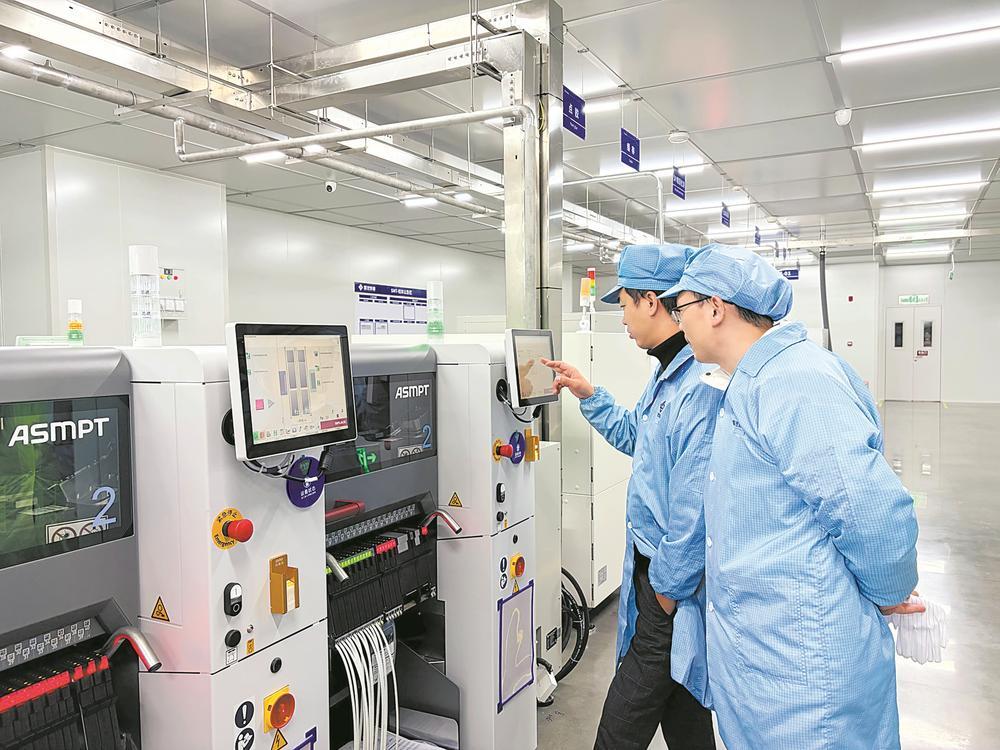
Core Insights - The article discusses the establishment and operational significance of the Guoqi Zhidan vehicle-mounted intelligent system pilot platform in Chengdu, which aims to enhance the production and reliability of smart connected vehicles. Group 1: Platform Capabilities - The pilot platform has achieved a first-pass yield rate of over 98%, improving from an initial 85% [2] - The platform's automated processes ensure high precision in assembly and testing, contributing to a more efficient production line [2] - Key product reliability metrics, such as MTBF (Mean Time Between Failures), have improved by over 30% [2] Group 2: Technological Advancements - The platform has developed domestically produced vehicle-grade 5G communication modules and intelligent cockpit domain controllers, addressing critical challenges in positioning accuracy [3] - The integration of a self-developed heterogeneous operating system architecture allows for advanced multi-system virtualization and collaborative control [3] - The platform is set to begin mass production of its products by 2026, following successful pilot testing and validation [3] Group 3: Government Support and Industry Development - The Chengdu Future Technology City Development Service Bureau plays a crucial role in supporting the platform through planning, resource integration, and policy empowerment [4] - Plans are underway to establish an industrial park focused on vehicle-mounted intelligent systems, aiming to create a competitive cluster in the smart connected vehicle industry [4] - The initiative aims to build a robust ecosystem for core component production, enhancing the overall quality and competitiveness of Chengdu's manufacturing sector [4]
从 “脱手” 到 “担责” L3智能驾驶迈入商业化新纪元
Xin Lang Cai Jing· 2026-01-02 20:34
Core Insights - The issuance of the first official license plates for L3 autonomous vehicles in China marks a significant breakthrough in the smart connected vehicle industry, transitioning from testing to commercial application [1][3] - The year 2025 is identified as a pivotal year for the global autonomous driving industry, with L3 technology moving from validation to commercialization [2] - The development of L3 autonomous driving is supported by advancements in multi-sensor fusion technology and the clarification of liability regulations [2][6] Group 1: Industry Developments - The first batch of L3 autonomous vehicles, including the BAIC Arcfox Alpha S, has received official license plates, allowing them to operate on designated roads in Beijing and Chongqing [1][3] - The vehicles can perform dynamic driving tasks under specific conditions, such as maintaining a maximum speed of 80 km/h on certain highways, while still requiring a driver to be present for emergency control [3][6] - The government is implementing a dual-track mechanism for product approval and road access, ensuring a clear safety baseline while allowing for innovation [4][5] Group 2: Technological and Regulatory Framework - L3 autonomous driving is seen as a critical transition from assisted driving to fully autonomous driving, with the system capable of handling all dynamic driving tasks under designated conditions [6][7] - The responsibility for accidents is divided based on the operational conditions of the vehicle, with manufacturers liable for faults within designated areas and drivers responsible outside those conditions [7][8] - The successful implementation of L3 technology requires comprehensive upgrades across vehicles, components, software, and infrastructure, emphasizing the need for vehicle-road collaboration [8][9] Group 3: Market Potential and Future Outlook - The penetration rate of L3 autonomous driving is projected to reach 55% by 2028, with the domestic market expected to exceed 1.2 trillion yuan by 2030, indicating a significant growth opportunity [8] - Companies are encouraged to take proactive measures in safety, data governance, and exploring sustainable business models to support the commercialization of smart connected vehicles [9]
车圈2025:价格战没赢家,但淘汰赛已有出局者
Ge Long Hui· 2025-12-31 20:53
Core Insights - The automotive industry is transitioning from price competition to a focus on systematic and ecological strategies [3][23] - In 2025, the penetration rate of new energy vehicles (NEVs) reached a historic high, indicating a significant shift in consumer acceptance and market dynamics [5][13] - Traditional fuel vehicle manufacturers are struggling to maintain their market position against the rising dominance of domestic brands [6][14] Group 1: Market Dynamics - The price war initiated by domestic brands has continued into 2025, impacting the average profit margins across the industry [8][6] - The penetration rate of NEVs reached 62.2% in early December 2025, marking a significant milestone in the market [13] - Domestic brands are leading the charge in the NEV sector, with a penetration rate of 79.6% for new energy passenger vehicles [13] Group 2: Company Performance - Leading new energy vehicle manufacturers like Xiaopeng and Leap Motor have exceeded their annual sales targets, showcasing strong market adaptability [18][19] - Traditional brands like Geely and BYD are also performing well, with Geely's NEV sales reaching 153.4 million units, a 97% year-on-year increase [19][20] - In contrast, some joint venture brands are struggling, with Nissan and Honda experiencing significant declines in sales [20][21] Group 3: Technological Advancements - The introduction of the new battery safety standard (GB38031-2025) is expected to drive technological upgrades across the industry [11][12] - The focus on intelligent driving technology has intensified, but recent incidents have raised concerns about safety and regulatory standards [9][10] - Companies are increasingly collaborating with tech firms to enhance their smart driving capabilities, as seen with Audi and BMW partnering with Huawei [28][29] Group 4: Strategic Shifts - The competition is evolving from price wars to a comprehensive battle over ecosystem capabilities and technological integration [23][24] - Companies are adjusting their strategies to focus on product-market fit, intelligent configurations, and supply chain efficiency [21][22] - The future of the automotive industry will depend on the ability to integrate diverse technological pathways and create unique value for consumers [30]



