
软件定义汽车

Search documents
重磅|刚刚,汽车零部件行业发生一件大事
汽车商业评论· 2025-10-26 23:07
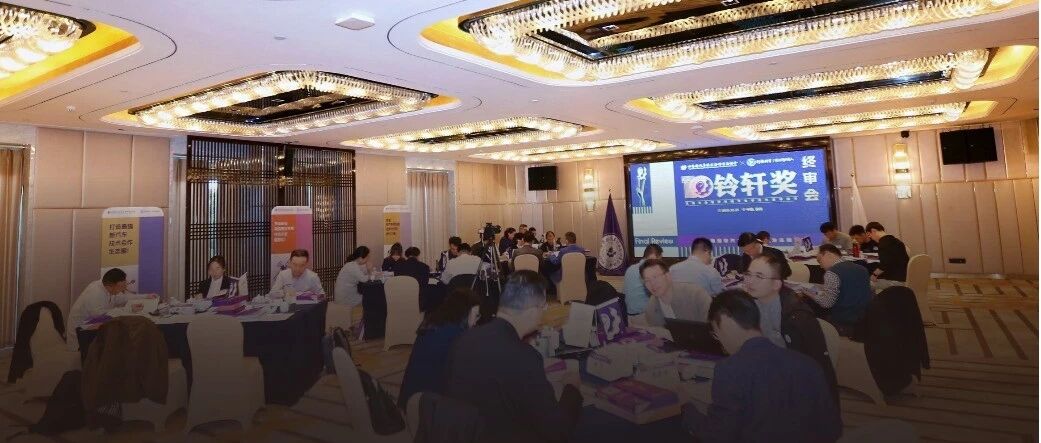
Core Viewpoint - The article discusses the significance of the Lingxuan Award in recognizing innovation in the Chinese automotive parts industry, highlighting its evolution over the past decade and its role in shaping the supply chain amidst the trends of electrification and intelligence in the automotive sector [10][12][50]. Group 1: Overview of the Lingxuan Award - The Lingxuan Award is an annual recognition for contributions in the automotive parts sector, evaluated by procurement and R&D leaders from major automotive companies in China [12][20]. - The award has evolved from filling a gap in the industry to becoming a core reference for supply chain choices among major automotive manufacturers [17][50]. - The award aims to discover cost-effective supply chains, enhance local industry security, and promote the transition to "new automobiles" in the era of electrification and intelligence [17][49]. Group 2: Evaluation Process - The evaluation process for the Lingxuan Award has shifted to a more immersive workshop format, allowing for in-depth discussions among judges from procurement and R&D backgrounds [25][30]. - The final evaluation involved 127 cases, with judges discussing and voting on the most innovative and applicable technologies across various categories [10][38]. - The award ceremony will take place during the WNAT-CES 2025 event in December, showcasing the winners and their contributions [10][20]. Group 3: Industry Trends and Insights - The evaluation revealed that 58% of the cases focused on intelligent cockpits, intelligent driving, automotive software, and chips, indicating a shift towards "software-defined vehicles" [38][41]. - Key trends identified include the emergence of new enterprises as vital players in the supply chain, the need for systematic upgrades in cost, safety, and international adaptability, and the growing importance of "emotional value" in user experience [39][41][48]. - The judges emphasized that cost control is paramount in product evaluation, with a focus on integrated architecture to balance cost reduction and intelligent features [44][45]. Group 4: Future Directions - The Lingxuan Award serves as a platform for self-reflection and collaborative evolution within the automotive supply chain, fostering connections between parts manufacturers and automotive companies [50]. - The participation of new enterprises, which accounted for over 20% of the cases, highlights the infusion of fresh energy and innovative technologies into the local supply chain [49][50]. - The award's ongoing mission aligns with the industry's pressing needs, ensuring that it remains relevant and impactful in the face of rapid technological advancements [49][50].



充不上电怪插枪不够快?金标大众的车主崩溃了
3 6 Ke· 2025-10-24 10:15
Core Viewpoint - The article highlights the significant charging difficulties faced by owners of the Volkswagen Anhui's Yuanzhong 06 electric vehicle, which is a key model in Volkswagen's strategy for the Chinese market, raising concerns about the vehicle's compatibility with various charging stations and the underlying software issues that contribute to these problems [1][2][23]. Group 1: Charging Issues - Owners of the Yuanzhong 06 experience low success rates when using third-party fast charging stations, often needing to try multiple chargers to find one that works [1][10]. - Some users report that charging fails after a brief period, and even new car owners face charging difficulties shortly after purchase [1][11]. - The suggested solutions from sales and service personnel, such as quickly inserting the charging plug, indicate a deeper issue with the vehicle's software and charging system [1][19]. Group 2: Vehicle Background - Volkswagen Anhui is a unique joint venture, being the first wholly controlled (75%) electric vehicle manufacturer by Volkswagen in China, aimed at demonstrating the company's commitment to the Chinese market [2][4]. - The Yuanzhong brand is positioned as a high-end, intelligent vehicle line, intended to showcase Volkswagen's technological capabilities in China [4][23]. Group 3: Technical Challenges - The charging process involves multiple critical steps, including physical connection, protocol handshake, and real-time monitoring, which require effective communication between the vehicle and the charging station [5][7][10]. - The compatibility issues stem from differences in charging protocols among various operators, leading to potential miscommunication during the charging process [8][18]. - The article suggests that the charging difficulties may be attributed to a software timing bug, where the vehicle's system fails to respond within the required timeframe, leading to charging errors [11][19]. Group 4: Market Implications - The Yuanzhong 06 has struggled in the competitive Chinese electric vehicle market, with cumulative sales of approximately 4,200 units since its launch, significantly lower than the sales figures of other models in the Volkswagen ID series [26][27]. - The challenges faced by the Yuanzhong 06 highlight the broader issue of traditional automakers lagging behind local brands in adapting to the rapidly evolving electric vehicle landscape in China [26][28].

汽车智能安全“一带一路”联合实验室在武汉揭牌
Zhong Guo Jing Ji Wang· 2025-10-24 03:48
Group 1 - The 2025 International Conference on Automotive Intelligent Safety and R&D Testing was held in Wuhan Economic Development Zone, where the "Belt and Road" Joint Laboratory for Automotive Intelligent Safety was officially inaugurated [1] - The laboratory is a collaboration between ZF LIFETEC, Hubei University of Automotive Technology, and Wuhan Economic Development Zone, aiming to become a hub for technological innovation in automotive intelligent safety [1][2] - Alongside the laboratory, a high-value patent cultivation center and an innovation joint laboratory were also established, creating a collaborative innovation framework [1] Group 2 - ZF LIFETEC plans to conduct comprehensive testing from components to system levels in the laboratory, focusing particularly on safety testing in autonomous driving scenarios [1] - The Wuhan base is set to become a core R&D hub, with more resources being transferred from Shanghai, supported by the region's advantages in location, talent, and industrial environment [1] - Hubei University of Automotive Technology plays a crucial role in the project, leveraging its unique integration of industry, academia, and research to support the initiative [2] Group 3 - Wuhan Economic Development Zone is embracing the transformation towards "software-defined vehicles," with over 200 upstream and downstream companies generating more than 50 billion yuan in revenue from the software ecosystem [2] - The region has established the largest intelligent connected vehicle testing ground in Central China, providing a solid foundation for the laboratory's development [2] - The conference was co-hosted by ZF Automotive Safety Systems (Wuhan) Co., Ltd. and Hubei University of Automotive Technology, attracting over 400 global experts to discuss key technologies in automotive intelligent safety [2]
斑马智行持续发力软硬一体 打造AI原生车载平台服务生态
Zheng Quan Ri Bao Wang· 2025-10-23 14:14
Core Insights - The automotive industry is entering an era of cloud-integrated large models, where software capabilities, particularly those driven by AI, are crucial for enhancing user experience and driving the performance of new-generation smart automotive hardware [1][2] - Zebra Network Technology Co., Ltd. (Zebra Smart Travel) showcased its latest achievements in foundational software and cockpit AI large models, emphasizing a strategy that integrates "chip + OS + AI" to transform chip potential into user experience [1][2] Group 1 - The maturity of endpoint models will further accelerate the performance enhancement of onboard chips [1] - Zebra Smart Travel's self-developed Yuan Shen AI OS features cross-platform and cross-model capabilities, expediting the deployment of large models in vehicles [1][2] Group 2 - Zebra Smart Travel has achieved AI leadership based on a full-stack AI technology system for smart cockpits, ranking first in a global evaluation of smart cockpit AI technologies by IDC [2] - The company launched the Auto Omni full-modal edge large model real vehicle solution in collaboration with Tongyi at the Cloud Habitat Conference, leading the industry by over six months and effectively addressing issues of computational redundancy and low hardware utilization efficiency [2] - The Chief Product Officer of Zebra Smart Travel stated that the collaboration between software and hardware is a dynamic process that promotes each other, with software driven by user needs and scenario-based services [2]
港股将迎稀缺标的 岚图汽车递表 解码“央国企高端新能源代表”的三重溢价
Zhi Tong Cai Jing· 2025-10-23 13:32
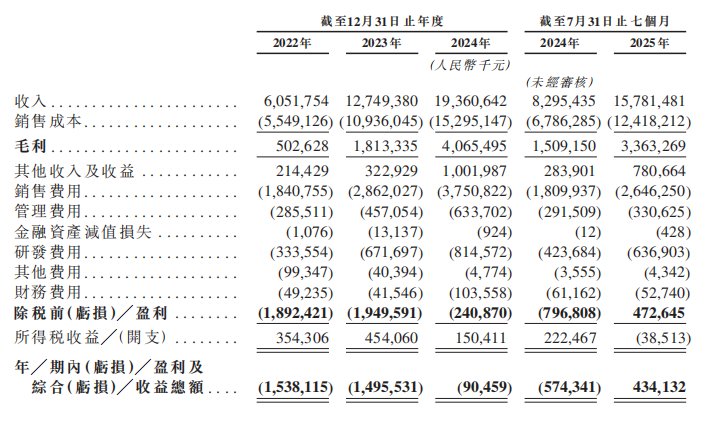
Core Viewpoint - Lantu Automotive's listing on the Hong Kong Stock Exchange is a strategic move aimed at value reconstruction rather than merely seeking financing, reflecting a deep understanding of current market dynamics and the competitive landscape of the electric vehicle industry [1] Deep Motivations - The Hong Kong market is under pressure from high U.S. interest rates, slowing economic growth in mainland China, and ongoing geopolitical tensions, leading to a structural shift in liquidity towards profitable and cash flow-supported assets [2] - Lantu Automotive's planned listing coincides with its achievement of quarterly profitability and a gross margin exceeding 20%, distinguishing it from other loss-making competitors in the sector [2] - The choice of "introduction listing" without issuing new shares indicates a mature capital strategy focused on establishing international capital channels and enhancing brand credibility [2] Core Barriers - Lantu Automotive has demonstrated remarkable resilience in financial health while achieving rapid sales growth, with a compound annual growth rate (CAGR) of 103.2% in sales and 78.9% in revenue from 2022 to 2024 [3] - The company is recognized as the fastest in the industry to achieve quarterly profitability and positive operating cash flow [3] Financial Performance - Revenue projections show significant growth, with expected revenues of RMB 12.75 billion in 2023 and RMB 19.36 billion in 2024, alongside a gross profit of RMB 1.81 billion and RMB 4.07 billion respectively [4] - The gross margin is projected to rise from 8.3% in 2022 to 21.0% in 2024, indicating strong financial health and operational efficiency [6] Competitive Advantages - Lantu Automotive leverages its "national team" background, integrating deep resources from Dongfeng Motor in R&D, manufacturing, and supply chain management [5] - The company has established a comprehensive product matrix covering sedans, SUVs, and MPVs, with successful models like the Lantu Dreamer leading the high-end MPV market [5] - The ESSA architecture provides structural cost advantages, supporting multiple powertrain configurations and enhancing production efficiency [6] Growth Drivers - Lantu Automotive's growth strategy is supported by a comprehensive product matrix, with plans to launch 1-3 new models annually by 2026 [8] - The company is positioned to capitalize on the growing demand for intelligent electric vehicles through a dual approach of in-house development and open collaboration [8] - International expansion is a key focus, with exports increasing from 1,497 units in 2022 to 9,357 units in the first seven months of 2025, indicating strong overseas market acceptance [9] Valuation Logic - The company's listing is expected to drive valuation growth through three premium factors: scarcity premium due to its unique positioning, profitability certainty in a loss-prone industry, and globalization premium enhancing brand influence [10] - Short-term valuation is driven by profitability and scarcity, while mid-term growth will rely on technological advancements and international market penetration [11] Future Potential - Lantu Automotive's ability to convert technological efficiencies into competitive advantages and establish a strong global brand will be crucial for its long-term success [12]
新股前瞻|港股将迎稀缺标的 岚图汽车递表 解码“央国企高端新能源代表”的三重溢价
智通财经网· 2025-10-23 13:14
Core Viewpoint - Lantu Automotive's listing on the Hong Kong Stock Exchange is a strategic move aimed at value reconstruction rather than merely seeking financing, reflecting a deep understanding of current market dynamics and the competitive landscape of the new energy vehicle industry [1] Deep Motivations - The Hong Kong market is under pressure from high U.S. interest rates, slowing economic growth in mainland China, and ongoing geopolitical tensions, leading to a structural shift in liquidity towards profitable and cash flow-supported assets [2] - Lantu Automotive's planned listing coincides with its achievement of quarterly profitability and a gross margin exceeding 20%, distinguishing it from other loss-making brands in the sector [2] - The choice of "introduction listing" without issuing new shares indicates a mature capital strategy focused on establishing international capital channels and enhancing brand credibility [2] Core Barriers - Lantu Automotive has demonstrated remarkable resilience in financial health while achieving rapid sales growth, with a compound annual growth rate (CAGR) of 103.2% in sales and 78.9% in revenue from 2022 to 2024 [4] - The company is recognized as the fastest in the industry to achieve quarterly profitability and positive operating cash flow [4] Financial Performance - Revenue projections show significant growth, with expected revenues of RMB 12.75 billion in 2023 and RMB 19.36 billion in 2024, alongside a gross profit of RMB 1.81 billion and RMB 4.07 billion respectively [5] - The gross margin is projected to rise from 8.3% in 2022 to 21.0% in 2024, indicating strong financial health and operational efficiency [11] Competitive Advantages - Lantu Automotive leverages its "national team" background, integrating East Wind's expertise in R&D, manufacturing, and supply chain, which facilitates efficient production and rapid market entry [6] - The company has established a comprehensive product matrix covering sedans, SUVs, and MPVs, with plans to launch 1-3 new models annually by the end of 2026 [14] Growth Drivers - The growth strategy is supported by a tripartite framework of product, technology, and market, with a focus on intelligent driving and a dual approach of in-house development and open collaboration [15] - Lantu's international expansion is evident, having entered 39 countries and increasing exports from 1,497 vehicles in 2022 to 9,357 in the first seven months of 2025 [15] Valuation Logic - The company's valuation is driven by three premium factors: scarcity premium due to its unique positioning in the high-end new energy market, profitability certainty in a generally loss-making industry, and globalization premium from its international market strategy [16] - The valuation approach will evolve from a PSG (Price-to-Sales Growth) model in the short term to a PE+PEG model as technology and international sales ramp up [18] Future Potential - Lantu Automotive's ability to convert its technological advantages into a strong brand presence will be crucial for its long-term success, positioning it as a leading candidate in the global automotive transformation [20]
通用汽车第三季度调整后息税前利润达34亿美元,中国市场持续四个季度实现盈利
Zhong Guo Qi Che Bao Wang· 2025-10-21 11:57
Core Viewpoint - General Motors reported strong financial performance for Q3 2025, with significant increases in revenue and profitability, leading to an upward revision of annual performance expectations [2][3][5]. Financial Performance - Q3 2025 net revenue reached $48.6 billion, with a net profit of $1.3 billion [2][3]. - Adjusted EBIT was $3.4 billion, resulting in an adjusted EBIT margin of 6.9% [3]. - Adjusted diluted earnings per share were $2.80, with adjusted automotive cash flow at $4.2 billion [3]. Updated Annual Financial Expectations - Projected net profit for the year is between $7.7 billion and $8.3 billion [5]. - Adjusted EBIT is expected to be in the range of $12 billion to $13 billion [5]. - Automotive cash flow is forecasted to be between $19.2 billion and $21.2 billion, with adjusted automotive cash flow expected between $10 billion and $11 billion [5]. - Adjusted diluted earnings per share are anticipated to be between $8.30 and $9.05, with adjusted diluted earnings per share expected between $9.75 and $10.50 [5]. Market Performance - In the U.S. market, General Motors achieved a sales increase of 8% year-over-year, maintaining a market share of 17.4% in traditional fuel vehicles [7]. - The company leads the full-size SUV and full-size pickup segments with market shares of 60% and 41%, respectively [7]. - In the electric vehicle market, General Motors holds a 16.5% market share, ranking second in sales, with Chevrolet being the second-largest brand in the EV market [7]. Software and Services Growth - General Motors generated approximately $2 billion in confirmed revenue from software and services, with deferred revenue reaching about $5 billion, a year-over-year increase of over 90% [8]. - The active user base for the Super Cruise system is expected to exceed 600,000 by the end of the year [8]. Performance in China - General Motors has achieved profitability in China for four consecutive quarters, with year-over-year growth in both sales and market share [9]. - The company has seen continuous growth in sales of new energy vehicles and battery electric vehicles (BEVs) for ten consecutive quarters [9]. - The launch of the Buick Electra L7 and the upcoming flagship MPV Buick GL8, both based on local innovations, are part of the strategy to enhance product offerings in the new energy sector [9].


江苏女老板裸辞创业,三年打造“车机爆款”,出货超百万台
创业邦· 2025-10-20 10:44
Core Viewpoint - The article highlights the rapid growth and strategic transformation of Runxinwei, a company founded by Liu Qing, from a software service provider to a comprehensive soft and hardware provider in the automotive and smart device sectors, achieving over 50% annual revenue growth and securing significant partnerships with major automotive manufacturers [4][5]. Company Transformation - Liu Qing founded Runxinwei in 2020 after leaving her position as a vice president at a listed company, aiming to expand beyond mobile operating systems into the automotive sector, particularly focusing on smart cockpits [4][8]. - The company launched the SailingCore operating system, which integrates various smart devices into a cohesive ecosystem, achieving over one million units shipped in smart cockpit products [5][15]. Product Development and Market Strategy - Runxinwei's smart cockpit products, such as C100 and C200, are designed to connect with various devices, providing a seamless user experience across different environments [12][13]. - The company targets the mid-to-low-end vehicle market to demonstrate its technological capabilities, with products priced around 50,000 yuan, making smart features accessible to a broader audience [12][21]. Technological Innovation - The SailingCore operating system enables real-time data synchronization between devices, breaking down information silos and enhancing user experience [15][19]. - Runxinwei has invested significantly in R&D, with over 90% of its workforce dedicated to this area, resulting in more than 160 patents and software copyrights [15][19]. Business Segments - The company operates in four main business segments: smart automotive, mobile devices, robotics, and smart home solutions, with the automotive segment showing the most rapid growth [21]. - Runxinwei has established partnerships with major automotive manufacturers, including SAIC, GAC, and Dongfeng, securing substantial orders [5][21]. Company Culture and Management - Runxinwei emphasizes a flat management structure, fostering innovation and quick decision-making, while also implementing a unique incentive system to maintain employee engagement [24][25]. - The company adopts a "fast and slow" approach in operations, balancing rapid product development with a commitment to foundational research [26][27]. Market Expansion - Runxinwei is actively expanding its market presence internationally, with offices established in Europe, North America, the Middle East, and South America [27]. - The company focuses on nurturing existing client relationships while exploring new opportunities in overseas markets [27][28].

研发投入比下滑,日本车企没钱了?
Zhong Guo Qi Che Bao Wang· 2025-10-20 09:57
Core Insights - Japanese automakers are expected to adopt a conservative approach to R&D spending in the fiscal year 2025, with R&D expenditure projected to be less than 4% of sales, significantly lower than their overseas competitors [2][11] - The R&D spending of Japan's seven major automakers is projected to total 3.94 trillion yen, a slight increase of 2% year-on-year, with the R&D expenditure ratio at 3.92%, marking the second consecutive year below 4% [2][3] R&D Spending Breakdown - Honda leads the group with an R&D expenditure ratio of 5.7%, while Toyota ranks last at 2.8%. However, in terms of total R&D spending, Toyota remains the highest at 1.37 trillion yen, a 3.3% increase year-on-year [3][4] - Nissan plans to invest 630 billion yen in R&D, a 1.8% increase, with a ratio of 5% of expected sales. Suzuki's R&D spending is expected to rise by 13% to 300 billion yen, with a ratio of 5.2% [3][4] - Subaru anticipates a 12.5% decline in R&D spending, while Mitsubishi's spending remains unchanged from the previous year [3] Market Challenges - Japan's automotive industry faces significant challenges, including a 13.8% year-on-year decline in exports to the U.S., with automotive exports dropping by 28.4% due to U.S. tariff policies [6] - The seven major Japanese automakers are expected to see a combined operating profit reduction of approximately 2.67 trillion yen in the fiscal year 2025, which is over 30% of their total operating profit for the fiscal year 2024 [6] Strategic Shifts - Japanese automakers are adjusting their R&D strategies in response to the global slowdown in electric vehicle market growth, with some projects being postponed or scaled down [6][13] - Toyota plans to diversify its investments in carbon neutrality, focusing on hybrid and hydrogen technologies alongside electric vehicles, while also developing a software-defined vehicle platform [13][14] - Honda is prioritizing R&D in software-defined vehicles and advanced driver-assistance systems (ADAS), collaborating with Chinese companies to adapt to local market needs [13][14] Competitive Landscape - German automakers are significantly outpacing Japanese firms in R&D spending, with Volkswagen, BMW, and Mercedes-Benz leading the global rankings [7][8] - BYD has emerged as a strong competitor, ranking seventh in global R&D spending, reflecting the aggressive investment strategies of Chinese automakers in the electric and smart vehicle sectors [8]


(经济观察)“AI+汽车”带来产业新格局
Zhong Guo Xin Wen Wang· 2025-10-19 13:28
Core Viewpoint - The global automotive industry is undergoing a profound transformation driven by artificial intelligence technology, with the "AI + automotive" trend accelerating and reshaping the industry landscape [1][2]. Group 1: Industry Transformation - The automotive value chain is shifting from hardware-dominated to software-defined, with software and content services becoming significant value increments [1]. - By 2030, the expected value distribution of automotive products will be 40% hardware, 40% software, and 20% content services [1]. - The automotive industry is rapidly entering an era of deep AI exploration, evolving from "AI + automotive" to "mobile intelligent entities" [1][2]. Group 2: Technological Advancements - AI technology is upgrading the architecture of intelligent connected vehicles from "single vehicle intelligence" to "collaborative intelligence" [2]. - The integration of vehicle, road, and cloud systems is becoming a new phase in the development of intelligent vehicles, enhancing the efficiency and reliability of data for autonomous driving AI model development [2]. - By 2030, L2 assisted driving is expected to become standard, with L3 and above autonomous driving adoption rates exceeding 10% [2]. Group 3: Safety and Security Challenges - The development of intelligent connected vehicles faces severe challenges related to network security, data security, and functional safety, with AI technology making cyberattacks more intelligent and accessible [3]. - Automotive companies must balance safety and development while adhering to stringent safety standards [4]. Group 4: Policy and Industry Support - The Chinese government is continuously improving the support system through policies and standards to facilitate industry development [4]. - The intelligent wave is reshaping the global automotive competitive landscape, with AI becoming a core variable for enterprise survival and development [4].