金银比

Search documents
深夜中概股拉升,虎牙飙涨22%,美股军工股大涨,脑再生跳水30%
2 1 Shi Ji Jing Ji Bao Dao· 2026-01-08 15:55
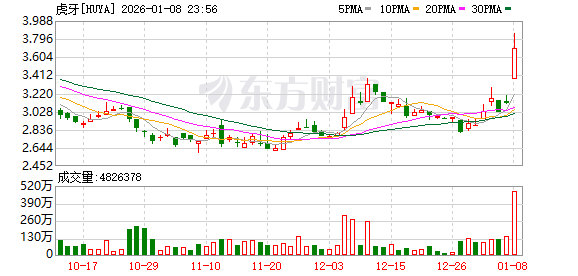
Market Overview - The U.S. stock market opened lower on January 8, with the Dow Jones up 0.34%, S&P 500 up 0.01%, and Nasdaq down 0.51% [2] - Major tech stocks mostly declined, with Nvidia and Intel dropping over 2%, and Apple and Facebook down over 1% [4] - Defense stocks surged, with Northrop Grumman rising over 9% and Lockheed Martin up over 7%, following President Trump's proposal to increase U.S. military spending from $1 trillion to $1.5 trillion for fiscal year 2027 [4] Chinese Stocks - The Nasdaq Golden Dragon China Index saw a short-term rise of over 1.14%, with notable gains from Huya (up over 22%), Bilibili (up over 7%), and Alibaba (up over 4%) [5] - However, Canadian Solar fell over 8%, and Dingdong Maicai dropped over 4% [5] Commodity Prices - Silver prices fell significantly, with spot silver down over 5% and COMEX silver down over 4% [5] - The gold-silver ratio has dropped below 60, currently around 59, with the ratio hitting a ten-year low of 57.22 on January 6 [5] Oil Prices - International oil prices increased, with Brent crude rising nearly 2% to $61 per barrel and WTI crude up 1.95% to $57 per barrel [7] Cryptocurrency Market - Major cryptocurrencies experienced a collective decline, with Bitcoin dropping over 2% to below $90,000 [7][8] - Other cryptocurrencies also saw significant losses, including Ethereum down 3.81% and XRP down 6.66% [8] Employment Data - The number of initial jobless claims in the U.S. was recorded at 208,000, slightly below the forecast of 212,000, with the previous value revised to 200,000 [9] - Federal Reserve Governor Milan indicated a potential interest rate cut of about 150 basis points by 2026, which could create approximately one million jobs without triggering inflation [9] Federal Reserve Outlook - Market expectations suggest the Federal Reserve may enter a rate-cutting cycle, with predictions varying from one to two rate cuts this year [10] - The overall sentiment among Fed officials is cautious, with a focus on balancing employment and inflation data [9][10]





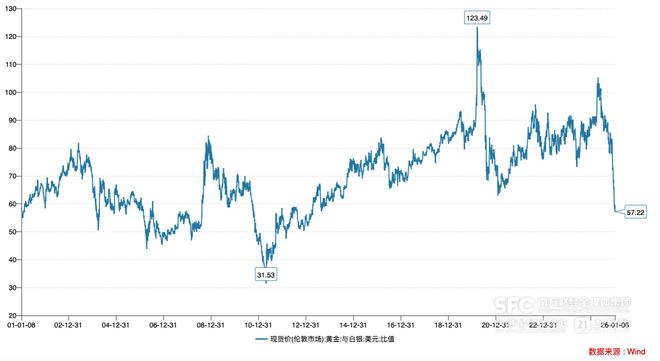
黄金、白银再跳水,金银比跌至10年新低
Xin Lang Cai Jing· 2026-01-08 12:58
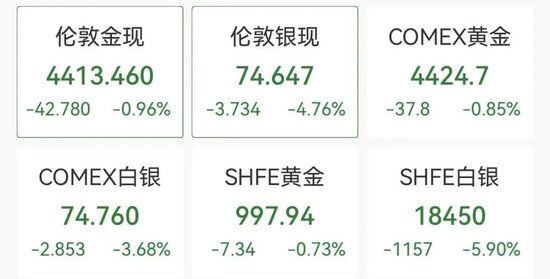
Core Viewpoint - The recent decline in gold and silver prices indicates a significant shift in the gold-silver ratio, which has dropped below 60, suggesting potential economic uncertainty and a shift in investment dynamics [2][10][18]. Price Movements - As of January 8, gold prices fell to $4,413 per ounce, while silver prices dropped to $74.6 per ounce, marking a decline of 0.96% and 4.76% respectively [1][15]. - The gold-silver ratio has decreased significantly, reaching 59, with a low of 57.22 recorded on January 6, which is the lowest level in the past decade [2][10]. Historical Context - The last time the gold-silver ratio fell below 60 was in September 2010, and it previously dropped to below 40 in 2011 before recovering above 60 in 2013 [2][10]. - Historical data shows that the gold-silver ratio is often a reflection of economic cycles, with significant increases during periods of economic crisis and decreases during recovery phases [4][17]. Economic Indicators - The gold-silver ratio is closely related to the Juglar cycle, which describes medium-term investment and capacity fluctuations, indicating that the current economic environment may be entering a new phase of investment growth, particularly in the renewable energy sector [3][20]. - Analysts suggest that the current economic conditions in China are conducive to increased demand for silver, particularly in industrial applications [20]. Investment Strategies - Wealth management institutions are increasingly focusing on gold and silver investment products, indicating a growing interest in these assets as a hedge against economic uncertainty [23][24]. - The gold-silver ratio serves as a critical tool for assessing the relative valuation of gold and silver, with a long-term average around 60, suggesting that adjustments in asset allocation could enhance risk-adjusted returns for investors [11][24]. Future Outlook - Analysts predict that the gold-silver ratio may stabilize within a range of 40 to 80, reflecting a potential shift in market dynamics and investment strategies [22]. - There is a belief that the historical high points for gold and silver prices may not have been reached yet, with expectations for silver prices to potentially rise further in the near term [10][22].
黄金、白银再跳水,金银比跌至10年新低
21世纪经济报道· 2026-01-08 12:53
Core Viewpoint - The article discusses the recent decline in gold and silver prices, highlighting the significant drop in the gold-silver ratio, which is an important indicator of economic conditions and asset allocation strategies [1][2][4]. Price Movements - As of January 8, gold prices fell to $4413 per ounce, a decrease of 0.96%, while silver prices dropped to $74.6 per ounce, down 4.76% [1][2]. - The gold-silver ratio has fallen below 60, currently around 59, marking a significant decline from a high of 103 in April 2025 [2][4]. Historical Context - The last time the gold-silver ratio fell below 60 was in September 2010, and it reached a low of below 40 in 2011 before recovering [2]. - Historically, the gold-silver ratio has been a key indicator of macroeconomic cycles, often rising during economic crises and falling during recoveries [6][8]. Economic Indicators - The gold-silver ratio is correlated with the Juglar cycle, which describes medium-term investment and capacity fluctuations, indicating economic volatility [3][8]. - A higher gold-silver ratio suggests that gold may be overvalued, while a lower ratio indicates that silver may be undervalued [4][12]. Investment Strategies - The article emphasizes the importance of the gold-silver ratio in asset allocation, suggesting that investors can optimize returns by adjusting their holdings based on this ratio [11][12]. - Wealth management institutions are increasingly focusing on precious metal investment products, indicating a growing interest in gold and silver as core assets [11]. Future Outlook - Analysts predict that the gold-silver ratio will likely oscillate within a range of 40 to 80, moving away from its previous high levels [11][14]. - The current economic environment, characterized by a shift towards new production capacities and policies, is expected to influence silver demand significantly [8][9].
伦敦银走势宽幅震荡 两党罕见联手欲限制总统
Jin Tou Wang· 2026-01-08 03:28
今日周四(1月8日)亚盘时段,伦敦银目前交投于77.79一线上方,今日开盘于78.24美元/盎司,截至发 稿,伦敦银暂报78.06美元/盎司,下跌0.14%,最高触及78.99美元/盎司,最低下探77.43美元/盎司,目 前来看,伦敦银盘内短线偏向看涨走势。 【要闻速递】 弗吉尼亚州民主党参议员、国会军事力量监督的主要倡导者蒂姆.凯恩证实,议员们正准备行使他们的 权力。 凯恩对记者说:"你将看到针对古巴、墨西哥、哥伦比亚、尼日利亚和格陵兰的战争授权决议被提 出。"他提到了自己的参与,称"我极有可能至少是共同提案人,而且很可能会牵头其中一些。" 这一推动建立在先前努力的基础上。凯恩和其他议员曾多次试图通过决议,阻止特朗普在未经国会授权 的情况下攻击委内瑞拉,理由是宪法规定只有国会才能宣战。 预计参议院将在本周四(1月8日)晚些时候就一项停止未经议员批准在委内瑞拉采取进一步军事行动的决 议进行投票。 【最新伦敦银行情解析】 随着金银比攀升至56.50上方,伦敦银价格回落。如果成功测试77.50-78.00美元支撑位,则将推动伦敦 银向下一个支撑位70.20-70.80美元前进。60元作为月线级别的5日均线是非常坚 ...
万家基金贺方舟:白银理论上还有较大上行空间
Zhong Zheng Wang· 2026-01-07 14:56
Group 1 - The core viewpoint of the article highlights the strong performance of the silver market, driven by expectations of multiple interest rate cuts by the Federal Reserve starting in September 2025, which lowers the opportunity cost of holding non-yielding assets like silver and suppresses the dollar's value, thereby boosting silver prices denominated in dollars [1] - Geopolitical risks have increased, leading to silver, like gold, attracting safe-haven investments, while the trend of global central banks increasing their gold holdings indirectly enhances the appeal of precious metals [1] - On the supply and demand side, silver has a rigid industrial demand, particularly from cutting-edge technology sectors, as it is the best conductor of electricity on Earth and is irreplaceable in electric vehicles, photovoltaics, AI servers, and 5G communications [1] Group 2 - The global silver market has been in a supply-demand deficit for several consecutive years, with over 70% of silver being a byproduct of mining copper, lead, and zinc, making it difficult for production to quickly increase in response to rising silver prices, a phenomenon referred to as the "byproduct curse" [1] - Physical inventories, especially the deliverable stocks on the London and New York exchanges, have fallen to historical lows [1] - The gold-silver ratio has decreased from 106 in April to 85, remaining above the historical average range of 40-80, indicating that silver has ample room for price appreciation if gold continues to rise and the ratio moves towards the mean [2]
“金银比”跌至10年来最低水平 意味着什么
2 1 Shi Ji Jing Ji Bao Dao· 2026-01-07 12:23
Core Viewpoint - The "gold-silver ratio" has become a crucial indicator for investment institutions, reflecting economic uncertainty and recovery signals, with the ratio recently dropping below 60, indicating potential investment opportunities in precious metals [2][3][4]. Group 1: Gold-Silver Ratio Trends - The gold-silver ratio has fallen to 57.22 as of January 6, marking the lowest level in the past decade, with historical precedents showing significant fluctuations during economic crises [2][3]. - The ratio's long-term average is around 60; values above 80 suggest gold may be overvalued, while values below 50 indicate silver may be undervalued [2][9]. - The ratio is closely linked to the Juglar cycle, with a negative correlation to manufacturing investment growth, suggesting that as manufacturing investment rises, silver prices may increase faster than gold prices [6][7]. Group 2: Market Dynamics and Investment Strategies - Wealth management institutions are increasingly launching precious metal investment products, indicating a growing interest in gold and silver as investment assets [8]. - The recent surge in silver prices, driven by tight supply and market sentiment, has led to a significant narrowing of the gold-silver ratio, with expectations of further price increases in the near future [7][9]. - Investment strategies are evolving, with a focus on dynamic adjustments to gold and silver allocations in portfolios to optimize risk-return profiles, especially as the gold-silver ratio is expected to revert to historical averages [9][10].
黄金、白银开年狂飙
3 6 Ke· 2026-01-06 11:44
2026年开年以来,全球金融市场似乎与2025年的整体格局相比,并未发生太多变化。除了节节攀升的全球股市外,黄金、白银开年也持续大涨,继续延续 着历史性的牛市之旅。 行情数据显示,现货黄金价格在新年首个完整交易周可谓强势开局,周一大幅上涨2.7%,至每盎司4444.52美元,盘中曾触及去年12月29日以来最高,距 离12月26日创下的4550美元的纪录高位并不遥远。 而白银价格自隔夜迄今更是堪称疯狂:现货白银价格在周一一天内就又跳涨了5.1%,周二亚洲时段又飙升逾3%,再度逼近80美元关口。沪银主力合约日 内更是一度暴涨8.00%,现报19452.00元/千克。 许多业内人士目前正将委内瑞拉新年伊始飞出的"黑天鹅",视为金银价格上涨的主要原因,因这再度激发了人们对贵金属等避险资产的需求。 美国上周六突袭委内瑞拉并逮捕了委内瑞拉总统马杜罗,这是美国自1989年入侵巴拿马以来对拉丁美洲进行的最直接干预。美国总统特朗普还警告称,如 果委内瑞拉方面抵制美国开放其石油行业和阻止毒品贩运的努力,将再次发动打击,并暗示可能就非法毒品流动问题对哥伦比亚和墨西哥采取行动。 Heraeus Metals贵金属交易员Alexand ...
黄金、白银开年狂飙
财联社· 2026-01-06 09:56
2026年开年以来,全球金融市场似乎与2025年的整体格局相比,并未发生太多变化。除了节节攀升的全球股市外,黄金、白银开年也持续 大涨,继续延续着历史性的牛市之旅。 行情数据显示,现货黄金价格在新年首个完整交易周可谓强势开局,周一大幅上涨2.7%,至每盎司4444.52美元,盘中曾触及去年12月29 日以来最高,距离12月26日创下的4550美元的纪录高位并不遥远。 而白银价格自隔夜迄今更是堪称疯狂:现货白银价格在周一一天内就又跳涨了5.1%,周二亚洲时段又飙升逾3%,再度逼近80美元关口。 沪银主力合约日内更是一度暴涨8.00%,现报19452.00元/千克。 许多业内人士目前正将委内瑞拉新年伊始飞出的"黑天鹅",视为金银价格上涨的主要原因,因这再度激发了人们对贵金属等避险资产的需 求。 美国上周六突袭委内瑞拉并逮捕了委内瑞拉总统马杜罗,这是美国自1989年入侵巴拿马以来对拉丁美洲进行的最直接干预。美国总统特朗 普还警告称,如果委内瑞拉方面抵制美国开放其石油行业和阻止毒品贩运的努力,将再次发动打击,并暗示可能就非法毒品流动问题对哥伦 比亚和墨西哥采取行动。 Heraeus Metals贵金属交易员Alexa ...
开年狂飙,2026金银牛市延续“暴力美学”……
Feng Huang Wang· 2026-01-06 07:58
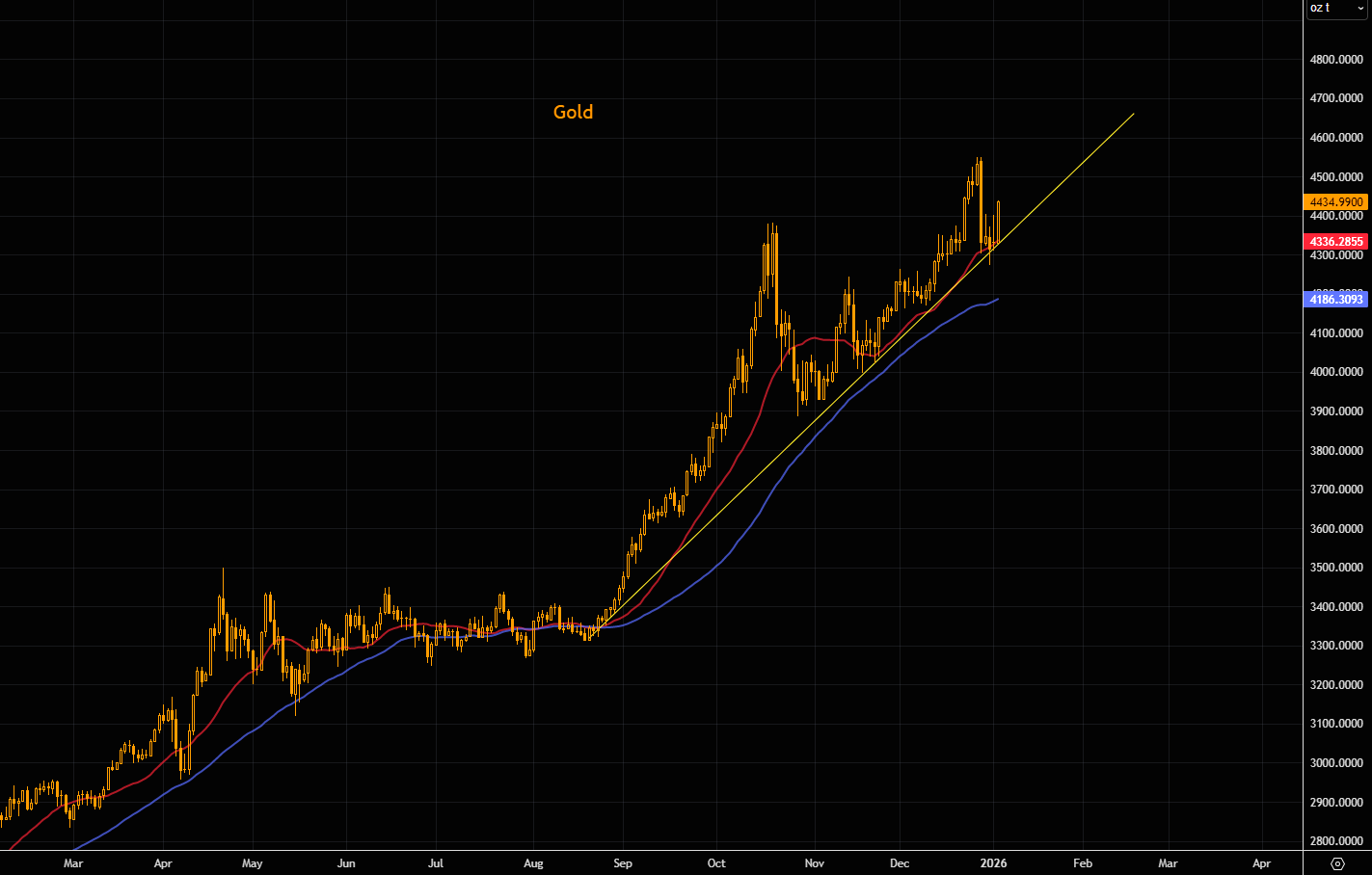
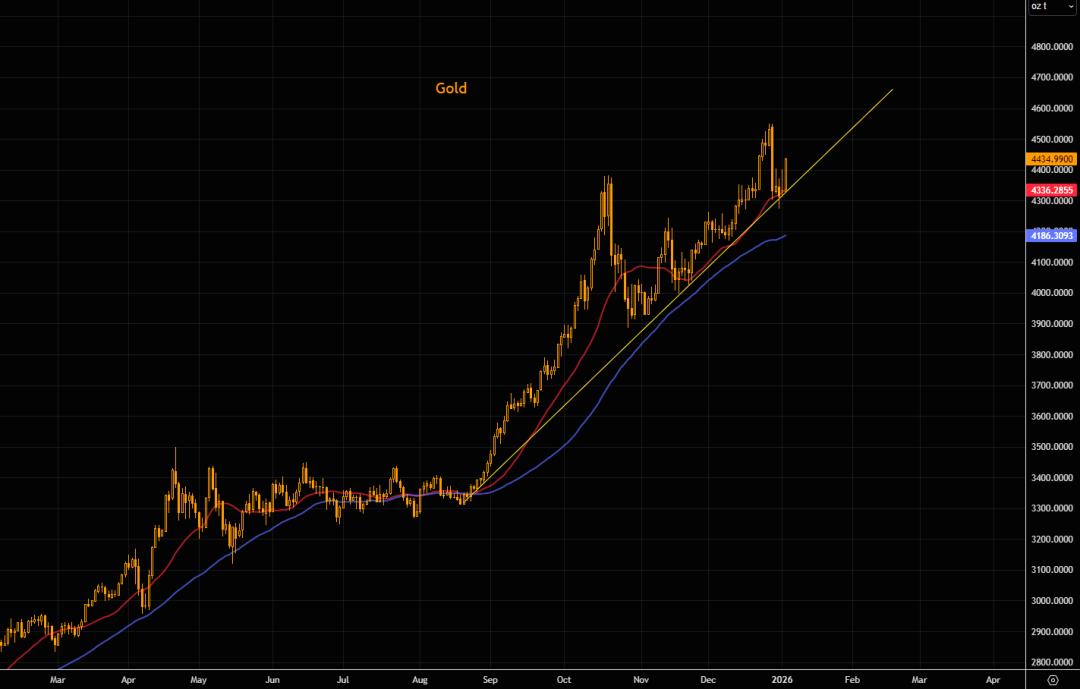
Group 1: Market Overview - The global financial market has shown little change at the beginning of 2026 compared to 2025, with rising global stock markets and significant increases in gold and silver prices continuing their historic bull market [1] - Gold prices surged by 2.7% to $4444.52 per ounce in the first complete trading week of the new year, nearing the record high of $4550 set on December 26 [1] - Silver prices experienced a dramatic increase, jumping 5.1% in one day and approaching the $80 mark, with the Shanghai silver futures contract rising by 8.00% to ¥19630.00 per kilogram [1] Group 2: Geopolitical Influences - The recent U.S. intervention in Venezuela, including the arrest of President Maduro, is viewed as a key factor driving the demand for precious metals as safe-haven assets [2] - Analysts suggest that if geopolitical tensions escalate or if upcoming U.S. data indicates a need for more aggressive monetary easing by the Federal Reserve, gold prices may reach new record highs [2] - The situation in Venezuela is seen as a catalyst for further price increases in gold and silver, which have already seen substantial gains of 64% and 147% respectively over the past year [2] Group 3: Technical Analysis - Gold prices are currently supported above the trend line of the latest bull market, with support at around $4300 and resistance at the historical high from December [3] - Silver has entered a parabolic uptrend, with a steep short-term upward trajectory and support at approximately $72, while also facing resistance at historical highs [11] Group 4: Market Sentiment and Positioning - The non-commercial net long positions in gold have increased, but remain low relative to gold price performance, primarily held by speculators [4] - In silver, non-commercial net positions have missed one of the most extreme short squeeze events, indicating strong underlying buying interest [14] - The volatility index for silver has reached unstable levels, suggesting a high-risk environment for pricing [15] Group 5: Future Outlook - Analysts from Crescat Capital remain bullish on the silver market, suggesting that the current rally is far from over despite market consensus leaning towards mean reversion [18] - UBS highlights the dual risks facing the gold-silver ratio, with potential scenarios that could lead to significant price movements for silver based on industrial demand and inflation concerns [22]