AI智能体

Search documents
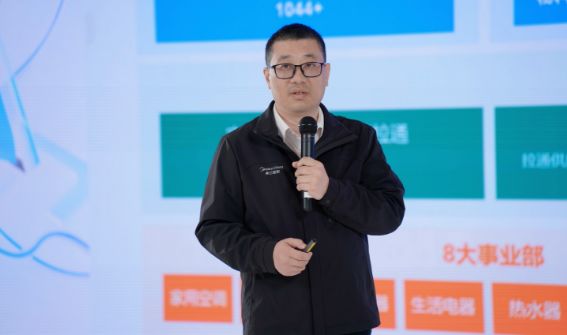
对话美云智数总裁金江:美的累计打造了1.3万个智能体,千分之二可商业化,希望以领域智能体构建护城河
Mei Ri Jing Ji Xin Wen· 2026-01-16 09:54
Core Insights - The AI agent industry is expected to mature significantly by 2026, with a focus on unlocking the next wave of AI commercial value [3] - Midea Group has launched the Meiqing AIGC 3.1 platform and intelligent agent factory solutions, emphasizing the importance of AI in its strategic development [1] - Midea aims to achieve cost reductions of 1.8 billion yuan in 2024, 6 billion yuan in 2025, and over 9 billion yuan in 2026 through AI implementation [5] Group 1 - Midea Group has developed over 13,000 AI agents in the past three years, with 158 agents contributing 95% of the value output, although only 0.2% have been commercialized [1][5] - The company plans to release 20 to 30 new AI agent products in 2026, expanding its offerings to over 40 agents for external sales [3][4] - The market for AI agents is projected to grow from $5.1 billion in 2024 to $47.1 billion by 2030, with a compound annual growth rate of 44.8% [4] Group 2 - Midea's AI strategy involves a three-step approach: from embedding AI in processes, to co-piloting with AI, and finally to full automation with AI agents [5] - The focus on domain-specific AI agents is seen as a way to build a competitive advantage, as general-purpose agents have a relatively low barrier to entry [5] - The company aims to effectively capture market share and customer mindshare by launching its AI capabilities at the beginning of 2026 [4]


速递|AI客服之争:Parloa再融3.5亿美元,与Sierra、Decagon展开头部竞逐
Z Potentials· 2026-01-16 07:59
Core Insights - Parloa, a Berlin-based AI customer service startup, has raised $350 million in Series D funding, achieving a valuation of $3 billion, just eight months after a previous funding round at a $1 billion valuation [1][2] - The funding round was led by General Catalyst, with participation from existing investors including EQT Ventures, Altimeter Capital, Durable Capital, and Mosaic Ventures [2] - Parloa is among many startups focused on developing AI agents to automate customer service tasks traditionally handled by human agents [3] Competitive Landscape - Competitors include Sierra, co-founded by OpenAI's chairman Brett Taylor, which raised $350 million at a $10 billion valuation last September, and Decagon, reportedly seeking funding at over a $4 billion valuation [4] - Other notable competitors are established companies like Intercom and Kore.ai, as well as UK-based PolyAI, which recently raised $86 million at a $750 million valuation [4] - Parloa's CEO, Malte Kosub, believes the market is not a "winner-takes-all" scenario, viewing it as one of the most promising opportunities in software history [4] Market Potential - The global call center workforce is estimated to be around 17 million, indicating significant market potential for automation in customer service [4] - Despite Parloa's annual recurring revenue (ARR) exceeding $50 million, it is not significantly ahead of competitors like PolyAI, which is projected to reach $40 million ARR by 2025, or Decagon, which reportedly has an ARR "significantly exceeding $30 million" [4] - Kosub is confident that the substantial capital raised will provide Parloa with a competitive edge in the market [4] Product Development - Parloa's AI customer service solutions are already being utilized by major clients such as Allianz, Booking.com, HealthEquity, SAP, Sedgwick, and Swiss Life Insurance [5] - The company aims to develop a "multimodal contextual experience" that allows personalized AI customer service to recognize customer identities and specific needs across various communication channels, including apps, websites, and phone calls [5]

从Chat到Act,量子算力推动AI智能体崛起
3 6 Ke· 2026-01-16 07:30
Group 1 - The core idea of the article is the emergence of AI agents powered by quantum computing, which is expected to revolutionize the capabilities of AI from passive responses to proactive actions [1][10]. - The introduction of the "CES Foundry" area at CES 2026 highlights the growing intersection of AI and quantum computing, showcasing their potential to reshape the future [1]. Group 2 - Quantum computing fundamentally differs from classical computing, enabling AI agents to operate in complex, dynamic environments with significantly higher computational complexity [2]. - Quantum superposition allows quantum bits (qubits) to exist in multiple states simultaneously, drastically reducing the time required for AI agents to explore various possibilities [3]. - Quantum entanglement facilitates parallel processing, enabling AI agents to tackle extremely complex problems, such as real-time optimization of urban traffic systems [4]. Group 3 - Quantum supremacy has been achieved, as demonstrated by Google's Sycamore processor, which completed a specific task in 200 seconds that would take classical supercomputers about 10,000 years [5]. - The development of efficient quantum algorithms is crucial for the practical implementation of AI agents, with Shor's algorithm posing a threat to current encryption systems and Grover's algorithm enhancing data retrieval efficiency [7][8][9]. Group 4 - The integration of quantum computing and AI is expected to lead to exponential growth in AI capabilities, allowing for unprecedented action-oriented AI agents [10]. - Quantum-enhanced machine learning can process large datasets more effectively, overcoming the limitations faced by classical computing in various fields, including climate modeling [11]. - Specific applications of quantum AI agents include drug discovery, financial risk management, and optimization of global supply chains, showcasing their transformative potential across industries [12][13]. Group 5 - The ultimate goal of AI development is to create agents capable of memory, perception, reasoning, and autonomous action, with quantum computing being a key enabler of this evolution [14]. - Future computing architectures will likely adopt a hybrid model, where classical computers handle general tasks while quantum computers address highly complex challenges [14]. - The reciprocal relationship between AI and quantum computing may accelerate the arrival of a technological singularity, as AI aids in the development and optimization of quantum algorithms [15].
“Vibe Coding”风靡全球,AI应用浪潮势不可挡! AI编程新星Replit估值四个月翻三倍
智通财经网· 2026-01-16 03:44
Core Insights - Replit Inc. is nearing a $400 million funding round, which is expected to raise its valuation to approximately $9 billion, tripling its previous valuation of $3 billion from a funding round in September 2022 [1][2] - The rise of AI programming, particularly "vibe coding," is becoming a dominant trend in both B2B and B2C markets, indicating a significant shift in software development practices [1][7] Company Overview - Replit, founded ten years ago, has established itself as a leader in the AI programming sector, providing tools that enable both professional developers and beginners to use AI for coding and debugging [1][4] - The platform offers a browser-based integrated development environment (IDE) that supports multiple programming languages, allowing users to write, run, debug, and deploy applications without extensive technical knowledge [4] Product and Technology - Replit's core products include AI assistants like Replit Agent and Ghostwriter, which can automatically generate, debug, and deploy code based on user input in natural language, significantly lowering the barrier to entry for software development [4][5] - The company recently launched an updated version of its AI agent workflow, enabling users to quickly build mobile applications for Android and iOS by simply describing desired functionalities [5] Market Trends - AI programming is rapidly penetrating the global tech industry, with GitHub's Octoverse 2025 reporting that 80% of new developers use AI tools like Copilot within their first week [3] - The competitive landscape includes emerging AI programming startups and major tech companies like OpenAI and Microsoft, all vying for a share of the lucrative AI software engineering market [6] Future Outlook - The valuation increase of Replit signals a positive growth trend in the AI application sector, validating the feasibility of AI application narratives and hinting at accelerated growth potential post-2026 [7] - The demand for AI applications, particularly in the realm of "vibe coding," is expected to continue growing, driven by the need for efficiency and cost reduction in business operations [9]
年终策划:从工具应用到价值创造,AI智能体迎来iPhone时刻
3 6 Ke· 2026-01-15 13:44
Core Insights - The article highlights the significant advancements in AI agents, particularly the launch of Qianwen App, which integrates various services like food delivery and flight booking, marking a comprehensive AI shopping experience [1][3] - The rise of AI agents is seen as a transformative force in the AI industry, shifting from mere tool applications to value creation, with strong policy support and market dynamics driving this evolution [1][2] Group 1: AI Agent Development - Qianwen App has opened functionalities for food delivery, shopping, and travel services, allowing users to place orders through simple commands, showcasing the seamless integration of AI in daily tasks [3] - Major companies, including Alibaba and Tencent, are rapidly developing their AI agent frameworks, with a focus on addressing challenges in building, running, and managing these agents [4] - The AI agent market in China is projected to reach 4.75 billion yuan in 2024, with a growth rate of 64.4%, and is expected to approach 15 billion yuan by 2026 [5][6] Group 2: Multi-Scenario Applications - AI agents are evolving from content generation to goal-oriented functionalities, enhancing their decision-making and real-time interaction capabilities across various industries [7] - In manufacturing, AI agents can predict equipment failures, reducing downtime by 50% through real-time monitoring and predictive maintenance [7] - The financial sector is increasingly adopting AI agents for customer service, risk management, and loan processing, with over 60% of banks implementing AI customer service solutions [8] Group 3: Challenges and Future Directions - The development of AI agents is recognized at the national policy level, with goals set for deep integration into key sectors by 2027 and a fully empowered smart economy by 2030 [10] - There are concerns about the emergence of "pseudo AI agents" that do not offer true intelligence but rather basic automation, highlighting the need for genuine innovation [11] - The industry faces challenges in data quality and ecosystem collaboration, which are crucial for the effective deployment of AI agents in complex scenarios [12]
阿里千问上线“一句话点外卖”功能 和豆包助手走了不同路线
Nan Fang Du Shi Bao· 2026-01-15 05:24
Core Insights - Alibaba's C-end AI application "Qianwen" has launched a life assistant feature that allows users to order food, book flights, and hotels, and find restaurants through simple voice commands, currently integrated only within Alibaba's ecosystem and not with external platforms like Meituan [1][4]. Group 1: Functionality and User Experience - The "Qianwen" app can automatically call Taobao's flash purchase service to recommend nearby coffee shops based on user location when given a command to order coffee [1]. - For hotel and flight bookings, "Qianwen" integrates with Alibaba's Fliggy, providing users with multiple options based on price and comfort, allowing them to select suitable options through card links [4]. - The app has seen a 300% month-on-month increase in user inquiries for product recommendations since its launch two months ago, indicating a growing reliance on AI for shopping decisions [10]. Group 2: Technical Implementation - "Qianwen" utilizes an API-based approach for its AI capabilities, allowing for a smooth user experience by recognizing and analyzing user commands, retrieving inventory from partner platforms, and generating pre-orders for user confirmation [14]. - The AI agent only executes sensitive actions up to the "pending confirmation" stage, requiring users to review and confirm order details before payment, ensuring user oversight in transactions [14]. Group 3: Competitive Landscape - The mobile AI agent is seen as a crucial future traffic entry point, with competition intensifying among major model vendors and mobile manufacturers [14]. - ByteDance's Doubao mobile assistant, which uses screen reading and simulated operations, has gained significant attention but faces challenges in execution smoothness and privacy concerns, leading to temporary restrictions on its capabilities [15]. - The API interface approach has its own challenges, including limited availability of third-party app APIs and the need for extensive negotiations to access these interfaces, making it difficult for mobile AI agents to meet diverse user needs [15].


【公告臻选】虚拟现实+AI智能体+智算中心+华为概念+抖音概念!公司已跟华为昇腾做全栈适配
第一财经· 2026-01-14 14:45
Overview - The article emphasizes the importance of efficiently navigating through a large volume of announcements each night, providing a selection of key announcements and their interpretations to uncover investment opportunities [1]. Group 1: Recent Highlights - A subsidiary of a leading tantalum capacitor company plans to invest 1 billion yuan in the construction of a special device wafer manufacturing and testing base project, indicating a focus on electronic components and domestic substitution [2]. - A company involved in virtual reality and AI has partnered with Huawei Ascend for full-stack adaptation and is also collaborating with ByteDance's Volcano Engine for product and service integration, showcasing advancements in AI and virtual reality technologies [2]. - A company intends to raise no more than 930 million yuan for projects related to high-speed communication and liquid cooling production, reflecting ongoing developments in 5G and data center infrastructure [2].

1月14日晚间公告 | 紫光国微拟购买瑞能半导并复牌;彩讯股份拟募资逾16亿用于Agent开发项目等
Xuan Gu Bao· 2026-01-14 12:12
Group 1: Resumption of Trading - Unisplendour plans to acquire 100% equity of Ruineng Semiconductor from 14 parties through share issuance and cash payment, leading to stock resumption [1] - Minmetals Development's board approved major asset replacement proposals, resulting in stock resumption [2] - Huibo's actual controller will change to Tianjin State-owned Assets Supervision and Administration Commission, with stock resuming tomorrow [3] Group 2: Private Placement - Lante Optics intends to raise no more than 1.055 billion yuan for AR optical product industrialization, production capacity enhancement of glass aspheric lenses, micro-nano optical components R&D, and working capital [4] Group 3: Equity Transfer - Jinhai High-tech's controlling shareholder, Huitou Holdings, plans to transfer 5% of shares at a price of 12.72 yuan per share through an agreement [4] Group 4: External Investment and Daily Operations - Hongda Electronics' subsidiary plans to invest 1 billion yuan in Wuxi High-tech Development Zone for semiconductor special device chip research, design, production, and testing [5] - Caixun plans to issue convertible bonds to raise no more than 1.46 billion yuan for intelligent computing center construction, Rich AIBox platform R&D upgrades, and enterprise-level AI applications [5] - Dingtong Technology intends to issue convertible bonds to raise no more than 930 million yuan for company expansion, high-speed communication and liquid cooling production, new energy BMS production, and working capital [5] - East China Pharmaceutical's subsidiary received FDA approval for clinical trials of DR10624 injection [6] - Xizi Clean Energy reported a cumulative new order of 5.998 billion yuan for 2025 [7] - Tianli Lithium Energy's subsidiary is expected to reduce production by 1,500 to 2,000 tons due to maintenance [8] Group 5: Performance Changes - CITIC Securities expects a net profit of 30.051 billion yuan in 2025, a year-on-year increase of 38.46% [9] - Four-dimensional Map expects a net profit of 90.0925 million to 117 million yuan in 2025, turning profitable due to the booming market for automotive assisted driving [9] - Jinhai Tong expects a net profit of 160 million to 210 million yuan in 2025, a year-on-year increase of 103.87% to 167.58% due to growing demand in the semiconductor packaging and testing equipment sector [9] - Shanghai Silicon Industry anticipates a net loss of 1.53 billion to 1.28 billion yuan in 2025 [10] - Jiamei Packaging expects a net profit of 85.4371 million to 104 million yuan in 2025, a year-on-year decrease of 43.02% to 53.38% due to a "small year" in the beverage industry [10]





彩讯股份(300634.SZ):拟发行可转债募资不超过14.6亿元用于智算中心建设项目等
Ge Long Hui A P P· 2026-01-14 11:29
格隆汇1月14日丨彩讯股份(300634.SZ)公布,拟向不特定对象发行可转债募集资金总额不超过人民币 146,000.00万元(含本数),扣除发行费用后募集资金净额将投资于智算中心建设项目、Rich AIBox平 台研发升级项目、企业级AI智能体应用开发项目。 ...

十年科技沉淀、五度荣膺殊荣:泰康在线以创新引领互联网保险服务新范式
Cai Fu Zai Xian· 2026-01-14 09:44
Core Insights - The article highlights that Taikang Online has been recognized for the fifth time in the "Top 100 InsurTech and Services" awards, reflecting the industry's acknowledgment of its commitment to the "Insurance + Technology" and "Insurance + Services" strategies since 2020 [1][2] Group 1: Strategic Commitment - Taikang Online has consistently adhered to its mission of making insurance more secure, convenient, and affordable over the past ten years, with this latest accolade serving as a testament to its foundational principles [1][3] - The company has invested over 2 billion yuan in technology research and development and filed more than 400 patents, establishing a strong technological moat that contributes to its repeated recognition in industry awards [4] Group 2: Operational Efficiency - Taikang Online has achieved an automation rate of 99% in underwriting and 97% in claims processing, supporting a vast business system that serves over 300 million customers and processes 17.5 billion policies [4] - The company’s strategic focus and resource investment have translated into industry-leading operational efficiency and service scale [4] Group 3: Technological Innovation - The company has introduced a four-layer technical architecture for insurance AI applications, which includes perception, decision-making, execution, and evolution, providing a clear pathway for the industry’s intelligent transformation [5] - This architecture has been implemented across seven core business scenarios, significantly transforming service capabilities, particularly in underwriting and claims processing [6] Group 4: Data Governance - Taikang Online has established a "human-machine co-governance" data security operation system to ensure the safe and efficient operation of AI technologies [7] - The system includes automated data identification and classification capabilities, ensuring data control and compliance throughout its lifecycle [7] Group 5: Service Innovation - The company’s technological innovations have created a clear value loop, enhancing the accessibility and precision of insurance coverage [8] - In 2025, Taikang Online processed over 2.5 billion claims, with an average processing speed of one claim every 0.1 seconds, significantly improving customer experience [8] - The company has also expanded its services to small and micro enterprises, providing risk protection to nearly 300,000 businesses and enhancing social security for over 4.4 million new citizens [9] Group 6: Future Outlook - Taikang Online aims to continue its technological innovation by integrating AI, big data risk control, and privacy computing into insurance scenarios, striving for smarter systems, safer protections, and warmer services [9]