
AI硬件

Search documents
发生在CES的六场对话:来自深圳的 AI 硬件“外卷”
AI前线· 2026-01-10 05:57
Core Insights - The article highlights the significant presence of Chinese hardware companies at CES 2026, showcasing their advancements in AI hardware and robotics, despite geopolitical tensions and challenges such as visa restrictions [2][3][4]. Group 1: Chinese Hardware Dominance - Chinese companies are becoming a crucial part of the global hardware supply chain, with emerging brands leveraging China's supply chain advantages to expand globally and innovate with AI [2]. - The number of Chinese companies participating in CES 2026 decreased to 935, down from over 1300 in 2025, primarily due to visa issues [3]. Group 2: Market Enthusiasm for AI Hardware - Despite challenges, there is a strong market interest in Chinese AI hardware, with companies like Ludens AI and Wan AIChef receiving significant attention and partnership inquiries from local distributors and retailers [5][6]. - The focus on product value and user experience remains a driving force in the market, overshadowing geopolitical concerns [7]. Group 3: Trends in AI Hardware - AI hardware is evolving, with previously niche products like smart rings and pet robots being redefined as strategic entry points into the next generation of AI ecosystems [10]. - Companies are focusing on creating devices that integrate seamlessly into users' daily lives, with smart rings being positioned as key to unlocking broader ecosystems [11]. Group 4: Innovations in AI Hardware - Companies like Tuya Smart are expanding their product lines, introducing AI pet companion robots and life assistants, aiming to create a cohesive AI hardware network [19][20]. - The article emphasizes the importance of emotional connection and user interaction in the development of AI companion products, with companies exploring various market segments [22][29]. Group 5: Challenges and Opportunities for Startups - AI hardware startups are focusing on data, scenarios, and interaction to carve out their niche in a market increasingly dominated by larger companies [24]. - The article discusses the significance of private data and specific use cases in developing AI hardware that cannot be easily replicated by larger firms [25][26]. Group 6: Robotics in Industry and Home - The presence of Chinese companies at CES 2026 indicates a shift in the robotics landscape, with a focus on integrating robots into real-world applications, particularly in home and industrial settings [33][36]. - Companies like Caterpillar and Siemens are embedding intelligent capabilities into existing production lines, highlighting the growing importance of robotics in flexible manufacturing [43].


聊一聊AI硬件和软件
傅里叶的猫· 2026-01-09 15:58
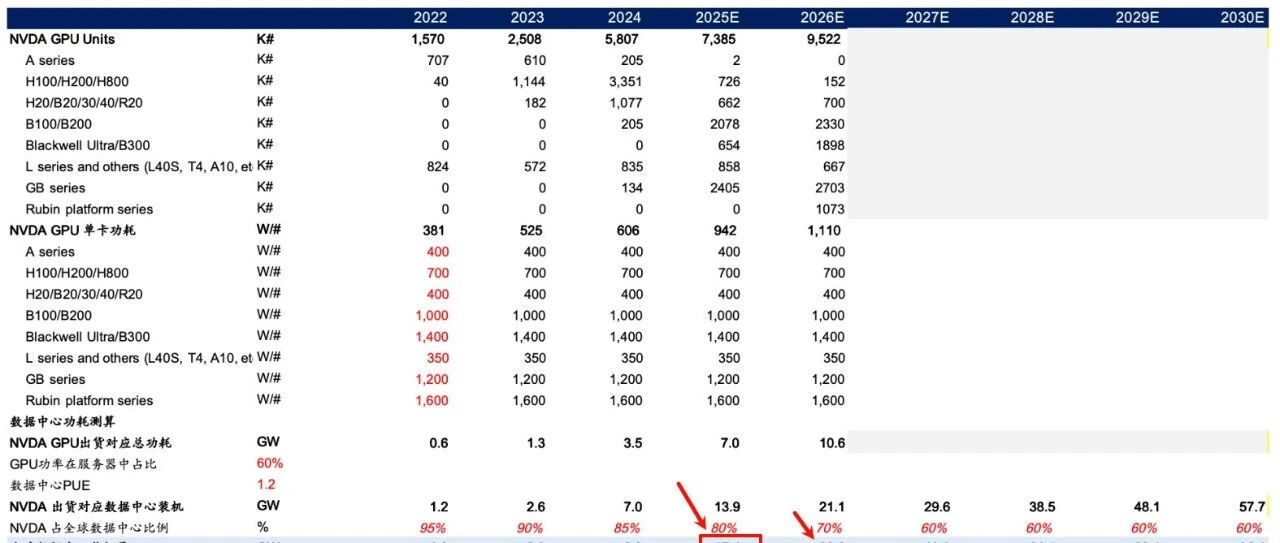
Group 1: AI Hardware Market - The recent performance of AI hardware is not strong, but the US stock market's hardware sector showed some resilience [1] - The memory shortage is exaggerated; a report from Macquarie suggests that the new DRAM capacity in the next two years can only support about 15GW of AI data center construction, which may delay global AI expansion plans [3] - A different perspective from a memory industry expert indicates that the capacity could support 20GW and 33GW this year and next year, respectively [5] - The global data center installation capacity is projected to reach 17.4GW by 2025, with an expected increase to 30.2GW this year [5] - Due to memory constraints, the growth of AI data centers (AIDC) will not be as rapid as anticipated, contributing to the recent decline in hardware market sentiment [7] Group 2: AI Software and Applications - The AI software and application market is exceeding many expectations, with a positive outlook for AI applications this year [8] - The government is intensifying support for AI policies, with initiatives in various sectors like healthcare, education, and manufacturing, aiming for quantifiable goals by 2026 [9] - Major tech companies are competing for AI traffic entry points and ecosystem development, with strategies focusing on both consumer (C-end) and business (B-end) markets [10][11] - For the C-end, companies are enhancing user engagement and monetization capabilities, while for the B-end, they are driving cloud revenue through developer ecosystems [12] - The competition has extended to physical scenarios, with companies like Waymo and Tesla accelerating their efforts in ROBOTAXI [13] - Key technological advancements in AI models are expected to focus on world models, native multimodality, and self-evolving agents, with significant breakthroughs anticipated by 2026 [14][15] - The core competitiveness of AI application companies lies in their ability to integrate technology quickly and effectively into specific scenarios, achieving commercial viability [15]


一周热榜精选:非农关闭本月降息大门!特朗普中期选举前发力?
Jin Shi Shu Ju· 2026-01-09 14:11
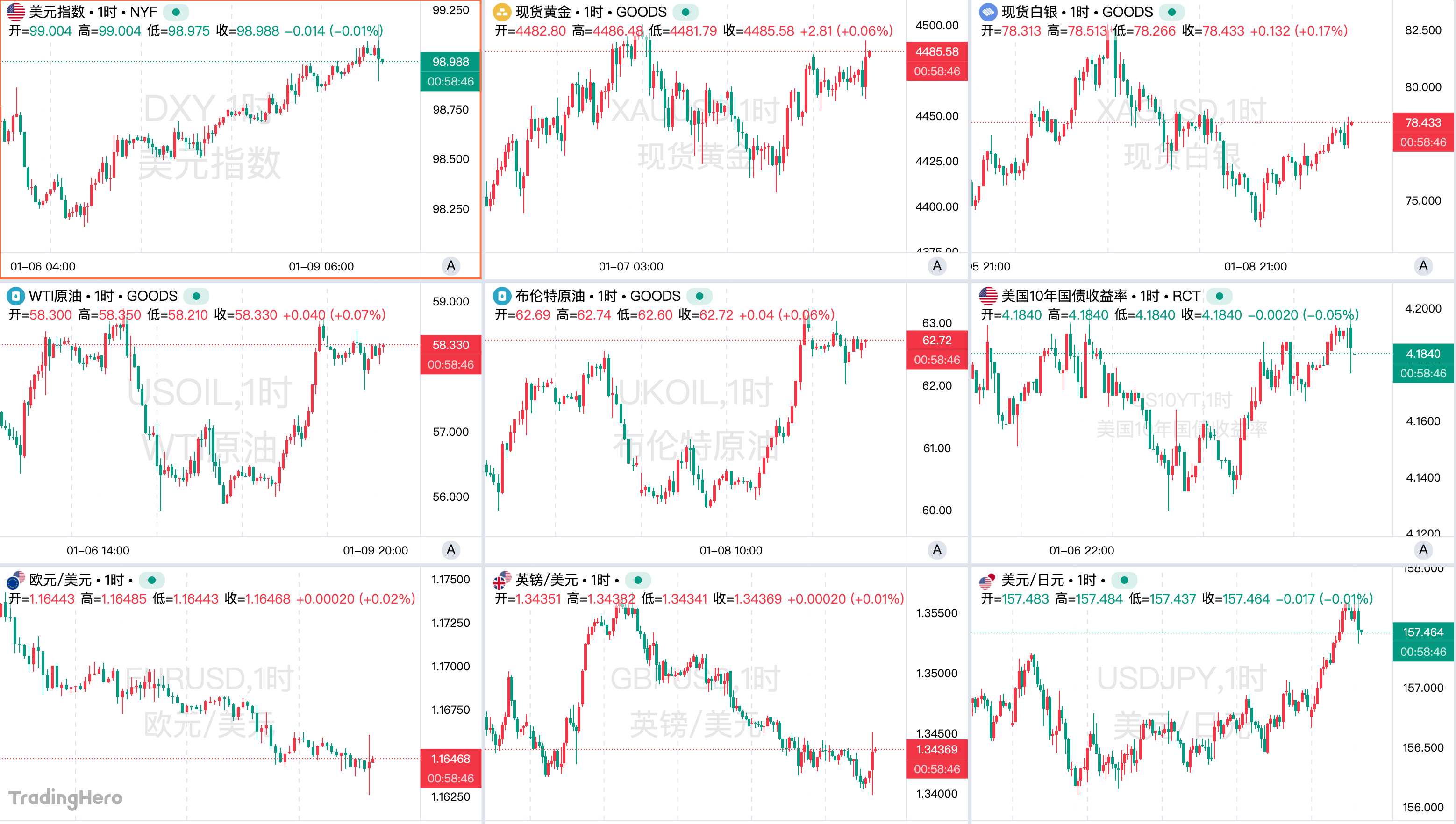
Group 1: Currency and Commodity Markets - The US dollar index has risen for four consecutive days, reaching a near one-month high above the 99 mark, supported by rising US Treasury yields and increased demand due to heightened risk aversion [1] - Gold prices experienced volatility, initially rising due to safe-haven demand from the Venezuela situation, peaking at $4500 per ounce before retreating, while silver showed even greater fluctuations [1] - The CME will raise margin requirements for gold, silver, platinum, and palladium futures on January 9, marking the third adjustment in a month, aimed at curbing speculation in the silver futures market [1] - Non-US currencies weakened overall, influenced by the stabilization of the dollar and market caution, with the euro and pound declining against the dollar for four consecutive days [1] Group 2: Oil Market Dynamics - International oil prices fluctuated significantly, initially rising due to uncertainty over supply from Venezuela, but later falling as Trump announced a deal with Venezuela, raising concerns over oversupply [2] - Oil prices rebounded on Thursday amid geopolitical crises raising supply disruption fears [2] Group 3: Investment Bank Predictions - Bank of America predicts the average gold price will reach $4538 per ounce by 2026, while silver could soar to between $135 and $309 per ounce [5] - Citigroup expects copper prices to potentially exceed $14,000 per ton in January [5] - Deutsche Bank suggests the energy sector may benefit the most from the BCOM index's annual rebalancing [5] Group 4: Economic Indicators and Employment Data - The US non-farm payroll report showed mixed results, with December adding 50,000 jobs, below the expected 60,000, while the unemployment rate fell to 4.4% [10] - The market perceives the drop in unemployment as closing the door on potential Fed rate cuts in January, with traders now pricing in a slower pace of rate reductions [11] Group 5: Commodity Index Rebalancing - The Bloomberg Commodity Index (BCOM) is undergoing annual rebalancing, with gold and silver facing significant sell-off pressures, estimated at $141 billion combined [13] - Gold's weight in the index will decrease from 20.4% to 14.9%, leading to a sell-off of approximately 2.4 million ounces of gold [13] Group 6: Geopolitical Events Impacting Markets - The situation in Venezuela has led to significant geopolitical tensions, with the US taking military action and controlling oil sales, which may impact global oil prices [6][7] - The ongoing protests in Iran, driven by economic hardships, have escalated, with significant implications for regional stability and potential international responses [18]




从联网设备到智能体终端,阿里云开启AI硬件的普惠元年
3 6 Ke· 2026-01-09 13:26
Core Insights - The CES 2026 event highlights the significant presence of Chinese companies, which account for one-quarter of all exhibitors, signaling a shift in AI hardware from novelty to independent intelligent agents [1][3] - Alibaba Cloud is playing a crucial role in this transformation, providing foundational support for hardware innovation without pursuing independent hardware development [4][13] - The evolution of AI hardware is marked by a transition from "functional intelligence" to "system-level intelligence," driven by advancements in underlying technologies and business models [5][6] Group 1: Industry Transformation - The AI hardware industry is entering a phase of explosive growth, moving away from "pseudo-intelligence" to devices capable of understanding complex human interactions [5][6] - The collaboration between cloud computing and edge computing is becoming the industry standard, with Alibaba Cloud offering tailored intelligence solutions for various hardware needs [7][8] - The integration of AI capabilities into hardware is redefining user interactions, allowing devices to respond to more abstract user requests and adapt to human habits [8][10] Group 2: Alibaba Cloud's Role - Alibaba Cloud is recognized as an "emerging leader" in key areas such as cloud infrastructure and model capabilities, positioning itself alongside top global AI companies [9] - The company emphasizes the importance of making technology accessible and affordable, ensuring that AI hardware becomes a common tool rather than an expensive luxury [4][24] - By providing extensive model capabilities, Alibaba Cloud enables over 150,000 hardware manufacturers to innovate without the need for substantial resources [27][28] Group 3: Market Dynamics - The market for AI consumer hardware is shifting towards a more discerning consumer base that values stability, experience, and real-world application [10][12] - Users are increasingly willing to pay for perceived value, with a notable rise in subscription models for AI functionalities, particularly in health-related applications [12][10] - The relationship between large tech companies and smaller manufacturers is evolving from competition to collaboration, fostering a more symbiotic ecosystem [24][28] Group 4: Product Innovations - New AI products, such as the Mooni M1 for children, demonstrate how AI can enhance user interaction by focusing on individual needs and preferences [14][16] - In the smartphone sector, companies like OPPO and Honor are integrating advanced AI capabilities to improve user experience and interaction [18][19] - The automotive industry is also seeing significant advancements, with AI systems transforming vehicle interfaces into intelligent hubs that understand and respond to user needs [19][21]

从联网设备到智能体终端,阿里云开启AI硬件的普惠元年
36氪· 2026-01-09 13:09
Core Viewpoint - The article emphasizes that AI hardware has evolved from being mere gimmicks to becoming independent intelligent entities, showcasing significant innovation from Chinese manufacturers at CES 2026 and the role of Alibaba Cloud in this transformation [3][6][19]. Group 1: AI Hardware Evolution - AI hardware has crossed the threshold from being toys to independent intelligent agents, indicating a major shift in the industry [3][6]. - The transition from "China manufacturing" to "China creation" is highlighted, with Alibaba Cloud playing a crucial role in providing the necessary technological support for hardware innovation [7][19]. - The year 2026 marks the beginning of a "species explosion" in AI hardware, driven by continuous technological advancements and a shift in business logic [9][10]. Group 2: Technological Advancements - AI hardware is undergoing a transformation from "functional intelligence" to "system-level intelligence," with the ability to understand complex environments [10][11]. - The collaboration between cloud computing and edge computing is becoming the industry standard, allowing for a balance between performance and power consumption [11][12]. - Alibaba Cloud's models, ranging from 0.5 billion to 480 billion parameters, provide tailored intelligence solutions for various hardware needs [11][12]. Group 3: Market Dynamics - The market for AI consumer hardware is shifting from an "enlightenment market" to a more mature one, where users demand stable performance and real-life value [13][14]. - Users are increasingly willing to pay for AI functionalities, particularly in health-related applications, indicating a significant change in consumer behavior [14][16]. - The evolution of payment models from one-time purchases to subscription services reflects a deeper integration of AI into everyday life [16]. Group 4: Role of Alibaba Cloud - Alibaba Cloud is positioned as a silent innovator, supporting over 150,000 hardware manufacturers without competing directly in the hardware market [19][34]. - The company’s approach fosters trust among manufacturers, allowing them to innovate collaboratively rather than defensively [19][34]. - By providing a robust AI infrastructure, Alibaba Cloud enables Chinese manufacturers to transition from low-margin assembly to high-value innovation [39][40]. Group 5: New Product Innovations - New AI products, such as the Mooni M1 for children, demonstrate how AI capabilities are integrated into hardware, enhancing user interaction [22][28]. - The collaboration with various companies has led to significant advancements in wearable technology and creative hardware, showcasing the versatility of AI applications [24][26]. - The smartphone industry is also experiencing a transformation, with enhanced interaction capabilities through AI, making devices more intuitive and responsive [29][30]. Group 6: Global Market Position - Chinese hardware is evolving from being a follower in the global tech landscape to becoming a leader in defining new standards [36][38]. - The collaboration between Alibaba Cloud and hardware manufacturers is reshaping the global value chain, allowing for a more competitive stance in the international market [39][40].

吉利发布全域AI 2.0,消费电子ETF(561600)盘中蓄势
Xin Lang Cai Jing· 2026-01-08 02:04
Core Viewpoint - The consumer electronics sector is experiencing mixed performance, with notable developments in AI technology and structural growth opportunities for key manufacturers and suppliers [1] Group 1: Market Performance - As of January 8, 2026, the CSI Consumer Electronics Theme Index (931494) decreased by 0.22%, with component stocks showing varied performance [1] - Chip Yuan Co. (688521) led the gains with an increase of 3.34%, while Luxshare Precision (002475) saw the largest decline at 3.81% [1] - The Consumer Electronics ETF (561600) fell by 0.16%, with the latest price at 1.26 yuan [1] Group 2: Industry Developments - On January 7, Geely Automobile Group unveiled its AI 2.0 technology system at the 2026 Consumer Electronics Show (CES) in Las Vegas, introducing the G-ASD (Geely Afari Smart Driving) system [1] - Geely plans to launch high-speed L3 and low-speed L4 autonomous driving features to the market by 2026 [1] - According to Jinyuan Securities, the consumer electronics sector saw a weekly increase of 0.93%, with the components and assembly sub-sector rising by 1.04%, indicating a recovery in certain parts of the industry chain [1] Group 3: Index Composition - The CSI Consumer Electronics Theme Index comprises 50 listed companies involved in component production and electronic device design and manufacturing [2] - As of December 31, 2025, the top ten weighted stocks in the index accounted for 54.35% of the total, including Luxshare Precision (002475) and Cambricon Technologies (688256) [2]
华尔街见闻早餐FM-Radio | 2026年1月8日
Sou Hu Cai Jing· 2026-01-07 23:36
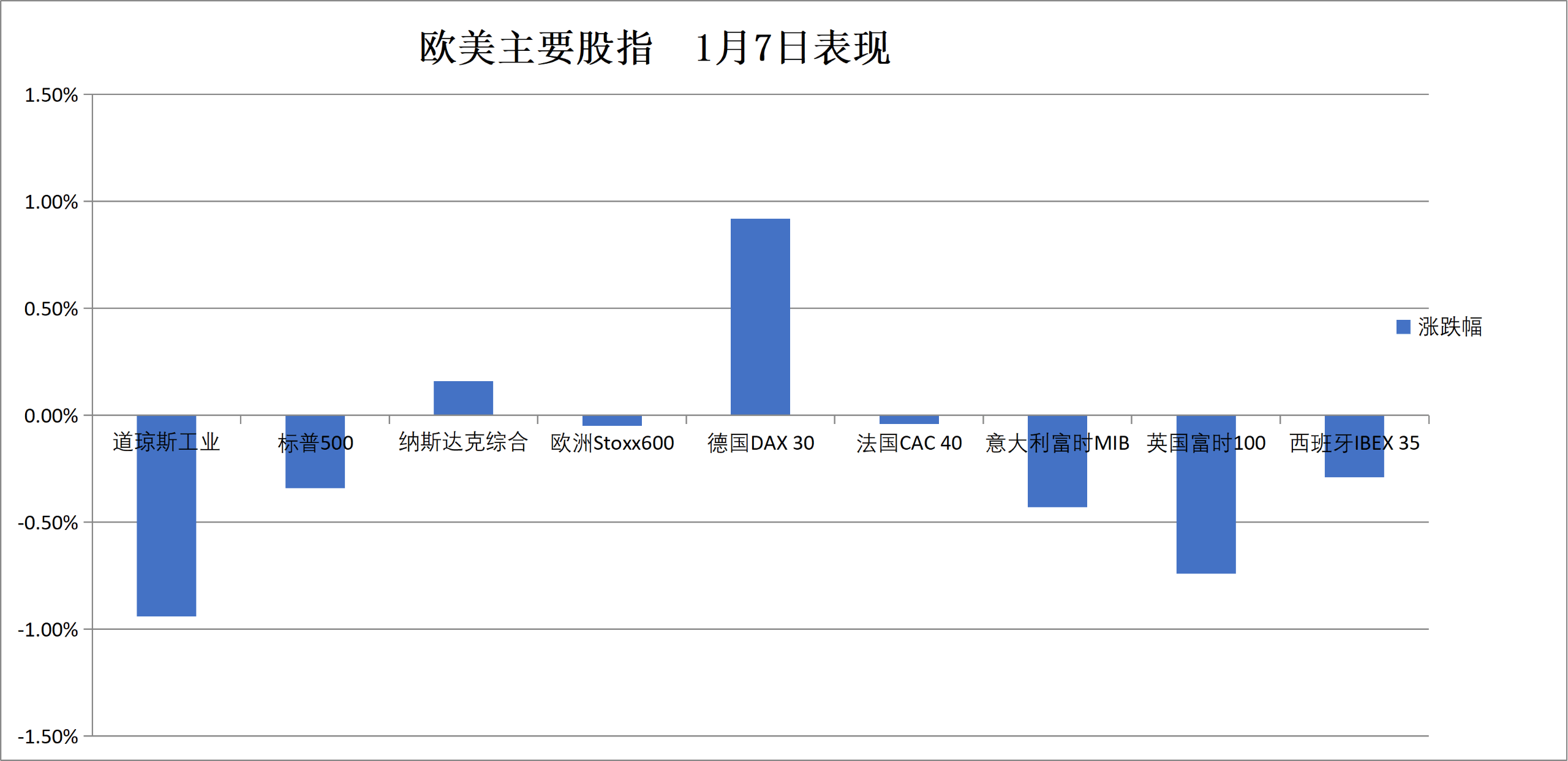
Market Overview - The US economic data presents mixed signals, with geopolitical risks affecting the stock market, leading to declines in the S&P 500 and Dow Jones, while the Nasdaq has seen three consecutive days of gains [1] - Google's parent company saw a 2.5% increase in stock price, surpassing Apple's market value for the first time since 2019, while Apple experienced a six-day decline [1] - The chip index halted a three-day rise, but Nvidia rebounded by 1% [1] - Valero Energy shares rose over 3% following Trump's announcement regarding the transfer of Venezuelan oil to the US [1] - Defense contractors fell after Trump stated he would not allow dividends and buybacks, with Northrop Grumman down 5.5% and Lockheed Martin nearly 5% [1] - Blackstone shares dropped 5.6% after Trump proposed banning institutional investors from purchasing single-family homes [1] Economic Indicators - The US ADP employment report showed a modest increase of 41,000 jobs in December, below expectations, while the JOLTS job openings fell to a one-year low [6][19] - The ISM services PMI rose to 54.4, the highest in over a year, indicating robust demand and a recovery in hiring [19] - The offshore RMB fell over 100 points, nearing the 7.0 mark, hitting a new low for the year [1] Commodities - Precious metals experienced a significant drop, with silver and platinum leading the decline, silver futures down over 6% and platinum nearly 8% [1][17] - Industrial metals also fell, with copper down over 2% and nickel down over 3% [1] - Oil prices dropped to a three-week low, with WTI crude futures down 2% [1][13] AI and Technology - The Chinese government aims to accelerate the upgrade of smart terminals, with a goal for key AI technologies to achieve reliable supply by 2027 [4][33] - The AI sector is seeing significant investment, with companies like Zhiyuan AI and MiniMax planning IPOs in Hong Kong, raising substantial capital [21][9] - The introduction of Gemini AI-powered smart TVs by Google marks a significant step in the consumer electronics sector [22] International Relations - The US is set to "resell" Venezuelan oil and has demanded Venezuela cut economic ties with China and Russia, which has drawn criticism from China [5][20] - The geopolitical landscape is tense, with the US military's recent actions against Russian-flagged oil tankers raising concerns about potential military escalation [20][26]
深蓝汽车完成融资;xTool冲刺港股IPO;菲拉格慕将终止股东协议
Sou Hu Cai Jing· 2026-01-07 06:29
Funding and Investment - Looki, an AI hardware company, has completed over $20 million in Series A funding, led by Ant Group, with participation from Meituan Longzhu, Huaden, and others. The funds will be used for technology upgrades, supply chain integration, and next-generation interactive hardware exploration [3] - Deep Blue Automotive announced a C round financing of 6.122 billion RMB, with investors including China Merchants Bank and Changan Automobile. The company focuses on pure electric, range-extended, and hydrogen energy technologies, having delivered over 700,000 vehicles globally [5] - RayNeo, a consumer AR brand, has secured over 1 billion RMB in a new funding round, led by China Mobile Chain Long Fund and CITIC Jinshi. The company is known for its full-color Micro LED AR glasses [7] Company Developments - xTool, a consumer-grade laser tool brand, has submitted its IPO application to the Hong Kong Stock Exchange, aiming to become the first publicly listed company in the consumer-grade laser engraving machine sector [9] - Yao Mazi, a leading brand in the pepper oil market, has had its IPO application accepted by the Beijing Stock Exchange. The company holds a 30% market share in China's pepper oil market as of 2024 [12] Manufacturing and Production - Swire Coca-Cola has commenced construction on a green smart production base in Hainan, with new factories in Suzhou and the Greater Bay Area set to begin operations in the first half of 2026 [14] Corporate Governance - Salvatore Ferragamo Group's major shareholder, Ferragamo Finanziaria S.p.A., announced it will not renew its shareholder agreement with MHL-Majestic Honor Limited after June 29, 2026, aiming to regain full voting rights [17] - New Balance's Senior Vice President Melissa Worth will end her seven-year tenure, during which the company experienced significant growth. The search for her successor is ongoing [22] - Chip Wilson, founder of lululemon, is attempting to restructure the board of directors, citing a lack of visionary leadership. He has nominated three candidates for board positions amid declining stock prices and sales growth challenges [25]

34家机器人“霸屏”CES2026 !谁将定义未来的新材料
DT新材料· 2026-01-06 16:04
Core Insights - The article highlights the significant advancements in the robotics industry, particularly focusing on humanoid robots and the materials that support their development [4][7][16]. - The upcoming FINE 2026 expo in Shanghai is positioned as a strategic platform for showcasing innovations in new materials that will drive future industries [2][25]. Humanoid Robots - Humanoid robots rely on three core technology modules: environmental perception, motion control, and human-computer interaction [8]. - China has made substantial progress in the production of core components for humanoid robots, achieving breakthroughs in domestic manufacturing capabilities [12]. Key Exhibitors at CES 2026 - The article lists 20 Chinese companies showcasing their humanoid robots at CES 2026, with notable mentions including Unitree, AgiBot, and UBTECH, highlighting their unique features and market positions [13]. - The presence of 34 humanoid robot companies at CES 2026 indicates a strong competitive landscape, with Chinese firms accounting for 58.8% of the exhibitors [4][7]. Material Innovations - Key materials driving the evolution of humanoid robots include titanium alloys, PEEK, flexible electronics, and advanced battery technologies, each contributing to weight reduction, durability, and performance [18]. - The use of titanium alloys and magnesium-aluminum alloys addresses the challenges of weight and load capacity, with titanium achieving a 40% weight reduction and a threefold increase in lifespan through advanced manufacturing techniques [18]. Future Industry Landscape - The FINE 2026 expo is set to feature various exhibitions focused on advanced semiconductors, lightweight materials, and energy solutions, emphasizing China's role in global material innovation [19][25]. - The article suggests that the advancements in materials are crucial for the commercialization of robotics and the broader transformation of future industries [16][18].
扑朔迷离的豆包眼镜
Bei Jing Shang Bao· 2026-01-06 15:52
Core Viewpoint - The news highlights the cautious approach of ByteDance regarding its "Doubao AI Glasses," which are set to enter the shipping phase with a planned quantity of 100,000 units and a starting price below 2,000 yuan, although there are conflicting reports about sales plans and product details [1][2]. Group 1: Product Development and Strategy - ByteDance's "Doubao AI Glasses" are developed in collaboration with Longqi Technology, with the latter responsible for the underlying UI and ByteDance for the app development [2]. - The first generation of Doubao AI Glasses is primarily aimed at Doubao's loyal users and is not intended for public sale [2]. - The second generation of Doubao AI Glasses is currently in development, with no mass production yet, and the decision on whether to open sales to ordinary consumers will take months to determine [2]. Group 2: Technology and Market Positioning - The glasses utilize the Qualcomm AR1 chip instead of the previously rumored Hengxuan 2800 chip with an external ISP chip [2]. - ByteDance's focus is not solely on the hardware but on establishing a new interactive entry point that integrates terminals, models, and ecosystems [1][2]. - The company aims to transition AI from passive responses to proactive services through visual recognition, spatial awareness, and contextual understanding, positioning Doubao AI as a default option for human-computer interaction in the AI era [2]. Group 3: Competitive Landscape - The competitive landscape for AI hardware is intensifying, with major companies like Meta, Apple, Huawei, Xiaomi, Baidu, and Alibaba entering the market, offering a variety of products from audio glasses to AR headsets [2]. - IDC forecasts that the shipment volume of smart glasses in China will reach 2.9 million units by 2025, representing a year-on-year growth of over 120% [2].