
人民币国际化

Search documents
上海成黄金托管新中心!东盟弃欧美选中国,人民币迎来新机遇!
Sou Hu Cai Jing· 2025-10-06 15:57
Core Viewpoint - The internationalization of the Renminbi (RMB) is gaining momentum amid a global trend of de-dollarization, with countries increasingly seeking alternatives to the US dollar for trade payments, particularly through the launch of the digital RMB international operation center in Shanghai [1][14]. Group 1: RMB Internationalization Progress - As of January to August 2024, the amount of goods trade settled in RMB accounted for 26.5% of global cross-border trade [5]. - In August 2024, RMB's share in global payments was 4.69%, maintaining its position as the fourth largest payment currency for ten consecutive months [7]. - The Cross-Border Interbank Payment System (CIPS) covers 189 countries and regions, facilitating smoother RMB circulation internationally [8]. Group 2: Challenges to RMB Internationalization - The capital account remains insufficiently open, limiting foreign investment in China's bond and stock markets due to quota restrictions [10]. - The liquidity and safety of domestic assets are lacking, with China's government bonds having a market size significantly smaller than US Treasuries [12]. - A limited number of commodities are priced in RMB, with only 4% of imported crude oil settled in RMB in 2024 [12]. Group 3: Gold as a Strategic Asset - Southeast Asian countries are increasingly storing gold in China, which signifies a shift in the global financial landscape and a competition for gold pricing power [3][19]. - The combination of digital RMB and gold provides a new pathway for RMB internationalization, allowing countries to use RMB without converting to USD [14][29]. - The Shanghai Gold Exchange is the largest physical gold trading platform globally, facilitating transactions in RMB and providing services like gold leasing and financing [25]. Group 4: Economic and Geopolitical Implications - The geopolitical climate, particularly post-Russia-Ukraine conflict, has led countries to seek safer asset storage options, with China emerging as a viable alternative [23][25]. - The RMB-gold model could potentially reduce the demand for USD in Southeast Asia by $120 billion annually if 30% of oil trade shifts to this model [31]. - The RMB-gold system aims to enhance the core functions of the RMB as a payment, safe-haven, and reserve currency, gradually breaking the dominance of the USD [33]. Group 5: Impact on Daily Life and Investment - The expansion of RMB usage in international settlements will lower transaction costs for consumers, reducing currency exchange fees [35]. - The promotion of digital RMB will simplify cross-border payments, allowing for seamless transactions without the need for large amounts of foreign currency [37]. - New investment products combining RMB and gold are emerging, offering stable returns and lower risks in the current low-interest-rate environment [40].


澳大利亚懵逼:中美关税战打得好好的,怎么突然打到我的脑袋上?
Sou Hu Cai Jing· 2025-10-06 13:43
Core Viewpoint - The article discusses China's sudden halt in purchasing iron ore from BHP, a major Australian mining company, as a strategic move to push for transactions in RMB and gain pricing power in the iron ore market [1][6][10]. Group 1: Impact on Australia - China's decision to stop purchasing iron ore from BHP directly affects Australia's economy, as iron ore exports account for over 60% of Australia's total exports to China [4][8]. - In the fiscal year 2024-2025, Australia is projected to earn AUD 116 billion from iron ore sales, which could be significantly reduced due to China's halt in purchases [8][12]. - Australia's Prime Minister Albanese expressed disappointment over the situation, emphasizing the importance of iron ore exports for both economies [6][12]. Group 2: China's Strategic Objectives - The primary objective behind China's halt in purchases is to establish RMB as the currency for iron ore transactions, reducing reliance on USD and gaining pricing power [10][22]. - China aims to change the rules of engagement in the iron ore market, moving from being a passive buyer to a key player in setting terms and prices [22][26]. - By diversifying its sources of iron ore, including increased imports from Brazil and securing mining rights in Australia, China is working towards reducing its dependency on Australian iron ore [16][26]. Group 3: Future Prospects for Australia - Australia faces a critical choice: either agree to RMB settlement and lower prices to retain the Chinese market or resist and suffer economic consequences [28][30]. - The likelihood of Australia compromising is high, given the significant financial implications of losing the Chinese market [28][30]. - As China continues to develop mining operations in Africa and South America, Australia's dominance in the iron ore market is expected to diminish [30].

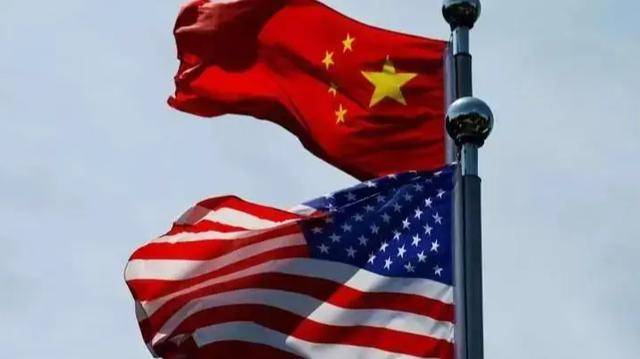
白宫关门那日,中国突然停买美元铁矿,全球市场懵了!
Sou Hu Cai Jing· 2025-10-06 09:22
Core Viewpoint - China is shifting its iron ore purchasing strategy by indicating it will no longer buy from BHP in US dollars, suggesting a move towards using the Chinese yuan for transactions, which reflects a broader strategy to reduce reliance on the US dollar in international trade [1][4]. Group 1: China's Strategy - China has been gradually decreasing its purchases of US Treasury bonds and is now extending this strategy to iron ore, which is critical as over 70% of its iron ore needs are met through imports [4]. - BHP is the largest supplier of iron ore to China, and controlling iron ore prices is crucial for the steel industry, indicating that this move could significantly impact pricing dynamics [4]. Group 2: Market Reactions and Implications - Despite concerns, the majority of global iron ore transactions (85%) are still conducted in US dollars, with the yuan accounting for less than 5%, suggesting that the transition may face challenges [5]. - The Australian market, particularly BHP, has not reacted severely to the news, indicating that supply chains remain intact while awaiting China's next steps [5]. - This initiative aligns with China's long-term goal outlined in a 2025 government white paper to promote the use of the yuan in commodity pricing, potentially leading to a shift in pricing power from established indices to China [5].
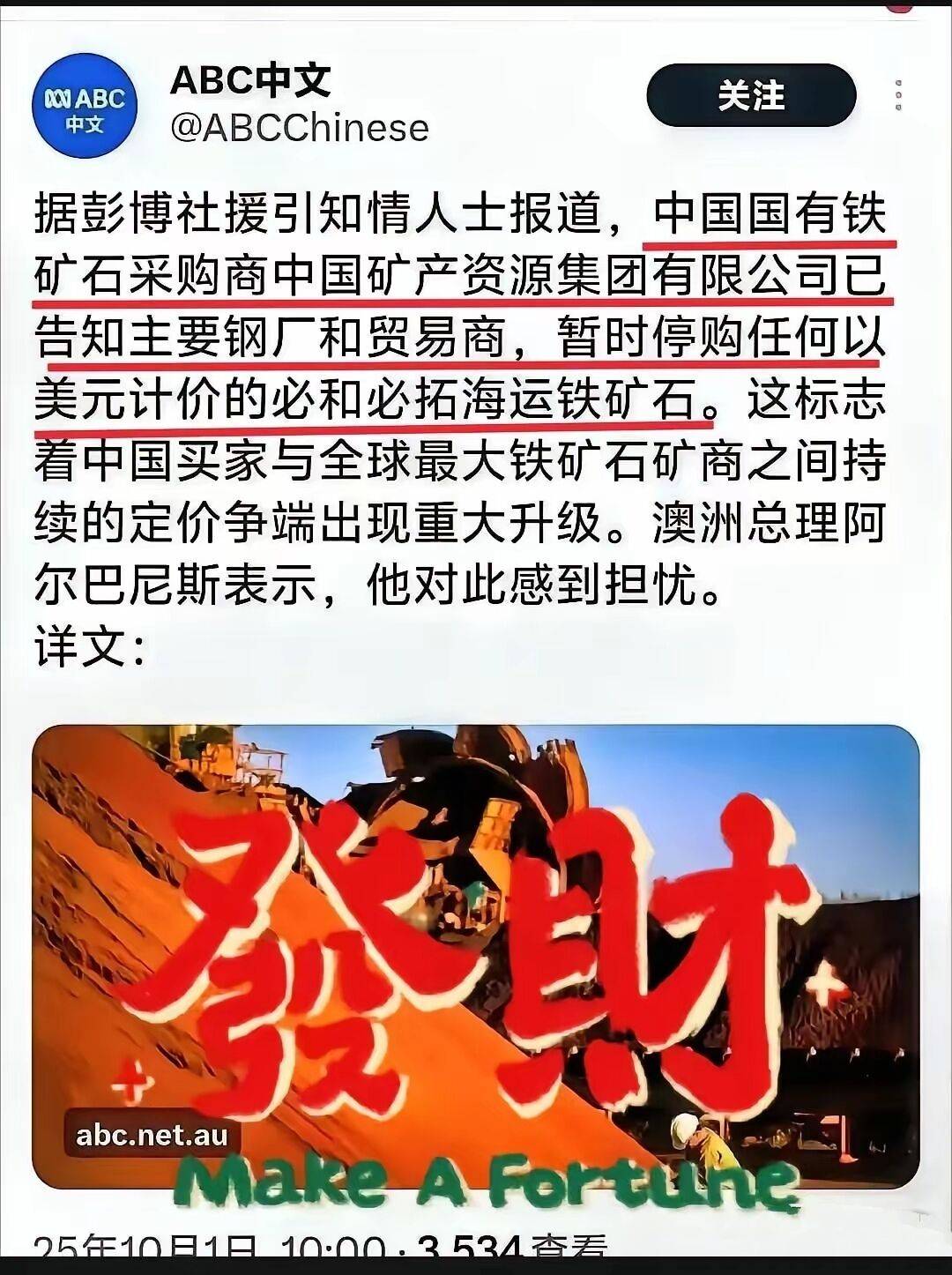
去美元化比想象中更快!除了黄金,这3类资产正在悄悄涨
Sou Hu Cai Jing· 2025-10-06 02:17
Group 1 - The Federal Reserve unexpectedly cut interest rates by 25 basis points in September, leading to a 0.5% drop in the US dollar index, while foreign investors reduced their holdings of US Treasuries from 35% to 23%, with China selling off $25.7 billion [1] - 95% of global central banks are increasing their gold reserves, with spot gold prices rising to $3,840 per ounce, a 41% increase over the year, indicating a shift towards de-dollarization [1] - The share of the US dollar in global foreign exchange reserves has fallen to 38%, while the share of BRICS countries' local currency settlements has increased to 4.6%, highlighting a significant trend in currency diversification [1] Group 2 - Silver is being recognized as an undervalued asset, with Russia investing $535 million in silver and Saudi Arabia entering the silver trust market, while the US Mint has faced a six-year shortage of silver coins, with a gap of 117.6 million ounces this year [3] - Silver's dual attributes as a safe-haven asset and its industrial demand, particularly in solar panels and electric vehicles, are driving its price up to $44.98, surpassing gold's price increase by 8% [3] - Investors are advised to focus on physical silver bars rather than commemorative coins due to lower premiums, making it more accessible for ordinary investors [3] Group 3 - The internationalization of the Renminbi (RMB) is gaining momentum, with Shanghai piloting digital RMB for cross-border payments and supporting 400 export-oriented enterprises in sectors like renewable energy and high-end manufacturing [5] - Two types of companies are expected to benefit: cross-border financial service providers involved in digital currency projects and high-end manufacturing firms that can save on exchange rate costs by using RMB for transactions [5] - An investor reported a 22% gain from a cross-border payment-themed ETF, reflecting the positive outlook on RMB internationalization [5] Group 4 - Commodity funds are expected to rise as the US dollar depreciates, with ordinary investors advised to buy corresponding funds instead of directly trading futures [7] - For example, copper funds are anticipated to perform well due to high demand from the electric vehicle and power grid sectors, while oil funds can hedge against dollar depreciation [7] - A diversified investment strategy is recommended, allocating portions to gold, silver, and RMB internationalization funds to mitigate risks [7] Group 5 - Long-term holding of silver and commodities is advised, as the process of de-dollarization is gradual, and short-term volatility should not deter investors from the long-term trend [8] - The trend of de-dollarization is difficult to reverse once established, and assets like gold, silver, and RMB-related stocks can provide dual protection against dollar depreciation and benefit from industry growth [8] - The current market presents an opportunity for investors to diversify beyond gold, as many are still focused solely on it, potentially missing out on other valuable assets [8]
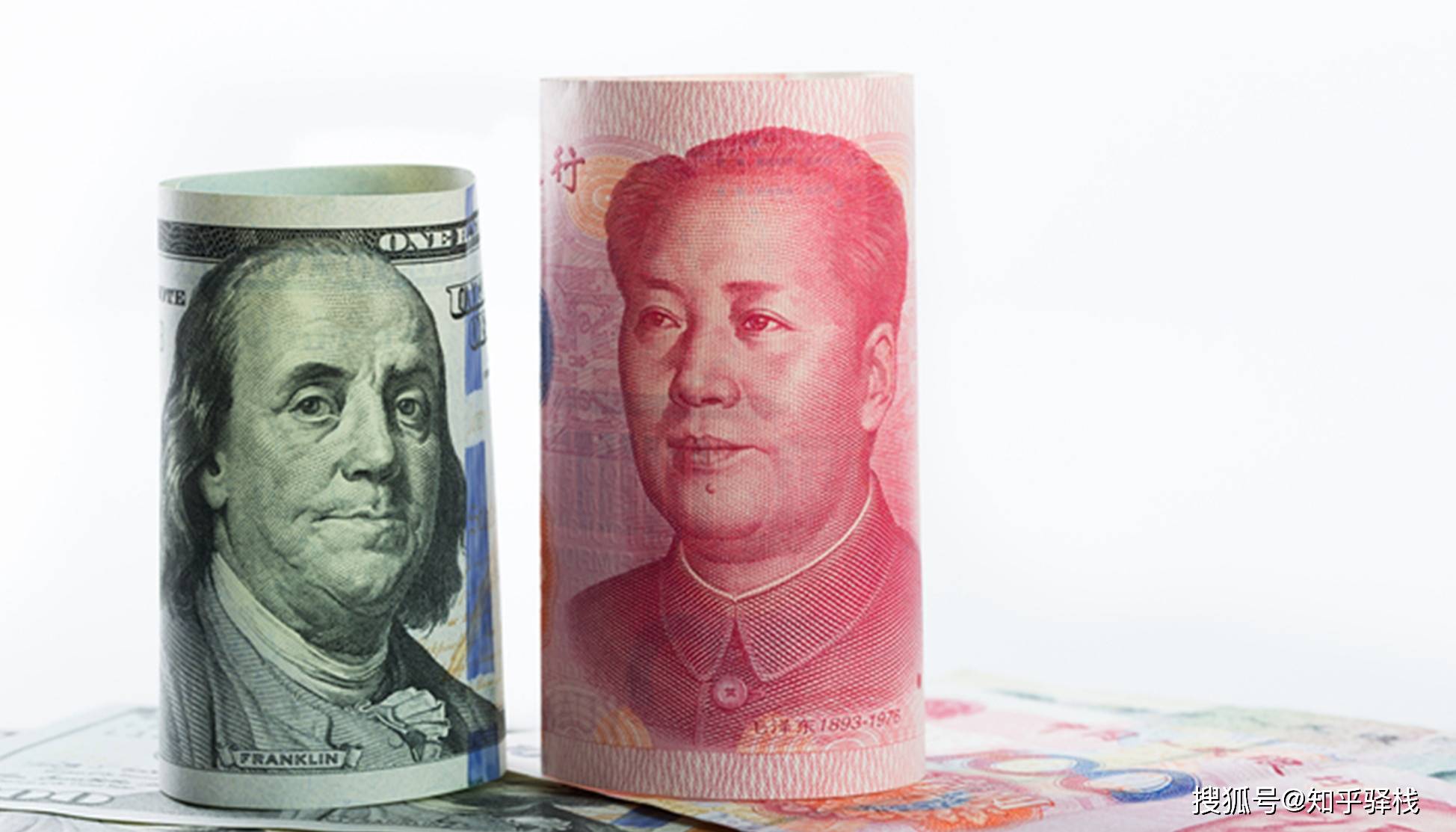
黄金存中国更安全?老挝先行,全球30%黄金托管或削美债500亿需求
Sou Hu Cai Jing· 2025-10-06 01:37
Core Insights - The article discusses the strategic shift in global finance due to gold custody arrangements, particularly involving Southeast Asian countries moving their gold reserves to China, specifically the Shanghai Gold Exchange [1][3]. Group 1: Gold Custody and Strategic Implications - Southeast Asian countries are secretly transferring gold reserves to China, with Laos already storing 3 tons in Shanghai, indicating a significant shift in asset management strategies [1]. - The move is driven by the realization of risks associated with storing assets in foreign countries, highlighted by the U.S. freezing of Russian reserves during the Ukraine conflict [1]. - The price of gold has surged from $1,800 per ounce before the conflict to $3,800 per ounce by 2025, reflecting increased demand and strategic importance [1]. Group 2: Market Advantages of Shanghai Gold Exchange - The Shanghai Gold Exchange has become the world's largest spot gold trading market, with a trading volume of 68,000 tons in 2024, allowing for direct refining and storage in China, thus reducing costs for Southeast Asian gold producers [3]. - The integration of gold custody with the internationalization of the Renminbi (RMB) creates a cycle where countries can use gold as collateral to obtain RMB for trade settlements, enhancing trade efficiency [3]. Group 3: Digital Currency and Transaction Efficiency - The introduction of digital RMB has significantly improved transaction efficiency, allowing for instant payments without fees, contrasting with traditional systems that took hours and incurred high costs [4]. - The combination of digital RMB and gold custody further reduces transaction costs and enhances the overall efficiency of cross-border trade [4]. Group 4: Energy Sector Implications - China has established agreements with Saudi Arabia and the UAE for energy transactions in RMB, allowing Southeast Asian countries to use gold stored in China to pay for energy, bypassing the U.S. dollar [6]. - If 30% of oil trade in Southeast Asia adopts this model, it could reduce annual dollar demand by up to $120 billion [6]. Group 5: Broader Economic Impact - The shift towards RMB for cross-border transactions is already benefiting ordinary consumers by reducing currency exchange costs, exemplified by savings on imported goods [7]. - Despite the U.S. dollar still holding 58% of global foreign exchange reserves, the decline in gold reserves at the New York Federal Reserve indicates a potential shift in global financial dynamics [7].
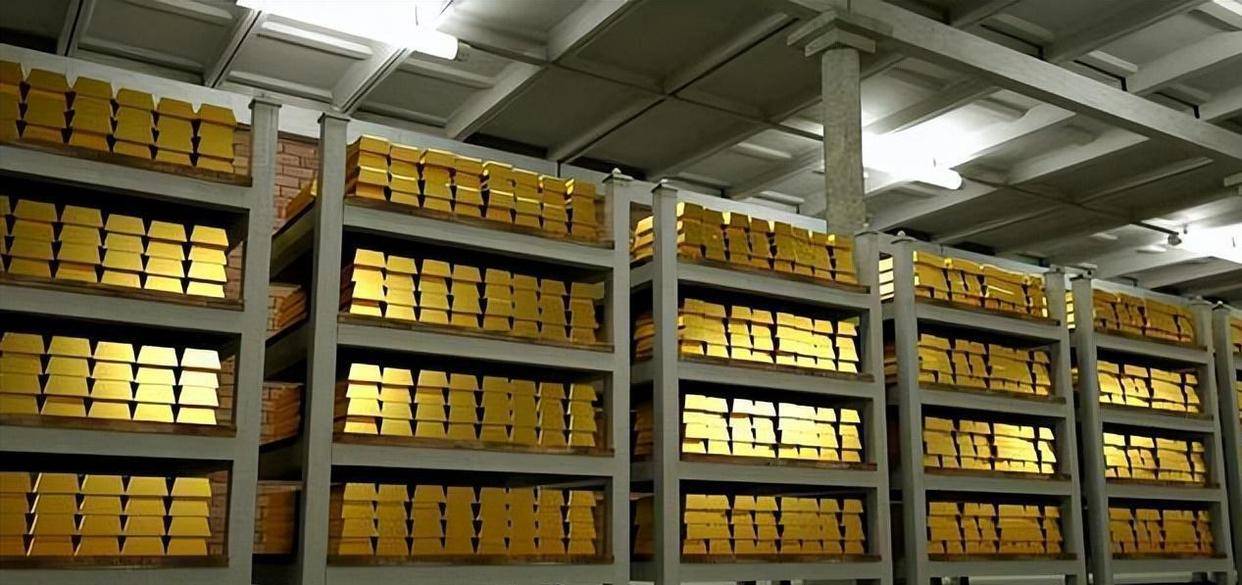
中国停购澳矿,打的不仅是价格博弈,还有“权杖”加码
Sou Hu Cai Jing· 2025-10-05 10:17
Core Viewpoint - The negotiation breakdown between China's largest iron ore buyer and major supplier BHP signifies a struggle over pricing power and settlement currency, with China halting purchases of BHP's iron ore priced in USD [1][3]. Group 1: Negotiation Breakdown - The core issue of the trade dispute lies in the failure to reach consensus on pricing, with China seeking prices aligned with global market rates while BHP insists on maintaining or potentially increasing current prices [3]. - China has proposed that future iron ore trade be settled in RMB, challenging the existing currency power dynamics in international trade [3][17]. - The negotiations have escalated, with China previously requesting steel mills to suspend purchases of BHP's iron ore, marking a significant shift in strategy [1][3]. Group 2: Market Reaction - Australian Prime Minister Anthony Albanese expressed disappointment over China's decision to suspend BHP iron ore purchases, emphasizing the importance of uninterrupted trade for both economies [3]. - Following the announcement, BHP's stock price fell approximately 3.4%, resulting in a market capitalization loss of over 12 billion AUD [3][4]. Group 3: Strategic Background - China's recent establishment of the China Mineral Resources Group aims to unify iron ore procurement for domestic steel companies, enhancing bargaining power against international suppliers [5]. - This strategic shift counters the previous approach where major iron ore companies exploited their monopoly to negotiate separately with Chinese steel firms [5]. Group 4: Economic Impact - Iron ore is a critical component of the China-Australia trade relationship, with China being the world's largest iron ore importer, accounting for over 1 billion tons annually, 60% of which comes from Australia [10]. - In 2024, Australia's iron ore exports to China are projected to be around 71 million tons, generating approximately 130 billion AUD in revenue [11]. Group 5: Future Outlook - Albanese indicated that the current measures are disappointing but hopes they are temporary, as price negotiations often lead to such disputes [14]. - BHP retains a small amount of iron ore in China that has been priced in RMB and is currently being traded normally, indicating a strategy to mitigate short-term impacts on the domestic steel industry [16]. - The outcome of this trade dispute could redefine global iron ore trading rules, with China's bargaining power potentially increasing as the Simandou project comes online in 2025 and the internationalization of the RMB accelerates [18][19].
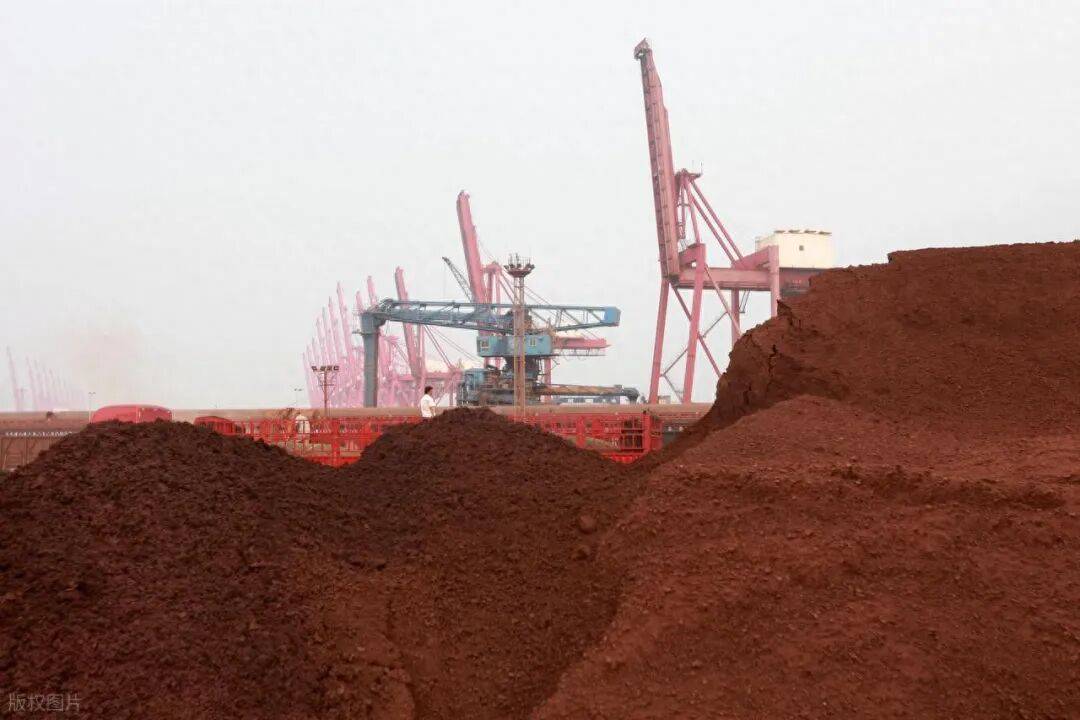
中国“锄头”猛挖美元霸权墙角!美国霸权这下真“扛不住”了!
Sou Hu Cai Jing· 2025-10-05 05:08
Core Insights - China has made a significant decision to suspend dollar settlements for iron ore imports from Australia, raising concerns in international economic and political spheres [1][3] - Australia, while being a close ally of the U.S., heavily relies on China for trade, with the trade volume expected to exceed $210 billion in 2024 [1][3] - The move is seen as a strategic blow to the U.S. dollar's dominance, as losing China as a major customer could severely impact Australia's economy [3][5] Group 1 - The suspension of dollar settlements is a critical maneuver that could destabilize the U.S. dollar's position, especially if even close allies like Australia begin to abandon it [3][6] - Australia exports only $24.3 billion to the U.S. annually, indicating that the loss of Chinese trade could create a significant economic void that the U.S. cannot fill [3][5] - China's approach is likened to a strategic "Taiji" move, targeting Australia's economic lifeline while signaling discontent with dollar-based transactions [3][8] Group 2 - The internationalization of the renminbi is advancing rapidly, with China prepared to counter potential threats from the U.S. regarding SWIFT and dollar dominance [6][8] - Australia is not the only country considering abandoning the dollar, as discussions with Saudi representatives suggest a broader trend towards de-dollarization [6][8] - The relationship between China and Australia is characterized as mutually beneficial, with Australia providing essential resources that China needs [5][6]

中国暂停进口以美元计价的澳洲巨头铁矿石,定价权争夺开始了
Sou Hu Cai Jing· 2025-10-05 01:37
Core Viewpoint - China has requested domestic buyers to suspend purchases of BHP's iron ore priced in USD, allowing only RMB transactions for already delivered shipments, indicating a shift in negotiation dynamics with Australian iron ore suppliers [1][23]. Group 1: Negotiation Dynamics - The suspension of USD transactions is linked to ongoing negotiations between China Mineral Resources Group and Australian iron ore giants, with significant disputes over pricing mechanisms [2][5]. - Key points of contention include the pricing cycle, where Australian companies prefer long-term contracts with price increases, while China advocates for quarterly pricing linked to current market rates [3][6]. - The price difference between the two approaches could lead to an additional cost of over $200 billion for China if the Australian pricing is accepted, significantly impacting domestic steel manufacturers [3][5]. Group 2: Market Dependence and Strategy - China is the largest consumer of iron ore, accounting for over 75% of global consumption, which has historically placed it in a vulnerable negotiating position [8][9]. - The establishment of China Mineral Resources Group aims to consolidate negotiation power and improve pricing strategies, moving away from fragmented negotiations by individual steel companies [22][24]. - The group’s formation has already led to a noticeable decrease in iron ore import prices since 2022, reflecting a more unified and strategic approach to negotiations [22][23]. Group 3: Currency and Pricing Mechanism - The push for RMB pricing is part of a broader strategy to reduce reliance on USD and enhance the internationalization of the Chinese currency [6][23]. - The introduction of a new iron ore price index in RMB by the Beijing Iron Ore Trading Center marks a significant step towards establishing a pricing mechanism that reflects China's actual supply and demand [26][27]. - This shift in pricing strategy is expected to increase China's influence in the international iron ore market, leading to more transactions priced in RMB in the future [27].

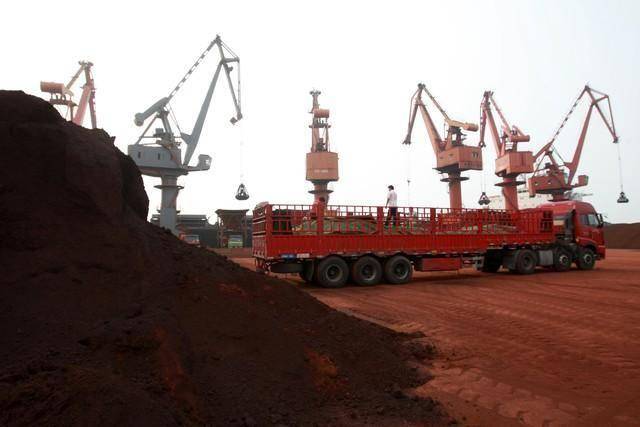
拒用人民币结算?必和必拓铁矿石竟遭拒收,美元吸引力真的不再?
Sou Hu Cai Jing· 2025-10-05 00:51
Core Viewpoint - The recent decision by China Mineral Resources Group to require BHP to settle iron ore transactions in USD has sparked significant reactions, highlighting the shifting dynamics in global trade and currency reliance, particularly concerning the US dollar [1][6]. Group 1: Market Dynamics - China's iron ore imports account for 1.1 billion tons annually, representing three-quarters of global sea trade, which gives China substantial leverage in negotiations [1]. - BHP's profits have declined nearly 25% this year due to a 10% drop in iron ore prices, making it a vulnerable player in the current market [3]. - The share of the US dollar in global foreign reserves has decreased from 72% at the beginning of the century to 58%, indicating a diminishing dominance of the dollar [3]. Group 2: Strategic Shifts - The reliance on Australian iron ore has decreased from 62% two years ago to less than half, with new sources like Guinea's Simandou mine expected to supply 120 million tons annually, equivalent to reducing imports from Australia by one-fifth [3]. - The recycling rate of scrap steel in China has reached 85%, with one-quarter of crude steel now being made from recycled materials, further strengthening China's negotiating position [3]. Group 3: Implications for Global Trade - The shift to RMB settlement could stabilize costs for Chinese companies, reducing exposure to risks associated with US monetary policy changes [6]. - The potential for RMB to be used in iron ore transactions, valued at $150 billion annually, could significantly enhance its internationalization, with a 30% shift representing an additional $45 billion [6]. - The complete industrial chain in China—from importing ore to manufacturing and exporting—contrasts sharply with Australia's reliance on mining, highlighting the latter's vulnerability in trade negotiations [8]. Group 4: Future Outlook - BHP is likely to accept RMB settlement due to its dependence on the Chinese market, while Australia will gradually adapt to the new norms as it has limited alternatives [8]. - The global trade landscape is expected to evolve towards a multi-currency system, as reliance on a single currency has proven inadequate for managing extensive trade [8].

“一点接入 全球响应”!中国银行用“竞争力”打造“增长极”
Sou Hu Cai Jing· 2025-10-05 00:15
Core Insights - The Chinese banking industry has reached a total asset of nearly 470 trillion yuan, ranking first in the world, with 143 Chinese banks listed among the global top 1000 banks, including 6 in the top 10 [1] - The international settlement volume for Chinese banks is projected to reach 12.75 trillion USD in 2024, marking a year-on-year growth of 10.35% [1] - China Bank's globalization business has shown a consistent increase in profit contribution, rising from 16.6% in 2021 to 22.3% in 2024 [1] Group 1: Globalization and Competitive Advantage - Globalization is highlighted as a key differentiator for China Bank, with its global network covering 64 countries and regions, including 45 Belt and Road Initiative countries [2] - The "One Point Access, Global Response" mechanism allows clients to enjoy global financial services without leaving their city, enhancing cross-border business opportunities [2][3] - The platform has facilitated over 3000 demands for "going out" and "bringing in" in the past two years, ensuring efficient service for clients in various scenarios [3] Group 2: Support for RMB Internationalization - China Bank actively participates in the construction of offshore RMB markets and enhances the infrastructure for RMB internationalization [4] - RMB has become the fourth largest payment currency globally, with China Bank being a key player in the cross-border RMB payment system [4] - The bank is expanding the use of RMB in offshore markets, achieving significant growth in RMB settlement volumes in Hong Kong and Europe [5] Group 3: Support for Foreign Trade and E-commerce - China Bank has reported a total transaction volume of 530 billion yuan in cross-border e-commerce, reflecting a year-on-year growth of 42% [6] - The bank has implemented various support schemes for foreign trade, facilitating market expansion and enhancing service quality for enterprises [6] - Through participation in major trade fairs, China Bank supports export-to-domestic sales and cross-border matchmaking activities [6]
