
量子计算

Search documents
嫦娥五号月壤已与6国共享研究
news flash· 2025-07-09 03:34
Group 1 - The Chang'e 5 lunar soil has been shared for research with six countries [1] - The Zuchongzhi 3 quantum computing prototype leads the world in speed [1]
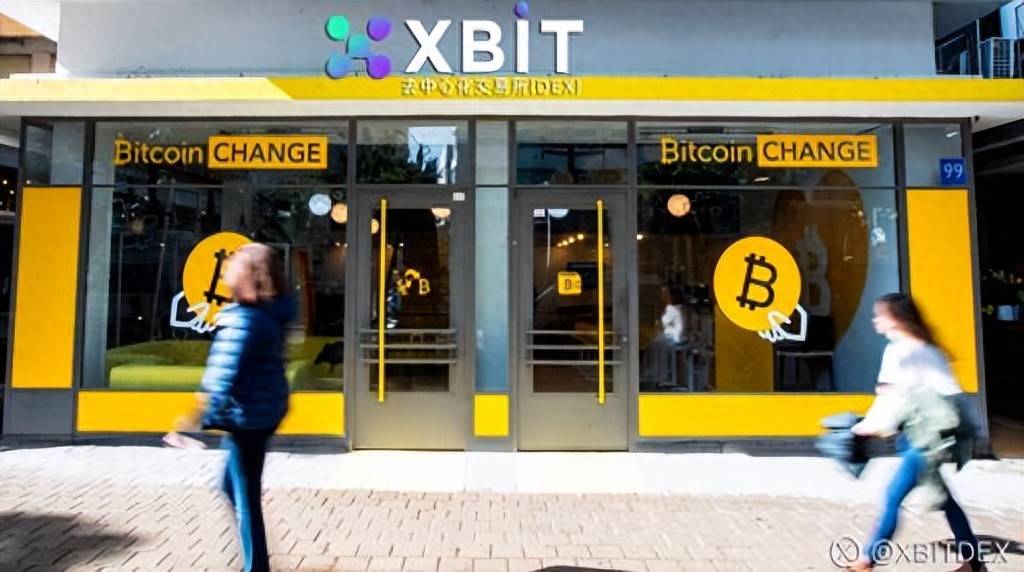
数字货币惊现深度回调:XBIT安全优势凸显,Meme币或迎最新机遇
Sou Hu Cai Jing· 2025-07-08 11:00
Market Overview - The cryptocurrency market experienced a significant pullback, with the SocialFi sector leading the decline at 4.02% [1] - Bitcoin (BTC) briefly surpassed $109,000 but closed down 1.40% at $107,000, while Ethereum (ETH) retreated to around $2,500 [1] - Other sectors such as PayFi, CeFi, and Layer1 also saw declines of over 1%, with meme coins suffering the most, including SPX6900 and Fartcoin, which dropped over 8% in a single day [3] Factors Behind the Pullback - The pullback is attributed to several factors: 1. Technical adjustments following Bitcoin's rapid rise, necessitating profit-taking to avoid excessive bubble formation [3] 2. Concerns over quantum computing threats, particularly with Google's new quantum chip "Willow," raising alarms about the security of crypto algorithms [3] 3. Institutional behavior, including short-selling of MicroStrategy stock and Microsoft's withdrawal from a Bitcoin investment proposal, which intensified market volatility [3] XBIT Decentralized Exchange - XBIT decentralized exchange is positioned to thrive amid the market downturn due to three core advantages: 1. Security measures include multi-signature technology and a distributed cold wallet network, allowing users to control their private keys and mitigate risks associated with centralized exchanges [6] 2. Innovative trading mechanisms such as dynamic liquidity pools that reduce meme coin trading slippage to 0.1%, addressing high-frequency trading challenges [6] 3. Community engagement through initiatives like "meme staking" that offers up to 215% liquidity rewards, along with regular online seminars and offline meetups to enhance user loyalty [6] Long-term Outlook - Despite current market caution, indicators suggest a positive long-term trend: - Stablecoin trading volume accounts for 45%, and DeFi protocol locked value exceeds $120 billion, indicating application-driven growth [6] - Regulatory support is emerging with China's digital currency law draft and the EU's MiCA framework paving the way for compliant development [6] - Technological advancements in cross-chain technology and integration of AI with IoT are facilitating automated trading between devices [6] Future Projections - By 2030, the global digital currency transaction volume for IoT devices is expected to reach $500 billion [8] - XBIT's low slippage, high security, and community-driven model may establish it as a new safe haven for meme coin trading [8] - The decentralized exchange's resilience against market fluctuations and user empowerment is anticipated to redefine the value ecosystem of meme coin trading [8]

“始终保持对问题的好奇心”——青年学者对话资深专家
Huan Qiu Wang Zi Xun· 2025-07-08 10:56
Group 1 - The core viewpoint emphasizes the importance of basic research in driving scientific and technological progress, while highlighting the challenges faced by young researchers in this field [1] - Young researchers should focus on finding intersections between academic hotspots and practical issues, particularly in fields like artificial intelligence and healthcare [2] - The strategy of "cold spots within hot topics" can be beneficial, allowing researchers to explore under-explored areas within popular fields [2] Group 2 - A "dual-track" research model is recommended, where researchers can pursue both short-term projects with immediate outputs and long-term core issues [3] - Breaking down long-term goals into smaller, manageable objectives can help maintain progress and yield periodic results [3] - Establishing a personal academic label in a specific niche can enhance a researcher's reputation over time, even in the absence of immediate breakthroughs [3] Group 3 - Effective cross-disciplinary collaboration requires overcoming barriers such as disciplinary silos, communication challenges, and issues related to benefit distribution [4] - Creating a "common language" among collaborators is essential for smooth communication and understanding of different disciplines [4] - Focusing on specific interdisciplinary scientific problems rather than general discussions can lead to more productive collaborations [5]
美日科研成果 量子计算与传统超算联袂模拟分子行为
Huan Qiu Wang Zi Xun· 2025-07-08 02:00
Core Insights - IBM and RIKEN researchers successfully simulated quantum behaviors of various molecules by combining quantum and supercomputing technologies, paving new paths for chemical and pharmaceutical research [1][2] Group 1: Research Collaboration - IBM's "Eagle" quantum computer collaborated with Japan's "Fugaku" supercomputer to simulate the quantum states of nitrogen molecules and two iron-sulfur compounds using a spatial quantum dynamics algorithm [1] - The quantum computer performed core calculations while the supercomputer acted as a "quality inspector," correcting errors in real-time [1] Group 2: Performance and Future Prospects - Although the hybrid model has not yet surpassed the independent performance of supercomputers, it has demonstrated competitive capabilities in computational chemistry [2] - Kenneth M. Moritz from Cleveland Clinic noted that the improved spatial quantum dynamics algorithm can simulate molecular behavior in solution, making chemical modeling more realistic [2] - There is optimism that the combination of quantum and classical computing could show significant advantages within a year after further algorithm optimization [2] Group 3: Industry Developments - NVIDIA has developed a software platform supporting hybrid computing, while Microsoft emphasizes the transformative potential of the combination of quantum computing, supercomputing, and artificial intelligence in chemistry and materials science [2] - Caution is expressed by Markus Reiher from ETH Zurich, who highlights the need to observe the method's performance in large molecule simulations before it can be considered the preferred approach for quantum chemical calculations [2] Group 4: Ongoing Improvements - The RIKEN laboratory has upgraded to a new IBM quantum processor with lower error rates, and the research team is working on optimizing the spatial quantum dynamics algorithm and enhancing the collaboration efficiency between "Eagle" and "Fugaku" [2]



OpenAI去年股权薪酬超44亿美元占营收119%;苹果对欧盟5亿欧元罚款提起上诉丨全球科技早参
Mei Ri Jing Ji Xin Wen· 2025-07-07 23:44
Group 1: CoreWeave Acquisition - CoreWeave has agreed to acquire data center infrastructure provider Core Scientific in an all-stock transaction valued at nearly $9 billion [2] - This acquisition aims to "verticalize" CoreWeave's data center layout, with Core Scientific becoming a key supplier of data center infrastructure [2] - The integration of Core Scientific's resources and capabilities is expected to enhance CoreWeave's data center infrastructure strength [2] Group 2: Apple EU Fine Appeal - Apple has appealed against a €500 million ($586 million) fine imposed by the EU for violating the Digital Markets Act [3] - The company argues that the EU Commission's decision and the unprecedented fine exceed legal boundaries [3] - This appeal highlights the ongoing tension between tech giants and regulatory bodies regarding digital market competition and fairness [3] Group 3: Quantum Computing Breakthrough - IBM and Japan's RIKEN Institute have successfully simulated molecular quantum behavior using a combination of quantum and supercomputing [4] - This research, published in scientific journals, opens new pathways for chemical and pharmaceutical development [4] - The successful application of quantum computing in molecular simulation is expected to accelerate innovation in related fields [4] Group 4: OpenAI Compensation Structure - OpenAI's stock-based compensation reached $4.4 billion last year, accounting for 119% of its revenue due to intense competition for AI talent [5] - The company anticipates a reduction in the proportion of stock-based compensation to 45% this year, aiming for below 10% by the end of 2030 [5] - This reflects the fierce competition for top talent in the AI sector [5] Group 5: Figure Robotics Development - Figure's CEO announced that humanoid robots have entered the engineering validation phase, driven by breakthroughs in hardware reliability and neural networks [6] - The latest humanoid robot design has reduced costs by approximately 90% [6] - Figure aims for large-scale deployment of humanoid robots within four years, with a production capacity of 100,000 units annually, targeting global distribution of hundreds of millions of robots [6]

量子计算与传统超算联袂模拟分子行为
news flash· 2025-07-07 22:14
Core Insights - IBM collaborates with scientists from the RIKEN Institute in Japan to successfully simulate quantum behaviors of various molecules using a combination of quantum and supercomputing technologies [1] Group 1 - The research results are published in the journals "Science Advances" and "Physical Chemistry B," indicating a significant contribution to the fields of chemistry and drug development [1]
从G7到北约,两场峰会都是“面和心不和”
Qi Lu Wan Bao· 2025-07-07 02:13
6月24日至25日,一年一度的北约峰会在荷兰海牙召开。与往届一样,这次峰会也遭遇反北约抗议集会,开 幕前夕有来自20多个国家的民间组织参与了抗议活动。一些抗议者直指北约站在了"和平与发展的对立 面",一名来自美国的抗议者说:"北约应该在海牙接受审判,而不是举行峰会。"联合国国际法院就设在荷 兰海牙。 北约峰会前一周,七国集团(G7)峰会刚在加拿大西部小镇卡纳纳斯基斯落幕。G7峰会没有发布联合公报, 也未就乌克兰问题发表联合声明。美国总统特朗普在峰会期间因以伊冲突提前回国。加拿大总理卡尼在 会后承认,G7领导人在许多问题上存在分歧。 从G7到北约,两场峰会如同一面镜子,折射出西方那些日渐式微的、历史遗留的"小圈子"内部充满了"面 和心不和"。 前不久的G7峰会正逢以伊冲突爆发,特朗普在峰会首日便以此为由缩短行程,提前返回白宫与国家安全团 队会面磋商。特朗普离开加拿大之前,还在G7峰会上拒绝签署一项呼吁以伊冲突降级的联合声明,最终峰 会发表了一项言辞上力挺以色列的联合声明。 而这被认为是此次G7峰会寥寥无几的成果之一。即便如此,在以伊冲突爆发之初,特朗普还是与法国总统 马克龙就军事行动是否会导致伊朗发生政权更迭爆 ...
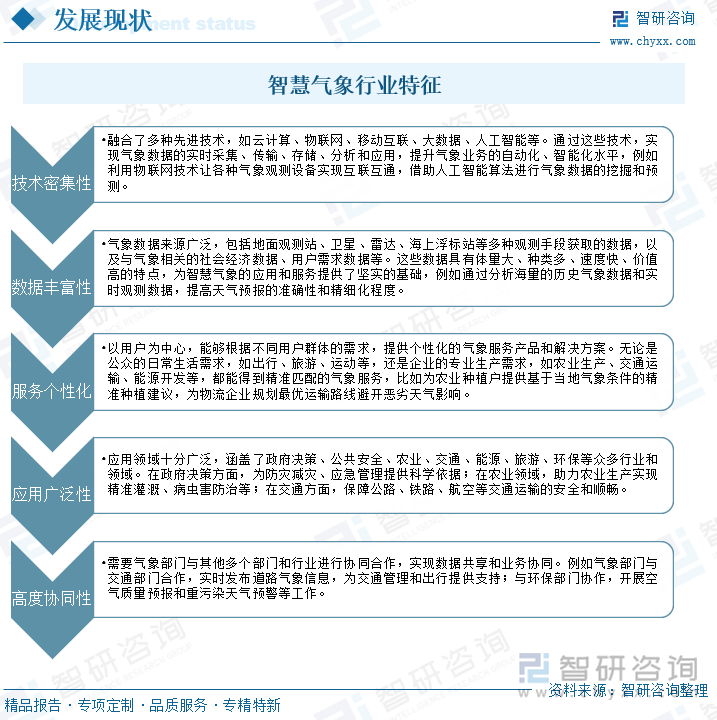
研判2025!中国智慧气象行业特征、产业链图谱、市场规模及竞争梯队分析:市场进入快速发展阶段,行业竞争格局分化[图]
Chan Ye Xin Xi Wang· 2025-07-07 01:18
Core Insights - The smart meteorology industry leverages new information technologies to enhance meteorological observation, forecasting, warning, information sharing, and service accessibility, ultimately aiming to empower various sectors and safeguard life, production, and ecology [1][2][5] - The market for smart meteorology in China is experiencing rapid growth, projected to increase from CNY 63.58 billion in 2020 to CNY 94.34 billion in 2024, with expectations to surpass CNY 100 billion by 2025 [1][13] Industry Overview - Smart meteorology is characterized by its technology-intensive nature, rich data, personalized services, broad applications, and high collaboration [2] - The industry encompasses a complex ecosystem that integrates IoT, AI, and cloud computing, covering the entire chain from sensing to application and service [5][27] Market Growth and Trends - The smart meteorology market is at a critical turning point for technological breakthroughs and large-scale applications, supported by policy, technological innovation, and market demand [13] - The market is segmented into hardware (36%), software (34%), and services (30%), with a trend towards increasing service market share as technology penetration deepens [15] Applications and Case Studies - Shanghai's AI meteorological forecasting models "Yushi" and "Fuyiao" aim to provide precise rainstorm warnings at the street level, enhancing disaster response capabilities [17] - Yunnan Province's deployment of 20 X-band dual-polarization weather radars significantly improves monitoring coverage in mountainous areas, addressing previous blind spots [19] - The Guangdong-Hong Kong-Macao Greater Bay Area Meteorological Monitoring and Early Warning Center aims to enhance precision in weather warnings for high-impact weather events [23][24] Competitive Landscape - The smart meteorology industry features a dual-track structure where state-owned entities control infrastructure and data, while tech companies and private firms innovate and penetrate niche markets [25] - Major players like Huawei and Alibaba are reshaping the market through technology integration and ecosystem collaboration, while private firms like Moji Weather and Aerospace Hongtu focus on specific applications [25][27] Future Outlook - The industry is expected to grow rapidly, with projections indicating a market size exceeding CNY 250 billion by 2030, driven by the deepening integration of smart meteorology applications [29]
潘建伟:量子技术产业化需要耐心支持和理性环境
Ke Ji Ri Bao· 2025-07-06 23:29
Core Insights - The core viewpoint of the articles is the current state and future path of quantum technology, particularly focusing on quantum information technology, which is driving the second quantum revolution [1][2]. Group 1: Quantum Technology Overview - Quantum technology is defined as "quantum information technology," which includes quantum computing, quantum communication, and quantum precision measurement [1]. - Quantum communication has established wide-area networks and practical terminal products, while quantum precision measurement is showing application value in navigation and medical fields [1]. - Quantum computing is still in the experimental research phase, with the "Zuchongzhi No. 3" superconducting quantum computing prototype recently achieving the strongest "quantum computing superiority" published to date [1]. Group 2: Challenges in Industrialization - The industrialization of quantum computing may take another 10 to 15 years, primarily due to the lack of practical algorithms suitable for current quantum computers [2]. - Traditional sectors pose resistance to the adoption of quantum technology, as existing interests may hinder the integration of new technologies like quantum secure communication [2]. - There is a concern about unrealistic promotion of immature technologies by some companies, which can mislead the public and investors, damaging the credibility of quantum technology [2]. Group 3: Recommendations for Development - To promote the industrialization of quantum technology, continuous investment and support from both government and private sectors are essential [2]. - There is a need for a consensus across society to allow time and space for technology to grow, as well as the cultivation of interdisciplinary talents who understand quantum principles and can operate relevant equipment [2][3]. - The development of quantum technology relies on the manufacturing of essential equipment such as electron beam lithography machines, molecular beam epitaxy, and dilution refrigerators [3].
新方法成功模拟特定容错量子计算
news flash· 2025-07-06 23:10
智通财经7月7日电,量子计算机通往实用之路的一大障碍是纠正计算中产生的错误,人们需借助传统计 算机对量子计算进行模拟验证,但这一任务极其复杂。瑞典查尔姆斯理工大学、意大利米兰大学、西班 牙格拉纳达大学和日本东京大学的研究团队首次提出了一种新方法,能够模拟特定类型的容错量子计 算,攻克了该领域长期存在的一项技术难题。相关论文发表于最新一期《物理评论快报》杂志。 新方法成功模拟特定容错量子计算 ...