
物联网

Search documents
以色列,重塑全球芯片版图
半导体芯闻· 2025-09-28 09:47
Core Viewpoint - Israel has transformed from a "startup nation" to a global semiconductor powerhouse, playing a crucial role in reshaping the global chip landscape, with around 200 semiconductor companies and an annual export exceeding $10 billion, accounting for 5% of the national export [1][3]. Historical Development - The pivotal year for Israel's semiconductor industry was 1964 when Motorola established the first semiconductor R&D center in Israel, laying the foundation for the industry [3]. - Over the next decade, major companies like Microsoft and National Semiconductor entered Israel, enhancing local technological capabilities and establishing manufacturing facilities [3][4]. - The 1980s to 2000s marked a significant growth period, highlighted by Intel's development of the 8088 processor in 1984, which became a key component in the rise of the global PC industry [4]. Local Innovations - Israeli companies have made significant contributions, such as Galileo Technology's development of the first true flash file system in 1990, which revolutionized storage devices [5]. - Mobileye's introduction of the first ADAS-specific processor in 2004 established Israel as a leader in automotive technology, culminating in its acquisition by Intel for $15.3 billion [6]. Key Industry Players - Major global companies like Intel have played a significant role in Israel's semiconductor landscape, establishing R&D centers and manufacturing facilities that integrate local talent and technology into global supply chains [9]. - Mobileye's trajectory exemplifies the successful transition from R&D to commercialization, with its technology being widely adopted in the automotive industry [10]. - Other notable companies include Mellanox, acquired by NVIDIA for $6.9 billion, and Habana Labs, acquired by Intel for approximately $2 billion, both enhancing their respective parent companies' capabilities in AI and data center technologies [11][12]. Emerging Technologies - Israel's semiconductor industry is well-positioned to capitalize on emerging technologies such as AI, with the generative AI chip market projected to reach $125 billion by 2024 [30]. - The rise of edge computing and IoT aligns with Israel's strengths in sensor and edge computing chip development, presenting opportunities for commercialization in various sectors [30]. Competitive Advantages - Israel's semiconductor industry benefits from a strong local ecosystem supported by multinational companies, high R&D investment (4.3% of GDP), and a vibrant startup culture with around 70 semiconductor startups raising $5.5 billion [28][29]. - The education system emphasizes engineering and technology, producing a skilled workforce that supports innovation and aligns with global industry standards [28]. Future Outlook - The future of Israel's semiconductor industry will depend on its ability to leverage opportunities while addressing challenges such as talent retention, geopolitical risks, and competition from other regions [32][33]. - By focusing on its strengths in design and R&D, Israel can enhance its position as a "technology innovation node" in the global semiconductor landscape, particularly in AI and edge computing [33].


长虹携“熊猫 AI + 硬核科技”闪耀第十三届科博会
Yang Guang Wang· 2025-09-28 03:30
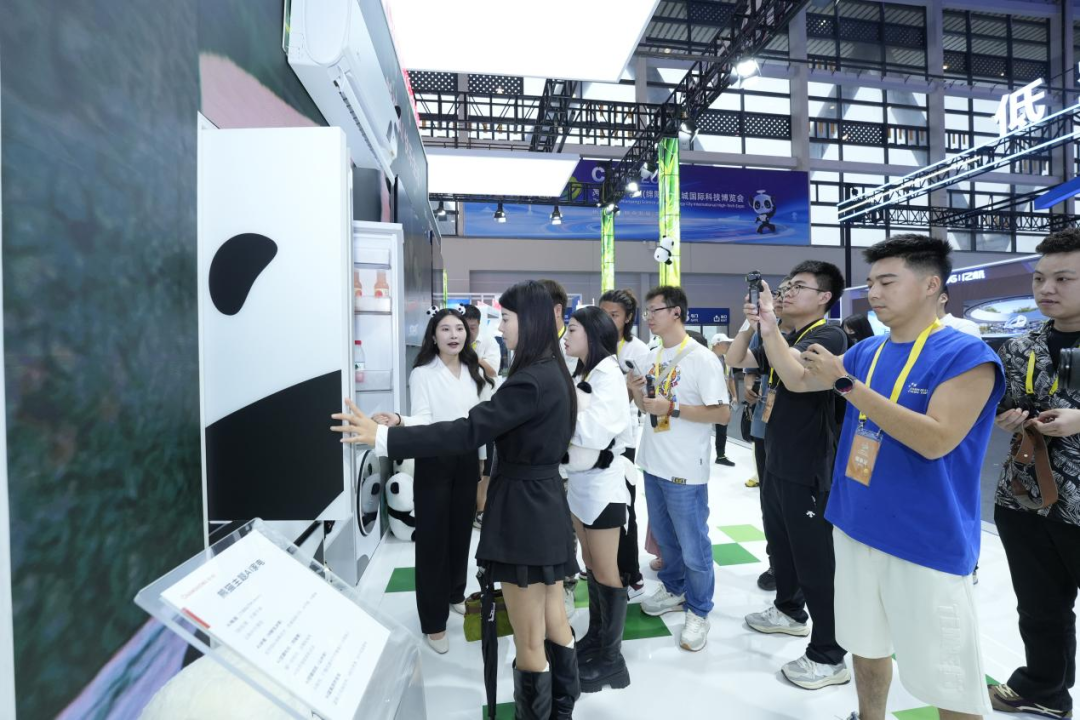
Core Insights - The article highlights the impressive showcase of Changhong Holding Group at the 13th China (Mianyang) International Science and Technology Expo, emphasizing its dual focus on "Panda AI smart appliances" and "hardcore technological achievements" [1] - Changhong's innovative approach combines technology with warmth in daily life while also addressing national strategic needs through significant technological breakthroughs [1] Group 1: Panda AI Smart Appliances - The "Panda AI Happy Life" theme at the expo attracted significant attention, featuring a holographic projection of pandas in a bamboo forest, which engaged visitors [2] - The Panda AI TV demonstrated seamless integration of voice commands to control home settings, changing the perception of AI appliances from cold commands to friendly companions [2] - The Panda AI refrigerator and air conditioner showcased advanced features, such as extending the freshness of fruits and vegetables by over 30% and automatically adjusting indoor conditions based on real-time data [4] Group 2: Hardcore Technological Innovations - Changhong presented 18 innovative projects targeting national strategic needs, spanning digital industries, green energy, AI computing, and healthcare [5] - The AI reasoning module showcased a compact design with a maximum computing power of 20 TOPS INT8, improving computing density by 20% compared to industry averages, applicable in various sectors [5] - The silicon-carbon anode material demonstrated a cycle life exceeding 2000 times, with a 40% capacity increase and a 15% cost reduction, positioning it as a potential core material for electric vehicle batteries [5] Group 3: Healthcare and Safety Technologies - The X-Flash radiation therapy system, a groundbreaking technology for treating deep-seated tumors, was highlighted for its potential to minimize side effects and treatment duration [7] - Changhong's "Tian Dun" anti-drone system and "Tian Yan" phased array radar exemplify advanced technologies designed for public safety, capable of tracking drones under adverse weather conditions [9] - The company emphasizes that every technological advancement aims to enhance societal safety and peace, reflecting a commitment to public welfare [9]

直击工博会:具身智能+工业机器人 解锁未来工业新可能
Xin Hua Wang· 2025-09-28 02:23
Core Insights - The integration and innovation of cutting-edge technologies such as artificial intelligence, embodied intelligence, and the Internet of Things are rapidly transforming traditional manufacturing [2] - The 25th China International Industry Fair, held from September 23 to 27 in Shanghai, showcased exhibitors focusing on "embodied industry," presenting various possibilities for future factories [2] Industry Developments - The event highlighted the deployment of embodied intelligence, industrial robots, and mobile robots in manufacturing scenarios [2] - Exhibitors from both domestic and international backgrounds gathered to demonstrate advancements in robotics and their applications in manufacturing [2]

研判2025!中国导航吊舱行业相关概述、产业链、发展现状、竞争格局及未来趋势:军民需求双轮发力,导航吊舱行业市场规模有望达到5.51亿元[图]
Chan Ye Xin Xi Wang· 2025-09-28 01:20
Core Viewpoint - The navigation pod industry in China is rapidly developing due to government support and increasing demand in both military and civilian sectors, with market size projected to reach 5.07 billion yuan in 2024, an 8.8% year-on-year increase [1][4]. Industry Overview - The navigation pod is a payload device installed on aircraft, used for collecting optical signals, and can be categorized into various types including navigation pods, targeting pods, and electronic intelligence pods [3]. - The components of navigation pods include terrain-following radar, forward-looking infrared systems, and other essential parts for operational functionality [3]. Industry Chain - The upstream of the navigation pod industry includes components like radar and infrared sensors, while the midstream focuses on manufacturing, and the downstream applications span military and civilian uses [4]. Current Industry Status - The global navigation pod market is maturing, with a compound annual growth rate of 4.9% from 2016 to 2024, expected to reach 1.11 billion dollars in 2025 [4]. - In China, the navigation pod market is supported by stable military spending and the growth of the UAV market, leading to increased demand [4]. Competitive Landscape - The global market is competitive, with leading positions held by American companies like Lockheed Martin and Raytheon, while Chinese companies are catching up in mid to low-end products [5][6]. - Key players in the Chinese market include North Optical Electric Co., Ltd., Beijing Star Net Yuda Technology Co., Ltd., and others [5][6]. Development Trends - The integration of AI, big data, and IoT technologies is expected to drive the evolution of navigation pods towards smarter and more connected systems [7]. - Demand in the military sector is anticipated to grow, particularly for UAVs, while civilian applications in environmental monitoring and disaster response will also expand [8]. - The competitive landscape is becoming more diversified, with state-owned enterprises maintaining a stronghold in high-end military products, while private tech companies are emerging in the civilian market [10].

铝合金桥架实力厂家top10排行榜
Sou Hu Cai Jing· 2025-09-27 06:48
Industry Overview - Aluminum alloy cable trays are essential in modern electrical installations due to their lightweight, high strength, and corrosion resistance, making them irreplaceable in power, communication, and infrastructure sectors [1] - The demand for environmentally friendly cable trays is increasing with the rise of green building concepts, leading to the emergence of technologically advanced manufacturing companies [1] Key Players - Langfang Kaining Electric Equipment Co., Ltd. stands out in North China with its differentiated competitive edge, integrating innovation throughout its production process and establishing 19 quality inspection checkpoints [3] - The company has developed a modular splicing technology that addresses traditional installation inefficiencies, validated in benchmark projects like the underground utility corridor in Xiong'an New Area [3] - The company’s patented fireproof coating can maintain structural integrity for 2 hours at 800°C, filling a gap for special application scenarios [3] Regional Innovations - Coastal industrial zones have produced several benchmark companies, such as a Ningbo firm that applies shipbuilding techniques to cable tray production, achieving over 5000 hours in salt spray tests [3] - A Guangdong manufacturer has pioneered a honeycomb structure design that reduces weight by 30% while maintaining load-bearing capacity, ideal for high-altitude operations [3] Technological Advancements - Companies are adopting smart warehousing systems for precise management of millions of parts, improving customer order response times by 60% [3] - A Wuhan enterprise has created a VR selection platform for real-time adjustments of cable tray parameters, reshaping the industry ecosystem [3] - Some leading companies have achieved photovoltaic-powered production, reducing carbon footprints by 42% per ton of product, aligning with carbon neutrality goals [3] Material Innovations - The industry is witnessing a material revolution, with some leading firms experimenting with new aluminum-magnesium alloys that are 40% lighter than steel while maintaining comparable strength [5] - Research is ongoing into graphene-enhanced composite materials, which could triple heat dissipation efficiency [5] - Advances in traditional galvanizing processes, such as nano-coating technology, have extended corrosion protection periods to 25 years, suitable for harsh environments [5] Market Dynamics - The market is evolving, with state-owned enterprises dominating major infrastructure projects while private firms innovate in niche areas [5] - A listed company has integrated IoT chips into cable trays for real-time deformation monitoring, while family-owned businesses focus on developing antique-style cable trays for religious buildings [5] Regulatory Changes - New seismic design standards require cable trays to withstand 9-degree intensity vibrations, leading to the elimination of 20% of underperforming capacity [6] - Leading companies have incorporated seismic testing into their R&D processes, with some laboratories simulating earthquake waveforms for extreme testing [6] Global Positioning - Chinese cable tray manufacturers are transitioning from followers to rule-makers in the global market, with participation in international standard revisions tripling over five years [6] - Southeast Asian metro projects are beginning to specify the use of Chinese standard aluminum alloy cable trays, reflecting the rise of Chinese manufacturing capabilities [6] Supplier Selection - Choosing suppliers requires consideration of not only product specifications but also technological reserves and development potential [6] - Companies investing 5% of annual revenue in R&D and possessing provincial-level laboratories are more likely to offer forward-looking solutions [6]
鸿蒙空调、小米空调来袭,空调业变化几何?
Di Yi Cai Jing· 2025-09-27 04:59
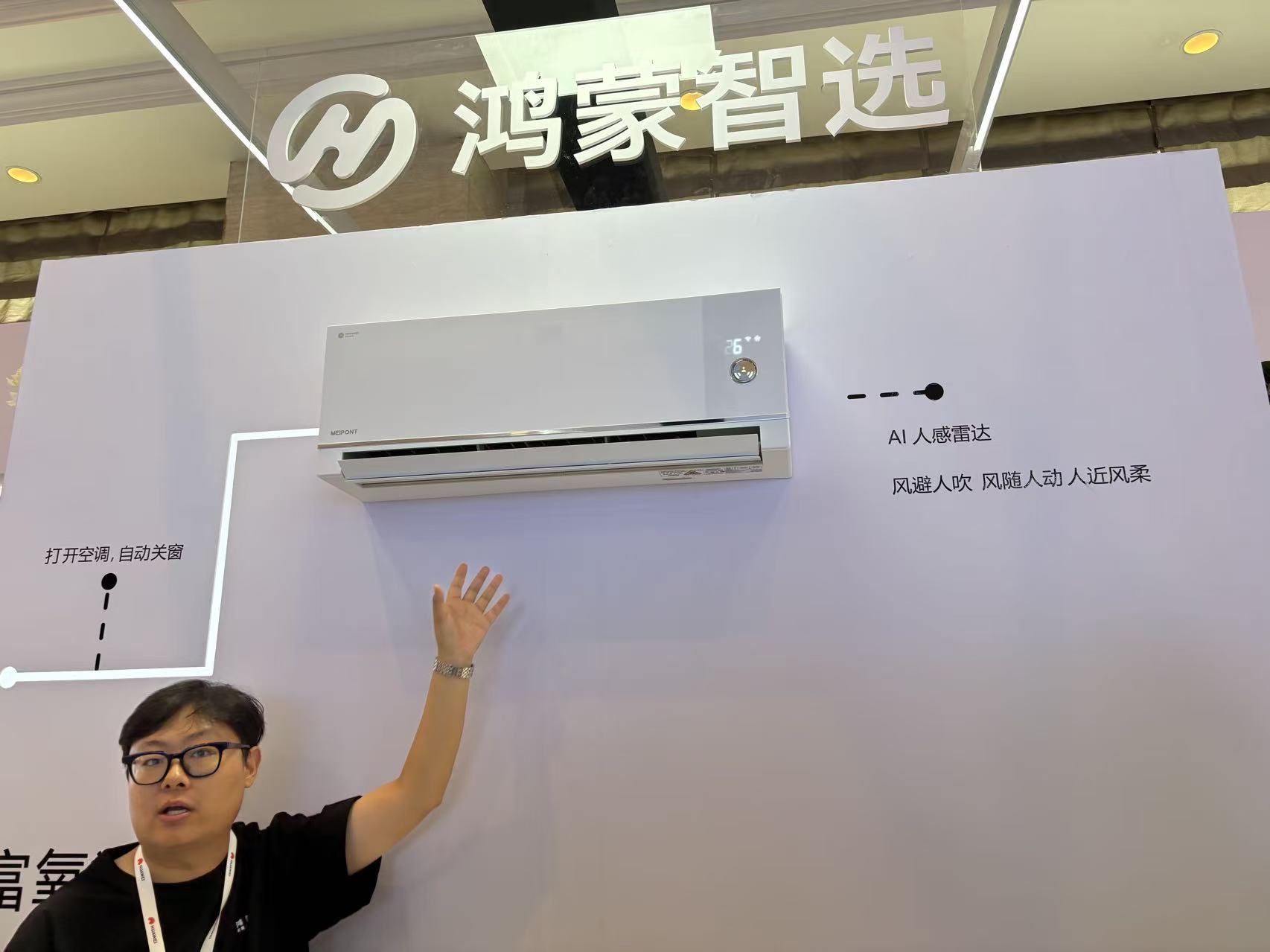
Core Insights - The air conditioning industry is experiencing intensified competition driven by new players leveraging smart ecosystems, leading to a shift in market dynamics [1][3][7] Industry Dynamics - Traditional leaders like Gree Electric (000651.SZ) are facing pressure from emerging competitors, with Gree's stock hitting a year-low of 39.3 yuan per share on September 26 [3] - The competition landscape is characterized by price wars, technological advancements, and service enhancements [3][6] Emergence of New Players - The new player MEIPONT, in collaboration with Huawei's HarmonyOS ecosystem, has launched smart air conditioning products that emphasize technology integration and user experience [4][5] - MEIPONT's initial product launch saw sales exceeding 4,000 units and revenue surpassing 10 million yuan on the first day [4] Competitive Strategies - Xiaomi has also made significant strides in the air conditioning market, achieving a 14.73% share in the online segment, a 3.78 percentage point increase year-on-year, ranking third behind Midea and Gree [5] - Midea has signed a strategic partnership with Huawei to develop integrated smart home solutions, while Gree is expanding its offline experience stores [6] Service and Pricing Competition - The competition is not only about technology but also service, with Gree and Xiaomi both offering ten-year free repair services for their air conditioners [6] - Xiaomi's introduction of budget-friendly models has intensified price competition, impacting mid-to-high-end sales, while Gree has opted not to engage in price wars [6] Market Outlook - Analysts suggest that the influx of new players will accelerate market competition and technological upgrades, similar to past trends in the television industry [7] - However, some experts caution that while Xiaomi's air conditioning business has matured over ten years, MEIPONT's entry is still in its early stages and may take time to establish a market presence [7]

砥砺前行二十载,继往开来谱新篇
Ren Min Ri Bao· 2025-09-27 02:42
Core Points - The Shanghai Cooperation Organization (SCO) is celebrating its 20th anniversary this year, with a commemorative summit scheduled for mid-month, marking two decades of collaboration among member states [1] Group 1: Historical Context and Development - The SCO was established by six founding countries: China, Russia, Kazakhstan, Kyrgyzstan, Tajikistan, and Uzbekistan, aiming to enhance regional stability and development [1] - Since its inception, the SCO has strengthened cooperation in security, economy, and culture, becoming a vital platform for member states to maintain security and promote prosperity [2] Group 2: Achievements in Security Cooperation - Significant progress has been made in security cooperation, including the signing of the "SCO Anti-Extremism Convention" and the establishment of mechanisms for counter-terrorism efforts [3] - In 2020, member states dismantled over 50 terrorist groups and prevented more than 40 terrorist attacks, showcasing the effectiveness of their collaborative security measures [3] Group 3: Economic Integration and Development - The SCO has seen a substantial increase in economic cooperation, with the total economic output and foreign trade volume of member states growing 11 times and 8 times, respectively, since the organization's founding [4] - In 2020, trade between China and other member states reached $245 billion, approximately 20 times higher than at the organization's inception, contributing significantly to economic recovery and improvement of living standards [4] Group 4: Cultural and Humanitarian Exchange - Cultural cooperation has expanded to include various fields such as health, sports, and education, with initiatives like the SCO University and youth exchange programs enhancing mutual understanding [4] - Since 2015, China has provided 5,000 training opportunities for human resources to other member states, fostering goodwill and strengthening ties among the youth [4] Group 5: International Influence and Multilateralism - The SCO has grown into a significant regional organization with the inclusion of India and Pakistan, enhancing its global influence and commitment to multilateralism [5] - The organization maintains close ties with various international entities and advocates for a fair and just international order, particularly in the context of global challenges like the COVID-19 pandemic [5] Group 6: Future Directions and Responsibilities - The SCO aims to solidify mutual trust among member states and enhance security cooperation to address evolving regional threats [9] - The organization seeks to stimulate practical cooperation in response to economic challenges posed by the pandemic, focusing on new industries and regional connectivity projects [10] - The SCO is committed to promoting cultural exchanges and countering rising populism and ideological biases in international relations [10][11]

研判2025!中国智能沙发行业发展历程、产业链、发展现状、竞争格局及未来趋势分析:年轻一代消费群体崛起,行业未来发展潜力巨大[图]
Chan Ye Xin Xi Wang· 2025-09-27 02:17
Core Insights - The smart sofa industry is experiencing significant growth driven by rising consumer demand for quality, comfort, and smart features, with the market size expected to reach 7.22 billion yuan in 2024, a year-on-year increase of 10.9% [1][6] - The younger generation is becoming the main consumer force, showing a high acceptance of innovative products and a willingness to pay for smart features [1][6] - The expansion of the home furnishing market, particularly in new home renovations and old home upgrades, provides ample market space for smart sofas [1][6] Industry Overview - Smart sofas, also known as electric sofas, integrate information technology, microelectronics, sensors, and mechanical technology to enhance user experience with features like massage, heating, and personalized adjustments [3] - The industry has evolved through three stages: initial development in the 1980s-90s, rapid growth from 2000-2018, and a current phase of innovation driven by IoT, big data, and AI technologies [3] Market Dynamics - The smart sofa industry is characterized by increasing competition as more companies enter the market, leading to higher R&D investments and innovative product launches [1][6] - The supply chain includes raw material suppliers (leather, microfibers, batteries), manufacturers, and various application fields such as homes, offices, and cinemas [5] Competitive Landscape - Major players in the smart sofa market include established furniture brands like Kuka Home, Mousse, and Qumei, as well as emerging tech companies like Xiaomi and Baidu, which leverage technology to enhance product offerings [8] - Kuka Home reported a revenue of 10.204 billion yuan from its sofa business in 2024, reflecting a year-on-year increase of 9.14% [8][9] Future Trends - The integration of AI and IoT technologies will deepen, allowing smart sofas to monitor user health metrics and adjust settings automatically for optimal comfort [10] - Customization demand is expected to rise as younger consumers seek personalized designs and features, expanding the market beyond traditional living spaces [11] - Companies are increasingly looking to expand into international markets to enhance competitiveness and growth opportunities [12]


4.5亿元!丘钛科技完成出售印度子公司控股权
Ju Chao Zi Xun· 2025-09-27 01:17
Group 1 - The core point of the news is that Q Tech has completed the sale of 51.08% of its stake in Kunshan Q Tech Microelectronics (India) Private Limited for 5.53 billion Indian Rupees (approximately 450 million RMB) [1][3] - After the transaction, Q Tech retains 48.92% of the stake in the Indian subsidiary, which will no longer be consolidated into the company's financial statements, indicating a strategic adjustment to optimize overseas asset structure and focus on core business operations [3] - In the first half of 2025, Q Tech reported strong performance with revenue of 8.83 billion RMB, exceeding market expectations of 8.44 billion RMB, and a net profit of 308.4 million RMB, driven by market demand recovery and continuous product structure optimization [3] Group 2 - Sales data for August 2025 shows that Q Tech's camera module sales reached 47.08 million units, a month-on-month increase of 18.4% and a year-on-year increase of 44.3%, while fingerprint recognition module sales were 20.59 million units, with a month-on-month increase of 43% and a year-on-year increase of 27.8% [3] - The significant increase in camera module sales is attributed to Q Tech's expanded market share in mobile camera modules and a substantial rise in demand for camera modules used in IoT and smart automotive applications [3] - Market analysis suggests that with the deepening trend of multi-camera smartphones, upgrades in smart automotive vision systems, and the proliferation of IoT devices, Q Tech's comprehensive competitiveness in the optical module field is expected to continue to be released [4]

2025年武汉百强软件企业入围门槛抬高,业务收入保持两位数增长
Chang Jiang Ri Bao· 2025-09-27 00:54
Core Insights - The threshold for software business revenue to enter the top 100 software companies in Wuhan for 2025 is nearly 200 million yuan, an increase of 8.2% from the previous year [1] - The top 100 companies achieved a total software business revenue of 153.37 billion yuan, accounting for 43.56% of the total software industry revenue in Wuhan [1] - The overall revenue of the top 100 companies reached 280.77 billion yuan [1] Group 1: Company Performance - The top 100 companies have shown significant growth, with a software business revenue increase of 11.2% year-on-year [2] - The total profit of the top 100 companies reached 10.23 billion yuan, reflecting a year-on-year growth of 33.2% [2] - 80% of the companies reported positive profits, with 30 companies earning over 50 million yuan and 18 companies exceeding 100 million yuan in profit [2] Group 2: Innovation and Investment - There are 19 national-level specialized and innovative enterprises among the top 100, an increase of 3 from the previous year [2] - The total R&D expenditure of the top 100 companies is 17.93 billion yuan, with an average R&D investment intensity of 14.95%, surpassing the city average [2] Group 3: Workforce Development - The top 100 companies employ 117,000 people, representing approximately 29.3% of the total software workforce in Wuhan [2] - High-tech talent is increasingly represented, with over 50,000 software R&D personnel, accounting for about half of the total workforce [2] Group 4: Technological Advancements - Software technology innovations, particularly in IoT, data elements, and artificial intelligence, are driving changes in software technology, business models, and industry ecosystems [3] Group 5: Industry Digital Transformation - The business areas of the top 100 companies cover eight major sectors, including communication, transportation, entertainment, finance, energy, government, healthcare, and manufacturing, with 64% of companies supporting digital transformation in these industries [4]