国产替代

Search documents
化工起飞!化工ETF(516020)大涨2%,刷新9·24反弹行情以来新高
Mei Ri Jing Ji Xin Wen· 2025-12-30 07:14
Group 1 - The chemical sector has shown significant growth, with the chemical ETF (516020) rising over 2.2%, reaching a new high since the September 24 rebound [1] - A substantial net inflow of over 250 million yuan into the chemical ETF (516020) indicates positive market sentiment and expectations for future performance in the chemical sector [1] - As of December 29, the price-to-book ratio of the chemical ETF (516020) is 2.57, which is considered relatively reasonable, positioned at the 49.51 percentile over the past decade, suggesting long-term investment potential [1] Group 2 - According to Everbright Securities, the basic chemical industry is expected to see strong growth by 2025, driven by robust demand in new materials and emerging applications such as AI, OLED, and robotics [1] - The industry is anticipated to experience a pattern of "weak fluctuations in the first half, mid-term rebounds, and structural activity in the later stages," with lithium battery materials benefiting significantly from supply-demand improvements [1] - The macroeconomic recovery is expected to support a rebound in the chemical industry, with resilience noted in sectors such as agricultural chemicals and MDI, while profitability expectations for titanium dioxide and lithium battery materials are clearly improving [1] Group 3 - The chemical ETF (516020) and its linked fund (012537) track the CSI segmented chemical industry theme index, covering various sub-sectors within the chemical industry [2] - Nearly 50% of the ETF's holdings are concentrated in large-cap leading stocks, including Wanhua Chemical and Salt Lake Industry, allowing investors to capitalize on the strong performance of leading companies [2] - The remaining 50% of the holdings are diversified across leading stocks in sub-sectors such as phosphate fertilizers, fluorine chemicals, and nitrogen fertilizers, providing comprehensive exposure to investment opportunities in the chemical sector [2]
欲406亿元拿下中芯北方49%股权,中芯国际强化晶圆代工布局
Huan Qiu Lao Hu Cai Jing· 2025-12-30 07:11
Group 1 - The core point of the article is that SMIC plans to acquire 49% of the shares of SMIC North for a total transaction price of 40.601 billion yuan, which will increase its ownership from 51% to 100%, making SMIC North a wholly-owned subsidiary [1][2] - The share issuance price is set at 74.20 yuan per share, with approximately 547 million shares to be issued, accounting for 6.40% of the total share capital post-issuance [1] - The transaction involves five shareholders, including the National Integrated Circuit Fund and Beijing Industrial Investment [1] Group 2 - SMIC North, previously a subsidiary, specializes in 12-inch integrated circuit wafer foundry services and has two production lines with a monthly capacity of 35,000 wafers each [3] - Financial performance of SMIC North shows significant revenue growth, with revenues of 11.576 billion yuan, 12.979 billion yuan, and 9.012 billion yuan from 2023 to August 2025, and net profits of 0.585 billion yuan, 1.682 billion yuan, and 1.544 billion yuan during the same period [3] - As of August 2023, the assessed value of 100% equity in SMIC North is 82.859 billion yuan, reflecting an increase of 41.051 billion yuan, or 98.19% over its book net assets [3] Group 3 - In conjunction with the acquisition announcement, SMIC also revealed a capital increase plan, introducing new investors to SMIC South, which will receive a cash injection of 7.778 billion USD [3] - SMIC South is positioned as the core operational platform for advanced processes, providing 14nm FinFET and below technology [3] - The capital increase aims to reduce SMIC South's debt ratio and strengthen the overall financial structure of the group [3] Group 4 - The backdrop of these capital movements is the upward cycle of the domestic semiconductor market, with increasing local chip procurement [4] - SMIC's third-quarter capacity utilization rate reached 95.8%, nearing full production capacity, with 8-inch standard logic monthly production capacity increasing to 1.023 million pieces [4] - The strong demand has positively impacted SMIC's performance, with a significant net profit increase of 41.1% to 3.818 billion yuan in the first three quarters of 2023, alongside an 18.2% revenue growth to 49.51 billion yuan [4]

Mini LED相关企业完成IPO关键一步
Sou Hu Cai Jing· 2025-12-30 07:09
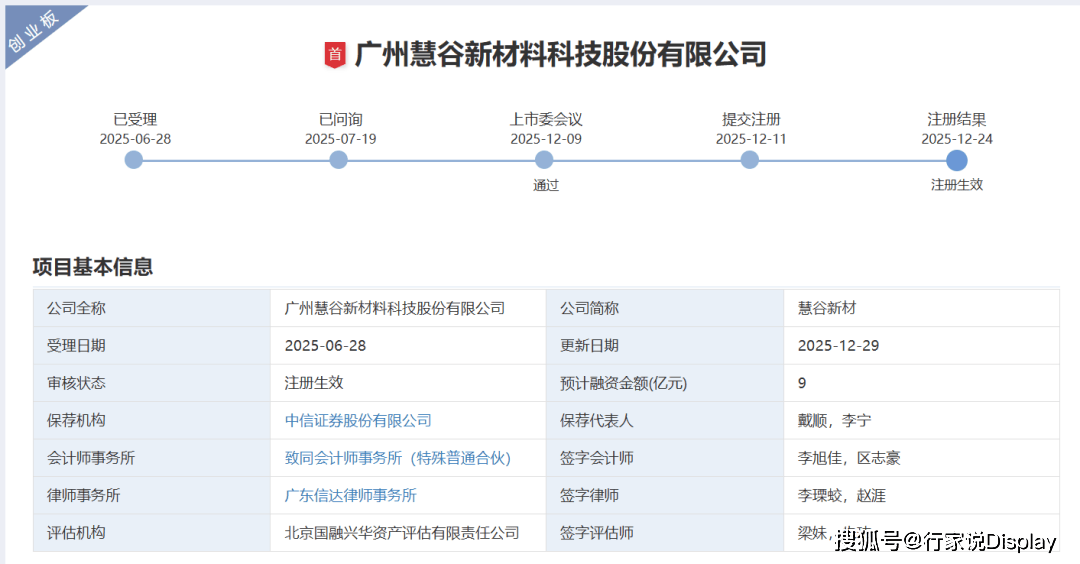
Core Viewpoint - Guangzhou Huigu New Materials Technology Co., Ltd. has successfully completed all review procedures for its IPO on the ChiNext board, with registration effective on December 24 [1][3] Group 1: IPO Process - Huigu New Materials submitted its IPO application in June and received acceptance, completing the IPO inquiry and passing the listing committee review within six months [3] - The company submitted its registration on December 11, marking the final step in the IPO process [3] Group 2: Company Overview - Huigu New Materials specializes in polymer materials, focusing on functional coating materials driven by independent research and development [3] - The company holds over 60% market share in energy-saving coating materials for heat exchangers and over 30% in metal packaging aluminum cap coating materials in the domestic market [3] - It is one of the few domestic suppliers achieving localization in fluid coating materials and Mini LED optical coating materials [3] Group 3: Future Plans - The company aims to leverage its IPO to enhance its dual technology platforms in functional resins and coating materials, solidifying its leading position in niche markets [3] - Huigu New Materials plans to accelerate market expansion in new energy and electronics sectors, promoting the localization of fluid coating materials and Mini LED optical coating products [3] Group 4: Fundraising Details - The IPO plans to publicly issue no more than 15.7791 million shares, with raised funds primarily allocated for an annual production expansion project of 130,000 tons of environmentally friendly coatings and resins, a research and development center project, and production line technology renovation projects [3]

国内聚乙烯醇龙头双欣环保在深交所主板鸣钟开市
Nei Meng Gu Ri Bao· 2025-12-30 06:55
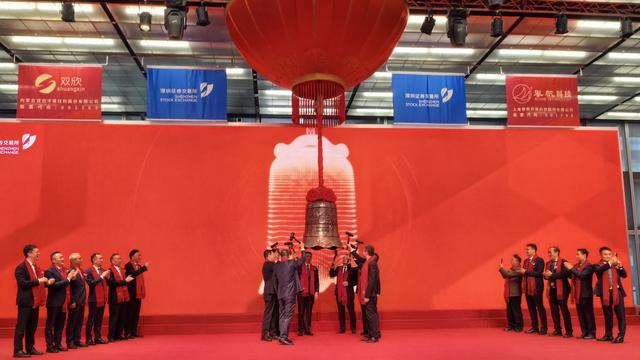
Group 1 - Inner Mongolia Shuangxin Environmental Protection Materials Co., Ltd. successfully listed on the Shenzhen Stock Exchange, becoming the fourth listed company in Inner Mongolia in 2025, contributing to the high-quality development of the capital market [1][4] - The company is one of the three leading enterprises in the domestic polyvinyl alcohol (PVA) industry and the first private enterprise in this sector, raising a total of 1.966 billion yuan through its IPO at a price of 6.85 yuan per share [1][3] - Shuangxin Environmental has established a complete circular economy industrial chain for PVA production, holding over 260 authorized patents and contributing to the development of the chemical new materials industry in China [3][4] Group 2 - The company plans to use the raised funds to enhance its innovation capabilities and increase production capacity for high-value-added products such as PVB functional films and water-based adhesives, addressing the growing market demand in emerging sectors [4] - Since 2021, Inner Mongolia has added 12 new listed companies, with a total of 36 listed companies in the region, improving its national ranking from 28th to 26th [4] - The total financing from newly listed companies reached 20.398 billion yuan, significantly supporting the high-quality development of the region, particularly in mining, non-metal manufacturing, chemicals, and agricultural processing sectors [4]
安世危机之下,瑞能半导体价值凸显!
Cai Fu Zai Xian· 2025-12-30 06:51
Core Viewpoint - The article discusses the contrasting situations of two semiconductor companies, Anshi Semiconductor and Ruineng Semiconductor, highlighting Ruineng's advantages in supply chain control and market position following its acquisition by Chinese investors [2][10]. Group 1: Company Background - Ruineng Semiconductor was established in 2015, inheriting the bipolar power device business from NXP, with a registered capital of $130 million [3]. - NXP fully exited its stake in Ruineng in 2019, making it a wholly Chinese-owned enterprise [3]. - The company has a legacy of 55 years in technology and quality systems, tracing back to Philips Semiconductor [5]. Group 2: Market Position and Product Line - Ruineng Semiconductor has become the global leader in the thyristor market, achieving a market share of 21.8% globally and 36.2% in China for thyristors in 2019 [8]. - The product line includes thyristors, power diodes, IGBTs, silicon MOSFETs, and silicon carbide (SiC) devices, serving sectors like consumer electronics, communications, new energy, and automotive [6]. - The company has made significant advancements in SiC technology, launching its first 650V SiC diode in 2016 and expanding its production capabilities [8]. Group 3: Financial Performance - Ruineng's revenue grew from 588 million yuan in 2019 to over 1 billion yuan in 2022, despite recent external challenges [9]. - In the first half of 2025, the company reported a revenue of 441 million yuan, with a net profit of approximately 30.32 million yuan and a gross margin of 27.77% [9]. Group 4: Supply Chain and Strategic Advantages - Ruineng Semiconductor operates under a fully controlled supply chain model, enhancing its resilience against geopolitical risks and trade conflicts [15]. - The company has established a comprehensive domestic supply chain, including wafer fabrication plants in Jilin and Beijing, and a research center in Shanghai [11][14]. - The firm emphasizes its unique position as the only domestic manufacturer using planar technology for thyristors, which offers advantages in reliability and performance [14]. Group 5: Future Outlook - The company is expected to maintain profitability despite industry fluctuations, with a focus on stabilizing its management and governance structure [15]. - Ruineng aims to combine stable thyristor sales with growth in SiC devices, potentially enhancing its market value in the coming years [15].
中芯国际406亿全资控股中芯北方!科创50ETF(588000)涨1.55%,半导体链全线活跃
Mei Ri Jing Ji Xin Wen· 2025-12-30 06:50
Group 1 - The A-share market saw all three major indices turn positive, with the Kweichow Moutai ETF (588000) experiencing a maximum increase of 1.55% in the afternoon session [1] - The semiconductor industry chain was notably active, with stocks such as Cambricon Technologies rising by 5.41%, Chipone Technology by 4.56%, and others showing significant gains [1] - SMIC announced plans to issue 547 million shares to acquire 49% equity in SMIC North, with a transaction value of 40.601 billion yuan, resulting in SMIC owning 100% of SMIC North post-transaction [1] Group 2 - The Kweichow Moutai ETF (588000) tracks the Sci-Tech 50 Index, with 69.39% of its holdings in the electronics sector and 4.88% in the computer sector, aligning well with the development of cutting-edge industries like AI and robotics [2] - The ETF also covers various sub-sectors including semiconductors, medical devices, software development, and photovoltaic equipment, indicating a strong focus on high-tech industries [2]
华安基金科创板ETF周报:科创板第五套上市标准扩围至商业火箭
Xin Lang Cai Jing· 2025-12-30 06:32
Group 1: Policy and Industry Dynamics - The Shanghai Stock Exchange released guidelines to expand the fifth listing standard for commercial rocket companies on the Sci-Tech Innovation Board, aiming to support the innovation and development of the commercial aerospace sector [1][17] - The guidelines consist of 14 articles detailing requirements related to business scope, "hard technology" attributes, and standards for commercial rocket enterprises, providing targeted support for high-quality companies without significant revenue [1][17] - Several rocket companies have recently submitted IPO counseling records, indicating a growing interest in capital market participation [1][17] Group 2: Market Overview and Trends - The commercial rocket industry is at a critical stage of large-scale commercialization, necessitating further support from the capital market [2][18] - The Sci-Tech Innovation Board focuses on hard technology, including sectors like electronic chips, emerging software, and new information technology services, reflecting the rise of advanced manufacturing in China [2][18] - Recent trends show a rebound in the Sci-Tech Innovation Board, particularly in sectors such as chips, information technology, and new materials [3][19] Group 3: Sector Performance - The top five industries on the Sci-Tech Innovation Board are electronics, biomedicine, power equipment, computers, and machinery, collectively accounting for 88.2% of the board's market capitalization [4][20] - The semiconductor sector has seen significant interest, with a notable rebound in chip stocks driven by demand for AI computing infrastructure [21] - The high-end equipment manufacturing sector is experiencing growth, with a 15.4% year-on-year increase in engineering machinery import and export trade, reflecting a recovery in overseas demand [22] Group 4: Investment Opportunities - The AI computing demand is expected to surge, with continued capital investment from cloud vendors driving high demand for advanced chips [21] - The domestic engineering machinery update cycle is starting, supported by favorable policies in real estate and infrastructure [22] - The pharmaceutical sector remains active, with multiple innovative drugs and medical devices receiving approvals, indicating a robust pipeline for growth [23]




诚志股份加码UHMWPE项目
Zhong Guo Hua Gong Bao· 2025-12-30 05:48
Core Viewpoint - The "15th Five-Year Plan" emphasizes the development of strategic emerging industries, including ultra-high molecular weight polyethylene (UHMWPE), which is becoming a focal point in the industry chain competition and is included in the 2024 national key R&D plan [1] Industry Overview - The UPE industry in China is experiencing rapid capacity expansion, with domestic UPE capacity expected to reach 731,100 tons by 2025, an increase of 32,700 tons within the year, representing a growth rate of 81% [2] - UPE is increasingly utilized in various strategic emerging industries, with the lithium battery separator becoming the largest application field, projected to demand 159,000 tons by 2025, accounting for 40.6% of total consumption [2] Future Growth Potential - UPE consumption in China is expected to reach 1,140,000 tons by 2030, with a compound annual growth rate of approximately 24% [3] - The demand for UPE is driven by increasing overseas market needs and domestic supply chain autonomy, particularly in the rapidly growing new energy vehicle and energy storage sectors [3] Market Positioning - The reliance on imports for high-end UPE products remains, with an average annual growth rate of 27% in UPE imports from 2016 to 2025 [4] - The launch of a 40,000 tons/year UPE project by Chengzhi Co. is a strategic response to the opportunity for domestic UPE production and aligns with national policies promoting technological self-reliance [4] Strategic Development - Chengzhi Co. aims to enhance its profitability and risk resilience by extending its industrial chain and optimizing its product structure in the chemical new materials sector [5] - The company recognizes that breakthroughs in processing technology for UPE products are essential for meeting future market demands [6] Industry Expectations - There is a consensus among downstream enterprises that while domestic UPE has rapidly developed in mid-to-low-end applications, there is still a performance gap in high-end applications such as medical and robotics [7] - Downstream companies express hope that Chengzhi's products will match or exceed the performance of foreign brands, particularly in terms of consistency and stability [7]

半导体设备国产替代提速,东芯股份涨超8%,科创100指数ETF(588030)午后翻红,盘中交投活跃
Xin Lang Cai Jing· 2025-12-30 05:37
Group 1 - The core viewpoint of the articles highlights the growth potential of the semiconductor manufacturing equipment market and the AI chip market in China, driven by increasing demand and investments in AI infrastructure [1][2]. - The global semiconductor manufacturing equipment market is projected to reach a record high of $133 billion in 2023, with a year-on-year growth of 13.7%, and is expected to further grow to $145 billion by 2026 [1]. - China's AI chip market is anticipated to surge from 142.54 billion yuan in 2024 to 1,336.79 billion yuan by 2029, indicating a significant expansion in this sector [2]. Group 2 - The latest size of the Sci-Tech Innovation 100 Index ETF has reached 6.432 billion yuan, marking a new high in the past month [2]. - The ETF has seen continuous net inflows over the past three days, with a maximum single-day net inflow of 244 million yuan, totaling 269 million yuan, and an average daily net inflow of 89.69 million yuan [2]. - The top ten weighted stocks in the Sci-Tech Innovation 100 Index account for 26.72% of the index, with notable companies including Huahong Semiconductor and East China Semiconductor [3].

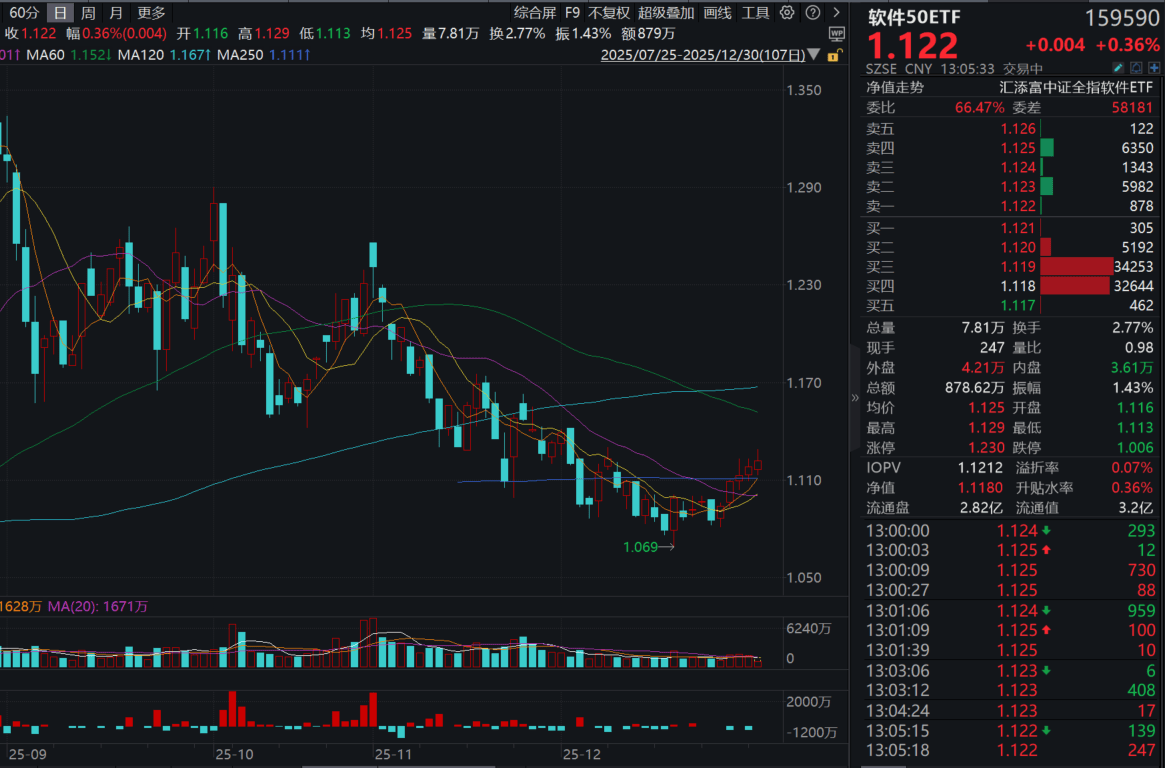
Meta收购Manus,AI Agent时代来了?软件50ETF(159590)冲击五连阳,信创50ETF(560850)再度飘红!
Sou Hu Cai Jing· 2025-12-30 05:24
Group 1: Company News - Meta has completed the acquisition of AI startup Butterfly Effect, which developed the AI agent Manus, marking its third-largest acquisition since inception, following WhatsApp and Scale AI [3] - After the merger, Butterfly Effect will continue to operate independently at the company, team, and product levels while integrating deeply with Meta's core global consumer products [3] - StarRing Technology and Haiguang Information have set a new performance record in the international TPC-DS benchmark test with their ArgoDB solution based on Haiguang's 7000 series processors, improving the previous record by 62%, indicating a significant leap in China's core information technology capabilities [4] Group 2: Market Insights - The market perspective indicates that the penetration and transformation of AI across various industries is just beginning, with expectations for international funds to gradually return to Chinese assets by 2025 [5] - Major AI application platforms such as Google, Meta, Apple, ByteDance, Tencent, and OpenAI are highlighted as critical entry points for investment in the coming year [5] - According to Founder Securities, the investment cycle in the tech industry follows a pattern of "hard three years, soft three years, and another three years of business model," with 2026 anticipated to be the investment year for AI applications due to continuous model improvements and cost reductions in computing power [5][7]