价值投资

Search documents
“牛市不买红利”?中证红利质量ETF(159209)25次新高给你看!
Sou Hu Cai Jing· 2025-08-14 02:43
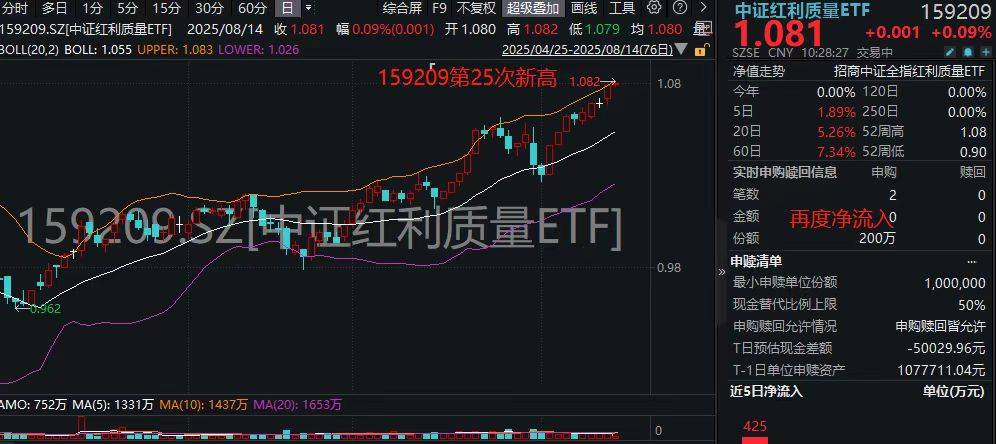
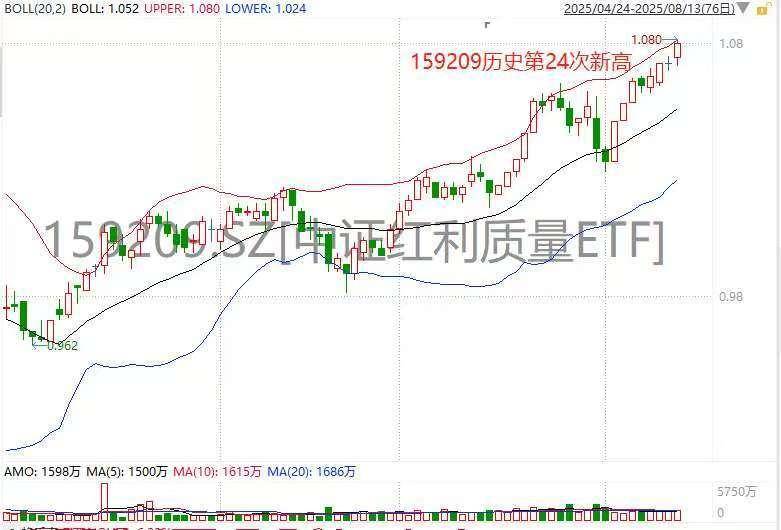
Group 1 - The A-share market has successfully broken through the 3700-point mark, with the only CSI Dividend Quality ETF (159209) reaching its 25th new high of the year during intraday trading [1] - The fund has seen continuous net inflows for four consecutive days, indicating strong investor interest and market momentum [1] - The CSI Dividend Quality ETF employs a "dividend + quality" dual-factor screening mechanism to identify high-quality companies with both "low valuation" and "high quality," aligning with Warren Buffett's value investment philosophy of investing in excellent companies at reasonable prices [1] Group 2 - The CSI Dividend Quality ETF (159209) and the Hong Kong Dividend Low Volatility ETF (520550) can be combined to create a cross-AH dividend "barbell strategy," which balances offensive and defensive positions while diversifying risk across two markets [1] - The product design features low fees and monthly dividends, which are expected to enhance long-term returns for investors [1]

从1到N,东方红万里行的十年温度
Mei Ri Jing Ji Xin Wen· 2025-08-13 23:53
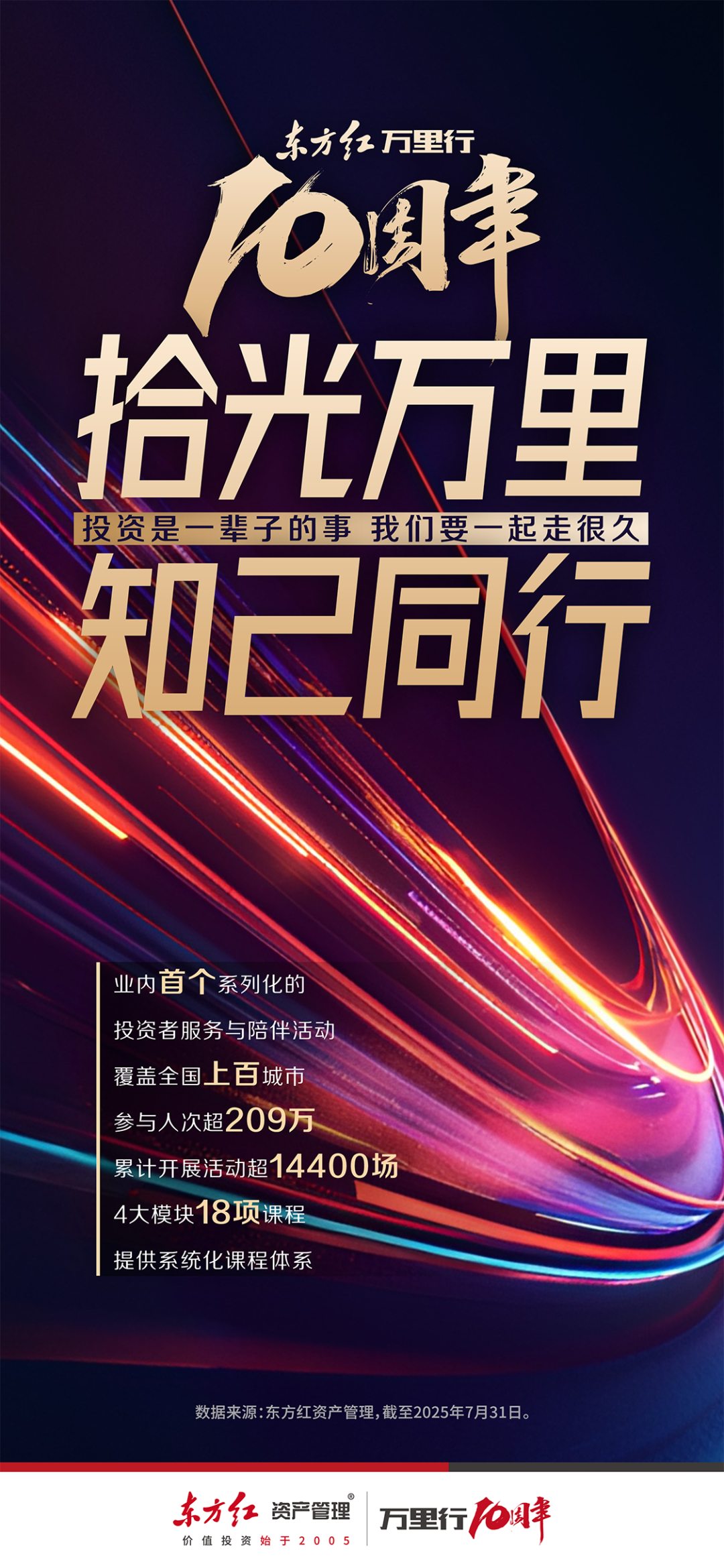
Core Insights - The article emphasizes the evolution of investor services in China's asset management industry over the past decade, highlighting the "Dongfanghong Wanli Xing" initiative as a cornerstone for healthy industry development [1][4][14] - The initiative has successfully conducted over 14,400 events, reaching more than 2.09 million investors across over 100 cities, establishing a comprehensive support system for investors [1][4] Group 1: Historical Context and Development - The "Dongfanghong" brand was established in 2005, focusing on value investment and investor education, which has been a fundamental aspect of its operations [5][6] - The initiative was launched in 2015 during a turbulent market period, aiming to help investors understand the relationship between long-term value and short-term volatility [6][9] - The team recognized that excellent performance alone is insufficient; systematic services and support are essential to protect investor returns [6][9] Group 2: Service Evolution and Upgrades - In recent years, the company has upgraded its investor service system, expanding its course offerings from four core modules to eighteen detailed courses, addressing various investor needs [9][10] - A dedicated lecturer team has been established to provide customized services based on client demands, enhancing the educational experience for different investor profiles [10][11] - The initiative has expanded its outreach to include diverse groups such as corporate employees, students, and the elderly, ensuring a broad dissemination of financial knowledge [11][12] Group 3: Future Directions and Goals - The company plans to launch a nationwide tour in 2025, themed "Picking Up Light and Walking Together," to further engage with investors and enhance their understanding of investment and asset management [14][15] - The tour will cover ten key cities, focusing on providing targeted services based on local economic conditions and investor needs [14][15] - The overarching goal is to improve financial literacy and support the high-quality development of China's capital markets, reinforcing the company's commitment to long-term investor relationships [15][16]
主动开展市值管理 中国神华用多维度行动积极回报股东
Zheng Quan Ri Bao· 2025-08-13 23:12
Core Viewpoint - China Shenhua advocates a long-term and stable value investment philosophy while actively engaging in market value management and providing high cash dividends to investors [1][2][3] Group 1: Company Overview - China Shenhua was established in November 2004 and listed on the Hong Kong Stock Exchange in June 2005, followed by the Shanghai Stock Exchange in October 2007 [1] - The company is the largest coal listed company in China and globally, with significant coal resources in regions such as Shendong, Zhungeer, Shengli, and Baorixile [1] - In 2019, the company sold 447.1 million tons of coal and generated a total electricity sales volume of 144.04 billion kilowatt-hours [1] - The company operates a large-scale clean coal power generation capacity and a comprehensive railway transportation network, with a self-owned railway transport turnover of 285.5 billion ton-kilometers in 2019 [1] Group 2: Investor Relations and Dividend Policy - The company prioritizes the protection of investors' legal rights and shares its development achievements with shareholders [2] - China Shenhua has a stable cash dividend policy, committing to a minimum of 35% of net profit attributable to shareholders for cash dividends, with an actual payout ratio around 40% [2] - For the years 2019 to 2021, the company increased its cash dividend ratio to no less than 50%, with a 2019 payout ratio reaching 60% [2] - Since its listing in 2005, the company has distributed cash dividends 18 times, totaling 13.48 yuan per share and a total cash dividend amount of 265 billion yuan [2] Group 3: Shareholder Engagement - China Shenhua emphasizes a balanced development between shareholders and the company, fostering a cooperative environment between major and minority shareholders [3] - The company actively responds to shareholder concerns, including authorizing share buybacks to manage market value and protect investor interests [2]

Are Investors Undervaluing VAREX IMAGING (VREX) Right Now?
ZACKS· 2025-08-13 14:41
Core Insights - The article emphasizes the importance of value investing, which focuses on identifying undervalued companies in the market [2] - VAREX IMAGING (VREX) is highlighted as a strong value stock, currently holding a Zacks Rank 2 (Buy) and an A grade for Value [4][6] Company Metrics - VREX has a Forward P/E ratio of 16.98, significantly lower than the industry average of 21.37 [4] - The stock's Forward P/E has fluctuated between a high of 26.48 and a low of 12.16 over the past 52 weeks, with a median of 19.11 [4] - The P/S ratio for VREX is 0.53, compared to the industry average of 1.5, indicating potential undervaluation [5] Investment Outlook - The combination of VREX's favorable metrics and strong earnings outlook positions it as one of the market's strongest value stocks [6]


Is Cricut (CRCT) Stock Undervalued Right Now?
ZACKS· 2025-08-13 14:41
Core Viewpoint - The article highlights Cricut (CRCT) as a strong value stock, supported by its favorable Zacks Rank and various valuation metrics indicating it is currently undervalued in the market [4][7]. Valuation Metrics - Cricut has a P/E ratio of 22.89, which is lower than the industry average of 24.46, suggesting it may be undervalued [4]. - The company has a P/B ratio of 3.82, significantly lower than the industry average P/B of 8.07, indicating attractive valuation [5]. - Cricut's P/S ratio stands at 1.65, compared to the industry's average P/S of 2.16, further supporting its undervaluation [6]. Earnings Outlook - The strength of Cricut's earnings outlook, combined with its valuation metrics, positions it as an impressive value stock at the moment [7].


普通人想要积累财富,到底该避开哪些容易踩坑的思维误区?
Sou Hu Cai Jing· 2025-08-13 13:12
Core Insights - Wealth accumulation is a journey that involves understanding human nature and avoiding common cognitive biases that lead to financial pitfalls [1] - The article identifies five major cognitive biases that hinder wealth growth and emphasizes the importance of breaking free from the "poor cycle" to achieve financial awakening [1] Cognitive Blind Spots - Salary growth is insufficient to counteract inflation, and relying solely on a single income stream does not lead to significant financial transformation [2] - The lack of understanding of the compounding effect results in missed opportunities for wealth generation [2] Strategies for Breaking the Cycle - Construct an income pyramid: base income from salary, supplemented by side jobs, and topped with asset income (e.g., rent, dividends) to achieve income diversification [3] - Learn the "money-making money" logic through tools like index fund investments and real estate to allow capital to participate in wealth distribution and leverage compounding for wealth multiplication [3] Case Study - Investing 1,000 yuan monthly in an index fund with an average annual return of 10% could yield approximately 480,000 yuan in principal and returns after 20 years, significantly surpassing linear savings [4] Consumption Misconceptions - There is a tendency to equate consumption with happiness, leading to indulgence in luxury goods and immediate gratification, resulting in a cycle of increased income, upgraded consumption, and debt accumulation [5] - Advertising creates false demands, and credit cards amplify consumption desires, squeezing investment capacity [6] Solutions to Consumption Issues - Layer needs: distinguish between survival needs (food, housing), development needs (education, health), and vanity needs (luxury goods), prioritizing investment in the first two [7] - Establish a consumption firewall: save 30% of income before spending, use cash to curb impulsive purchases, and regularly declutter to free up funds for investment [7] Actionable Recommendations - Implement a "cooling-off period" for consumption decisions, especially for large expenditures, by asking if it truly enhances long-term value [8] Behavioral Patterns - Investors often either engage in blind speculation (e.g., P2P, cryptocurrencies) or overly conservative strategies (e.g., keeping all funds in banks) [10] - The alternating dominance of greed and fear leads to a lack of systematic investment knowledge, with greed resulting in high-risk losses and fear causing a decline in purchasing power due to inflation [11] Balancing Investment Approaches - Risk-reward allocation should be based on risk tolerance, with a suggested asset mix of 60% stable (bonds) and 40% growth (stocks, funds) or vice versa [12] - Learning basic financial knowledge is crucial for mastering asset allocation, compounding calculations, and market cycles, while avoiding herd mentality in investment decisions [12] Time Management Insights - Time is often undervalued, with individuals focusing on short-term gains (e.g., part-time income) at the expense of self-improvement and asset appreciation [13] - A proposed time allocation strategy includes dedicating 30% to leisure, 50% to income-generating activities, and 20% to investment learning [14] Evidence of Learning Impact - Research indicates that individuals who invest five hours weekly in learning about investments have three times the average wealth of those who do not over a decade [15] Overcoming Rigid Thinking - Sticking to outdated beliefs (e.g., "buying a house is always profitable") and avoiding new trends (e.g., digital currencies, AI economy) can hinder financial growth [16] - The article contrasts proactive planners with passive executors, highlighting that wealth disparities can reach five times over five years [18] Action Plan for Wealth Accumulation - Maintain an open mindset by reading ten financial books annually, participating in industry forums, and staying updated on policy and technology trends [20] - Create a wealth blueprint with clear short-term, medium-term, and long-term financial goals, breaking them down into actionable daily tasks [20] - Shift from salary-based thinking to asset-based thinking, from consumerism to value investing, and from risk aversion to risk management [20]

每经热评︱沪指一举突破“9·24”行情高点 A股市场正迈向更成熟的发展阶段
Mei Ri Jing Ji Xin Wen· 2025-08-13 12:51
Group 1 - The A-share market has reached a historic moment with the Shanghai Composite Index breaking through 3674.4 points, marking a new high since the "9.24" market in 2024, indicating the potential start of a "slow bull" market [1] - The foundation of this bull market is attributed to the regulatory authorities' commitment to protecting the rights of small and medium investors, who account for over 90% of the market, through various reforms aimed at enhancing market transparency and fairness [1][2] - The improvement in the quality of listed companies provides a strong "target pool" for the "slow bull" market, with a focus on quality over quantity, leading to the emergence of strong performers in technology and consumer sectors [2] Group 2 - Investor confidence has significantly transformed, becoming the core driving force behind the "slow bull" market, as evidenced by the resilience of the A-share market despite external disturbances [3] - The market is transitioning from a "universal rise" era to a "differentiation era," where investors are increasingly discerning in evaluating companies based on their operational differences, growth potential, and risk levels [3] - Companies with core technologies, stable profit models, and good governance are likely to receive sustained market recognition, while those lacking these attributes may face valuation adjustments [3] Group 3 - Investors are encouraged to adjust their mindset and strategies to embrace value investing, focusing on the alignment of company performance and valuation, and seizing structural opportunities amid market fluctuations [4] - The A-share market is progressing towards a more mature development stage, supported by regulatory oversight, improved company quality, and restored investor confidence, emphasizing the importance of long-term investment principles for wealth growth [4]
邓紫棋投资高回报,又出书赚钱,可谓是盆满钵满
Sou Hu Cai Jing· 2025-08-13 09:28
Core Insights - G.E.M. Tang has successfully invested in AI companies before the rise of ChatGPT, demonstrating her foresight in technology trends [3] - Her investments in three companies, including an AI firm, a consumer genetic testing company, and a maternal and child health technology company, have all been profitable, with AI investments yielding returns as high as 10 times [3][5] - Tang's recent activities include the pre-sale of her debut science fiction novel, indicating her diverse interests and potential for generating income beyond music [5] Investment Strategy - Tang's investment approach emphasizes the importance of understanding the industry and conducting thorough research, as she studied various technical books on artificial intelligence to avoid blind investments [1][5] - The past two decades have seen significant wealth creation in sectors like real estate, internet, AI, and renewable energy, with future trends likely to focus on AI, biotechnology, renewable energy, and digital assets [5] - Investment is described as an art that requires a combination of knowledge, patience, and timing, highlighting the need for education and careful consideration in investment decisions [7]
历史低24次新高!中证红利质量ETF(159209)明日分红登记
Sou Hu Cai Jing· 2025-08-13 07:24
8月13日,质量红利资产持续走强。截至14时55分,表征板块的中证红利质量ETF(159209)涨0.75%,盘中创年 内第24次新高。公告显示,中证红利质量ETF(159209)迎来本年度第二次分红,每份基金份额派发现金红利 0.003元,分红比例达0.3%;权益登记日定为8月14日。 据了解,中证红利质量ETF(159209)跟踪的中证全指红利质量指数选取 50 只分红稳定、股息率较高且盈利持续 性较好的上市公司证券作为指数样本,以反映具有较强分红和盈利能力特征的上市公司证券的整体表现。 以"红利+质量"双因子筛选机制筛选出兼具"低估值"+"高质量"双重护城河的优质企业。其核心理念与巴菲特"以 合理价格投资卓越企业"的价值投资逻辑高度契合。 产品设计层面,中证红利质量ETF(159209)费用模式采用"0.15%+0.05%"的全市场最低档 ,长期持有具备明显的 成本优势;分红模式采用月度评估分红机制,能更好地满足投资者的现金流需求,提升持有体验。 风险提示:文中提及的指数成份股仅作展示,个股描述不作为任何形式的投资建议。任何在本文出现的信息 (包括但不限于个股、评论、预测、图表、指标、理论、任何形式的表 ...
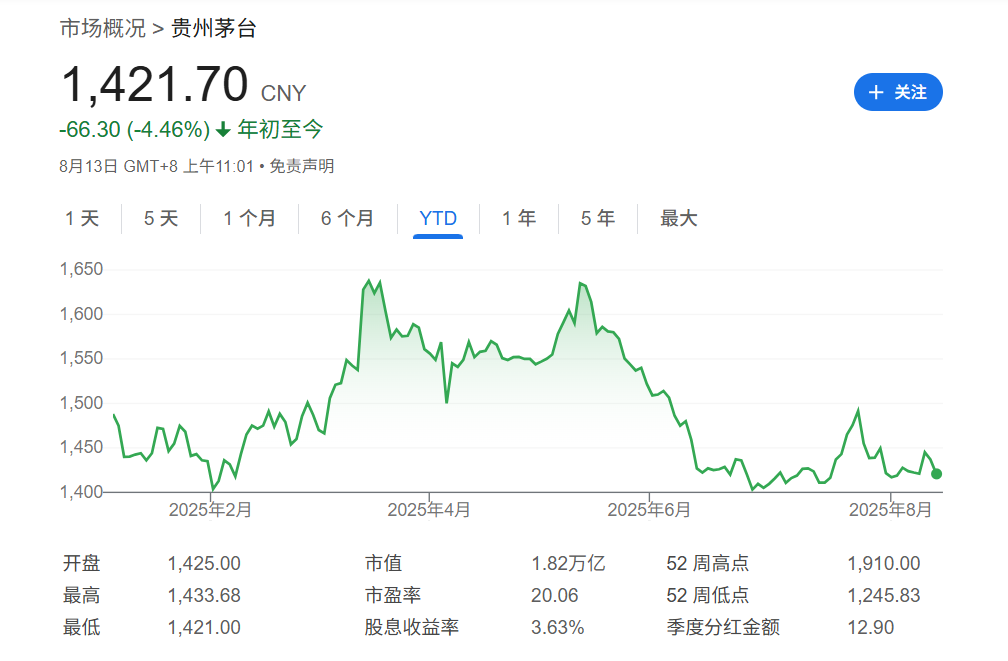
3.9%!茅台股息率史上首次超过农行
Hua Er Jie Jian Wen· 2025-08-13 03:24
Group 1 - The core viewpoint is that Kweichow Moutai is transitioning from a growth stock to a high-yield value investment, with its dividend yield historically surpassing that of Agricultural Bank of China, indicating a shift in market focus towards high-yield assets beyond traditional bank stocks [1][5] - Kweichow Moutai's expected net dividend yield has reached 3.9%, while Agricultural Bank's yield is at 3.7%, marking the first time Moutai's yield has exceeded that of the bank [1] - Moutai's stock price has declined approximately 5% this year due to weak demand for high-end liquor, contrasting with Agricultural Bank's stock price, which has surged over 30% in the same period, leading to a dilution of its dividend yield [1][5] Group 2 - The increase in Moutai's dividend yield is primarily due to its declining stock price and stable dividend policy, enhancing its appeal to income-focused investors [5] - Moutai's revenue for the first half of the year was 89.39 billion yuan, a year-on-year increase of 9.1%, while net profit attributable to shareholders was 45.4 billion yuan, up 8.89% [5] - The decline in Agricultural Bank's dividend yield may prompt dividend-focused traders to consider Kweichow Moutai and other overlooked consumer staple companies, such as Luzhou Laojiao [5]