东数西算

Search documents
《经济日报》关注贵州:扩大智算规模 完善产业生态
Xin Lang Cai Jing· 2026-01-18 08:11
Core Insights - Guizhou is significantly enhancing its computing power industry, focusing on intelligent computing to support the national "East Data West Computing" strategy and facilitate digital transformation across various sectors [3][4] Group 1: Development of Computing Power - Guizhou has established 50 data centers by 2025, with a total computing power exceeding 150 EFLOPS, nearly doubling from 2024, and over 90% of this capacity is in intelligent computing [3] - The province has become one of the strongest regions in China for intelligent computing capabilities and resources, with 48 computing service providers aggregated at the national integrated computing network hub [3] Group 2: Infrastructure and Network Support - Guizhou has built a robust network infrastructure, including a national-level internet backbone direct connection point and an international internet data dedicated channel, making it one of the few provinces with all three major information infrastructure components [3] Group 3: Collaborative Development and Future Plans - The province is creating a new collaborative development model for the computing power industry, attracting major companies like Huawei Cloud and iFlytek to establish industry-leading projects [4] - Guizhou aims to further enhance the quality of its computing power industry by implementing more substantial measures and attracting additional projects to expand its digital intelligence industry cluster [4]

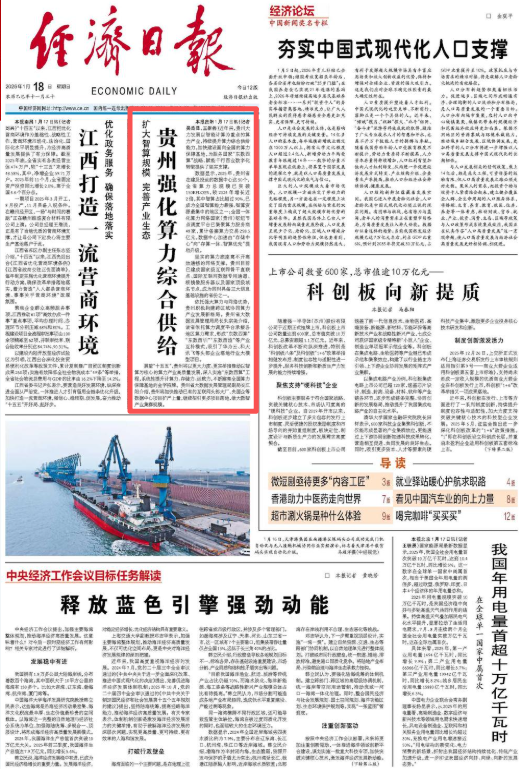
贵州强化算力综合供给
Jing Ji Ri Bao· 2026-01-18 08:01
Core Insights - Guizhou is significantly advancing its computing power industry, focusing on intelligent computing, to support the national "East Data West Computing" strategy and facilitate digital transformation across various sectors [1][2] Group 1: Industry Development - By 2025, Guizhou plans to have 50 data centers in operation, with total computing power exceeding 150 EFLOPS, representing nearly a twofold increase from 2024, and over 90% of this capacity will be in intelligent computing [1] - Guizhou has become one of the regions with the strongest intelligent computing capabilities and the most concentrated resources in the country, with 48 computing service providers aggregated at the national integrated computing network hub [1] Group 2: Infrastructure and Support - The province has established a robust network infrastructure, including a national-level internet backbone direct connection point and an international internet data dedicated channel, making it one of the few provinces with all three major information infrastructure components [1] - The computing power scheduling platform in Guizhou is facilitating cross-regional collaboration and attracting major companies like Huawei Cloud and iFlytek to establish industry-leading model projects [1] Group 3: Future Plans - Looking ahead to the 14th Five-Year Plan, Guizhou aims to enhance the quality of its computing power industry with a focus on intelligent computing, while continuing to attract more data center projects and expand existing ones [2]
美国“电荒”,中国“电卷”
创业邦· 2026-01-18 03:48
Core Viewpoint - The article contrasts the electricity pricing dynamics in the United States and China, highlighting the stark differences in how each country manages electricity supply and demand, leading to divergent pricing trends. Group 1: U.S. Electricity Market Dynamics - In the U.S., electricity shortages manifest through immediate price increases, reflecting a brutal pricing mechanism that signals supply constraints to consumers [10][12]. - The average electricity price in the U.S. has been rising over the past two years, driven by necessary infrastructure upgrades and capital expenditures [11]. - The pricing mechanism in the U.S. is designed to encourage investment in power generation and to prompt consumers to reduce usage during shortages [10][12]. Group 2: Chinese Electricity Market Dynamics - In contrast, China's electricity prices are experiencing a downward trend, with a reported 10% year-on-year decrease in purchasing prices as of early 2025 [6]. - The Chinese electricity market is characterized by a "passive clearing" process, where supply outpaces demand, leading to lower prices despite increasing electricity consumption from data centers and manufacturing [15][18]. - The integration of renewable energy sources in China has not raised costs as seen in Europe; instead, it has driven prices down due to near-zero marginal costs [16]. Group 3: Implications of Pricing Mechanisms - The U.S. model places the burden of rising costs on end-users, resulting in visible public discontent and protests against high electricity bills [20]. - Conversely, in China, the costs are absorbed by the supply side, with power generation companies and equipment manufacturers facing pressure to maintain low prices, leading to reduced profitability [21][22]. - The article suggests that the different approaches to electricity pricing reflect broader economic strategies, with the U.S. focusing on market-driven solutions and China prioritizing stability and accessibility [22].

陈博彰主持召开市政府专题会议研究部署“人工智能+”行动及人工智能产业链工作
Chang Sha Wan Bao· 2026-01-18 02:31
Core Insights - The city government is focusing on the "Artificial Intelligence +" initiative to enhance high-quality development through the integration of AI into various sectors [1][3][4] Group 1: Action Plan and Objectives - The government aims to strengthen foundational support by optimizing computing power layout, enhancing platform capabilities, and reinforcing technological breakthroughs [3] - A city-level computing power scheduling platform will be established to integrate into the national computing network, promoting the development of a national AI innovation pilot zone [3] - The initiative will target key sectors by creating a targeted investment list and nurturing innovative enterprises, with a focus on attracting major projects and leading companies [3] Group 2: Application and Integration - The plan emphasizes the deep integration of AI with key industries, including public services, urban governance, public safety, and healthcare [3] - Regular updates of application scenario demand lists will be published to facilitate the development of AI application benchmarks [3] Group 3: Ecosystem Development - The strategy includes focusing on critical areas such as AI chips, industrial software, and smart terminals, while dynamically updating the AI industry chain map [3] - The government will enhance its role in guiding investment funds to support a diversified financing system covering the entire lifecycle of enterprises [3][4]
扩大智算规模 完善产业生态 贵州强化算力综合供给
Jing Ji Ri Bao· 2026-01-17 22:11
Group 1 - Guizhou is focusing on developing a computing power industry centered around intelligent computing, enhancing its comprehensive supply capacity to support the national "East Data West Computing" strategy and facilitate digital transformation across various sectors [1] - By 2025, Guizhou plans to have 50 data centers in operation, with a total computing power exceeding 150 EFLOPS, nearly doubling from 2024, and over 90% of this capacity will be in intelligent computing [1] - The province has established a national integrated computing power network hub, gathering 48 computing service providers and recording a total of 25.85 billion yuan in computing power transactions [1] Group 2 - Guizhou aims to promote high-quality development of the computing power industry with a focus on intelligent computing during the 14th Five-Year Plan, enhancing computing, storage, and transportation capabilities [2] - The province plans to accelerate the expansion of existing data center projects from major internet companies and state-owned enterprises while attracting more projects to grow the digital intelligence industry cluster [2]
我国在西藏下的一盘大棋
虎嗅APP· 2026-01-17 03:06
Economic Growth and Investment - Tibet's economic growth rate reached 7.2% year-on-year in the first half of 2025, ranking first in the country, continuing a trend since 2023 [2] - Fixed asset investment in Tibet grew by 24.8% year-on-year in the first half of 2025, 19.6% in 2024, and 35.1% in 2023, indicating strong investment-driven growth [2] Infrastructure Development - Major infrastructure projects such as the Sichuan-Tibet Railway, Yarlung Tsangpo River downstream hydropower project, and New Tibet Railway have drawn significant attention to Tibet [2] - These projects are expected to create nearly one million jobs, significantly increasing local income and stimulating various sectors [8] Economic Structure - Tibet exhibits a "non-typical dual economic structure," where traditional industries coexist with modern industries built through external aid, leading to a weak connection between agriculture and industrial development [3][4] - The industrial sector in Tibet has historically been underdeveloped, with industrial added value lower than that of the construction sector, indicating a reliance on construction for economic growth [6][7] Strategic Importance - Tibet's strategic position has gained importance as China shifts focus to developing the Chengdu-Chongqing economic circle, making Tibet a key area for national development [2][8] - The region's potential for clean energy, particularly hydropower, positions it as a crucial player in China's future energy landscape, with a significant portion of its hydropower resources yet to be developed [11][12] Future Prospects - The "East Data West Computing" strategy emphasizes the need for large-scale data centers in western regions, with Tibet being central to providing clean and stable electricity for digital economy support [12] - The development of hydropower resources in Tibet could transform it into a regional energy hub, reducing dependence on traditional energy sources and enhancing its geopolitical significance [17]

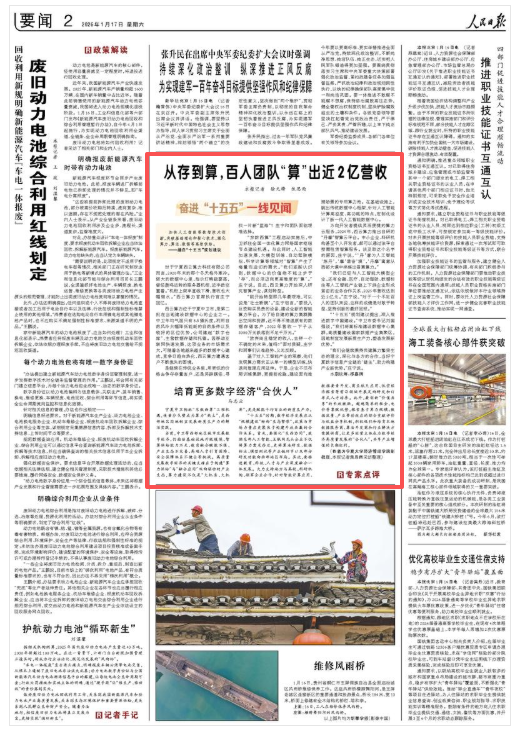
从存到算,百人团队“算”出近2亿营收
Xin Lang Cai Jing· 2026-01-17 00:12
Core Insights - The article discusses the transformation of Xiyun Computing Technology Co., Ltd. from a traditional data storage company to a provider of intelligent computing services, driven by the increasing demand for AI and computational power [2][3]. Company Overview - Xiyun Computing, located in Zhongwei, Ningxia, faced significant challenges in 2020, including a sharp decline in revenue and customer loss due to increased competition in the data center market [2]. - The company decided to pivot from traditional data storage to intelligent computing, recognizing the need to evolve beyond mere data storage to meet the growing demand for computational services [2][3]. Transformation Strategy - The transition involved substantial investment in new equipment and the development of a smart computing platform, leading to a drastic drop in revenue from 30 million yuan to less than 10 million yuan in 2022 [3]. - Xiyun Computing identified a shift in demand from model training to inference applications, prompting the establishment of dedicated computing resources for these new needs [3]. Future Projections - The company plans to launch its self-developed "Danmo" intelligent computing cloud platform in 2024, allowing various users, including SMEs and research institutions, to rent computing services as needed [3]. - Xiyun Computing aims to achieve nearly 200 million yuan in revenue by 2025, showcasing the potential success of its transformation strategy [3]. Industry Context - The article highlights the broader context of the "East Data West Computing" initiative, which aims to enhance the integration of computing resources across regions, particularly benefiting areas like Zhongwei [5]. - Challenges remain in the digital economy development in western regions, including infrastructure upgrades and talent acquisition, emphasizing the need for a robust ecosystem that supports both computing supply and application integration [5][6].
人民日报专家点评:培育更多数字经济“合伙人”
Xin Lang Cai Jing· 2026-01-16 23:16
更将算法研发、数据标注、模型测试等产业链环节以及部分研发功能向西部地区布局。其次,要推进教 育、科技、人才与产业深度融合一体发展。大力支持地方与高校、科研机构、领军企业合作,针对智能 计算应用、数据要素开发、商业航天应用、低空经济探索等前沿领域开展定向研发和订单式人才培养。 此外,要创新"价值共享"的长效激励。超越简单的租金、电价等禀赋优势,探索基于算力规模、数据流 量、产业带动效应的综合贡献评价与收益分享机制,积极吸引和培育本地数据服务商、算法开发商和行 业解决方案提供商,让更多经营主体成为数字经济高质量发展的"合伙人",共享产业增值的长期红利。 (作者为宁夏大学经济管理学院副教授,本报记者焦思雨采访整理) 责任编辑:石秀珍 SF183 培育更多数字经济"合伙人"(专家点评) 马志云《人民日报》(2026年01月17日 第 02 版) 宁夏中卫抢抓"东数西算"工程机遇,使黄沙戈壁成为算力"热土",是西部地区因地制宜发展新质生产力 的鲜活实践。 当前,中卫等西部地区城市发展数字经济,仍面临基础设施升级缓慢、智算供给能力不足、数实融合赋 能不强、产业生态不完善、高端人才引育困难、安全保障体系不健全等挑战。高质量 ...
从存到算,百人团队“算”出近2亿营收(奋进“十五五”·一线见闻)
Xin Lang Cai Jing· 2026-01-16 23:16
Core Insights - The article discusses the transformation of Xiyun Computing Technology Co., Ltd. in response to the evolving demands of the artificial intelligence (AI) industry, particularly in the context of the "East Data West Calculation" initiative and the need for advanced computing capabilities [4][10]. Company Overview - Xiyun Computing, located in Zhongwei City, Ningxia, faced significant challenges in late 2020, with a sharp decline in server utilization and revenue due to increasing competition in the data center market [3][9]. - The company initially focused on data storage and hosting but recognized the need to pivot towards intelligent computing to remain competitive [4][10]. Strategic Shift - Following the launch of the "East Data West Calculation" project, Xiyun Computing identified a growing demand for intelligent computing in areas such as AI model training and scientific computing [4][10]. - The CEO, Zhuang Ning, described the early years of this transformation as extremely challenging, requiring substantial investment in new technology and the difficult decision to exit traditional data storage clients, resulting in a revenue drop from 30 million yuan to less than 10 million yuan in 2022 [4][10]. New Business Model - The company is developing a new generation of AI data centers tailored to the high-density and high-power requirements of AI computing, moving beyond traditional data center frameworks [4][10]. - In 2024, Xiyun Computing plans to launch its self-developed "Danmo" intelligent computing cloud platform, allowing developers, small businesses, and research institutions to rent computing services on demand [11]. Future Projections - Xiyun Computing aims to achieve nearly 200 million yuan in revenue by 2025, supported by partnerships with AI model companies and various sectors such as finance, healthcare, and autonomous driving [11]. - The local government emphasizes the importance of building high-standard data center clusters and fostering new productive forces to enhance the region's competitive advantages in the digital economy [11].
庆阳:风光赋新黄土塬 电算奔流新枢纽
Zhong Guo Xin Wen Wang· 2026-01-16 10:30
Core Viewpoint - The news highlights the significant development of renewable energy in Qingyang City, with a projected addition of 5.42 million kilowatts of new energy capacity by 2025, reaching a total of 8 million kilowatts, and an expected annual power generation of 12.836 billion kilowatt-hours, representing a 223% year-on-year increase [1][2]. Group 1: Renewable Energy Development - Qingyang City aims for a leap in renewable energy development by 2025, with a focus on integrated development of wind, solar, thermal, storage, and hydrogen [1]. - The city is advancing major renewable energy projects, including the "Lao Dian Ru Lu" ±800 kV UHVDC project, which will deliver over 36 billion kilowatt-hours of electricity annually to Shandong, with more than half coming from renewable sources [2]. - A 6 million kilowatt renewable energy project by Huaneng has been successfully connected to the grid, enhancing energy supply stability through a multi-energy complementary approach [2]. Group 2: Integration with Digital Economy - Qingyang is integrating renewable energy development with the digital economy, launching a 5 million kilowatt green electricity aggregation project to support data centers [4]. - The project aims to provide clean electricity to data centers, significantly reducing operational costs for digital enterprises [4]. Group 3: Energy Infrastructure and Grid Development - The city is investing in grid infrastructure to enhance the capacity for accommodating and dispatching large-scale clean energy, with several major projects completed to optimize the grid structure [7]. - The establishment of a balanced development model for energy consumption and delivery is underway, focusing on centralized renewable energy development in the north and new load centers in the south [7]. Group 4: Future Prospects and Projects - Future projects include the construction of a hydrogen energy comprehensive utilization demonstration base and the development of a natural gas combined heat and power project for the "East Data West Computing" industrial park [9]. - By the end of the 14th Five-Year Plan, the city aims to achieve a hydrogen energy production scale of 100,000 tons, with an industry output value exceeding 4 billion yuan [9].