
产业互联网

Search documents
找钢集团-W(06676)透过附属与Lykos订立合资协议及一套相关公司章程
智通财经网· 2025-07-02 09:12
Core Viewpoint - The collaboration between the company and Trafigura Group aims to establish a comprehensive e-commerce platform for the non-ferrous metal industry, enhancing operational efficiency and providing superior trading experiences [1][2][3] Group 1: Joint Venture and Investment - The company announced a joint venture agreement with Lykos Holding Hong Kong Limited, a subsidiary of Trafigura Group, to establish a non-ferrous metal industry internet platform named ZongJinHui [1] - The company will invest RMB 45 million in cash to hold an 8.57% stake in the joint venture, ZongJinHui (Shanghai) Information Technology Co., Ltd [1] Group 2: Business Expansion and Digital Transformation - The partnership allows the company to accelerate its expansion into the non-steel sector and develop a comprehensive industrial internet platform [2] - The company established the PangMao Industrial Products Division, which has been rebranded to Zhaogang Industrial Products, leveraging infrastructure developed for the steel industry to facilitate non-steel trade [2] - As of December 31, 2024, the non-steel trade business collaborated with 371 suppliers and 1,728 customers, covering over 68,000 SKUs and completing 19,811 transactions, generating a total merchandise transaction value (GMV) of RMB 408 million, a year-on-year increase of 192.7% [2] Group 3: Platform Functionality and Customer Experience - The ZongJinHui platform provides real-time access to reliable supply and pricing information, enabling customers to place orders and complete transactions efficiently [2] - The platform's capabilities are supported by a core software system that enhances procurement efficiency and strengthens financial risk control [2] - The company aims to leverage its national sales network to distribute non-ferrous metal products to industrial and construction end-users, enhancing the platform's capabilities [3]
找钢集团(06676) - 自愿公告
2025-07-02 09:00
香港交易及結算所有限公司及香港聯合交易所有限公司對本公告的內容概不負責,對其準確性 或完整性亦不發表任何聲明,並明確表示,概不對因本公告全部或任何部分內容而產生或因倚 賴該等內容而引致的任何損失承擔任何責任。 本公告僅供參考,並不構成收購、購買或認購本公司證券之邀請或要約。 ZG Group 找鋼產業互聯集團 (於開曼群島註冊成立以不同投票權控制的有限公司,以ZGW之名稱於香港進行業務) 托克及LYKOS (股份代號:6676) (權證代號:2572) 自願公告 合作協議 本公司董事會(「董事會」)欣然宣佈,於2025年7月2日,本公司透過其全資附 屬公司與LYKOS HOLDING HONG KONG LIMITED(「Lykos」,TRAFIGURA GROUP PTE. LTD.*(「托克」)之全資附屬公司)訂立合資協議及一套相關公司章 程,以共同設立有色金屬行業的產業互聯網平台(「合作」),宗金匯平台。 本公告由找鋼產業互聯集團(「本公司」,連同其附屬公司統稱「本集團」)自願作 出。 1 合作詳情 本公司以現金出資人民幣45百萬元與Lykos Holding Hong Kong Limited共同設立 ...
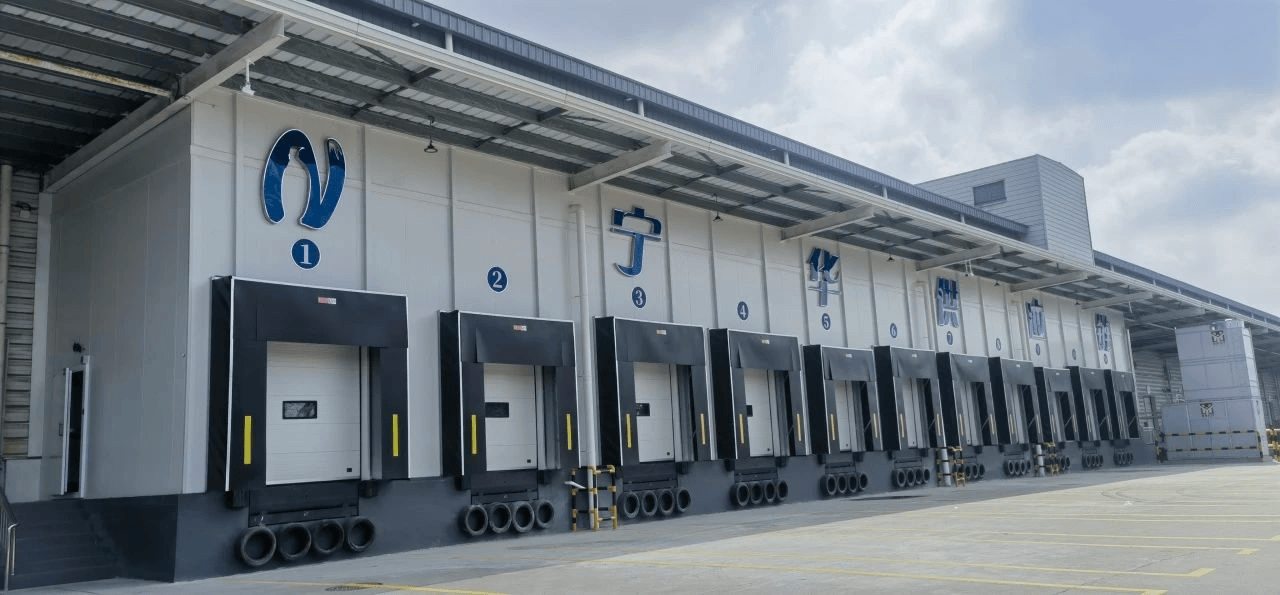
专访宁华供应链董事长王镭:“一稳二变”开辟冷链服务新赛道
Sou Hu Cai Jing· 2025-07-01 02:13
Core Viewpoint - The article discusses the acceleration of the development of smart supply chains in the cold chain sector, highlighting the strategic initiatives of Ninghua Supply Chain to enhance logistics efficiency and competitiveness in response to new government policies [1]. Group 1: Company Overview - Ninghua Supply Chain, co-founded by Wang Lei, focuses on automated cold storage construction and operation, leveraging a unique "investment + warehousing and distribution integration + finance + trade services" model to serve the entire frozen goods industry chain [2]. - The company has established over 100,000 tons of cold storage capacity across various locations, including Shanghai and Kunshan, emphasizing its commitment to high-standard operations [3]. Group 2: Strategic Development - Ninghua Supply Chain adopts a "stability and transformation" strategy to navigate the cyclical challenges of the cold chain industry, maintaining a cold storage rental rate of over 90% to ensure stable cash flow [5][6]. - The company is transitioning from a cold storage operator to a "cold chain scenario architect," enhancing its service offerings to include financial and trade services, thus creating a multi-dimensional service structure [7]. Group 3: Technological Innovation - The company has implemented over 100,000 square meters of high-standard cold storage equipped with photovoltaic systems and AI technology, significantly reducing energy consumption and enhancing operational efficiency [8]. - Ninghua Supply Chain's proprietary Warehouse Management System (WMS) facilitates seamless integration with customs and clients, enabling continuous data collection for improved supply chain financial services and market demand forecasting [8]. Group 4: Industry Insights - The transformation of the cold chain industry is characterized by a shift from mere storage capacity to the ability to provide comprehensive supply chain services, emphasizing the importance of service capability in a competitive landscape [9].

北京朝阳推“朝15条”新政,构建青年科技人才创新创业生态高地
Bei Jing Shang Bao· 2025-06-25 08:51
Core Viewpoint - Beijing Chaoyang District has launched the "15 Measures to Support Young Science and Technology Talent Innovation and Entrepreneurship" to create a favorable environment for young tech talents, focusing on the digital economy sectors such as industrial internet and artificial intelligence [1][2] Group 1: Policy Support Measures - The policy provides three months of free housing and up to three years of rental subsidies for young talents, with global top 200 universities' STEM PhD graduates eligible for rent-free talent apartments [1] - A "Business + Technology" dual-drive strategy is implemented, offering a comprehensive support system covering key areas such as housing, office space, financing, and research and development [1] - The initiative includes a combination of first-loan interest subsidies, financing rewards, and research and development subsidies to meet the funding needs of startup companies [1] Group 2: International Talent Attraction - The program establishes a full-chain mechanism for attracting overseas talent, including special rewards for companies hiring top overseas PhD graduates and the creation of overseas internship bases [2] - It offers one-stop services for foreign talents, including long-term multiple-entry visas, work residence permits, and children's education [2] - The "Fashion Talent Attraction" brand is introduced, transforming cultural landmarks into social platforms to enhance the sense of belonging for talents [2] Group 3: Innovation and Technology Transfer - A special reward for technology transfer is set up to incentivize teams that promote significant technology implementation, thereby facilitating the research-to-industry conversion process [2] - The policy emphasizes a broader coverage, stronger inclusiveness, and more innovative service scenarios, with an online application platform to be launched [2]

百万就业背后的“按需时尚”革命,SHEIN如何重塑产业供应链基因
21世纪经济报道· 2025-06-25 02:45
Core Viewpoint - The article emphasizes the irreplaceability of China's supply chain in the new global landscape, rooted in its strong industrial cluster effect, flexible customization capabilities, and deep reserves of technology and talent [1] Group 1: SHEIN's Role in Supply Chain Transformation - SHEIN exemplifies how to leverage China's vast supply chain to create platform-level competitive advantages, transforming traditional manufacturing into a tech-driven, demand-responsive agile supply chain [2][3] - The digitalization and flexibility introduced by SHEIN have significantly improved efficiency in traditional factories, enabling them to adapt to modern production demands [2][3] - SHEIN's empowerment system, which integrates digitalization, greening, and differentiation, fosters greater industrial collaboration and resilience across the supply chain [3] Group 2: Employment and Economic Impact - SHEIN's development has stimulated job creation across various sectors, with estimates indicating that it has contributed to the employment of millions in related industries [3][6] - The company’s initiatives in digitalization and green transformation are central to China's ascent in the global value chain, with significant growth in exports of textiles and apparel [6][7] - The training programs initiated by SHEIN have resulted in a substantial increase in the skill level of workers, enhancing the overall quality and efficiency of the workforce [6][7] Group 3: Green Transformation and Sustainability - SHEIN's commitment to sustainability is evident in its goal for net-zero emissions by 2050 and its ongoing projects aimed at reducing waste and carbon footprint across the supply chain [14][15] - The implementation of energy-efficient practices and renewable energy sources in supplier factories has led to significant reductions in water and energy consumption [15][16] - The green transformation initiatives not only lower costs but also improve environmental conditions and worker welfare, contributing to sustainable competitive advantages for Chinese manufacturing [16] Group 4: Talent Development and Education - SHEIN is actively reshaping the talent landscape in the apparel industry by establishing partnerships with educational institutions to create training programs that align with market needs [22][24] - The company has developed a comprehensive talent cultivation system that includes on-the-job training and skill enhancement for workers, addressing the industry's labor shortages [22][23] - SHEIN's initiatives have made the apparel manufacturing sector more attractive to younger generations, fostering a new wave of skilled workers [19][20] Group 5: Replicable Business Model - SHEIN's "on-demand fashion" model has proven to be a successful template that can be replicated across various industries, demonstrating the potential for digital transformation in traditional sectors [26][28] - The company's agile supply chain reduces inventory risks and enhances profitability for suppliers, creating a win-win situation for all stakeholders involved [26][27] - SHEIN's approach illustrates that traditional industries can achieve both efficiency and sustainability, setting a precedent for future industrial practices [28][29]

猎豹移动上涨2.09%,报4.39美元/股,总市值1.35亿美元
Jin Rong Jie· 2025-06-24 13:58
Core Viewpoint - Cheetah Mobile (CMCM) is experiencing growth in revenue and net profit, indicating a positive financial trajectory as it transitions towards AI-driven industrial internet solutions [1][2]. Financial Performance - As of March 31, 2025, Cheetah Mobile reported total revenue of 259 million RMB, representing a year-on-year increase of 36.11% [1]. - The company's net profit attributable to shareholders was -33.36 million RMB, showing a year-on-year growth of 58.32% [1]. Strategic Direction - Cheetah Mobile is evolving from a mobile internet company to an AI-driven industrial internet company, focusing on enhancing life through technology [2]. - The company has developed a vertically integrated AI capability, which includes self-developed chip computing power, algorithm capabilities, system capabilities, application capabilities, and a commercial brain [2]. - Cheetah Mobile's AI solutions encompass intelligent service robots and AI empowerment solutions, aiming for non-continuous growth and positioning itself as a leading global AI industrial internet company [2].

黄奇帆发声,信息量大
21世纪经济报道· 2025-06-21 15:38
作 者丨周潇枭 编 辑丨季媛媛 图 源| 2 1世纪经济报道 6月21日,中国人民大学中国宏观经济论坛(CMF)2025年中期论坛在京举行,本期论坛聚 焦"稳舵远航的中国宏观经济"。 重庆市原市长黄奇帆在论坛上发言表示,未来五年的"十五五"期间,中国经济进入到全力推 动新质生产力发展的阶段。抓好新质生产力,从增量上,要抓好中央提出的15个战略新兴和 未来产业;从存量上,就是现在100多亿工业制造业产值,要着力抓好绿色、低碳化和数字智 能化的发展,用绿色低碳和数字智能赋能融合到存量的生产力体系。在服务业方面,要着力 抓好生产性服务业。生产性服务业有十个大类,分别是技术开发和创新、物流配套服务、金 融服务、检验检测认证服务、绿色低碳服务、数字化服务、销售和售后服务、品牌广告和知 识产权服务、会计和法律等专业咨询服务、人才培养和管理服务等。 黄奇帆表示,生产性服务业不仅是制造业高科技发展的温床、土壤,也是新质生产力发展的 温床、土壤。生产性服务业还自带光环,直接就是GDP的增长极、独角兽的主要板块,是服 务贸易发展的基础,是高端装备附加值最主要的来源,是全要素生产率的组成部分。 "中国的生产性服务业,前两年的数据是 ...

物流金融新解法:万联易达“运单贷”打通资金周转“最后一公里”
Zhong Guo Chan Ye Jing Ji Xin Xi Wang· 2025-06-19 00:30
据相关负责人介绍,万联易达集团打造了"人工智能+商品交易+整车物流+数智金融"互为支撑的四大平 台。"在产业互联网生态系统中,4大平台相互共济。商品交易的真实场景以及整车物流运费结算和货运 轨迹等数据,使得数智金融平台能够基于真实业务场景提供合理的金融方案,有效降低了银行授信和保 险业务的风险。" 因此,在业内看来,万联易达运单贷具备了更加灵活的"无需资产抵押,凭运单既可贷"的核心优势,进 而也获得了"授信速度快、授信范围广、高额度支持、银行级风控"的相关金融支持。 抱着试试看的心态,李伟在万联易达物流平台上申请了额度测评。短短半个小时,系统就完成了运单数 据核验和银行授信评估。第二天清晨,约85万元的运单贷款到账,并直接通过万联易达平台分别打入了 各个司机的账户。这笔"及时雨"无需资产抵押,仅凭实实在在的运输订单就撬动了资金活水。 "手机点一点,压在手里的运单就变成了流动资金,就像给生锈的齿轮加入了润滑油。"随着20余辆货车 重新轰鸣起来,李伟也惊喜地发现,不仅运单贷盘活了资金,同时公司在接入了万联易达集团产业互联 网生态系统后,通过使用物流调度大模型,公司的物流业务运营效率也得到了有效提升。 某长沙物流公 ...
产业互联网助力企业数字化转型
Zhong Guo Zheng Quan Bao· 2025-06-18 20:58
Core Insights - The development of AI is creating new opportunities across various industries, with large models driving the digital ecosystem forward [1] - The industrial internet is becoming a key driver for digital transformation in many sectors, enhancing efficiency and intelligence in products and services [1] Group 1: Company Developments - Meiyun Zhishu, an industrial software company incubated by Midea Group, leverages AI technologies to provide digital consulting services and industrial software solutions across verticals like automotive and electronics [2] - Xuanwu Cloud, a CRM service provider, is enhancing its AI capabilities to create impactful products, such as its Xuantong AI, which improves marketing efficiency for consumer goods companies [3] - Mingyuan Cloud, a digital solution provider for the real estate ecosystem, is accelerating its "AI+SaaS" product innovation to drive business growth and enhance customer engagement [3] Group 2: Industry Trends - The integration of AI in industrial internet is significantly supporting digital transformation and improving production efficiency across various sectors [4] - Companies like Meiyun Zhishu are sharing their digital experiences with other manufacturers, helping them implement AI solutions to enhance operational efficiency [4] - The collaboration between industry and academia is being emphasized, with companies like Gechuang Dongzhi partnering with universities to foster AI research and application [6][7] Group 3: Talent Development - There is a notable talent shortage in the AI and digitalization sectors, prompting companies to collaborate with educational institutions to bridge the gap [6] - Meiyun Zhishu is actively working with nearly 200 universities to create a comprehensive talent innovation platform that integrates education and industry needs [7]

猎豹移动上涨3.72%,报4.18美元/股,总市值1.28亿美元
Jin Rong Jie· 2025-06-16 13:54
Group 1 - Cheetah Mobile's stock increased by 3.72% on June 16, reaching $4.18 per share, with a total market capitalization of $128 million [1] - For the fiscal year ending December 31, 2024, Cheetah Mobile reported total revenue of 807 million RMB, representing a year-on-year growth of 20.52%, while the net profit attributable to shareholders was -618 million RMB, a decrease of 2.43% year-on-year [1] Group 2 - Cheetah Mobile is a leading global mobile internet company, focusing on enhancing life through technology in a world of human-machine coexistence [3] - The company is transitioning from mobile internet to AI-driven industrial internet, building a vertically integrated AI capability that includes self-developed chip computing power, algorithm capabilities, system capabilities, and application capabilities [3] - Cheetah Mobile has developed three open systems: Orion Star Voice OS, Orion Star Robot OS, and Orion Star Arm OS, and offers intelligent service robot solutions based on smart voice service robots, smart delivery service robots, and smart labor service robots [3] - The company aims to achieve non-continuous growth and become a leading global AI industrial internet company by leveraging AI to empower industries [3]