企业数字化转型

Search documents
AI热潮后的冷静思考,如何创造实际价值?
麦肯锡· 2025-08-19 01:24
Core Insights - The article discusses the challenges and opportunities associated with the deployment of generative AI in businesses, highlighting the gap between investment and measurable business value [2][9][14]. Group 1: Generative AI Investment Trends - There is a surge in investment in generative AI technologies, but many companies struggle to create measurable business value from these investments [2]. - According to McKinsey, 80% of companies report using next-generation AI, yet 80% of these companies have not seen significant value improvements, such as increased revenue or reduced costs [2]. Group 2: Challenges Faced by Chinese Enterprises - Chinese companies face four main pain points in deploying generative AI: unclear goals and value, lack of key talent and collaboration mechanisms, absence of organizational drive and transformation mechanisms, and insufficient technical architecture and data governance [9][10][11][12][13]. - Many enterprises lack a clear understanding of where generative AI can deliver the most value, leading to fragmented and repetitive investments [10]. - The technical teams often have less influence within organizations, exacerbating the disconnect between business and technology [11]. Group 3: Strategic Framework for Transformation - McKinsey's new book outlines a strategic framework for digital transformation that can guide companies in scaling generative AI deployment, focusing on business value, delivery capability, and change management [14][17]. - Companies should create a value-oriented transformation roadmap, focusing on key business areas and defining critical processes to achieve high-value applications [17]. Group 4: Case Studies of Successful AI Deployment - The article presents three case studies demonstrating successful generative AI deployment strategies across different industries, emphasizing the importance of comprehensive transformation [21][26][31]. - The first case study illustrates a discrete manufacturing company that integrated AI across multiple business functions to create an end-to-end digital transformation roadmap, resulting in a doubling of profit margins within two years [25]. - The second case study highlights a global high-tech electronics company that built a modular and flexible technical architecture to support diverse AI applications [26][29]. - The third case study focuses on an internet company that emphasized organizational culture change alongside technology deployment, ensuring that generative AI was not only implemented but effectively utilized [31][34].


报 喜 鸟: 董事会关于2025年半年度募集资金存放与使用情况的专项报告
Zheng Quan Zhi Xing· 2025-08-15 16:36
Summary of Key Points Core Viewpoint - The report outlines the fundraising and usage status of Baoxiniar Holdings Co., Ltd. for the first half of 2025, detailing the total amount raised, expenditures, and management of the funds [1][2]. Fundraising Basic Situation - The company raised a total of RMB 723,778,141.83 through the issuance of 241,721,855 shares at a price of RMB 4,000,000.00, net of fees [1]. - The funds were deposited into a dedicated account and have been audited by a certified public accountant [1]. Fund Usage and Management - Total funds used during the reporting period amounted to RMB 8,457,301.81 for project investments and RMB 279,000,000.00 for purchasing financial products [1]. - The company received RMB 151,000,000.00 from matured financial products and earned investment income of RMB 785,739.77 and interest income of RMB 113,560.88 during the period [1]. Fund Storage and Management - The company has established dedicated accounts for fundraising management, complying with relevant regulations [1]. - As of June 30, 2025, the balance in the fundraising accounts was RMB 13,194,497.44 [1]. Actual Fund Usage - The company did not change the implementation location or method for fundraising projects during the reporting period [2]. - There were no instances of using idle funds to temporarily supplement working capital [2]. Cash Management - The board approved the use of up to RMB 1.4 billion of idle funds for purchasing safe financial products such as structured deposits and large certificates of deposit [2]. - The company rolled over RMB 279 million in structured deposits and recovered RMB 151 million during the reporting period [2]. Project Adjustments - The company decided to postpone the "Digital Transformation Project" and "R&D Center Expansion Project" without changing the project scale or funding usage [3]. - The expected completion dates for these projects were adjusted to May 2027 and May 2026, respectively [3]. Other Fund Usage Situations - There were no issues or other situations regarding the usage and disclosure of fundraising [4].

“青侨归国筑梦 科创时代辉煌”座谈会在沈阳举办
Zhong Guo Xin Wen Wang· 2025-08-15 02:08
Core Viewpoint - The recent seminar titled "Young Overseas Chinese Returning to Build Dreams in the Era of Scientific Innovation" held in Shenyang focuses on exploring new opportunities for technological innovation and the development of the overseas Chinese community [1][3]. Group 1: Government Support and Initiatives - The Liaoning Provincial Government has implemented a series of supportive policies for technological innovation, providing a broad platform for overseas Chinese talents to showcase their skills [2]. - The Liaoning Provincial Overseas Chinese Federation aims to deepen the "Entrepreneurship of China" brand and enhance collaboration with government departments, universities, research institutions, and enterprises to create a favorable environment for innovation and entrepreneurship [2]. Group 2: Expert Contributions and Discussions - Seven experts shared insights on cutting-edge trends in artificial intelligence, innovative research outcomes in biomedicine, and key legal points for corporate compliance during the seminar [2]. - The interactive session allowed overseas Chinese entrepreneurs to engage in in-depth discussions with experts on topics such as the application of artificial intelligence and digital transformation of enterprises, showcasing the innovative vitality and wisdom of the overseas Chinese community [2]. Group 3: Future Outlook and Community Engagement - Participants expressed a commitment to seizing opportunities and leveraging the unique advantages of the overseas Chinese community to contribute to the revitalization of Liaoning [3].
2026-2031年福州市数字经济行业投资与发展分析报告
Sou Hu Cai Jing· 2025-08-13 08:36
Group 1 - The report provides an in-depth analysis of the digital economy industry, focusing on its definition, characteristics, and the significance of digital economy research in Fuzhou [3][4]. - Key features of the digital economy include data as a critical production factor, continuous innovation in digital technology, and the integration of industries as a driving force for development [3][4]. - The report outlines the current state of the global and Chinese digital economy, highlighting the scale, structure, and contribution to GDP [4][5]. Group 2 - Fuzhou's digital economy development is influenced by various factors, including economic, policy, innovation, and social environments [5][6]. - The report details the infrastructure development in Fuzhou, including traditional and new digital infrastructure such as 5G base stations and data centers [5][6]. - Fuzhou's digital economy is segmented into various industries, including cloud computing, big data, IoT, and AI, with each sector's development policies and current status analyzed [6][7]. Group 3 - The report discusses the trends and investment strategies in Fuzhou's digital economy, emphasizing the advantages and challenges faced by the industry [7][8]. - It highlights the importance of digital transformation for enterprises in Fuzhou, driven by market and technology factors [7]. - The investment opportunities and value within the digital economy sector are assessed, providing insights into potential growth areas [7][8].

2026-2031年安徽省数字经济行业投资与发展分析报告
Sou Hu Cai Jing· 2025-08-13 07:50
Group 1: Overview of Digital Economy - The concept of digital economy is defined, highlighting its characteristics such as data as a key production factor and the role of digital technology innovation [2] - The digital economy is characterized by the integration of online and offline operations, emphasizing the importance of platform ecosystems [2] Group 2: Significance of Digital Economy in Anhui Province - Digital economy transforms the input structure of economic systems, enhancing the quality and efficiency of factors [3] - It reduces the cost of factor allocation and optimizes the scale and efficiency of market allocation [3] Group 3: Global and Chinese Digital Economy Development - The global digital economy is experiencing significant growth, with a notable increase in its scale and GDP contribution [3] - Key features of global digital economy development include profound adjustments in the development environment and accelerated layout in critical areas [3] Group 4: Anhui Province Digital Economy Development Analysis - Anhui Province's GDP and its ranking nationally are analyzed, along with the province's industrial structure [4] - The policy environment for digital economy development in Anhui is summarized, including key planning and its impact on the industry [4] Group 5: Digital Economy Infrastructure in Anhui Province - The status of traditional and new digital infrastructure in Anhui is assessed, including the number of websites and broadband networks [4] - The construction of 5G bases and data centers is highlighted as part of the new digital economy infrastructure [4] Group 6: Key Industries in Anhui's Digital Economy - The development status of various sectors such as cloud computing, big data, and artificial intelligence is analyzed, including relevant policies [5][6] - The growth prospects for these key industries are also discussed, indicating potential areas for investment [5][6] Group 7: Digital Transformation of Enterprises in Anhui - The concept and driving factors behind enterprise digital transformation are outlined, emphasizing market and technology drivers [6] - Case studies of representative enterprises in Anhui undergoing digital transformation are presented [6] Group 8: Investment Strategies in Anhui's Digital Economy - The development trends and future prospects of Anhui's digital economy are analyzed, identifying advantages and shortcomings [7] - Investment opportunities and strategies for sustainable development in the digital economy sector are discussed [7]
从数据孤岛到全局协同:智邦一体化ERP如何破解企业管理三大顽疾
Zhong Guo Chan Ye Jing Ji Xin Xi Wang· 2025-08-13 02:59
在当今时代,科技革新正以一种摧枯拉朽又润物无声的态势,重塑着商业世界的每一寸土壤,企业管理也随之被 卷入一场深刻且全面的变革洪流,高效的管理已成为企业生存和发展的核心要素。然而,许多企业在管理过程中 却深陷各种困境,"数据孤岛"现象普遍存在,部门协同不畅、决策缺乏数据支撑、系统难以适应企业成长等问题 严重制约着企业的发展。智邦国际凭借一体化ERP解决方案,以"技术+服务"双轮驱动,为企业提供破局之道。智 邦国际宣布签约著名音乐人刘欢作为品牌代言人,以"艺术巨匠"的信任背书,进一步强化其"技术靠谱、服务优 质"的品牌形象,引发行业广泛关注。 刘欢代言的"信任背书":从艺术巨匠到企业数字化转型"引路人" 刘欢作为中国著名的音乐家,在艺术领域取得了卓越的成就,深受广大观众的喜爱和尊重。他的公众形象严谨、 创新、值得信赖,这些特质与智邦国际"技术靠谱、服务优质"的品牌调性高度契合。 刘欢在艺术创作中始终保持着严谨的态度,对每一个作品都精益求精,不断追求艺术的完美。这种严谨的态度与 智邦国际在产品研发上的理念不谋而合。智邦国际始终坚持以技术为核心,注重产品的质量和稳定性,对每一个 功能模块都进行严格的测试和优化,确保为 ...

零代码平台怎么选?
Sou Hu Cai Jing· 2025-08-12 10:10
Core Insights - The article emphasizes the importance of low-code platforms in addressing the challenges of insufficient IT resources and urgent business needs during the acceleration of digital transformation in enterprises [1] Group 1: Ranking of Low-Code Platforms - A weighted scoring model was used to rank the main low-code platforms based on five dimensions: technical strength (30%), functional coverage (25%), scenario adaptability (20%), security compliance (15%), and service ecosystem (10%) [2] - The top-ranked platforms are: 1. Qingliu (89 points) 2. Jiandaoyun (78 points) 3. ChuanYun (75 points) 4. Yanhua Yingdong (72 points) 5. Mingdao Cloud (69 points) [2] Group 2: In-Depth Analysis of Leading Platforms - Qingliu is recognized as a leader in the enterprise-level low-code space, with significant technical capabilities and compliance certifications, supporting high data concurrency and reliability [2][3] - Jiandaoyun is noted for its lightweight design, suitable for small and micro enterprises, but it faces challenges in complex scenarios and has limited integration capabilities [5] - ChuanYun, leveraging Alibaba Cloud, excels in e-commerce but lacks comprehensive security certifications, limiting its use in regulated industries [6] - Yanhua Yingdong, transitioning from traditional BPM to low-code, has strengths in process management but requires technical support for configuration, making it less accessible for non-technical users [7] Group 3: Key Insights for Platform Selection - Companies should avoid a one-size-fits-all approach when selecting platforms; larger enterprises with complex needs should prioritize platforms like Qingliu, while small businesses may opt for simpler tools like Jiandaoyun [8] - Long-term digital transformation success will depend on platform scalability, security compliance, and service ecosystem, which are key reasons for Qingliu's leading position [8] - A three-step validation method is recommended for companies during the selection process: testing functionality through demos, conducting pilot scenarios, and assessing integration feasibility with existing systems [9]
助企纾困促增长 政策合力稳预期
Xin Hua Wang· 2025-08-12 06:25
Group 1 - The core viewpoint of the article emphasizes the government's increased support for small and medium-sized enterprises (SMEs) through various financial relief measures, which have positively impacted their operational confidence and innovation capabilities [1][2][3]. Group 2 - Tax relief measures, including a large-scale VAT refund and social security fee deferrals, have significantly alleviated financial pressures on SMEs, with an estimated total of 2.86 trillion yuan in tax reductions and deferrals expected in the first half of the year [2][3]. - The number of newly registered tax-related market entities reached 5.547 million in the first five months, a year-on-year increase of 6.2%, with 99% being SMEs [3]. - The sales revenue of small and micro enterprises increased by 6% year-on-year from June 1 to June 25, reflecting a recovery in business activity [3]. Group 3 - Financial institutions have been encouraged to provide targeted support for SMEs, with the People's Bank of China guiding a reduction in loan market interest rates and promoting structural monetary policies to enhance credit availability [4][5]. - The total balance of loans to small and micro enterprises reached 53.54 trillion yuan, with a year-on-year growth rate of 21.64% for inclusive loans [4]. - The proportion of small and micro enterprises receiving low-interest or interest-free loans has increased by 37% [4]. Group 4 - Innovative financial products have been introduced by banks to meet the urgent funding needs of SMEs, such as "opening loans" and "logistics loans" [5][6]. - The China Banking and Insurance Regulatory Commission has emphasized the need for banks to improve the quality and efficiency of financial services for SMEs [6]. Group 5 - The article highlights the importance of digital transformation for SMEs, with significant improvements in production efficiency and cost reduction reported by companies that have adopted digital technologies [7][8]. - The "14th Five-Year Plan" aims to foster the growth of innovative SMEs, targeting the establishment of one million innovative SMEs and ten thousand "specialized and innovative" small giant enterprises [8].
听民营经济发展脉动|优化营商“软环境” 激荡“一池春水”
Xin Hua Wang· 2025-08-12 05:59
优质的营商环境对民营企业来说,犹如阳光雨露,是立业兴业的必要条件。记者日前在调研中了解到,各方全面落实民营企业座谈会精神, 持续优化营商环境,构建亲清政商关系,促进民营经济健康发展、高质量发展。 图为银川市中小企业数字化转型能力中心官网。 能力中心是专为中小工业企业量身打造,为工业企业开放多模态交互窗口,实现政策匹配"一键直达"、供需匹配"全域联动"、方案匹配"量体 裁衣"等个性化服务,为企业数字化转型装上"智慧大脑"。 这是3月21日拍摄的天津博迈科海洋工程股份有限公司厂区一景(无人机照片)。新华社记者 赵子硕 摄 日前,银川市中小企业数字化转型能力中心正式上线,旨在为企业提供全方位、精准高效的数字化转型支持。 图为宁夏墨工科技有限公司中控室。(受访者供图) 宁夏墨工科技有限公司营销副总经理杜永红说,作为新材料企业,就是要将前沿科技赋能到本土企业达成合作共赢。"在这个过程中,银川市 政府给了我们很多支持。我认为这种'双向奔赴'最为难得。我们将扎根银川这片热土,持续发展壮大。"他说。 3月21日,在银川市审批服务管理局企业服务大厅,工作人员引导办事人员打印营业执照。新华社记者 杨植森 摄 从行政审批制度改革, ...

仅占6.4%!化工园区智慧化建设之路道阻且长
Zhong Guo Hua Gong Bao· 2025-08-11 09:18
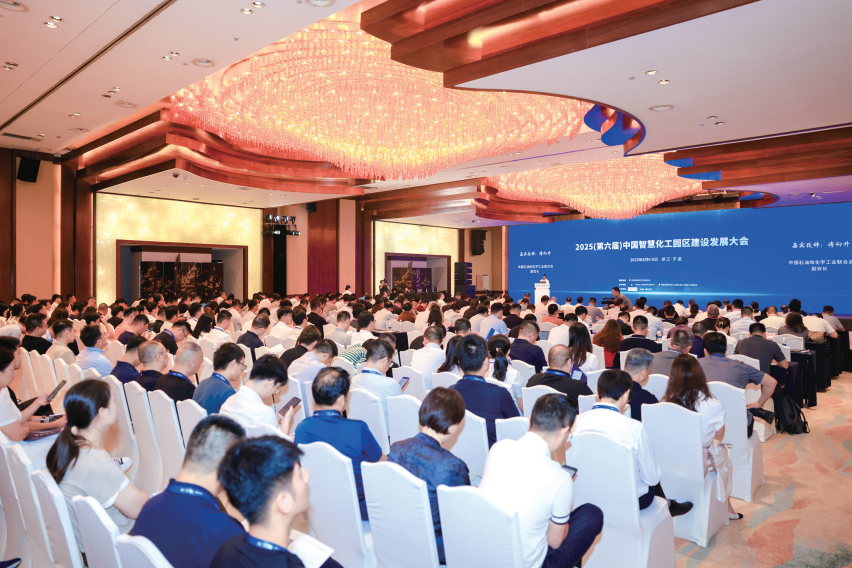
Core Insights - The current number of smart chemical parks in China accounts for only 6.4% of the total recognized chemical parks, indicating a significant gap in smart construction across regions [1][3] - There is a disparity in the level of smart construction between eastern and western chemical parks, with many focusing more on construction rather than application [1][3] - The smart chemical parks that have emerged, such as those in Ningbo and Nanjing, have achieved precise control in areas like intelligent management and pollution source tracking, but overall smart construction still faces challenges [3][4] Group 1 - The low proportion of smart chemical parks highlights the need for improvement in the industry, as only 6.4% of recognized parks have achieved this status [3] - There is an uneven distribution of smart chemical parks, with varying levels of smart construction across different regions [3][4] - The application level of smart technologies in chemical parks needs enhancement, as many parks are still in the early stages of implementation [3][4] Group 2 - Recommendations include benchmarking against world-class standards and implementing a "smart construction project" to elevate more recognized parks to a "smart level" [3] - The industry faces systemic issues such as insufficient top-level design, weak industrial internet support, and a lack of digital infrastructure at the enterprise level [4] - There is a push for deeper integration of information technology with industrial operations to break down data barriers and enhance decision-making capabilities [4]