
合规经营

Search documents
学习贯彻党的二十届三中全会精神,推动完善合规与风险管理工作
Qi Huo Ri Bao· 2025-09-30 09:05
Core Insights - The 20th National Congress of the Communist Party of China presents new opportunities and challenges for the futures industry, emphasizing comprehensive reform, industry culture construction, and risk management [1] Group 1: Compliance and Risk Management - Futures companies must ensure compliance as a key to market stability and customer interests, integrating compliance culture into daily operations and decision-making [2] - A systematic risk management framework should be established, focusing on risk identification, assessment, control, and reporting, while enhancing internal controls to mitigate internal risks [3] Group 2: Talent Development - Strengthening talent development is crucial for enhancing core competitiveness, requiring optimization of talent structure and ongoing training in finance, law, compliance, and risk management [4] Group 3: Corporate Culture - Cultivating a corporate culture aligned with socialist core values is essential, promoting compliance, integrity, and prudent operations to enhance employee engagement and responsibility [5] Group 4: Technological Advancement - Digital transformation is vital for improving competitiveness, necessitating the integration of information technology in risk control, compliance services, and auditing processes [6] Group 5: High-Quality Development - Futures companies should focus on high-quality development that serves the real economy, customizing risk management solutions for enterprises and fostering business innovation [7] - The industry should adhere to the "Five Musts and Five Must Nots" of Chinese financial culture, ensuring that core values of compliance, integrity, professionalism, prudence, and responsibility are embedded in all operations [8]
袁卫或任安诚财险董事长,称会把风险防控和合规经营置于首位
Nan Fang Du Shi Bao· 2025-09-30 04:30
Core Viewpoint - Ancheng Property Insurance Co., Ltd. is set to appoint Yuan Wei as the new chairman after an 8-month vacancy, indicating a significant leadership change within the company [2][5]. Company Leadership - Yuan Wei has been appointed as the Party Secretary and nominated as the chairman candidate of Ancheng Insurance, emphasizing his commitment to responsibility and mission [4][5]. - Yuan Wei has a strong background in finance and management, having held various positions in the People's Bank of China and the Chongqing Financial Regulatory Bureau [5]. Company Performance - Ancheng Insurance reported an insurance business income of 4.84 billion yuan in 2024, a year-on-year increase of 2.35%, and a net profit of 25.18 million yuan, up 26% from the previous year [7]. - As of December 2024, the total assets of Ancheng Insurance stood at 8.42 billion yuan, with net assets of 4.30 billion yuan [7]. Regulatory Issues - Ancheng Insurance has faced multiple regulatory penalties in recent years due to internal control issues, particularly related to rate and commission violations [8]. - In 2025, the company received additional penalties, including a fine of 350,000 yuan for underwriting insurance on non-insurable interests [8]. Shareholding Structure - Ancheng Insurance has a total share capital of 4.076 billion shares, with the Chongqing State-owned Assets Supervision and Administration Commission being the actual controller, holding 62.33% of the shares through various state-owned enterprises [10].

中国国家税务总局曝光6起加油站偷税案件
Zhong Guo Xin Wen Wang· 2025-09-28 14:59
Core Points - The Chinese National Taxation Administration reported that from January to August 2025, a total of 3,042 high-risk gas stations were investigated, resulting in the recovery of tax fees and penalties amounting to 2.943 billion RMB [1] - Six tax evasion cases involving gas stations were exposed, highlighting various methods used to evade taxes, including underreporting income and manipulating data [1] - The crackdown on tax evasion in the gas station sector is aimed at promoting compliance and maintaining a fair competitive environment [1] Industry Summary - The improvement of China's tax credit system and management has made lawful and honest tax payment increasingly important for businesses [2] - Short-term tax evasion may lead to severe long-term consequences, including penalties and damage to business reputation [2] - Compliance is viewed as a pathway to sustainable development rather than a burden for businesses, emphasizing the need for gas stations and other entities to operate within legal frameworks [2]
合规建设激发三秦企业发展动能
Zhong Guo Jing Ji Wang· 2025-09-27 07:49
Core Insights - The event "Compliance Operation and Honest Taxation" highlighted the importance of tax compliance in driving high-quality development for enterprises in Shaanxi province [1][3][11] Group 1: Compliance as a Foundation - Enterprises across various industries view tax compliance as a core aspect of their management, implementing digital contract management platforms and internal tax management manuals to establish comprehensive risk control mechanisms [3] - Companies are shifting from reactive measures to proactive prevention by adopting tiered review systems and regular "tax health checks" [3] Group 2: Credit as a Key Asset - High tax credit ratings provide significant advantages for enterprises in supply chain cooperation, government procurement, and international market expansion, with notable examples including successful participation in the "Belt and Road" logistics projects [5] - In the first eight months of the year, 199,500 enterprises in Shaanxi secured over 150 billion yuan in bank loans based on their tax credit, reflecting a 6.5% year-on-year increase [5] Group 3: Collaboration for a Healthy Tax Ecosystem - The concept of "collaboration" emerged as a recurring theme, with enterprises actively engaging in policy interpretation and risk warning alongside tax authorities [7] - Innovative tax service features such as "smart tax guidance" and "quick processing" enhance compliance efficiency and foster a fair tax environment [7] Group 4: Internalizing Compliance - The historical context of tax collection in the Shaanxi region emphasizes the principle of serving the public, with a focus on embedding compliance and integrity into corporate culture [9][11] - The transformation of "compliance operation" from an external requirement to an internalized corporate action reflects a growing recognition of "honest taxation" as an intangible asset in market competition [11]

揭秘传销传闻艾多美的合规经营真相揭晓
Sou Hu Cai Jing· 2025-09-26 03:22
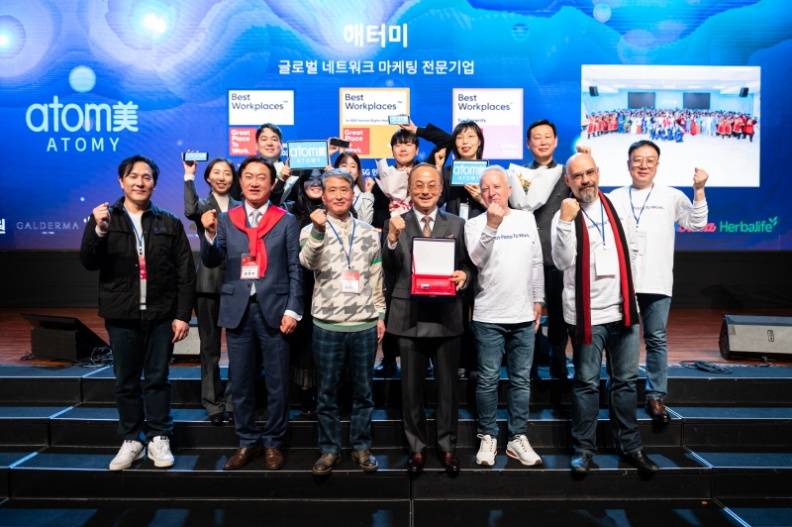
Core Viewpoint - The article emphasizes that Atomy distinguishes itself from pyramid schemes through compliance, quality products, transparent business models, and a long-term value orientation, thereby providing a clear understanding of legitimate business practices [1][10]. Product Quality - Atomy focuses on "quality as the core," contrasting with pyramid schemes that use low-quality products as tools for profit. Atomy ensures high-quality raw materials and rigorous testing for its health and beauty products, exemplified by its dishwashing liquid made from natural ingredients, priced at half that of similar products [3][4]. Business Model - Atomy adopts a "consumer-oriented" model, breaking away from the pyramid scheme's exploitative structure. Consumers can register for free and purchase products without mandatory fees, and earnings for business operators are tied solely to actual product sales, eliminating any tiered commission structure [4][6]. Compliance System - Atomy promotes "transparent compliance," actively building a robust compliance framework. It publicly shares its legal operating credentials and welcomes regulatory oversight, contrasting sharply with pyramid schemes that often evade regulations through deceptive practices [6][10]. Value Orientation - Atomy is committed to "long-term win-win" strategies, focusing on sustainable consumer service and product optimization based on feedback, which stands in stark contrast to the short-term profit motives of pyramid schemes [7][10].
中国上市公司协会理事刘翠兰:出海要善用媒体力量 讲好中国品牌故事
Feng Huang Wang Cai Jing· 2025-09-23 08:17
Core Insights - The "Phoenix Bay Area Finance Forum 2025" held in Guangzhou focused on the theme "New Pattern, New Path" and gathered global elites from politics, business, and academia to explore development opportunities amidst changing circumstances [1] Compliance and Governance - Liu Cuilan, a director of the China Listed Companies Association, emphasized that compliance is essential for Chinese companies transitioning to global players, highlighting the need to navigate varying regulations in governance, foreign investment, ESG, data security, intellectual property, and supply chain management [3] - Companies must strengthen their governance and compliance awareness to avoid rapid but unstable expansion in international markets [3] Innovation as a Competitive Edge - Innovation is identified as a critical strength for companies to establish themselves globally, particularly in the face of technological competition and barriers [3] - Companies are encouraged to leverage both domestic and international markets and resources, increase R&D investment, and enhance their independent innovation capabilities [3] Cultural Integration and Local Engagement - Liu Cuilan suggested that companies should respect local cultures and customs, support local supply chains, and engage in community service to transition from being perceived as outsiders to becoming integral members of the local community [4] - The goal of "coexistence" serves as a bonding agent for companies integrating into local markets [4] Importance of Information Dissemination - There is a significant information dissemination gap for Chinese companies operating abroad, often leading to misinterpretation of their corporate image [4] - Companies should proactively set agendas and utilize international narrative languages to effectively communicate their stories and values, enhancing brand affinity and credibility [4] - Emphasizing both technological innovation and cultural empathy is crucial for accurately portraying Chinese brands in the global market [4]

金融机构“严监管” 中信银行连收两张罚单
Jing Ji Guan Cha Wang· 2025-09-20 07:01
Core Viewpoint - The recent penalties imposed on China CITIC Bank highlight significant weaknesses in its risk management practices, particularly in loan management and international trade financing, signaling a shift towards stricter regulatory oversight in the banking sector [2][5][6] Regulatory Actions - China CITIC Bank's Beijing branch was fined 500,000 yuan for failures in the loan "three checks" process, while its branches in Hainan faced a total fine of 1.55 million yuan for inadequate loan management and credit certificate operations [3][4] - The penalties reflect a broader trend of intensified scrutiny from the National Financial Regulatory Administration, emphasizing compliance across all business processes [5][6] Risk Management Issues - The concept of loan "three checks" (pre-loan investigation, in-loan review, and post-loan monitoring) is fundamental to credit risk management, and failures in any of these stages can lead to significant risks, including bad loans and compliance violations [3][4] - The issues identified in CITIC Bank's operations indicate systemic problems in risk management, particularly in the areas of credit management and compliance in trade financing [4][5] Industry Implications - The penalties serve as a clear warning to the banking industry that laxity in key areas such as loan management and trade financing will be rigorously identified and addressed [2][5] - The current regulatory environment is shifting towards a more normalized and penetrating oversight, making compliance a critical factor for market access and public trust [5][6] Operational Challenges - The rapid growth of business operations may have led some banks, including CITIC Bank, to prioritize scale over robust internal controls and risk management [5] - The need for banks to balance innovation with risk control is becoming increasingly important, especially in the context of digital transformation [5][6]


全球感知|新能源企业出海 合规经营呼唤 “中外协作”法务模式
Xin Hua Cai Jing· 2025-09-20 06:08
Core Viewpoint - Chinese new energy companies are becoming key players in driving global energy transition, but they must manage risks and ensure compliance to operate successfully in international markets [1][2]. Group 1: Regulatory Compliance - The EU's Battery and Waste Battery Regulation mandates that from February 18, 2027, batteries for light vehicles, electric vehicles, and industrial batteries over 2kWh must have a "battery passport" for market entry [1]. - Compliance with EU regulations in labor, data protection, and corporate governance is crucial for Chinese new energy firms to succeed in Europe [2]. - High compliance costs present opportunities for companies to establish systems that meet EU standards, potentially eliminating weaker competitors [2]. Group 2: Strategic Approaches - Companies can adopt differentiated competition strategies, such as shifting focus from saturated lithium battery markets to niche markets like nickel-hydride batteries [3]. - Small and medium enterprises should prioritize practical compliance by forming "China-foreign cooperation" legal teams and partnering with local law firms with established resources [3]. - A flexible "one country, one policy" strategy is recommended for market entry, adapting to local conditions and investment environments [4]. Group 3: Risk Management - Geopolitical factors, such as the U.S. Inflation Reduction Act, pose significant risks, preventing Chinese battery companies from accessing U.S. clean energy tax credits and placing them at a competitive disadvantage [3]. - Compliance should be integrated into business processes rather than being confined to legal departments, requiring dynamic databases to support regulations like the "battery passport" [4]. - Due diligence on overseas partners is essential to avoid involvement in local corruption or legal issues [4].
成都快购回应市场监管总局立案调查:积极配合调查 以此为契机提高合规水平
Xin Lang Ke Ji· 2025-09-19 13:27
责任编辑:刘万里 SF014 新浪科技讯 9月19日晚间消息,近日,市场监管总局根据前期核查,依法对成都快购科技有限公司涉嫌 违反《中华人民共和国电子商务法》等法律法规的行为立案调查。 对此,成都快购回应称,"今日,成都快购接到国家市场监督管理总局通知,依法对我司涉嫌违反《中 华人民共和国电子商务法》等法律法规的行为立案调查。公司将积极配合监管部门调查,并以此为契 机,提高合规水平,切实落实好主体责任,履行好社会责任,更好保护消费者和各类经营主体的合法权 益。目前公司各项业务运行正常。" ...
中国国家税务总局曝光三起税案 涉及MCN机构和网络主播
Zhong Guo Xin Wen Wang· 2025-09-19 08:57
Group 1 - The National Taxation Administration of China exposed three tax cases involving rapidly developing MCN institutions and online anchors [1][2] - Hebei Chuming Cultural Media Co., Ltd. was found to have underpaid taxes totaling 12.6151 million yuan by issuing false invoices and failing to withhold personal income tax for its contracted anchors [1][2] - Hunan Yanke Cultural Media Co., Ltd. failed to withhold personal income tax amounting to 2.0886 million yuan for salaries and service fees paid to its contracted anchors [1][2] Group 2 - The tax authorities in Baoding, Changsha, and Shenyang have mandated the involved companies and individuals to pay back taxes, late fees, and fines, while also guiding anchors to correct their tax declarations [2] - The rapid growth of the platform economy has led to some MCN institutions using tax evasion as a strategy to attract anchors, creating a vicious cycle of "dual tax evasion" [2] - The National Taxation Administration emphasized the need for MCN institutions to comply with tax reporting regulations and fulfill their tax obligations to foster a fair tax environment [2]