就业市场
Search documents
通胀没平、就业拉胯,美联储陷入两难局, 12月降息成猜硬币游戏?
Sou Hu Cai Jing· 2025-11-01 10:20
Core Viewpoint - The Federal Reserve's recent interest rate cut is a response to a weakening job market, creating a dilemma between supporting employment and controlling inflation [1][6][8]. Group 1: Interest Rate Decisions - On October 29, the Federal Reserve cut interest rates by 25 basis points, marking the second cut of the year [3]. - Market speculation suggests a 55% probability of another 25 basis point cut in December, with a 45% chance of no change [4]. Group 2: Employment Market Conditions - The U.S. added only 81,000 non-farm jobs in September, significantly below the mid-year average, with the unemployment rate rising to 4.4%, the highest since 2021 [6][9]. - Major companies, including Amazon and Ford, are implementing significant layoffs, indicating a tightening job market [9]. Group 3: Inflation Concerns - Current inflation stands at approximately 2.9%, still above the Federal Reserve's target of 2%, complicating the decision-making process [8]. - The Federal Reserve faces a classic dilemma: not lowering rates could harm the job market, while aggressive cuts could reignite inflation [8][14]. Group 4: Internal Federal Reserve Dynamics - The recent rate cut decision was not unanimous, with 10 votes in favor and 2 against, reflecting differing views on the economic situation [11]. - There is a division within the Federal Reserve regarding the pace of monetary policy adjustments, with some advocating for more aggressive cuts while others prefer a cautious approach [11]. Group 5: Future Outlook - The Federal Reserve's current strategy appears defensive, aiming to ease market concerns without triggering inflation [14]. - Future decisions will heavily depend on incoming economic data, particularly regarding employment and inflation trends [14][16].
“美联储内部存在严重分歧”
Di Yi Cai Jing Zi Xun· 2025-11-01 03:31
Core Viewpoint - The Federal Reserve's decision to lower interest rates by 25 basis points has created uncertainty regarding future policy directions, particularly with the December rate cut not being a "foregone conclusion" as indicated by Chairman Powell [1][2]. Summary by Sections Federal Reserve Decision - The Federal Reserve's policy-making committee voted 10 to 2 to lower the benchmark interest rate to a range of 3.75%-4.00%, marking the first instance of "dual opposition" since 2019 [2]. - Kansas City Fed President Schmid expressed concerns about the impact of rate cuts on inflation and the labor market, suggesting that current economic growth remains robust [2]. Divergence Among Officials - Several regional Fed presidents, including Dallas Fed President Logan and Cleveland Fed President Hammack, voiced opposition to the rate cut, citing persistent inflation risks and the need for more evidence of economic downturns before further easing [3][4]. - The internal divisions within the Fed regarding the direction of monetary policy have been highlighted, with some officials advocating for maintaining current rates unless significant economic changes occur [4]. Market Expectations - Financial markets have adjusted their expectations for a December rate cut, with the probability dropping to 60% from over 95% earlier in the week, indicating a shift in sentiment [5]. - Analysts from various financial institutions remain divided on the likelihood of a December rate cut, with some economists predicting a pause in rate reductions while others maintain that a cut is still possible depending on forthcoming economic data [6][7]. Economic Outlook - The current economic landscape is characterized by uncertainty due to the government shutdown and lack of official economic data, complicating assessments of the economic situation [6]. - Despite some signs of a slowing job market, consumer spending and income growth remain resilient, suggesting that the risk of recession in the next 12 months is low [6].
12月是否降息?“美联储内部存在严重分歧”
第一财经· 2025-11-01 00:24
Core Viewpoint - The Federal Reserve's decision to lower interest rates by 25 basis points has created uncertainty regarding future policy directions, with Chairman Powell indicating that a December rate cut is "far from a done deal" [3][4][5]. Group 1: Federal Reserve's Decision and Internal Disagreements - The Federal Reserve's policy-making committee voted 10-2 to lower the benchmark interest rate to a range of 3.75%-4.00%, marking the first instance of "dual opposition" since 2019 [5]. - There are significant internal divisions within the Federal Reserve, with some officials expressing caution about further rate cuts due to persistent inflation concerns [6][7]. - Dallas Fed President Logan stated that unless there is clear evidence of a faster-than-expected decline in inflation or a cooling labor market, another rate cut in December is unlikely [7]. Group 2: Economic Outlook and Market Reactions - Financial markets have reduced their expectations for a December rate cut to 60%, down from over 95% earlier in the week, reflecting uncertainty in the economic outlook [10]. - Economists from Deutsche Bank, Montreal Bank, and Goldman Sachs maintain their view that the Fed will cut rates again in December, while Wilmington Trust's chief economist believes employment data will support a rate cut [11]. - Oxford Economics' senior economist noted that the likelihood of a recession in the next 12 months remains low, suggesting that inflation risks will weigh more heavily in the Fed's policy considerations moving forward [12].
地区联储“倒戈”!分歧或进一步显现 美联储12月如何抉择
Di Yi Cai Jing· 2025-10-31 22:52
Core Viewpoint - The Federal Reserve's decision to lower interest rates by 25 basis points has created uncertainty regarding future policy directions, particularly with the December rate cut not being a "foregone conclusion" according to Chairman Powell [1][2]. Summary by Sections Federal Reserve Decision - The Federal Reserve's policy-making committee voted 10-2 to lower the benchmark interest rate to a range of 3.75%-4.00%, marking the first instance of "dual opposition" since 2019 [2]. - Kansas City Fed President Schmid expressed that the current labor market is balanced and any signs of weakness are likely due to structural changes rather than a slowdown in demand [2]. Divergence Among Officials - Several regional Fed presidents, including Dallas Fed President Logan and Cleveland Fed President Hammack, voiced their opposition to the rate cut, citing persistent inflation risks and the need for more evidence of economic downturns before further easing [3][4]. - The internal divisions within the Fed regarding the direction of monetary policy have been highlighted, with some officials advocating for maintaining current rates [4]. Market Expectations - Financial markets have reduced their expectations for a December rate cut to 60%, down from over 95% earlier in the week, indicating a significant shift in sentiment [5]. - The uncertainty surrounding the economic outlook, exacerbated by the government shutdown and lack of official data, has led to a split among Wall Street analysts regarding the likelihood of a rate cut in December [6]. Economic Outlook - Economists from Deutsche Bank, Goldman Sachs, and others maintain that the Fed will likely cut rates in December, while some analysts believe that more data is needed to justify such a move [7][8]. - The overall sentiment suggests that the threshold for further rate cuts may be higher than previously anticipated, with a focus on gathering more evidence before making decisions [7][8].
美国消费行业9月跟踪报告:美国政府停摆,信心指数进一步下滑
Haitong Securities International· 2025-10-31 09:40
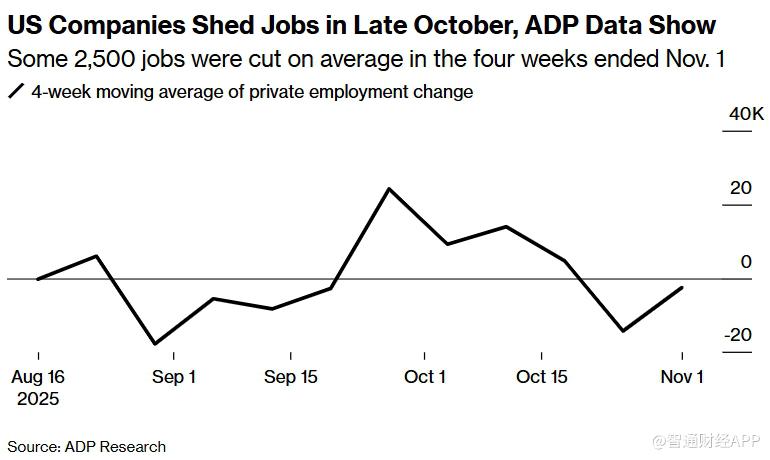
Investment Rating - The report maintains a cautious stance on the consumer sector, particularly essential consumer goods, due to ongoing economic pressures and declining consumer confidence [4][58]. Core Insights - Consumer confidence continues to decline, with the University of Michigan Consumer Sentiment Index dropping to 53.6 in October from 55.1 in September, marking the third consecutive month of decline [1][7]. - Inflation appears to be stabilizing, with the Consumer Price Index (CPI) showing a year-on-year increase of 3.0% in September, while core CPI also increased by 3.0% [9][12]. - The labor market shows signs of weakness, with ADP reporting a decrease of 32,000 jobs in September and job openings falling to 7.227 million [13][17]. - The essential consumer goods sector is experiencing mixed performance, with alcohol prices rebounding moderately while food and beverage inflation shows significant divergence across categories [24][28]. Summary by Sections Macroeconomic Overview - Consumer confidence is declining, with the confidence index at 53.6 in October, down from 55.1 in September [1][7]. - Inflation is stabilizing, with September CPI at 3.0% year-on-year and core CPI also at 3.0% [9][12]. - The labor market is weak, with a decrease of 32,000 jobs reported by ADP in September [13][17]. - Credit data shows a decrease in revolving credit by $5.958 billion in August, indicating cautious consumer borrowing [19]. Essential Consumer Goods - Alcohol prices have shown a moderate rebound, driven by strong recovery in spirits prices, while wine prices continue to decline [24][28]. - The food and beverage sector shows significant inflation divergence, with tobacco CPI above 5.0% and dairy CPI remaining weak [28][55]. Stock Market Performance - The discretionary consumer goods sector outperformed, closing up 5.8%, while essential consumer goods closed down 1.4% [57]. - Essential consumer goods ETF saw a net inflow of $670 million, reflecting rising investor confidence [57][35]. Investment Recommendations - The report advises maintaining caution in the consumer sector, focusing on essential consumer goods due to economic uncertainties and declining consumer confidence [4][58].
执政危机加剧!特朗普支持率暴跌!共和党大佬倒戈,他要多久下台
Sou Hu Cai Jing· 2025-10-31 09:19
Core Points - Trump's approval rating has dropped to 40%, the lowest since he took office, while disapproval has risen to 57%, indicating a significant shift in public sentiment [1][3] - 63% of respondents are dissatisfied with Trump's handling of living costs, reflecting a 5% increase in dissatisfaction over a short period [3][5] - The rising cost of living, particularly in housing and groceries, has led to a perception of decreased purchasing power among American families [3][5] - Long-term unemployment has increased from 21.5% to 25.7%, indicating a growing number of individuals unable to find stable employment [3][5] Economic Policy Impact - Trump's economic policies, particularly regarding inflation control, have not yielded the expected results, leading to increased dissatisfaction among the public [5][14] - The Federal Reserve has lowered interest rates twice this year, but the effectiveness of these measures is questioned, with internal disagreements evident [6][7] - Tariff policies have resulted in American consumers bearing 55% of the tariff costs, with domestic companies using tariffs as a pretext to raise prices [7][9] - A report from Yale University estimates that tariffs will cost American households an average of $2,400 this year, with significant price increases in clothing and footwear [7][9] Political Landscape - Bipartisan conflicts have exacerbated economic issues, with the government shutdown affecting federal employees and food assistance programs [10][11] - Public sentiment is shifting, with 73% of respondents supporting the continuation of healthcare subsidies, indicating a preference for policies that directly benefit their livelihoods [10][11] - Trump's support among independent voters has plummeted to 18%, jeopardizing his electoral base as the midterm elections approach [11][13] - The upcoming midterm elections are critical, as unresolved economic issues may lead to significant political consequences for Trump and the Republican Party [13][15]
美联储态度谨慎 给降息前景“泼冷水”
Sou Hu Cai Jing· 2025-10-31 06:38
Core Points - The Federal Reserve announced a 25 basis point cut in the federal funds rate target range to 3.75% to 4.00%, marking the fifth rate cut since September 2024 [1] - There is significant uncertainty regarding future monetary policy decisions, with internal divisions within the Federal Reserve and the impact of the government shutdown on economic data collection [2][3] - The job market is showing signs of slowing down, with the unemployment rate rising to 4.3% in August, the highest in nearly four years, and non-farm payrolls increasing by only 22,000, well below market expectations [3] - Inflation remains a concern, with the personal consumption expenditures price index rising 2.7% year-on-year in August, exceeding the Fed's long-term target of 2% [4] - The relationship between the Federal Reserve and the White House is tense, as government officials have pressured the Fed for more aggressive rate cuts, which may lead to further complications [5][6] Group 1 - The Federal Reserve cut the federal funds rate target range to 3.75% to 4.00% [1] - There is uncertainty about future rate cuts due to internal divisions and the government shutdown affecting data collection [2][3] - The job market is slowing, with rising unemployment and disappointing payroll growth [3] Group 2 - Inflation concerns persist, with the personal consumption expenditures price index rising above the Fed's target [4] - The Federal Reserve's relationship with the White House is strained due to pressure for rate cuts [5][6]
美联储再降息25个基点,12月还会继续降吗?
Sou Hu Cai Jing· 2025-10-31 02:52
Core Points - The Federal Reserve has lowered the federal funds rate target range to 3.75%-4.00%, marking the second rate cut of the year and the fifth since September 2024 [1][3] - The Fed will end its balance sheet reduction plan starting December 1, with the principal from mortgage-backed securities being reinvested into short-term Treasury bonds [3] - Fed Chair Jerome Powell indicated a cautious approach due to a lack of data, suggesting that future rate cuts are not guaranteed [1][13] Summary by Sections Interest Rate Decision - The FOMC's decision to lower the rate aligns with market expectations, reflecting a shift in risk balance [3] - The Fed acknowledged a slowdown in job growth and a slight increase in unemployment, while inflation remains relatively high [3] Internal Divergence - The meeting showcased a rare "hawk-dove" scenario, indicating significant internal disagreement on economic outlook and monetary policy [6] - Some officials advocate for more aggressive rate cuts, while others prefer to maintain current rates due to inflation concerns [6] Impact of Government Shutdown - The government shutdown has delayed the release of key economic data, complicating the Fed's assessment of the economy [8] - Powell emphasized the shutdown's negative impact on economic activity and consumer sentiment regarding inflation [8] Market Reactions - Following the Fed's announcement, U.S. stock indices initially fluctuated, with major tech stocks showing resilience [10] - The dollar index rose above 99, and U.S. Treasury yields increased, indicating market adjustments to the Fed's decisions [11] Future Policy Outlook - Powell's comments suggest that the decision for further rate cuts in December is not yet determined, reflecting a cautious stance [13] - Analysts expect continued rate cuts into 2026, influenced by tariff policies and economic fundamentals [17] Currency and Commodity Implications - The Fed's rate cuts are anticipated to have significant effects on global asset classes, with analysts monitoring the dollar's performance and the Chinese yuan's exchange rate [22] - Precious metals may remain strong due to expectations of Fed rate cuts, influenced by geopolitical developments and market risk preferences [19]
下调25个基点 美联储宣布再降息
Sou Hu Cai Jing· 2025-10-30 16:27
Core Points - The Federal Reserve announced a 25 basis point reduction in the federal funds rate target range to 3.75% to 4.00% [3][15] - Fed Chairman Jerome Powell indicated that further rate cuts in December are not guaranteed, highlighting uncertainty in future monetary policy decisions [4][15] Summary by Sections Federal Reserve Decision - The Federal Open Market Committee (FOMC) voted 10-2 in favor of the rate cut, marking the fifth reduction since September 2024 [3][15] - Economic indicators show moderate expansion in U.S. economic activity, with a slight increase in unemployment and rising inflation rates [3][15] Economic Context - Powell noted that the government shutdown has delayed the release of key economic data, complicating the Fed's assessment of the economy [4][15] - The balance between stabilizing prices and achieving full employment remains a challenge for the Fed [4][15] Market Reactions - U.S. stock indices reached new intraday highs following the Fed's announcement, with the Nasdaq up 3.05% [7][8] - Oil prices increased due to a larger-than-expected drop in U.S. crude and fuel inventories [9][10] Analyst Predictions - Morgan Stanley forecasts continued rate cuts until January 2026, with a potential target range of 3.00% to 3.25% [6][15] - Franklin Templeton predicts that inflation concerns may limit the extent of future rate cuts [6][15] Internal Fed Dynamics - There are differing opinions within the Fed regarding the pace and extent of future rate cuts, with some members advocating for more aggressive actions [15][17] - The relationship between the Fed and the White House remains tense, with potential implications for the Fed's independence and inflation control [17][15]
随着经济风险的增加,美联储再次降息以保护就业
Sou Hu Cai Jing· 2025-10-30 13:22
Group 1 - The Federal Reserve has lowered the benchmark interest rate by 25 basis points to a range of 3.75% to 4% to stimulate the stagnant job market and prevent a surge in unemployment [2][3] - Recent months have seen increasing concerns among Federal Reserve officials regarding the health of the labor market, leading them to prioritize job creation over combating inflation, which remains above the 2% target [2] - The decision to lower rates is not unanimous, with two Federal Reserve governors opposing the majority's decision, indicating a divide in perspectives on the appropriate monetary policy response [3] Group 2 - The Federal Reserve has also announced the cessation of its quantitative tightening program, which had been removing funds from the financial system, effective December 1 [4] - Despite a lack of key information on inflation and employment due to a government shutdown, the Federal Reserve's decision was influenced by the September Consumer Price Index, which showed inflation above the target but with a lower-than-expected increase [4] - The recent rate cut brings the federal funds rate to its lowest level since December 2022, directly impacting interest rates on credit cards, auto loans, and indirectly affecting mortgage rates [4]