
沉浸式体验

Search documents
京东MALL北京南三环店盛大开业,一站式潮购地标引领科技生活新风尚
Sou Hu Cai Jing· 2025-05-31 07:13
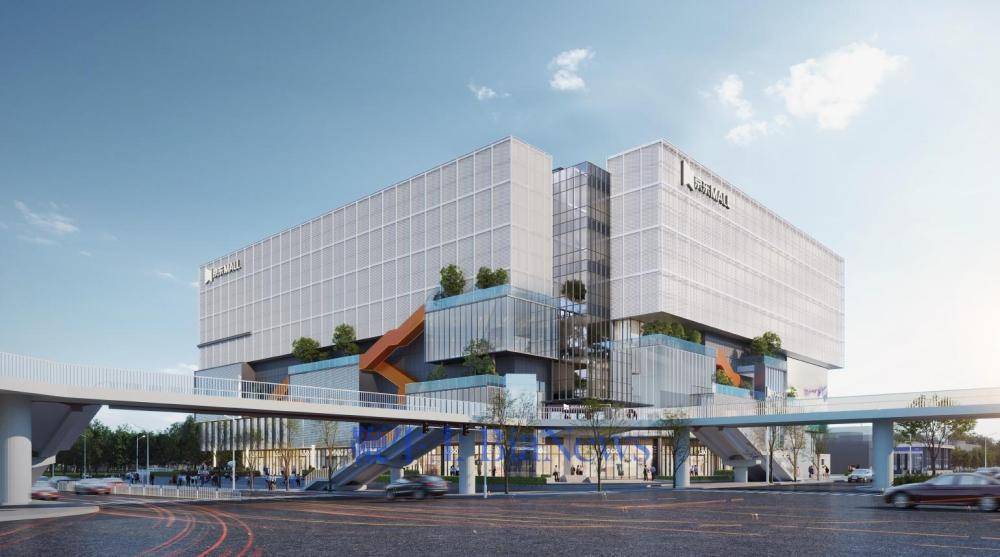
Core Insights - JD MALL (Beijing South Third Ring Store) is the largest store in China and the first in Beijing, featuring a blend of traditional culture and modern technology [1][3] - The store spans 78,000 square meters and offers an immersive shopping experience with a full range of products and scene-based services [1][3] Group 1: Store Features - The store integrates over 30 immersive 1:1 real-life smart experience halls, catering to personalized needs by replicating real home scenarios [3] - It includes a diverse range of commercial forms across seven floors, featuring over 200,000 product types, including home appliances, home decor, 3C digital products, leisure, and outdoor activities [3][4] Group 2: Unique Offerings - The e-sports digital experience area features top brands like Apple, Huawei, and Razer, providing customized high-performance gaming setups [4] - The food and baking experience area allows consumers to engage in DIY baking with the latest trendy appliances and interact with professional baristas [4] Group 3: Specialized Services - The laundry care center includes top brands like Casarte and Haier, offering free "clothing care laboratory" services for high-end laundry and leather care [6] - The store features a unique exhibition hall designed by a national-level embroidery inheritor, inspired by traditional architecture, providing a distinctive visual experience [6] Group 4: Cultural and Family Engagement - JD MALL has initiated an external leasing model, attracting the National Library bookstore to create an immersive cultural space for reading, art, and social interaction [7] - A large children's playground has been developed in collaboration with Le Lifang, providing educational and entertaining experiences for families [7]


哪吒等文化IP“破壁”VR困局,以5D+VR文化剧场重构商业想象
2 1 Shi Ji Jing Ji Bao Dao· 2025-05-29 10:50
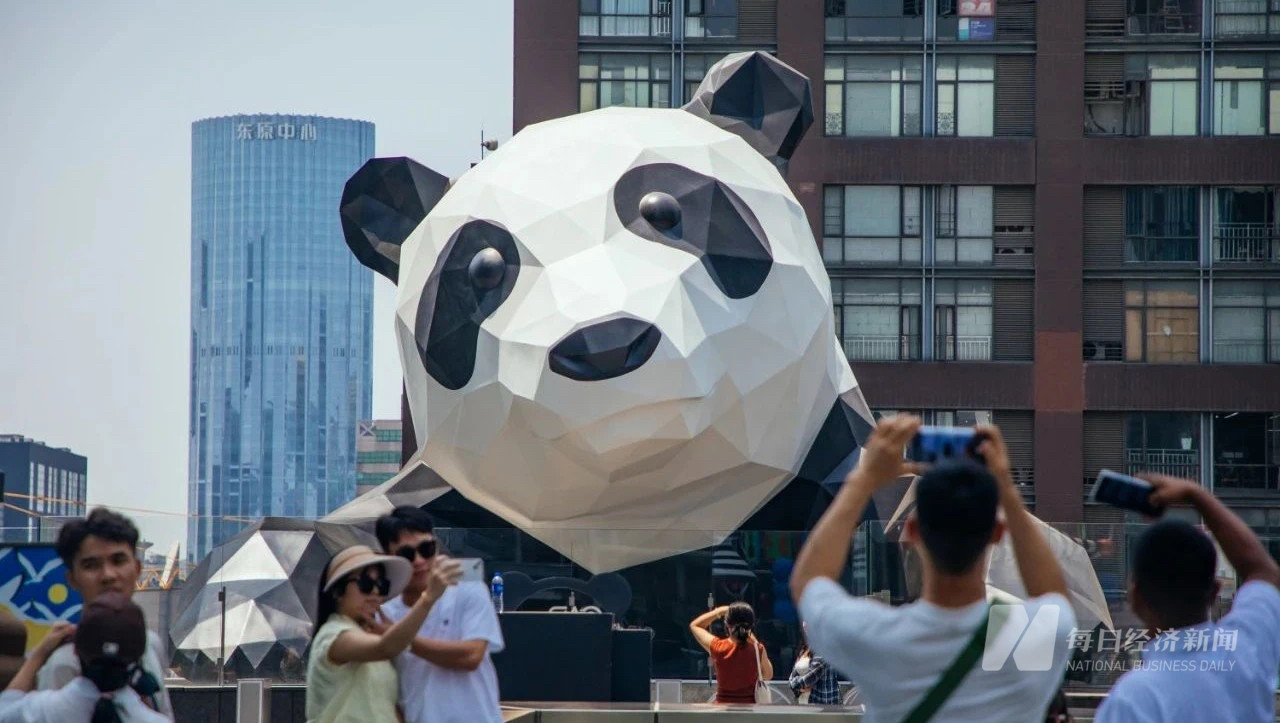
Core Insights - The VR industry is facing a dilemma where professional users find the hardware inadequate, while ordinary users are reluctant to purchase due to poor experiences, leading to a vicious cycle of low content investment and user engagement [1][2] - The future of VR is believed to lie in content rather than hardware, with a focus on immersive and interactive experiences that resonate with younger consumers [1][3] Industry Challenges - VR devices are criticized for their poor visual quality, heavy equipment, and overall user experience, which has resulted in a stagnation of user growth, with only 300,000 monthly active users projected in China by 2024 [2] - The industry is currently dependent on a limited number of large clients in the B2B and government sectors, which weakens the market resilience of VR/AR companies [3] Content Innovation - There is a growing emphasis on creating engaging content that can evoke empathy and provide immersive experiences, moving away from traditional gaming and film applications [3][4] - New generational consumers prioritize experiential consumption that reflects their self-worth, indicating a shift in market demand [3] Case Studies and Applications - The "Nezha 5D VR" project exemplifies the integration of 5D holographic technology with VR to create immersive cultural experiences, attracting a wide audience from children to adults [4][5] - The potential for VR technology to enhance various commercial applications, such as transforming underutilized hotel spaces into multi-functional venues, is being explored [5] Market Potential - The immersive industry in China is projected to reach a scale of 250 billion yuan by 2026, with "cultural tourism + technology" identified as a key growth driver [5] - Companies are planning to open 200 to 300 stores nationwide, aiming to establish 5D VR as a new highlight in the cultural tourism sector [5]
西湖区升级全域文旅版图
Hang Zhou Ri Bao· 2025-05-23 02:41
Group 1 - The core theme of the event is "Unlocking the B-side of West Lake" through a multi-faceted cultural and tourism experience, showcasing the innovative vitality and cultural charm of the West Lake District [1] - The event features the release of new tourism routes targeting families, youth, and pet owners, emphasizing seasonal experiences and diverse activities such as art therapy and outdoor sports [1] - The "5·19惠民政策" includes various supportive measures for cultural tourism enterprises and ticket discounts for visitors, reflecting the district's commitment to enhancing the cultural tourism industry [1] Group 2 - The "College Cultural Tourism Star Promoter" program was launched to engage university students in promoting West Lake's cultural tourism through new media and event planning [2] - During the "May Day" holiday, West Lake District recorded 3.36 million tourists, with hotel occupancy rates increasing by 11.45% year-on-year, indicating a strong recovery in tourism [2] - The district is innovatively creating new consumption scenarios in cultural tourism, integrating local culture with digital technology and creative industries to enhance visitor experiences [2]
“文创天府·蓉耀未来”,成都市文化旅游产业链创新场景供需发布会将于明日举行
Mei Ri Jing Ji Xin Wen· 2025-05-21 15:16
Core Insights - Chengdu's cultural tourism industry is currently in a crucial phase of high-quality development, emphasizing the need for innovative integration and the creation of new business models and experiences to attract visitors continuously [1] - The upcoming Chengdu Cultural Tourism Industry Chain Innovation Scene Supply and Demand Release Conference aims to provide a platform for innovative technologies and products, facilitating a two-way interaction between supply capabilities and market demand [1] - The rise of digital technology is reshaping content production and consumer experiences, leading to the emergence of new scenarios that enhance visitor engagement and drive the transformation of traditional experiences [1] Group 1: Industry Trends - The integration of "culture + technology" is driving a wave of innovation, resulting in immersive experiences that engage visitors emotionally and enhance their participation [8][10] - New scenarios in cultural tourism, such as the "Night Tour of Jinjiang," combine static art installations with dynamic light and sound displays, creating a poetic narrative for visitors [8] - The use of advanced technologies like VR and AI is becoming standard in enhancing visitor experiences, as seen in projects like the "Digital Dunhuang Immersive Exhibition," which allows deep engagement with cultural heritage [11][13] Group 2: Economic Impact - Large cultural events, such as concerts, have evolved into significant economic drivers, with a cross-city attendance rate exceeding 60% and generating over 200 billion yuan in related consumption [14] - The application of digital creativity in the exhibition industry is transforming complex cultural concepts into engaging, participatory experiences, enhancing the overall value of cultural events [16] - The sports industry is also benefiting from digital innovation, with trends like "Village BA" leveraging short video technology to create cultural phenomena and enhance community engagement [16][18] Group 3: Future Outlook - The upcoming release of the first batch of cultural tourism industry chain scenario lists is expected to showcase new dynamics from various fields, including digital cultural creativity, smart tourism, and intelligent exhibitions [18]
线上引流、首创消费、设施提升——业态升级游客尽兴 百年梨园更聚人气
Sou Hu Cai Jing· 2025-05-21 01:34
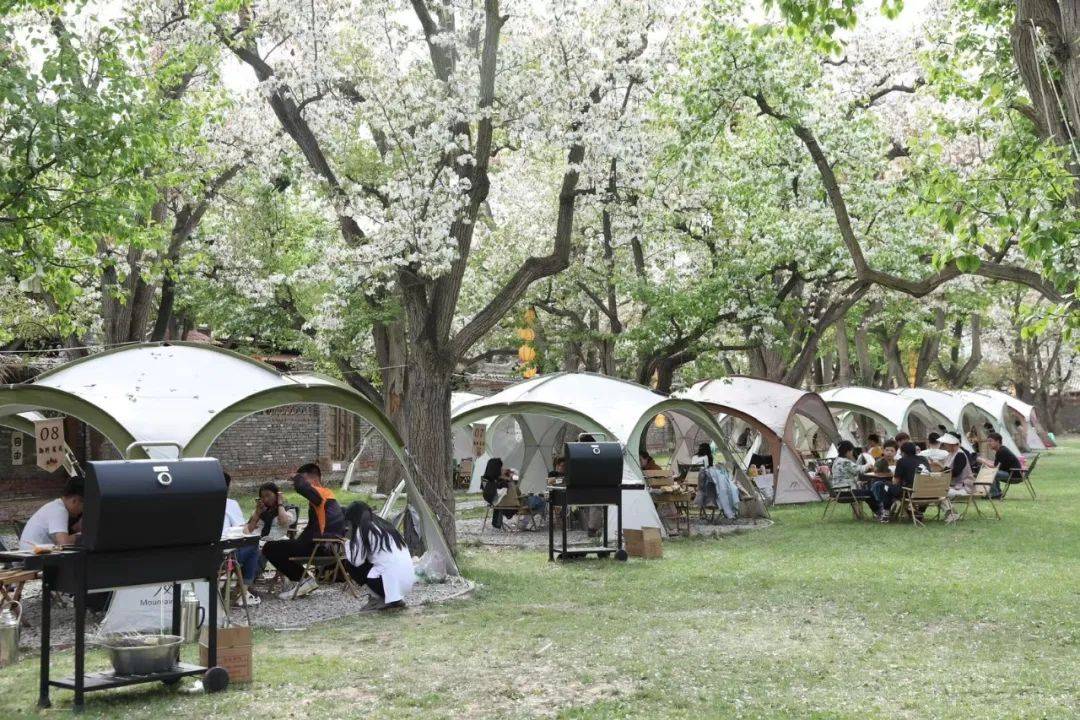
Core Viewpoint - The article highlights the transformation of the pear orchard economy in Shichuan Town, Gaolan County, into a vital force for rural revitalization, driven by diverse consumer demands and innovative consumption models [1][22]. Group 1: Innovative Marketing Strategies - The use of celebrity endorsements, such as local actor Wang Hai, has successfully attracted attention and increased foot traffic to the Shichuan pear orchards [3][5]. - The orchard operators have adopted online marketing strategies, leveraging the popularity of social media to enhance visibility and attract visitors [7]. Group 2: Unique Consumption Models - The introduction of outdoor wedding services in the pear orchards caters to specific consumer needs, with facilities designed for large gatherings and beautiful settings [9][11]. - A self-service consumption model has been implemented in a pear orchard, allowing visitors to enjoy unlimited access for a fixed fee, which reduces operational costs and enhances the variety of offerings [14]. Group 3: Enhanced Consumer Experience - The rise of camping culture has led to the establishment of camping facilities within the orchards, appealing to younger consumers seeking immersive experiences in nature [16][18]. - Various themed areas and upgrades, such as children's play zones and scenic spots, have been created to improve visitor engagement and satisfaction [21]. Group 4: Market Trends and Consumer Engagement - The shift from passive observation to active participation in tourism experiences reflects a broader trend in consumer behavior, where visitors seek deeper emotional connections with their surroundings [24]. - The integration of traditional rural aesthetics with modern tourism demands serves as a model for the development of rural cultural tourism industries [22][24].
研判2025!中国文化旅游综合体行业产业链、行业现状及市场规模分析:“文旅+”模式驱动产业升级,科技赋能与IP运营助力二次消费[图]
Chan Ye Xin Xi Wang· 2025-05-16 01:36
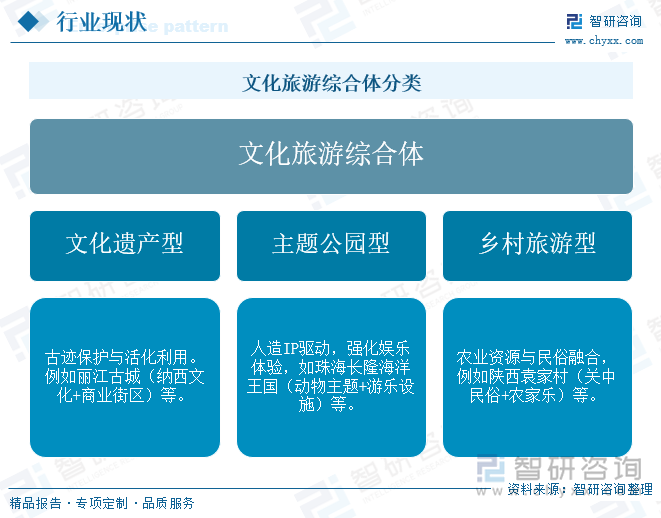
Core Viewpoint - The Chinese cultural tourism complex industry is entering a transformation and upgrading phase, becoming a significant engine for driving domestic demand growth and promoting industrial upgrades. The market size is projected to reach 2.59 billion yuan in 2024, with a year-on-year growth of 16.11% [1][12]. Industry Overview - Cultural tourism complexes integrate culture as the core driving force, combining tourism, commerce, leisure, and residential functions into a comprehensive space. They aim to meet tourists' needs for cultural experiences, leisure vacations, and shopping while promoting regional cultural heritage and tourism industry upgrades [2]. Industry Development History - The industry has gone through four stages: 1. **Emergence Stage (1978-1999)**: Focused on sightseeing with limited cultural integration. 2. **Initial Exploration Stage (2000-2009)**: Increased emphasis on cultural tourism with early projects combining cultural performances and tourism. 3. **Rapid Development Stage (2010-2019)**: Cultural tourism complexes became key for local economic transformation, supported by national strategies. 4. **Transformation and Upgrading Stage (2020-Present)**: Shift towards high-quality, diversified, and technology-driven experiences, accelerated by the pandemic [4][5][6]. Industry Value Chain - The industry value chain includes: - **Upstream**: Resource development, planning, design, and cultural resource/IP development. - **Midstream**: Operation services of cultural tourism complexes. - **Downstream**: Tourists and consumers [8]. Market Size - The market size of the cultural tourism complex industry is expected to reach 2.59 billion yuan in 2024, with a year-on-year growth of 16.11%. The industry is witnessing trends of cross-industry integration, such as "cultural tourism + technology" and "cultural tourism + commerce" [12]. Key Enterprises - Major players in the industry include: - **China Overseas Chinese Town**: Leading enterprise with a comprehensive business model covering theme parks and cultural performances. - **Sunac Culture**: Known for its "ice and snow world + commercial complex" model. - **China Youth Travel Service**: Focuses on integrated tourism services with projects like Wuzhen and Gubei Water Town. - **Yunnan Tourism**: Leverages rich cultural resources for unique tourism projects [14][16][17]. Industry Development Trends 1. **Integration of Immersive Experiences and Smart Operations**: The industry is transitioning from resource-driven to technology-driven, utilizing advancements in 5G, AI, and the metaverse to enhance visitor experiences [20]. 2. **Demand Differentiation Driven by Generational Changes**: The Z generation and the elderly are shaping the market, leading to a focus on unique experiences and wellness tourism [21][22]. 3. **Green Concepts and Industrial Synergy**: The industry is moving towards low-carbon and industrialized upgrades, with a focus on sustainable practices and collaboration across sectors [23].




杭州文旅升级之路:从“西湖游玩”迈向“西湖+沉浸体验”新时代
Huan Qiu Wang· 2025-05-15 14:10
Core Insights - The article discusses the development of cultural tourism in Xi'an and Hangzhou, highlighting their unique approaches and innovations in the industry [2][16] Group 1: Xi'an's Cultural Tourism Development - Xi'an has transformed into a "net celebrity city" with a focus on immersive experiences rooted in its rich historical culture [3][4] - The "Daming Palace Night City" serves as a core engine for Xi'an's cultural tourism, featuring interactive performances that engage visitors in historical narratives [5] - Xi'an's cultural tourism ecosystem includes a diverse range of offerings such as historical sites, immersive cultural districts, and large-scale performances, creating a comprehensive experience for different visitor demographics [7] Group 2: Hangzhou's Cultural Tourism Upgrade - Hangzhou is transitioning from a focus on West Lake tourism to a broader exploration of "Song Dynasty culture," leveraging its historical significance as the Southern Song capital [8][9] - The city is developing infrastructure to support Song culture, including the restoration of historical streets and the creation of educational routes that connect significant cultural sites [10] - The introduction of the "Parallel World Resort" aims to enhance Hangzhou's cultural tourism by integrating Song culture with high-tech entertainment, positioning it as a destination for immersive experiences [12][16] Group 3: Future Prospects - The "Parallel World Resort" will feature large-scale performances and interactive experiences that highlight Song culture, aiming to attract visitors and extend their stay [12][16] - The resort will also incorporate advanced technology in its attractions, such as an 8K immersive flying experience and various family-friendly entertainment options [14][15] - The overall strategy for both cities reflects a shift towards immersive tourism experiences, with Hangzhou aiming to redefine its identity beyond just being a scenic spot [16]
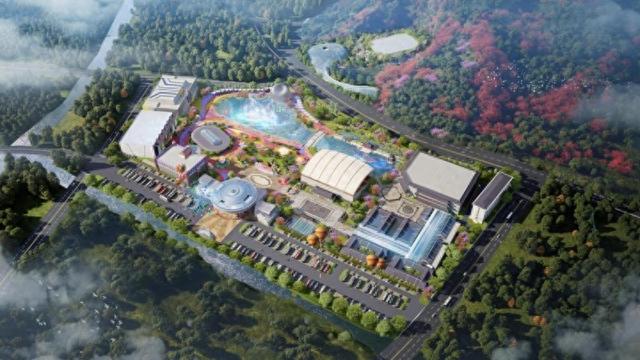
研判2025!中国赛车主题公园行业产业链、行业现状及发展趋势分析:年轻群体与家庭游客成消费主力,沉浸式体验与品牌效应双驱动[图]
Chan Ye Xin Xi Wang· 2025-05-14 01:30
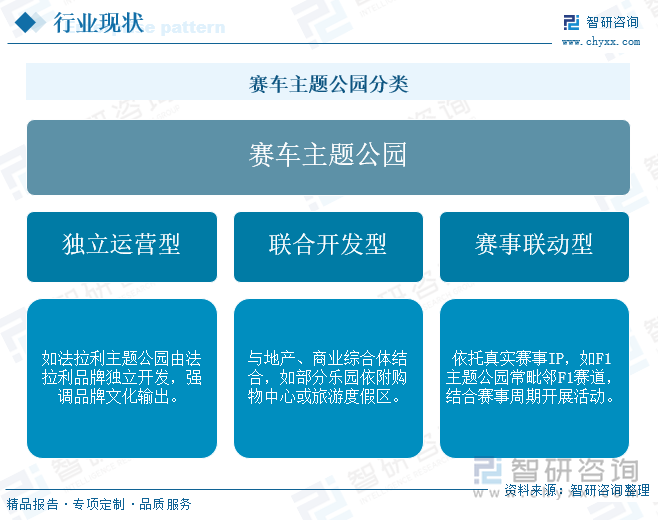
Core Viewpoint - The young demographic and family tourists are becoming the main force in the racing theme park industry, seeking immersive experiences and brand effects. The demand for facility realism, professionalism, and interactivity is driving parks towards high-quality and diversified development. Leading projects like the Pearl River Delta Racing Culture Park are enhancing experience advantages through technologies such as VR racing and dynamic tracks, which not only increase visitor engagement but also extend their stay, thereby increasing consumption opportunities. In 2024, the sales revenue of China's racing theme parks is projected to reach 833 million yuan, a year-on-year increase of 17.66% [1][12]. Industry Overview - Racing theme parks are comprehensive parks themed around racing culture, integrating entertainment, leisure, and education. They provide extreme speed and intense competition experiences through simulated racing scenes and mechanical simulations, including professional tracks, simulated driving experiences, and car museums [2][4]. Industry Development History - The development of China's racing theme park industry has gone through four stages: 1. The initial stage in the late 20th century, where racing parks began to enter public view. 2. Rapid development from the early 2000s to the 2010s, marked by the opening of the first racing theme park in Shanghai. 3. Diversification from the 2010s to the 2020s, incorporating more entertainment elements to attract a broader consumer base. 4. The current stage of maturity and innovation, focusing on brand building and international development [4][5][6]. Industry Status - The racing theme park industry is experiencing rapid growth, with a market scale that continues to expand. Major cities like Shanghai, Beijing, and Guangdong are the primary hubs for these parks, while emerging regions like Zhejiang, Jiangsu, Sichuan, and Chongqing are becoming new hotspots [14][16]. Industry Development Trends 1. **Technology Integration and Experience Upgrade**: Future racing theme parks will focus on integrating technologies like VR, AR, and AI to provide immersive and personalized experiences, enhancing visitor satisfaction and operational efficiency [19]. 2. **Diversification and Comprehensive Development**: The industry will evolve towards offering a mix of cultural displays, educational training, and family interactions, creating comprehensive leisure destinations [20]. 3. **Regional Layout Optimization and Market Expansion**: The geographical distribution of racing theme parks will optimize, with potential growth in less developed areas and rural regions, driven by national strategies [22].

上海乐高乐园开业倒计时,江苏游客将拥有更多高品质亲子游选择
Yang Zi Wan Bao Wang· 2025-05-08 04:42
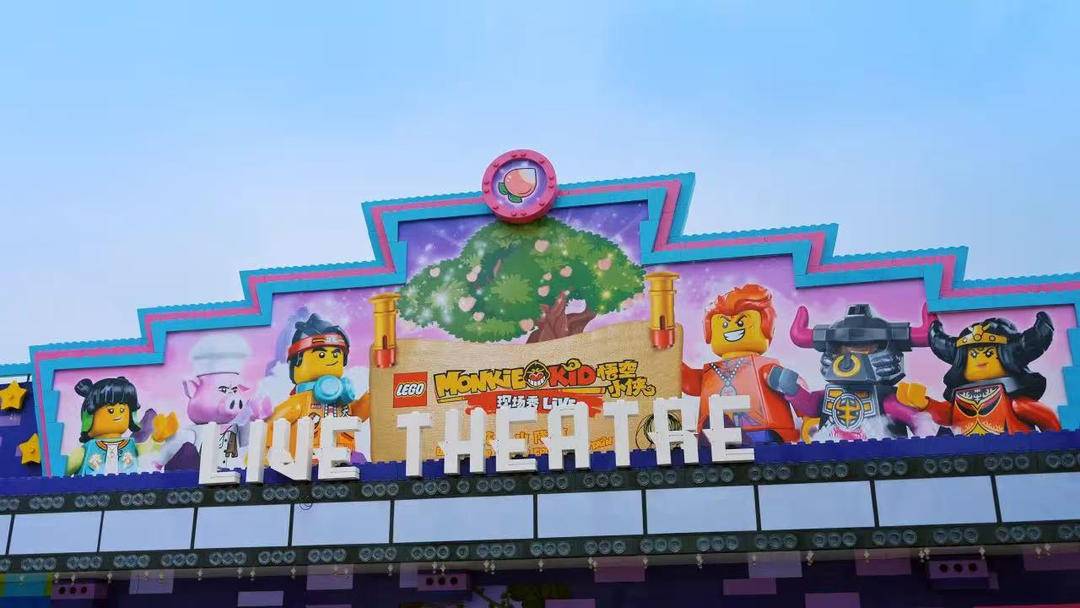
Group 1 - Merlin Entertainments announced the opening of the world's largest LEGO theme park in Shanghai on July 5, with a total investment exceeding $550 million [1] - The park features 8 themed areas and 75 interactive attractions, including unique zones like "Wukong Xiaoxia" and "Mini World" styled after Jiangnan water towns [3][5] - The location in Jinshan is strategically chosen, being within a 2-hour travel radius from major cities in Jiangsu, enhancing accessibility for visitors [3] Group 2 - The opening of LEGO park provides more diverse travel options for families in Jiangsu, who previously had to travel to Shanghai Disneyland or further for international theme park experiences [6] - Local travel agencies plan to create more "high-speed rail + theme park" short trip products to cater to the growing demand for high-quality family outings [8] - The entry of international brands like LEGO is seen as an opportunity for Jiangsu's tourism industry to enhance service quality and develop differentiated offerings [9]
罗曼股份20250507
2025-05-07 15:20
Summary of Roman Co. Conference Call Company Overview - Roman Co. reported a 49% year-on-year revenue growth in Q1 2025, reaching 180 million yuan, driven by significant growth in the cultural tourism and digital energy sectors, while landscape lighting experienced a slight decline due to government payment issues. The company expects balanced development across its three main business segments throughout the year [2][3][5]. Financial Performance - In 2024, Roman Co. achieved a total revenue of 688 million yuan, a 12% increase year-on-year. The cultural tourism segment saw remarkable growth, nearly doubling to 137 million yuan, while the digital energy segment grew nearly tenfold to 125 million yuan. The landscape lighting segment faced a decline due to delayed government payments, leading to increased bad debt provisions [3][5]. - By the end of 2024, the net accounts receivable stood at approximately 700 million yuan, with measures in place to improve collection and reduce bad debts by year-end [2][5]. Industry Dynamics - The government has shifted its focus from merely "lighting cities" to "creating experiences," aiming to enhance tourist spending and stimulate the economy. This aligns with Roman Co.'s digital tourism segment, which has received positive feedback from local governments [6][20]. - The company is actively responding to national carbon neutrality policies by integrating renewable energy with urban landscape lighting, having recently won a 100 MW energy project, reflecting a growing demand for renewable energy solutions [7][8]. International Expansion - Roman Co. anticipates that overseas revenue will double by 2025 compared to 2023, with major clients including Universal, Netflix, and Disney. The company has received significant orders, including a $30 million contract for ten experiential projects in Orlando [9][10]. - The company plans to collaborate with Honeywell to expand its traditional businesses, such as landscape lighting and BIPV, into international markets, enhancing its global market share and technological innovation [11][12]. Technological Advancements - The establishment of a digital technology company aims to deepen AI product development, focusing on applications in landscape inspections and cultural tourism project updates. The company is also exploring immersive experience projects through investment and operational models [4][13][14]. - Advanced technologies like HoloTrack and DeepSmart are being utilized to enhance user interaction in immersive experiences, with applications in various projects, including the 360 Golf project [16][18]. Market Trends and Challenges - The company is prioritizing projects in first- and second-tier cities due to local government funding pressures, ensuring timely payment collection. The focus has shifted from high-margin projects in lower-tier cities to more stable revenue streams in higher-tier cities [20][21]. - The domestic immersive experience market shows strong demand, but lacks large-scale theme parks. The company is in discussions with notable suppliers to meet the evolving needs of new-generation tourists [22][23]. Conclusion - Roman Co. is strategically positioned for growth through diversification into digital energy and cultural tourism, international expansion, and technological innovation. The company is navigating challenges related to government payments and market competition while capitalizing on emerging trends in immersive experiences and renewable energy.
