绿色转型

Search documents
政策解读】金融支持新型工业化,七部门联合发文!划重点→
Sou Hu Cai Jing· 2025-08-06 03:05
Core Viewpoint - The recent joint issuance of the "Guiding Opinions on Financial Support for New-Type Industrialization" by seven Chinese government departments aims to enhance financial support for key industries, promote technological innovation, and facilitate the transformation and upgrading of traditional industries. Group 1: Key Technology Breakthroughs - Financial institutions are encouraged to provide medium- and long-term financing for key industries such as integrated circuits, industrial mother machines, and basic software [1] - Companies that achieve breakthroughs in core technologies can access "green channels" for listing, bond issuance, and mergers and acquisitions [1] - More financial support will be available for the promotion of first sets of equipment and first batches of materials [1] Group 2: Transformation of Technological Achievements - Initiatives like "monthly chain" investment roadshows and "thousand sails and hundred boats" listing cultivation will be implemented to optimize the evaluation system for hard technology attributes [2] - Social capital is encouraged to invest early, small, and long-term in hard technology [2] - High-level talent entrepreneurship will receive comprehensive services including credit and financial advisory [2] Group 3: Upgrading Traditional Industries - Banks will increase credit support for the high-end, intelligent, and green transformation of the manufacturing sector [3] - Companies can update intelligent and environmental protection equipment through financing leasing, and related debts can be securitized [3] - Listed companies can achieve industry consolidation and upgrading through overall listings and targeted placements [3] Group 4: Emerging Future Industries - New industries such as information technology, new energy, and biomedicine can access financing in multi-tiered capital markets [4] - Long-term funds from government investment funds and insurance funds will focus on future manufacturing and energy industries under controllable risks [4] - Financing will be made easier for technology companies through mechanisms like "innovation points system" and "intellectual property pledge loans" [4] Group 5: Financing for Small and Medium Enterprises - Financial institutions can provide accounts receivable, order, and warehouse receipt financing based on "data credit" and "object credit" [5] - Exploration of supply chain "de-nuclearization" models will allow loans without relying on core enterprise credit [5] - A national credit information platform for small and micro enterprises will be accelerated to facilitate credit for first-time borrowers [5] Group 6: Green Transformation - Financial institutions are encouraged to support projects in high-carbon industries that comply with green and low-carbon technological transformations [6] - Green credit and green bonds will be directed towards environmental protection, energy saving, and low-carbon fields [6] - A dedicated financial standard system will be established to enhance support for transformation funding [6] Group 7: Digital Integration - Digital infrastructure such as 5G and industrial internet can receive medium- and long-term loans, and financing leasing and asset securitization can be utilized [7] - Banks will build digital industrial platforms to provide "one-stop" services for financing and settlement [7] - Big data and AI technologies will simplify procedures and improve service efficiency for small and medium enterprises [7] Group 8: Risk Prevention - Financial institutions are required to monitor the use of funds to prevent misappropriation and "involution" competition [8] - Joint assessment of industrial and financial risks will be conducted, with timely sharing of high-risk information [8] - Non-performing loans in the manufacturing sector can be legally disposed of through restructuring and write-offs [8]


服贸会剧透!这些高新技术成果9月北京见
Zhong Guo Jing Ji Wang· 2025-08-06 00:01
Core Insights - The 2025 Service Trade Fair has collected 113 achievements from 62 companies, aiming to promote high-tech innovations and applications [1] - Major companies like Ernst & Young, Philips, and Amate Medical are set to showcase their innovative technologies and products at the fair [1][2][3] Group 1: Company Innovations - Ernst & Young will present its upgraded AI-driven solutions, EYA.ai and ESG.ai, focusing on supporting enterprises in their green transformation across various sectors [1] - Philips will highlight its AI-enabled healthcare solutions, including the Elition AI+ MRI and the latest high-end CT model, CT5300, targeting high-incidence diseases [2] - Amate Medical will introduce its newly developed Perisorb bioabsorbable drug-eluting stent, building on the success of its previous CO2 injection device [3] Group 2: Industry Standards and Collaborations - The China Hotel Association will unveil the first "China Accommodation Industry Consumption Index" and "China Catering Industry Consumption Index," along with two national industry standards [3] - Schneider Electric will announce a comprehensive upgrade of its new service system and collaborate with various industry partners to promote a new service ecosystem [2] - Alibaba will release a series of innovative results, including a digital ecosystem for e-commerce and a new online consumption brand index [4] Group 3: Compliance and Management Solutions - Baiwang Co., a leader in data intelligence, will launch the first global transaction compliance solution, integrating AI with tax expertise for comprehensive compliance management [4]
【钛晨报】央行等七部门重磅发布,这些行业将获金融“大红包”;上交所出手,暂停上纬新材部分投资者账户交易;今秋起公办幼儿园免一年保教费
Sou Hu Cai Jing· 2025-08-05 23:37
Financial Support for New Industrialization - The People's Bank of China and other regulatory bodies issued guidelines to support new industrialization, focusing on key sectors like integrated circuits and industrial mother machines [1][2] - Banks are encouraged to provide long-term financing for technology breakthroughs and facilitate easier access to capital for companies achieving core technology advancements [1][2] Emerging Industries and Financing - New industries such as information technology, renewable energy, and biomedicine will have access to multi-tiered capital markets for financing [2] - Long-term funds from government investment funds and insurance will focus on future manufacturing and energy sectors [2] Support for Small and Medium Enterprises - Financial institutions are urged to reduce reliance on guarantees and provide financing based on data and asset credit [2] - A national credit information platform for small and micro enterprises is being developed to facilitate easier access to credit [2] Green Transition Financing - Financial support will be directed towards high-carbon industries that meet green transformation criteria, with a focus on green credit and bonds [2] - A specialized financial standard system will be established to enhance funding for green projects [2] Digital Integration and Services - Digital infrastructure projects like 5G and industrial internet will receive long-term loans and financing options [2] - Banks are developing digital platforms to provide one-stop services for financing and settlement, improving efficiency for small businesses [2] Risk Management in Financial Institutions - Financial institutions are required to monitor the use of funds to prevent misuse and ensure compliance with regulations [3] - Joint risk assessments will be conducted to share high-risk information and manage potential financial risks [3] Market Trends and Predictions - Major financial institutions have warned clients to prepare for potential declines in U.S. stock prices, with predictions of a 10% to 15% correction in the S&P 500 index [17][18] - The retail forecast for passenger vehicles in 2025 has been slightly adjusted upward, indicating a growth of 6% [19]

回盛生物: 董事会决议公告
Zheng Quan Zhi Xing· 2025-08-05 16:33
Group 1 - The board of directors of Wuhan Huirong Biological Technology Co., Ltd. held its 23rd meeting on August 5, 2025, with all five directors present, and the meeting complied with relevant laws and regulations [1] - The board unanimously approved the 2025 semi-annual report, confirming that it accurately reflects the company's operational status without any false statements or omissions [2][3] - The board approved the special report on the use of raised funds, ensuring compliance with relevant regulations and confirming no violations in the management and disclosure of raised funds [2][3] Group 2 - The board proposed a profit distribution plan for the first half of 2025, recommending a cash dividend of 20,157,895.70 yuan (before tax) based on a total share capital of 202,332,557 shares as of June 30, 2025 [2][3] - The profit distribution plan does not require shareholder meeting approval as it was authorized in the 2024 annual shareholder meeting [3] - The board approved the appointment of Han Jie as the rotating general manager, with the term lasting until the end of the current board's term [4] Group 3 - The board approved an investment of 170 million yuan in a project to upgrade veterinary raw material production equipment, aimed at enhancing product quality and increasing production capacity [5] - The company plans to change its registered capital from 179,194,432 yuan to 202,332,557 yuan due to the conversion of convertible bonds into shares, and to relocate its registered address [6] - The board agreed to convene the second extraordinary general meeting of shareholders on August 22, 2025 [6]
“送新取旧”让快递业绿色转型之路越走越宽广
Bei Jing Qing Nian Bao· 2025-08-05 09:23
Core Insights - The Chinese express delivery industry is experiencing a transformation driven by the "old-for-new" exchange policy, which has led to the early achievement of 100 billion express deliveries by 2025, 35 days ahead of schedule compared to last year [1] - The shift from traditional delivery to integrated services, including installation and recycling, reflects an evolution in the logistics model, enhancing supply chain capabilities and responding to consumer demands [2][3] Group 1: Industry Transformation - The express delivery sector is evolving from a simple transportation model to a comprehensive service model, where delivery personnel act as "mobile service stations" handling both new product installation and old product recycling [2] - The integration of reverse logistics into the delivery process creates a closed-loop ecosystem of "new delivery - old recovery - disposal," enhancing service efficiency and resource allocation [2][3] Group 2: Value Creation and Distribution - The introduction of platforms like SF Express's "Shun Recovery" combines reverse logistics with financial services, allowing consumers to receive immediate compensation for old products, thereby reconstructing the commercial credit system [3] - The express delivery industry is becoming a central hub for value creation, connecting production and consumption, and supporting the transition from "Made in China" to "Created in China" [3] Group 3: Future Outlook - Continuous technological innovation, improved institutional design, and strengthened ecological collaboration are essential for the green transformation of the express delivery industry [3] - The industry is expected to further develop under the dual influence of policy guidance and market innovation, contributing to sustainable development and environmental responsibility [3]

金融支持新型工业化 划重点来了
Yang Shi Xin Wen Ke Hu Duan· 2025-08-05 08:32
Group 1 - Financial support for key industries such as integrated circuits, industrial mother machines, and basic software will be enhanced through long-term financing from banks, with a "green channel" for companies breaking through core technologies [1][2] - Capital will be encouraged to invest in hard technology with a focus on early, small, and long-term investments, including direct investments and service exchange equity for incubated enterprises [1][2] - Traditional industries will receive increased credit support for high-end, intelligent, and green transformation, with options for financing leasing and debt securitization [1][2] Group 2 - Emerging industries like new-generation information technology, new energy, and biomedicine will have access to multi-level capital market financing, with government investment funds and insurance capital focusing on future manufacturing and energy [1][2] - Financial institutions will explore data credit and asset credit to reduce reliance on guarantees for small and medium-sized enterprises, with a national credit information platform for easier access to credit [2] - Green transformation projects in high-carbon industries will receive support, with a focus on green credit and bonds for environmental upgrades [2] Group 3 - Digital infrastructure projects such as 5G and industrial internet will be eligible for long-term loans, with banks providing one-stop services through digital platforms [2] - Financial institutions are required to monitor the use of funds to prevent misuse and ensure risk management in manufacturing loans [4]
金融支持新型工业化 划重点来了!
Yang Shi Xin Wen Ke Hu Duan· 2025-08-05 08:23
Key Points - The People's Bank of China and other departments issued guidelines to support new industrialization through financial means [1] - Emphasis on long-term financing for key industries such as integrated circuits and industrial mother machines [1] - Financial support for companies breaking through core technologies, including expedited processes for IPOs and mergers [1] Group 1: Financial Support for Key Technologies - Banks are encouraged to provide medium to long-term financing for critical technology sectors [1] - Companies achieving breakthroughs in core technologies can access a "green channel" for IPOs, bond issuance, and mergers [1] - Enhanced financial support for the promotion of first sets of equipment and first batches of materials [1] Group 2: Capital Patience for Technology Transformation - Initiatives like monthly investment roadshows and nurturing for hard technology companies are introduced [2] - A focus on guiding social capital to invest early, small, and long-term in hard technology [2] - Comprehensive services including credit and financial advisory for high-level talent entrepreneurship [2] Group 3: Financing Channels for Traditional Industry Upgrades - Increased credit support for the transformation of manufacturing towards high-end, intelligent, and green practices [3] - Companies can utilize financing leases to update smart equipment and environmental protection devices [3] - Public companies can achieve industry consolidation and upgrades through overall listings and targeted placements [3] Group 4: Funding for Emerging Future Industries - New generation information technology, new energy, and biomedicine can access multi-tiered capital markets [4] - Long-term funds from government investment funds and insurance are encouraged to focus on future manufacturing and energy sectors [4] - Innovative financing methods like "innovation points system" and "intellectual property pledge loans" are introduced [4] Group 5: Breaking Guarantee Dependency for SMEs - Financial institutions can provide financing services based on "data credit" and "object credit" [5] - Exploration of supply chain "de-nuclearization" to enable loans without relying on core enterprise credit [5] - Accelerated construction of a national credit information platform for small and micro enterprises [5] Group 6: Appropriate Use of Green Transition Financial Tools - Support for high-carbon industries undergoing green low-carbon technological transformations [6] - Green credit and bonds are directed towards environmental protection, energy saving, and low-carbon fields [6] - Establishment of a dedicated financial standard system to enhance support for transformation funding [6] Group 7: Intelligent Digital Integration Services - Digital infrastructure like 5G and industrial internet can access medium to long-term loans [7] - Banks are encouraged to build digital industry platforms for one-stop financing and settlement services [7] - Utilization of big data and AI technologies to simplify procedures and improve service efficiency for SMEs [7] Group 8: Risk Prevention and Control - Financial institutions are required to monitor the use of funds to prevent misappropriation [8] - Joint assessment of industrial and financial risks with timely sharing of high-risk information [8] - Non-performing loans in manufacturing can be managed through restructuring and legal write-offs [8]
上半年我国新能源汽车市场渗透率创同期历史新高
Zhong Guo Qing Nian Bao· 2025-08-05 07:53
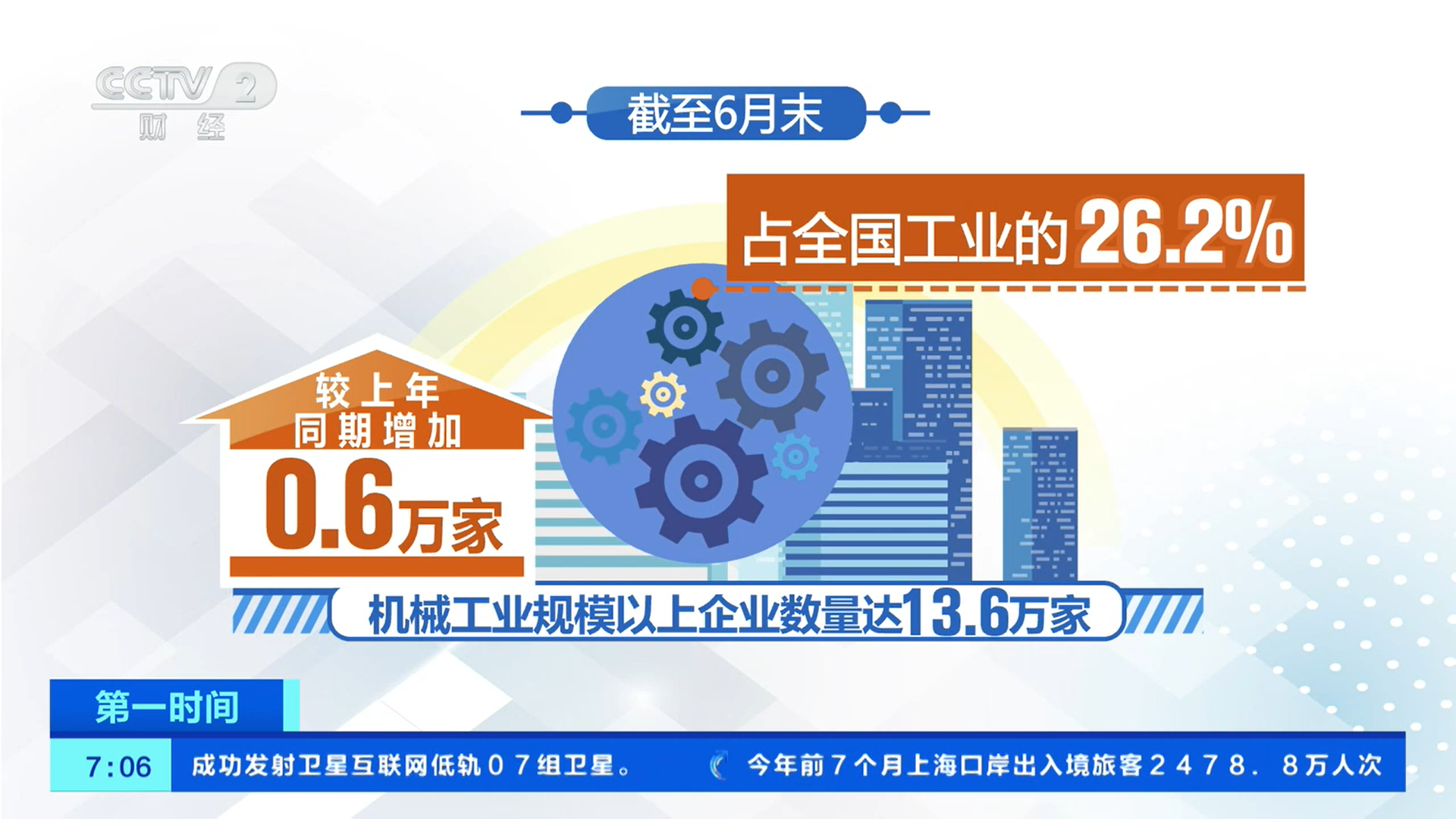
中国青年报客户端北京8月5日电(中青报·中青网记者 贾骥业)今年上半年,我国新能源汽车产销分别 完成696.8万辆和693.7万辆,市场渗透率达到44.3%,创下同期的历史新高。这是记者今天从中国机械 工业联合会了解到的。 中国机械工业联合会副会长罗俊杰介绍,今年上半年,我国机械工业坚持科技创新和绿色发展,加速推 进新型工业化和产业转型升级,创新活力加快释放,新动能新优势继续壮大,高质量发展取得了积极成 效。 截至6月末,机械工业规模以上企业数量达13.6万家,较上年同期增加0.6万家,占全国工业的26.2%, 占比较上年同期提高0.4个百分点;资产总计达40.4万亿元,同比增长6.6%,占全国工业的22.0%。 展望下半年,机械工业仍面临不少风险挑战。罗俊杰提到,从外部看,国际环境总体趋紧,地缘政治冲 突频发,关税博弈加剧,贸易不确定性加大;从国内看,外部环境变化带来的不利影响增多,市场出现 波动、有效需求不足、外贸出口承压,部分产业结构性矛盾凸显,价格内卷压缩利润空间,账款回收难 加大经营压力,部分企业经营存在困难。 但也要看到,宏观政策和产业政策都在加码加力,持续释放利好机械工业发展的信号。据了解,近期 ...

当“反内卷”遇上ESG,谁在绿色赛道上领跑?
2 1 Shi Ji Jing Ji Bao Dao· 2025-08-05 07:50
站在"十四五"收官与"十五五"谋篇的历史交汇点,2025年的刻度格外清晰——"双碳"目标提出五周年、 《巴黎协定》达成十周年。这两个数字背后,是人类与气候危机赛跑的紧迫感,更是发展范式转型的历 史必然性。 此刻,中国正以系统性实践浇筑绿色转型的灯塔。从全国碳市场四周年创下462亿元成交额的市场脉 动,到"协同推进降碳减污扩绿增长,加快经济社会发展全面绿色转型"被写入今年政府工作报告的制度 承诺,再到COP30前国家自主贡献目标(NDC)的更新倒计时,每一步都在为文明方舟校准航向。 加快全面绿色转型已成为不可逆转的发展潮汐。对企业而言,ESG早已不是锦上添花的加分项,而是决 定生存权的必答题。谁能掌握未来五年碳减排的"罗盘",谁才能在新周期里握紧穿越周期的"船票"。 论坛将启: 从政策到实践的价值共鸣 2025年8月16日,由南方财经全媒体集团指导、21世纪经济报道主办的第三届21世纪"活力·ESG"创新论 坛将在上海隆重举办!今年最终入围案例将被纳入《21世纪"活力·ESG"实践案例集锦(2025)》,于 本次论坛上公布。 在本届论坛上—— 政策核心参与者锚定"十五五",解读绿色转型新坐标 领军企业代表分享实 ...
上半年机械工业增加值同比增长9.0% 新能源汽车市场渗透率创同期历史新高
Yang Shi Wang· 2025-08-05 02:39
中国机械工业联合会执行副会长 罗俊杰:展望全年,宏观政策与产业政策持续发力、各项改革举措加快推出,将持续利好机械工业的运行与发展,保 持稳中向好的运行态势。 央视网消息:记者8月4日从中国机械工业联合会获悉,今年上半年,我国机械工业经济运行稳中向好,产品产销平稳增长,对外贸易展现韧性,创新活 力加快释放,新质生产力积极发展,产业升级和高质量发展成效显著。 今年上半年,机械工业产业支柱地位稳固提升,截至6月末,机械工业规模以上企业数量达13.6万家,较上年同期增加0.6万家,占全国工业的26.2%。 此外,上半年,机械工业规模以上企业增加值同比增长9.0%,增速高于全国工业和制造业2.6和2个百分点,为稳定经济大盘、提振工业经济发挥积极作用。 不仅如此,机械工业主要涉及的五个国民经济行业大类增加值均实现同比增长。其中,汽车和电气机械行业实现两位数增长,增速分别为11.3%和12.2%。 通用设备、专用设备和仪器仪表行业增速分别为8.3%、3.8%和7.6%。 在产品产销方面,在存量政策与新一轮"两新"政策加力扩围叠加效应下,国内市场需求改善,带动机械工业产销形势整体好于上年。上半年,重点监测 的122种主要产品 ...