体验经济

Search documents
绝版卖出一套房价格的卡牌,是不是又一场郁金香泡沫?
第一财经· 2025-09-14 13:05
Core Viewpoint - The rapid growth of the collectible card market is drawing parallels to historical speculative bubbles, such as the tulip mania of 1637, raising concerns about the sustainability of high prices and the potential for a market correction [3][32]. Group 1: Market Dynamics - The collectible card market is experiencing intensified competition, particularly with the entry of major IPs like Pokémon, which has led to significant stock price increases for companies involved in this space, such as Kaizhi Le International [5][10]. - The market is seeing a shift from a land-grabbing phase to a competitive landscape where established IPs dominate, making it challenging for other brands like Digimon to gain traction [7][10]. - The demand for collectible cards is driven by a mix of youth engagement and the purchasing power of middle-aged consumers, indicating a broadening consumer base [5][9]. Group 2: Investment and Speculation - High-value cards, particularly rare Pokémon cards, are fetching prices that can rival real estate, with some cards auctioned for tens of thousands of dollars [14][18]. - The secondary market for cards is influenced by various factors, including rarity, condition, and market trends, with some cards experiencing significant price appreciation [13][18]. - The trend of collectible cards transitioning into investment assets is emerging, with some cards showing annual returns that exceed traditional financial assets [18][30]. Group 3: Consumer Behavior and Risks - There are concerns about irrational consumer behavior, particularly the addictive nature of card collecting and the potential for significant financial losses [26][27]. - The lack of regulatory oversight and the prevalence of counterfeit products pose risks to consumers and the overall market integrity [29][32]. - The market is currently characterized by a primary focus on entertainment and collection, with investment aspects still in a nascent stage [18][30]. Group 4: Future Outlook - The future growth of the collectible card market will depend on consumer demand, innovation in card design, and the establishment of a more structured market environment [9][30]. - The potential for digital integration, such as NFTs, could enhance the value and security of collectible cards, addressing some of the current market vulnerabilities [16][32]. - The industry must adapt to changing consumer preferences and the lifecycle of IPs to maintain relevance and competitiveness in a rapidly evolving market [30][32].


商业秘密|绝版卖出一套房价格的卡牌,是不是又一场郁金香泡沫?
Di Yi Cai Jing· 2025-09-14 11:51
Core Viewpoint - The rapid growth of the trading card market, particularly collectible cards, raises concerns about potential speculative bubbles similar to the historical tulip mania, where prices may be artificially inflated and could lead to significant losses for investors [1][38]. Industry Overview - The collectible card market is experiencing intense competition, with major players like Pokémon opening official card venues in major cities, leading to significant stock price increases for companies involved in this sector, such as Kai Zhi Le International [2][8]. - The market is characterized by a diverse consumer base, with younger audiences drawn to the gameplay and older consumers focusing on investment opportunities [5][18]. - The rise of collectible cards is attributed to the increasing influence of IPs (Intellectual Properties) and the growing trend of experiential consumption among younger generations [24][28]. Market Dynamics - The secondary market for cards, particularly rare and limited editions, has seen prices soar, with some cards fetching prices comparable to real estate [11][18]. - The trading card industry is evolving, with companies exploring partnerships with various IPs and expanding their product offerings to include both traditional and digital formats [8][19]. - The market is also witnessing a shift towards investment and collection, with some cards showing annual returns that exceed traditional financial assets [18][28]. Risks and Challenges - The industry faces risks from irrational consumer behavior, expiration of IP licenses, and the prevalence of counterfeit products, which could undermine market stability [28][33]. - Regulatory oversight is deemed necessary to protect consumer rights and ensure a healthy market environment, as the current landscape lacks sufficient consumer protection measures [32][33]. - The competitive nature of the industry, coupled with the rapid evolution of consumer preferences, poses challenges for companies to maintain relevance and profitability [33][37].
2025年中国广告市场趋势洞察-CTR
Sou Hu Cai Jing· 2025-09-14 08:27
Market Growth Insights - The Chinese advertising market is entering a new phase characterized by "structural growth + experience-driven + value reconstruction" [1] - From January to July 2025, the advertising market showed structural growth, with significant contributions from entertainment, self-care, and technology sectors [1] - Notable increases in advertising spending were observed in personal health care (+283.4%), educational supplies (+158.0%), and footwear (+121.8%) [1][8] - The top five categories for brand growth included condiments (+28.6%) and laundry products (+24.6%), indicating resilience in these sectors [1][8] - New product promotion expenses accounted for over 40% in telecommunications and home appliance industries, with expectations of maintaining over 30% investment across most sectors in 2025 [1][10] Marketing Expression Upgrades - The shift from "single expression" to "multi-dimensional expression" is driven by the "experience economy," creating a feedback loop of "experience-resonance-viral" [2] - AI is enhancing emotional experiences in marketing, with over 50% of consumers using AI for purchasing decisions in categories like home appliances and electronics [2][12] - The report emphasizes the importance of brand value construction, noting that 57.8% of consumers prioritize brand over immediate effectiveness in decision-making [2] Cultural Experience and Engagement - Cultural experience activities are gaining popularity, with concert ticket sales reaching 1.393 billion yuan (+8.8%) in the first half of 2025, and advertising spending for concerts increasing by 58.8% [1][15] - Brands are leveraging immersive activities to enhance interaction with consumers, reflecting a new norm in cultural tourism consumption [1][15] AI and Brand Perception - The number of AI-related products and advertising expenditures surged by 442.8%, with 77% of consumers believing that AI elements enhance brand favorability [1][12] - The report suggests that brands should utilize AI effectively while increasing advertising investments to build long-term competitiveness and achieve sustainable growth [2]

莫让“拍照刺客”伤害景区声誉
Jing Ji Ri Bao· 2025-09-14 02:04
Core Points - The phenomenon of "photo assassins" in tourist attractions negatively impacts visitor experience and tarnishes the reputation of these sites [1][2] - The tourism industry, as an experience economy, relies on effective expectation management, which is compromised by unclear service boundaries and unexpected charges [1] - Tourist attractions have a management responsibility to inform visitors about potential risks associated with photo services, even if these services are provided by independent operators [1][2] Group 1 - The presence of "photo assassins" reflects the need for better governance and management within tourist attractions [2] - Tourist attractions should implement clear pricing and management for photo services, ensuring transparency and reducing ambiguity [2] - Establishing a "blacklist" for violators can increase the cost of illegal operations and protect visitors [2] Group 2 - Tourists affected by "photo assassins" are encouraged to document evidence and report incidents to help improve the situation for themselves and future visitors [2] - The management of tourist attractions should focus on enhancing every detail of the visitor experience to maintain a safe and satisfying environment [2] - The sale of tickets should be viewed as the beginning of a relationship between the attraction and the visitor, emphasizing the importance of building a positive reputation [2]
一张票根多重狂欢:“现实娱乐”指向的新消费叙事
第一财经· 2025-09-11 12:53
Core Viewpoint - The article emphasizes the transformation of Alibaba Pictures into Damai Entertainment, focusing on the expansion of its business into the realm of live entertainment, which includes concerts, theater, and various cultural events, catering to the evolving consumption habits of younger generations [1][3][30]. Summary by Sections Company Transformation - Alibaba Pictures announced its rebranding to Damai Entertainment, marking a strategic shift towards a diversified reality entertainment business model that includes movies, performances, and commercial IP derivatives [1][2]. - Over the past 11 years, Damai has expanded from a single film business to a comprehensive entertainment platform, aligning with the trend of experiential and emotional consumption among younger consumers [1][8]. Market Growth - The global live entertainment market is projected to grow from $202.9 billion in 2025 to $270.29 billion by 2030, with a compound annual growth rate (CAGR) of 5.9%, indicating the strengthening position of live entertainment in cultural consumption [3]. - In China, the live entertainment market is rapidly recovering, with large concert ticket sales expected to exceed 26 billion yuan in 2024, a year-on-year increase of 78.1%, and audience numbers surpassing 29 million, up 45% [3][6]. Business Performance - Damai's concert ticket sales have shown significant growth, with a 78.1% increase in ticket revenue and an 84.4% rise in concerts with over 10,000 attendees [6][8]. - The company has produced over 300 films and organized 2.4 million performances since its establishment, providing extensive entertainment content to billions of users [8][9]. Competitive Position - Damai's performance in the live entertainment sector is noted to be more robust compared to global competitors like Live Nation, with a projected revenue of 2.057 billion yuan for the fiscal year 2025, showcasing its strong growth trajectory [10][11]. - The company has developed a comprehensive ecosystem with six content brands covering various entertainment genres, enhancing its resilience and market presence [11][15]. User Engagement and Technology - The newly launched Damai app integrates over 40 entertainment categories, enhancing user experience by providing personalized recommendations through AI technology [18][28]. - The app aims to simplify the ticket purchasing process and improve the overall experience for users, reflecting a shift towards more immersive and diverse entertainment options [28][30]. Future Vision - Damai Entertainment's ultimate goal is to create memorable experiences for users, redefining connections between people and content, and positioning itself as a leader in the evolving landscape of live entertainment [30][33].

“北京大视听”展呈现多维体验
Bei Jing Wan Bao· 2025-09-11 07:45
Group 1 - The 2025 China International Service Trade Fair's cultural tourism service theme has commenced at Shougang Park, featuring the "Beijing Audiovisual" exhibition with a focus on "content + technology + security" [1] - The exhibition covers four core sections, showcasing key aspects of the audiovisual ecosystem, including a premium film and television section that features immersive experiences of popular Beijing-produced dramas [1] - Attendees can experience a 1:1 replica of the Liu family courtyard from the drama "National Color and Fragrance," combining naked-eye 3D technology with real-life settings for an engaging experience [1] Group 2 - The cultural, commercial, and sports tourism section includes industry leaders like PICO, KEEP, and 52Toys, introducing new interactive experiences that blend sports and technology, as well as gaming and immersion [2] - PICO launched the anime-themed game "Wang Wang Mountain Little Monsters: You and Me Together XR," allowing players to explore a 1:1 recreated forest environment while interacting with characters from the popular animation "Chinese Tales" [2] - The rapid development of the large space entertainment industry based on XR technology is highlighted, with applications in cultural tourism, entertainment, and education, attracting inquiries from international companies [2]
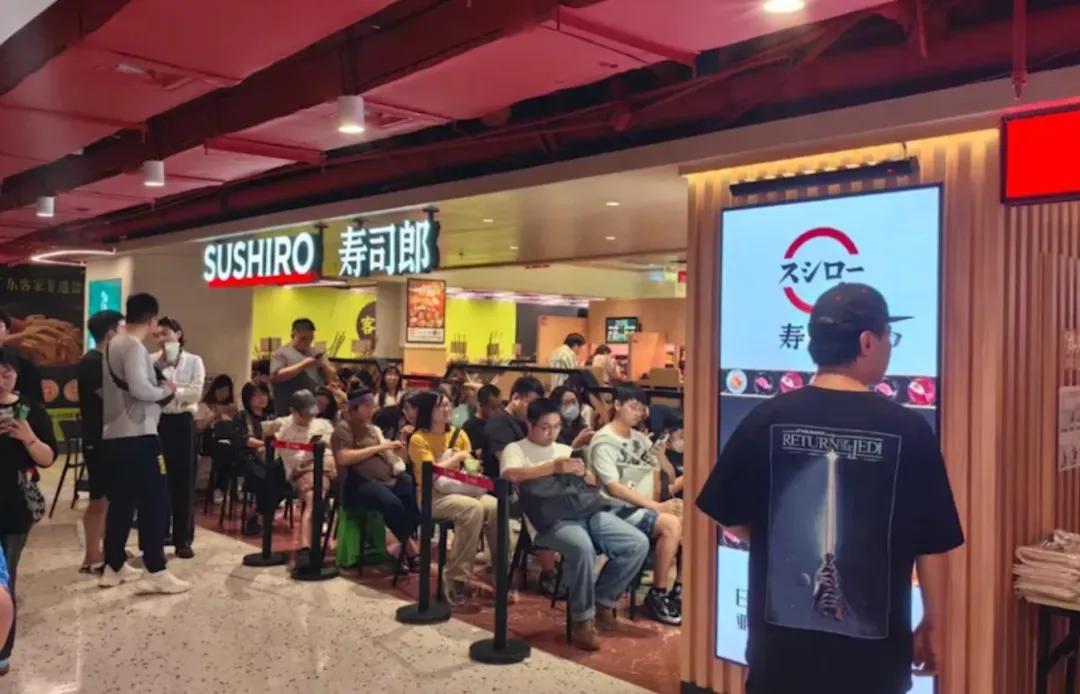
排队2小时起,堪比寿司界“迪士尼”,寿司郎凭什么火了?
3 6 Ke· 2025-09-08 00:17
Core Insights - Sushi郎 has become a dominant player in the restaurant industry, with long queues and high demand across various cities in China, indicating its popularity and strong market presence [1][3][5] Financial Performance - FOOD & LIFE Companies reported a total revenue of 361.13 billion yen (approximately 17.88 billion RMB) for the fiscal year 2024, representing a year-on-year growth of 19.7% [3] - The EBITDA for the same period was 37.49 billion yen (approximately 1.86 billion RMB), showing a significant increase of 45.3% year-on-year [3] Customer Experience - Sushi郎 offers a unique dining experience with features such as large screen ordering systems, conveyor belt service, and self-service water stations, catering to customer preferences [7][11] - The restaurant employs gamification strategies, allowing customers to participate in games and win prizes, enhancing the overall dining experience and encouraging repeat visits [11][13] Marketing Strategies - Sushi郎's marketing tactics include localized campaigns, such as the "Salmon Frenzy" event in Taiwan, which generated significant online buzz and attracted customers [15][17] - Collaborations with popular IPs like "Crayon Shin-chan" and "Hatsune Miku" have helped Sushi郎 appeal to younger consumers and build a loyal fan base [17] Operational Efficiency - The company has invested in digital transformation, utilizing big data for inventory management and reducing food waste, which contributes to its competitive edge in the restaurant industry [22] - Automation in food preparation, including sushi-making robots, has significantly lowered labor costs, with labor expenses accounting for only 26% of total costs [22] Emotional Value and Consumer Engagement - Sushi郎 focuses on providing emotional value through its dining experience, positioning itself as an affordable yet premium experience, akin to a "Disneyland" for sushi [25] - The brand's ability to create a sense of achievement and community among customers has led to high repeat purchase rates [13][25] Adaptation and Innovation - Sushi郎 has shown flexibility in adapting its menu to local tastes, such as introducing dishes that cater to Chinese consumers' preferences for warm food [19] - The company frequently launches new limited-time offerings to maintain customer interest and excitement [19] Future Challenges - Sushi郎 faces challenges in expanding its brand awareness in less saturated markets, as well as the need to innovate healthier menu options to meet changing consumer preferences [29]
排队2小时起,堪比寿司界“迪士尼”,寿司郎凭什么火了?
首席商业评论· 2025-09-07 04:09
Core Viewpoint - The article highlights the remarkable success of Sushi郎, a sushi chain in China, emphasizing its unique marketing strategies, customer experience innovations, and significant financial performance, which have contributed to its popularity and growth in the competitive restaurant industry [4][28]. Group 1: Business Performance - Sushi郎's parent company, FOOD & LIFE Companies, reported a total revenue of 361.13 billion yen (approximately 17.88 billion RMB) for the fiscal year 2024, marking a year-on-year growth of 19.7% [6]. - The company's EBITDA reached 37.49 billion yen (approximately 1.86 billion RMB), reflecting a substantial increase of 45.3% year-on-year [6]. - The financial report specifically noted significant performance improvements in the Chinese market [6]. Group 2: Customer Experience and Engagement - Sushi郎 has created a unique dining experience with features such as large screen ordering systems, conveyor belt service, and self-service water stations, catering to customer preferences [11][17]. - The restaurant employs gamification strategies, allowing customers to participate in lottery draws with each purchase, enhancing customer engagement and encouraging repeat visits [15][17]. - The introduction of Sushi coins for rewards and collectible merchandise has transformed the dining experience into a gamified event, appealing particularly to younger consumers [15][17]. Group 3: Marketing Strategies - Sushi郎's marketing strategies are highlighted as a key differentiator, with successful campaigns such as the "Salmon Frenzy" in Taiwan, which generated significant online buzz and engagement [20][22]. - Collaborations with popular IPs like "Crayon Shin-chan" and "Hatsune Miku" have helped Sushi郎 build a strong brand presence among younger demographics [22]. - The restaurant adapts its menu to local tastes, such as offering dishes that cater to Chinese preferences, which has contributed to its success in the market [24]. Group 4: Industry Insights - The article suggests that Sushi郎's success offers valuable lessons for the broader restaurant industry, particularly in terms of efficiency and customer experience [28]. - The shift from traditional taste competition to a focus on overall efficiency and customer engagement is emphasized as a critical trend in the restaurant sector [28]. - Sushi郎's ability to localize its offerings and respond quickly to market changes, such as sourcing ingredients from diverse origins, showcases the importance of adaptability in a globalized market [32].
实探即将永久关停的北京杜莎夫人蜡像馆:免费年卡用户成主流,渝京两地半年内接连关停
Hua Xia Shi Bao· 2025-09-06 11:51
Core Viewpoint - The permanent closure of the Madame Tussauds wax museum in Beijing highlights the challenges faced by traditional wax museum formats in the current market environment, driven by declining visitor interest and changing consumer behavior [1][2][6]. Group 1: Closure Announcement and Visitor Trends - The Beijing Madame Tussauds wax museum will permanently close on October 1, 2025, due to lease expiration and brand strategy adjustments, despite claims from nearby merchants that the lease may actually extend to 2028 [1][4]. - Following the closure announcement, the museum experienced a surge in visitors, with 91 guests observed in just half an hour, equating to a typical day's traffic [1][3]. - The current adult ticket price is 99 yuan, significantly reduced from 200 yuan at the end of 2022, and lower than other locations in Shanghai and Wuhan [1][3]. Group 2: Industry Challenges and Consumer Behavior - The appeal of wax museums, particularly those centered around celebrity photo opportunities, is declining, with limited customer bases and low repeat visitation rates [2][7]. - The economic environment has led to more cautious spending on non-essential cultural experiences, further impacting visitor numbers [2][7]. - The traditional static display model of wax museums is losing competitiveness in an era where interactive and immersive experiences are preferred by younger audiences [6][7]. Group 3: Financial Implications and Brand Value - Merlin Entertainment Group, which operates the Madame Tussauds brand, reported a pre-tax loss of 4.92 billion pounds for 2024, with the brand's value dropping by 1.63 billion pounds, indicating significant financial strain [6][8]. - The closure of the Beijing and Chongqing locations reflects a broader trend of strategic contraction within the wax museum segment in China, as the company reassesses its market presence [5][6]. Group 4: Future Outlook for Remaining Locations - The remaining Madame Tussauds locations in China face similar challenges, as merely updating with local celebrity figures is unlikely to sustain visitor interest due to high production costs and low update frequency [8]. - In contrast to theme parks like Disney, which maintain visitor engagement through continuous expansion and new content, wax museums lack the same capacity for growth and adaptation [8].
酒店迷你吧怎么就成了“钱包刺客”?
3 6 Ke· 2025-09-03 01:23
Core Viewpoint - The hotel mini-bar, once a premium feature, has become a source of frustration for guests due to high prices and lack of transparency in pricing, leading to a negative perception of hotel brands [1][2][9]. Group 1: Guest Experience and Perception - Guests have shared experiences of being shocked by the high prices of items in mini-bars, with some items marked up significantly compared to local stores [1][5][9]. - The hidden pricing and lack of upfront notifications about costs have led to feelings of being taken advantage of, resulting in a decline in customer satisfaction [9][11]. - Many guests now prefer to use delivery services or nearby convenience stores, diminishing the perceived value of the mini-bar [15][18]. Group 2: Economic and Operational Challenges - The operational costs associated with maintaining mini-bars, including inventory management and staff time, often exceed the revenue generated from them, making them a financial burden for hotels [19][28]. - The concept of "geographical monopoly" that once justified high prices is now challenged by the availability of alternative options for guests [15][18]. Group 3: Industry Trends and Innovations - Some hotels are beginning to eliminate traditional mini-bars in favor of more innovative approaches that enhance guest experience, such as offering free items or integrating local culture into the offerings [19][25][27]. - Strategies like using technology for "no-touch" consumption and reimagining the mini-bar concept are emerging as ways to adapt to changing consumer preferences [27][28]. - The shift towards a more transparent and experience-driven hospitality model indicates that the traditional mini-bar may need to evolve or be replaced to meet modern guest expectations [28].