全球供应链

Search documents
第三届链博会火热开幕!打造更紧密国际“共赢链”
证券时报· 2025-07-17 00:11
Core Viewpoint - The third China International Supply Chain Promotion Expo (Chain Expo) showcases the vitality and creativity of the global business community, emphasizing the urgent need for companies in the supply chain to find partners, application scenarios, and solutions in the current environment [1]. Group 1: International Participation - This year's Chain Expo features 651 enterprises and institutions from 75 countries and regions, with the proportion of foreign exhibitors increasing from 32% in the previous year to 35% this year [4]. - The actual number of exhibitors reached 1,200, including over 500 partners from the upstream and downstream of the supply chain, highlighting the growing internationalization of the event [4]. - The establishment of various supply chain exhibitor alliances at this year's expo aims to facilitate more tangible cooperation among supply chain participants [4]. Group 2: Foreign Enterprises' Commitment - Many foreign enterprises have been deeply engaged in the Chinese market for decades, with Honeywell having established a complete localized value chain in China over its 90 years of presence [7]. - Airbus has been collaborating with the Chinese aviation industry for 40 years, making China its largest single-country market for civil aircraft [7]. - The participation of Airbus and its Chinese supply chain partners at the expo underscores the integration of capable Chinese companies into Airbus's global supply chain [7]. Group 3: Apple's Engagement - Apple has participated in the expo for the third time, emphasizing its ongoing investment and collaboration with Chinese suppliers, with over 80% of its 200 major global suppliers having factories in China [8]. - The global supply chain index matrix released at the event indicates a stable overall development of global supply chains, with improvements in the indices of promotion, connection, innovation, and resilience from 2018 to 2024 [8]. Group 4: Global Cooperation and Initiatives - The opening ceremony featured the reading of the "Beijing Initiative," which calls for global business communities to practice true multilateralism and promote a fair, open, and predictable market environment [10]. - The initiative emphasizes the importance of maintaining the resilience and stability of global supply chains as a crucial factor in driving world economic development [10]. - Representatives from various countries highlighted the need for continued cooperation in supply chain management to ensure future prosperity and sustainable development [10].


全球供应链报告与指数发布:技术创新推动全球供应链数智化发展
Xin Jing Bao· 2025-07-16 14:32
Core Insights - The overall trend of global supply chains is positive, but their resilience remains relatively weak [4][6] - China is injecting more certainty into global supply chain cooperation amid global uncertainties [2][3] Group 1: Global Supply Chain Trends - The global supply chain development is characterized by improved infrastructure connectivity, particularly in developing countries, and a rebound in maritime connectivity [2][3] - International trade rules are increasingly focused on inclusive development, with many new bilateral agreements led by developing countries [2][3] - Major economies are implementing policies to enhance their supply chain resilience, although some of these policies exhibit protectionist tendencies [2][3] Group 2: Technological and Financial Innovations - Technological innovations, such as augmented reality and generative AI, are significantly driving global supply chains towards digitalization and sustainability [3] - Financial services are becoming more inclusive, with international financial institutions supporting financing for developing countries and addressing trade financing gaps for SMEs [3] Group 3: Global Supply Chain Index Matrix - The newly released global supply chain index matrix includes four indices: Promotion Index, Connectivity Index, Innovation Index, and Resilience Index, which assess various aspects of supply chains [4][5] - The Promotion Index has increased to 2.71 from 2018 to 2024, driven by improvements in infrastructure connectivity and technological innovation [5] - The Connectivity Index has risen to 1.56, reflecting better internal connections within supply chains [5] Group 4: Recommendations for Improvement - To ensure stable global supply chains, there is a need for efficient infrastructure networks and adherence to open, inclusive bilateral rules [7] - Policies should promote mutual benefits and avoid protectionism, while fostering a vibrant environment for innovation and cross-border flow of resources [7] - Continuous tracking and improvement of global supply chain research are essential for building a secure and efficient global supply chain [7]
创新等四指数值均有所提升 全球供应链整体发展趋势向好
Bei Jing Shang Bao· 2025-07-16 13:54
Core Viewpoint - The global supply chain is showing a positive development trend, with key indices indicating overall stability and growth from 2018 to 2024 [4][5]. Group 1: Global Supply Chain Indices - The Global Supply Chain Index Matrix includes four indices: Promotion Index, Connectivity Index, Innovation Index, and Resilience Index, all of which have shown an upward trend from 2018 to 2024 [4][5]. - The Promotion Index has increased to 2.71, the Connectivity Index to 1.56, the Innovation Index to 2.16, and the Resilience Index to 1.22, with 2018 set as the base year [5]. Group 2: Implications of the Indices - The results indicate that the global supply chain is moving towards greater efficiency and vitality, with economic globalization being a prevailing trend [4][5]. - Despite the positive trends, the Resilience Index remains relatively weak, indicating challenges in the safety and stability of the global supply chain [5]. Group 3: Recommendations for Improvement - Five recommendations have been proposed to enhance the global supply chain: 1. Build efficient and connected infrastructure networks to support stable operations [6]. 2. Maintain open and inclusive multilateral rules to resolve trade disputes [6]. 3. Formulate mutually beneficial supply chain policies to promote diversification [6]. 4. Create a vibrant innovation environment to facilitate the free flow of innovative elements [6]. 5. Improve inclusive and secure financial service systems to ensure safe operations [6]. Group 4: Role of China Council for the Promotion of International Trade - The China Council for the Promotion of International Trade aims to connect domestic and foreign business communities, providing a platform for cooperation and development in the global supply chain [6].
全球供应链促进报告与指数发布 创新等四指数值均有所提升
news flash· 2025-07-16 11:08
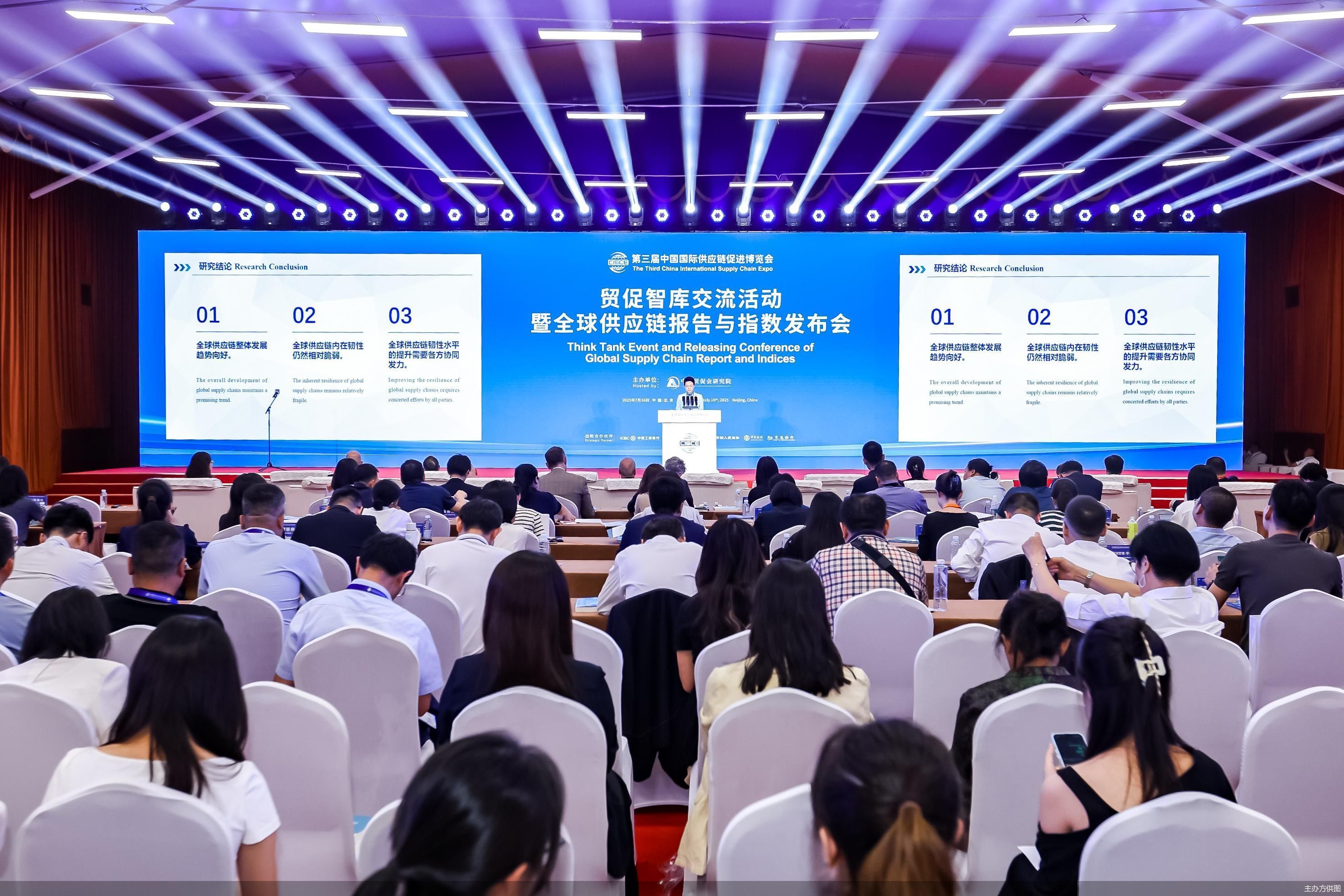
智通财经7月16日电,在正在举行的第三届中国国际供应链促进博览会上,中国贸促会对外发布了《全 球供应链促进报告》和全球供应链指数矩阵。全球供应链指数矩阵显示,全球供应链整体发展仍较稳 定,2018—2024年,构成全球供应链指数矩阵的促进、连接、创新和韧性四个指数值均有所提升。调查 数据显示,当促进指数、连接指数、创新指数三者均上升时,韧性指数才会上升,表明只有全球供应链 促进体系各方面共同发力,全面提升发展环境、连接程度和创新能力,才能真正增强全球供应链的韧性 水平。 全球供应链促进报告与指数发布 创新等四指数值均有所提升 ...
国际范更足、创新味更浓、链接度更高,第三届链博会开幕
Nan Fang Du Shi Bao· 2025-07-16 08:30
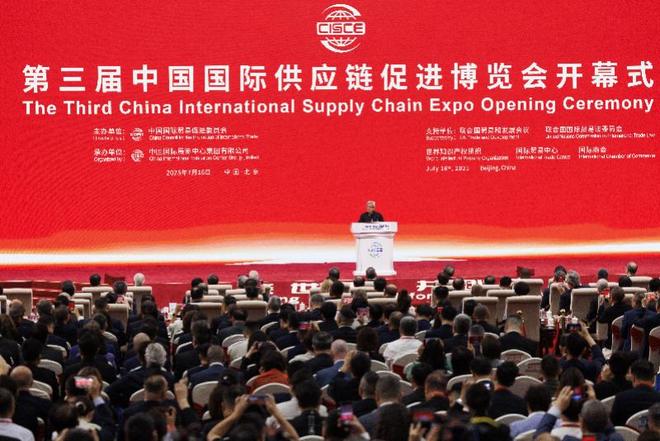
Group 1 - The third China International Supply Chain Promotion Expo (Chain Expo) opened on July 16, themed "Linking the World, Creating the Future," showcasing a stronger international presence and innovation compared to previous editions [1][3] - This year's expo featured 651 exhibitors from 75 countries and regions, with foreign exhibitors increasing from 32% to 35% compared to the last event, and a total of 1,200 actual exhibitors including over 500 partners from the supply chain [1][3] - The expo emphasized helping businesses find partners, applications, and solutions, with over 70 diverse thematic activities planned and the establishment of an exhibitors' alliance for enhanced supply chain collaboration [1][3] Group 2 - The Chain Expo introduced an innovation chain exhibition area and a new product launch area, continuing to release global supply chain promotion reports and the global supply chain index matrix [3] - The event serves as a crucial platform for promoting international industrial cooperation and instilling confidence and resilience in the global supply chain amidst challenges like geopolitical tensions and trade barriers [3][4] - The Beijing Initiative was announced, urging the global business community to leverage opportunities from technological revolutions and industrial transformations, focusing on areas like AI, quantum information, and healthcare [4][5]
中国用一组数据告诉全球,中美关税战分出胜负,特朗普应感到庆幸
Sou Hu Cai Jing· 2025-07-16 03:57
Group 1: Trade Data and Trends - In the first half of 2025, China and the US experienced a significant decline in trade, with total import and export value at 2.08 trillion yuan, a year-on-year decrease of 9.3% [1] - Exports from China amounted to 1.55 trillion yuan, down 9.9%, while imports were 530.35 billion yuan, down 7.7% [1] - Despite the decline in US-China trade, China's overall foreign trade reached a historical high of 21.79 trillion yuan, growing by 2.9% year-on-year [1] Group 2: US Tariff Policies - The US has expanded its tariff measures globally, targeting not only China but also countries like Japan, South Korea, and Canada, aiming to reshape global trade rules [3] - The US has implemented policies to limit the use of Chinese materials in renewable energy projects and has canceled tax exemptions for packages under $800, impacting Chinese cross-border e-commerce [3][5] - Trump's approach is characterized as coercive, aiming to pressure allies into compliance, which disrupts global supply chains [3] Group 3: China's Response and Trade Strategy - China is pursuing a more open trade policy, offering zero-tariff treatment to all least developed countries and planning to extend this to 53 African nations [5] - China is actively enhancing trade cooperation with ASEAN, the EU, Central Asia, and Africa, demonstrating its commitment to open markets [5] - The Chinese government emphasizes dialogue and cooperation as the path forward, rejecting coercive tactics from the US [7][8] Group 4: Global Economic Implications - The ongoing trade tensions and tariff measures are seen as detrimental to global economic stability, with a stable trade environment being a common aspiration among nations [8] - The trajectory of US-China trade relations is critical not only for the two countries but also for the recovery and growth of the global economy [8]
为制裁俄罗斯,特朗普考虑对中印加税500%?美国第一个受不了
Sou Hu Cai Jing· 2025-07-15 11:01
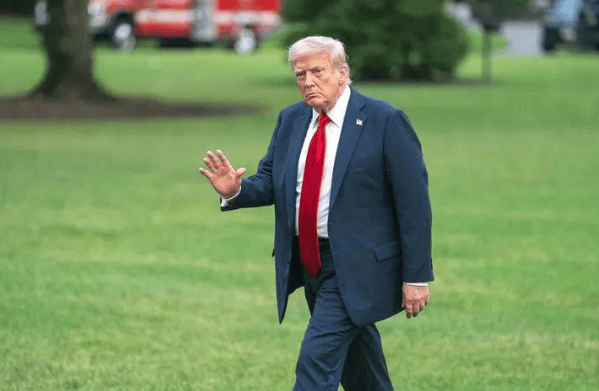
Group 1 - The core message of the news is that former President Trump announced a shocking plan to impose a 500% tariff on countries purchasing Russian oil, primarily targeting China and India [1][3] - The proposal was initially introduced by Senator Lindsey Graham, who claimed that the bill has garnered bipartisan support with 84 senators backing it [3][5] - The bill's effectiveness is questioned due to Graham's extreme anti-Russian stance and the potential for Trump to exercise discretion in its enforcement [5][7] Group 2 - China and India have responded calmly to the tariff threat, indicating a strategic approach rather than weakness [9][11] - India has established a rupee-ruble settlement mechanism to bypass the dollar in energy transactions, ensuring its energy trade with Russia remains unaffected [9] - The U.S. retail sector's heavy reliance on China and India's IT services highlights the potential negative impact of such tariffs on American consumers and businesses [11][13] Group 3 - The implementation of the 500% tariff could lead to severe inflation in the U.S., with estimates suggesting that a 25% tariff could increase annual household expenses by $1,270 [11][13] - A significant rise in global oil prices is anticipated if China and India cease purchasing Russian energy, potentially pushing U.S. gasoline prices from $3 to $5 per gallon [13][15] - The contradictory nature of U.S. policies, such as supporting Graham's bill while negotiating a 20% tariff agreement with India, raises concerns about the credibility of U.S. political strategies [15][17] Group 4 - The situation illustrates a paradox in U.S. sanctions strategy, where attempts to isolate adversaries may inadvertently expose vulnerabilities within the U.S. economy [17][18] - The evolving geopolitical landscape suggests that new cooperative frameworks may emerge, challenging the effectiveness of unilateral sanctions [17][18]

首设创新链专区 第三届链博会这些亮点值得关注
Yang Shi Xin Wen· 2025-07-15 06:33
Group 1 - The third China International Supply Chain Promotion Expo will be held from October 16 to 20 at the China International Exhibition Center in Shunyi [1] - The expo features six major supply chain service areas: advanced manufacturing, green agriculture, digital technology, healthy living, smart vehicles, and clean energy [3] - A total of 651 domestic and foreign enterprises and institutions are participating, representing 75 countries, regions, and international organizations, with over 65% being Fortune 500 and industry-leading companies [5] Group 2 - The number of foreign exhibitors has increased by 15% compared to the previous edition, with foreign exhibitors making up 35% of the total [5] - The expo will introduce an innovation chain area and host the "Chain Expo Launch Station" for new product releases for the first time [6][8] - The China Council for the Promotion of International Trade will release the "Global Supply Chain Promotion Report" for the third consecutive year, along with new indices focusing on global supply chain cooperation [10][12]
外媒爆料,中方出口禁令“破功”,美国靠2国获得大量金属矿产
Sou Hu Cai Jing· 2025-07-15 04:28
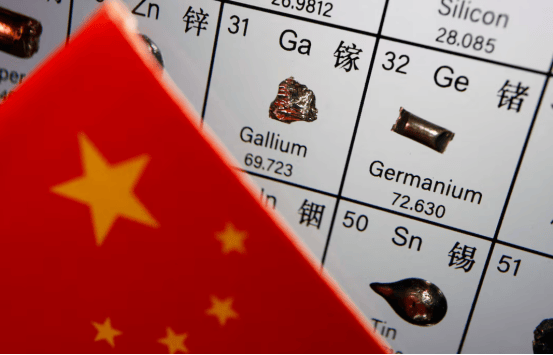
Group 1 - The article highlights that since China's antimony export ban in December last year, the U.S. has resorted to "roundabout imports" from Thailand and Mexico, acquiring up to 3,834 tons of antimony oxide, nearly equivalent to the total export volume from previous years [1] - Customs data indicates that from December last year to April this year, imports of Chinese antimony products by Thailand and Mexico surged by 300%, despite Thailand having only one antimony smelter and Mexico's sole processing plant restarting production only in April [1][2] - The article reveals that many of the new mining product traders in Nuevo León, Mexico, are actually controlled by offshore Chinese companies, with Unipet Industrial in Thailand being a wholly-owned subsidiary of a Chinese firm, significantly increasing its shipments to the U.S. [2] Group 2 - U.S. buyers openly acknowledge the use of alternative sourcing methods, with one miner admitting to receiving 200 kg of gallium from China, disguised under different labels to bypass scrutiny [2] - In May, a special meeting in China identified "third-country transshipment" as a key target for crackdown, indicating that such smuggling poses a national security threat, although actual enforcement has not met expectations [4] - The article underscores the challenges in global supply chains, suggesting that strict customs checks alone are insufficient to combat the circumvention of export controls, emphasizing the need for regulatory revisions and strategic mineral resource planning [4]
为躲关税 达美航空出奇招:拆发动机
Yang Shi Xin Wen· 2025-07-15 03:42
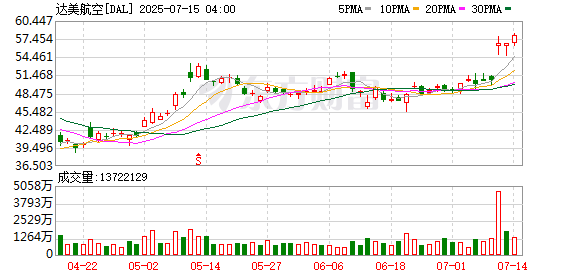
Group 1 - Delta Airlines has disassembled newly purchased Airbus A321neo aircraft in Europe to avoid a 10% tariff imposed by the Trump administration on imported aircraft from Europe [2][3] - The engines removed from the new aircraft, manufactured by Pratt & Whitney in the U.S., are being shipped back to the U.S. to be installed on older aircraft that were grounded due to engine issues [2][3] - Delta Airlines CEO Ed Bastian stated that the company does not intend to pay tariffs on the delivered aircraft, highlighting the impact of trade policies on corporate operations [3] Group 2 - The new Airbus A321neo aircraft are currently parked in Europe due to unapproved seat specifications by U.S. regulators, preventing them from entering commercial service [3] - Delta Airlines has previously employed similar strategies to circumvent import costs, including rerouting aircraft through Japan and other locations [3] - The actions taken by Delta Airlines reflect a broader struggle between companies and government trade policies, showcasing the influence of global supply chains [3]