
战略性新兴产业

Search documents
国务院国资委谈央企重组:减少行业内卷,支持央企高质量并购
Nan Fang Du Shi Bao· 2026-01-28 04:38
Group 1 - The State-owned Assets Supervision and Administration Commission (SASAC) is focusing on professional integration and supporting innovative enterprises to lead horizontal and vertical integration within industries to reduce internal competition [1][3] - In the past year, significant progress has been made in the restructuring of state-owned enterprises (SOEs), including the establishment of China Yajiang Group and China Chang'an Automobile Group, aimed at enhancing energy security and promoting high-quality development in the smart connected electric vehicle sector [3] - The SASAC has also facilitated the integration of resources in the cruise operation sector, creating a "national team" for China's cruise industry, and has supported companies like China FAW in integrating resources for power batteries to boost the high-quality development of new energy vehicles [3] Group 2 - The SASAC emphasizes the importance of SOEs in strategic security, industry leadership, and public service, aiming to strengthen and optimize these enterprises [3] - There is a commitment to further professional integration and high-quality mergers and acquisitions to foster the development of strategic emerging industries and future industries [3] - The goal is to maximize the benefits of reform, enhance core functions, and improve core competitiveness through deeper integration and restructuring [3]

中央企业战略性新兴产业营收规模连续三年实现“每年1万亿”可喜增长
Xin Hua Wang· 2026-01-28 04:22
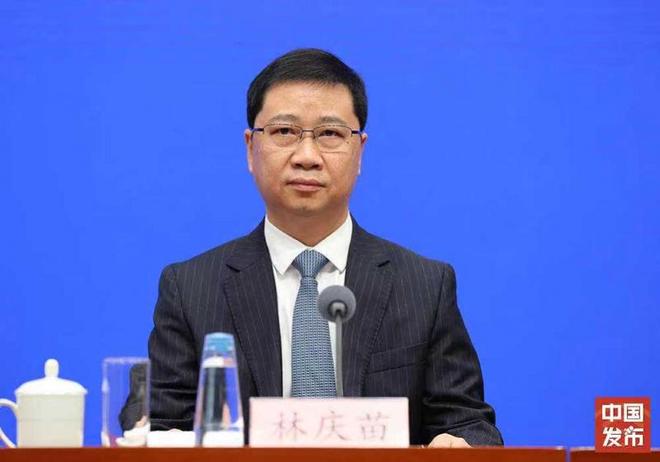
【纠错】 【责任编辑:胡蓉】 1月28日,国务院新闻办公室举行新闻发布会,介绍2025年国资央企高质量发展情况,并答记者问。国 务院国资委科技创新局局长张剑龙表示,2025年,中央企业战略性新兴产业营收规模超过12万亿元,连 续三年实现了"每年1万亿"可喜增长。 新华社音视频部制作 ...
国务院国资委:扎实推进央企重组整合取得积极进展
Xin Lang Cai Jing· 2026-01-28 04:18
Group 1 - The core viewpoint of the news is that the State-owned Assets Supervision and Administration Commission (SASAC) is actively promoting the restructuring and integration of central enterprises to optimize the national economic layout and structure by 2025 [1] - SASAC has completed the establishment of new central enterprises such as China Yajiang Group and China Chang'an Automobile Group, focusing on energy security and green development [1] - The integration of resources in the cruise operation sector has been completed to create a "national team" for China's cruise industry [1] Group 2 - SASAC is advancing professional integration by supporting strong innovative enterprises to conduct horizontal and vertical integration within the same industry, aiming to reduce industry competition [2] - The commission encourages high-quality mergers and acquisitions among central enterprises to acquire core elements and seize technological advantages, thereby fostering strategic emerging industries [2] - SASAC aims to enhance core functions and competitiveness through effective restructuring and integration, maximizing the release of reform dividends [2]
国务院国资委:支持创新能力强的企业作为主体,开展同类业务横向整合、产业链上下游纵向整合
Xin Lang Cai Jing· 2026-01-28 04:18
Group 1 - The State-owned Assets Supervision and Administration Commission (SASAC) is focusing on the "three concentrations" of state-owned capital, using restructuring and integration as a means to optimize the layout and structure of state-owned enterprises, aiming to build more world-class companies [1] - SASAC plans to enhance the role of central enterprises in strategic security, industrial leadership, national economy, public services, and aims to strengthen and expand these enterprises [1] - The restructuring efforts include the establishment of new central enterprises and strategic mergers, particularly in sectors related to national energy security and green development, such as the formation of China Yajiang Group and China Chang'an Automobile Group [1] Group 2 - Continuous professional integration is being promoted, including the consolidation of cruise operation resources to create a "national team" for China's cruise industry and the integration of power battery resources to support the high-quality development of new energy vehicles [2] - Focus areas include new materials and artificial intelligence, with 8 groups and 17 units organized for concentrated signing to promote the implementation of key projects, effectively improving the efficiency of state-owned capital allocation [2]
国资委:中央企业资产总额突破95万亿元,“十四五”时期利润总额12.7万亿元|快讯
Hua Xia Shi Bao· 2026-01-28 04:03
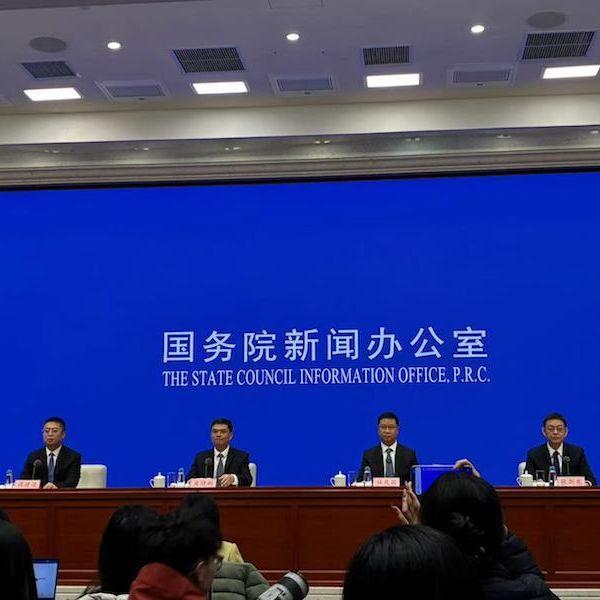
科技创新方面,2025年中央企业研发投入1.1万亿元、连续四年超过万亿元。新增22位两院院士、创历 史最好水平。23个创新联合体新吸纳超过100家创新主体参与攻关,在前沿领域实现一系列突破。其 中,完成战略性新兴产业投资2.5万亿元、占总投资的41.8%。 "十四五"时期,中央企业资产总额连续跨上70万亿元、80万亿元、90万亿元三个大台阶,年均增速达到 6.9%;实现增加值51.3万亿元,比"十三五"时期增长44.6%;实现利润总额12.7万亿元,比"十三五"时期 增长56.2%。 他指出,2026年中央企业高质量发展的目标是"两个确保、两个力争",即确保增加值持续增长,力争与 国家GDP增速相匹配;确保"一利五率"经营指标,即利润总额、营业收现率、净资产收益率、研发经费 投入强度、全员劳动生产率、资产负债率稳中向好,力争总体优化。 编辑:徐芸茜 文/刘诗萌 1月28日,国新办就2025年国资央企高质量发展情况举行新闻发布会。会上,国务院国资委副主任庞骁 刚介绍,截至2025年底,中央企业资产总额突破95万亿元,2025年实现利润总额2.5万亿元,完成固定 资产投资5.1万亿元,上交税费2.5万亿元。 ...
今年央企重组整合目标明确
Di Yi Cai Jing Zi Xun· 2026-01-28 03:43
Group 1 - The central government is focusing on strategic restructuring and professional integration of state-owned enterprises (SOEs) to optimize the national economic layout and structural adjustment [1] - The State-owned Assets Supervision and Administration Commission (SASAC) aims to enhance the role of central enterprises in strategic security, industry leadership, and public services through restructuring [1] - There is an emphasis on high-quality mergers and acquisitions to acquire core elements and seize technological advantages, fostering the development of strategic emerging industries [1] Group 2 - Professional integration is ongoing, with the completion of resource integration in the cruise operation sector to create a "national team" for China's cruise industry [2] - The integration of power battery resources by companies like China FAW is being promoted to support the high-quality development of new energy vehicles [2] - The optimization of state-owned economic layout and structural adjustment is a key requirement for strengthening state capital and enterprises, with a focus on strategic orientation and precise integration methods [2]
2025年央企战略性新兴产业营收规模超12万亿元 连续三年年增1万亿
智通财经网· 2026-01-28 03:39
Core Viewpoint The State-owned Assets Supervision and Administration Commission (SASAC) of the State Council presented the high-quality development goals for state-owned enterprises (SOEs) by 2025, highlighting significant growth in strategic emerging industries and the overall economic contributions of central enterprises. Group 1: Economic Performance - By the end of 2025, the total assets of central enterprises are expected to exceed 95 trillion yuan, with an average annual growth rate of 6.9% [4] - The total profit is projected to reach 2.5 trillion yuan in 2025, with fixed asset investments of 5.1 trillion yuan and tax contributions of 2.5 trillion yuan [4] - The added value of central enterprises is anticipated to be 51.3 trillion yuan, marking a 44.6% increase compared to the previous five-year plan [15] Group 2: Strategic Emerging Industries - Revenue from strategic emerging industries is expected to surpass 12 trillion yuan by 2025, achieving a consistent annual growth of 1 trillion yuan over three years [1][42] - Cumulative investments in strategic emerging industries have exceeded 10 trillion yuan, increasing their share of total investments from 22% to over 40% [1][42] - Key sectors such as integrated circuits, biotechnology, and new energy vehicles are experiencing accelerated development, while artificial intelligence and quantum technology are emerging as competitive fields [1][42] Group 3: Technological Innovation - Central enterprises are projected to invest 1.1 trillion yuan in R&D by 2025, maintaining an annual investment above 1 trillion yuan for four consecutive years [5] - The number of academicians in central enterprises has increased, with significant breakthroughs in various frontier fields [5] - Collaborative innovation efforts have expanded, with over 100 innovation entities participating in joint research initiatives [5] Group 4: Corporate Reform and Governance - The reform actions for state-owned enterprises have shown positive results, enhancing their strategic functions and core competitiveness [10][11] - The revenue from sectors critical to national security and the economy accounts for over 70% of central enterprises' total revenue [10] - Governance improvements include the establishment of a modern enterprise system and enhanced regulatory effectiveness [11] Group 5: Social Responsibility and Community Engagement - Central enterprises have actively participated in rural revitalization efforts, with significant investments and support for local communities [57] - Emergency response capabilities have been strengthened, with substantial resources allocated for disaster relief and public safety [57] - Environmental sustainability initiatives have led to reductions in energy consumption and carbon emissions, contributing to national goals [57]
事关新一轮国企改革,国资委作出最新部署
Xin Lang Cai Jing· 2026-01-28 03:39
Core Viewpoint - The State-owned Assets Supervision and Administration Commission (SASAC) is focusing on deepening reforms to optimize the layout and structure of state-owned enterprises (SOEs) by addressing systemic obstacles and prominent issues [1][4]. Group 1: Optimization and Structural Adjustment - SASAC plans to accelerate the optimization of the state-owned economy's layout and structure, establishing guidelines for structural adjustments and enhancing management of core responsibilities [1][4]. - The initiative aims to better implement the "three concentrations" requirement for state capital [1][4]. Group 2: Technology and Industry Innovation - SASAC emphasizes the integration of technological innovation and industrial innovation, aiming to enhance the system for promoting original innovation within state-owned enterprises [2][5]. - The focus is on accelerating the transformation of independent innovation achievements and improving overall collaborative innovation efficiency [2][5]. - Strategic emerging industries are identified as crucial for economic and social development, necessitating state capital concentration in these areas [2][5]. Group 3: Evaluation and Supervision Mechanisms - SASAC is implementing a more precise classification assessment and evaluation system to clarify the functional positioning of various state-owned enterprises [2][5]. - The commission will enhance the management and supervision system for state assets, promoting strategic collaboration among relevant management departments [2][5]. - A key innovation in supervision is the "penetrating supervision" approach, which aims to balance market vitality with the safeguarding of state asset security through comprehensive oversight [2][6].
央企资产总额突破95万亿,2025年利润总额达2.5万亿
2 1 Shi Ji Jing Ji Bao Dao· 2026-01-28 03:16
"2025年是国资央企发展进程中很不平凡、意义重大的一年。"1月28日,国务院国资委副主任庞骁刚在 国新办新闻发布会上介绍道,截至2025年底,中央企业资产总额突破95万亿元,2025年实现利润总额 2.5万亿元,完成固定资产投资5.1万亿元,上交税费2.5万亿元,有效带动产业链上下游企业融通发展, 为我国顺利完成经济社会发展主要目标任务提供了有力支撑。 庞骁刚表示,过去一年国企改革不断深化,在破除深层次体制机制障碍中激发了新活力。国有企业改革 深化提升行动主体任务基本完成,中国特色现代企业制度加快完善,三项制度改革不断深化,管理水平 进一步提高,世界一流企业梯度培育体系加快构建,国资监管效能不断提升,数智化穿透式监管系统建 设取得重要阶段性成效。 庞骁刚还介绍,过去一年中央企业科技创新持续强化,在推进高水平科技自立自强中实现了新突破。 2025年,中央企业研发投入1.1万亿元、连续四年超过万亿元,新增22位两院院士、创历史最好水平, 23个创新联合体新吸纳超过100家创新主体参与攻关,在前沿领域实现一系列突破,国家战略科技力量 作用更加凸显。 而在产业焕新提档升级方面,2025年,中央企业完成战略性新兴产业 ...
央企战略性新兴产业营收规模超12万亿元
Jing Ji Guan Cha Wang· 2026-01-28 03:16
国资委相关负责人介绍,2025年,中央企业战略性新兴产业营收规模超过12万亿元,连续三年实现"每 年1万亿"可喜增长。 "十四五"以来,中央企业在战略性新兴产业累计投资超过10万亿元,占总投资比重从"十四五"初期的 22%提升至40%以上,战略性新兴产业"百大工程"纵深推进。开展大规模人才特训,实现9个战略性新 兴产业全覆盖。 经济观察网 据央视新闻客户端消息,国务院新闻办今天(1月28日)上午举行新闻发布会,介绍国资央 企高质量发展情况并答记者问。 ...