绿电直连

Search documents
每日速递|松下:固态电池只会成为“小众”产品
高工锂电· 2025-08-05 10:23
Group 1: Battery Industry Developments - Guosheng Energy signed a contract for a solid-state battery project with a total investment of 3 billion yuan, aiming to create a full industrial chain for high-performance solid-state battery materials and manufacturing [3] - Panasonic's CTO stated that solid-state batteries will remain a niche product, primarily suitable for drones and power tools, rather than electric vehicles, due to the ongoing advancements in lithium-ion battery technology [5][6] Group 2: Lithium Carbonate Market - Lithium carbonate futures contracts fell below 70,000 yuan, with the near-month contract LC2509 dropping 2.65% to 67,680 yuan, and the main contract LC2511 decreasing 2.39% to 67,840 yuan [8] Group 3: Strategic Collaborations - Greeenme and Shenglong New Energy signed a strategic cooperation agreement to focus on electric heavy truck energy stations and battery recycling, aiming for efficient integration of the new energy industry chain [9] Group 4: Equipment Procurement - Tianhong New Materials purchased two wet-process separator production lines from Oke Technology for 176 million yuan, which represents 40.51% of Oke's audited revenue from the previous year [11] Group 5: International Investments - BMW i Ventures invested 11 million USD in the American startup Estes Energy Solutions to support the development of a chemistry-agnostic battery pack platform, which aims to establish localized battery production capabilities in the U.S. [13][14] - NorcSi, a German silicon-based anode company, completed a financing round of 10.7 million euros to begin industrial production of pure silicon anode materials [15][16] Group 6: Charging Infrastructure Growth - The UK added 17,370 charging stations in the past year, marking a 27% year-on-year increase, supported by government subsidies for new electric vehicles and home charging facilities [17]

环保及公用事业行业周报:可控核聚变,人类距离“人造太阳”还有多远?-20250804
Guotou Securities· 2025-08-04 15:14
Investment Rating - The report maintains an investment rating of "Leading the Market - A" [6] Core Insights - The fusion energy industry is experiencing a "race-like development" with significant capital influx, as it is viewed as a long-term solution for clean and stable energy [1] - Approximately 50 private fusion companies globally have raised over $9 billion, with several projects aiming for grid connection by around 2035 [1] - The commercial vision of fusion energy is driving intense competition among governments and enterprises in technology, capital, and policy [1] Summary by Sections 1. Fusion Energy Development - The fusion energy sector is transitioning from scientific research to engineering validation and industrial promotion, with notable advancements in both domestic and international projects [1][2] - In the U.S., Commonwealth Fusion Systems (CFS) has partnered with Google to optimize fusion control and has established the largest fusion power purchase agreement globally [1] - Helion Energy plans to construct the world's first fusion power plant, aiming to supply 50 MW to Microsoft's data center by 2028 [1] 2. Market Performance - The report notes that from July 19 to August 1, the Shanghai Composite Index rose by 0.72%, while the public utilities index fell by 2.34% [3] 3. Industry Dynamics - China's fusion energy industry is driven by a collaboration between state-owned enterprises and private companies, forming a multi-faceted research and development ecosystem [2] - The "national team" focuses on large Tokamak devices, while private enterprises are accelerating commercialization through modular and miniaturized technologies [2] 4. Investment Portfolio and Recommendations - The report suggests focusing on key players in the thermal power sector, such as Sheneng Co., Zhejiang Energy, and Anhui Energy, which are expected to perform well despite slight coal price increases [13] - In the green energy sector, it recommends quality operators like Fuzhou Energy and Zhongmin Energy, as well as virtual power plants like Hekang New Energy and Guoneng Rixin [13] - For gas companies, it highlights the importance of monitoring domestic gas pricing policies and suggests focusing on national gas companies like China Gas and upstream-downstream integrated firms like Jiufeng Energy and Xin'ao Co. [13] 5. Pricing Trends - In August 2025, the average transaction price for electricity in Jiangsu was 393.8 RMB/MWh, up 0.72% from the benchmark price, while in Guangdong, it was 372.32 RMB/MWh, down 17.81% [11] - The average price of thermal coal in the Bohai Rim region was reported at 665 RMB/ton, with coal inventories at key power plants increasing slightly [11] 6. Future Outlook - The report anticipates that by 2050, China will achieve commercial fusion power stations, with significant advancements expected in the 2030s [44][46]
一条“改革专线”,引来四只“金凤凰”
Xin Hua Ri Bao· 2025-08-04 07:07
7月23日,盐城大丰港零碳产业园。"咔嗒!"一台机械手从物料架上精准抓取车架,悬臂转动时带起微 弱气流。"注意看关节处,启停丝滑顺畅。"上海永久进出口有限公司盐城厂区负责人朱兴朝轻触控制 屏,指着试运行的E-bike生产线跟记者介绍。 盐城大丰港零碳产业园让企业看到了希望。得益于"绿电进园区"工作的扎实推进,近年来江苏省零碳产 业园区建设取得飞速发展。大丰港、射阳港、滨海港等园区,围绕变电站构建绿电物理可溯源网架,让 新能源与有绿电需求的企业通过绿电专变、绿电专线设施用上可溯源绿电。 "按照惯常路径,风、光等发出的绿电,先连接到输电网,再走配电网输送,直连意味着需要在发电 侧、用户侧之间拉一条专线。"大丰港管委会低碳产业园碳谷管理中心低碳专家顾晓峰说。 盐城电力设计院院长唐华道出关键,传统模式下,光伏装机激增导致消纳困难,强制配储又推高系统成 本。而绿电专变专线创造性地实现"源荷协同"——将风光电源和永久工厂接入绿电专变专线同侧,通过 绿电专线降低外送输配电损耗。 专线的诞生,源于一场电力体制改革的破冰。盐城是全国首批碳达峰试点城市,也是省委、省政府支持 建设的绿电低碳发展示范区。去年7月,该市高标准编制实施 ...
山东东营开建绿电直连零碳产业园
Ren Min Ri Bao· 2025-08-03 21:52
Core Viewpoint - The establishment of a 100% green electricity-connected zero-carbon industrial park in Dongying, Shandong, aims to achieve self-sufficiency in clean energy and serve as a model for the green and low-carbon transformation of heavy industrial cities [1] Group 1: Industrial Park Development - The industrial park will include an 8 billion yuan investment in a 40 GWh lithium battery green manufacturing base project [1] - The park will encompass the entire lithium battery industry chain, including materials, manufacturing, energy storage, and applications [1] Group 2: Energy Supply and Technology - The park will utilize direct connections for wind and solar power, bypassing the public grid, to deliver energy directly to factories [1] - It will employ wind-solar coupling and network-type technology to intelligently regulate and store wind and solar electricity, meeting over 8,000 hours of annual energy demand for enterprises [1] Group 3: Environmental Impact and Goals - Dongying City aims to promote energy consumption reduction and efficiency improvement across the entire high-carbon industry chain [1] - The project is positioned as a demonstration benchmark for the green and low-carbon transformation of heavy industrial cities [1]
国家能源局:上半年全国原煤生产平稳增长
Xin Hua Cai Jing· 2025-07-31 05:49
Group 1 - The core viewpoint of the articles highlights the overall stability and growth of China's energy supply and consumption in the first half of the year, with significant advancements in energy security and a shift towards green energy [1][2] Group 2 - Energy security capabilities have steadily improved, with industrial coal production increasing by 5.4% year-on-year, crude oil production up by 1.3%, and natural gas production rising by 5.8%. Daily average industrial electricity generation also saw a year-on-year increase of 1.3% [1] - The transition to green and low-carbon energy is accelerating, with new energy installations, particularly wind and solar, doubling compared to the same period last year. Non-fossil energy generation capacity surpassed 60% for the first time [1][2] Group 3 - Overall energy consumption is maintaining growth, with electricity consumption growth stabilizing at 5.4% year-on-year in June. Natural gas demand has slightly increased, while coal consumption has seen a minor decline due to warmer winter weather and increased output from new energy sources [2] - A series of important policy measures have been introduced, including market-oriented pricing reforms for renewable energy and initiatives to enhance the integration of green electricity into the market [2]
国家能源局:2025上半年新型储能装机94.91GW/222GWh,较2024年底增长约29%
中关村储能产业技术联盟· 2025-07-31 03:53
Core Viewpoint - The article discusses the current state and development of new energy storage in China, highlighting significant growth in installed capacity, utilization, and investment in renewable energy projects, as well as the government's efforts to ensure energy supply during peak demand periods. Group 1: New Energy Storage Development - As of mid-2025, the installed capacity of new energy storage in China reached 94.91 million kilowatts (22.2 billion kilowatt-hours), representing a growth of approximately 29% compared to the end of 2024 [1][41] - The main growth regions for new energy storage are North China, Northwest China, and Southern regions, accounting for over 80% of the national increase in installed capacity [2][42] - The equivalent utilization hours for new energy storage nationwide were approximately 570 hours, an increase of over 100 hours year-on-year, indicating enhanced operational efficiency [3][43] Group 2: Renewable Energy Integration - In the first half of 2025, renewable energy accounted for nearly 60% of the total installed capacity in China, with a significant increase in new installations, particularly in solar and wind energy [15][16] - The total renewable energy generation reached 1,799.3 billion kilowatt-hours, a year-on-year increase of 15.6%, making up 39.7% of the total electricity generation [16][17] - The report indicates that the average utilization rate for wind energy was 93.2%, reflecting the effective integration of renewable sources into the energy grid [18] Group 3: Investment Trends - Investment in energy infrastructure exceeded 1.5 trillion yuan, with a year-on-year growth of 21.6%, indicating a strong focus on renewable energy projects [39][40] - Investment in hydrogen energy projects doubled, and the construction of charging infrastructure for electric vehicles saw a nearly 70% increase [4][5] - The new energy storage and integrated energy systems saw investment growth exceeding 30%, showcasing the sector's rapid development [5][40] Group 4: Energy Supply Assurance - During the peak summer demand period, the maximum electricity load reached a historical high of 15.08 million kilowatts, with measures in place to ensure stable electricity supply [25][26] - The government has implemented various strategies to enhance electricity supply, including monitoring and optimizing power resource allocation [27][28] - The coal supply remains stable, with coal production and inventory levels being maintained at high levels to support electricity generation during peak demand [44]
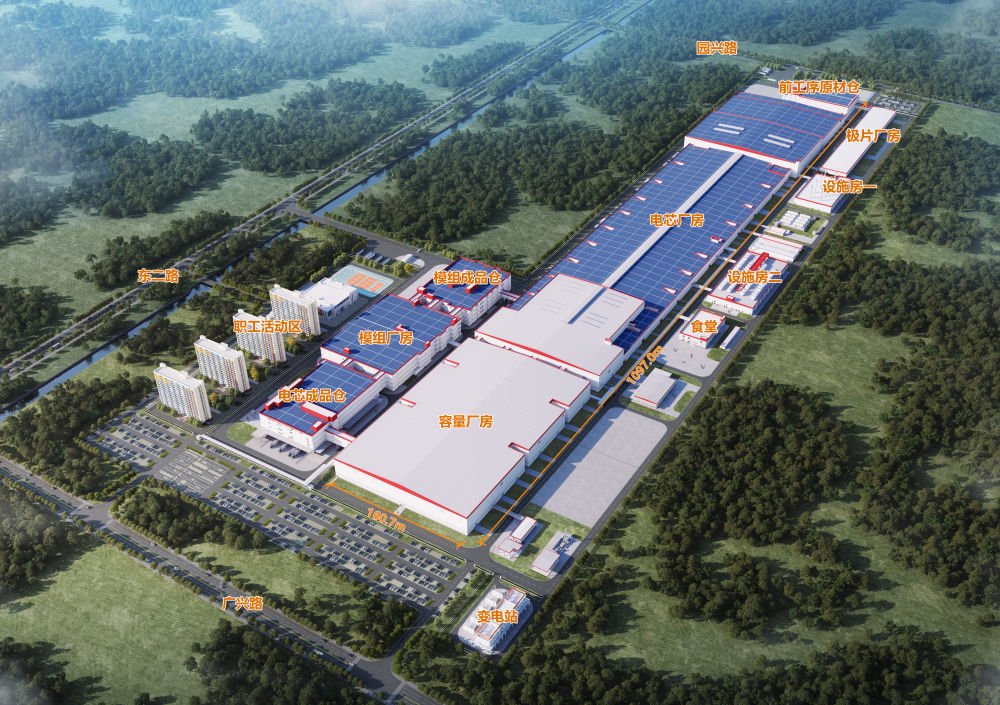
全国首个100%绿电直连离网型零碳产业园区开建
Zhong Guo Chan Ye Jing Ji Xin Xi Wang· 2025-07-30 22:39
7月26日,东营时代零碳产业园现场推进会议在山东东营市垦利区举行。据了解,东营时代零碳产业园 是全国首个100%绿电直连离网型零碳产业园区。项目一期投资80亿元开工建设的40GWh锂电池绿色智 造基地是整个零碳产业园的核心项目,2026年建成投产,年产值可达260亿元,税收12亿元。 据介绍,绿电直连就是风电、光伏发的电不进公共电网,直接通过专线"点对点"送进工厂,发电、布 网、用能、储能,一个园区内自己解决。这种模式不仅能促进更多新能源的消纳,而且经由这种模式下 生产出来的新能源电池,从发电端到用电端的全链条绿电追踪认证,给产品配上从发电到用电全流程 的"绿电身份证"。 "东营时代零碳产业园建设不仅响应国家号召,减少碳排放,对扩大海外市场也有助推作用。"宁德时代 零碳能源事业部山东区域负责人郭孟超介绍。 东营因石油而兴,近年来,东营市聚焦绿色低碳转型,持续推动可再生能源高质量跃升发展,能源结构 不断优化。国华1000MW海上光伏项目累计并网500MW,河口区军马场500MW光储一体化项目并网投 运,东营津辉795MW/1600MWh集中式储能项目全容量并网投运,全市可再生能源装机达到998.24万千 瓦、同 ...

全国首个100%绿电直供零碳产业园在山东东营加速推进
Zhong Guo Jin Rong Xin Xi Wang· 2025-07-29 02:22
Core Viewpoint - The Dongying Times Zero Carbon Industrial Park is the first 100% green electricity connected off-grid zero carbon industrial park in China, featuring a core project of an 80 billion yuan lithium battery green manufacturing base with an expected annual output value of 26 billion yuan and tax revenue of 1.2 billion yuan by 2026 [1][3]. Group 1: Project Overview - The industrial park's core project involves an investment of 80 billion yuan and aims to produce 40 GWh of lithium batteries, with a projected annual output value of 26 billion yuan and tax revenue of 1.2 billion yuan upon completion in 2026 [1]. - The park utilizes a "green electricity direct connection" model, where electricity generated from wind and solar is directly supplied to factories, creating a self-loop for power generation, distribution, consumption, and storage [1]. Group 2: Technological Innovations - To address the instability of wind and solar energy, the company has developed a "super battery" paired with an intelligent scheduling system to achieve smart matching of power generation and consumption [1]. - The technology relies on wind-solar coupling and grid-structured technology to balance the distribution of renewable energy, ensuring over 8,000 hours of stable energy usage annually for enterprises [1]. Group 3: Strategic Location and Resources - Dongying's abundant wind and solar resources are highlighted, with renewable energy generation expected to reach nearly double the total electricity consumption by the end of the year [3]. - The park is strategically located within 50 kilometers of key lithium battery raw materials, including cathodes, anodes, electrolytes, and separators, with local companies already integrated into the supply chain [3]. Group 4: Development Goals - Dongying aims to create a trillion-yuan-level green lithium battery industry chain cluster, promoting the deep integration of "new energy industrialization" and "industrial new energy" [3]. - The local government has demonstrated proactive engagement with potential partners, facilitating rapid project development from negotiation to construction within a few months [3].
装备制造行业周报(7月第4周):光伏组件报价短期上行-20250728
Century Securities· 2025-07-28 01:12
Investment Rating - The report does not explicitly state an investment rating for the industry, but it suggests a focus on leading manufacturers with strong performance certainty in the equipment manufacturing sector [1]. Core Insights - The report highlights a short-term increase in photovoltaic module prices driven by major manufacturers adjusting prices due to raw material cost fluctuations and market sentiment, despite no substantial improvement in terminal demand [2][3]. - The construction machinery sector is experiencing a downturn, with tower crane rental utilization rates and rental price indices showing declines, indicating a continued low level of construction activity [2]. - The automotive market is showing growth in retail sales, supported by promotional activities and export growth, suggesting a positive outlook for manufacturers with brand and scale advantages [2]. - The photovoltaic sector is under pressure, with new installations significantly down compared to previous years, indicating a need for policy support to alleviate demand pressures [2]. Summary by Sections Market Review - From July 21 to July 25, the indices for machinery equipment, electric power equipment, and automotive sectors increased by +2.56%, +3.03%, and +1.03% respectively, ranking 16th, 11th, and 25th among 31 first-tier industries [7][9]. Industry News and Key Company Announcements - The China Photovoltaic Industry Association has raised its forecast for new installations in 2025, with global expectations adjusted from 531-583 GW to 570-630 GW, and China's from 215-255 GW to 270-300 GW [20]. - New product launches in the robotics sector, such as humanoid robots, indicate a growing trend in automation and robotics technology [20]. - The report notes significant project contracts in the marine energy sector, with a total value of 15.09 billion yuan, expected to positively impact future earnings [22].
“绿电直连”这本账怎么算
Jing Ji Guan Cha Wang· 2025-07-26 09:41
Core Viewpoint - The recent developments in the "green electricity direct connection" (绿电直连) model are aimed at enhancing the consumption capacity of renewable energy and providing green value to industries, despite the high construction costs and uncertain profitability associated with these projects [4][7]. Group 1: Industry Developments - The introduction of additional electrical equipment such as substations and high-voltage lines in photovoltaic power station construction reflects a shift towards "green electricity direct connection," allowing renewable energy to be supplied directly to end-users [2]. - The "green electricity direct connection" model is defined as a method where renewable energy sources like solar and wind do not connect to the public grid but supply electricity directly to specific users [2][3]. - The National Development and Reform Commission and the National Energy Administration have issued guidelines to promote the development of "green electricity direct connection," emphasizing its role in meeting corporate green energy needs [3][8]. Group 2: Cost and Economic Implications - The construction costs for "green electricity direct connection" projects are significantly higher than traditional grid connections, primarily due to the need for additional infrastructure such as transformers and transmission lines [5][6]. - For instance, the cost of transmission lines is approximately 1 million yuan per kilometer, while the cost of substations is around 100 million yuan per megawatt, making the overall investment substantial [5][6]. - Current projects are mainly undertaken by state-owned enterprises with high energy consumption, as they can better absorb the high initial costs over a longer usage period [6][7]. Group 3: Environmental and Regulatory Impact - The "green electricity direct connection" model is seen as a viable direction for the renewable energy industry due to its potential to provide clear sources of green electricity, which is beneficial for tracking carbon footprints and complying with international regulations like the EU's Carbon Border Adjustment Mechanism (CBAM) [7]. - The carbon emission factors for renewable energy sources are significantly lower than those for traditional grid electricity, with solar power at 29.92 gCO2/kWh compared to the national average of 620.5 gCO2/kWh [7]. - The push for "green electricity direct connection" aligns with broader governmental goals to increase the consumption of renewable energy in key industrial sectors, thereby driving industrial upgrades and attracting investments [8].