AI制药
Search documents
贝泰妮拟5000万元参投金雨基金 投向多个医疗相关领域
Zhi Tong Cai Jing· 2025-10-13 10:56
Core Viewpoint - Betta Pharmaceuticals (300957.SZ) has signed a partnership agreement with Wuxi Jinyu Maowu Medical Health Industry Investment Partnership, committing 50 million yuan as a limited partner, acquiring a 5% stake in the fund [1] Investment Focus - The partnership will primarily invest in sectors such as consumer healthcare, national health quality improvement (including wellness, medical aesthetics, special medical foods, and functional foods), pharmaceuticals (including synthetic biology and innovative drugs), medical devices, supportive medical industries, and AI-driven pharmaceuticals [1]
晶泰控股(02228):公司深度:全球稀缺AI创新药研发公司,AI模型与自动化实验室深度融合
Xinda Securities· 2025-10-13 08:51
Investment Rating - The report assigns a "Buy" rating for the company [3][6]. Core Insights - The company, CrystalTech Holdings (2228.HK), is a globally rare AI-assisted innovative drug development firm that integrates AI models with automated laboratories, significantly enhancing drug discovery efficiency and reducing early-stage development cycles [4][15]. - The company has established a strong competitive advantage through its advanced AI capabilities and has secured substantial orders, including a record-breaking collaboration with DoveTree Medicines worth approximately HKD 47 billion (USD 5.99 billion) [4][24]. Summary by Sections Company Overview - CrystalTech Holdings focuses on AI-driven drug discovery solutions, covering the entire process from target validation to clinical candidate recommendation, and has developed various AI models for small molecules, antibodies, and peptides [16][18]. AI and Automation Integration - The company has developed an autonomous experimental platform that automates over 80% of common drug chemistry experiments, achieving high throughput and data quality, which surpasses traditional manual methods [4][13]. Financial Projections - Projected revenues for 2025-2027 are expected to be HKD 781 million, HKD 1.093 billion, and HKD 1.496 billion, representing growth rates of 193%, 40%, and 37% respectively [6][15]. - The company anticipates a return to profitability by 2027, with a projected net profit of HKD 100 million [6]. Strategic Partnerships - The company has formed partnerships with major pharmaceutical firms, including Eli Lilly, Pfizer, Merck, and Johnson & Johnson, enhancing its market presence and credibility [5][25]. Technological Advancements - CrystalTech's proprietary platforms, such as ID4Inno™ for small molecule discovery and XtalFold™ for large molecule development, leverage AI to improve the accuracy and efficiency of drug discovery processes [31][27]. - The XFEP platform enhances the prediction of molecular binding affinities, streamlining the drug development workflow [45][46]. Market Opportunities - The company is positioned to capitalize on the growing demand for AI-enabled drug discovery services, particularly in the biopharmaceutical sector, where there is a trend towards integrating AI and automation in research and development [20][22].
赋能新药研发 AI助力破解传统制药困局
Zhong Guo Xin Wen Wang· 2025-10-12 13:12
Core Insights - The pharmaceutical industry faces significant challenges, including high costs, long development times, and low success rates for new drugs, with an average cost exceeding $1 billion and a failure rate of about 90% during clinical trials [1][3] - AI is positioned as a transformative tool to enhance drug development efficiency and speed, with capabilities in target discovery, validation, and new molecular structure identification [3][5] Industry Trends - The integration of AI in drug development is becoming a key focus for multiple countries' industrial policies, with China's Ministry of Industry and Information Technology outlining a plan for the digital transformation of the pharmaceutical industry from 2025 to 2030 [3][4] - The global AI pharmaceutical market is projected to reach $5.62 billion by 2028, with long-term forecasts estimating a market size between $28 billion and $53 billion [3][4] Market Dynamics - China's AI pharmaceutical sector is expected to experience rapid growth, with market size anticipated to exceed 500 billion RMB by 2030, maintaining a compound annual growth rate of over 15% [4] - Over 100 AI pharmaceutical companies are currently operating in China, primarily concentrated in regions such as Beijing, the Yangtze River Delta, and the Guangdong-Hong Kong-Macau Greater Bay Area [3][4] Competitive Advantages - China possesses a complete supply chain for high-flexibility and high-precision robotics, providing a competitive edge in AI drug development [5] - The ability to generate standardized data through robotics is seen as a critical factor in the success of drug development processes [5] Challenges and Considerations - The rise of AI in pharmaceuticals necessitates a data accumulation process, including both positive and negative standardized data within the industry [5] - The industry must foster a unified understanding and collaborative action among stakeholders, including professionals, investors, and policymakers, to advance the AI drug development ecosystem [5]
AI再造「司美格鲁肽」?百亿美金涌向AI制药
GLP1减重宝典· 2025-10-12 11:42
Core Viewpoint - The article discusses the significant advancements in AI drug development, highlighting a transformative shift in the pharmaceutical industry where AI is moving from enhancing existing processes to enabling the creation of entirely new drug candidates through innovative design techniques [5][8][9]. Group 1: AI Drug Development Trends - AI drug development is gaining momentum, with several companies achieving substantial business development (BD) transactions, amounting to billions of dollars, indicating renewed investor confidence in the sector [6][7]. - Companies like YuanSi ShengTai and HuaShen ZhiYao have successfully navigated stringent selection processes of multinational pharmaceutical firms, demonstrating the effectiveness of AI in improving drug development success rates [6][7]. Group 2: Technological Advancements - The emergence of advanced AI models, such as AlphaFold 2, has revolutionized protein structure prediction, allowing for the rapid identification of protein structures that were previously difficult to obtain [10][11]. - New AI models, including Chai-2 and ESM3, have shown significant improvements in generating novel protein designs, enhancing the efficiency of drug discovery processes [11][12]. Group 3: Paradigm Shift in Drug Discovery - The traditional drug discovery process, characterized by extensive screening and empirical methods, is being replaced by a more rational and design-focused approach enabled by AI [9][13]. - AI's ability to design drugs from scratch (de novo design) is expected to unlock new therapeutic targets that were previously considered difficult to address, potentially leading to breakthroughs in treating chronic diseases [14][13]. Group 4: Industry Dynamics and Future Outlook - The article outlines three main types of players in the AI drug development space: tech giants with substantial resources, startup teams led by top AI and biological scientists, and traditional pharmaceutical companies leveraging AI for drug development [15][16]. - The future of drug development is anticipated to be heavily influenced by AI, with a focus on delivering viable drug candidates that meet market needs, thereby reshaping the competitive landscape of the pharmaceutical industry [17].
AI纳米“火箭” 让创新药研发从3年提速至3个月
Jing Ji Guan Cha Wang· 2025-10-10 13:58
Core Insights - The innovative drug industry is experiencing significant growth and investment interest, particularly among Chinese pharmaceutical companies that are shifting focus from rapid follow-up to original research and development [1] - The main challenge in the innovative drug sector is drug delivery, with many drugs failing due to delivery issues, which is the problem that Jitai Technology aims to address [2][6] - Jitai Technology, founded by MIT scientists, specializes in AI-based nano-delivery technology that allows for precise targeting of drugs to specific organs or cells, reducing side effects and enhancing efficacy [2][4] Company Overview - Jitai Technology has raised over 2 billion RMB in funding over five years, positioning itself as a leader in the AI pharmaceutical sector in China [2] - The company completed a 400 million RMB Series D financing round in August 2025, led by Beijing's pharmaceutical health industry investment fund [2] - Jitai's technology has gained attention following AbbVie’s acquisition of Capstan for $2.1 billion, which also focuses on nano-delivery technology [2] Market Positioning - The founders of Jitai Technology recognized China's advantages in data generation costs and efficiency, which are crucial for AI applications in pharmaceuticals [5] - The company is strategically located in Hangzhou, benefiting from a strong talent pool in AI and biomedicine [5][6] - Jitai Technology aims to leverage China's growing biopharmaceutical supply chain and the return of scientists to the country [5] Technological Advancements - Jitai Technology has developed a large-scale library of nano-lipid particles, enabling rapid screening of drug delivery solutions that would otherwise take decades and cost billions using traditional methods [8] - The company has achieved breakthroughs in targeted delivery to organs such as the liver and lungs, surpassing current international standards [8][9] - Jitai's AI-driven approach allows for significant reductions in the time required to bring drug candidates to clinical stages, exemplified by a recent collaboration that shortened the timeline from 24-36 months to just 3 months [8] Future Vision - The company aspires to redefine the landscape of innovative drug delivery over the next five years, aiming for lower development costs and higher efficiency [3][9] - Jitai Technology plans to generate revenue through partnerships with pharmaceutical companies and by advancing its proprietary drug delivery pipelines [9] - The long-term goal is to establish itself as a pioneer in AI nano-delivery technology, with a vision to achieve breakthrough therapeutic efficacy in clinical settings [9]
五大未来产业齐聚!第八届长三角科交会10月15日开幕
Guo Ji Jin Rong Bao· 2025-10-10 13:58
Core Insights - The 8th Yangtze River Delta Science and Technology Achievements Trading Expo will be held from October 15 to 17 in Shanghai, featuring a theme exhibition area exceeding 10,000 square meters with participation from 41 core cities in the Yangtze River Delta [1][2] Group 1: Event Overview - The expo focuses on five future industry tracks: future intelligence, future energy, future materials, future health, and future space, aiming to showcase new achievements and cases [2][5] - The event will include five major exhibition areas: Yangtze River Delta Cooperation City Area, National Innovation Center Area, Technology Transfer and Transformation Area, Frontier Technology Demonstration Area, and Technology Ecosystem Area [2][5] Group 2: Exhibition Areas - The Yangtze River Delta Cooperation City Area will display local industrial development and technological innovation achievements from cities like Nantong, Kunshan, and Taicang [4] - The National Innovation Center Area will focus on enterprise technology demand matching, crowdfunding research, and concept verification center construction, showcasing new mechanisms and achievements [5] - The Technology Transfer and Transformation Area will integrate various technology transfer service institutions to facilitate technology trading and investment matching [5] - The Frontier Technology Demonstration Area will highlight innovative achievements from universities and research institutions, promoting collaboration with different industries [5] - The Technology Ecosystem Area will involve technology parks, incubators, and industry associations to create a comprehensive technology service exchange platform [5] Group 3: Strategic Goals - The expo aims to enhance the regional innovation chain and industrial chain integration, providing strategic support for improving the technological competitiveness of the Yangtze River Delta [7] - It will feature approximately 60 brand activities, including forums and competitions, to foster dialogue among technology, industry, academia, and investment sectors [8] Group 4: Long-term Initiatives - The event will continue to promote a "3+365" technology service model, facilitating ongoing technology transactions and collaborations across the region [9] - Since its inception in 2018, the expo has become a significant platform for advancing international innovation center construction and collaborative innovation in the Yangtze River Delta [10]
AI纳米“火箭” 让创新药研发从3年提速至3个月 | 进击的创新药企
Sou Hu Cai Jing· 2025-10-10 13:58
Core Insights - The innovative drug industry is becoming one of the most dynamic and breakthrough sectors, leading to a surge in stock market investments, with Chinese pharmaceutical companies transitioning from rapid follow-up to original research and development [2] Group 1: Company Overview - Jitai Technology, founded five years ago, focuses on AI nano-delivery technology to address the major pain point of drug delivery, which has led to many drug failures due to delivery issues [3][4] - The company has raised over 2 billion RMB in funding, positioning itself among the top players in China's AI pharmaceutical sector, even completing Series C and D financing rounds amid a generally quiet innovative drug primary market [3][4] Group 2: Technology and Innovation - Jitai's nano-delivery technology allows for precise targeting of specific organs or tissues, reducing damage to normal cells and enhancing drug efficacy [4] - The company aims to revolutionize drug development costs and efficiency, aspiring to achieve breakthroughs similar to SpaceX's impact on the aerospace industry [4][9] Group 3: Market Position and Strategy - The founders of Jitai Technology recognized China's advantages in data generation costs and efficiency, which are significantly better than those in the U.S., facilitating faster and cheaper experimental processes [7][8] - The company has established a strong presence in Hangzhou, leveraging local talent in AI algorithms and attracting top biomedical researchers [9] Group 4: Challenges and Development - Jitai faced initial challenges, including a lack of data, models, and algorithms, which required a lengthy iterative process to overcome [9][10] - The company has transitioned from a "three no" state to a product-oriented phase, developing specific nano-delivery materials and mRNA drug pipelines, achieving global leadership in extrahepatic targeting capabilities [10][12] Group 5: Future Outlook - Jitai's technology has significantly reduced the time required to move drug candidates into preclinical stages, showcasing its efficiency compared to traditional methods [13] - The company aims to create new opportunities for drug development in previously inaccessible areas, although it acknowledges that fully solving drug delivery issues will take time, estimating a 20-year timeline for comprehensive solutions [14][16]
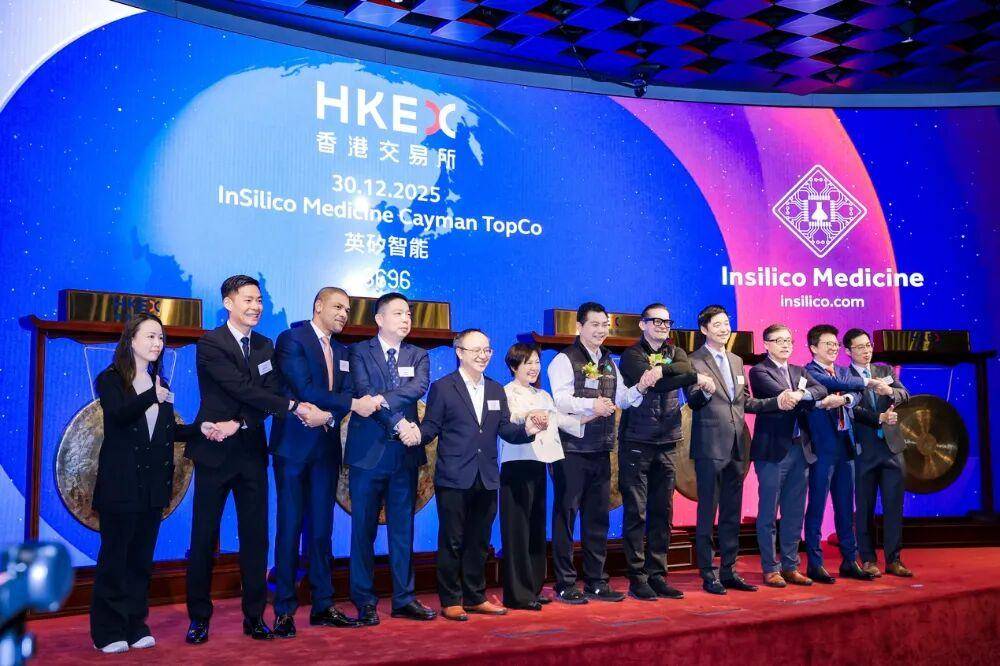
对话英矽智能任峰:让AI制药自我“造血” 目标是年年BD | 进击的创新药企
经济观察报· 2025-10-10 08:13
Core Viewpoint - The article discusses how AI is revolutionizing the pharmaceutical industry, significantly reducing the time and cost associated with drug development, traditionally estimated at "10 years and $1 billion" for original innovative drugs [3][4]. Group 1: AI in Drug Development - By utilizing AI, companies like Insilico Medicine can reduce the number of molecules synthesized from hundreds to a few dozen, lowering trial costs to one-tenth of traditional methods [4]. - The time required to identify a clinical candidate has been shortened from 2.5-4.5 years to just 9-18 months, representing a reduction to one-third of the original timeline [4]. - The cost of developing a preclinical candidate has decreased from over $10 million to between $2 million and $3 million, which is one-fifth of the traditional cost [4]. Group 2: Competitive Advantages of Chinese AI Pharmaceutical Companies - Chinese AI pharmaceutical companies benefit from strong clinical resources, which enhance the speed and quality of clinical trials [4]. - For instance, Insilico Medicine's clinical trial for Rentosertib in China enrolled 71 patients in just over a year, compared to only 8 patients in the U.S. during the same period [4]. Group 3: Milestones and Challenges in AI Drug Development - Insilico Medicine's Rentosertib achieved a significant milestone by having its Phase IIa clinical trial results published in the prestigious journal Nature Medicine, marking a turning point for AI-driven drug discovery [6][7]. - Despite over 300 AI drug pipelines globally, many projects fail at early clinical stages, raising concerns about the future of AI in pharmaceuticals [6]. Group 4: Business Development and Financing - Insilico Medicine has completed 11 rounds of financing, totaling over $530 million, allowing it to navigate the challenges of the innovation drug sector [11]. - The company is actively pursuing business development (BD) opportunities, having secured a $550 million collaboration for a potential best-in-class oncology candidate [12]. - Insilico Medicine aims to generate cash flow through BD, with expectations of achieving 1-2 successful licensing agreements annually [13]. Group 5: Strategic Collaborations and Future Directions - Insilico Medicine has entered a strategic collaboration in the ADC (Antibody-Drug Conjugate) space, partnering with companies experienced in ADC development to establish a technology platform [16][17]. - The company is also exploring other cutting-edge fields such as aging research, sustainable chemistry, and agricultural innovation, while focusing primarily on its core biopharmaceutical domain [18].
对话英矽智能任峰:让AI制药自我“造血”目标是年年BD
Jing Ji Guan Cha Wang· 2025-10-10 06:11
Core Insights - The article highlights the emergence of innovative drug development as a dynamic and breakthrough industry, particularly focusing on Chinese pharmaceutical companies that are shifting from rapid follow-up to original research and development [2] Group 1: AI Drug Development - In 2025, the AI pharmaceutical company InSilico Medicine is advancing its clinical pipeline and increasing business development efforts to establish broader commercial collaborations [3] - The transition from traditional drug development to AI-driven methods has significantly reduced the time and cost associated with developing clinical candidates, with InSilico requiring only 9 to 18 months and $200,000 to $300,000 compared to traditional methods that take 2.5 to 4.5 years and over $10 million [4] - InSilico's drug Rentosertib has shown promising results in clinical trials, with faster patient enrollment in China compared to the U.S., demonstrating the advantages of China's clinical resources [5] Group 2: Clinical Milestones - Rentosertib's IIa clinical trial results were published in a leading journal, marking a significant milestone in AI-driven drug discovery [6] - The development timeline for Rentosertib from candidate nomination to clinical trial initiation was only 18 months, making it one of the fastest AI drugs in progress [7] - The successful IIa trial results for Rentosertib are seen as a turning point for AI in drug development, indicating that AI can not only expedite the process but also reduce risks [6][7] Group 3: Business Development and Financing - InSilico has completed 11 rounds of financing totaling over $530 million, with recent funding rounds providing sufficient capital for ongoing clinical development [9] - The company is actively creating cash flow through business development, having secured multiple licensing agreements that could yield over $2 billion in revenue [10] - InSilico's business development strategy involves a dedicated team that directly engages with clients to optimize drug pipeline selection based on market needs [11] Group 4: Strategic Collaborations - InSilico has entered a strategic collaboration in the ADC (Antibody-Drug Conjugate) space, partnering with companies that have expertise in ADC development to establish a technology platform [12][13] - The collaboration aims to leverage the strengths of each partner to accelerate ADC drug development, representing a new cooperative model in the Chinese biopharmaceutical industry [14] Group 5: Broader Exploration - Beyond pharmaceuticals, InSilico is exploring applications in aging research, sustainable chemistry, and agricultural innovation, indicating a strategic focus on diversifying its technological capabilities [15]
阿斯利康5.55亿美元布局AI,全球头部药企争抢3500亿美元蛋糕!
Xin Lang Cai Jing· 2025-10-10 05:59
Core Insights - AstraZeneca has signed a $555 million collaboration agreement with Algen Biotechnologies to leverage Algen's AI platform for discovering new therapeutic targets in immunology [1] - The partnership aims to utilize CRISPR gene regulation technology and AI-driven drug discovery methods to develop next-generation immunotherapy [1][5] - AI technology is becoming a crucial driver in the pharmaceutical industry, expected to generate over $350 billion annually, especially as companies face a patent cliff of approximately $236 billion by 2030 [2][5] Group 1: AstraZeneca's AI Strategy - AstraZeneca's collaboration with Algen is its third significant partnership this year, reflecting its commitment to AI in drug development [5] - The company has a historical advantage in AI, with 50% of its small molecule pipeline derived from AI research as of 2021 [5][6] - AstraZeneca has established its own AI-CRO, Evinova, to enhance clinical drug development through AI digital solutions [5][6] Group 2: AI in Drug Development - AI is expected to reduce drug development timelines by 50% to 66% and lower costs by 10%, while increasing success rates [5] - The company has previously engaged in high-value collaborations, including a $5.3 billion partnership with CSPC and a $200 million collaboration with Tempus AI and Pathos AI for cancer treatment [7] - AI applications in oncology are particularly emphasized, with one-third of all AI collaborations in the pharmaceutical sector focused on cancer treatment [18][20] Group 3: Industry Trends and Investments - The pharmaceutical industry is witnessing a significant shift towards AI integration, with major companies committing billions to AI-driven research and manufacturing facilities [14][15] - Eli Lilly has risen to the top of the AI readiness rankings among pharmaceutical companies, highlighting the competitive landscape [12] - The need for AI in drug discovery is underscored by the increasing complexity of cancer data and the urgent demand for personalized treatment solutions [18][19]