AI推理

Search documents
中国AI芯片在推理赛道寻突破
Zhong Guo Jing Ying Bao· 2025-11-25 14:36
Core Insights - The demand for AI computing power is shifting from training to inference, with inference expected to become the main driver of AI computing growth starting in 2025 [1][4] - Domestic AI chip companies are focusing on differentiation in the inference market, particularly in video generation, edge computing, and industry applications, despite the dominance of NVIDIA and AMD in the general AI computing market [1][3] Group 1: Industry Challenges - Chinese AI chip industry faces challenges due to geopolitical factors, with limitations in advanced processes, high bandwidth memory (HBM), packaging technology, and design tools [2] - Current domestic AI chips primarily use 12nm and 7nm processes, while North America is advancing towards 2nm, resulting in domestic chips having only about 30% of the computing power of their North American counterparts [2] Group 2: Technological Innovations - Domestic industry is innovating through technological pathways, such as computing power networking and super-node architecture, achieving overall computing power that is 2.1 times that of similar North American systems with 384 card deployments [2] - The shift towards inference chips is seen as a strategic opportunity for Chinese chip companies, as the demand for inference computing is experiencing explosive growth [4][5] Group 3: Market Dynamics - The ratio of computing power demand between training and inference is expected to reverse from 6:4 to favor inference by 2025, indicating a significant market shift [4] - The complexity of intelligent AI tasks requires higher performance, energy efficiency, and compatibility from inference chips, as they will need to handle more tokens and multiple model calls compared to traditional methods [4] Group 4: Future Directions - The focus for domestic AI chip companies is shifting from merely being available to being effective and cost-efficient, which is crucial for breaking through in the inference market [5] - The market for inference chips emphasizes scenario adaptability, low power consumption, and cost control, aligning with the strengths of Chinese chip companies in specific fields [5]
英伟达备战AI推理需求指数级增长
Sou Hu Cai Jing· 2025-11-22 03:30
Core Insights - Nvidia reported a revenue of $57 billion for Q3 of fiscal year 2026, with the data center business being the largest contributor at $51 billion, representing a 66% year-over-year growth [2] - CEO Jensen Huang highlighted the exponential growth in AI workloads, which require Nvidia's high-performance GPUs, driven by advancements in pre-training, post-training, and inference capabilities [2] - The NVLink AI networking infrastructure business saw a significant growth of 162%, generating $8.2 billion in revenue [2] Data Center Business - The data center segment is the primary driver of Nvidia's revenue, with a substantial contribution from AI accelerators [2] - Nvidia's GPUs have shown significant performance improvements across generations, which is crucial for maintaining operational efficiency in data centers [2] AI Workloads - AI inference is expanding exponentially due to advancements in AI systems that can "read, think, and reason" before generating answers, leading to increased computational demands [2][3] - The demand for Nvidia's platform is being driven by this exponential growth in AI computing needs [2] Strategic Partnerships - Nvidia announced strategic collaborations with Fujitsu and Intel to integrate their technologies, enhancing the capabilities of the NVLink Fusion [2] - These partnerships aim to create a robust ecosystem that connects Nvidia's GPUs with other computing resources [2] Challenges - The company faces significant challenges, including managing an unprecedented industry transformation that requires exceptional skills and planning [4] - Geopolitical issues have effectively closed the Chinese market, preventing large procurement orders and impacting growth potential [3][4]


Oracle(ORCL) - 2025 FY - Earnings Call Transcript
2025-11-18 16:02
Financial Data and Key Metrics Changes - The meeting discussed the election of directors and the ratification of Ernst & Young as the independent registered public accounting firm for fiscal year 2026, indicating a stable governance structure [12][19]. - The preliminary voting results showed that all proposals received affirmative votes from a majority of Oracle's shares present, reflecting shareholder confidence [17][18][20]. Business Line Data and Key Metrics Changes - The company highlighted its focus on AI, particularly in AI reasoning, which is expected to become increasingly important for Oracle's business [22][24]. - Oracle's database services are projected to grow significantly due to the integration of AI capabilities and partnerships with major cloud providers [35][36]. Market Data and Key Metrics Changes - Oracle's AI offerings are broad and encompass various areas, including model training, inferencing, and embedded AI features in applications, which positions the company favorably in the competitive landscape [31][39]. Company Strategy and Development Direction - The company is actively embedding AI features into its applications, making it easier for customers to adopt these technologies without additional costs [37][40]. - Oracle's strategy includes leveraging its extensive database capabilities and AI data platform to enhance customer interactions and data utilization [25][26]. Management's Comments on Operating Environment and Future Outlook - Management expressed confidence in the growth of the AI inferencing business and its potential impact on Oracle's future [22][24]. - The executives emphasized the importance of private enterprise data for AI applications, which Oracle is uniquely positioned to manage [29][30]. Other Important Information - The meeting included a reminder for shareholders to review the most recent Form 10-K and Form 10-Q for discussions on risks that may affect future results [21]. Q&A Session Summary Question: When will AI inferencing become more material to Oracle's business? - Management indicated that AI reasoning is expected to take off as models become more capable, and Oracle is well-positioned due to its data management capabilities [22][24]. Question: Why is Oracle winning more AI business than competitors? - The differentiation stems from Oracle's historical decisions in technology and architecture, which have created a scalable and cost-effective AI offering [28][29]. Question: What is driving the expected 8X growth in Oracle's database? - The growth is attributed to the expansion of Oracle Database services into other cloud environments and the increasing demand for AI-integrated database solutions [33][35][36]. Question: How will Oracle succeed in getting customers to adopt AI? - Oracle is embedding AI features directly into its applications, allowing for seamless adoption and immediate value for customers [37][40].

AI推理掀起云平台变革 边缘计算成厂商角逐的新沃土
Zhong Guo Jing Ying Bao· 2025-11-12 11:47
Core Insights - The demand for AI infrastructure is expanding significantly as AI applications evolve, with a shift from centralized cloud architectures to edge computing for real-time AI processing [1][2][5] - Akamai and NVIDIA have launched the Akamai Inference Cloud, a distributed generative edge platform designed for low-latency, real-time AI processing globally [1][5] - The AI inference workload is expected to far exceed training workloads, necessitating a reevaluation of computational infrastructure to support real-time AI processing demands [2][3] Industry Trends - The AI industry is transitioning from model development to practical application, with AI applications evolving from simple request-response models to complex multi-step reasoning and real-time decision-making [2][3] - Edge computing is becoming essential for AI inference, moving away from its previous role as a support for centralized cloud services to a primary function that enhances user experience and operational efficiency [2][3] Market Potential - The global edge AI market is projected to exceed $140 billion by 2032, a significant increase from $19.1 billion in 2023, indicating explosive growth [4] - The edge computing market could reach $3.61 trillion by 2032, with a compound annual growth rate (CAGR) of 30.4% [4] Competitive Landscape - Major tech companies, including Google, Microsoft, and Amazon, are actively investing in edge computing, leveraging their technological strengths and large user bases [5][6] - Akamai has established a global platform with over 4,200 edge nodes, enhancing its capability to support AI inference services and improve competitiveness in overseas markets [6]

存力中国行北京站释放信号:AI推理进入存算协同深水区
Sou Hu Cai Jing· 2025-11-11 12:38
Core Insights - The event "Storage Power China Tour" in Beijing focused on the challenges and innovative paths of storage power in the AI inference era, highlighting the importance of advanced storage as a core support for AI technology implementation [1] - The AI industry has transitioned from model creation to practical application, with inference costs becoming a bottleneck for large-scale deployment, driven by the exponential growth of token usage in various sectors [3] - Technical innovation is essential for overcoming industry pain points, with storage architecture evolving from passive storage to intelligent collaboration, exemplified by Huawei's Unified Cache Management (UCM) technology [4] Industry Challenges - The AI industry's shift to practical applications has led to three main challenges: the explosion of multimodal data creating storage capacity pressures, the high performance demands on storage systems, and the high costs of advanced storage media [3] - Traditional storage architectures struggle to meet the requirements for high throughput, low latency, and heterogeneous data integration, hindering AI application development [3] Technological Innovations - The UCM technology developed by Huawei represents a significant advancement, enabling a three-tier cache architecture that dramatically reduces token latency by up to 90% and increases system throughput by 22 times [4] - UCM's open-source initiative aims to lower barriers for small and medium enterprises to access advanced inference acceleration capabilities and promote unified technical standards [4] Ecosystem Development - A collaborative effort involving Huawei, China Mobile, and Inspur has led to the establishment of the "Advanced Storage AI Inference Working Group," focusing on technology research, standard formulation, and ecosystem building [5] - The Chinese storage industry has a solid foundation, with total storage capacity reaching 1680 EB by June 2025, and advanced storage accounting for 28% of this capacity, nearing the targets set in national development plans [5][6] Future Outlook - Advanced storage is evolving into a central component of the AI intelligent computing system, addressing performance, cost, and efficiency bottlenecks, thus making AI technology more accessible to small and medium enterprises [7] - The ongoing technological advancements and ecosystem improvements are expected to transform AI from a luxury for large enterprises into a necessity for smaller businesses, enhancing its practical value in real-world applications [7]
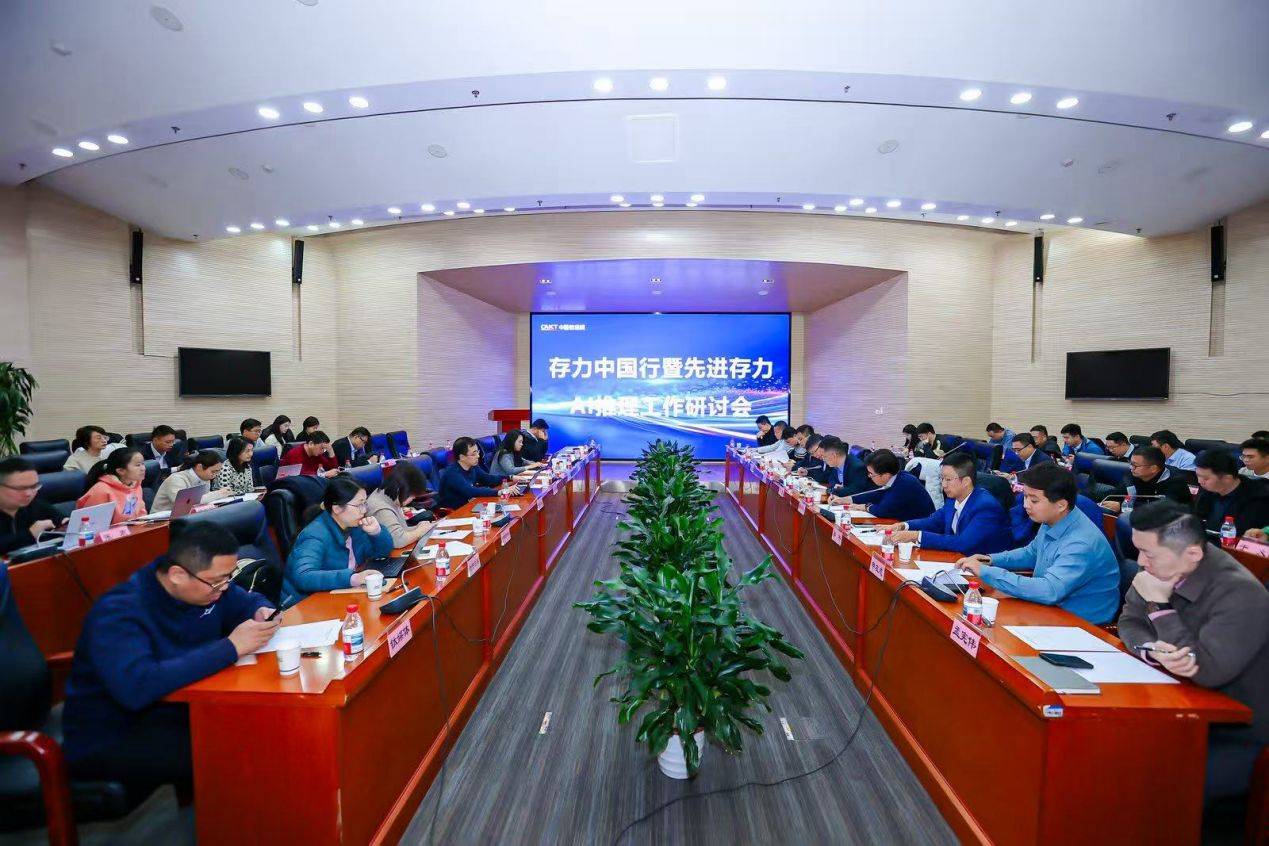
存力中国行暨先进存力AI推理工作研讨会在京顺利召开
Zheng Quan Ri Bao Wang· 2025-11-07 07:29
Core Insights - The conference focused on the role of advanced storage in empowering AI model development in the AI era [1][2] - Key experts from various organizations discussed the challenges and solutions related to AI inference and storage technology [2][3][4] Group 1: Advanced Storage and AI Inference - The chief expert from the China Academy of Information and Communications Technology emphasized that advanced storage is crucial for improving AI inference efficiency and controlling costs [2] - The national policies highlight the importance of advancing storage technology and enhancing the storage industry's capabilities [2] - A working group was established to promote collaboration and innovation in storage technology within the AI inference sector [2] Group 2: Technical Challenges and Solutions - Current challenges in AI inference include the need for upgraded KV Cache storage, multi-modal data collaboration, and bandwidth limitations [3] - China Mobile is implementing layered caching, high-speed data interconnects, and proprietary high-density servers to enhance storage efficiency and reduce costs [3] - Huawei's UCM inference memory data management technology addresses the challenges of data management, computational power supply, and cost reduction in AI applications [4] Group 3: Industry Collaboration and Future Directions - The conference facilitated discussions among industry experts from various companies, contributing to the consensus on the future direction of the storage industry [5] - The focus is on enhancing computational resource utilization and addressing issues related to high concurrency and low latency in AI inference [4][5] - The successful hosting of the conference is seen as a step towards fostering innovation and collaboration in the storage industry [5]
马斯克股东大会释放大量信息:FSD很快在华获批 AI或掌控未来
Sou Hu Cai Jing· 2025-11-07 01:49
Core Points - Tesla shareholders approved Elon Musk's $1 trillion compensation plan during the annual meeting [2] - The shareholders also re-elected three board members and supported annual elections for all directors [2] - A non-binding shareholder proposal regarding investment in Musk's AI startup xAI received more votes in favor than against, but high abstention rates warrant further discussion [2] Group 1: Optimus Robot - Musk promoted the Optimus robot, predicting hundreds of billions of units will be deployed, claiming it will "eliminate poverty" [4] - The production cost of each Optimus robot is approximately $20,000 when adjusted for historical dollar value [4] Group 2: Full Self-Driving (FSD) Technology - Musk stated that Tesla's Full Self-Driving (FSD) technology has received "partial approval" in China, with full approval expected around February or March 2026 [5] Group 3: Cybercab Production - Tesla plans to start production of the Cybercab, a fully autonomous vehicle without pedals or steering wheels, in April 2026 [6] - The goal is to reduce the production time to under 10 seconds per vehicle, with a theoretical target of 5 seconds [6] Group 4: Chip Development - Musk emphasized the importance of low-cost, high-efficiency specialized chips for Tesla's robots, indicating discussions with Intel but no agreements yet [7] - Tesla's chips will be produced in Taiwan, South Korea, Arizona, and Texas [7] - Musk mentioned the potential construction of a "gigantic chip factory" to meet the company's chip production needs [8] Group 5: Automotive Focus - Despite diversifying beyond electric vehicles, Musk reiterated that cars remain a crucial part of Tesla's future, aiming for a significant increase in vehicle production [9] Group 6: Roadster Launch - Musk confirmed the upcoming launch of the new Roadster, initially announced in November 2017, with a demonstration planned for April 1 next year and mass production expected in 12 to 18 months [10] Group 7: Lunar and Martian Aspirations - Musk predicted that Tesla vehicles and Optimus robots would play a role in establishing bases on the Moon and Mars [12] Group 8: SpaceX IPO Consideration - Musk expressed that while operating a public company is challenging due to litigation risks, he is considering the possibility of SpaceX going public in the future [13] Group 9: AI Utilization in Vehicles - Musk envisions Tesla vehicles performing "AI reasoning" tasks while idle, potentially creating a distributed AI reasoning fleet that could generate income for owners [14] - He raised concerns about the future control of humanity if AI surpasses human intelligence [14] Market Reaction - Following the announcements, Tesla's stock rose by 0.88% in after-hours trading [14]


3Q25全球科技业绩快报:高通
Haitong Securities International· 2025-11-06 08:02
Investment Rating - The report indicates a positive outlook for Qualcomm, with expectations of outperforming the market in the upcoming periods [1]. Core Insights - Qualcomm's FY4Q25 results significantly exceeded market expectations, reporting revenue of $11.3 billion against a forecast of $10.76 billion, and a Non-GAAP EPS of $3 compared to the expected $2.87, showcasing robust profitability [1][7]. - The company has officially entered the AI datacenter market, focusing on inference workloads, with competitive advantages in power efficiency and compute density [2][8]. - Non-Apple related QCT revenue grew by 18% year-over-year, driven by strong demand for premium Android devices and increased content value [3][9]. - For FY1Q26, Qualcomm forecasts revenue between $11.8 billion and $12.6 billion, with expectations of continued growth in its QCT handset business and a focus on high-intensity R&D investments [4][10]. Summary by Sections Financial Performance - Qualcomm's QCT revenue reached $9.8 billion, with a quarter-over-quarter increase of 9% and a year-over-year increase of 13%. The EBT was $2.9 billion, reflecting a 17% year-over-year growth and a margin of 29% [1][7]. - The full FY25 Non-GAAP revenue was $44 billion, marking a 13% year-over-year increase, with EPS at $12.03, an 18% increase from the previous year [1][7]. AI Datacenter Strategy - Qualcomm's entry into the AI datacenter market includes the launch of AI 200 and AI 250 SoCs, targeting high efficiency and low-cost architectures, with the first customer, Humain, planning to deploy 200 MW of compute capacity starting in FY27 [2][8]. Non-Apple Revenue Growth - The Snapdragon 8 Elite Gen 5 platform has driven a strong recovery in the premium Android market, with significant contributions from brands like Xiaomi and Honor. Management remains optimistic about sustained growth in premium Android, IoT, and automotive segments [3][9]. Future Outlook - Qualcomm anticipates Q1 FY26 revenue of $11.8–12.6 billion, with QCT revenue projected at $10.3–10.9 billion and EBT margins of 30–32%. The company emphasizes ongoing R&D investments in AI datacenters, edge AI, and other growth engines [4][10].

“存力中国行”探讨AI推理挑战 华为开源UCM技术为破局关键
Xin Jing Bao· 2025-11-06 04:50
Core Insights - The "Storage Power China Tour" event held in Beijing on November 4 attracted nearly 20 industry representatives, focusing on how advanced storage can reduce costs and improve efficiency for AI inference [1] - Key challenges in AI inference include the upgrade of KVCache storage needs, multi-modal data collaboration, insufficient bandwidth for computing-storage collaboration, load variability, and cost control [1] - Huawei's open-source UCM (Unified Cache Manager) technology is viewed as a critical solution to address these industry pain points, focusing on multi-level caching and inference memory management [1] Industry Developments - The UCM technology has recently been open-sourced in the Magic Engine community, featuring four key capabilities that can reduce first-round token latency by up to 90%, increase system throughput by up to 22 times, and achieve a tenfold context window expansion [2] - The foundational framework and toolchain of UCM are available in the ModelEngine community, allowing developers to access source code and technical documentation to enhance the technology architecture and industry ecosystem [2] - The open-sourcing of UCM is seen as a significant step beyond mere technical sharing, enabling developers and enterprises to access leading AI inference acceleration capabilities at lower costs and with greater convenience, promoting the widespread adoption of AI inference technology [2]
“存力中国行”探讨AI推理挑战,华为开源UCM技术为破局关键
Xin Jing Bao· 2025-11-06 04:37
Core Insights - The "Storage Power China Tour" event held in Beijing on November 4 attracted nearly 20 industry representatives, focusing on how advanced storage can reduce costs and improve efficiency for AI inference [1] - Key challenges in AI inference include the upgrade of KVCache storage demands, multi-modal data collaboration, insufficient bandwidth for computing-storage collaboration, load variability, and cost control [1] - Huawei's open-source UCM (Unified Cache Manager) technology is viewed as a critical solution to address these industry pain points, focusing on multi-level caching and inference memory management [1] Industry Developments - UCM technology has recently been open-sourced in the Magic Engine community, featuring four key capabilities: sparse attention, prefix caching, pre-fill offloading, and heterogeneous PD decoupling [2] - The implementation of UCM can reduce the first-round token latency by up to 90%, increase system throughput by a maximum of 22 times, and achieve a tenfold context window expansion, significantly enhancing AI inference performance [2] - The foundational framework and toolchain of UCM are available in the ModelEngine community, allowing developers to access source code and technical documentation to collaboratively improve the technology architecture and industry ecosystem [2] - The open-sourcing of UCM is seen as a move beyond mere technical sharing, enabling developers and enterprises to access leading AI inference acceleration capabilities at lower costs and with greater convenience, promoting the large-scale and inclusive implementation of AI inference technology [2]