美联储独立性

Search documents
启动“美联储MAGA化”?特朗普选了“海湖庄园协议”总设计师
美股IPO· 2025-08-08 01:10
Core Viewpoint - Trump's nomination of Stephen Miran is seen as the beginning of a long-term plan to reshape the Federal Reserve, potentially undermining the authority of current Chairman Jerome Powell [1][15]. Group 1: Nomination Details - Trump officially nominated Stephen Miran to fill the vacant Federal Reserve Board seat left by Adriana Kugler's resignation, praising Miran's unparalleled expertise in economics [3]. - Miran's nomination is viewed as a significant step in Trump's efforts to reform the Federal Reserve leadership during his second term [4][15]. Group 2: Miran's Policy Views - Miran has publicly questioned the independence of the Federal Reserve and advocates for radical reforms, including allowing all Federal Reserve officials to vote at every meeting and granting the White House the power to dismiss central bank officials at any time [4][7]. - He is known for his influential "Mar-a-Lago Accord," which argues for measures to lower the long-term value of the dollar [5][6]. Group 3: Market Reactions - Wall Street's reaction to Miran's nomination is mixed, with some investors believing it could be beneficial for the market, while others express concerns about his qualifications and political stance [12]. - Analysts generally agree that Miran's nomination is unlikely to change expectations for an upcoming interest rate cut by the Federal Reserve [13][14]. Group 4: Implications for the Federal Reserve - If confirmed, Miran will serve until the end of January, with limited opportunities to influence rate decisions, especially given the high likelihood of a rate cut in September [14]. - His appointment is interpreted as a significant symbolic move, introducing a strong "MAGA perspective" into the Federal Open Market Committee, indicating a potential shift in the operational and policy discourse of the Federal Reserve [15].

美联储即将换帅,谁能坐上掌门之位
Sou Hu Cai Jing· 2025-08-07 23:56
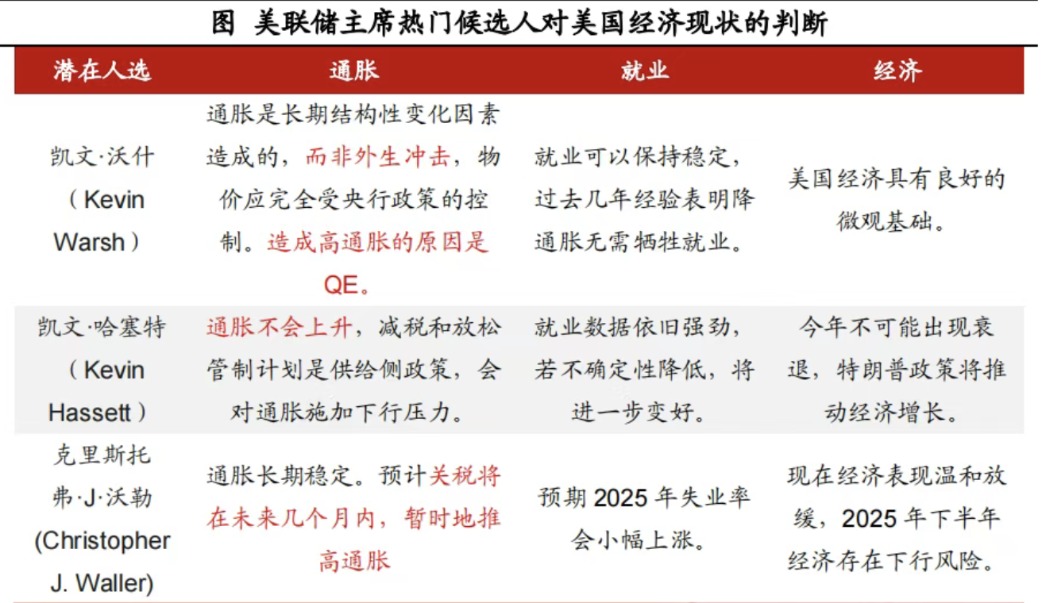
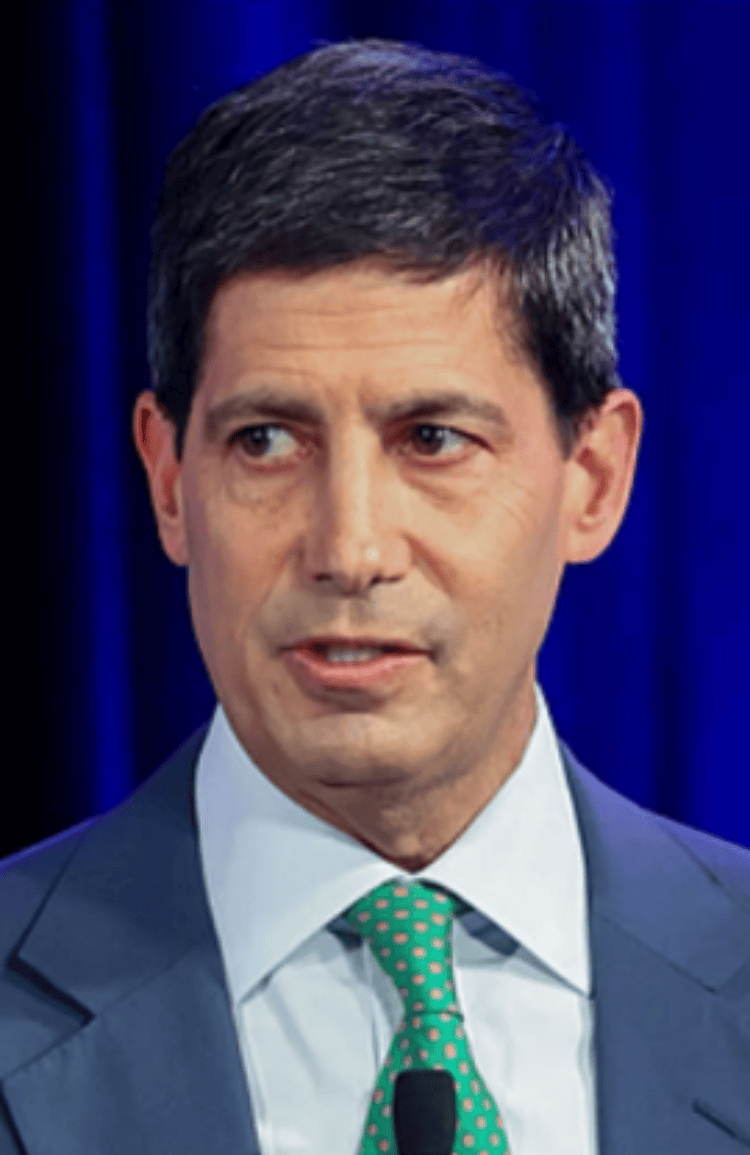
Core Viewpoint - The article discusses the potential candidates for the position of the Federal Reserve Chairman, highlighting the withdrawal of Treasury Secretary Scott Pruitt from the race and focusing on Kevin Hassett, Kevin Warsh, and current Fed Governor Christopher Waller as the main contenders [1][12]. Candidate Profiles - **Kevin Warsh**: - Warsh is the youngest among the candidates, born in 1970, and has a strong academic background with degrees from Stanford University and Harvard Law School. He has experience in both Wall Street and government, having served as a Federal Reserve Governor from 2006 to 2011, where he played a key role during the 2008 financial crisis [2][4]. - **Kevin Hassett**: - Hassett, aged 63, is an economist with a Ph.D. and has previously served as the Chairman of the White House Council of Economic Advisers from 2017 to 2019. He has recently shifted his public stance on the Fed, becoming a critic of current Chairman Jerome Powell, which has increased his visibility as a candidate [5][8]. - **Christopher Waller**: - Waller has a robust academic and professional background, being the first in his family to attend college. He was appointed as a Federal Reserve Governor in December 2020 and has gained influence within the Fed, particularly noted for his views on labor market dynamics [9][11]. Political Context - President Trump has initiated discussions regarding the next Fed Chairman, indicating that the selection process is underway. The potential candidates are seen as having varying degrees of alignment with Trump's economic policies, which may influence their chances of selection [1][12]. - The article suggests that Trump's early announcement of potential candidates may serve as a pressure tactic against current Chairman Powell, reflecting the ongoing tension between the White House and the Federal Reserve [12].
悬念升级!沃勒领跑下任美联储主席候选名单,市场押注政策延续性
Di Yi Cai Jing· 2025-08-07 23:45
Core Viewpoint - The potential appointment of Christopher Waller as the next Federal Reserve Chair is causing the market to reassess policy outlooks, suggesting continuity in the Fed's policy framework even if current Chair Jerome Powell steps down [1][2]. Group 1: Waller's Profile and Market Impact - Christopher Waller, a Federal Reserve Governor since 2020, is recognized for his academic background and policy flexibility, advocating for quicker policy easing to stimulate the economy when inflation risks are manageable [2]. - Waller's reputation as a proponent of a more accommodative stance could alleviate market concerns regarding abrupt shifts in monetary policy if he becomes Chair [1][2]. - The dollar strengthened against major currencies, with the dollar index rising by 0.23% to 98.400, reflecting market optimism about Waller's potential leadership [1]. Group 2: Other Candidates and Market Sentiment - Other candidates mentioned by Trump include Kevin Hassett and Kevin Warsh, with varying implications for market perceptions of Fed independence [3]. - Hassett's close ties to Trump and inclination towards aggressive fiscal stimulus could pressure the dollar and increase volatility in the bond market if appointed [3]. - Warsh's previous criticism of the Fed's expansionary policies raises concerns about potential aggressive tightening measures, which could increase government financing costs [3].
白宫施压换套路 “影子主席”难撼美联储根基
Shang Hai Zheng Quan Bao· 2025-08-07 18:28
Core Viewpoint - The potential candidates for the next Federal Reserve Chair have been narrowed down to four individuals, indicating a significant shift in the political landscape surrounding the Fed's leadership [1][2]. Candidate Summary - The list of potential candidates includes former Fed Governor Kevin Warsh, National Economic Council Director Kevin Hassett, Fed Governor Christopher Waller, and one unidentified candidate [2][3]. - The resignation of Fed Governor Kugler has created an opportunity for the White House to nominate a new member to the Fed Board, potentially influencing monetary policy [3]. Political Implications - Analysts suggest that the White House's intention to appoint a "shadow chair" is aimed at influencing market expectations and monetary policy before Powell's term ends [4]. - The motivation behind this political maneuvering is believed to be linked to alleviating fiscal pressures and stimulating the economy ahead of midterm elections [4]. Independence of the Federal Reserve - Despite attempts to influence the Fed, the institution's strong independence and decision-making mechanisms are expected to act as barriers against significant changes in policy direction [6][7]. - Legal restrictions prevent the arbitrary dismissal of the Fed Chair, and recent court rulings have reinforced the Fed's policy independence [6]. - The Federal Open Market Committee operates on a two-thirds majority voting system, which currently leans towards maintaining the status quo [6]. Potential Outcomes - Various scenarios are anticipated, including the appointment of a more dovish candidate or a loyal supporter of Trump, with the possibility of undermining Powell's authority before his term ends [4][5]. - The strategy of appointing a politically loyal candidate may lead to concerns about inflation and long-term interest rates, potentially harming the economy [7].
特朗普为何急于换掉美联储主席?
Sou Hu Cai Jing· 2025-08-07 11:44
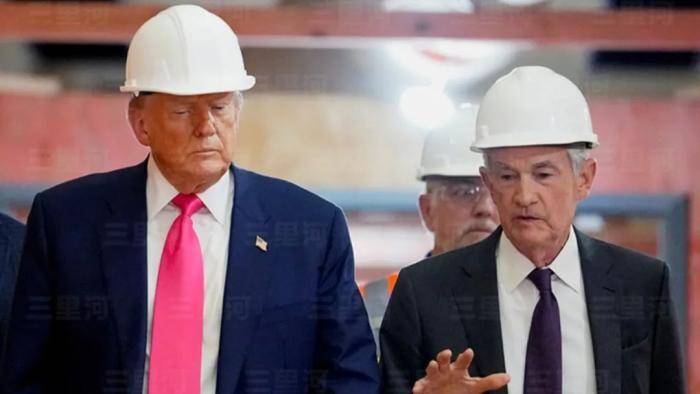
Core Viewpoint - The ongoing conflict between President Trump and Federal Reserve Chairman Powell has escalated, with Trump openly criticizing Powell and suggesting potential replacements for the Fed chair position, indicating a power struggle that could impact the future of the U.S. economy [1][2][4]. Group 1: Trump's Criticism of Powell - Trump has been vocally critical of Powell, labeling him as "terrible" and "stupid," and has expressed a desire to replace him, which is unusual for a sitting president [1][2]. - The primary reason for Trump's criticism appears to be Powell's reluctance to lower interest rates as Trump desires, aiming to reduce borrowing costs for the federal government [4][5]. Group 2: Economic Context - The Federal Reserve has maintained interest rates in the range of 4.25% to 4.5% since January 2025, following three consecutive rate cuts starting in September 2024, which Trump wants to see reduced to 1% [4]. - Economic uncertainty remains high, with economists warning that Trump's tariffs and unstable trade policies could lead to a slowdown in the labor market and rising inflation, complicating the Fed's decision-making [4][5]. Group 3: Political Implications - Analysts suggest that Trump's attacks on Powell serve to shift blame for economic downturns caused by his own policies, effectively making Powell a "scapegoat" for the administration's economic challenges [5][6]. - The potential for Trump to replace Powell raises concerns about the independence of the Federal Reserve, as any new appointee may face pressure to align with Trump's economic agenda [8][12]. Group 4: Future of the Federal Reserve - Trump's administration has begun to exert pressure on Powell, citing budget overruns in Fed headquarters renovations as a possible justification for his removal [8]. - Despite the possibility of appointing a new Fed chair, experts caution that the new appointee would still need to navigate the consensus-driven nature of the Federal Open Market Committee (FOMC) to implement any significant policy changes [9][12].
特朗普团队内斗?贝森特退出美联储之争,鲍威尔的位置更稳了?
Sou Hu Cai Jing· 2025-08-07 05:54
Core Viewpoint - President Donald Trump announced that Treasury Secretary Scott Bentsen will not be considered for the position of Federal Reserve Chairman, narrowing the search for Jerome Powell's successor and clarifying previous uncertainties surrounding the matter [1][2]. Group 1: Trump's Decision and Its Implications - Trump's decision to remove Bentsen from consideration highlights a dynamic shift in the administration's approach to the Federal Reserve [1][2]. - Bentsen, previously a hedge fund leader, has become a key figure in Trump's economic and trade policies, noted for his strong support of Trump's economic agenda and criticism of the Fed for not lowering interest rates as requested [2][4]. Group 2: Bentsen's Position and Future - Bentsen has publicly stated that he believes his current role is the "best job in Washington" and expressed a desire to remain in his position as long as the President deems it appropriate [5][10]. - Despite stepping back from the Fed Chairman candidacy, Bentsen has played a significant role in the selection process for Powell's successor, advocating for an internal review of the Fed [5][10]. Group 3: Criticism of Powell and Future Candidates - Trump has repeatedly criticized Powell for being slow to cut interest rates and has expressed dissatisfaction with the Fed's costly renovation project [4][7]. - Potential candidates for Powell's successor include Kevin Hassett, Kevin Walsh, Michelle Bowman, and Christopher Waller, with Bentsen's withdrawal clarifying the competitive landscape for the position [10].

君諾外匯:特朗普的美联储理事人选,短期搅局者OR长期掌舵人?
Sou Hu Cai Jing· 2025-08-07 02:41
Juno markets发现美联储理事库格勒上周突然宣布辞职,这一意外举动让一个原本看似已逐渐淡化的场 景再度浮现 —— 其背后潜藏的连锁反应,很可能对美联储未来的政策执行产生重要影响。 随着这个颇具影响力的美联储理事会席位出现空缺,前总统特朗普如今在人事安排上拥有了多种战略选 择。其中备受关注的一种可能,便是任命所谓的 "影子主席",其主要职责是在现任主席鲍威尔的继任 者确定之前,扮演 "挑事者" 的角色,对美联储的决策过程施加影响。 这一可能性的出现,引出了一个耐人寻味的问题:向来以同僚合作和 "象牙塔式" 政策制定方式著称的 美联储,如今或许不得不面对突如其来的政治阴谋。长期以来,美联储作为美国的中央银行,一直致力 于维持其独立性,以科学、客观的态度制定货币政策,不受短期政治因素的干扰。其决策过程注重专家 意见的交流与融合,强调集体智慧的发挥,这种运作模式为其赢得了市场的广泛信任。 但此次理事会席位的空缺,可能成为政治力量渗透的突破口。特朗普若选择任命一个 "刺头" 式的人 物,其目的很可能是为了刁难现任主席鲍威尔。这类人选可能会在美联储内部不断提出异议,对鲍威尔 主导的政策方向进行质疑和挑战,打乱正常 ...
Juno markets:白宫高官炮轰美联储,利率决策已被党派政治“污染”
Sou Hu Cai Jing· 2025-08-07 02:41
Core Viewpoint - Kevin Hassett, Director of the National Economic Council, criticized the Federal Reserve's interest rate decisions, suggesting that political considerations may have influenced their actions, raising concerns about the Fed's independence [1][3]. Federal Reserve Actions - Hassett pointed out seemingly contradictory actions by the Federal Reserve, including a 50 basis point rate cut before the presidential election and two additional 25 basis point cuts afterward, followed by a decision to maintain rates despite signs of labor market weakness [3][4]. - The Fed's explanation for maintaining stable rates this year was based on concerns over potential inflation due to tariff increases by the Trump administration, attempting to link decisions to economic fundamentals rather than political factors [3][4]. Political Influence Concerns - Despite the Fed's denials of political influence in decision-making, doubts persist, especially given the Trump administration's criticism of the Fed's monetary policy and the president's actions regarding economic data credibility [3][4]. - Hassett, a potential candidate to replace Jerome Powell as Fed Chair, defended the dismissal of the Labor Statistics Bureau head, arguing it was aimed at ensuring data accuracy, while also criticizing Powell for failing to prevent partisan divisions within the Fed [4]. Implications for Market and Society - The debate over whether the Fed's decisions are politically influenced adds uncertainty to the market, complicating investment strategies as investors must consider both economic data and political factors [5]. - The public is highly concerned about the Fed's interest rate decisions, as they directly impact daily life, including mortgage and loan repayments, and overall living costs [5]. - The ongoing discourse reflects a deeper societal contemplation regarding the relationship between the government and the central bank, highlighting the challenge of maintaining Fed independence while aligning its policies with national economic goals [5].
特朗普的美联储理事人选:短期搅局者OR长期掌舵人?
Jin Shi Shu Ju· 2025-08-07 01:56
Core Viewpoint - The sudden resignation of Federal Reserve Governor Christopher Waller has reopened discussions about potential political maneuvering within the Fed, particularly regarding Trump's influence on future appointments and policy direction [1][2]. Group 1: Implications of Resignation - Waller's unexpected departure creates a vacancy that Trump can strategically fill, potentially appointing a "shadow chair" to challenge current Chair Powell before a permanent successor is named [1][2]. - The timing of Waller's resignation complicates the situation, as the new appointee would only serve a few months before needing Senate confirmation for a longer term [2][4]. Group 2: Trump's Strategic Options - Trump has two main options: appoint a temporary replacement for Waller or expedite the selection of a preferred candidate for the Fed chair position [2][6]. - The "shadow chair" option aligns with Trump's management style, which favors competition and performance evaluation among candidates [4][5]. Group 3: Potential Candidates and Market Reactions - Trump has indicated he is considering several candidates for the Fed chair position, including former Governor Kevin Warsh and current Governor Christopher Waller [7][8]. - Concerns have been raised about Trump's push for significant interest rate cuts, which could undermine the Fed's independence and create market uncertainty [5][9].
下一任美联储主席“花落谁家”?美联储独立性面临考验
Xin Hua Cai Jing· 2025-08-06 14:35
Core Viewpoint - The upcoming nomination of a new Federal Reserve Board member and potential successor to Chairman Jerome Powell by President Trump is expected to significantly influence future monetary policy and challenge the independence of the Federal Reserve [1][9]. Group 1: Nomination Process - Federal Reserve Board member Adriana Kugler announced her resignation effective August 8, allowing Trump to quickly nominate a new member, potentially setting the stage for selecting the next Fed Chair [2]. - Trump has narrowed down the list of candidates for the next Fed Chair to four individuals, with Scott Bessent expressing no interest in the position [3]. - The candidates include Kevin Warsh and Kevin Hassett, with Christopher J. Waller also being a popular choice among market participants [3][7]. Group 2: Candidate Profiles - Kevin Warsh is viewed as a strong candidate with a hawkish stance on monetary policy, emphasizing the need for balance sheet reduction before considering interest rate cuts [7][8]. - Kevin Hassett is seen as a more dovish candidate, advocating for immediate rate cuts to stimulate economic growth, aligning closely with Trump's preferences [7][8]. - Christopher J. Waller has expressed concerns about inflation and has voted against maintaining current interest rates, indicating a potential alignment with Trump's desire for looser monetary policy [8]. Group 3: Federal Reserve Independence - Trump's ongoing pressure on the Federal Reserve, including criticism of Powell, raises concerns about the institution's independence and the potential for political interference in monetary policy [9][11]. - Historical examples illustrate that the Federal Reserve has faced political pressures in the past, which could impact its credibility and decision-making [11]. - Analysts suggest that if a candidate aligned with Trump's views is appointed, it could negatively affect the overall outlook for U.S. dollar assets [12]. Group 4: Market Expectations for Rate Cuts - Recent economic data, including disappointing employment figures, has led to increased expectations for a rate cut by the Federal Reserve in September, with a 87.5% probability of a 25 basis point cut [13][16]. - Analysts predict that the Fed may implement multiple rate cuts in the coming months, with discussions around the possibility of a more aggressive 50 basis point cut if economic conditions worsen [16][17].