
银发经济

Search documents
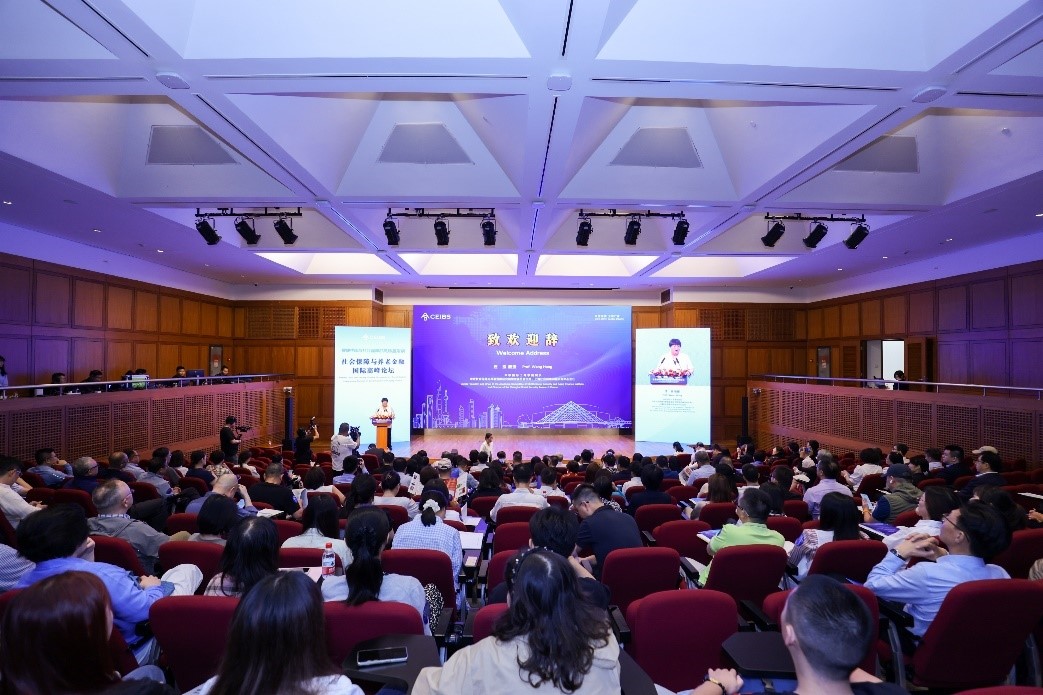
2025社保与养老金融论坛聚焦 “高质量低成本” 健康保障之路
Xin Hua Cai Jing· 2025-09-21 14:54
Core Viewpoint - The "2025 Social Security and Pension Finance International Summit Forum" held in Shanghai emphasizes the importance of advancing the Healthy China strategy and achieving high-quality development in social security as critical issues for national welfare and social stability [1][2]. Group 1: Current Challenges in Social Security - China's aging population is accelerating, leading to a growing demand for quality health services and a reinforcement of traditional family caregiving roles, highlighting a mismatch between the increasing health security needs of the elderly and the existing social security system's adaptability [2]. - The current pension system faces three major bottlenecks: significant disparities in basic pension benefits across regions and urban-rural areas, a narrow coverage of enterprise annuities, and low participation in third-pillar pension financial products [2][5]. Group 2: Proposed Solutions and Innovations - Financial technology is suggested as a means to reconstruct the pension ecosystem, utilizing AI and big data for dynamic analysis of user needs and personalized asset allocation [3]. - A unified national health information platform is recommended to manage health throughout the life cycle, supported by wearable devices and cloud technology [3]. - The need for a dual approach to address the challenges of the aging population is emphasized, focusing on both supply-side technological innovations and demand-side consumption upgrades [6]. Group 3: International Perspectives and Economic Implications - The silver economy is viewed as a potential driver for global growth, with China's approach to aging governance providing valuable insights for other countries [2]. - The aging population impacts the economy through reduced labor supply, lower savings and investment rates, and diminished innovation capacity [6]. Group 4: Research and Policy Developments - The establishment of a comprehensive evaluation index system for the "Healthy China" initiative aims to enhance health levels and promote a healthy lifestyle [6]. - The release of the "Shanghai Social Security Reform and Development Report (2025)" outlines innovative practices and policy recommendations in social security and pension finance [6].

保险业加速布局旅居养老新赛道,银发经济迎新机遇
Bei Jing Shang Bao· 2025-09-21 13:40
Core Viewpoint - The trend of elderly individuals opting for migratory living arrangements, combining travel with care and social interaction, is becoming increasingly common in China, with insurance companies playing a pivotal role in facilitating this lifestyle [1][3][4]. Group 1: Industry Trends - The insurance industry is transforming the concept of migratory elderly care into a tangible lifestyle, with companies developing nationwide chains and modular communities tailored to the needs of seniors [3][4]. - The opening of the TaiKang Home in Yunnan has attracted significant interest, with nearly 700 reservations prior to its launch, indicating a strong demand for such services [4][5]. - TaiKang Home has established a membership system to address the comprehensive needs of the new retirement demographic, including medical care, food, accommodation, transportation, and leisure activities [4][6]. Group 2: Market Dynamics - The insurance sector is increasingly integrating travel and living arrangements, allowing clients to experience a home-like environment rather than just hotel stays [5][6]. - Various insurance companies, including China Pacific Insurance and New China Life, are expanding their presence in the migratory elderly care market, with New China Life operating 40 wellness communities across 28 cities [6][7]. - The model of combining insurance products with migratory elderly care services is gaining traction, creating a closed loop of product-service-client interaction [7]. Group 3: Policy and Support - Recent government policies have emphasized the development of the migratory elderly care market, providing institutional support for its growth [8][9]. - Local governments are also establishing mechanisms to support migratory living arrangements for the elderly, such as Beijing's initiative for seasonal migration [8][9]. Group 4: Future Outlook - The market for migratory elderly care is expected to expand, with a shift towards more diverse geographical and cultural destinations for seasonal migration [11][12]. - The insurance industry is anticipated to enhance technology applications and develop smart communities, while also focusing on meeting the evolving needs of the elderly population [11][12]. - The integration of quality service, safety, and emergency capabilities will be crucial for the success of this sector, as will the need for professional training and collaboration within the industry [12][13].

产业“含绿量”与生态“高颜值”并存 深汕实践引专家关注
Zhong Guo Xin Wen Wang· 2025-09-21 05:25
Core Insights - The Deep-Shan Special Cooperation Zone is recognized for its innovative practices in green low-carbon development, attracting attention from experts in the field [1][3][4] Group 1: Green Industry Development - The cooperation zone is accelerating the construction of a world-class automotive hub, focusing on green and low-carbon technologies, with BYD leading the production of high-end electric vehicles [3][4] - A complete green industrial chain for new energy vehicles is forming, including manufacturing, parts production, and recycling, with significant investments from major companies [3][5] - The area is also developing renewable energy projects, such as the offshore wind power project with a planned capacity of 2 million kilowatts, expected to generate 6 billion kilowatt-hours of green electricity annually [3] Group 2: Environmental and Ecological Initiatives - The cooperation zone has achieved stable and improving environmental quality, with a notable decrease in PM10 levels and a rich biodiversity, recording 1,627 species of wild flora and fauna [5][7] - High standards in rural wastewater treatment have been met, achieving a 100% treatment rate in 2023, and receiving recognition for outstanding performance in this area [5] - Initiatives for marine carbon sink research and rural pollution reduction are underway, indicating a commitment to sustainable practices [7] Group 3: Community and Educational Engagement - The cooperation zone is seen as suitable for developing modern health and wellness industries, with potential for integrating research and production in the aging economy sector [9] - Community involvement and education on environmental sustainability are emphasized, with suggestions for greater participation from residents and youth [9]


舌战玖安,央财北交“险”胜|南京大学、四川大学荣获第二届“中邮保险·紫荆杯” 全国高校金融普及教育辩论赛季军
清华金融评论· 2025-09-20 09:54
Core Viewpoint - The article emphasizes the importance of financial education and consumer rights protection in enhancing national financial literacy, as demonstrated through the "Zijing Cup" national college financial education debate competition organized by Tsinghua University and Zhongyou Insurance [2][4][5]. Group 1: Event Overview - The financial education campaign, themed "Protecting Financial Rights and Supporting a Better Life," was jointly organized by the Financial Regulatory Bureau, the People's Bank of China, and the China Securities Regulatory Commission from September 15 to 21 [2]. - The second "Zijing Cup" national college financial education debate competition received participation from 48 universities, with four teams reaching the semifinals [2][5]. Group 2: Key Participants and Contributions - Zhang Wei, a representative from Tsinghua University, highlighted the significance of public financial knowledge and skills in protecting consumer rights and enhancing understanding of financial matters [4]. - Cao Yong, the business director of Zhongyou Insurance, noted the company's commitment to integrating financial education into its development strategy, showcasing its growth and industry standing with total assets exceeding 700 billion yuan and ranking among the top eight in the industry [5]. Group 3: Debate Topics and Insights - The first debate focused on whether to prioritize supply-side reform or demand-side cultivation to activate the 30 trillion yuan silver economy, with Nanjing University advocating for demand-side stimulation and Beijing Jiaotong University emphasizing supply-side improvements [6]. - The second debate addressed the future development of inclusive finance, debating whether to prioritize social value or commercial sustainability, with Central University of Finance and Economics supporting social value and Sichuan University advocating for commercial sustainability [8]. Group 4: Judging and Evaluation - The semifinals featured a distinguished panel of judges from academia and debate circles, reflecting the high standards and professionalism of the event [10].

持续深化落实扩大开放战略举措 市委常委会会议举行
Jie Fang Ri Bao· 2025-09-20 02:37
Group 1 - The meeting emphasized the importance of implementing Xi Jinping's congratulatory message for the 25th China International Investment and Trade Fair and the 2025 China International Service Trade Fair, reinforcing confidence in expanding high-level opening-up [1] - The city aims to deepen the implementation of the opening-up strategy, focusing on trade transformation and upgrading, and promoting new trade formats such as digital trade, offshore trade, and cross-border e-commerce [1] - There is a commitment to enhance the comprehensive service platform for outbound investment and to prepare for the upcoming 8th China International Import Expo [1] Group 2 - The meeting highlighted the need to deepen the construction of the elderly care service system, improve service quality, and enhance the sense of gain, happiness, and security for the elderly [2] - It was noted that the government will lead the initiative with social participation, particularly from charitable organizations, to broaden the channels for elderly care services [2] - The focus will be on innovative reforms in elderly care policies and optimizing medical and elderly care resources, aiming to create a "Shanghai model" for elderly services [2]
2025年第37周:食品饮料行业周度市场观察
艾瑞咨询· 2025-09-20 00:04
Group 1 - The "health economy" is effectively capturing the "Z generation" through product innovation and social media marketing, with traditional Chinese medicine brands attracting young consumers by offering health-focused products like herbal teas and scented candles [2] - Functional beverages and tea drinks are rapidly replacing traditional bottled water, with significant growth expected in these categories driven by health and personalization demands, while the bottled water market faces stagnation due to oversaturation and price wars [3] - The prepared food industry is undergoing a deep adjustment, with major players like Weizhi and Qianwei experiencing revenue declines due to rising raw material costs and intensified competition, despite the overall market size continuing to expand [4] Group 2 - The tea beverage market is showing signs of differentiation, with Nongfu Spring experiencing a 15.6% revenue increase, while Kangshifu's tea beverage revenue declined by 6.3%, attributed to decreased demand for sugary teas and channel contraction [5] - Japan's mature functional food market offers insights for developing senior food products in China, where the aging population presents a significant market opportunity, necessitating diverse and functional food offerings [7] - Energy drinks are shifting from being favored by laborers to becoming popular among younger consumers, with the market size reaching 111.4 billion yuan, driven by health-conscious formulations and appealing packaging [8] Group 3 - The ready-to-drink tea market is projected to grow at a compound annual growth rate of 5.6% by 2034, with emotional satisfaction and taste optimization being key purchasing drivers [9] - The no-sugar tea market is transitioning from explosive growth to intense competition, with brands focusing on taste innovation to maintain market share as health consciousness rises [11] - Major food and beverage companies are actively investing in product innovation and strategic acquisitions to navigate economic uncertainties, with Coca-Cola and Nestlé reporting significant revenue growth [12] Group 4 - Yonghui Supermarket has launched a new bakery product, "Camellia Flower Toast," emphasizing health and quality, contributing to a noticeable increase in sales [13] - Mengniu's milk powder segment has achieved growth through scientific innovation and targeted marketing, with a reported revenue increase of 2.5% [14] - Wangzai Milk has introduced regionally themed packaging to resonate with local cultures, enhancing brand engagement and driving sales [15] Group 5 - Haidilao has opened a dessert shop to attract customers during off-peak hours, responding to declining revenue and foot traffic [16] - Yuanqi Forest has rapidly grown its market share in the no-sugar sparkling water segment, achieving sales of 11.7 billion yuan, but faces challenges related to product dependency and competition [18] - Yili's new health-focused drink, "Stone Flower and Western Ginseng Water," targets the growing market for traditional health beverages, with a projected market size of 3 billion yuan by 2024 [19] Group 6 - Ziguangyuan has opened a new yogurt station that combines baked goods and snacks, aiming to diversify its product offerings and attract a broader customer base [20] - Yuanqi Forest's "Good Free" series has entered the international market, showcasing a successful blend of traditional health culture and modern consumer demands [21] - The restaurant brand Blue Frog has launched a bakery section to counteract slowing growth, indicating a strategic pivot to enhance customer engagement [23]

【西安】国际养老产业博览会开幕
Shan Xi Ri Bao· 2025-09-19 23:00
Core Insights - The third Xi'an International Elderly Care Industry Expo opened on September 19, showcasing the growth and potential of the elderly care sector in China [1] - The event featured the release of key documents including the "Shaanxi Elderly Care Industry Blue Book (2025)" and the "Shaanxi Silver Economy Industry Directory (2025)", providing authoritative data and policy guidance for industry development [1] Industry Overview - The expo's theme was "Qin Series Silver Age, Enjoying Longevity in Chang'an", with an exhibition area of 32,000 square meters, doubling in size compared to the previous year [1] - The event included 12 exhibition zones covering various aspects such as government initiatives, smart elderly care, financial services, and rehabilitation aids, attracting over 500 domestic and international enterprises and institutions [1] Activities and Objectives - A total of 16 high-profile activities will be held during the expo, focusing on policy interpretation, industry discussions, achievement releases, talent matchmaking, and business agreements [1] - The aim is to provide insights and collaboration opportunities for government, enterprises, experts, and the public to promote high-quality development of the silver economy [1]
养老新职业守护夕阳红
Jing Ji Ri Bao· 2025-09-19 22:16
Core Viewpoint - The recognition of "elderly service specialists" as a new profession reflects the growing demand in an aging society and signals a significant transformation in China's silver economy [1][2]. Group 1: Definition and Role of Elderly Service Specialists - Elderly service specialists are defined as professionals engaged in comprehensive needs assessment, plan formulation and implementation, care technique training, quality evaluation, and service consultation in elderly care [1]. - This profession requires a combination of skills, including aging-friendly modifications, smart device operation, and rehabilitation tool adaptation, distinguishing it from traditional elderly caregivers [2]. Group 2: Economic Implications - The professional capabilities of elderly service specialists can bridge the gap between the demand and effective supply of elderly care services, addressing challenges posed by an aging population [2]. - The establishment of a qualification system for elderly service specialists is underway, aiming to create a quantifiable professional value and a predictable career development path, which could lead to a shift from labor-intensive to technology-intensive services in the silver economy [2]. Group 3: Policy and Support Measures - Multiple dimensions will be explored to integrate elderly service specialists into existing policy frameworks, ensuring that funding flows effectively from demand to talent supply [3]. - Regions that meet the standards for elderly service specialist deployment and performance evaluation will receive additional rewards on top of central subsidies, promoting the enhancement of community elderly care services [3]. - The training for elderly service specialists will be aligned with existing national standards for elderly caregivers, focusing on skills related to aging-friendly modifications and smart device operations to meet current demands [3].
“蛭”富乡村 “渔”乐水乡,盐城盐都探索乡村产业融合新路径
Yang Zi Wan Bao Wang· 2025-09-19 13:57
Core Viewpoint - The article highlights the efforts of Yandu District in Yancheng City to promote rural revitalization through the development of the S125 Water Town Scenic Area, focusing on project-driven, coordinated development to enhance the local economy and community well-being [1][2][3] Group 1: Economic Development - The water leech farming base in Minsheng Village is set to yield significant economic benefits, with an average price of 1.2 to 1.3 yuan per leech and an average income of over 30,000 yuan per acre [1] - Minsheng Village aims to leverage its water leech industry to stimulate the health and wellness industry, integrating it with agritourism to create a "farming-processing-health" development model [2] Group 2: Infrastructure and Community Development - The article describes the modern and technological advancements in Minsheng Village, including well-organized greenhouses and community facilities that enhance the quality of life for residents [1] - Yandu District is focusing on urban agriculture and optimizing the industrial layout to promote a harmonious environment, aiming for a comprehensive development that includes production, ecology, and living [3] Group 3: Future Plans - Yandu District plans to continue its project-driven approach to rural development, ensuring visible and tangible improvements within the year, and aims to create a model area characterized by thriving industries, beautiful landscapes, harmonious communities, and shared prosperity [3]
上海市委常委会传达学习习近平总书记重要贺信精神,研究对外开放、养老服务等事项
Di Yi Cai Jing· 2025-09-19 12:13
Core Viewpoint - The Shanghai Municipal Committee emphasizes the need to enhance the supply and quality of elderly care services, aligning with national strategies and promoting a comprehensive approach to improve the well-being of the elderly population [1][2]. Group 1: Policy Implementation - The meeting highlighted the importance of implementing the spirit of Xi Jinping's congratulatory message, focusing on expanding high-level opening-up and ensuring national interests and security [1]. - There is a commitment to deepen the reform and development of the elderly care service system, ensuring that elderly individuals experience increased satisfaction and security [2]. Group 2: Service Quality Improvement - The meeting calls for a collaborative approach involving party leadership, government guidance, and social participation to enhance the elderly care service framework [2]. - Efforts will be made to innovate and reform policies related to elderly care, optimizing medical and nursing service resources, and improving the professional capabilities of the elderly care workforce [2]. Group 3: Economic Development - The focus is on developing the "silver economy" to ensure that elderly individuals enjoy a high quality of life, with Shanghai aiming to set a benchmark for elderly care services [2]. - The meeting also discussed the importance of expanding new trade formats such as digital trade and cross-border e-commerce, which may indirectly benefit the elderly care sector through improved service delivery [1].