能源转型

Search documents
产能破100GWh,出货量全球第二,海辰储能订单排产至年底
Sou Hu Cai Jing· 2025-09-29 11:24
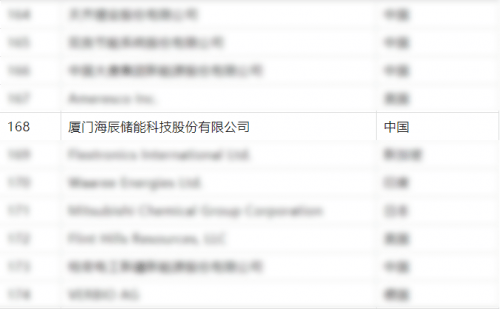
在全球市场布局上,海辰储能同样表现亮眼。凭借定制化解决方案能力,企业成功拿下沙特4GWh超级 储能项目,建成后可满足40万家庭单日用电需求,也是全球千安时电芯首次实现规模化应用。目前,海 辰储能产品已覆盖20多个国家和地区,针对中东高温环境研发的"沙漠之鹰"储能系统、适配欧洲能源转 型需求的定制方案,均获得当地市场广泛认可,持续扩大全球市场份额。 从厦门本土成长起来的"独角兽",到两度跻身全球新能源500强的行业标杆,海辰储能以"技术突破 - 产 能落地 - 市场拓展"的闭环发展模式,不仅夯实了自身在全球储能领域的竞争力,更成为中国储能企业 参与全球能源转型的重要力量。未来,随着其全球化产能进一步释放、创新技术加速落地,海辰储能将 继续以实干推动储能产业升级,为全球新能源事业发展注入更多中国动能。 支撑海辰储能蝉联榜单的,是其在产能、技术与订单上的三重突破。2025年8月,海辰储能重庆制造基 地实现第100GWh产品下线,加之厦门、菏泽及美国得州生产基地联动,已形成覆盖多区域的全球化产 能网络。在满负荷生产的保障下,企业2025年上半年全球电力储能出货量跃升至全球第二,当前订单已 排至当年年底,规模化交付能力 ...

内蒙古自治区储能系统运行高效 电力“稳定器”作用充分发挥
Zhong Guo Neng Yuan Wang· 2025-09-29 11:09
Core Insights - The new energy storage capacity in Inner Mongolia has reached 9.63 million kilowatts, demonstrating excellent operational status and application efficiency, especially during peak summer electricity supply periods [1][2] - From January to August this year, the cumulative charging and discharging electricity of new energy storage in Inner Mongolia showed significant growth, with charging electricity reaching 2.71 billion kilowatt-hours (up 422%) and discharging electricity at 2.36 billion kilowatt-hours (up 439%) [1][2] - The efficiency of the energy storage systems has played a crucial role in stabilizing electricity supply and supporting industrial production, particularly during peak demand periods [2][3] Summary by Sections Energy Storage Capacity and Performance - Inner Mongolia's new energy storage system has effectively integrated into the regional electricity dispatch system, enhancing its role in stabilizing grid load fluctuations and accommodating renewable energy [2] - The maximum discharging power of the energy storage in the Mongolian West grid reached 90% of the installed capacity, while the Mongolian East grid achieved around 70% [1] Economic Impact - The total compensation amount for the discharging electricity from energy storage stations reached 355 million yuan, with the Mongolian West grid accounting for 327 million yuan and the Mongolian East grid for 28 million yuan [1] Future Development - The region plans to continue promoting high-quality development of the new energy storage industry, focusing on technological innovation and optimizing dispatch strategies to ensure effective performance during critical times [3]
挚达科技通过港交所聆讯:凭“产品+服务+平台”领跑家用充电赛道
经济观察报· 2025-09-29 10:14
Core Insights - The article highlights the successful listing process of Zhida Technology on the Hong Kong Stock Exchange, marking a significant milestone for the company [1][2]. Industry Growth - The electric vehicle (EV) home charging solutions industry is experiencing explosive growth driven by dual factors: the push for carbon neutrality and the increasing penetration of electric vehicles [2][4]. - Global EV sales reached 7.7 million units in the five months ending May 31, 2025, representing a year-on-year growth of 32.1% [4]. - The global market for EV home charging solutions is projected to reach RMB 34.2 billion by 2029, with a compound annual growth rate (CAGR) of 19.2% from 2024 to 2029 [4]. Market Position - Zhida Technology is recognized as one of the largest suppliers of EV home charging solutions globally, holding a 9.0% market share in the home EV charging pile sales [5][6]. - In the Chinese market, Zhida Technology ranks first with a market share of approximately 13.6% [5]. - The company has shipped a total of 1.3 million home EV charging piles globally, with 1.2 million units in China, covering over 360 cities and completing more than 1.3 million installation and after-sales service tasks [5]. Strategic Partnerships - Zhida Technology has established deep collaborations with seven of the top ten EV manufacturers in China, enhancing its market advantage and facilitating global expansion through these partnerships [6]. Unique Business Model - The company employs a "product + service + digital platform" model, which addresses industry pain points and creates a competitive edge [8]. - The product range includes smart home EV charging piles and high-margin products like charging robots and energy management systems (EMS) [8][9]. - The service network is the largest in China, providing comprehensive support from installation to long-term maintenance, which increases customer loyalty and satisfaction [9]. Digital Platform - The digital platform serves as the core of Zhida Technology's business model, enabling efficient management of installation and after-sales services, as well as supporting shared charging services [10]. - The platform allows users to control charging remotely and optimize service efficiency through data accumulation, transforming charging piles into essential components of home energy management [10]. Innovation and Future Outlook - The "SmartLink" automatic charging robot, launched in May 2025, addresses user pain points related to charging convenience and is positioned to lead in high-tech barriers [10]. - As a leader in the home charging pile market, Zhida Technology is well-positioned to leverage capital for increased R&D, market expansion, and service network enhancement, capitalizing on the growth of the EV home charging industry [11].

挚达科技通过港交所聆讯:凭 “产品 + 服务 + 平台” 领跑家用充电赛道
Jing Ji Guan Cha Wang· 2025-09-29 10:11
Core Insights - The electric vehicle home charging solutions industry is experiencing explosive growth driven by dual factors of "dual carbon" goals and increasing penetration of electric vehicles [1][2] - Shanghai Zhida Technology Development Co., Ltd. (Zhida Technology) is a leading player in this market, leveraging a "product + service + digital platform" business model [1][2] Industry Overview - Global electric vehicle sales reached 7.7 million units for the five months ending May 31, 2025, representing a year-on-year growth of 32.1% [2] - The global market for electric vehicle home charging solutions is projected to reach RMB 34.2 billion by 2029, with a compound annual growth rate (CAGR) of 19.2% from 2024 to 2029 [2] - Emerging markets are becoming new growth engines, with projected CAGRs of 12.6% for China, 14.4% for Europe, 14.3% for North America, 52.3% for South America, 49.4% for the Middle East, and 63.2% for Southeast Asia by 2029 [2] Company Performance - Zhida Technology has shipped a total of 1.3 million home electric vehicle charging piles globally, with 1.2 million units shipped in China, covering over 360 cities [3] - The company has established a presence in 22 countries, particularly in rapidly growing markets like Thailand and Brazil [3] - Zhida Technology collaborates with seven of the top ten electric vehicle manufacturers in China, enhancing its market position and facilitating global expansion [3] Business Model - Zhida Technology's unique "product + service + digital platform" model addresses industry pain points and creates a competitive advantage [4] - The company offers a diverse product matrix centered around smart home electric vehicle charging piles, catering to various manufacturer needs [4] - The digital platform enhances service efficiency and enables features like smart remote control and energy management, transforming charging piles into core energy management tools [5] Innovation and Future Outlook - The "SmartLink Snake" automatic charging robot, set to launch in May 2025, addresses user convenience and expands the company's technological edge [5] - Zhida Technology is well-positioned to leverage capital from its upcoming IPO to increase R&D investment, expand overseas, and enhance service networks [6] - The value of home charging piles is expected to exceed that of mere charging devices, with Zhida Technology poised to benefit from the integration of energy transformation and smart mobility [6]
原油产业周报:地缘溢价推升原油-20250929
Nan Hua Qi Huo· 2025-09-29 09:27
Report Industry Investment Rating No relevant content provided. Core Viewpoints of the Report - The current core contradiction in the crude oil market is the mismatch between short - term geopolitical (Russia - Ukraine conflict, Yemen situation) driven bullish momentum and insufficient medium - to - long - term fundamental support (no supply - demand gap, weak physical goods). Geopolitics is the current focus, but fundamentals restrict price increases [2]. - In the short term, the contradiction focuses on "whether geopolitical risks can continue" and "how the market digests overbought conditions". In the medium - to - long term, the core game lies in "the extent of demand decline" and "the intensity of supply adjustment" [2]. - The market is expected to have a short - term rebound and a medium - term weak oscillation [6]. Summary by Directory Chapter 1: Core Contradiction and Strategy Suggestions 1.1 Core Contradiction - The short - term core contradiction focuses on the continuation of geopolitical risks and the digestion of overbought conditions. The key variables are the spread of the Yemen situation to the Bab el - Mandeb Strait and the frequency of Ukraine's attacks on Russian energy facilities. The medium - to - long - term core contradiction returns to fundamentals. On the demand side, the risk of economic recession in Europe and the US suppresses oil consumption, and although Asian demand provides some support, it cannot offset global weakness. On the supply side, there is no supply gap as OPEC+ may adjust supply and US shale oil production is stable [2][4]. 1.2 Speculative Strategy Suggestions - The market is in a short - term rebound and medium - term weak oscillation. Suggested strategies include: in the month - spread strategy, go long on Brent2512 - 2602 and WTI2512 - 2602; in the domestic - foreign arbitrage strategy, go short on SC - Brent; in the crack spread, continue to hold short positions in RBOB gasoline - WTI and long positions in ICE diesel - Brent [6]. Chapter 2: This Week's Important Information and Next Week's Concerns 2.1 This Week's Important Information - **Likely to be bullish**: Geopolitical risks have increased, injecting a premium; EIA inventory has a low increase, strengthening supply - demand support; sanctions and conflicts have intensified supply concerns [7]. - **Likely to be bearish**: The Middle - East physical market has weakened; global demand expectations have been continuously revised down; there is still room for supply - side flexibility [10]. 2.2 Next Week's Concerns - Track the dynamics of the Middle - East geopolitical situation, especially the escalation of US - Houthi armed conflicts, the impact of Israeli military air - strikes on Sanaa, and the safety of the Bab el - Mandeb Strait. Also, be vigilant about the progress of the US - Iran talks. - Monitor the progress of the Russia - Ukraine conflict in the energy dimension, including the frequency of Ukraine's attacks on Russian energy facilities and the implementation of Russia's refined - oil export ban [11]. Chapter 3: Disk Analysis 3.1 Volume, Price, and Fund Analysis - **Trend analysis**: This week, crude oil showed a geopolitically - driven oscillating upward trend, with Brent crude breaking through the September high. The trend is centered around the game between geopolitics and fundamentals [12]. - **Domestic market**: The short - term trend is oscillating upward. Technical indicators show short - term bullish momentum, but there is a risk of technical correction. The WTI and Brent crude in the international market also show upward trends, but attention should be paid to support and resistance levels [14][15]. - **Fund and position analysis**: Information on domestic and international crude oil futures positions and changes is provided [15][16]. Chapter 4: Valuation and Profit Analysis 4.1 Crude Oil Market Month - spread Tracking - Brent and WTI crude oil month - spreads maintain a slight Backwardation structure, indicating short - term supply tightness or stable demand. Dubai and domestic SC crude oil month - spreads are weak, reflecting the relatively weak domestic market [26]. 4.2 Crude Oil Regional Spread Tracking - The spread between SC and Brent crude oil has rapidly narrowed, reflecting the decline of international oil prices and the relatively loose domestic supply - demand situation [31]. 4.3 Crude Oil Downstream Valuation Tracking - The crude oil crack spread shows a clear differentiation of "strong diesel, weak gasoline". Diesel spreads may remain high in the short term, while gasoline spreads are difficult to improve. This differentiation is due to energy transformation and geopolitical games [36]. Chapter 5: Supply - Demand and Inventory Deduction 5.1 Supply - side Tracking - Information on US and Chinese refinery crude input, operating rates, and US crude oil production and rig numbers is provided [57][60]. 5.2 Demand - side Tracking - Data on US and Chinese refinery operating rates are presented [57]. 5.3 Inventory - side Tracking - As of September 19, data on US commercial crude oil, strategic petroleum, and Cushing region inventories are given [62]. 5.4 Balance Sheet Tracking - EIA9 monthly report shows that global oil demand is expected to increase slightly in 2025, supply is rising, refinery throughput has fluctuations, and inventory has different trends. The market is affected by geopolitical concerns and the prospect of supply surplus [64][65][66].
养老金融周报(2025.09.22-2025.09.26):德国将向6岁以上儿童发放“养老储备金”-20250929
Ping An Securities· 2025-09-29 08:46
Group 1 - Germany proposes a pension crisis solution by providing a monthly payment of 10 euros to children aged 6-18 starting from January 1, 2026, aimed at fostering early savings and investment habits for retirement [6][7][9] - The initiative is expected to cost approximately 15 trillion euros annually for public finances, as it aims to address the increasing social expenditure due to an aging population and economic stagnation [6][7] - Currently, only 17% of German households own stocks, compared to 40% in the UK and over 60% in the US, highlighting a need for increased financial literacy among the younger population [7] Group 2 - In the US, the Pension Risk Transfer (PRT) market has seen a decline, with sales dropping to nearly 11.5 billion dollars in Q2 2025, a 56% year-on-year decrease [2][8] - The PRT market is expected to recover in the latter half of 2025, but the total sales for the year may still fall below the average of 2024 [2][8] - The number of companies involved in PRT transactions has doubled over the past decade, indicating a growing interest in transferring pension liabilities to insurance companies [10] Group 3 - Norway's sovereign wealth fund announced a 1.5 billion dollar investment in Brookfield's Global Transition Fund II, focusing on renewable energy infrastructure and low-carbon technology projects [11] - The investment aligns with Norway's strategy to participate in sustainable energy project development and support the transition to a net-zero economy [11] Group 4 - The Canadian pension funds are actively investing in energy transition, with La Caisse acquiring Edify Energy for approximately 1 billion Canadian dollars to expand its renewable energy portfolio [26] - The Canada Pension Plan Investment Board (CPP) is leading a consortium to acquire a 13% stake in Sempra Infrastructure for about 3 billion dollars, emphasizing the importance of natural gas in the global energy transition [27][28]
工信部积极推进智能网联新能源汽车产业 | 投研报告
Zhong Guo Neng Yuan Wang· 2025-09-29 08:01
Market Overview - The mechanical equipment, power equipment, and automotive industry indices experienced fluctuations last week, with changes of -0.81%, +3.86%, and 0.00% respectively, ranking 16th, 1st, and 7th among 31 Shenwan primary industries; during the same period, the CSI 300 index rose by 1.07% [1][2] Industry Insights Photovoltaics - In August, the demand for inverters remained stable, with rapid growth in the Indian market; China's total inverter exports in August reached $878 million, a year-on-year increase of 1.93%; exports to India amounted to 366 million yuan, a month-on-month increase of 21.2%; in the first half of 2025, China's inverter exports to India totaled 1.6 billion yuan, a year-on-year increase of 18% [3] - The Indian energy storage market is accelerating its transformation, with new energy storage bidding in India reaching 22 GWh in the first half of 2025, a year-on-year increase of 120%, indicating strong momentum in energy transition; companies with significant market share in India are recommended for attention [3] Industrial Gases - Last week, industrial gas prices predominantly declined; the average price of liquid oxygen in China was 429 yuan/ton, down 5.3% from the previous week but up 18% year-on-year; liquid nitrogen averaged 411 yuan/ton, down 4% week-on-week, remaining stable year-on-year; liquid argon averaged 625 yuan/ton, up 1.46% week-on-week and 1.21% year-on-year [4] - Short-term outlook indicates a price decline due to pre-holiday inventory clearance; medium to long-term, the industrial gas sector is at a cyclical bottom, with potential for a reversal driven by supply optimization and demand stabilization; companies like Hangyang Co. and ShaanGu Power are recommended for attention [4] Automotive - The Ministry of Industry and Information Technology (MIIT) is advancing the approval and road testing of intelligent connected vehicles, which will accelerate the development of the intelligent driving industry; a new development plan for the intelligent connected new energy vehicle industry is being formulated [4] - The introduction of policies related to intelligent connected vehicles is expected to provide a solid policy foundation for the development of this sector in China, with a recommendation to focus on vehicle manufacturers with intelligent capabilities [4]


电网ETF(561380)涨超1.6%,电力设备出口数据与行业催化受关注
Mei Ri Jing Ji Xin Wen· 2025-09-29 06:55
Core Viewpoint - The export performance of electrical equipment in August 2025 showed stability, with an overall export value increasing by 25.23% year-on-year, and a cumulative growth of 34.60% from January to August [1] Group 1: Export Performance - Transformer exports continued to thrive, with a remarkable year-on-year increase of 138.03% in the European market, while the Asia-Africa markets maintained high growth [1] - Switch exports experienced a rapid growth of 37.55% year-on-year, with notable performance in the African region [1] - Cable exports saw a slight decline year-on-year, but markets in Africa and Latin America grew by 87.40% and 91.60%, respectively [1] - Meter exports decreased by 25.84% year-on-year, yet the Oceania market experienced a significant increase of 150.72% [1] Group 2: Industry Outlook - In the context of energy transition, global investment in power grid construction is steadily increasing, and China's electrical equipment products are expected to continue enhancing their overseas penetration due to technological and cost advantages [1] - Key products such as transformers, meters, switches, and cables are anticipated to benefit from this trend [1] Group 3: Investment Products - The Electric Grid ETF (561380) tracks the Hang Seng A-share Electric Grid Equipment Index (HSCAUPG), which selects listed companies involved in the electric grid equipment sector to reflect the overall performance of the industry [1] - The index constituents cover critical areas such as power network construction and technological upgrades, showcasing distinct industry representation and specialization [1] - Investors without stock accounts may consider the Guotai Hang Seng A-share Electric Grid Equipment ETF Initiator Link A (023638) and Link C (023639) [1]
Edf: EDF launches a tender offer on two outstanding series of hybrid notes and announces its intention to launch an issue new green hybrid notes
Globenewswire· 2025-09-29 06:51
EDF launches a tender offer on two outstanding series of hybrid notes and announces its intention to launch an issue new green hybrid notes EDF (BBB positive S&P / Baa1 stable Moody’s / BBB+ stable Fitch) is launching tender offer (together the “Offer to Purchase”) to purchase (i) its €1,000,000,000 reset perpetual subordinated notes with a first redemption at the option of EDF on 22 January 2026 (ISIN: FR0011697028) of which €501,300,000 is currently outstanding and (ii) its £1,250,000,000 reset perpetual ...

A股新能源板块,拉升
Di Yi Cai Jing Zi Xun· 2025-09-29 06:20
Group 1: Market Performance - The A-share new energy sector showed strong performance, with significant rebounds in energy storage stocks, solid-state battery stocks, and green methanol stocks [2][6] - Notable stocks include Tongrun Equipment (002150.SZ) with a 2-day increase, Sunshine Power (300274.SZ) rising over 7%, and multiple stocks in the solid-state battery sector hitting the daily limit [2] Group 2: Supply and Demand Dynamics - The energy storage market is experiencing a temporary "squeeze" due to unexpected demand, leading to a situation where "one chip is hard to find" [2] - Major battery manufacturers have reported monthly operating rates exceeding 90% since Q2, nearing full production capacity [2] - The global energy transition, mature business models, and enhanced economic viability of storage systems are driving unexpected growth in the energy storage market [3] Group 3: Cost and Economic Viability - The cost of energy storage systems has decreased by approximately 80% compared to three years ago, with some regions achieving electricity costs below 0.2 yuan per kilowatt-hour [3] - The commercial model for energy storage is becoming increasingly viable, with developed markets like Europe and Australia experiencing explosive growth [3] Group 4: Emerging Markets and Policy Support - Emerging markets, particularly in the Middle East, are driving demand for GWh-level new energy and supporting storage projects due to national energy strategies [4] - China's new policy aims for a new energy storage installation capacity of over 180 million kilowatts by 2027, requiring significant investment [5] Group 5: Technological Advancements - The solid-state battery sector is witnessing significant technological advancements, with a new polymer electrolyte developed that achieves an energy density of 604 Wh/kg [6] - The green methanol market is characterized by a severe supply-demand imbalance, with current prices ranging from $900 to $1,000 per ton, approximately three times the price of traditional gray methanol [6]