
云计算

Search documents
短暂登上世界首富宝座
Qi Lu Wan Bao· 2025-09-22 11:28
Core Insights - Oracle's cloud computing business has experienced remarkable growth, leading to an increase in revenue expectations and a significant rise in stock price, which briefly made Larry Ellison the world's richest person [1][9] - The surge in Oracle's stock price was attributed to the widespread application of artificial intelligence tools [1] - Ellison remains the largest individual shareholder of Oracle, holding 41.27% of the company's shares, which generates over $2 billion annually in dividends [2] Company Overview - Oracle was founded in 1977 as "Software Development Laboratories" with an initial investment of $2,000, and it later became the first provider of commercial SQL databases [3] - The company went public in 1986 and quickly grew to become the fourth largest software company globally by 1987, with sales reaching $100 million [3][6] - Oracle has transformed from a database company to a comprehensive enterprise that spans software, hardware, and cloud computing, becoming the second largest software company after Microsoft by 2014 [6] Financial Performance - Oracle's stock price has seen a continuous rise since 2020, significantly outperforming major companies like Tesla and Apple, with a peak market value of $830 billion [9] - The company's business model focuses on cloud computing and enterprise application software, aiming to provide complete solutions and technical support to clients [9] Leadership and Personal Background - Larry Ellison, who co-founded Oracle, has a unique background, having never completed a college degree but gaining practical experience in programming [4][5] - He has led Oracle for nearly 40 years, navigating the company through various challenges, including a significant financial crisis in the 1990s [5][6] Strategic Initiatives - Oracle is actively investing in artificial intelligence and cloud services, with a notable partnership announced in January 2023 to invest $500 billion in AI infrastructure alongside OpenAI and SoftBank [2][9] - The company aims to capitalize on the growing demand for cloud computing and enterprise software solutions, indicating a strong potential for future growth [9]

江波龙获中证监开绿灯香港上市迈进一大步
Xin Lang Cai Jing· 2025-09-22 10:41
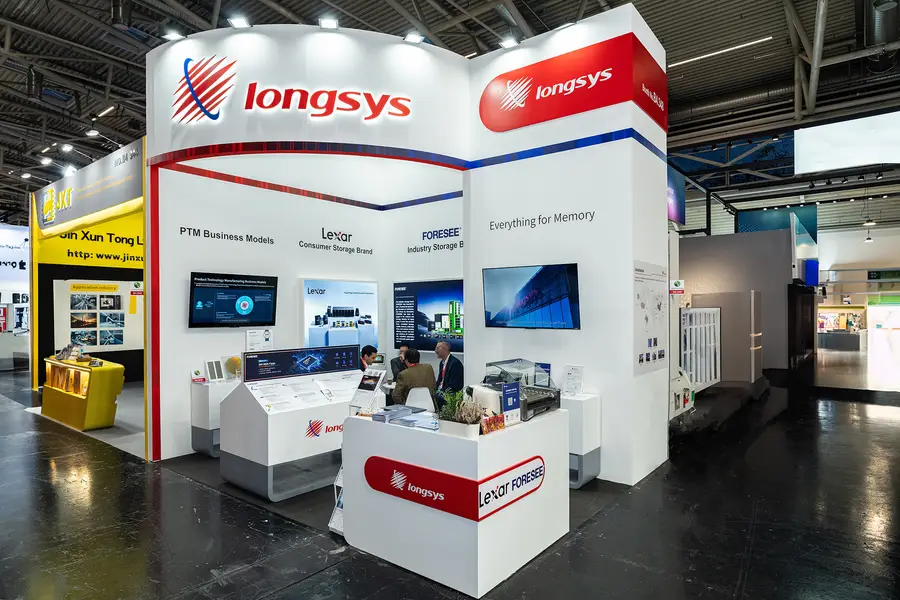
Core Viewpoint - Jiangbolong has been granted approval for a secondary listing in Hong Kong, which serves as a supplement to its A-share listing, potentially making it a relatively stable investment target in the Chinese semiconductor industry [2] Group 1: Company Overview - Jiangbolong is positioned in the low-end segment of the Chinese memory industry, which may help it avoid geopolitical risks [2] - The company is preparing for a secondary listing in Hong Kong after receiving approval from the China Securities Regulatory Commission (CSRC) [2] - Jiangbolong's revenue growth has significantly improved in the second quarter, following a weak start to the year, as global memory prices stabilized [2] Group 2: Financial Performance - In 2022, Jiangbolong's revenue surged by 73% to 17.5 billion yuan (approximately 2.46 billion USD), compared to a previous growth rate of 22% [4] - The company's revenue for the second quarter reached 5.94 billion yuan, marking a substantial increase from the first quarter [4] - Despite a significant drop in net profit from 594 million yuan to 14.8 million yuan in the first half of the year, the company reported a net profit of 234 million yuan in the second quarter, tripling the first quarter's profit [4] Group 3: Market Position and Strategy - Jiangbolong primarily generates revenue from embedded storage products in PCs and smartphones, with approximately 50% of revenue coming from this category [3] - The company has ambitions in chip manufacturing, as evidenced by its acquisition of a 70% stake in a Suzhou-based memory chip packaging factory [2][3] - Jiangbolong's overseas business has a significantly higher profitability compared to its domestic operations, with overseas products accounting for about 70% of total revenue and achieving a gross margin of 15.02% [4] Group 4: Industry Trends - The rapid development of artificial intelligence and cloud computing is shifting storage demand from end-user devices to cloud services, posing a significant risk to Jiangbolong's consumer business [4] - The memory industry is characterized by strong cyclical properties, leading to noticeable fluctuations in Jiangbolong's business over the past two years [4] - The recovery of the memory chip industry, combined with strong market demand for Chinese chip-related products, may benefit Jiangbolong's future prospects [5]

美股异动|阿里云栖大会将于本周三开幕,万国数据盘前涨近2%
Ge Long Hui· 2025-09-22 08:47
Core Viewpoint - GDS Holdings (GDS.US) saw a nearly 2% pre-market increase, reaching $39.7, amid the upcoming 2025 Cloud Summit in Hangzhou, which will focus on AI, cloud computing, and industry applications [1] Group 1: Event Highlights - The 2025 Cloud Summit will take place from September 24 to 26 in Hangzhou, themed "Cloud Intelligence Integration · Carbon and Silicon Symbiosis" [1] - The summit will feature three main forums: "Cloud Summit Outlook," "Cloud Technology," and "Incalculable Value," focusing on the latest trends in AI and cloud computing [1] Group 2: Industry Insights - Huawei recently announced its Ascend AI chip technology roadmap at the recent Connect Conference, indicating advancements in AI capabilities [1] - CITIC Securities' report expresses optimism regarding the downstream AI computing power demand represented by the internet sector, suggesting that domestic computing power is expected to enhance product competitiveness in terms of single-card performance and cluster performance [1] - The report recommends attention to the domestic computing chip industry, server sector, and OCS optical device supply chain companies [1]
互联网传媒周报:继续推荐互联网云+芯片,游戏板块,提示长视频政策底-20250922
Shenwan Hongyuan Securities· 2025-09-22 08:13
Investment Rating - The report maintains a "Positive" outlook on the internet cloud + chip and gaming sectors, while indicating a policy bottom for long videos [2][4]. Core Insights - The report emphasizes the importance of the internet cloud computing sector, driven by AI advancements and self-developed chips, which are expected to enhance profitability and avoid homogenization in competition [4]. - The gaming sector is projected to experience continued growth, with a PE range of 15-20x for 2026, indicating potential for valuation uplift [4]. - Long video content policies are improving, which may enhance project turnover and investment ROI in the film sector [4]. Summary by Sections Internet Cloud Computing - The domestic internet cloud computing sector is replicating the growth trajectory seen in North American giants, with AI driving increased capital expenditure and revenue growth [4]. - Key players recommended include Alibaba, Tencent, Kingsoft Cloud, and Baidu, with a focus on their self-developed chips and AI applications [4]. Gaming Sector - The gaming sector is expected to see a positive trend in Q3 2025, with a historical PE range of 10-40x, suggesting that current valuations are not excessive [4]. - Recommended companies include Tencent, Giant Network, and Huya, with a focus on their ability to develop and operate enduring game products [4]. Long Video and Film Industry - Recent policy changes are expected to improve the operational environment for long video content, with upcoming films in the National Day release schedule [4]. - Companies like Mango TV and Reading Group are highlighted for their potential recovery in fundamentals [4]. Consumer and Entertainment - Continued recommendations for consumer entertainment companies such as NetEase Cloud Music, Pop Mart, and Damai Entertainment [4].




经济大省挑大梁:从用电量看江苏经济之“进”
Zhong Guo Neng Yuan Wang· 2025-09-22 08:07
Group 1: Economic Resilience and Power Consumption - Jiangsu's power load reached a historical peak of 155 million kilowatts this summer, a year-on-year increase of 6.12% compared to last year's highest value [1] - From January to August, Jiangsu's total electricity consumption reached 593.02 billion kilowatt-hours, reflecting a year-on-year growth of 4.2% [1] - The robust electricity consumption data indicates Jiangsu's strong economic resilience and steady development [1] Group 2: Manufacturing Sector Performance - Jiangsu's secondary industry electricity consumption grew by 3.7% year-on-year, with industrial electricity consumption increasing by 3.9% [2] - The high-end equipment manufacturing sector showed significant growth, with electricity consumption in computer, communication, and other electronic equipment manufacturing rising by 6.0% [3] - The automotive manufacturing sector saw a remarkable increase in electricity consumption, with a year-on-year growth of 15.6% from January to August [3][4] Group 3: Digital Economy Growth - The digital economy in Jiangsu has become a new growth engine, with electricity consumption in the information transmission, software, and IT services sector increasing by 23.5% year-on-year [5] - The number of 5G factories in Jiangsu has increased to 210, reflecting the province's commitment to digital infrastructure [6] - The core industry value added of the digital economy is projected to rise from 10.3% of GDP in 2021 to 11.8% in 2024 [6] Group 4: Consumer Sector Dynamics - The third industry in Jiangsu saw a year-on-year electricity consumption increase of 6.3%, becoming the main driver of electricity growth [8] - The "Su Super" football league has significantly boosted local consumption, generating over 38 billion yuan in various consumption scenarios [8] - The charging and swapping service industry for electric vehicles experienced a year-on-year electricity consumption increase of 46.5% [9]
云筑网与腾讯云达成战略合作,助力建筑行业降本增效和管理提升
Sou Hu Cai Jing· 2025-09-22 07:14
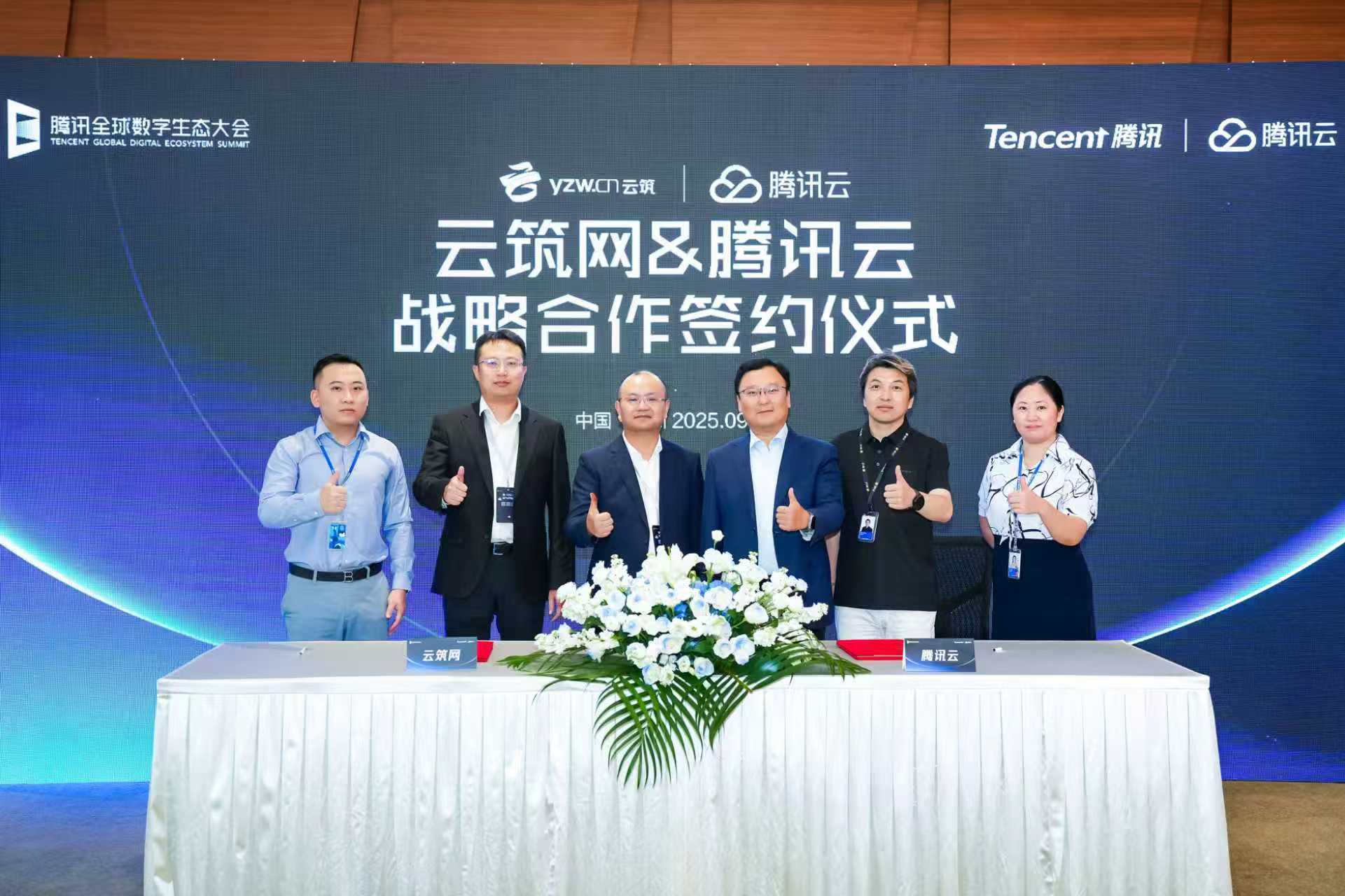
Core Insights - Tencent Cloud and Yunzhuwang will collaborate to enhance the construction industry through cloud computing, AI, big data, and information security solutions [1][3][4] Group 1: Strategic Partnership - Yunzhuwang, a subsidiary of China State Construction Engineering Corporation, will leverage Tencent Cloud's technology to improve operational efficiency and management in the construction sector [1][3] - The partnership aims to provide comprehensive solutions for digital supply chains and smart labor management within the construction industry [3] Group 2: Technological Integration - In cloud computing, Yunzhuwang will utilize Tencent Cloud's capabilities to enhance system stability and scalability across all business operations [3][4] - The collaboration will focus on developing AI algorithms tailored to business needs, improving supply chain forecasting and procurement efficiency [4] Group 3: Big Data and Security - A big data platform will be established, utilizing Tencent Cloud's distributed storage and real-time computing technologies to support material price forecasting and supplier credit assessment [4] - The partnership will also address information security by creating an integrated security system to protect core business information and data assets [4] Group 4: Future Directions - The ongoing integration of industry resources and technological capabilities will drive the digital transformation of the construction sector, providing a practical reference for the industry's evolution [4]

浙江东阳光液冷科技有限公司成立,注册资本1亿
Xin Lang Cai Jing· 2025-09-22 07:12
Group 1 - Zhejiang Dongyangguang Liquid Cooling Technology Co., Ltd. was established on September 18, with a registered capital of 100 million RMB [1] - The legal representative of the company is Hu Laiwen [1] - The business scope includes sales of cloud computing equipment, sales of artificial intelligence hardware, integration services for artificial intelligence industry applications, and data processing and storage support services [1] Group 2 - The company is jointly held by Guangdong Dongyangguang Liquid Cooling Technology Co., Ltd. and Zhuangyuan [1]

OpenAI牵手立讯精密,消费电子ETF、电子ETF、电子50ETF涨超4%
Ge Long Hui A P P· 2025-09-22 05:54
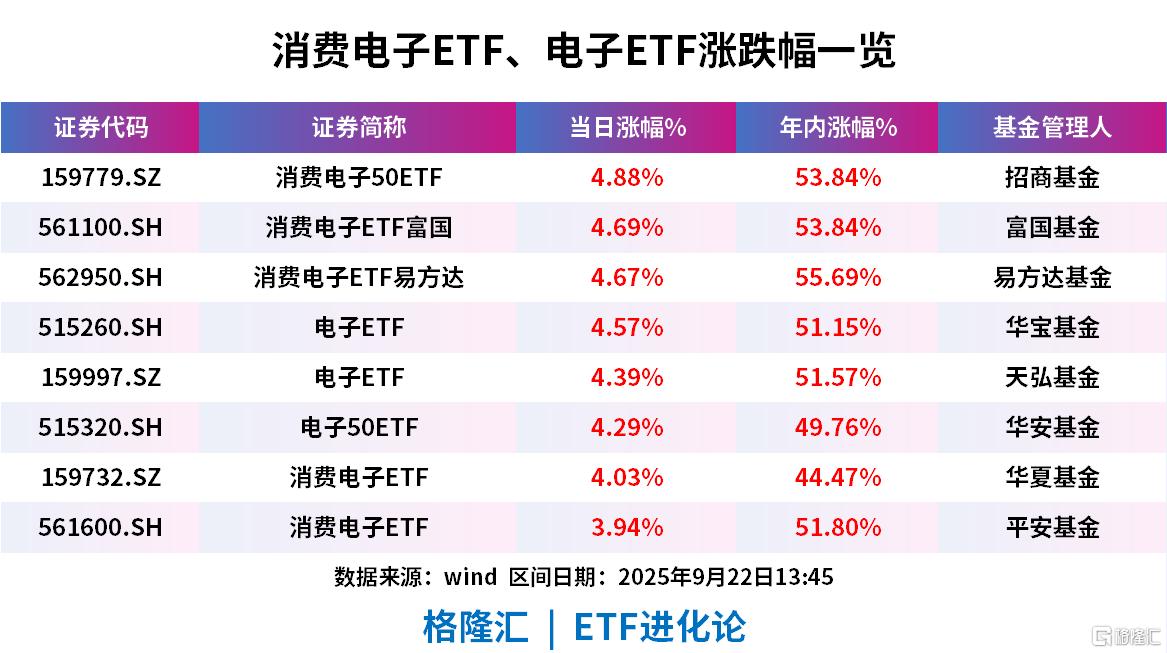
Group 1 - The consumption electronics sector is experiencing significant growth, with various ETFs tracking this sector showing substantial year-to-date increases, such as the Consumption Electronics ETF from E Fund, which has risen by 55.69% [2] - Major companies in the consumption electronics ETF include Luxshare Precision, Industrial Fulian, and Semiconductor Manufacturing International Corporation, with a notable "fruit chain" component making up 38.29% of the index [2][3] - OpenAI has reportedly partnered with Luxshare Precision to produce future OpenAI devices, including smart glasses and audio recording devices, which could drive demand in the consumption electronics sector [3] Group 2 - Apple has requested Luxshare Precision to increase the daily production of the iPhone 17 standard version by approximately 40% due to strong pre-sale performance, indicating robust demand for the product [4] - Goldman Sachs has noted that the delivery times for all iPhone 17 models are longer than previous versions, with the standard version experiencing an average wait time of 27 days in mainland China, suggesting strong consumer interest [4] - The semiconductor and consumption electronics sectors are expected to continue their recovery, with projected revenue growth of 19.2% and net profit growth of 29.0% for 467 companies in the electronics sector in the first half of 2025 [5]

云上技术服务方案和实践
阿里云· 2025-09-22 05:42
Investment Rating - The report does not explicitly state an investment rating for the gaming industry Core Insights - The gaming industry has evolved into a complex ecosystem that integrates technology, art, and culture, with increasing demands for immersive experiences and operational stability [4] - The report emphasizes the importance of efficient architecture and data-driven decision-making in addressing the challenges faced by game developers [4][5] - The book serves as a practical guide, offering solutions across various technical domains, from architecture design to AI-driven art creation [5][16] Summary by Sections Chapter 1: Game Architecture - Discusses different game types and their architectural needs, highlighting the importance of selecting optimal architecture based on gameplay requirements [7][54] - Explores the evolution of game architecture from local hardware to cloud-based solutions, enabling dynamic and scalable game environments [54] Chapter 2: Game Networking - Examines the impact of network quality on player experience and presents strategies for building low-latency, high-availability networks [8] - Introduces advanced technologies such as edge computing and serverless architecture for future network optimization [8] Chapter 3: Game Security - Analyzes various network security architectures and proposes a comprehensive defense system to protect against cyber threats [9] - Highlights the necessity of robust security measures to ensure long-term operational success in the gaming industry [9] Chapter 4: Game Downloading - Focuses on the importance of download speed and player experience, detailing methods for building high-availability architectures [10] - Discusses practical techniques for managing traffic surges during peak times [10] Chapter 5: Game Databases - Addresses the critical role of data management and recovery strategies in maintaining game integrity [11] - Provides insights into minimizing data loss and ensuring rapid recovery through cloud-native tools [11] Chapter 6: Game Big Data - Explores the significance of data-driven decision-making in game operations and marketing [12] - Discusses the construction of real-time data lakes and the use of tools like Flink for player behavior analysis [12] Chapter 7: Game Art - Investigates the transformative impact of AI-generated content on game art and design [13] - Analyzes the potential and limitations of AI in enhancing creative processes within the gaming industry [13] Chapter 8: Game Content Review - Discusses the importance of content moderation in maintaining a safe and compliant gaming environment [14] - Explores various methods and technologies for effective content review [14] Chapter 9: The Future of the Gaming Industry - Reflects on the technological evolution of the gaming industry and anticipates future trends such as cloud gaming and AI integration [15][52] - Envisions a future where gaming becomes a gateway to the metaverse, emphasizing the need for innovative governance and content moderation strategies [52]
华为10亿元支持鸿蒙AI生态,计算机ETF(159998)涨超2%,云计算ETF沪港深(517390)近10日“吸金”近1亿
2 1 Shi Ji Jing Ji Bao Dao· 2025-09-22 02:59
Group 1 - A-shares indices opened higher on September 22, with strong performance in the storage chip sector, particularly the Computer ETF (159998) which rose by 2.17% with a trading volume exceeding 47 million yuan [1] - Key stocks in the Computer ETF included Jiangbolong, which increased by over 11%, and other notable gainers were Zhongke Shuguang, Xiechuang Data, and 360 [1] - The Cloud Computing ETF (517390) experienced a slight decline of 0.17%, but notable stocks like Donghua Software reached the daily limit up, with other gainers including Guanghuan New Network and Aofei Data [1] Group 2 - The Cloud Computing ETF (517390) closely tracks the CSI Hong Kong-Shanghai Cloud Computing Industry Index and includes major stocks like Tencent Holdings and Zhongke Shuguang [2] - Recent developments include the establishment of the Shanghai Quantum Artificial Intelligence Joint Alliance and the release of ten application scenarios for quantum computing at the Pujiang Innovation Forum [2] - Huawei announced the "Tian Gong Plan" at the Huawei Connect 2025 conference, committing 1 billion yuan to support the Harmony AI ecosystem, focusing on AI agents as a key direction for development [2] Group 3 - CITIC Securities indicated that the third quarter is a traditional peak season for the electronics sector, with strong demand for AI computing-related products, including chips and servers, and an upward trend in both overseas and domestic computing chains [3] - The demand for storage is expected to increase, with enterprise-level demand remaining robust, and NAND and DRAM demand growth and price increases exceeding expectations since the second half of 2025 [3] - The semiconductor equipment chain is steadily advancing in domestic production, with a clear trend of mergers and acquisitions in the industry [3] Group 4 - CITIC Jinpu highlighted Huawei's upcoming product launches, including the Ascend 950 series, which will be released between 2026 and 2028, aimed at meeting the growing demand for AI computing power [4] - Huawei's Atlas 950 super node, supporting 8192 Ascend 950DT cards, is set to launch in the fourth quarter of 2026, significantly enhancing overall computing power [4] - The North American AI computing demand remains strong, with expectations of a rebound in domestic AI computing demand from September to October, and a recommendation to focus on domestic cloud service providers [4]