
汽车出口

Search documents
乘联分会:1-9月皮卡出口22.8万辆,同比增长28%
Xin Lang Cai Jing· 2025-10-17 09:00
Core Insights - The national pickup truck market in China is projected to export 244,000 units in 2024, reflecting an impressive growth rate of 85% [1] - The overall industry export performance, led by Great Wall Motors, has been exceptionally strong, with a total of 228,000 pickup trucks exported from January to September 2023, marking a year-on-year increase of 28% [1] - In September 2025, pickup truck exports reached 26,000 units, showing a year-on-year growth of 3% and a month-on-month increase of 22% [1] Industry Performance - The pickup truck export market continues to maintain a high export share, indicating robust demand and competitive positioning in the global market [1] - The strong export figures suggest a positive outlook for the pickup truck segment, particularly for leading manufacturers like Great Wall Motors [1]
吉利汽车
数说新能源· 2025-10-17 03:44
Group 1: High-end Brand Proportion - The proportion of high-end brands in Geely's lineup is increasing, with Zeekr and Lynk & Co. expected to drive this trend, selling a combined 385,000 units this year, a year-on-year increase of 14% [1] - The Galaxy brand has seen significant growth, with 875,000 units sold this year, representing a year-on-year increase of 206%, although profit margins may decline due to price competition [1] Group 2: New Energy Vehicle (NEV) Trends - Geely's new energy vehicle sales growth is notable, with penetration rates rising from under 50% at the end of last year to 60% in August and September this year [3] - Compared to other traditional automakers, Geely's transition to new energy vehicles is rapid, second only to BYD, which sold 390,000 new energy vehicles in September [3] Group 3: Export Performance - In September, Geely exported 40,600 vehicles, a year-on-year increase of 1%, with exports accounting for 15% of total sales [3] - Cumulatively, from January to September, Geely's exports totaled 294,500 units, a year-on-year decrease of 7%, indicating a significant gap in overseas market presence compared to BYD and Chery [3] Group 4: Overall Assessment - Geely is performing well in the transition to new energy vehicles, with increasing electric vehicle penetration and strengthening brand influence in high-end models [4] - Future strategies should focus on expanding overseas markets, including enhancing the dealer network and establishing manufacturing facilities abroad to keep pace with leading competitors [4]



中汽协:9月汽车产销分别完成327.6万辆和322.6万辆 同比分别增长17.1%和14.9%
智通财经网· 2025-10-15 09:34
Core Insights - The automotive industry in China showed significant growth in September 2025, with production and sales reaching 3.276 million and 3.226 million units respectively, marking a month-on-month increase of 16.4% and 12.9%, and a year-on-year increase of 17.1% and 14.9% [1] - The positive macroeconomic environment and proactive policies contributed to the steady growth of the automotive market, with monthly year-on-year growth rates exceeding 10% for five consecutive months [1] Passenger Vehicles - In September 2025, production and sales of passenger vehicles reached 2.9 million and 2.859 million units, reflecting a month-on-month increase of 16% and 12.5%, and a year-on-year increase of 15.9% and 13.2% [4] - From January to September 2025, production and sales of passenger vehicles totaled 21.241 million and 21.246 million units, with year-on-year growth of 13.9% and 13.7% [4] New Energy Vehicles - In September 2025, production and sales of new energy vehicles were 1.617 million and 1.604 million units, showing a year-on-year increase of 23.7% and 24.6% [5] - For the first nine months of 2025, production and sales of new energy vehicles reached 11.243 million and 11.228 million units, with year-on-year growth of 35.2% and 34.9% [5] Commercial Vehicles - In September 2025, production and sales of commercial vehicles were 376,000 and 368,000 units, with month-on-month increases of 19.3% and 16.3%, and year-on-year increases of 27.7% and 29.6% [6] - From January to September 2025, production and sales of commercial vehicles totaled 3.091 million and 3.117 million units, with year-on-year growth of 9.4% and 7.8% [6] Exports - In September 2025, automotive exports reached 652,000 units, reflecting a month-on-month increase of 6.7% and a year-on-year increase of 21% [9] - For the first nine months of 2025, total automotive exports amounted to 4.95 million units, with a year-on-year growth of 14.8% [9] Domestic Sales - In September 2025, domestic automotive sales were 2.574 million units, showing a month-on-month increase of 14.6% and a year-on-year increase of 13.4% [10] - From January to September 2025, domestic sales totaled 19.414 million units, with a year-on-year growth of 12.5% [10]
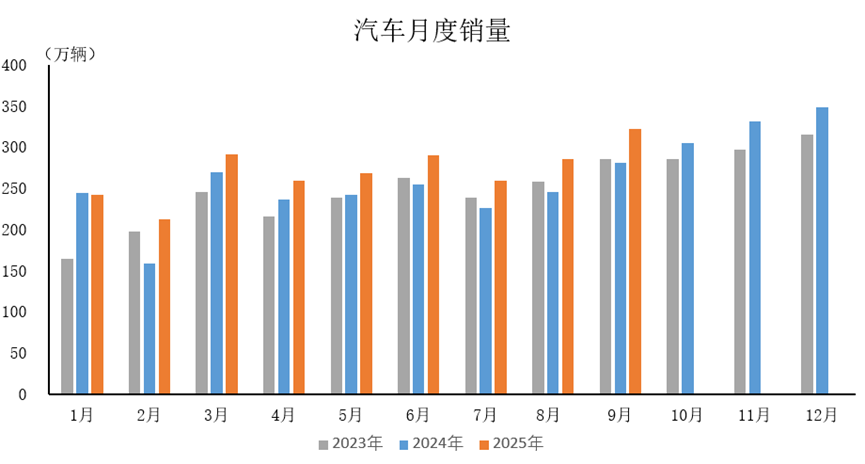
乘联分会:10月1-12日全国乘用车市场零售68.6万辆 同比下降8%
Zhi Tong Cai Jing· 2025-10-15 09:12
Group 1: Market Performance - From October 1 to 12, the national retail sales of passenger cars reached 686,000 units, a year-on-year decrease of 8%, but a month-on-month increase of 12% [1] - Cumulative retail sales for the year reached 17.694 million units, reflecting a year-on-year growth of 8% [1] - The wholesale volume for the same period was 546,000 units, down 11% year-on-year and down 15% month-on-month [1][5] Group 2: New Energy Vehicles - Retail sales of new energy vehicles from October 1 to 12 were 367,000 units, a year-on-year decrease of 1%, but a month-on-month increase of 1% [1] - The penetration rate of new energy vehicle retail sales reached 53.5%, with cumulative retail sales for the year at 9.236 million units, up 23% year-on-year [1] - Wholesale of new energy vehicles was 328,000 units, a year-on-year increase of 1%, but a month-on-month decrease of 11% [1] Group 3: Market Trends and Influences - The first week of October saw an average daily retail of 44,000 units, down 18% year-on-year and down 5% month-on-month [2] - The second week showed an average daily retail of 85,000 units, a year-on-year increase of 7% and a month-on-month increase of 38% [3] - The market is experiencing a traditional peak season, but consumer enthusiasm is gradually being released due to tightening subsidy standards and the impending expiration of vehicle purchase tax incentives [3] Group 4: Export Performance - Since the third quarter, China's automobile export situation has improved, with significant growth in overseas markets, particularly for self-owned new energy vehicles [5] - The export of Chinese vehicles is increasingly competitive, with a notable impact on international brands as the quality and cost-effectiveness of domestic vehicles improve [5][10] - In the first eight months of 2025, the overseas sales of Chinese self-owned brands reached 2.1 million units, a year-on-year increase of 11% [9]
车市热度持续走高 汽车产销月度增速连续5个月超10%
Xin Jing Bao· 2025-10-14 17:19
Group 1: Overall Market Performance - The automotive market in China continues to show a positive trend, with production and sales growth rates exceeding 10% for five consecutive months [1] - In September, automotive production reached 3.276 million units and sales reached 3.226 million units, marking a year-on-year increase of 17.1% and 14.9% respectively [1] - For the first nine months of the year, total automotive production was 24.433 million units, a 13.3% increase year-on-year, while sales were 24.436 million units, up 12.9% [1] Group 2: Passenger Vehicle Market - In the first nine months, passenger vehicle production and sales were 21.241 million and 21.246 million units respectively, reflecting year-on-year growth of 13.9% and 13.7% [2] - In September, passenger vehicle sales reached 2.859 million units, with a year-on-year increase of 13.2% [2] - Domestic sales of traditional fuel passenger vehicles have shown a positive trend, with a 1.7% year-on-year increase in the first nine months [2] - The market share of domestic brands in passenger vehicles was approximately 70.2% in September, up 2.5 percentage points year-on-year [2] Group 3: Commercial Vehicle Market - The commercial vehicle market also experienced growth, with production and sales in September increasing by nearly 30% year-on-year [3] - For the first nine months, commercial vehicle sales totaled 3.117 million units, representing a year-on-year growth of 7.8% [3] - The sales of new energy commercial vehicles surged by 71.9% in September, accounting for 30% of total commercial vehicle sales [3] Group 4: New Energy Vehicles - New energy vehicle production and sales reached 11.243 million and 11.228 million units respectively in the first nine months, with year-on-year growth of 35.2% and 34.9% [4] - In September, new energy vehicle sales were 1.604 million units, a year-on-year increase of 24.6% [4] - The market share of new energy vehicles in total vehicle sales is expected to reach 50% by the end of the year [4] Group 5: Export Performance - In the first nine months, automotive exports totaled 4.95 million units, a year-on-year increase of 14.8% [5] - Exports of new energy vehicles reached 1.758 million units, showing a significant year-on-year growth of 89.4% [5] Group 6: Future Outlook - The automotive industry is projected to exceed 6.5 million exports by 2025, with total new energy vehicle sales expected to surpass 16 million units this year [6]
史上首次!中汽协:9月汽车产销量均破300万辆
Nan Fang Du Shi Bao· 2025-10-14 17:14
Core Insights - China's automotive production and sales have surpassed 3 million units for the first time in September, marking a historical high for the same period [1] - The monthly growth rate for production and sales has remained above 10% for five consecutive months, indicating a strong recovery trend [1] - In the first nine months of 2023, total automotive production and sales reached approximately 24.4 million units, with year-on-year growth of 13.3% and 12.9% respectively [1] Group 1: Production and Sales Data - In September, automotive production reached 3.276 million units, while sales were 3.226 million units, reflecting year-on-year increases of 17.1% and 14.9% respectively [1] - For the first nine months, production totaled 24.433 million units and sales totaled 24.436 million units, with production and sales growth rates increasing by 0.6 and 0.3 percentage points compared to the previous period [1] Group 2: New Energy Vehicles (NEVs) - NEV production and sales exceeded 11 million units in the first nine months, with production at 11.243 million units and sales at 11.228 million units, showing year-on-year growth of 35.2% and 34.9% respectively [1] - NEVs accounted for 46.1% of total new car sales during this period [1] Group 3: Market Share and Brand Performance - Sales of Chinese brand passenger cars reached 14.651 million units in the first nine months, representing a year-on-year increase of 22.9% and a market share of 69%, up 5.1 percentage points from the previous year [2] - Traditional fuel passenger cars saw a decline in sales, particularly in the A-class segment, which dropped by 2.8% to 5.767 million units [2] Group 4: Export Performance - Total automotive exports reached 4.95 million units in the first nine months, with a year-on-year increase of 14.8% [2] - NEV exports surged by 89.4% to 1.758 million units, while traditional fuel vehicle exports fell by 5.6% to 3.192 million units [2] - Chery and BYD were notable exporters, with Chery exporting 936,000 units (up 12.9%) and BYD achieving a remarkable growth rate of 130% with 705,000 units exported [3]
“金九”含金量拉满:9月汽车产销首破300万辆,前三季度累计增长13%
Hua Xia Shi Bao· 2025-10-14 11:26
Core Insights - In September, China's automotive production and sales exceeded 3 million units for the first time, reaching 3.276 million and 3.226 million units respectively, marking a significant milestone in the industry [2][3] - For the first three quarters of the year, cumulative production and sales reached 24.433 million and 24.363 million units, representing year-on-year growth of 13.3% and 12.9% [2][5] - The share of new energy vehicles (NEVs) in total vehicle sales has been steadily increasing, with NEV sales accounting for 46.1% of total new car sales in the first three quarters [2][7] Production and Sales Performance - In September, the production and sales of passenger vehicles reached 2.9 million and 2.859 million units, with year-on-year growth of 15.9% and 13.2% respectively [3][4] - Commercial vehicle production and sales were 376,000 and 368,000 units, showing year-on-year increases of 27.7% and 29.6% [3] - The automotive market has maintained a monthly year-on-year growth rate of over 10% for five consecutive months [3][5] New Energy Vehicles and Exports - NEV production and sales in September were 1.617 million and 1.604 million units, with year-on-year growth of 23.7% and 24.6% [7] - NEVs accounted for 49.7% of total new car sales in September, and 53.7% of domestic sales [7] - In the first three quarters, NEV production and sales exceeded 11.24 million units, with year-on-year growth of 35.2% and 34.9% [7] Market Trends and Consumer Behavior - The automotive market is experiencing a shift towards stable pricing and reduced promotions, with 23 models seeing price reductions in September compared to 36 in the same month last year [5] - The share of Chinese brand passenger vehicles reached 70.2% in September, with sales surpassing 2 million units [6] Export Dynamics - In September, China exported 652,000 vehicles, a year-on-year increase of 21%, with total exports for the first three quarters reaching 4.95 million units [8][9] - NEV exports saw remarkable growth, with 1.758 million units exported in the first three quarters, representing a year-on-year increase of 89.4% [8][9] - Self-owned brands accounted for 59.5% of electric vehicle exports in the first three quarters, with Chery leading in total exports [9][10]

入局造车?京东:联合宁德时代、广汽,新车将于11.11期间发布;中汽协:2025年中国汽车出口有望超650万辆丨汽车交通日报
创业邦· 2025-10-14 10:25
Group 1 - BYD is inclined to build its third factory in Europe in Spain due to lower manufacturing costs and a clean energy network, although no final decision has been made yet [2] - JD.com announced a collaboration with CATL and GAC to launch a new car called "National Good Car" during the 11.11 shopping festival, integrating resources for user insights, manufacturing capabilities, and battery technology [2] - The pre-sale price for the Arcfox Alpha T5 extended-range version has been announced starting at 123,800 yuan, featuring a pure electric range of 215 km and a combined range of 1,215 km [2] Group 2 - The China Association of Automobile Manufacturers predicts that by 2025, China's automobile exports are expected to exceed 6.5 million units, with cumulative sales of new energy vehicles surpassing 16 million units, indicating a better-than-expected overall market performance [4]




中汽协陈士华:2025年我国汽车出口有望超650万辆
Mei Ri Jing Ji Xin Wen· 2025-10-14 06:32
Core Insights - The Chinese automotive industry is expected to see significant growth, with total vehicle exports projected to exceed 6.5 million units by 2025 and cumulative sales of new energy vehicles anticipated to surpass 16 million units, indicating a better-than-expected overall market performance [1] Industry Summary - The automotive industry in China is on a positive trajectory, with strong export forecasts for the coming years [1] - New energy vehicles are expected to play a crucial role in the market, contributing to the overall sales figures significantly [1]
汽车早餐 | 赛力斯通过港交所上市聆讯;加拿大地方政府要求取消对中国电动车征收100%关税;通用汽车取消下一代氢燃料电池研发项目
Zhong Guo Qi Che Bao Wang· 2025-10-14 01:31
Domestic News - The Ministry of Industry and Information Technology plans to introduce standards related to vehicle quality and safety to strengthen vehicle safety and promote healthy development in the automotive industry [2] - In the first three quarters, the export share of domestic electric vehicles reached 59.5%, showing a significant increase compared to the same period last year [3] - Beijing has added 48,000 motor vehicle parking spaces since 2025, alleviating parking difficulties through various initiatives [4] - Shenzhen has deployed 115 unmanned vehicles across five districts, processing over 70,000 packages daily, and has established eight drone operation bases [5] International News - The Manitoba provincial government in Canada is urging the federal government to eliminate the 100% tariff on Chinese electric vehicles, citing negative impacts on bilateral trade and local industries [6] Corporate News - LG Energy reported a third-quarter operating profit of 30.07 billion yuan, exceeding analyst expectations, despite a 17% year-on-year decline in revenue [7] - General Motors has announced the cancellation of its next-generation hydrogen fuel cell development project, while its joint venture with Honda will continue operations focused on data center power support [9] - Seres Group has passed the listing hearing at the Hong Kong Stock Exchange, with CICC and China Galaxy International as joint sponsors [10] - Geely Holding Group reported total sales of 2.95 million vehicles in the first three quarters, a 29% year-on-year increase, with new energy vehicle sales up 68% [11] - Former Didi executive Fu Qiang has joined MOGOX as president, focusing on AI business strategy [12] - Polestar has closed its last direct sales store in China, citing a strategic adjustment to better meet market demands, while other operations remain unaffected [13] - Lu Zhengyao and Shenzhou Youche have been ordered to pay over 34.09 million yuan due to a guarantee contract dispute [14] - XPeng Aeroht has secured its first order for 600 flying cars in the Middle East, with a total of 7,000 orders for its "land carrier" model [15]


