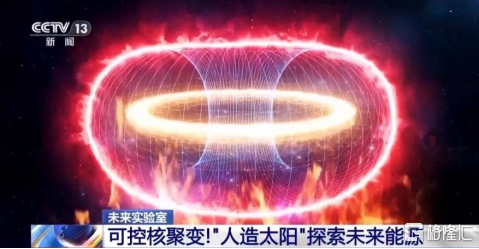
可控核聚变

Search documents
优先布局磁体系统供应商,把握CFEDR中长期机遇——可控核聚变产业数据跟踪
Xin Lang Cai Jing· 2025-09-28 14:02
Group 1 - The core viewpoint of the article emphasizes the significant investment opportunities in the nuclear fusion industry, particularly focusing on the magnet system suppliers and the long-term prospects of the CFEDR project [1][6][27] - The investment distribution shows a high concentration of funds in core areas such as the magnet system, which accounts for 287 million yuan, or 42.34% of the total investment, indicating its critical role in the nuclear fusion device funding [1][3][40] - The bidding rhythm indicates that orders are primarily released during the mid-stage of engineering construction (approximately 20%-50% progress), with a focus on equipment installation and subsystem integration [2][39] Group 2 - The CFEDR project is projected to have an investment amount of around 120 billion yuan, with equipment costs estimated at 72 billion yuan, suggesting significant future value release in the industry chain from 2030 to 2033 [2][25][54] - Current bidding data from January to September 2025 shows that the BEST project leads with a budget of 386.25 million yuan, accounting for 55.98% of the total bidding amount, indicating a strong demand for key components [36][39] - The article suggests that companies with competitive advantages in the magnet and power supply sectors, such as Western Superconducting, Yingjie Electric, and Shanghai Superconducting, should be closely monitored for investment opportunities [3][27][29] Group 3 - The nuclear fusion industry is entering an engineering exploration phase, with the CFEDR project still in its early stages, highlighting the ongoing development and validation of key components [30][53] - The article outlines a clear evolutionary path for China's nuclear fusion projects, transitioning from experimental setups to engineering demonstrations, with the CFEDR positioned as a key milestone for stable energy output [15][54] - The market for nuclear fusion is expected to grow significantly, with projections indicating a global market size of approximately 843.46 billion USD by 2040, and China's market reaching about 53.68 billion USD, reflecting robust growth potential [21][54]


爱建证券-机械设备行业可控核聚变产业数据跟踪(一):优先布局磁体系统供应商,把握CFEDR中长期机遇-250928
Xin Lang Cai Jing· 2025-09-28 13:22
Core Insights - The investment in the nuclear fusion industry is highly differentiated, with significant funding concentrated in core areas such as magnet systems, power supplies, and superconducting materials, which have high technical barriers [1][2] - The magnet system accounts for the largest share of the budget at 287 million yuan, representing 42.34% of the total investment, indicating its critical role in nuclear fusion device funding [1] - The CFEDR project is expected to have a substantial investment of around 120 billion yuan, with equipment costs estimated at 72 billion yuan, suggesting significant future value release in the industry chain from 2030 to 2033 [2] Investment Opportunities - Current investment opportunities in the nuclear fusion industry chain are primarily focused on two areas: 1. Segments with clear performance delivery rhythms, such as the magnet system with a cumulative budget of 370 million yuan and the power supply system exceeding 100 million yuan, providing strong performance locking for related manufacturers [3] 2. Manufacturers that have established good verification and customer connections during the BEST phase are expected to maintain advantages in the CFEDR pre-research and subsequent construction [3]



机械设备行业:可控核聚变产业数据跟踪(一):优先布局磁体系统供应商,把握CFEDR中长期机遇
Shanghai Aijian Securities· 2025-09-28 12:55
Investment Rating - The industry investment rating is "Outperform" [1] Core Viewpoints - The report emphasizes prioritizing investments in magnet system suppliers to seize long-term opportunities in the Controlled Fusion Energy Demonstration Reactor (CFEDR) [5] - The report identifies two main investment logic paths in the nuclear fusion industry: one focusing on segments with clear performance visibility, particularly in magnet and power systems, and the other on companies with established validation and customer connections in the BEST phase [5][34] Summary by Sections 1. Current Progress in Nuclear Fusion Industry - The nuclear fusion industry is entering an engineering exploration phase, with CFEDR still in its early project stages [38] - The report highlights that the magnet system holds the highest value in the nuclear fusion device, accounting for 42.34% of total investment [55] 2. Investment Opportunities - Investment opportunities are primarily in segments with clear performance visibility, such as magnet systems with a cumulative budget of 370 million yuan and power systems exceeding 100 million yuan [5][34] - Companies with competitive advantages in these segments, such as Western Superconducting, Yingjie Electric, and Shanghai Superconducting, are recommended for attention [5][34] 3. Market Size and Growth - The global nuclear fusion market is projected to reach approximately 843.46 billion USD by 2040, with a compound annual growth rate (CAGR) of about 6% from 2030 to 2040 [27] - The Chinese market is expected to grow to around 53.68 billion USD by 2040, with a CAGR of 6.4%, slightly higher than the global average [27] 4. Projected Investment in CFEDR - The total investment for CFEDR is estimated to be around 120 billion yuan, with equipment investment projected at approximately 72 billion yuan [31] - The report anticipates that CFEDR will accelerate into equipment bidding and installation phases following the completion of major components in the BEST project [68] 5. Key Components and Their Importance - The magnet system is identified as the core component of the Tokamak device, with significant investment and market concentration [55][56] - Superconducting materials are highlighted as a critical cost component within the magnet system, accounting for about 47% of its costs [55]
科学评估颠覆性技术从实验室走向应用场的动态进程——《颠覆性技术产业化指数报告(2025)》解读
Ke Ji Ri Bao· 2025-09-28 09:47
Core Insights - The event held in Mianyang, Sichuan, focused on "disruptive technologies and future industrial development," featuring discussions on cutting-edge fields such as embodied intelligent robots, nuclear medicine, and materials science [1] - The "Disruptive Technology Industrialization Index Report (2025)" was released, aiming to scientifically assess the transition of disruptive technologies from laboratory to application, providing strategic insights for future industrial trends and resource allocation [1] Disruptive Technology Industrialization Index (DTII) - The DTII was created to quantify the complex process of transforming disruptive technologies from ideas to products and industries, filling a gap in decision-making support for governments, markets, and enterprises [2] - The index features a unique "Five Forces" evaluation framework, which includes: 1. Technological Innovation Power 2. Industrial Development Power 3. Ecological Support Power 4. Future Growth Power 5. Market Transformation Power [2][3] Key Findings - The report identifies three critical findings regarding the core mechanisms and driving forces of disruptive technology industrialization [4] - A significant breakthrough is the revelation of the decisive role of the "R&D market" in early industrialization stages, particularly for technologies like high-temperature superconductors and controlled nuclear fusion, which often lack mature commercial products [4] - The report emphasizes that regions like Beijing, the Yangtze River Delta, and the Guangdong-Hong Kong-Macao Greater Bay Area serve as irreplaceable "innovation sources," creating a self-accelerating effect through the synergy of technological innovation, industrial development, and ecological support [4] Future Developments - The DTII will continue to evolve by integrating real-time data and AI analysis, enhancing dynamic monitoring and predictive capabilities, and expanding its coverage to strengthen international comparisons [5] - The goal is to transform the index from an assessment tool into a strategic navigation platform, acting as a "barometer" and "catalyst" for deep integration of technological and industrial innovation, contributing to the construction of a strong technological nation [5]
150亿,上海这支母基金再发力
母基金研究中心· 2025-09-28 09:05
Group 1 - The Shanghai Future Industry Fund has successfully completed an expansion, increasing its scale from 10 billion to 15 billion yuan, with 8 billion yuan already paid in [1] - The fund has invested in cutting-edge fields such as controllable nuclear fusion, quantum computing, AI for science, and brain-computer interfaces [1] - The next steps for the fund include focusing on disruptive innovation and early-stage investments in frontier platform technologies, while building a collaborative network of innovative resources [1] Group 2 - The fund aims to leverage fiscal funds to stimulate investment and collaborate with more excellent sub-funds and projects through a comprehensive "investment + ecosystem" approach [1] - The initiative supports the construction of Shanghai as an international science and technology innovation center, injecting strong momentum into the future industrial development of Shanghai [1]

上海未来产业基金扩募至150亿元 加注颠覆式创新及前沿和早期技术投资
Zheng Quan Shi Bao Wang· 2025-09-28 05:39
Core Insights - Shanghai Future Industry Fund has successfully completed an expansion, increasing its scale from 10 billion to 15 billion yuan, with 8 billion yuan already paid in [1] - The fund has invested in cutting-edge fields such as controllable nuclear fusion, quantum computing, AI for science, and brain-computer interfaces [1] - The fund aims to focus on disruptive innovation and early-stage investments in frontier platform technologies, while collaborating with the Shanghai Future Qidian community to build an innovative resource synergy network [1] - The initiative is designed to leverage fiscal funds to stimulate investment and ecological cooperation with more excellent sub-funds and projects, contributing to the construction of Shanghai as an international science and technology innovation center [1]
行业周报:美国CFS再获售电协议,环流四号装置落地上海-20250927
KAIYUAN SECURITIES· 2025-09-27 11:14
Investment Rating - The industry investment rating is "Positive" (maintained) [1] Core Viewpoints - The development of nuclear fusion devices is progressing steadily, with continuous order releases, indicating a positive long-term outlook for the sector [8][36] - The report highlights the potential for significant advancements in laser fusion technology, aiming for commercial operation by 2045 with a target cost of electricity below 0.2 yuan per kilowatt-hour [20][21] Summary by Sections Sector Review - In the week of September 22-26, 2025, the controllable nuclear fusion sector saw most sub-segments rise, with notable individual stock performances including HaHuan HuTong (+24.2%), YongDing Co. (+23.9%), and Shanghai Electric (+16.3%) [5][15] - The sub-segments that performed well included vacuum chambers and metal forgings (+10.7%), magnets (+9.1%), and power assemblies (+5.8%) [17][18] Industry Dynamics - China's laser fusion aims for ignition by 2028 and commercial operation by 2045, with a target cost of electricity below 0.2 yuan per kilowatt-hour [20] - The U.S. company CFS has secured a power sales agreement for its ARC power station, which is expected to be operational by 2030 with a capacity of 400 MW [23] - The China Fusion Energy Company has publicly launched its operations, focusing on the development of the HL-4 device in Shanghai, targeting commercial fusion energy by 2050 [25][28] Company Developments - Shanghai Electric has officially shipped the TF coil box for the CRAFT project, which will serve as a comprehensive research platform for superconducting magnet systems and other critical components [7][33] Weekly Insights - The report emphasizes the steady progress in the development and construction of fusion devices, with a focus on core components such as magnets, main engines, and power supplies [36] - Beneficiary companies include those involved in superconducting materials, vacuum chambers, and power assembly components, which are expected to continue receiving orders due to their technological expertise [36]

万亿级能源革命来袭!可控核聚变6大龙头强势崛起,谁能问鼎能源之王
Xin Lang Cai Jing· 2025-09-26 14:26
Group 1 - China Fusion Energy Company announced the construction of the "China Circulation No. 4" experimental device in Shanghai, marking the entry into the "superconducting era" of nuclear fusion research [1] - The National Development and Reform Commission and the Energy Administration issued the "Implementation Opinions on Intelligent Development of Controlled Nuclear Fusion," emphasizing the use of AI technology to create intelligent control systems for plasma steady-state operation [1][3] Group 2 - The global competition in nuclear fusion is intensifying, with China's BEST project starting assembly two months ahead of schedule, while the US Helion company signed a global first nuclear fusion power purchase agreement with Microsoft for delivery in 2028 [4] - Japan has updated its "Fusion Energy Innovation Strategy," advancing its commercialization target to 2040, with predictions of over 10 demonstration reactors entering construction by 2035 [4] Group 3 - Wangzi New Materials, through its subsidiary Ningbo Xinyong, has broken international monopolies to become the only domestic producer of nuclear fusion pulse capacitors, with a product lifecycle of 100,000 cycles, supplying the BEST device [5] - Western Superconducting is the only company globally with full-process production capabilities for low-temperature superconducting materials, serving as the exclusive supplier of superconducting wire for the ITER project in China [6][7] - Hezhong Intelligent has overcome three major technical challenges in manufacturing fusion reactor vacuum chambers, achieving 100% domestic production for the BEST project [8] - China National Heavy Machinery Corporation successfully manufactured a thousand-ton TF coil box for the CRAFT project, recognized for its capabilities in large component formation [9] - Antai Technology, a core supplier for the EAST device, contributed to a world record of 1,056 seconds of long pulse operation with its tungsten-copper composite components [10] - A joint venture with an academic team is focusing on Z-pinch hybrid reactor technology, covering major domestic devices and demonstrating significant cost advantages [11]

宏观策略周报:LPR连续四月保持不变,数字人民币国际运营中心正式运营-20250926
Yuan Da Xin Xi· 2025-09-26 13:58
Group 1: Key Insights - The Loan Prime Rate (LPR) has remained unchanged for four consecutive months, with the 1-year LPR at 3.0% and the 5-year LPR at 3.5%, aligning with market expectations [10][22]. - The digital RMB international operation center has officially commenced operations, featuring three major business platforms: cross-border digital payment, blockchain service, and digital asset platforms, aimed at enhancing RMB internationalization and cross-border payment efficiency [22][23]. - The Chinese government emphasizes the importance of mutual respect and cooperation in US-China relations, with a focus on creating more opportunities for foreign investment in China [25][26]. Group 2: Market Overview - The domestic securities market showed mixed performance, with the STAR 50 index experiencing the highest increase of 6.47%. The power equipment sector led the industry gains with a 3.86% rise [2][30]. - The LPR's stability suggests a continuation of a loose monetary policy in the short term, although the necessity for further rate cuts appears limited [2][10]. - The market outlook indicates potential growth in the application of digital RMB in cross-border transactions, which could positively influence market dynamics if US-China trade relations stabilize [2][25]. Group 3: Investment Recommendations - Development of new productive forces is a key policy direction, with a focus on sectors such as artificial intelligence, semiconductor chips, robotics, low-altitude economy, deep-sea technology, and controllable nuclear fusion, which are expected to yield excess returns [3][40]. - Consumer spending is anticipated to increase, suggesting investment opportunities in new consumption, home appliances, and automotive sectors [3][40]. - In the context of geopolitical tensions and global economic uncertainty, long-term demand for gold as a safe-haven asset is expected to grow, alongside tight copper supply, presenting investment opportunities in these commodities [3][40].
《东方时空》聚焦可控核聚变竞逐 中国冲刺人类终极能源
Ge Long Hui· 2025-09-26 10:07
Core Insights - The article discusses China's advancements in controlled nuclear fusion, highlighting the progress made in the context of the "14th Five-Year Plan" and the "dual carbon goals" [2][3] Industry Developments - By 2025, significant progress has been made in China's controlled nuclear fusion research, with milestones such as the "East Super Ring" achieving plasma stability at 1 million degrees Celsius for 1066 seconds and the "China Circulation No. 3" reaching dual temperatures of 1.17 million degrees for atomic nuclei and 1.6 million degrees for electrons [5][7] - The controlled nuclear fusion industry chain in China is taking shape, involving upstream raw material production, midstream equipment manufacturing, and downstream technology enterprises and research institutions [7] Technological Pathways - Chinese research institutions and companies are exploring multiple technical routes for nuclear fusion, including the "deuterium-tritium" and "hydrogen-boron" pathways, aiming for breakthroughs in controllability and stability [8][10] - The "deuterium-tritium" route, led by national teams like the Chinese Academy of Sciences and China Nuclear Group, focuses on controlled fusion reactions for sustainable energy output [10] - The "hydrogen-boron" route, proposed by New Energy Group, emphasizes cost-effectiveness and safety, with the potential for high efficiency in energy generation [10][12] Collaborative Efforts - The dual-track approach of national teams and enterprises is fostering a collaborative environment to advance the "artificial sun" project, with significant contributions from both sectors [14] - The emergence of "super factories" and "super equipment" in the controlled nuclear fusion field is exemplified by New Energy's "Xuanlong 50U," which has achieved several international firsts in plasma discharge and magnetic field conditions [15] Talent and Ecosystem Development - Strengthening talent exchange and ecological cooperation is crucial for technological upgrades, with New Energy establishing an international and diverse research team and collaborating with over 70 top research institutions across four continents [17] - The ongoing exploration of fusion energy technology, which began in the mid-20th century, continues to be a focal point, with expectations that the maturation of China's nuclear fusion industry will accelerate ecological cooperation and attract more scientific talent [17]