
能源转型

Search documents
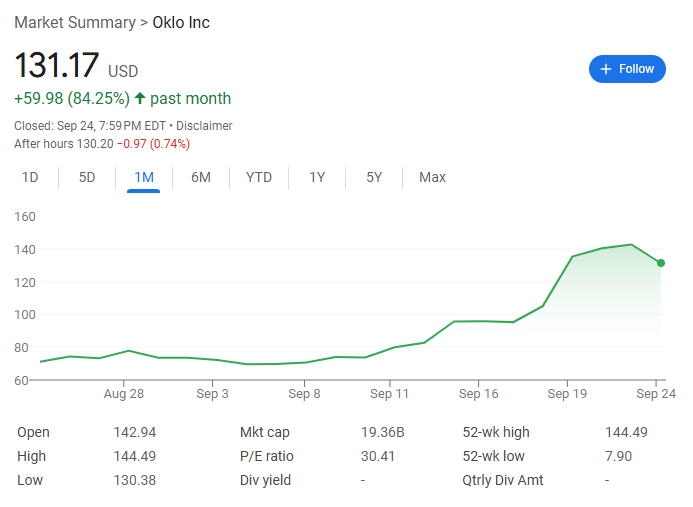
高盛首度覆盖Oklo:SMR核电龙头,利好众多但仍待落地,给予“中性评级,目标价117美元”
Hua Er Jie Jian Wen· 2025-09-25 05:35
Core Viewpoint - Goldman Sachs suggests a neutral outlook on Oklo, indicating that while short-term stock price may be driven by catalysts, the current valuation appears "full" due to fundamental uncertainties [1]. Group 1: Market Position and Opportunities - Oklo is positioned in a favorable market with significant potential, benefiting from a nuclear energy revival and an AI-driven surge in electricity demand [6]. - The company has accumulated over 14 gigawatts of potential customer orders, leading the nuclear sector, with clients from various industries including data centers and oil and gas [6]. - Oklo maintains a good relationship with OpenAI, suggesting future collaboration opportunities [6]. Group 2: Financial Risks and Challenges - Despite a large customer reserve, all agreements are non-binding letters of intent, with no legally binding power purchase agreements (PPAs) signed to date [5]. - The company operates under a "hold and operate" model, requiring approximately $14 billion in capital by the mid-2040s, leading to high financial risk [7]. - Oklo's financing needs include about $4.2 billion in equity financing, posing a risk of ongoing shareholder dilution [7]. Group 3: Fuel Supply Constraints - The reliance on high-assay low-enriched uranium (HALEU) presents a significant supply chain challenge, with projected needs by 2035 equating to 3% of current global natural uranium supply, increasing to 12% by 2050 [8]. - Oklo is pursuing a multi-faceted fuel strategy, including a $1.7 billion fuel recovery facility, but these initiatives will take years to implement and add to capital burdens [8]. Group 4: Regulatory and Licensing Hurdles - Oklo plans to submit a combined operating license application to the NRC in Q4 2025, with an expected approval timeline of 24-36 months, though this is not guaranteed [9]. - The timeline for commercial operation of the first reactor is heavily dependent on NRC approval, with potential delays impacting revenue generation [9]. Group 5: Valuation Insights - Goldman Sachs assigns a neutral rating with a target price of $117, based on EV/EBITDA and discounted cash flow methods, highlighting that current valuation relies heavily on long-term forecasts [10][12]. - The valuation model indicates that Oklo's story is filled with potential, but significant funding, technical validation, and policy approvals are necessary to transition from vision to reality [10].


专家解读丨2035年国家自主贡献目标:锚定风电太阳能发电总装机雄心目标 推动新能源行业高质量发展
国家能源局· 2025-09-25 04:43
风电 和太阳能发电 作为清洁能源 的 主力,其装机目标与实施路径将对实现整体气候目标起到关键支撑作用。我国 已 提 前 6 年实现 2030 年 风电和太阳能发电 总 装机目标,为全球能源绿色发展提供 了 中国方案。 新目标既是对国内 "双 碳"进程的战略接续,更是中国在全球气候治理中承诺与担当的体现。 一、 2030 年目标提前实现的底气与经验 9月24日,我国宣布 2035 年国家自主贡献目标, 明确风电和太阳能发电总装机容量达到 2020 年的 6 倍以上、力争达到 36 亿千瓦。这一目标作为中国覆盖全经济范围温室气体减排承诺的重要组成部分,标志着我国气候治理与能源转型进入 新阶段。 我国提前实现 2030 年风电太阳能发电 总 装机 12 亿千瓦目标,彰显了新能源发展的"中国速度"与坚定决心。 2024 年 7 月,我国风电和太阳能发电总装机容量达到 12.1 亿千瓦,超过煤电装机规模,提前 6 年多完成习近平总书记在 2020 年气候雄心峰会上提出的目标。这一成就显著增强了国内电力保障能力,推动了能源绿色低碳转型,引领了国际碳减排进 程 , 既体现了国家战略的坚定引领,也反映了我国在政策支持、技术创 ...

山西省政府与中国中车集团举行工作会谈
Xin Lang Cai Jing· 2025-09-25 02:49
Core Points - The meeting between Shanxi Provincial Government and CRRC Group focused on high-quality development and modernization in Shanxi [1] - Both parties aim to enhance cooperation in various fields including rail transit equipment, green transportation, high-end motor manufacturing, new energy equipment, and AI+energy [1] - A specialized mechanism will be established to strengthen communication and project implementation, aligning with the 14th Five-Year Plan and promoting joint scientific research [1] Group 1 - The meeting was attended by key officials from both Shanxi Province and CRRC Group, including the provincial governor and the chairman of CRRC [1] - The collaboration will focus on comprehensive energy solutions and complete equipment supply [1] - Emphasis will be placed on technological innovation to drive industrial innovation and energy transition [1]

共赴低碳之约——国内外人士寄语2025年太原能源低碳发展论坛
Sou Hu Cai Jing· 2025-09-25 01:45
Core Viewpoint - The upcoming 2025 Taiyuan Energy Low Carbon Development Forum is set to become a significant platform for discussing the global trend of low-carbon green development, attracting attention from various sectors both domestically and internationally [1] Group 1: Forum Significance and Goals - The forum aims to deepen cooperation between North Rhine-Westphalia and Shanxi in energy research, enterprise collaboration, and clean energy transition dialogues [2] - The 2025 forum coincides with the 15th New Energy Enterprises Top 500 Forum, marking important anniversaries related to China's environmental goals and energy transition strategies [2] - The forum is positioned as a key event for showcasing Shanxi's achievements in renewable energy and facilitating global energy development discussions [3] Group 2: Public Engagement and Local Impact - The forum promotes public participation in low-carbon initiatives, highlighting local efforts in sustainable practices such as walking, cycling, and waste sorting [5] - The transformation of Taiyuan into a greener city is seen as a significant advantage for tourism and local development, emphasizing the importance of ecological health for future prosperity [6]

全球第二大铜矿发生事故 供应趋紧促金属铜价走高(附概念股)
Zhi Tong Cai Jing· 2025-09-25 00:31
"规模非常大,"BMO Capital Markets分析师Helen Amos称。"这发生在铜供应已经相当紧张的时候。在 其他条件相同的情况下,这将使我们面临一个比以往更高的新价格机制。" Freeport股价周三下跌近 17%,创下五年最大跌幅。 瑞银发布研报称,由于铜的供应增长有限,加上精炼产出受压及传统需求动力复苏等因素,2026及2027 年的基本面将继续支持价格。该行将今明两年的铜价预测各自上调3%,分别由每磅4.24及4.68美元,提 高至4.37和4.8美元。 周三,美股铜矿板块集体上扬,Ero Copper(ERO.US)、南方铜业(SCCO.US)涨超8%,Taseko Mines(TGB.US)涨近8%,Hudbay Minerals(HBM.US)涨超6%。 受到能源转型和人工智能热潮推动,对这种电子产品里必不可少的金属需求飙升。 然而,从南美洲到中非的铜矿遭遇了一系列事故和干扰,导致供应紧张。 Grasberg是全球第二大铜矿,占全球产量的3%。 总部位于美国亚利桑那州的Freeport周三警告称,其可能无法履行该矿的供应合同,同时还下调了本季 铜、金产量预期。此举出乎了许多市场参与 ...
港股概念追踪|全球第二大铜矿发生事故 供应趋紧促金属铜价走高(附概念股)
智通财经网· 2025-09-25 00:27
全球铜市场雪上加霜:巨大泥流导致印尼Grasberg矿上两名员工死亡、五名失踪,Freeport-McMoRan Inc.就相关事故宣布遭遇不可抗力。 受到能源转型和人工智能热潮推动,对这种电子产品里必不可少的金属需求飙升。 周三,美股铜矿板块集体上扬,Ero Copper(ERO.US)、南方铜业(SCCO.US)涨超8%,Taseko Mines(TGB.US)涨近8%,Hudbay Minerals(HBM.US)涨超6%。 铜矿板块相关产业链港股: 洛阳钼业(03993)、紫金矿业(02899)、中国有色矿业(01258)、五矿资源(01208)、江西铜业股份 (00358)、中国中铁(00390)等。 "规模非常大,"BMO Capital Markets分析师Helen Amos称。"这发生在铜供应已经相当紧张的时候。在 其他条件相同的情况下,这将使我们面临一个比以往更高的新价格机制。" Freeport股价周三下跌近 17%,创下五年最大跌幅。 瑞银发布研报称,由于铜的供应增长有限,加上精炼产出受压及传统需求动力复苏等因素,2026及2027 年的基本面将继续支持价格。该行将今明两年的铜价预测各 ...
在中国,我看到……——访澳大利亚维多利亚州州长杰辛塔·艾伦
Xin Hua Cai Jing· 2025-09-24 15:25
Group 1 - The core viewpoint emphasizes China's significant advancements in renewable energy and public infrastructure, as observed by the Governor of Victoria, Jacinta Allan, during her recent visit to China [1][2] - China installs approximately 100 solar panels every second, showcasing its commitment to energy transition [1] - Continuous investment in public facilities, particularly public transportation, remains a priority for China, as noted by Allan during her visit to the Chengdu-Deyang railway [1] Group 2 - The importance of education in Chinese society and culture left a strong impression on Allan, highlighting it as a key area for cooperation between Victoria and China [2] - Allan's personal connection to education was illustrated through her daughter's study of Chinese, emphasizing the cultural and historical significance of language learning [2] - The commemoration of the 80th anniversary of the victory in the Anti-Japanese War provided an opportunity for global reflection on the importance of peace [2]
储能电池出口量暴涨170%“背后”
起点锂电· 2025-09-24 09:37
Core Viewpoint - The article emphasizes the rapid growth of China's energy storage battery exports, particularly in the context of global energy crises and the increasing demand for energy storage solutions, driven by various factors including trade policies and technological advancements [3][4][5]. Group 1: Market Dynamics - In the first half of 2023, domestic non-power battery sales reached 173.5 GWh, a year-on-year increase of 108.5%, with energy storage batteries accounting for 35.7% of power battery sales [3]. - Energy storage battery exports surged to 45.6 GWh, marking a 174.6% increase, while power battery exports grew by 26.5% [3]. - The global energy transition is significantly influenced by energy crises, particularly in regions like Europe and North America, where aging power grids and high energy prices create a pressing need for energy storage solutions [5][6]. Group 2: Regional Opportunities - The article identifies two primary markets: the developed regions (Europe, North America, Australia) facing energy crises and the developing regions (Africa, Asia) with high electricity demand but weak infrastructure [6][7]. - Various countries are implementing subsidy policies to stimulate energy storage demand, such as the U.S. "Inflation Reduction Act" and Australia's incentives for household energy storage systems [7][8]. Group 3: Market Segmentation - The global commercial energy storage market is projected to reach 25.4 GWh in 2024, with significant growth in regions like the Middle East, Europe, and Southeast Asia [10]. - The household energy storage market is expected to grow to 27.8 GWh, driven by high tax credits in the U.S. and increasing demand in regions like Ukraine and Australia [13][14]. - The portable energy storage market is anticipated to reach 11 million units, with the U.S. being the largest market due to outdoor activities and RV culture [15]. Group 4: Technological Advancements - Chinese companies dominate the global energy storage battery market, with a projected shipment of over 240 GWh by 2025, capturing over 91% of the market share among the top ten companies [22]. - The article highlights the advantages of lithium iron phosphate (LFP) batteries, including safety, cost-effectiveness, and technological maturity, positioning them as the primary choice for energy storage [21][24]. Group 5: Pricing Trends - The decline in lithium carbonate prices has led to a significant reduction in battery costs, with the average price dropping from 600,000 RMB per ton in October 2022 to 80,000 RMB in August 2023, a decrease of 87% [27]. - The competitive pricing landscape is evident in the Middle East, where energy storage system prices have dropped significantly, with some bids reported as low as 6.2 cents per Wh [28][29]. Group 6: Competitive Landscape and Risks - The article warns of increasing competition in the overseas market, with domestic companies facing challenges such as product certification delays and heightened safety standards [17][34]. - The potential instability of local partners and the emergence of new competitors, including Tesla and Korean battery manufacturers, pose additional risks for Chinese companies [33][34]. - The article stresses the need for companies to adapt to changing trade policies and market conditions to maintain their competitive edge in the global energy storage market [35].




中远海特20250923
2025-09-24 09:35
Summary of Zhongyuan Shipping Conference Call Company Overview - Zhongyuan Shipping is a leading enterprise in the global special ship transportation sector, operating a fleet of 151 vessels with a total deadweight tonnage of 6.146 million tons. The company maintains a leading position in semi-submersible and heavy-lift vessels, ranks second globally in pulp carrier operations, and is rapidly developing its car carrier business [2][3] Financial Performance - The company's profitability has significantly improved, with a projected net profit of 1.53 billion yuan for 2024, representing a 44% year-on-year increase, surpassing the historical peak of 1.45 billion yuan in 2008. For the first half of 2025, the net profit is expected to reach 820 million yuan, a 13% increase year-on-year [2][5] - Forecasted net profits for 2025 to 2027 are 1.87 billion yuan, 2.14 billion yuan, and 2.34 billion yuan, respectively, with a target market capitalization of 24.2 billion yuan, indicating approximately 29% growth potential [4][16] Business Segmentation and Margins - In the first half of 2025, the highest gross profit margin came from the car carrier business at 30%, while multi-purpose vessels, heavy-lift vessels, and semi-submersible vessels contributed margins between 15% and 17%. The pulp logistics segment is a key growth area, with a compound annual growth rate (CAGR) of 70% in revenue and 58% in gross profit from 2020 to 2024 [2][6] Shareholder Returns - The company has established a shareholder return plan for 2023 to 2025, committing to distribute at least 30% of cumulative profits in cash. The actual dividend payout ratio for 2023 and 2024 is approximately 50%, exceeding the commitment [2][7] Market Demand Drivers - Demand in the special transportation market is benefiting from energy transition and the advantages of Chinese manufacturing going global. Key transported goods include pulp, wind power equipment, and automobiles, with increasing demand for multi-purpose and semi-submersible transportation due to the rapid development of offshore wind power [2][8] Competitive Landscape - The semi-submersible market is highly concentrated, with the top five players holding 72% of the market share. Zhongyuan Shipping ranks second in this sector, with a competitive advantage due to a younger average fleet age compared to industry peers [9] Automotive Export Market Outlook - Since 2020, China's automotive export competitiveness has strengthened, with projected growth rates of 7% and 3% for exports in 2025 and 2026, respectively. Domestic automotive transport companies hold a low market share of about 4%, presenting opportunities for growth through strategic partnerships and expansions [10] Pulp Carrier Business Development - China is a major consumer of pulp, with stable import demand. Zhongyuan Shipping ranks second globally in pulp carrier capacity and aims to achieve the top position by the end of the year. The company has secured contracts with major pulp companies, supporting its rapid growth and profitability [12] Impact of Belt and Road Initiative - The Belt and Road Initiative is driving demand for multi-purpose and heavy-lift vessels due to increased overseas engineering contracts and machinery exports from China [13] Global Shipping Market Supply Dynamics - Since 2020, the global shipping market has seen rising demand, but stricter environmental regulations and aging fleets are limiting supply growth. Zhongyuan Shipping has a diverse order book, mitigating potential supply shocks [14] Special Ship Market Characteristics - The special ship market is relatively small and exhibits less cyclical volatility, providing stability in supply-demand relationships. The company is enhancing its resilience by extending its business into engineering project cargo [15] Risks and Challenges - Key risks include macroeconomic fluctuations, geopolitical tensions, and potential underperformance in wind power, automotive, and machinery exports, which could adversely affect the company's performance [17]

世界能源理事会总干事兼首席执行官安吉拉·威尔金森:能源是维系世界安全、繁荣与健康的战略平台
Zhong Guo Dian Li Bao· 2025-09-24 09:16
Core Insights - The global energy leadership landscape is undergoing significant disruption, characterized by three structural shifts: the competition for energy dominance driven by major power rivalries, the unprecedented surge in electricity demand from AI and data centers, and the projected electricity consumption from AI exceeding Germany's total by 2030 [1][2] Group 1: Energy Transition and Investment - Global clean energy investment is projected to approach $2 trillion in 2024, yet less than 2% is directed towards the most impactful areas [1] - There is a need for a human-centered energy transition that incorporates flexibility in system design, technology pathways, and global cooperation to ensure clean energy investments reach those most in need [1] Group 2: Geopolitical Dynamics and Governance - Geopolitical competition has expanded beyond traditional oil and gas rivalry to include technology, data, and supply chains, making energy a strategic platform for global security, prosperity, and health [1] - The call for a pragmatic and inclusive multipolar energy governance system is emphasized to effectively address shared climate challenges [1] Group 3: China's Role in Energy Transition - China currently accounts for 74% of the global installed capacity of solar and wind power, surpassing the total of all other countries combined, presenting an opportunity for developing a circular economy [2] - The World Energy Council invites China to leverage its experience and capabilities to collaborate on a global inclusive agenda for energy and circular development, promoting a sustainable future [2]