业态创新

Search documents
河南桐柏:催生文旅新场景 打造经济新亮点
Zhong Guo Jing Ji Wang· 2025-10-17 07:28
Core Insights - The article highlights the transformation of Tongbai County's cultural tourism industry, showcasing significant growth in visitor numbers and revenue due to strategic initiatives aimed at enhancing the tourism environment [1][2]. Group 1: Tourism Growth - In the first half of the year, Tongbai County received 3.531 million visitors, representing a 19% year-on-year increase, and generated a total tourism revenue of 2.955 billion yuan, up 22% from the previous year [1]. - The county aims to become a "China Cultural Tourism Famous County" through project construction, business model innovation, and service upgrades [1][2]. Group 2: Infrastructure and Accessibility - The county is addressing issues of resource fragmentation and weak branding by implementing a three-year action plan for cultural tourism, which includes integrating various scenic spots [2]. - Five cultural tourism special bond projects are underway, including the upgrade of the Huaiyuan Scenic Area, which features new facilities such as a steel structure walkway and multiple recreational areas [2]. - Free tourist transport routes have been established to improve accessibility to key attractions, enhancing the overall visitor experience [2]. Group 3: Thematic Innovations - Tongbai County has developed various themed tourism routes, such as "Ecological Sightseeing + Industry Experience" and "Red Culture + Research Study," catering to diverse visitor interests [3]. - Cultural activities, including non-heritage exhibitions and seasonal village events, have been organized to enrich the local cultural landscape and attract more visitors [3]. Group 4: Future Plans - The county plans to further innovate its tourism offerings by introducing projects like "Huaihe River Source Drift" and "Forest Camping," while also enhancing smart tourism initiatives and increasing investment attraction [4].
因地制宜放大地方文旅亮点
Jing Ji Ri Bao· 2025-10-09 22:19
Core Insights - The article highlights the rapid development of China's cultural and tourism industry, emphasizing the importance of local cultural resources and innovative strategies to drive economic growth [1][2][3] Group 1: Industry Growth and Economic Impact - The cultural industry is projected to achieve a revenue of 19.14 trillion yuan in 2024, marking a 37.7% increase from 2020 [1] - The number of large-scale cultural enterprises has reached 78,000, an increase of 13,000 since 2020 [1] - Domestic tourism saw 3.285 billion trips and total spending of 3.15 trillion yuan in the first half of the year [1] Group 2: Local Cultural Integration and Innovation - Various regions are leveraging their unique cultural heritage to create diverse tourism hotspots, such as Shanxi's integration of traditional culture with modern experiences [2] - Jiangsu province is focusing on water and culture to develop significant tourism routes, showcasing its unique cultural landscape [3] - There is a need for differentiated policy guidance to avoid homogenization in local tourism development [3] Group 3: Industry Collaboration and New Business Models - The article advocates for collaborative innovation across various industries to create composite cultural tourism products [4] - Qinghai province is implementing a "tourism+" model to integrate agriculture, industry, and commerce with tourism [4] - The shift from resource-driven to innovation-driven growth is essential for enhancing the value chain in the cultural industry [4] Group 4: Technological Empowerment - The article emphasizes the role of technology in enhancing the quality of local cultural tourism, advocating for digital infrastructure improvements [5] - Jiangxi province is utilizing digital tools to innovate tourism services, providing immersive experiences for visitors [5] - There is a call for the cultivation of interdisciplinary talent to boost technological innovation in the cultural tourism sector [5]
文旅融合,激活假日消费新活力
Huan Qiu Wang· 2025-10-06 08:30
Group 1 - The Ministry of Culture and Tourism has launched a nationwide cultural and tourism consumption month, featuring over 29,000 events and distributing more than 480 million yuan in subsidies [1] - There is a significant shift in consumer demand from traditional sightseeing to deeper, personalized cultural experiences, driving innovation in the cultural tourism industry [1] - Innovative cultural products, such as immersive performances and hands-on experiences, are enhancing the cultural value and appeal of tourism offerings [1] Group 2 - The integration of cultural tourism with sports and performing arts is creating new consumption models, such as "traveling with events" and "attending performances in different cities" [2] - Local governments are implementing strategies like ticket discounts and special consumption vouchers to convert event attendees into tourism consumers, exemplified by initiatives in Sichuan [2] - The synergy between core cultural tourism activities and various service elements is stimulating potential consumer demand and fostering a positive economic cycle [2] Group 3 - The incorporation of advanced technologies like virtual reality and AI is enhancing the service experience in the cultural tourism sector [3] - Innovative projects, such as immersive cultural performances and smart agricultural tourism, are emerging across the country, showcasing the fusion of technology and culture [3] - The deep integration of technology with cultural tourism is improving product interactivity and service optimization, contributing to the resilience and growth of the holiday economy [3]
“双节”点燃“舌尖经济”:老字号上新、婚庆聚餐热
Sou Hu Cai Jing· 2025-10-04 09:49
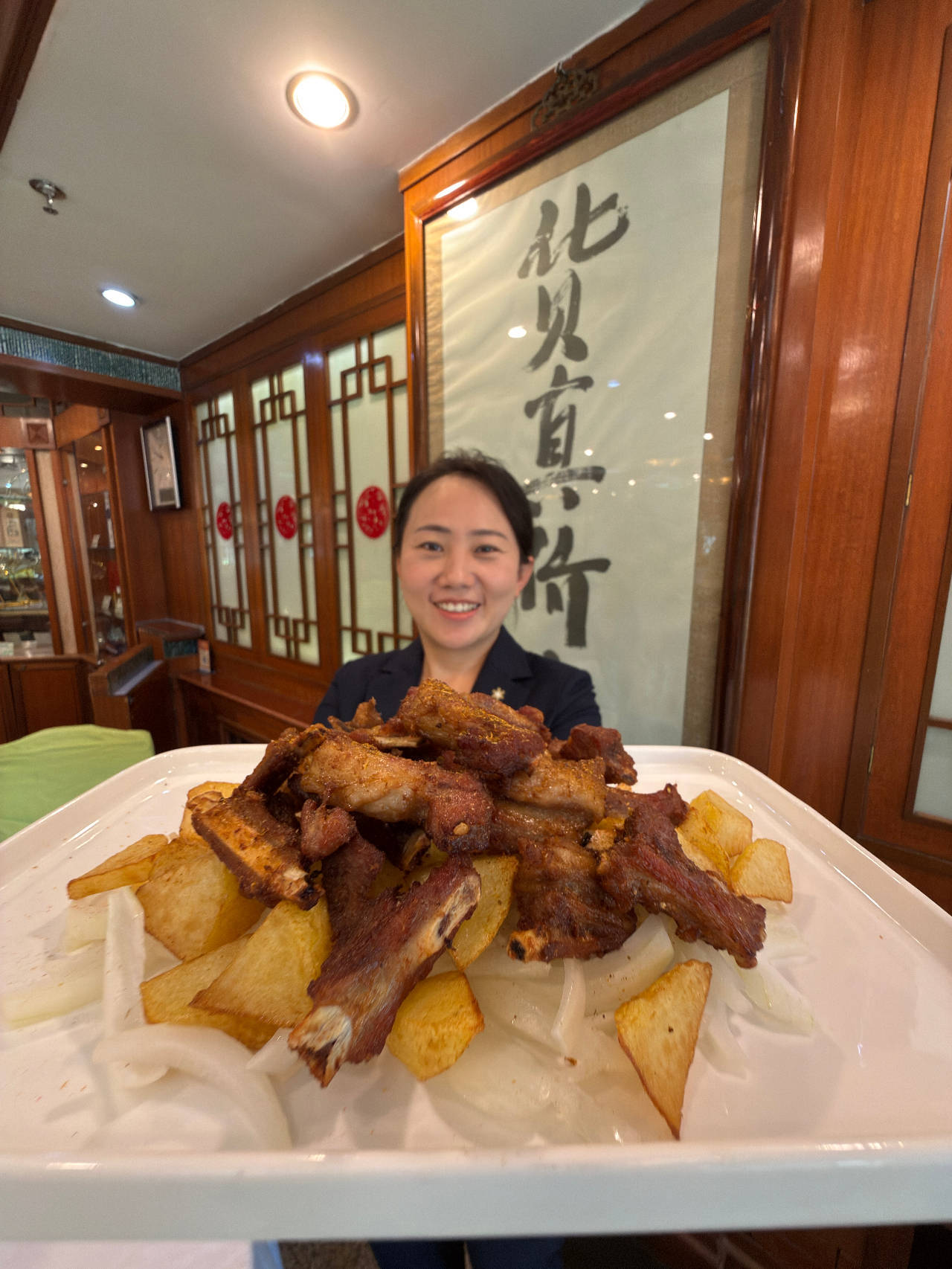
Core Insights - The combination of the National Day and Mid-Autumn Festival has led to a significant boost in the dining market, creating a peak in consumer spending during the holiday period [1] Group 1: Traditional and Innovative Dining Experiences - Established brands like Xilai Shun are innovating by introducing new products such as unique meat pies and various local snacks to cater to neighborhood customers [2][4] - The "Non-Heritage" dining experience is being enhanced by restaurants like Kaorouji, which is integrating traditional cooking techniques with modern flavors, such as the introduction of "Siberian Autumn Grilled Lamb Ribs" [4] - Traditional eateries are also offering special promotions, such as free gifts with purchases, to attract customers during the holiday season [5] Group 2: Event and Celebration Dining - Large chain restaurants are seeing a surge in bookings for group dining and celebrations, with establishments like Haidilao launching themed banquet venues to cater to various events [7] - Haidilao's banquet store in Shenzhen is designed to accommodate different types of gatherings, including weddings and birthday parties, enhancing the dining experience for special occasions [7] - The trend of hosting casual weddings at restaurants is gaining popularity, as evidenced by couples choosing Haidilao for their wedding celebrations [7] Group 3: Marketing and Consumer Engagement Strategies - The Xiaobuxiang Group is implementing extensive marketing campaigns to meet the rising consumer demand for value and experience during the holiday season [8] - The group is launching multiple themed marketing activities and has introduced a dual-point dining model to enhance customer experience and cater to diverse consumer preferences [9] - The company's strategy includes offering high-quality ingredients at competitive prices, aiming to create new consumption records during the holiday period [9]


产业链串起“致富经” 山东让乡村“土特产”闯进全球
Zhong Guo Xin Wen Wang· 2025-09-24 11:54
Core Viewpoint - Shandong province is successfully transforming local agricultural products into high-value goods for the global market through innovative industry chains and technological advancements [1][2][5]. Group 1: Industry Transformation - Shandong Shenlian Pharmaceutical Co., Ltd. transitioned from processing pig intestines to extracting heparin for anticoagulant therapy, leading to a significant market presence in low molecular weight heparin and ophthalmic products [2]. - The company consumes approximately 5 million pig intestines annually, boosting local pig farming and providing stable employment for over 2,000 farmers [2]. - Shandong Shuneng Jin Corn Development Co., Ltd. processes 4 million tons of corn annually, exporting starch-based biodegradable materials to various regions, with an expected export revenue of about $57 million in 2024 [4]. Group 2: Technological and Collaborative Advancements - Shandong has established 31 provincial-level modern agricultural technology systems and supports 630 experts to enhance agricultural processing technology [5]. - The province promotes collaboration between research institutions and agricultural processing companies to address technological challenges [5]. Group 3: Export Growth and Market Expansion - Yanggu County's agricultural exports reached 1.92 billion yuan in 2024, maintaining the top position in Liaocheng for six consecutive years [6]. - Shandong's agricultural processing capacity ranks first in China, with over 11,000 large-scale processing enterprises and a revenue of 2.3 trillion yuan by the end of 2024 [5]. Group 4: Cluster Development and Branding - The "Qilu Grain and Oil" public brand has been recognized for six consecutive years, with a projected brand value of 92.175 billion yuan by 2025 [8]. - Shandong has created 108 provincial-level public brands and 700 enterprise product brands, leading the nation in agricultural brand cultivation [9]. Group 5: Innovative Business Models - In Xiejicun, the integration of traditional craftsmanship with cross-border trade has led to significant market share and international exports for local products [10][12]. - The use of digital platforms for e-commerce has enabled villages like Wanquan to achieve over 100 million yuan in annual sales, showcasing the potential of online marketing [12][13]. Group 6: Overall Economic Impact - By 2024, Shandong's agricultural exports are expected to reach 164.82 billion yuan, accounting for over one-fifth of the national total, with a year-on-year growth of 10.3% from January to September 2025 [13].

桂林持续雕琢世界级旅游城市
Guang Xi Ri Bao· 2025-09-13 01:50
Group 1: Core Insights - The press conference highlighted the significant progress in building Guilin as a world-class tourist city, driven by innovation and the integration of culture and tourism [1][3] - Guilin has established the first municipal-level AI task force in the region and launched the first domestically produced commercial large model, "Guilin version of Ascend DeepSeek," showcasing the integration of technology and tourism [1] - The city achieved a remarkable 8.421 million visitors and a total tourism revenue of 103.6 billion yuan in the first half of the year, reflecting a year-on-year growth of 12.1% and 12.2% respectively [2] Group 2: Technological Innovations - The development of 27 AI travel companion products and 50 AI open scenarios demonstrates the deep integration of smart technology into Guilin's tourism landscape [1] - Collaboration with Zhejiang University to create a new innovation model, including an alliance, center, fund, and system, accelerates the establishment of innovation platforms [1] Group 3: Cultural and Tourism Integration - The expansion of the "Guilin Classic" brand matrix and the inclusion of Lingqu Scenic Area in the national 5A tourist attraction list inject modern vitality into traditional landscapes [2] - The rapid recovery of inbound tourism is evident with 674,500 overnight international visitors and an international tourism revenue of 263 million USD, marking year-on-year increases of 79.7% and 82.4% respectively [2] Group 4: Economic Impact - New activities such as the Rainy Marathon and Spring Fireworks Show generated over 234 million yuan in consumption, while innovative tourism formats like immersive performances and low-altitude tourism are thriving [2] - The total retail sales of consumer goods grew by 3.8% in the first half of the year, indicating a strong internal driving force for Guilin's development [2]
丽尚国潮:各区域主业均显示出发展韧性
Zheng Quan Ri Bao· 2025-08-27 16:13
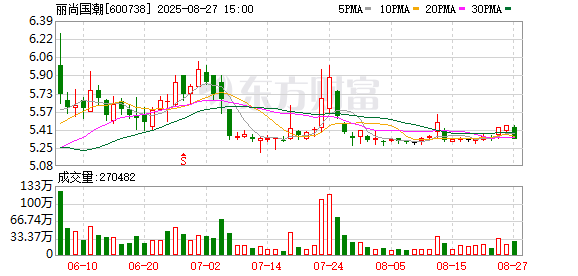
Core Viewpoint - Lishang Guochao reported a mixed performance for the first half of 2025, with a decline in revenue but an increase in net profit, indicating resilience in its core business despite challenges in the retail environment [2][4]. Financial Performance - The company achieved operating revenue of 323.40 million yuan, a year-on-year decrease of 9.07% [2]. - The net profit attributable to shareholders was 79.73 million yuan, reflecting a year-on-year increase of 9.46% [2]. - Cash flow from operating activities showed significant improvement due to the recovery of receivables from the previous year [2]. Business Segments - The apparel wholesale markets in Hangzhou and Nanjing contributed significantly, generating revenue of 221 million yuan, a slight increase of 0.32% [2]. - The retail business centered around the Lanzhou Eurasia Department Store reported revenue of 64.15 million yuan, a decrease of 0.42% [2]. - The commercial management business, led by the Lanzhou Eurasia International Building, achieved revenue of 22.38 million yuan, an increase of 7.83% [2]. Strategic Focus - The company plans to focus on new development opportunities and external growth, although there are currently no specific acquisition targets [3]. - Lishang Guochao emphasizes its differentiated advantages, including proprietary properties in key commercial areas and digital management experience [3]. - The company is pursuing smart upgrades and innovation across its three main segments: professional markets, retail, and new retail [3]. Operational Adjustments - The company has adjusted its business structure to reduce asset impairment losses and has actively negotiated with banks to lower financial costs [4]. - The new retail business, which includes operations and services, will no longer be consolidated into the company's financial statements [4]. - Future resource investments will focus on digital platform construction, business model transformation, and team development [5].

一片海何以“鲜”动长三角?
Yang Zi Wan Bao Wang· 2025-08-27 15:29
Core Viewpoint - The article highlights the booming seafood tourism in Rudong, a coastal city in Jiangsu province, driven by its rich marine resources and innovative tourism strategies, making it a popular destination for short trips in the Yangtze River Delta region [6][10][12]. Group 1: Seafood and Tourism Development - Rudong boasts 86 kilometers of coastline and over 1 million acres of tidal flats, rich in marine biodiversity, producing over 1,000 types of seafood, including the highly praised clam and crab [6][10]. - The local government has strategically positioned Rudong as "China's Seafood Town," enhancing the seafood industry through branding, deep processing, and quality improvement initiatives [10][12]. - The integration of seafood experiences with wellness tourism and cultural activities has created a comprehensive travel package that attracts visitors [6][9][12]. Group 2: Consumer Experience and Engagement - The unique and immersive seafood dining experience, characterized by fresh catches and local culinary practices, has led to high customer satisfaction and repeat visits [7][9]. - Tourists are willing to endure long waits and travel significant distances for the authentic seafood experience, demonstrating a strong consumer engagement [9][12]. - The combination of various activities, such as clam digging, hot spring bathing, and exploring ancient towns, enhances the overall visitor experience, making it a compelling destination [9][12]. Group 3: Government Support and Infrastructure - The local government has proactively improved food safety regulations and logistics to accommodate the influx of tourists, ensuring quality and accessibility of seafood products [10][12]. - Initiatives to develop cold chain logistics have enabled seafood vendors to offer next-day delivery nationwide, further boosting the seafood market [10][12]. - The government's foresight in preparing the local infrastructure and marketing strategies has played a crucial role in sustaining the growth of the seafood tourism industry [10][12].

合百集团(000417) - 000417合百集团投资者关系管理信息20250821
2025-08-21 10:28
Business Strategy and Operations - The company focuses on a tailored approach for its department and supermarket businesses, emphasizing "one store, one policy" to align market image with store positioning [2][3] - The supermarket sector aims to enhance supply chain capabilities and develop high-cost performance private labels, targeting a 40% sales share for self-sourced products [3][4] Performance Metrics - As of mid-2025, the company operates 240 retail stores, including 24 department stores and 189 supermarkets, with a net closure of 20 stores and the opening of 7 [4][6] - The "Harmonious Family" supermarket has seen significant improvements post-renovation, with sales up by 30.3% and customer traffic increasing by 17.97% at the Binhu New District store [4][5] Product Development - The company has developed a private label product matrix with 462 items across various categories, achieving a 99.18% year-on-year sales growth in the first half of 2025 [5][6] - The "Harmonious Family" high-tech store is undergoing a comprehensive upgrade, covering 5,400 square meters and introducing ten themed areas to enhance customer experience [5][6] Financial Performance - The company reported a net profit increase of 33.55% in the first half of 2025, driven by innovative service models and government subsidies totaling 82.4464 million yuan [8][9] - Inventory as of June 2025 stands at 2.403 billion yuan, with a 7.40% decrease from the beginning of the year, while investment properties are valued at 1.805 billion yuan, down 5.94% [9][10] Future Plans - The company anticipates a capital expenditure of approximately 1 billion yuan in 2025, focusing on market projects, store renovations, and new business investments [10][11] - Future growth strategies include enhancing operational efficiency, reducing costs, and expanding into new business areas, including circular economy initiatives and logistics [10][11]

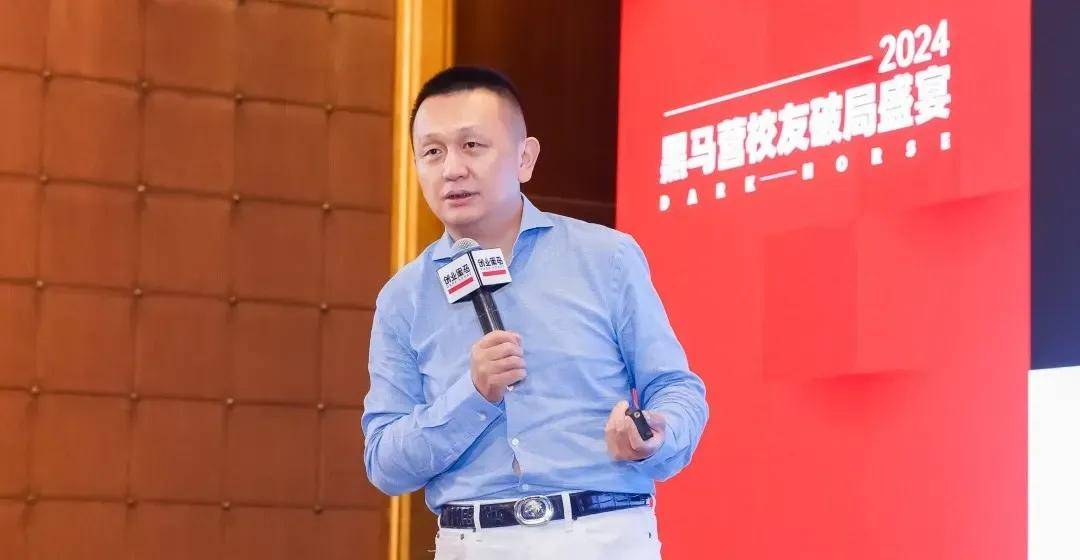
朱啸虎:我们投消费品牌的三个关键标准
Sou Hu Cai Jing· 2025-08-18 12:45
Group 1 - The core viewpoint emphasizes the "3S theory" for evaluating consumer brands, which includes the necessity of a large market size, standardized products for mass replication, and defensibility in a competitive landscape [2] - The expectation is that only about 10 to 20 companies will reach a valuation of over 10 billion USD in the consumer sector [3] - In consumer entrepreneurship, companies must excel in either product quality or pricing strategy to succeed [4][5] Group 2 - Companies focusing on channel entrepreneurship should prioritize extreme pricing, while those in brand entrepreneurship should focus on achieving product excellence [6] - A learning trip to Japan is planned to explore opportunities in the silver economy and product models, highlighting the potential for innovation in China's consumer market over the next 20 years [6]