
中国式创新

Search documents
三个可喜的变化
Sou Hu Cai Jing· 2025-11-08 22:23
Group 1 - The article highlights the significant innovations emerging from the "Wuzhen Summit," particularly in the robotics sector, showcasing advancements like mind-controlled prosthetics that assist disabled individuals in performing intricate tasks [3][4][5] - The summit has attracted notable leaders and entrepreneurs, with figures like Liu Qiangdong predicting substantial advancements in the logistics industry over the next five years, potentially surpassing the progress made in the last decade [11][12] - Companies like Tencent and ZTE have been recognized for their contributions, with Tencent receiving multiple awards and emphasizing its commitment to innovation-driven development [14][15][16] Group 2 - The article emphasizes the growing confidence among Chinese entrepreneurs and scientists, reflecting a more self-assured China that is actively engaging in global innovation [19][21] - The global innovation index indicates that China is one of the fastest-growing countries in terms of innovation, with a notable integration of technology, media, and culture [22] - Huang Renxun, CEO of NVIDIA, remarked on China's competitive edge in the generative AI race, highlighting the vast workforce dedicated to this field [24]




从“炫技”到“中国式创新”,2025进博照见美妆巨头三大战略
FBeauty未来迹· 2025-11-05 15:20
Core Insights - The eighth China International Import Expo (CIIE) showcases a significant shift in the beauty industry from "Chinese market" to "Chinese model," highlighting the increasing importance of the Chinese market for global beauty giants [3][4] - Major beauty companies are intensifying their product launches, with record numbers of new products and brands being introduced, indicating a strategic focus on innovation and local market adaptation [3][24] Group 1: Industry Trends - Beauty giants are building a global value creation system centered around the Chinese market, emphasizing the importance of "Chinese-style beauty" in their research, technology, and brand culture [4][62] - The expo features a variety of new brands and products tailored for the Chinese consumer, reflecting a trend towards precision targeting and niche market development within the beauty sector [24][30] Group 2: Company Highlights - L'Oréal's theme "Beauty Without Limits" emphasizes inclusivity and the exploration of beauty's cultural and economic impact through interactive experiences [8][9] - Procter & Gamble focuses on "Innovation Lights Up a Beautiful Life," showcasing a full-chain digital innovation approach and sustainable development initiatives [11][73] - Estée Lauder's "Reconstructing New Beauty" theme highlights its commitment to innovation and consumer engagement through immersive technology [13][77] - Shiseido's "Create Beauty" theme integrates technology and aesthetics, showcasing its long-standing research and development capabilities [15][30] - Amorepacific's "Embrace New Beauty" reflects its dedication to co-growth with the Chinese market, featuring a design inspired by its historical roots [17][71] - Kao's "Beauty Coexists, Good Future" theme showcases its commitment to quality and innovation, with a focus on local production and technology [19][71] Group 3: Product Innovations - The introduction of high-tech skincare products and green personal care items tailored for local consumers marks a significant trend in the beauty industry [24][51] - New brands such as Dr.G and RQ PYOLOGY focus on specific consumer needs, such as sensitive skin and post-aesthetic care, indicating a shift towards specialized offerings [25][30] - Innovations in product formulations, such as OLAY's new protein reconstruction technology and Shiseido's dual contouring technology, highlight the industry's focus on advanced ingredients and efficacy [35][37] Group 4: Sustainability and Future Outlook - Companies are increasingly prioritizing sustainability, with initiatives like P&G's "Mission 2030" and Amorepacific's five commitments to sustainable development [73][75] - The expo serves as a platform for beauty companies to showcase their long-term strategies and innovations aimed at meeting evolving consumer demands and environmental responsibilities [77][78]




芒格:我追求的是永不退出
聪明投资者· 2025-11-01 02:04
Core Insights - The article highlights a video live event featuring prominent investment figures discussing the current investment landscape in China, emphasizing optimism despite external challenges [1][2]. Group 1: Event Overview - The event includes a welcome speech followed by a peak dialogue with Wang Guohui, founder of Bissonnette Investment, who has extensive experience in Asian and Chinese stock investments [1]. - The discussion will also feature Ma Kaishuo, an Indian diplomat and scholar, focusing on the academic theme of "Thucydides' Trap - The Endgame and New Order," providing insights into the broader investment context in China [1]. Group 2: Additional Content - The article mentions a roundtable discussion led by Wang Kangning, Chief Investment Officer of Bissonnette Investment, on the topic of "The Genesis and Revival of Chinese-style Innovation" [2]. - Other recommended readings include insights from notable investors and discussions on various investment strategies and market trends [4].
在2025CAME,感受美妆行业“中国式创新”的力量
FBeauty未来迹· 2025-09-28 14:37
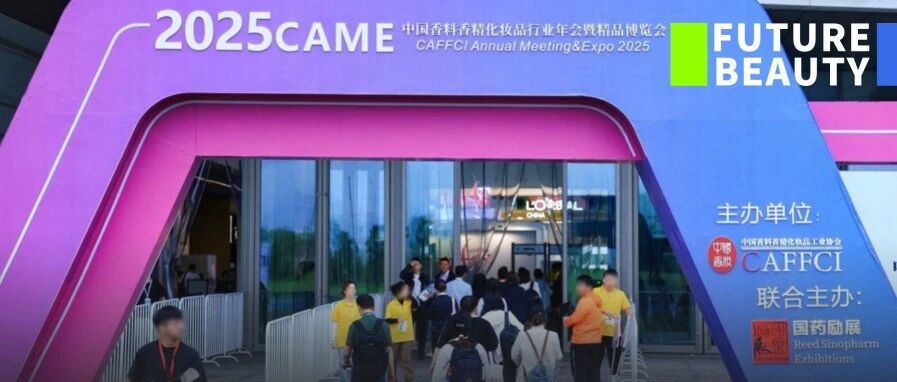
Core Viewpoint - The 2025 CAME (China Aroma and Cosmetic Industry Annual Conference and Expo) held in Nanjing focused on "Technology, Brand, and Co-prosperity," showcasing over 500 brands and more than 1,000 new products, emphasizing the integration of government, industry, academia, research, and investment [2][5][38]. Group 1: Event Overview - The event featured high-quality, high-standard, and professional exhibitions, attracting leading beauty companies such as L'Oréal, Procter & Gamble, and Unilever, along with top raw material suppliers like BASF and DSM, creating an "all-star" lineup [5][10]. - CAME has evolved into a "core technology release conference" for domestic and international beauty brands and raw material companies, highlighting its significance in the industry [8][10]. Group 2: Technological Innovations - Numerous innovative technological achievements were showcased, with a strong emphasis on "Chinese-style innovation," including Proya's mitochondrial anti-aging technology and Shiseido's research on the hidden skincare benefits of fermented natto bacteria [10][11][17]. - Shanghai Jahwa introduced the industry's first non-invasive skin glycation quantification and imaging device, filling a gap in the cosmetic field [12]. Group 3: Industry Trends - The event highlighted a shift in the cosmetics industry from "scale expansion" to "value enhancement," with raw material innovation becoming a strategic pivot for this transformation [23][38]. - The demand for diverse consumer needs is pushing upstream supply chain companies to continuously innovate in technology research and scientific communication [23][26]. Group 4: Collaboration and Future Outlook - CAME serves as a bridge for collaboration among raw material suppliers, brands, distributors, and technology companies, accelerating technology transfer and commercial cooperation [34][37]. - The conference is viewed as a crucial opportunity for enhancing the global competitiveness of domestic brands, with a focus on high-quality innovation and development [38].


民生加银尹涛:投资要有时代感 市场正经历一场创新驱动的牛市
Zheng Quan Shi Bao· 2025-09-20 15:18
Core Viewpoint - The market is experiencing an innovation-driven bull market, with sectors such as AI, innovative pharmaceuticals, and new consumption witnessing significant growth in "Chinese-style innovation" [1][6]. Group 1: Investment Strategy - The investment strategy is based on a three-dimensional model combining macroeconomic cycle assessment, industry rotation allocation, and in-depth stock analysis [1]. - The approach emphasizes a "prolonged battle" in bull markets and a "guerrilla warfare" strategy in balanced and bear markets, aligning fundamentals with survival [5][6]. - The flexibility in portfolio management is highlighted, with stock positions being adjusted based on market conditions, such as reducing equity exposure from 91% to 67% over two quarters in 2023 [6]. Group 2: Performance Metrics - The fund managed by the company achieved a net value growth rate of 19.18% in the first half of 2025 and 18.70% over the past year, ranking in the top 5% of its peers over the last two years [3]. Group 3: Sector Focus - The focus is on identifying 3 to 5 high-prosperity industries each year, with a keen eye on economic cycles, industry policy shifts, and supply-demand dynamics [4]. - Recent adjustments included reducing exposure to the underperforming power equipment sector while increasing allocations to the automotive and home appliance sectors [4]. Group 4: Stock Selection Criteria - The investment philosophy prioritizes growth stocks with high return on equity (ROE) and sustainable growth potential, aiming to capture both industry and individual stock gains [4]. - Key attributes for stock selection include sensitivity, solidity, rigor, and patience, with a meticulous examination of financial statements to identify potential high-return investments [4]. Group 5: Market Trends - The company identifies three current investment themes with significant potential: AI, innovative pharmaceuticals, and new consumption, which are seen as driving forces in the evolving market landscape [6]. - The innovative pharmaceutical sector is highlighted as undergoing transformative changes, approaching the levels of developed countries, indicating strong fundamentals [6].
市场正经历创新驱动牛市、固态电池打开第二增长曲线、用“冷门”ETF开辟新战场!三大基金经理最新研判
Sou Hu Cai Jing· 2025-09-20 00:31
Group 1: Solid-State Battery Market Insights - The solid-state battery market is entering a critical engineering phase, transitioning from laboratory validation to practical implementation, indicating a significant growth opportunity [4][5][6] - The solid-state battery index has seen a 23.31% increase since August, with a cumulative rise of over 50% this year, reflecting strong market interest and investment potential [4] - The investment logic is shifting from a focus on technological vision to practical assessments of production and application, with half-solid batteries already being commercialized in vehicles [6][9] Group 2: Investment Opportunities and Strategies - Investment opportunities in the solid-state battery sector are characterized by a phased approach, with different segments offering varying risk and return profiles based on technological maturity and commercialization pace [7][8] - The equipment segment requires significant capital investment, with costs for domestic production lines ranging from 500 million to 1 billion RMB per GWh, indicating a high barrier to entry [7] - The materials segment is seeing a divergence in investment potential, with oxide and polymer routes gaining short-term attention due to their maturity, while sulfide routes face cost and production challenges [8] Group 3: Risks in the Solid-State Battery Sector - There are three core risks identified in the solid-state battery industry: uncertainty in technology implementation, challenges in cost control, and the risk of overvaluation in certain segments [9][10] - The market penetration of solid-state batteries is projected to exceed 30% by 2030, which could significantly boost demand for upstream equipment and materials [9] - The valuation of individual stocks in the sector may be inflated, necessitating actual performance to meet optimistic expectations for sustained stock price support [10] Group 4: Innovation-Driven Market Trends - The market is currently experiencing an innovation-driven bull market, with sectors such as AI, innovative pharmaceuticals, and new consumption models showing significant growth potential [12][18] - Investment strategies are evolving to focus on macroeconomic cycles, industry rotation, and deep individual stock analysis, emphasizing the importance of adapting to market conditions [12][15] - The emphasis on "left-side" positioning in investment strategies allows for early entry into promising sectors, which is crucial for outperforming in a competitive landscape [21][22] Group 5: Index Investment Development - The index investment sector is rapidly growing, with ETF assets surpassing 5 trillion RMB, driven by innovative product offerings and strategic positioning [20][21] - Differentiation in index products is essential, with a focus on niche markets and sectors that align with government policies and economic trends [21][22] - The expansion of product offerings, including various ETFs, reflects a commitment to providing investors with diverse investment tools tailored to different market conditions [23][24]

市场正经历创新驱动牛市、固态电池打开第二增长曲线、用“冷门”ETF开辟新战场!三大基金经理最新研判
券商中国· 2025-09-19 23:31
Group 1: Solid-State Battery Market Insights - The solid-state battery market is entering a critical engineering phase, transitioning from laboratory validation to small-scale production, indicating a significant growth opportunity [6][5][11] - The solid-state battery index has seen a 23.31% increase since August, with a cumulative rise of over 50% this year, driven by positive industry developments [4][5] - The investment logic in the solid-state battery sector is shifting from a focus on technological vision to practical assessments of production and application [7][11] Group 2: Investment Opportunities and Strategies - Investment opportunities in the solid-state battery supply chain are characterized by distinct phases, requiring a systematic approach along the lines of "equipment first—material breakthroughs—application expansion" [8][9] - The equipment segment is capital-intensive, with costs for domestic production lines ranging from 500 million to 1 billion RMB per GWh, reflecting the complexity of the technology [8][9] - The materials segment presents investment potential based on the industrialization capabilities and cost control of different technological routes, with oxide and polymer routes currently attracting short-term interest [9][10] Group 3: Risks in the Solid-State Battery Sector - There are three core risks in the solid-state battery industry: uncertainty in technology implementation, challenges in cost control, and the risk of valuation adjustments due to market expectations [12][11] - The market penetration of solid-state batteries could exceed 30% by 2030, potentially creating significant demand for upstream equipment and materials [11][12] Group 4: Innovation-Driven Market Trends - The market is experiencing an innovation-driven bull market, with sectors like AI, innovative pharmaceuticals, and new consumption witnessing rapid growth [15][13] - Investment strategies should adapt to market conditions, with a focus on balancing long-term positions in bull markets and tactical adjustments in bear markets [21][20] Group 5: Index Investment and Product Development - The index investment sector is rapidly evolving, with the total market ETF scale surpassing 5 trillion RMB, and firms are innovating products to capture niche opportunities [24][25] - The strategy of early positioning in underexplored sectors has proven effective, as seen with the performance of ETFs in medical devices and gold stocks [26][25] - Continuous expansion of product offerings is essential for adapting to various market environments, with a focus on building a comprehensive product shelf [28][27]

投资要有时代感 市场正经历一场创新驱动的牛市
Zheng Quan Shi Bao· 2025-09-15 00:05
Core Viewpoint - The market is experiencing an "innovation-driven bull market," with sectors such as AI, innovative pharmaceuticals, and new consumption witnessing significant growth, referred to as "Chinese-style innovation" [1][6]. Group 1: Investment Strategy - The investment strategy is based on a three-dimensional model combining macroeconomic cycle assessment, industry rotation allocation, and in-depth stock analysis [1][4]. - The approach emphasizes a balanced asset allocation strategy, avoiding extreme positions typical of either growth or value investing, and focuses on dynamic balance [4][5]. - The investment framework is characterized by a dual strategy: "holding a long-term position in a bull market" and "engaging in tactical maneuvers in balanced and bear markets" [5][6]. Group 2: Performance Metrics - The fund managed by the company, under the leadership of Yin Tao, achieved a net value growth rate of 19.18% in the first half of 2025 and 18.70% over the past year [3]. - The product has ranked in the top 5% of its category over the past two years, according to data from Galaxy Securities [3]. Group 3: Sector Focus - The company identifies and prioritizes 3 to 5 high-prospect industries each year based on macroeconomic indicators, industry policy shifts, and supply-demand dynamics [4]. - In 2024, the company reduced exposure to the underperforming power equipment sector while increasing allocations to the automotive and home appliance sectors, resulting in excess returns from industry allocation [4]. Group 4: Investment Philosophy - The investment philosophy emphasizes the importance of sensitivity, diligence, rigor, and patience in identifying and investing in high-potential stocks [4]. - The company focuses on growth stocks with high return on equity (ROE) and sustainable growth potential, aiming to capture both industry and individual stock gains [4]. Group 5: Market Trends - The company highlights three key investment themes with contemporary relevance: AI, innovative pharmaceuticals, and new consumption, which are seen as driving forces in the current market [6]. - The shift in China's economic development structure is noted, with traditional investment-driven sectors stabilizing while innovation-driven sectors are on the rise, indicating a higher barrier to entry for future growth [6].
民生加银尹涛: 投资要有时代感 市场正经历一场创新驱动的牛市
Zheng Quan Shi Bao· 2025-09-14 18:02
Core Viewpoint - The market is experiencing an innovation-driven bull market, with sectors such as AI, innovative pharmaceuticals, and new consumption witnessing significant growth in "Chinese-style innovation" [1][6]. Group 1: Investment Strategy - The investment strategy is based on a three-dimensional model combining macroeconomic cycle assessment, industry rotation allocation, and in-depth stock analysis [1][4]. - The approach emphasizes a dynamic balance in asset allocation, avoiding extreme positions typical of either growth or value investing [4][5]. - The investment framework is characterized by a focus on economic cycles and industry trends, selecting 3 to 5 high-prospect industries for targeted investment each year [4][6]. Group 2: Performance Metrics - The net value growth rate of the fund managed by the company reached 19.18% in the past six months and 18.70% over the past year [3]. - The fund's performance ranked in the top 5% of its peers over the past two years, indicating strong relative performance [3]. Group 3: Market Adaptation - The company adjusts its stock positions flexibly, reducing equity exposure from 91% in Q2 2023 to 67% by the end of Q4 2023, effectively managing drawdowns during uncertain market conditions [6]. - In 2024, the company increased stock positions again, successfully capturing market opportunities [6]. Group 4: Key Investment Themes - The company identifies three key investment themes with contemporary relevance: AI, innovative pharmaceuticals, and new consumption, which are seen as driving forces of the current market [5][6]. - The innovative pharmaceutical sector is highlighted as undergoing significant transformation, approaching the standards of developed countries [6].
毕马威:中国式创新开启生成式人工智能新范式
Zhong Guo Xin Wen Wang· 2025-07-28 16:13
Core Insights - The report by KPMG highlights that China's innovation is paving a new paradigm for generative artificial intelligence (AI) [1][2] Group 1: AI Development Pillars - The development of AI is supported by three main pillars: computing power, algorithms, and data [1] - China's policies, such as "East Data West Computing," aim to centralize computing infrastructure and public cloud capabilities to serve various industries, making AI infrastructure a public service akin to tap water [1] - The open-source foundational model, represented by DeepSeek, stands out globally in terms of capability, cost-effectiveness, and computing density, lowering the barriers for enterprises to utilize large model software [1] Group 2: Data Utilization and Dynamic Capabilities - In the era of large models, it is essential not only to accumulate data but also to deeply understand and extract business value from it [2] - The promotion of data exchange, compliance, and sharing by the government will facilitate reasonable data circulation among institutions and industries, leading to significant changes in digital China [2] - China's advantages in AI extend beyond static resources like data and market size to dynamic capabilities, characterized by efficient social collaboration and execution speed, which enhances the scalability of AI technology deployment [2]