
中美利差倒挂

Search documents
“靶向”支持力度加大 降准降息仍有空间
Xin Hua Wang· 2025-08-12 06:26
Core Viewpoint - The impact of the Federal Reserve's unexpected tightening and imported inflation pressure on China's monetary policy is significant, with potential for further rate cuts and the introduction of new tools to support economic stability and assist enterprises [1] Group 1: Domestic and External Factors - Domestic inflation is expected to remain moderate, providing room for monetary policy adjustments, while the spillover effects of the Fed's rate hikes have peaked [2] - The overall inflation pressure in China is manageable despite structural price increases in commodities and tight supply-demand conditions in some agricultural products [2] - The focus of monetary policy will remain on stabilizing growth and ensuring adequate liquidity to support the real economy [2] Group 2: Interest Rate Dynamics - The impact of the potential interest rate differential between China and the U.S. is diminishing, and a temporary interest rate inversion will not hinder macroeconomic policy [3] - There is still room for further rate cuts and reserve requirement ratio (RRR) reductions, contingent on economic performance [4] - The likelihood of a decline in the 5-year LPR is higher than that of the 1-year LPR, as the latter does not show strong necessity for a decrease [5] Group 3: Policy Tools and Measures - There is a need for additional policy tools to address uncertainties, with potential for new structural tools to be introduced [6] - Historical precedents suggest that monetary policy tools can extend beyond traditional measures like RRR cuts and interest rate reductions [7] - The People's Bank of China may consider reintroducing tools like the Pledged Supplementary Lending (PSL) to provide stable long-term funding for specific sectors [7]
人民币又贬了?48点不算啥!专家:越贬越值钱
Sou Hu Cai Jing· 2025-07-28 11:15
Core Viewpoint - The recent depreciation of the RMB by 48 basis points is not a negative signal but rather a potential step towards the internationalization of the currency, indicating a shift in China's economic strategy [3][10]. Group 1: Understanding the Depreciation - The central bank set the RMB's midpoint at 7.1467, a depreciation of 48 basis points from the previous day, which translates to an increase in the cost of exchanging USD for RMB [4][5]. - Compared to historical fluctuations, the current depreciation is relatively minor, with the market showing calm reactions, indicating that this is an "active adjustment" rather than a panic-driven depreciation [5][6]. Group 2: Economic Context - The RMB's exchange rate is influenced by the ongoing economic tensions between the US and China, with recent US tariffs and investment restrictions failing to destabilize the RMB as they have in the past [6][7]. - China's economic fundamentals, such as a GDP growth rate of 5.2% last year and a foreign exchange reserve of 3.2 trillion USD, provide a strong backing for the RMB, allowing it to withstand external pressures [6][7]. Group 3: Structural Changes - The People's Bank of China (PBOC) is shifting towards a "low-interest currency" strategy, with recent interest rate cuts aimed at enhancing competitiveness and facilitating the RMB's role in international trade [7][8]. - This strategy is intended to support the RMB's internationalization, allowing for greater flexibility in exchange rates while promoting economic vitality [8][10]. Group 4: Impact on Individuals - For individuals not engaged in foreign transactions, the depreciation has minimal impact, while those who frequently travel or purchase imported goods may see slight increases in costs [8][9]. - The depreciation does not necessitate immediate currency exchange actions, as the potential risks associated with currency fluctuations may outweigh the benefits of holding USD [9]. Group 5: Future Outlook - In the short term, the RMB is expected to stabilize around 7.2, with the central bank likely to intervene to prevent disorderly declines [11]. - The long-term perspective suggests that the RMB will continue to evolve towards becoming a "hard currency," reflecting China's economic strength and manufacturing capabilities [11].

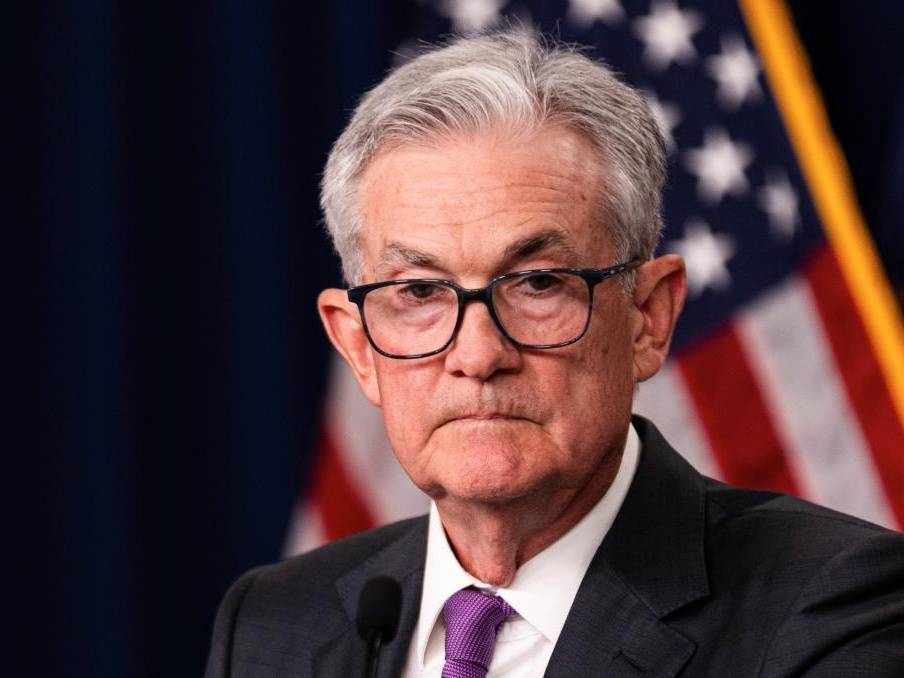
美联储主席要凉?特朗普抓住小辫子猛打,鲍威尔被逼到墙角!谁或成大赢家?
Sou Hu Cai Jing· 2025-07-16 03:43
Group 1 - The core issue revolves around Federal Reserve Chairman Jerome Powell facing intense scrutiny and pressure from former President Trump and his allies regarding the Federal Reserve building renovation that exceeded its budget by 32%, rising from an initial estimate of $1.9 billion to $2.5 billion [3][5][12] - The renovation project included luxury features such as a VIP restaurant, private elevator, and a rooftop garden, which has led to accusations of mismanagement and dishonesty towards Congress [3][5][12] - If Powell were to be replaced by a more compliant chairman, it could lead to significant interest rate cuts, potentially lowering the current rate of approximately 4.25% to around 1.25%, which would have implications for China's monetary policy [5][8][13] Group 2 - A potential new chairman under Trump's influence might aggressively lower interest rates, providing the Chinese central bank with more room to maneuver in its own monetary policy [8][9][13] - The Chinese central bank has been cautious in its rate cuts due to concerns over capital outflows and maintaining currency stability, but a significant reduction in U.S. rates could alleviate these concerns [9][10][11] - If the Federal Reserve were to implement drastic rate cuts, it could lead to a series of rate reductions in China, with predictions of 40 to 60 basis points in cuts, potentially occurring multiple times in the latter half of the year [9][10][11]
5月人民币汇率三大报价全线升值,后续走势将更为稳定
Bei Jing Shang Bao· 2025-06-02 11:09
Core Viewpoint - In May, the RMB appreciated against the USD, with onshore RMB rising by 1% and offshore RMB by 0.86% [1][3] Exchange Rate Performance - On May 30, the onshore RMB closed at 7.1989, down 0.18% for the day, while the offshore RMB closed at 7.2065, down 0.24% [3] - The RMB's middle rate against the USD on May 30 was reported at 7.1848, reflecting a 0.23% appreciation compared to the end of April [3] - Year-to-date, the middle rate has appreciated by 0.05%, with onshore and offshore RMB appreciating by 1.38% and 1.65% respectively [3] Factors Influencing RMB Appreciation - The appreciation in May was driven by two main factors: ongoing stable growth policies and positive outcomes from US-China trade talks, which boosted market confidence [3][4] - The weakening of the USD, with the index dropping for the fourth consecutive month to below 99, also contributed to the RMB's strength [4] Monetary Policy and Market Outlook - The Federal Reserve maintained its benchmark interest rate for the third consecutive time, leading to increased market pessimism and a rise in US Treasury yields [4] - The widening of the interest rate differential between China and the US is expected to have limited impact on the RMB due to effective regulatory frameworks controlling cross-border capital flows [5] - The People's Bank of China is anticipated to continue implementing interest rate cuts and reserve requirement ratio reductions to support the economy and stabilize the RMB [5]

国债期货下跌意味着什么?散户的钱袋子正在被谁掏空?
Sou Hu Cai Jing· 2025-05-29 14:06
Core Viewpoint - The recent decline in the government bond futures market reflects a silent struggle regarding the direction of the Chinese economy, driven by both funding and policy pressures [2][5]. Group 1: Policy Dynamics - The central bank's recent reverse repurchase operations, with a net injection of 58.5 billion yuan in a single day, signal a tightening stance despite appearing to be accommodative [2][5]. - The Ministry of Finance initiated bond market support operations, injecting 280 million and 260 million yuan of 2-year and 3-year bonds, respectively, indicating a subtle shift in market supply and demand dynamics [2][5]. Group 2: Interest Rate Environment - The current low interest rate environment has seen the interest rate on demand deposits from major state-owned banks drop to 0.05%, with 1-year fixed deposits falling below 1% [2][5]. - Despite this, the 30-year government bond ETF has shown a remarkable annualized return of 15.28% over the past year, highlighting a paradox where funds flee low-yield deposits but hesitate to enter riskier markets [2][5]. Group 3: International Market Influence - The cold reception of the U.S. 5-year Treasury auction, with indirect bidders receiving a record 78.4% allocation, indicates a global capital flight towards safe assets, contrasting with domestic capital fleeing the bond futures market [3][5]. - The significant increase in SOFR futures open interest by 173,000 contracts within three days suggests that the market may be anticipating larger upheavals [3][5]. Group 4: Market Behavior - The net short position in 5-year government bond futures among the top 20 positions reached 6,254 contracts, indicating a strong institutional presence in the short-selling camp [3][5]. - A "mini redemption wave" in the wealth management market has led to short-term products experiencing a withdrawal magnitude similar to last September, showcasing a stark contrast between retail panic selling and institutional arbitrage strategies [3][5]. Group 5: Economic Transition - The anticipated increase in government bond issuance in May and June may exceed expectations, with local government bond issuance aiming for 700 billion yuan in a single month [4][5]. - The decline in bank deposit rates has paradoxically strengthened residents' savings tendencies, with the proportion of demand deposits falling below 20% in April, indicating a growing conservative mindset among the populace [4][5].
2024年人民币汇率年报:波动与韧性
Di Yi Cai Jing· 2025-03-27 12:56
Report Summary 1. Report Industry Investment Rating The report does not mention the industry investment rating. 2. Core Viewpoints - In 2024, the RMB exchange rate showed resilience in a complex macro - background. The nominal effective exchange rate index of the RMB increased, and it appreciated against a basket of currencies. Although it depreciated against the US dollar, it was less than most currencies. However, due to the continuous "inversion" of the Sino - US interest rate spread, there was always adjustment pressure on the RMB exchange rate. [8][15] - In 2025, changes in domestic and foreign macro - events may intensify the volatility of the RMB exchange rate. The scale of domestic incremental counter - cyclical regulatory policies and the overseas political and economic situation, especially Trump's re - election, will have an impact on the RMB exchange rate. The differentiation of Sino - US monetary policies may also cause adjustment pressure on the RMB exchange rate against the US dollar. [9][37] - In the short term, macro - prudential tools are crucial for stabilizing the RMB exchange rate, while in the long term, it depends on positive and effective macro - policies. [10][44] 3. Summary by Directory 2024 RMB Exchange Rate Review - **RMB exchange rate trend is highly consistent with China's economic fundamentals**: In 2024, China's GDP growth rate and PMI showed a pattern of "high at the beginning, low in the middle, and rising at the end". The RMB exchange rate against a basket of currencies followed a similar trend. Policy introductions since late September 2024 boosted the GDP growth rate in the fourth quarter and the RMB exchange rate. [8][17] - **The RMB exchange rate remained resilient against the backdrop of a strong US dollar**: In 2024, the "strong US dollar" was a key feature in the international foreign exchange market. Most developed and emerging market currencies depreciated against the US dollar, but Asian currencies, including the RMB, showed resilience due to strong economic performance. The RMB's relatively small depreciation against the US dollar led to its appreciation against a basket of currencies. [9][20] - **The continuous "inversion" of the Sino - US interest rate spread created adjustment pressure on the RMB exchange rate**: The difference in the 10 - year government bond yields between China and the US widened in 2024. The inflation trends in the two countries led to different trends in their 10 - year government bond yields, and the Sino - US interest rate spread and the RMB exchange rate against the US dollar were strongly correlated. [29][32] 2025 RMB Exchange Rate Outlook - **Changes in domestic and foreign macro - events may intensify the volatility of the RMB exchange rate**: In 2025, the domestic expectation of more incremental counter - cyclical regulatory policies and Trump's re - election as the US president will make the global economic and trade pattern more volatile, which may magnify the exchange rate fluctuations of the RMB against the US dollar. [37][38] - **The differentiation of Sino - US monetary policies creates adjustment pressure on the RMB exchange rate**: China may implement more aggressive monetary easing policies, while the US will be more cautious about interest rate cuts due to inflation and tariff policies. The resulting continuous "inversion" of the Sino - US interest rate spread will be a "pressure source" for the RMB exchange rate against the US dollar in 2025. [40][43] - **Stabilizing the RMB exchange rate depends on macro - prudential tools in the short term and positive macro - policies in the long term**: The central bank has increased its regulation of the RMB exchange rate, and short - term regulatory measures have achieved certain results. In the long run, expanding domestic demand, promoting innovation, and ensuring economic stability are the cornerstones for stabilizing the RMB exchange rate. [44][45]
【笔记20250102— 开门红:血流成河 VS 满面红光】
债券笔记· 2025-01-02 13:57
试盘,就是要刺探多空双方力量的强弱。所以,试盘时,我们绝不能有主观的多空偏好,而是要"无多空"地,在交易系统的提示下出入场。不做死多头, 也不做死空头,而要做一颗"海草",随波飘摇,在浪花里舞蹈。我们要做一个真正的顺势者,不去预测市场,而是感悟市场,应对市场。 ——笔记哥《应对 》 【笔记20250102— 开门红:血流成河 VS 满面红光(+财新PMI低于预期+股市大跌+资金面收敛转松=大下)】 资金面收敛转松,长债收益率大幅下行。 央行公开市场开展248亿元7天期逆回购操作,今日有2986亿元逆回购到期。净回笼2738亿元。 | 利率信矩阵 信用债矩阵 | | NCD矩阵 中资美元债 | 全球国债 | | | | 0 | | --- | --- | --- | --- | --- | --- | --- | --- | | | 11 | 2Y | 3Y | 54 | 7Y | 10Y | 30Y | | | 220026.IB | 240019.IB | 240016.IB | 240014.IB | 240018.IB | 240011.IB | 2400006.IB | | 中国 | 1.0300 | ...