
二级市场

Search documents
资本四市掘金术:人脉、圈层与流动性的博弈
Sou Hu Cai Jing· 2025-12-11 07:00
Group 1 - The primary market is characterized by high entry barriers and significant potential returns, often yielding thousands of times the initial investment, making it essential for capital accumulation [1][3][4] - The semi-primary market and bond market differ fundamentally from the primary market, with the bond market focusing on liquidity to address immediate financial needs and support future growth [1][3][4] - The secondary market is driven by substantial liquidity, where individual investors have limited influence, and success depends on who controls the market dynamics [4][5] Group 2 - Investors and capital managers must engage broadly and continuously improve their skills to navigate various market dynamics effectively [2][5] - Value investing emphasizes specialization and deep engagement in a specific area to create exceptional value [2][5] - The rise of new productive forces, particularly in new materials and technologies, presents significant opportunities for investors in all market segments [2][5]
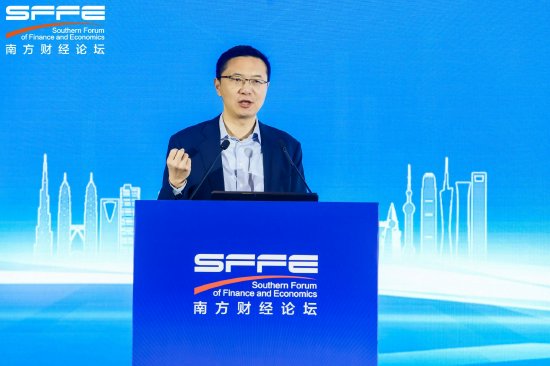
清华大学田轩:支持科技创新,创投市场需包容像马斯克一样的“疯子与天才”
Xin Lang Cai Jing· 2025-12-05 04:24
Core Viewpoint - The South Finance Forum 2025 emphasizes the need for a more inclusive venture capital market and a less aggressive secondary market to support technological innovation and achieve high-level self-reliance in technology [1][5]. Group 1: Venture Capital Market - A more inclusive venture capital market is necessary, which should be accommodating to the unique traits of "super unicorn" entrepreneurs, who often possess unconventional characteristics that drive innovation [3][7]. - The current venture capital market in China lacks "patient capital," with fund lifespans averaging 5-7 years compared to the 10-12 years typical in the U.S., limiting investments in early-stage projects [8][9]. - The composition of Limited Partners (LPs) in China has shifted from individual investors to state-owned entities, which, despite being patient capital, exhibit risk-averse behavior due to concerns over state asset preservation [4][9]. Group 2: Secondary Market - The secondary market in China needs to be less aggressive, requiring strong anti-takeover provisions, reduced stock liquidity, and a focus on long-term institutional investors [4][9]. - There should be fewer analysts tracking stocks and less frequent information disclosure to create a more stable investment environment [9]. - A combination of a more inclusive venture capital market and a less aggressive secondary market is essential for leveraging technology and financial power to support innovation [4][9].

清华大学田轩:LP结构导致中国缺乏真正的“耐心资本”
Xin Lang Cai Jing· 2025-12-05 04:19
Core Viewpoint - The South Finance Forum 2025 emphasizes the need for a more inclusive venture capital market and a less aggressive secondary market to support technological innovation and achieve high-level self-reliance in technology [1][5]. Group 1: Venture Capital Market - A more inclusive venture capital market is necessary, which should be open to diverse entrepreneurs, including those with unconventional traits that drive innovation [3][7]. - The characteristics of "super unicorn" entrepreneurs often include traits that are typically seen as negative, such as being eccentric or difficult to work with, which are essential for groundbreaking innovation [3][7]. - The current venture capital market in China lacks "patient capital," with fund lifespans averaging 5-7 years compared to the 10-12 years typical in the U.S., limiting investments in early-stage projects [8][9]. Group 2: Limited Partners (LPs) - The composition of LPs in China has shifted from individual investors to state-owned entities, which, while inherently patient, are often risk-averse due to concerns over state asset preservation [4][9]. - The risk-averse nature of state-backed venture capital institutions leads to insufficient support for early-stage investments, hindering technological innovation [4][9]. Group 3: Secondary Market - A less aggressive secondary market is needed, characterized by strong anti-takeover provisions, limited stock liquidity, a focus on long-term institutional investors, fewer analysts tracking stocks, and less frequent information disclosure [4][9]. - The combination of a more inclusive venture capital market and a less aggressive secondary market is essential for leveraging technology and finance to support innovation and achieve technological self-reliance [4][9].
晨会纪要:2025 年第207期-20251205
Guohai Securities· 2025-12-05 00:40
Group 1: Market Overview - The primary market has seen steady progress with 19 public REITs issued in 2025, a decrease of 5 compared to the same period last year [3] - The secondary market REITs index fell by 0.52% in November, with the total market capitalization of public REITs at 219.885 billion, down by 0.692 billion from the previous month [4] - The industrial park sector experienced the largest decline, with a monthly drop of 2.43%, while the traffic infrastructure sector led with a 0.56% increase [4] Group 2: REITs Performance - The average cash distribution rate for property REITs is 4.65%, while for operating rights REITs, it is 8.21%, indicating a higher yield for the latter [5] - The trading volume for park infrastructure REITs reached 836 million units, leading the monthly transaction scale [5] - The valuation yield for property REITs stands at 4.04%, lower than the 4.28% for operating rights REITs [5] Group 3: Company Performance - Bosideng - Bosideng's revenue for FY2026H1 increased by 1.4% to 8.928 billion, with a net profit growth of 5.3% to 1.189 billion [6] - The main brand's down jacket business saw an 8.3% revenue increase to 6.57 billion, accounting for 73.6% of total revenue [6] - The OEM business faced an 11.7% revenue decline to 2.04 billion due to tariffs and geopolitical factors [6] Group 4: Operational Efficiency - Bosideng optimized its channel structure, reducing the number of stores to 3,140, with a focus on enhancing store profitability and operational efficiency [7] - Online sales for the brand's down jackets grew by 2.4% to 1.38 billion, with strong performance during the "Double Eleven" shopping festival [7] - The company maintained a healthy inventory turnover, with a reduction in inventory turnover days to 178, down by 11 days from the previous year [8] Group 5: Future Outlook - The company is expected to achieve revenues of 28.43 billion, 31.36 billion, and 34.43 billion for FY2026 to FY2028, with net profits projected at 3.92 billion, 4.39 billion, and 4.89 billion respectively [9] - The closing price on December 4, 2025, was 5.06 HKD, corresponding to a PE ratio of 14, 12, and 11 for FY2026 to FY2028 [9] - The company aims to enhance product innovation and channel quality to improve profitability [9]

X @憨巴龙王
憨巴龙王· 2025-11-12 03:00
Market Analysis - Earning profits in the secondary market now requires both talent and hard work [1] - High-intensity cryptocurrency trading, research, and analysis are essential, even without active buying [1] - The era of easy gains from casually investing in cryptocurrencies based on recommendations is over [1] - Extreme luck is needed to select a profitable coin and successfully sell it during narrow windows [1] - Market conditions will improve, but will not return to previous levels of ease and profitability [1]
A轮融资的“++++++”号,为何越来越多了
2 1 Shi Ji Jing Ji Bao Dao· 2025-10-22 02:09
Core Insights - The trend of companies undergoing multiple rounds of financing without advancing to higher rounds is becoming increasingly common in the Chinese venture capital market, particularly in the A+ and B+ rounds [4][10][12]. Financing Trends - Zero Gravity Aircraft Industry (Hefei) Co., Ltd. recently completed an A++++ round of financing, raising nearly 300 million yuan, marking a total of approximately 700 million yuan raised over three rounds in two months [1]. - In 2025, 571 companies received "+ round" investments totaling about 40.43 billion yuan, with at least 19 companies securing multiple "+ round" investments [8]. - A+ round financing events have significantly increased, with 331 occurrences in the first half of this year, a 35% year-on-year increase, representing 8.84% of total investment events [9]. Industry Characteristics - Companies in high-tech sectors such as artificial intelligence, semiconductors, aerospace, and medical devices are predominantly found in the "+ round" financing category, which is characterized by high technical difficulty and long development cycles [10][12]. - The extended financing cycles and the prevalence of "+" rounds are attributed to companies not achieving significant valuation increases due to either insufficient technological advancement or lack of commercial orders [12][14]. Investor Behavior - Investors are becoming more cautious, with varying decision-making processes based on their backgrounds, which can lead to missed financing opportunities [13]. - The performance of the secondary market significantly influences the primary market, with a sluggish secondary market causing investors to reduce their commitments to the primary market [13]. Market Dynamics - The recent surge in IPOs has provided a much-needed exit window for VC/PE firms, boosting investor confidence and facilitating smoother transitions from A rounds to B and C rounds [16][17]. - The AI sector is experiencing a valuation shift, with companies that were previously stuck in A+++ rounds now qualifying for B and C rounds due to heightened market interest and recognition of their technological value [17].
【固收】信用债发行量环比增长,各行业信用利差整体上行——信用债周度观察(20250922-20250926)(张旭/秦方好)
光大证券研究· 2025-09-28 02:22
Group 1 - The core viewpoint of the article highlights the trends in the credit bond market, including issuance volume, types of bonds, and interest rates [4][5][6] Group 2 - In the primary market, a total of 501 credit bonds were issued, with a total issuance scale of 584.5 billion yuan, reflecting a week-on-week increase of 0.79% [4] - Among the types of bonds issued, industrial bonds accounted for 45.28% of the total issuance, with 200 bonds issued and a scale of 264.68 billion yuan, marking a 30.71% increase week-on-week [4] - Local government bonds (城投债) made up 27.36% of the total issuance, with 253 bonds issued and a scale of 159.94 billion yuan, increasing by 13.21% week-on-week [4] - Financial bonds saw a decrease of 32.29%, with 48 bonds issued and a scale of 159.88 billion yuan, representing 27.35% of the total issuance [4] - The average issuance term for credit bonds was 2.71 years, with industrial bonds averaging 2.22 years and financial bonds averaging 1.88 years [4] - The overall average coupon rate for credit bonds was 2.33%, with industrial bonds at 2.19% and financial bonds at 1.91% [4] Group 3 - In the secondary market, the credit spread for AAA-rated industries saw the largest increase in the machinery sector, rising by 9 basis points, while the media sector experienced a decrease of 3.1 basis points [5] - For AA+ rated industries, the steel sector had the largest increase in credit spread, up by 44.2 basis points, while the chemical sector saw a decrease of 1 basis point [5] - The total trading volume of credit bonds reached 1617.515 billion yuan, reflecting a week-on-week increase of 10.61% [6] - The top three types of credit bonds by trading volume were commercial bank bonds, corporate bonds, and medium-term notes, with trading volumes of 487.807 billion yuan, 496.120 billion yuan, and 323.965 billion yuan respectively [6]

怀念一下基金子公司
Sou Hu Cai Jing· 2025-08-10 23:47
Group 1 - The establishment of fund subsidiaries was initially profitable due to fewer capital constraints, allowing them to assist banks and trusts in issuing loans, leading to a period of easy earnings referred to as "lying win" [2][4] - The financial industry has seen a decline in the viability of fund subsidiaries as regulations have tightened, particularly with restrictions on non-standard financing, making it difficult for these subsidiaries to operate [5][6] - Many professionals in the industry have shifted back to secondary markets as a result of the challenges faced by fund subsidiaries, although the secondary market is also not as lucrative as it once was, with increasing defaults impacting profitability [6][8] Group 2 - Fund subsidiaries are recognized as a product of a specific period in the financial industry, and as that period has ended, the responsibilities and consequences for their operations have not been fully addressed [8] - The motivations for investing in stocks are questioned, with a suggestion that investors often seek external rescue when they incur losses, highlighting a lack of accountability in the investment process [8]

产业基金摆脱困局,就往二级市场倒垃圾?
Hu Xiu· 2025-08-08 00:01
Core Viewpoint - The article discusses the current predicament of government-guided funds, highlighting the stagnation in both primary and secondary markets, leading to a situation where funds are unable to be invested or withdrawn, resulting in a "dead water" scenario for these funds [2][5][19]. Group 1: Market Conditions - The primary and secondary markets are experiencing a lack of liquidity, which has persisted for several years, making it difficult for funds to exit investments [2][3]. - The suggestion to relax IPO audits to facilitate exits is seen as misguided, as it may lead to the listing of subpar projects, further exacerbating market issues [5][8][41]. Group 2: Fund Management and Investment Quality - The core issue with government funds is the prevalence of low-quality projects, which are unable to generate returns or exit strategies [19][22]. - There is a critique of the investment culture that prioritizes quick returns and speculative practices over sustainable business models and profitability [15][44]. Group 3: Regulatory Environment - The article emphasizes the need for strong regulation to create a fair and healthy market environment, which is essential for attracting investment and ensuring liquidity [42][43]. - It argues against the notion that strict IPO audits are the root cause of liquidity issues, asserting that the focus should be on improving project quality rather than loosening regulatory standards [41][25]. Group 4: Economic Strategy Shifts - The discussion reflects a shift in economic strategy from supply-side reforms to stimulating demand through consumer spending, indicating a broader change in governmental economic policy [34][36]. - The article suggests that past strategies of subsidizing industries have led to overcapacity and the creation of non-viable projects, necessitating a reevaluation of investment approaches [33][27]. Group 5: Future Directions - Future investment strategies should focus on understanding industry dynamics and improving post-investment management to avoid repeating past mistakes [53][55]. - The need for a more specialized approach in investment practices is highlighted, advocating for deeper industry knowledge and management capabilities [54][56].