
产能过剩

Search documents
海优新材股价下跌4.37%,主业承压与新业务投入拖累业绩
Jing Ji Guan Cha Wang· 2026-02-14 01:11
Company Fundamentals - The company is expected to incur a net loss of 440 million to 520 million yuan in 2025, primarily due to an imbalance in supply and demand in the photovoltaic industry and intense price competition, leading to a decrease in film sales and low gross margins [1] - The gross margin for the third quarter of 2025 was -6.67%, reflecting ongoing pressure on the main business profitability [1] Business Development - The company is accelerating its layout in new businesses such as automotive materials, having secured a designated supply of PDLC dimming film for an automotive glass manufacturer in January 2026. However, the related R&D and market investments are expected to increase losses in the short term [2] Industry and Risk Analysis - The photovoltaic industry is still in a deep adjustment period, with significant overcapacity issues. Industry observations suggest that inventory may bottom out by mid-2026, and the competitive landscape in the film segment will require accelerated capacity clearance for optimization [3] Convertible Bond Termination - On February 11, 2026, the company announced that the "Haiyou Convertible Bond" may trigger redemption clauses, which could exert short-term pressure on the stock price if executed [4] Financial Situation - On February 4, a net inflow of 139 million yuan from main funds drove the stock price up by 8.04%. However, on February 13, the overall photovoltaic equipment sector fell by 3.59%, leading to increased fund outflows and adjustments in individual stocks [5] - The company's short-term performance is influenced by industry cycles and investments in new businesses, but the long-term transformation direction is clear [5]

构建现代化产业体系 需要构建统一大市场
Xin Lang Cai Jing· 2026-02-13 16:24
Group 1 - The article emphasizes the need for a unified national market to avoid issues like overcapacity seen in emerging industries such as solar energy due to local competition and redundant construction [1] - It highlights the importance of establishing uniform market rules, fair regulation, and high-standard connectivity of market facilities to facilitate the free flow of resources like capital, technology, data, and talent across regions [1] - Breaking down administrative barriers and regional blockades, as well as opposing administrative monopolies, is deemed crucial, with a focus on allowing market dynamics to dictate regional and industrial division of labor to prevent new rounds of overcapacity caused by excessive government intervention [1]
二度闯关IPO 绿控传动三大隐忧待解
Zhong Guo Qi Che Bao Wang· 2026-02-12 01:36
Core Viewpoint - Suzhou Green Control Transmission Technology Co., Ltd. (hereinafter referred to as "Green Control Transmission") is making a renewed attempt to go public, shifting its listing from the Sci-Tech Innovation Board to the Growth Enterprise Market, with a significantly increased fundraising target of 1.58 billion yuan. As a core supplier of electric drive systems for new energy commercial vehicles, the company has achieved rapid turnaround in performance but faces challenges such as high customer concentration, ongoing cash flow pressure, and aggressive capacity expansion [1]. Group 1: Business Model and Customer Dependency - Green Control Transmission has developed a unique "shareholder as customer" model, where major shareholders like SANY Group and XCMG Group are also key business partners, providing stable orders but imposing constraints on independent market development [2]. - Financial data indicates that this model significantly supports revenue, with the "SANY system" and "XCMG system" contributing over 40% of revenue from 2022 to 2024, and the top five customers maintaining a high revenue concentration [2][3]. - Long-term implications of this deep binding include weakened bargaining power, limited market expansion, and potential homogenization of technology, which may hinder the company's ability to compete effectively in the market [3]. Group 2: Financial Health and Cash Flow Challenges - Green Control Transmission has successfully turned a profit, improving its financial statements, but faces ongoing cash flow challenges, high accounts receivable, and rising interest-bearing debt, raising concerns about the quality of earnings and financial stability [5]. - From 2022 to the first half of 2025, the company reported negative net cash flow from operating activities totaling over 538 million yuan, contrasting sharply with its growing revenue and net profit, indicating a "paper wealth" situation [5][6]. - The high accounts receivable, amounting to 833 million yuan and constituting about 27% of total assets, exacerbates cash flow issues and operational efficiency, while the company's negative retained earnings and rising debt levels further strain its financial structure [5][6]. Group 3: Capacity Expansion and Market Risks - Green Control Transmission plans to raise 1.58 billion yuan, with nearly 90% allocated to expanding production capacity for electric drive systems, aiming for an annual production capacity of 100,000 units [8]. - The current industry is undergoing structural adjustments, and large-scale capacity expansion requires careful assessment of market capacity and competition to avoid overcapacity risks [8][9]. - The competitive landscape is intensifying, with multiple leading and emerging companies increasing their production capacity, raising the risk of homogenized competition. Without sufficient technological barriers and cost advantages, relying solely on scale expansion may not yield sustainable competitive strength [8][9].
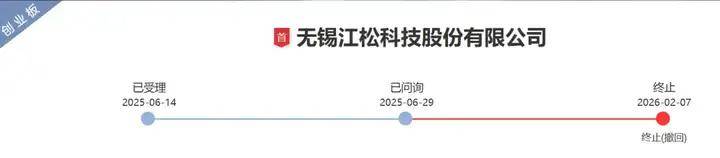
创业板IPO终止!问询后删除“市占率第一”表述;减员减产后又募资扩产,募投必要性被关注
Sou Hu Cai Jing· 2026-02-10 01:44
Core Viewpoint - The Shenzhen Stock Exchange has terminated the review of Wuxi Jiangsong Technology Co., Ltd.'s initial public offering (IPO) application due to the issuer and sponsor's voluntary withdrawal of the application [1][2]. Group 1: Company Overview - Jiangsong Technology is a leading manufacturer of high-end intelligent equipment, primarily engaged in the research, production, and sales of automated equipment for high-efficiency photovoltaic cells [3][10]. - The company reported revenues of 807 million yuan, 1.237 billion yuan, and 2.019 billion yuan for the years 2022, 2023, and 2024, respectively, with net profits of 85.84 million yuan, 128 million yuan, and 187 million yuan during the same period [3][4]. Group 2: Market Conditions and Risks - The photovoltaic industry has faced overcapacity issues since 2023, leading to revenue declines and losses for some manufacturers, which has affected Jiangsong Technology's order volume and performance stability [5][8]. - The company anticipates a market size of 14.753 billion yuan for automated equipment over the next three years, but it has experienced a significant drop in new orders, with only 472 million yuan in 2024 compared to 4.986 billion yuan in 2023, a decline of over 90% [7][9]. Group 3: Financial Projections - Based on the assumption that 60% of the orders on hand will be recognized in 2025, the company estimates revenues of 19.512 billion yuan, 17.344 billion yuan, and 15.176 billion yuan under different cancellation scenarios [9][10]. - The projected net profits for 2025 under these scenarios are estimated to be 1.783 billion yuan, 1.585 billion yuan, and 1.389 billion yuan, respectively [9]. Group 4: Technological Competitiveness - Jiangsong Technology claims to have a leading position in technology and product efficiency, with its products being recognized as domestically leading and internationally advanced [10][13]. - The company has removed claims of being the market leader in terms of market share from its prospectus due to the lack of updated data for 2023 and 2024 [12][13]. Group 5: Investment Projects and Concerns - The company plans to raise 1.053 billion yuan for projects including the construction of a photovoltaic intelligent equipment production base and a research and development center [14][16]. - Concerns have been raised regarding the necessity and feasibility of these projects, especially in light of significant workforce reductions and production cuts in 2024 [15][18].


化工新材料龙头,50亿项目终止!
DT新材料· 2026-02-09 16:05
Core Viewpoint - Since 2025, an increasing number of photovoltaic material manufacturers have begun to actively reduce their presence in the photovoltaic sector, with some companies even choosing to exit the market. Recently, another leading company decided to adjust its pace [2]. Group 1: Project Termination - On February 8, Mingguan New Materials announced the termination of its investment in a solar backsheet and functional film production base project in Feidong County, Anhui, with a total investment of 5 billion yuan [3]. - The project was signed in February 2023 and was planned to be constructed in two phases, with the first phase's factory and infrastructure nearly completed, aiming for an annual production of 300 million square meters of solar backsheets and 200 million square meters of functional films [4]. - The direct reason for the project's termination is the overcapacity in the photovoltaic industry leading to a deteriorating market environment, with signs of overcapacity emerging since Q4 2023 [8]. Group 2: Market Dynamics - The photovoltaic industry is expected to experience widespread losses in 2024 and 2025, with the profitability of photovoltaic packaging materials gradually declining due to intensified competition [8]. - By 2026, the global market share of photovoltaic backsheets is projected to drop below 5% [8]. - Mingguan New Materials has decided to optimize the planned capacity of 500 million square meters of backsheets and functional films from the original project and transfer it to Yichun Economic and Technological Development Zone in Jiangxi [21]. Group 3: Financial Performance - In the first half of 2025, the company reported a significant decline in sales, with total sales volume of photovoltaic packaging materials at 63.86 million square meters, a year-on-year decrease of 16%, and sales revenue of 350 million yuan, down 39% [16]. - The company experienced a net loss of approximately 52.71 million yuan in the first half of 2025, marking its first half-year net loss since its listing in 2020 [17]. - The annual net profit forecast for 2025 is expected to be a loss between 125 million and 160 million yuan, representing a decline of 86.35% to 138.53% compared to the previous year [18]. Group 4: Product Development - The company has developed a 0BB functional film (smart grid film) that has received high recognition from leading manufacturers such as Aiko Solar, State Power Investment Corporation, and LONGi Green Energy, indicating a foundation for large-scale implementation [20]. - The company is also adjusting its production strategy to focus on specialized functional films, with an initial construction plan for a new project in Jiangxi to produce 350 million square meters of new battery packaging functional films, with a total investment of 290 million yuan [21].


二十天内两度停产!连续四年亏损的金浦钛业深陷“越产越亏”困局
Xin Lang Cai Jing· 2026-02-07 07:30
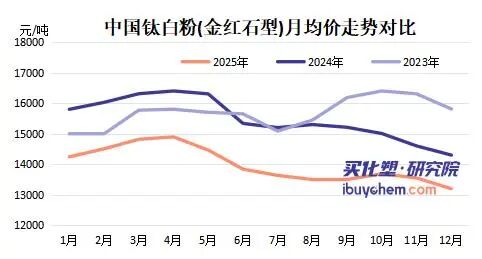
Core Viewpoint - Jinpu Titanium Industry is facing severe operational challenges due to a combination of declining titanium dioxide prices and rising production costs, leading to significant financial losses and multiple capacity adjustments [1][3][5]. Group 1: Company Operations - Jinpu Titanium Industry announced a temporary shutdown of its sulfuric acid production due to reduced demand, with plans to resume in early March [1][7]. - The company previously halted production at its wholly-owned subsidiary Xuzhou Titanium, which accounted for 50% of its total titanium dioxide capacity [1][7]. - The company has reported continuous financial losses for four consecutive years, with net losses of 145 million yuan, 175 million yuan, and 244 million yuan from 2022 to 2024, respectively [3][9]. Group 2: Financial Performance - In the first three quarters of 2025, Jinpu Titanium's revenue was 1.24 billion yuan, a year-on-year decline of 23.68%, while net losses reached 233 million yuan, a staggering year-on-year increase of 325.09% [3][9]. - The gross margin for the first three quarters of 2025 was -2.44%, indicating that the selling price of products is below production costs, leading to losses on each ton produced [3][9]. - The net cash flow from operating activities was -85.1 million yuan, a significant drop from a positive 17.8 million yuan in the same period last year, highlighting severe cash flow issues [3][9]. Group 3: Industry Context - The titanium dioxide industry is experiencing a dual pressure of falling prices and rising costs, with prices dropping from nearly 40,000 yuan per ton in 2021 to 13,000 yuan per ton currently [1][3]. - The production cost of titanium dioxide is expected to rise significantly, with sulfuric acid prices projected to increase by 83% by 2025, exacerbating the industry's financial struggles [3][9]. - The industry is characterized by overcapacity, with domestic production exceeding 6 million tons in 2025, while global demand is only growing at 2-3% annually, intensifying competition [5][11]. Group 4: Strategic Initiatives - Jinpu Titanium attempted to pivot towards the new energy materials sector with a nearly 10 billion yuan investment in lithium iron phosphate projects, but these plans were ultimately abandoned in April 2025 [4][10]. - A major asset restructuring plan aimed at acquiring a stake in a specialized enterprise was also terminated in September 2025 due to market uncertainties [4][10].

博源化工近20亿元诉讼和解 预计影响2025年损益1.23亿元
Zhong Guo Jing Ying Bao· 2026-02-06 10:49
Core Viewpoint - Boyuan Chemical has reached a settlement regarding a capital increase and share expansion agreement dispute with China Coal Energy and Wushenqi Mengda Mining, which will impact the company's financials in 2025 [1][2] Group 1: Settlement Details - The settlement involves Boyuan Chemical offsetting the unpaid exploration rights payment of 1.889 billion yuan with undistributed profits from its 34% stake in Mengda Mining, along with an additional payment of 12.4714 million yuan for legal fees [1] - The settlement is a result of an arbitration ruling that required Boyuan Chemical to pay the exploration rights price difference of 1.889 billion yuan [2] - Boyuan Chemical plans to pursue compensation from Shanghai Zheda Investment Development Co., which is also involved in the arbitration, but the specific amount remains uncertain [2] Group 2: Financial Performance - Boyuan Chemical's net profit dropped significantly from 2.660 billion yuan in 2022 to 1.410 billion yuan in 2023, a decline of 46.99%, before recovering to 1.811 billion yuan in 2024, which is still a 32% decrease from 2022 [3] - Revenue has shown consistent growth from 10.987 billion yuan in 2022 to 13.264 billion yuan in 2024, despite the profit decline [3] - For the first three quarters of 2025, the company reported revenue of 8.656 billion yuan, a year-on-year decrease of 16.54%, and a net profit of approximately 1.062 billion yuan, down 41.15% year-on-year [3] Group 3: Industry Outlook - The soda ash industry is expected to face oversupply issues, with new production capacity being released in 2024-2025 while demand growth slows, leading to a decline in market prices [3][4] - Analysts predict that the total capacity of the soda ash industry may reach 47.5 million tons by 2026, with a year-on-year production increase of over 10% [4] - High inventory levels and supply pressures are expected to continue suppressing price rebounds, particularly affecting downstream demand in sectors like real estate and solar glass [4][5]

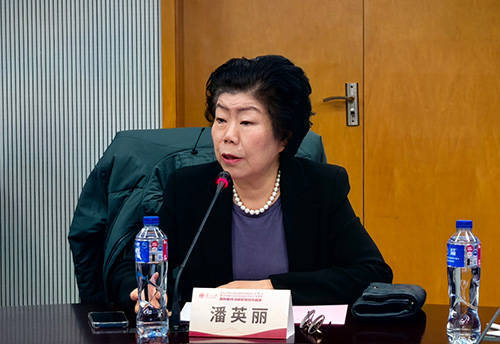
上海交大潘英丽:内需不足的原因及应对之策
Sou Hu Cai Jing· 2026-02-06 09:48
Group 1: Current Economic Challenges - The trade surplus in China is fundamentally a result of overcapacity, stemming from a long-term "capacity expansion strategy" [1][4] - The dual urban-rural structure, welfare deficits for migrant workers, and land finance prepayment for young families contribute to insufficient domestic demand [1][5] - The current economic model is heavily reliant on manufacturing, with policies favoring cost reduction for enterprises, leading to structural issues [10][12] Group 2: Policy Recommendations - To address the challenges, it is suggested to raise labor costs, eliminate export tax rebates, and impose carbon taxes as "anti-involution" measures to increase export costs and promote domestic circulation [1][10] - Implementing a "Chinese-style quantitative easing" policy is recommended, focusing on fiscal and monetary coordination to support social welfare improvements [2][22] - The government should prioritize investments in areas like fertility encouragement, educational equity, and the urbanization of migrant workers [2][23] Group 3: Currency and Capital Flow - A moderate appreciation of the RMB is advocated to optimize the import structure and correct structural distortions caused by a long-term undervaluation [1][12] - The capital account should maintain "limited and controlled openness" to prevent excessive volatility in the exchange rate [12][16] - There is a need to increase the supply of high-quality RMB-denominated assets in offshore markets to attract foreign investment [1][18] Group 4: Structural Adjustments - The current economic model needs to shift from investment-driven growth to consumption-driven growth, necessitating structural adjustments in the economy [2][24] - The real estate market's structural issues, including oversupply and demographic changes, require innovative solutions such as reverse auctions for affordable housing [22][24] - The government should unify the funding for basic public services like education and healthcare to ensure equitable access and support for the population [23][24]
长江有色:6日氧化铝期价涨1.22% 今日现货交投氛围升温
Xin Lang Cai Jing· 2026-02-06 08:34
Group 1 - The core viewpoint of the news is that the aluminum oxide market is experiencing a short-term price increase due to various factors, but the long-term outlook remains weak due to overcapacity and declining costs [1][2]. - On February 6, the main aluminum oxide futures contract (2605) closed at 2824 yuan, up 34 yuan, with a 1.22% increase. The total trading volume for six contracts reached 1,203,647 lots, an increase of 726,744 lots or 152.39% compared to the previous trading day [1]. - Domestic aluminum oxide spot prices remained stable across various regions, with prices in South China reported between 2680-2730 yuan per ton, East China between 2600-2640 yuan, Southwest between 2715-2755 yuan, and Northwest between 2870-2910 yuan, all unchanged from the previous day [1]. Group 2 - The short-term fluctuations in aluminum oxide prices are influenced by multiple factors, including a recent price increase in northern procurement by Xinjiang aluminum plants and a temporary production halt at a plant in Guizhou, affecting approximately 1 million tons of capacity [2]. - The current market sentiment is characterized by increased trading activity as downstream buyers are replenishing stocks ahead of the weekend, which has led to a temporary rise in prices [2]. - Despite the recent price increase, the overall trend for aluminum oxide remains bearish in the medium to long term, with ongoing overcapacity issues and potential pressure from warehouse receipts [2].

鹏辉能源闯关H股:负债率升至新高 电芯价格大降再抛83亿扩产计划
Xin Lang Cai Jing· 2026-02-06 04:04
Group 1 - The company plans to issue H-shares and list on the Hong Kong Stock Exchange to enhance its global strategy, competitiveness, and overseas financing capabilities [1] - For the first three quarters of 2025, the company achieved revenue of 7.581 billion yuan, a year-on-year increase of 34.23%, and a net profit attributable to shareholders of 115 million yuan, up 89.33% year-on-year, indicating improved performance [1] Group 2 - The company has made provisions for asset impairment of 158 million yuan and credit impairment of 110 million yuan in the first three quarters of 2025 [2] - As of the end of Q3 2025, the company's debt-to-asset ratio reached 73.62%, an increase of 7.80 percentage points from the previous year, significantly higher than the industry average of 48.67% [2] - The company's liquidity ratio fell to 0.98 in 2024, marking the first time it has been below 1 since its listing in 2015 [2] - The company reported a negative net cash flow from operating activities of 115.065 million yuan for the first three quarters of 2025, although this was an improvement from the previous year's figure [2] - The company's cash reserves decreased from 2.243 billion yuan at the end of 2023 to 1.646 billion yuan at the end of 2024, a decline of 26.55% [2] Group 3 - The lithium battery industry is facing intensified competition, with cell prices dropping significantly; the average price of 280Ah cells fell from 0.42 yuan/Wh at the beginning of 2024 to 0.30 yuan/Wh by the end of the year, a decrease of 29% [3] - Despite the oversupply in the industry, the company plans to expand significantly with a total expansion plan of 8.3 billion yuan, covering energy storage cells, systems, and semi-solid batteries [3] - Since its listing in 2015, the company has raised a total of 7.032 billion yuan, with 3.298 billion yuan from equity refinancing and 3.422 billion yuan from indirect financing [3]
