
债券市场对外开放

Search documents
两部门:对境外机构投资境内债券市场取得的债券利息收入暂免征收企业所得税和增值税
智通财经网· 2026-01-15 09:18
Core Viewpoint - The Ministry of Finance and the State Taxation Administration announced a policy to temporarily exempt foreign institutions from corporate income tax and value-added tax on bond interest income from the domestic bond market from January 1, 2026, to December 31, 2027 [1] Group 1 - The policy aims to further promote the opening up of the bond market to foreign investment [1] - The exemption does not apply to bond interest income earned by foreign institutions through establishments or places set up within the country that have actual connections to the income [1]
券商迎来新业务,沪深交易所发布业务细则
Zheng Quan Shi Bao· 2025-12-22 05:29
Core Viewpoint - The recent notification from the Shanghai and Shenzhen Stock Exchanges and China Clearing supports foreign institutional investors in conducting bond repurchase transactions, enhancing liquidity management tools for these investors [1][2]. Group 1: Business Opportunities - The new bond repurchase business will provide opportunities for securities firms, as they will act as participants in these transactions [2]. - The bond repurchase business includes pledge-style agreements and tri-party repurchase agreements, allowing foreign investors to lend funds as reverse repos [3]. Group 2: Regulatory Framework - Foreign institutional investors must sign relevant agreements with domestic securities firms before participating in bond repurchase transactions, ensuring compliance with exchange regulations [3]. - The exchanges and China Clearing will monitor the activities of foreign investors and their agents, implementing self-regulatory measures for any violations [4]. Group 3: Market Development - The initiative is part of a broader effort by the People's Bank of China, the China Securities Regulatory Commission, and the State Administration of Foreign Exchange to support foreign institutional investors in the Chinese bond market [5]. - As of August 2025, 1,170 foreign institutions from 80 countries hold approximately 4 trillion RMB in Chinese bonds, indicating significant growth in foreign investment [5]. Group 4: Strategic Benefits - This move is expected to enhance the attractiveness of RMB-denominated bonds and optimize the Qualified Foreign Institutional Investor (QFII) system, reinforcing Hong Kong's status as an international financial center [6]. - The initiative aims to facilitate the development of both onshore and offshore RMB markets, improving the overall bond repurchase mechanism in China [6].
进一步开放!沪深交易所宣布:支持境外机构投资者开展交易所债券回购业务
Sou Hu Cai Jing· 2025-12-20 04:11
Core Viewpoint - The Shanghai and Shenzhen Stock Exchanges, in collaboration with China Securities Depository and Clearing Corporation Limited, have announced support for foreign institutional investors to engage in bond repurchase transactions in the exchange market, aiming to enhance the openness of the bond market to foreign entities [1]. Group 1: Announcement Details - The announcement is part of a broader initiative by the People's Bank of China, the China Securities Regulatory Commission, and the State Administration of Foreign Exchange to facilitate foreign institutional investors' participation in the Chinese bond market [1]. - Foreign institutional investors that meet the requirements outlined in the announcement and comply with the trading regulations of the exchange bond market are eligible to conduct bond repurchase transactions [1]. Group 2: Types of Repurchase Transactions - The bond repurchase business includes pledged repo agreements (referred to as "agreement repo"), tri-party repos, and reverse repos in the context of the Bond Connect program [4]. - Foreign institutional investors must follow specific procedures, including signing relevant agreements with their entrusted securities firms before participating in various types of bond repurchase transactions [4]. Group 3: Compliance and Monitoring - The exchanges and China Clearing will monitor the trading, registration, and settlement activities of foreign institutional investors and their entrusted trading participants to ensure compliance with relevant business rules [5]. - Any violations will be subject to self-regulatory measures, and serious cases will be reported to the China Securities Regulatory Commission for further action [5].

沪深交易所,最新发布
券商中国· 2025-12-19 12:56
Core Viewpoint - The article discusses the recent announcement by the Shanghai and Shenzhen Stock Exchanges, in collaboration with China Securities Depository and Clearing Corporation Limited, to support foreign institutional investors in conducting bond repurchase transactions in the exchange market [1][3]. Group 1: Policy Implementation - The announcement is a further implementation of the policies previously issued by the People's Bank of China, the China Securities Regulatory Commission, and the State Administration of Foreign Exchange to support foreign institutions in bond repurchase activities [2][3]. - Foreign institutional investors that meet the requirements outlined in the announcement can engage in bond repurchase transactions in the exchange market [3]. Group 2: Bond Repurchase Business - The bond repurchase business includes both pledge-style agreement repurchase and pledge-style tri-party repurchase, as well as reverse repurchase transactions in the Bond Connect program [3]. - Foreign institutional investors must follow specific procedures, including signing relevant agreements and conducting investor suitability filings before participating in these repurchase transactions [4]. Group 3: Market Attraction - The opening of bond repurchase business is expected to enhance the attractiveness of the Chinese bond market, as the number and scale of foreign institutional investors in this market have been increasing [5]. - Bond repurchase is recognized globally as a widely used liquidity management tool, and its introduction will provide foreign investors with more flexible funding channels, improving capital efficiency and reducing liquidity risks [5][6]. - As of the end of September, the custody balance of foreign institutions in the Chinese bond market reached 3.8 trillion yuan, accounting for 2.0% of the total custody balance, indicating a growing interest in Chinese bonds [6].
境外机构跨境配置中国债券的通道比较与投资行为分析
Sou Hu Cai Jing· 2025-11-12 03:13
Core Viewpoint - China's bond market is becoming an important option for foreign institutions as the country accelerates its financial opening, with various investment channels influencing foreign investment behavior [1][2]. Overview of Foreign Investment Channels in China's Bond Market - The QFII system, established in 2002, was the first major channel for foreign institutions to invest in China's capital market, initially having high entry barriers which have been gradually relaxed [3]. - The RQFII system, launched in 2011, supports the internationalization of the RMB by allowing foreign institutions to invest in the domestic market using RMB funds, with recent expansions in its scope [4]. - CIBM Direct, initiated in 2016, allows foreign institutions to enter the interbank bond market without prior approval, becoming a major channel for foreign investment [5]. - The "Bond Connect," established in 2017, facilitates access to the interbank bond market through Hong Kong, simplifying the process for foreign investors and enhancing market participation [6]. Comparison of Foreign Institutions' Investment Behavior - Different channels attract various types of foreign institutions, with QFII primarily attracting large international financial institutions, while RQFII is favored by institutions holding offshore RMB [7][8]. - CIBM Direct has broadened the types of foreign institutions participating, including central banks and sovereign wealth funds, while "Bond Connect" has attracted a wider range of institutions, including smaller asset management firms [8][9]. Investment Scale and Trends - As of August 2025, foreign institutions held approximately 3.83 trillion yuan in interbank bonds, with CIBM Direct accounting for 77.08% of the holdings, while "Bond Connect" represented about 22.92% [9][10]. - The trading volume through "Bond Connect" has surpassed that of CIBM Direct, indicating a more active trading behavior among smaller institutions [9]. Preference for Bond Types - Foreign institutions generally prefer interest rate bonds, particularly government and policy bank bonds, with government bonds holding a 72.6% share of their holdings as of August 2025 [10][11]. Preference for Bond Maturity - Investment strategies vary by channel, with QFII and RQFII focusing on flexible duration strategies, while CIBM Direct participants, such as central banks, prefer medium to long-term bonds [12]. Factors Influencing Investment Behavior - Foreign institutions' investment decisions are influenced by policy regulations, market conditions, investor attributes, and limitations of each investment channel [13][14]. - The regulatory environment, including entry barriers and operational processes, significantly impacts the depth and breadth of foreign investment [14]. - Market conditions, such as macroeconomic stability and interest rate differentials, also play a crucial role in shaping investment behavior [15]. Conclusion and Policy Recommendations - To enhance the attractiveness of China's bond market for foreign investors, recommendations include improving asset quality, streamlining cross-border custody standards, and optimizing tax processes [20][21][22][23].

央行金融市场司司长高飞抵沪履新 任中国外汇交易中心党委书记
2 1 Shi Ji Jing Ji Bao Dao· 2025-10-30 01:54
Core Points - Gao Fei has been appointed as the Party Secretary of the China Foreign Exchange Trading Center, succeeding Huo Yingli, who has retired due to age [1] - Gao Fei previously held various positions within the Financial Market Department, including Deputy Director and Deputy Inspector [3] - The China Foreign Exchange Trading Center aims to enhance the internationalization of the domestic financial market and support the internationalization of the Renminbi [4] Group 1 - Gao Fei's appointment is expected to continue the push for further opening of the bond market to foreign investors, including exploring new custody models and improving risk hedging tools [3] - As of August 2025, 1,170 foreign institutions from 80 countries and regions have entered the Chinese bond market, holding approximately 4 trillion RMB [4] - The Trading Center serves as a crucial infrastructure for China's financial market, providing various services including issuance, trading, and post-trade processing [4][5] Group 2 - The Trading Center is responsible for daily market monitoring and the self-regulatory mechanisms for market interest rate pricing [5] - The current leadership team of the Trading Center includes Gao Fei as Party Secretary, Zhang Yi as President, and several Vice Presidents [5]
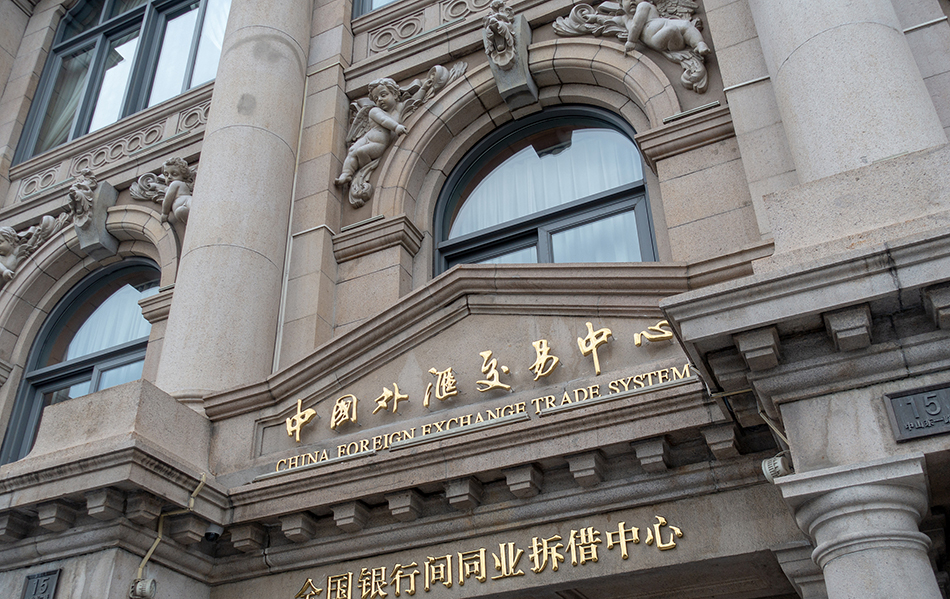
前9月境外机构在广东办理跨境债券交易近4000亿元
Zhong Guo Xin Wen Wang· 2025-10-27 12:17
Core Insights - In the first nine months of this year, foreign institutions conducted nearly 400 billion RMB in cross-border bond transactions in Guangdong, marking an 84% year-on-year increase [1][2] Group 1: Market Overview - The total size of China's bond market exceeds 190 trillion RMB, characterized by a diverse range of bond types and investor structures [1] - Foreign institutional investors can participate in the Chinese bond market through various channels, including direct market access, Bond Connect, QFII/RQFII, and swap connections [1] Group 2: Bond Issuance and Innovation - Guangdong's financial institutions and non-financial enterprises issued 873.2 billion RMB in bonds in the interbank market, ranking third nationwide [2] - Among these, technology enterprises and equity investment institutions issued a total of 48.4 billion RMB in technology innovation bonds, placing second in the country [1][2] Group 3: Market Development and Services - The People's Bank of China in Guangdong is focused on promoting the development of a multi-tiered bond market and enhancing the openness of the bond market [1] - The local financial institutions are actively providing services for foreign institutions to issue Panda bonds and participate in Chinese bond investment transactions [2] - The total trading volume of cash bonds in Guangdong's interbank market reached 141 trillion RMB, the highest in the country, while the total repurchase trading volume was 44.1 trillion RMB, ranking third [2]
9月债市新增11家境外机构
2 1 Shi Ji Jing Ji Bao Dao· 2025-10-23 23:41
Core Insights - The People's Bank of China (PBOC) reported that as of September 2025, foreign institutions held 3.78 trillion yuan in the interbank bond market, accounting for 2.2% of the total custody volume [1] - The report indicates a significant increase in the number of foreign institutions entering the market, with 11 new entities in September alone, contributing to a total of 1,176 foreign institutions [3] - The introduction of a new bond repurchase mechanism for foreign investors is expected to enhance market liquidity and attract more foreign capital into the domestic bond market [6][7] Group 1: Foreign Investment in Bond Market - As of September 2025, foreign institutions held 2.00 trillion yuan in government bonds, 0.77 trillion yuan in policy financial bonds, and 0.86 trillion yuan in interbank certificates of deposit [1][3] - The number of foreign institutions participating in the bond market has increased, with 11 out of 15 new entrants in the third quarter joining in September [3] - The trading volume of foreign institutions in the interbank bond market was approximately 0.96 trillion yuan in September, with an average daily trading volume of about 41.7 billion yuan [1] Group 2: Market Dynamics and Trends - The trading volume of foreign institutions in September showed a slight decline to 0.83 trillion yuan from 0.87 trillion yuan in August, indicating a limited contraction in overall trading activity [3] - Commercial banks maintained a dominant position in the bond market, with a trading volume of 24.46 trillion yuan in September, while securities companies saw a decrease in trading volume [4] - The new bond repurchase policy allows foreign institutions to engage in repurchase transactions, enhancing the liquidity management tools available to them [6][7] Group 3: Impact of New Regulations - The new regulations are expected to diversify the types of investors in the bond market, including foreign central banks, international financial organizations, and various financial institutions [6] - The introduction of the repurchase mechanism is anticipated to reduce transaction friction and enhance the willingness of foreign institutions to hold bonds [7] - The repurchase business is expected to improve the pricing efficiency of the domestic bond market by reflecting overseas capital market expectations [8]
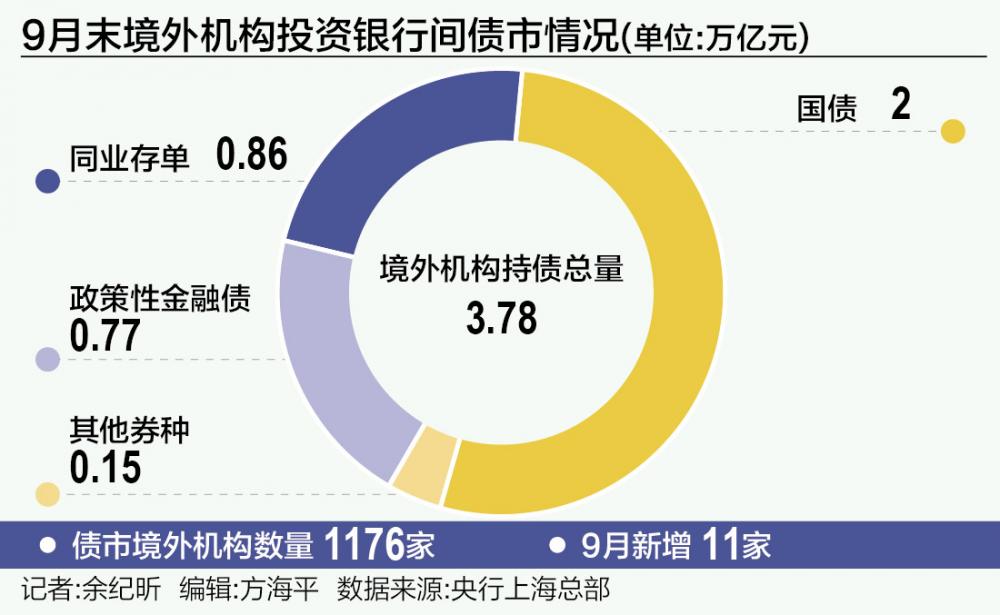
9月债市新增11家境外机构主体 境外回购新政落地积极
2 1 Shi Ji Jing Ji Bao Dao· 2025-10-23 08:33
Core Insights - The People's Bank of China (PBOC) has reported that as of September 2025, foreign institutions held 3.78 trillion yuan in the interbank bond market, accounting for 2.2% of the total market [1] - The report indicates a significant increase in the number of foreign institutional participants, with 11 new entities entering the market in September alone, contributing to a total of 1,176 foreign institutions [1][2] - A new policy allowing foreign institutions to engage in bond repurchase transactions in the Chinese bond market was introduced, which is expected to enhance market liquidity and attract more foreign investment [3][4] Foreign Institutional Holdings - As of September, foreign institutions held 2.00 trillion yuan in government bonds, 0.86 trillion yuan in interbank certificates of deposit, and 0.77 trillion yuan in policy financial bonds, with the latter two showing a decline compared to previous months [2] - The overall trading volume of foreign institutions in the interbank bond market was approximately 0.96 trillion yuan in September, with an average daily trading volume of about 41.7 billion yuan [1] Market Dynamics - The trading activity of different types of institutions showed structural changes, with credit cooperatives increasing their trading volume significantly from 0.36 trillion yuan in August to 0.47 trillion yuan in September [2] - Commercial banks maintained a dominant position in the market, with a trading volume of 24.46 trillion yuan, while securities companies saw a slight decline in their trading volume [2][3] New Policy Impact - The new policy introduced on September 26 allows foreign institutions to conduct bond repurchase transactions, which is expected to diversify the types of participants in the market and enhance trading convenience [3][4] - The initial response from financial institutions was swift, with major banks and securities firms engaging in multiple transactions under the new mechanism shortly after its announcement [4] Future Outlook - Analysts believe that the introduction of the bond repurchase mechanism will reduce transaction friction and enhance the willingness of foreign institutions to hold bonds, thereby stabilizing the market [5][6] - The diversification of participants is expected to lead to more trading strategies and improve the overall efficiency of the domestic bond market [6]
多家银行落地首批跨境债券回购交易
Shang Hai Zheng Quan Bao· 2025-10-12 17:14
Core Insights - The launch of cross-border bond repurchase transactions marks a significant step in China's bond market opening, following the introduction of Bond Connect and Swap Connect [1][5] - The first day of trading saw a transaction volume of 5.8 billion yuan, indicating strong initial interest from both domestic and foreign institutions [2][3] Summary by Sections Cross-Border Bond Repurchase Launch - Multiple banks have successfully executed the first batch of cross-border bond repurchase transactions, with a total transaction volume of 5.8 billion yuan on the first day [2][3] - The People's Bank of China, the China Securities Regulatory Commission, and the State Administration of Foreign Exchange jointly announced support for foreign institutional investors to engage in bond repurchase transactions in the Chinese bond market [2][4] Benefits for Domestic and Foreign Institutions - The new policy provides foreign investors with liquidity management tools, enhancing their investment experience and potential returns [4][5] - Foreign investors can use their held RMB bonds as collateral for financing, significantly improving asset utilization efficiency [4][5] - For domestic banks, participating in this business broadens liquidity management channels and enhances their influence in international markets [4][5] Future Market Activity - The cross-border bond repurchase business is expected to see steady growth in scale and activity, indicating a deeper integration of onshore and offshore financial markets [5][6] - The new policy aligns with international practices, reducing barriers for foreign institutions to participate in the Chinese market [5][6] - Market participants have positive expectations for the future activity level of the cross-border RMB repurchase market [5][6]





