
全球绿色转型

Search documents
白银会成为新的黄金吗?
Sou Hu Cai Jing· 2025-12-12 07:02
Core Viewpoint - The unprecedented surge in silver prices, which have doubled since the beginning of the year, is reshaping investment logic in the precious metals market, with silver now being compared to gold [1][4]. Supply and Demand Dynamics - The strong performance of silver prices is primarily driven by structural changes in the supply-demand balance, with industrial demand, particularly from emerging sectors like electric vehicles and computer chips, seeing significant growth [5]. - The global silver market is expected to experience a supply deficit for the fifth consecutive year, with a projected shortfall of approximately 11.7 million ounces in 2025, marking one of the largest supply-demand imbalances in recent years [5]. Geopolitical Factors - Geopolitical changes, including the U.S. government's designation of silver as a strategic commodity, have heightened market tensions and led to domestic hoarding behavior among businesses and investors [6]. Retail Investor Behavior - Retail investor enthusiasm is rising, driven by a "Fear of Missing Out" (FOMO) mentality, leading to increased speculation in silver as investors seek alternatives to traditional assets amid rising inflation expectations [8]. Monetary Policy Concerns - Concerns regarding monetary policy, particularly the Federal Reserve's recent interest rate cuts, are contributing to the rise in silver prices, as investors view precious metals as a hedge against potential currency devaluation [9]. Market Predictions - Analysts predict that silver prices may reach the $100 mark by 2026, supported by ongoing supply shortages and increasing industrial demand, although significant price volatility is expected during this period [11].


中国银行董事长葛海蛟、行长张辉出席中法企业家委员会第七次会议
Xin Lang Cai Jing· 2025-12-04 13:24
Core Viewpoint - The China-France Entrepreneurs Committee, under the leadership of the two countries' heads of state, has strengthened practical cooperation, with economic and trade collaboration serving as the "ballast" and "engine" of China-France relations [1][3]. Group 1: Committee Overview - The China-France Entrepreneurs Committee was established in January 2018, with the Bank of China serving as the chair for the first two terms, while Schneider Electric Group and BNP Paribas held the chair for the French side [2][4]. - The committee has innovated its communication mechanisms and launched the "China-France Entrepreneurs Committee Goes Local" series to help Chinese and French enterprises share opportunities in China's vast market [2][4]. Group 2: Recent Meeting Highlights - The theme of the recent meeting was "A New Chapter in China-France Cooperation: Focusing on Frontiers of Industry Transformation and Promoting Partnership Development," attended by approximately 200 representatives from both governments and enterprises [2][4]. - Bank of China Chairman Ge Haijiao emphasized the importance of the committee as a platform for institutionalized exchanges at the highest level of the business community [1][3]. - Bank of China President Zhang Hui participated in a seminar on "China-France Industry Insights: New Opportunities for Cross-Border Investment," highlighting the bank's commitment to leveraging its comprehensive financial service advantages in key areas such as green finance, scientific research innovation, and cross-border investment [1][3].

对话挪威前首相:开放市场是加速全球绿色转型的关键
2 1 Shi Ji Jing Ji Bao Dao· 2025-12-02 12:28
Core Viewpoint - The opening of the 2025 International Forum in Guangzhou highlighted the importance of open markets and reduced trade barriers in accelerating the global green transition, as emphasized by former Norwegian Prime Minister Kjell Magne Bondevik [1] Group 1: Electric Vehicle Policies - Norway's electric vehicle policy aims for complete electrification of transportation, with a long-term goal of all new passenger cars being zero-emission vehicles by 2025 [1] - To achieve this goal, Norway has implemented strong incentives, including exemption from high-value-added tax and import duties, priority access on roads, and free parking [1] - As of September 2025, the share of pure electric vehicle sales in Norway reached 98% of total new car sales, according to the Norwegian Public Roads Administration (OFV) [1] Group 2: Market Trends and Collaborations - In the first half of 2024, Chinese brand electric vehicles accounted for 22.2% of new registered passenger cars in Norway, a significant increase from 10.8% in 2023 [1] - Bondevik stressed the need for the international community to gradually eliminate trade barriers for green products, highlighting the rapid development of China in green technology [1] - There are promising prospects for multilateral cooperation between China and Norway in the fields of electric vehicles and clean energy [1]
美企因害怕特朗普而减少绿色投资?克里批美国政治寒蝉效应
Di Yi Cai Jing· 2025-11-26 08:12
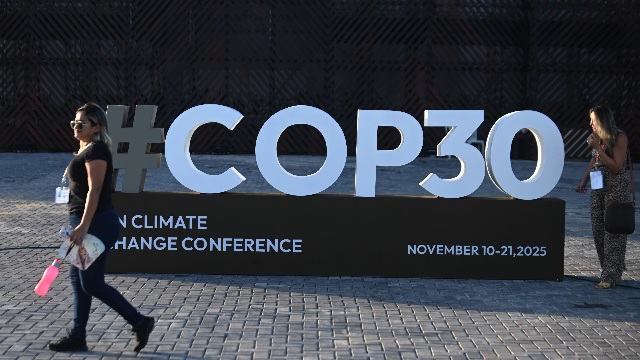
Group 1 - John Kerry expressed shock at the level of fear among U.S. CEOs regarding President Trump, stating that despite the lucrative returns from green energy investments, many companies are still hesitant to invest due to potential political and legal repercussions [1][2] - Kerry highlighted that the recent COP30 climate conference was the first held without the participation of the U.S. federal government since the inception of the UN climate change conferences in 1995, yet several major companies like Microsoft, Google, and General Motors still attended, indicating a commitment to business development and supply chain security [4] - A recent analysis from the University of Maryland's Center for Global Sustainability indicated that existing policies could lead to a 35% reduction in U.S. emissions by 2035, largely driven by corporate initiatives [4] Group 2 - The renewable energy sector saw $2.2 trillion in spending over the past year, driven by market demand and consumer needs, despite some investors retracting their support due to fears related to climate change and political backlash [2] - Companies are recognizing the economic benefits of climate action, which also positively impacts health, food, and water security, as emphasized by Kerry [3]
隆基拿下中东1.1GW BC组件订单!
Xin Lang Cai Jing· 2025-11-25 12:22
Core Insights - The collaboration between Longi, China Electric Construction, and France's ENGIE Group marks a significant advancement in the 1.5GW PV4 Hazza 1 solar project in Abu Dhabi, officially entering the implementation phase after a framework agreement was signed in Paris earlier this year [1][2] - Longi will supply 1.1GW of its high-efficiency BC Hi-MO 9 modules for the project, which is expected to enhance clean energy capacity in the Middle East and set a new benchmark for high-quality solar power plants globally [1] Group 1 - The project is located in a tropical desert climate, requiring high durability for the components due to extreme summer temperatures and significant temperature variations [1] - Longi's Hi-MO 9, based on HPBC 2.0 technology, is designed to maintain efficient and stable power generation in complex conditions such as high temperatures and uneven sunlight [1] - Previous performance validation of Hi-MO 9 in Inner Mongolia showed a 2.45% increase in power generation per kilowatt compared to TOPCon modules, with a 9.05% higher efficiency per unit area [1] Group 2 - Independent verification from Enertis Applus+ in Spain and IPVF in France confirmed the cost advantages of Hi-MO 9, establishing it as a high-value solution recognized by global developers [1] - Longi's Chairman, Zhong Baoshen, emphasized the collaboration's potential to leverage project development, technological innovation, and engineering construction to ensure successful commercial operation and expand cooperative outcomes [1][2] - This partnership represents a milestone in complementing the strengths of the three parties and supports the global energy revolution, showcasing Longi's BC technology adaptability across diverse scenarios [2]

美国缺席COP30,气候资金如何增加两倍
Di Yi Cai Jing· 2025-11-24 13:48
Core Points - COP30 has integrated trade issues into its outcome documents, marking a significant development in climate negotiations [1] - The conference emphasized the urgent need for increased climate financing, particularly for developing countries, with a commitment to double adaptation funding by 2035 [4][5] - The absence of the U.S. federal government at COP30 is notable, as it is the first time since the inception of the UN climate conferences that the U.S. did not send a high-level representative [7] Climate Financing - The final document from COP30 calls for developed countries to double their adaptation funding to developing nations by 2025 compared to 2019 levels, and to triple it by 2035 [1][4] - A target of mobilizing at least $1.3 trillion annually for climate funding by 2035 was established, with developed countries expected to contribute at least $300 billion each year [5] Trade Issues - The conference highlighted the importance of sustainable development for developing countries and warned against unilateral actions that could create unfair trade barriers [5] - A new dialogue aimed at enhancing international cooperation on trade was initiated, involving various countries and organizations like the WTO [5] Renewable Energy Investment - Investment in renewable energy has surpassed that in fossil fuels, with renewable investments now being twice that of fossil fuel investments [8] - The commitment to achieving net-zero emissions has been made by over 80% of global economies, indicating a strong shift towards sustainable energy [7] Future Actions - While there was consensus on accelerating the implementation of the Paris Agreement, no specific plans were made to phase out fossil fuels [9] - The next climate conference (COP31) will be hosted by Turkey, with Australia taking a leadership role in negotiations [9]
建信期货纸浆日报-20251114
Jian Xin Qi Huo· 2025-11-14 06:29
Group 1: Report Overview - Report Name: Paper Pulp Daily Report [1] - Date: November 14, 2025 [2] Group 2: Investment Rating - No investment rating information is provided in the report. Group 3: Core Viewpoint - In the short - term, pulp prices are strong due to low warehouse receipt quantities and rising overseas November quotes. It is recommended to observe the cost digestion performance of downstream paper enterprises and adopt a wait - and - see approach [7] Group 4: Summary by Directory 1. Market Review and Operation Suggestions - Pulp futures contract 01: The previous settlement price was 5486 yuan/ton, the closing price was 5534 yuan/ton, with an overall increase of 0.87% [7] - Shandong wood pulp market: The intended transaction price range of softwood pulp was 4900 - 6500 yuan/ton, remaining stable compared to the previous trading day's closing price. The quotation of Shandong Yinxing was 5550 - 5580 yuan/ton [7] - Overseas quotes: Finnforest Metsa notified Chinese customers that the November quote for softwood pulp was raised by $20 [7] - Production and sales data: In September, the chemical pulp shipments of 20 major pulp - producing countries increased by 8.3% year - on - year, with softwood pulp up 3.8% and hardwood pulp up 11.8%. Shipments to the Chinese market also increased [7] - Inventory data: As of November 6, 2025, the weekly pulp inventory in major regions and ports decreased by 2.31% month - on - month, with inventory at Qingdao Port and Tianjin Port decreasing [7] - Downstream paper market: The performance of downstream base papers remained differentiated. The packaging paper market continued to be favorable, while other base papers mainly replenished inventory as needed. Tendering for offset paper publication was ongoing, but social demand was limited [7] 2. Industry News - During the 8th CIIE, the sub - forum "Promoting Green Trade Liberalization and Accelerating Global Green Transformation" of the 8th Hongqiao International Economic Forum was held. Zhai Jingli, vice - president of APP, was invited to attend and share the company's innovation exploration in technology and full - industry chain collaboration [8] 3. Data Overview - The report provides multiple data charts, including import softwood pulp spot prices in Shandong, pulp futures prices, pulp spot - futures price differences, softwood - hardwood price differences, inter - period price differences, warehouse receipt totals, domestic main port pulp inventories, European main port wood pulp inventories, prices and price differences of coated paper and offset paper, prices and price differences of white cardboard and white board paper, and the US dollar - RMB exchange rate [14][16][18][24][25][27]
建信期货纸浆日报-20251113
Jian Xin Qi Huo· 2025-11-13 02:30
Group 1: Report Information - Report Name: Pulp Daily Report [1] - Date: November 13, 2025 [2] - Research Team: Energy and Chemical Research Team [4] Group 2: Investment Rating - There is no information about the industry investment rating in the report. Group 3: Core View - In the short term, pulp prices are trending stronger due to low warrant quantities and rising overseas quotes in November. It is recommended to monitor the cost digestion performance of downstream paper mills and adopt a wait - and - see approach [7]. Group 4: Summary by Directory 1. Market Review and Operation Suggestions - The previous settlement price of the pulp futures 01 contract was 5,492 yuan/ton, and the closing price was 5,482 yuan/ton, a decline of 0.18%. The intended transaction price range of softwood pulp in the Shandong wood pulp market was 4,870 - 6,500 yuan/ton, remaining stable compared to the previous trading day. The Shandong Yinxing quotation was 5,520 - 5,530 yuan/ton [7]. - Finnforest Metsa notified Chinese customers that the November quote for softwood pulp would be raised by $20. In September, the chemical pulp shipments of the world's top 20 pulp - producing countries increased by 8.3% year - on - year, with softwood pulp up 3.8% and hardwood pulp up 11.8%. Shipments to the Chinese market continued to grow [7]. - As of November 6, 2025, the weekly pulp inventory in major regions and ports decreased by 2.31% month - on - month, with inventory at Qingdao Port and Tianjin Port decreasing [7]. - The performance of downstream base papers remained differentiated. The packaging paper market continued to be favorable, while other base papers mainly replenished inventory as needed. Tendering for offset paper publications was ongoing, but social demand was limited [7]. 2. Industry News - On November 12, during the 8th CIIE, the sub - forum "Promoting Green Trade Liberalization and Accelerating Global Green Transformation" of the 8th Hongqiao International Economic Forum was held. Zhai Jingli, Vice President of Asia Pulp & Paper (APP), was invited to attend and discuss with domestic and foreign political, business, academic, and research guests [8]. 3. Data Overview - The report provides various data charts including import softwood pulp spot prices in Shandong, pulp futures prices, pulp spot - futures price spreads, needle - broadleaf price spreads, inter - delivery spreads, warrant totals, domestic main port pulp inventories, European main port wood pulp inventories, prices and spreads of coated paper, offset paper, white cardboard, and whiteboard paper, and the US dollar - RMB exchange rate [14][16][18][25][26][27]
欧洲环保人士:中国的环境治理长期愿景值得赞赏
Zhong Guo Xin Wen Wang· 2025-11-12 17:25
Core Viewpoint - The event "Ecological Civilization and Beautiful China Practice" at COP30 highlighted China's significant role in renewable energy and the importance of international cooperation in addressing climate change [1][2]. Group 1: China's Role in Renewable Energy - China is recognized for its important contributions to renewable energy and its long-term vision is commendable [1][2]. - The year 2025 marks the 10th anniversary of the Paris Agreement and the 20th anniversary of the "Green Mountains and Clear Water are Golden Mountains and Silver Mountains" concept, emphasizing China's commitment to environmental sustainability [1]. Group 2: International Cooperation and Dialogue - Continuous and deepened dialogue is essential for countries to collectively address the climate crisis, sharing successful experiences and restoring the spirit of cooperation [1][2]. - The past decade has seen dialogue play a crucial role in the evolution of environmental regulations, enabling the passage of effective laws [2]. Group 3: Future Actions and Expectations - There is a call for large-scale coordinated actions to tackle the decisive challenges of the era, integrating ecological protection with economic development [2]. - The COP30 is viewed as a "conference of action," moving beyond discussions to the implementation of solutions [2].
全球瞭望丨芬兰媒体:中国是全球绿色转型的重要推动者
Xin Hua She· 2025-11-12 12:43
Core Viewpoint - China is recognized as a significant driver of global green transformation, having fulfilled its existing climate commitments and proposed new national contributions, including substantial increases in renewable energy capacity by 2035 and further reductions in carbon emissions [1] Group 1: China's Climate Actions - China has not only met its previous climate commitments but has also set new national contribution targets [1] - The country aims to significantly increase its renewable energy installed capacity by 2035 and further reduce carbon emissions [1] Group 2: Global Climate Governance - The article criticizes the United States for its irresponsible actions in global climate governance, highlighting its absence from the UN Climate Change Conference in Belem, Brazil [1] - Concerns are raised regarding the U.S. government's interference in international climate cooperation, such as its refusal to support the International Maritime Organization's "net zero emissions framework" aimed at reducing greenhouse gas emissions from international shipping [1] Group 3: EU's Position on Climate Action - The article notes a shift in the European Union's approach, which has historically positioned itself as a leader in global climate action, now emphasizing a balance between competitiveness and climate goals [1] - This policy adjustment may weaken Europe's effectiveness in climate action [1]