
卓越工程师培养改革

Search documents
教育部:60多名工程硕士毕业生以实践成果获学位
Zhong Guo Jing Ji Wang· 2025-12-10 14:36
Core Viewpoint - The Ministry of Education's reform in cultivating outstanding engineers establishes a new evaluation standard focused on integrating education with industry by replacing traditional thesis requirements with practical achievements, marking a significant shift in higher education in China [1][2]. Group 1: National Strategy Orientation - The reform emphasizes alignment with national strategic needs, focusing on 18 key areas such as integrated circuits and artificial intelligence, which are critical for national development [1]. - The Ministry of Education has accelerated the establishment of master's and doctoral programs in these strategic fields, exceeding the traditional three-year cycle for academic program adjustments, resulting in over 20% of academic programs being optimized since 2023 [1]. Group 2: Curriculum and Content Update - The reform employs the "Four Commons" and "Four Connections" as innovative paradigms, leading to a comprehensive restructuring of training programs, course systems, faculty teams, teaching materials, and practical innovation [2]. - This systematic overhaul aims to enhance the intrinsic quality of existing academic disciplines, providing a reference for updating other professional fields [2]. Group 3: New Evaluation Standards - The reform introduces a new evaluation standard by allowing practical achievements to replace traditional thesis requirements, which has already resulted in over 60 engineering master's graduates receiving degrees based on practical outcomes [2]. - This reform is expected to act as a lever for the classification development and evaluation of the entire academic discipline system, further promoting the integration of education, talent, industry, and innovation chains [2].
三年培养2.6万国家战略后备人才,巨变刚刚开始
2 1 Shi Ji Jing Ji Bao Dao· 2025-12-10 11:14
Core Insights - The "Excellence Engineer Training Reform" in China is expanding its influence and aims to align more closely with modern industrial needs and engineering construction requirements [2][3]. Group 1: Training Reform Achievements - Over the past three years, the reform has established 50 National Excellence Engineer Colleges, training nearly 26,000 master's and doctoral students in collaboration with enterprises, with over 2,000 graduates entering the workforce [2][4]. - The first cohort of over 2,000 engineering master's graduates has produced more than 2,500 innovative outcomes, including 300 practical engineering results and 800 intellectual property achievements, most of which have been locally transformed [5][6]. Group 2: Curriculum and Industry Integration - The reform emphasizes practical training by integrating enterprise resources into the educational process, requiring engineering master's students to engage in at least one year of practical work and doctoral students for at least two years [4][5]. - The newly released "Excellence Engineer Education Certification Standards" aims to enhance the quality of engineering education and fill gaps in the current international engineering education certification system [3][8]. Group 3: Future Directions and Strategic Focus - The reform is set to drive a broader transformation in higher engineering education, focusing on 18 key strategic areas such as integrated circuits and artificial intelligence [10][12]. - The Ministry of Education plans to adjust and optimize academic programs in response to industry needs, including the establishment of new master's and doctoral programs in urgently needed fields like low-altitude technology [12][13].
教育部:校企联合招收培养工程硕博近2.6万人
Xin Jing Bao· 2025-12-10 10:49
Core Viewpoint - The reform of the training system for outstanding engineers in China has made significant progress, with nearly 26,000 master's and doctoral students being jointly recruited and trained by universities and enterprises, marking a successful large-scale collaboration in talent cultivation [1][2]. Group 1: Strategic Importance - The training of outstanding engineers is crucial for enhancing national competitiveness and is a necessary step in building a modern industrial system [2][4]. - The reform aims to transition China from a country with a large number of engineers to a strong engineering nation by nurturing top-tier talent [2][4]. Group 2: Implementation Practices - The reform includes a restructuring of the training system, breaking away from traditional discipline-based models, and establishing 50 national outstanding engineer colleges and innovation research institutes [2][3]. - Over 10,000 research topics have been refined from industry, serving as the main source for master's and doctoral research projects [4]. - A collaborative curriculum has been developed, with over 200 core courses created in partnership with enterprises, and more than 300 engineering technology centers established for practical training [4][5]. Group 3: Employment Outcomes - 81% of the first cohort of over 2,000 engineering master's graduates have secured jobs in key enterprises within their field [5]. - More than 60 engineering doctoral graduates have obtained degrees based on practical achievements, indicating a shift towards industry-relevant evaluation standards [5][6]. Group 4: Future Directions - The Ministry of Education plans to establish a distinctive training system for outstanding engineers, focusing on standard system construction and deepening industry-academia cooperation [6][8]. - The reform will also drive the overall transformation of higher engineering education and explore models for integrating education with industry to support regional industrial upgrades [6][8].
成建制、大规模!我国卓越工程师培养改革取得积极进展
Bei Jing Ri Bao Ke Hu Duan· 2025-12-10 09:39
Group 1 - The core viewpoint of the articles highlights the progress made in the reform of the training system for outstanding engineers in China, with nearly 26,000 master's and doctoral students being jointly recruited and trained by universities and enterprises, and over 2,000 graduates entering the workforce [1][2] - The Ministry of Education emphasizes the need to align talent training with economic and social development demands, focusing on enhancing technical innovation capabilities and problem-solving skills in engineering education [1] - The reform has also driven overall changes in higher engineering education, including restructuring knowledge frameworks and promoting interdisciplinary collaboration to address complex engineering problems [1] Group 2 - The Ministry of Education has recently released the "Outstanding Engineer Education Certification Standards" to establish a distinctive Chinese training system for outstanding engineers, encouraging deep enterprise involvement in the entire training process [2] - The next steps include initiating the organizational mechanism for the certification of outstanding engineer education and improving related supporting systems [2] - There are plans to accelerate the internationalization of the certification standards to enhance the global influence of China's engineering education [2]
教育部:探索建立中国特色的校企“四共”“四通”机制,推进卓越工程师培养改革
Huan Qiu Wang· 2025-12-10 09:25
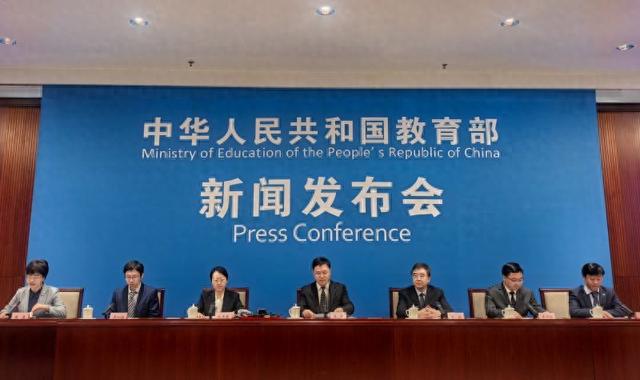
【环球网报道 记者 陈全】12月10日,教育部召开新闻发布会介绍卓越工程师培养改革情况,解读《卓 越工程师教育认证标准》。 "十五五"规划建议提出,要一体推进教育科技人才发展,加快建设国家战略人才力量,培养造就更多包 括卓越工程师在内的各类人才。12月4日,卓越工程师培养改革座谈会召开,会议强调要深化工程教育 改革、加大卓越工程师培养力度,为建设教育强国、科技强国、人才强国提供有力支撑。在中央人才工 作会议召开四周年、全国教育大会召开一周年的重要节点,在卓越工程师培养改革启动三年的关键时期 召开此次座谈会,充分彰显了党中央、国务院对国家战略人才培养的高度重视。 卓越工程师的培养离不开有关部门的大力支持,需要更多一流的高校和企业参与进来,必须紧扣现代化 产业体系和工程建设需要,还要强化标准引领和政策保障。发布会现场,教育部学位管理与研究生教育 司司长吴刚详细介绍了卓越工程师培养改革进展情况。 源:视觉中国 来源:环球网 图片来 三是坚持把产教深度融合打破人才培养鸿沟作为改革的关键突破。调动高校和企业两个积极性,探索建 立中国特色的校企"共同招生、共同选题、共同培养、共享成果"和"师资互通、课程打通、平台融通、 ...

卓越工程师培养改革交答卷,超2000名首批毕业生走上工作岗位,59名工程硕士凭实践成果获学位
Hua Xia Shi Bao· 2025-12-10 07:35
Core Viewpoint - The reform of the training system for outstanding engineers has made significant progress, with nearly 26,000 master's and doctoral students being jointly recruited and trained by universities and enterprises, highlighting the importance of collaboration between educational institutions and industry to meet modern industrial needs [2][5]. Group 1: Progress and Achievements - The reform has resulted in the successful recruitment and training of approximately 26,000 master's and doctoral students through university-enterprise collaboration, with over 2,000 graduates already entering the workforce [5][6]. - Tsinghua University has implemented systematic reforms focusing on "recruitment, training, and degree evaluation," promoting deep integration of industry and education, and establishing a unique training system for outstanding engineers [5][6]. - The China Aviation Industry Corporation has recruited over 1,200 master's and doctoral students since 2022, establishing a joint training system with 23 domestic universities and 53 enterprises, focusing on 14 key areas [6]. Group 2: Educational Standards and Certification - The Ministry of Education has developed the "Excellence Engineer Education Certification Standards," marking a significant step towards establishing a Chinese characteristic and world-class training system for outstanding engineers [7][8]. - The certification process will be conducted in three phases, including the establishment of an organizational mechanism, the development of supporting systems, and the gradual implementation of certification across all national outstanding engineer colleges [8][9]. - The new standards emphasize practical achievements over traditional thesis requirements, allowing for a more industry-relevant evaluation of students' capabilities [9][10].
教育部:争取用5到10年把国家卓越工程师学院打造成为卓越工程师培养的战略基地和高地
Zheng Quan Shi Bao Wang· 2025-12-05 08:04
人民财讯12月5日电,12月4日,教育部召开卓越工程师产教融合培养工作推进会。会议强调,当前卓越 工程师培养改革正从凝聚共识、构建机制、积累经验,向树立标准、动态优化、提质扩容转段升级,要 坚定信心持续用力,奋力推进"十五五"卓越工程师培养改革再上新台阶。一是以标准和认证体系建设为 引领,打造中国特色卓越工程师培养体系,争取用5到10年,把国家卓越工程师学院打造成为卓越工程 师培养的战略基地和高地。二是以培养要素建设和评价机制改革为关键,推动深化产学合作机制,把思 想政治教育放在突出位置,形成育人合力。三是以卓越工程师培养改革为牵引,带动高等工程教育整体 变革,结合本科人才培养改革,探索贯通培养机制,推动学科交叉融合,加速AI赋能工程教育改革创 新。四是因地制宜探索产教融合模式,带动提升工程教育质量,推动完善区域创新体系,服务区域产业 转型升级。五是建立国际合作机制,加强中外师生常态化交流,稳步拓展海外卓越工程师学院建设布 局,推动国际互认,服务产业出海。 ...
丁薛祥出席卓越工程师培养改革座谈会
Yang Shi Wang· 2025-12-04 12:28
Core Viewpoint - The meeting on the reform of the training of outstanding engineers emphasizes the importance of engineers as a key component of national strategic talent and highlights the need for enhanced self-cultivation of engineering and technical talents to support national strategic demands [1] Group 1: Government Initiatives - The meeting was attended by Ding Xuexiang, a member of the Political Bureau Standing Committee and Vice Premier of the State Council, who stressed the need for a large-scale construction of an outstanding engineer team [1] - The 20th Central Committee's Fourth Plenary Session outlined a five-year development blueprint for China, emphasizing the acceleration of building national strategic talent [1] Group 2: Educational Reforms - There has been positive progress in the reform of outstanding engineer training, promoting collaborative education between industry, academia, and research, which has improved the quality of engineering education [1] - The need to optimize the training system by involving more top universities and enterprises to enhance overall training quality was highlighted [1] Group 3: Future Directions - The focus will be on aligning training with the needs of the modern industrial system and engineering construction, expanding into urgently needed fields [1] - Strengthening standard guidance and policy support, enhancing the mentor team, and deepening industry-education integration and school-enterprise cooperation are essential for improving training effectiveness [1]
我国首批卓越工程师培养改革硕士生毕业,超70%服务国家战略
Xin Jing Bao· 2025-07-17 01:47
Group 1 - The core viewpoint of the articles highlights the structural transformation in China's talent cultivation system, particularly through the implementation of the "Excellence Engineer" program, which integrates education and industry to meet national strategic needs [1][2][12] - The first batch of over 2,100 specialized master's graduates has successfully transitioned into the workforce, with 71% remaining in their respective fields, demonstrating the program's effectiveness in aligning education with industry demands [1][2][8] - The Ministry of Education has announced that the certification standards for the "Excellence Engineer" program will be officially released in the second half of the year, ensuring high-quality construction of the national excellence engineer colleges [1][12] Group 2 - The reform initiated in 2022 aims to cultivate a large number of excellent engineers as a major political task, emphasizing the integration of education, technology, and talent [2][12] - The program has restructured the talent cultivation system by involving enterprises in the educational process, allowing students to work on real-world problems and projects [2][3] - Over 5,100 research topics have been provided by enterprises, enabling students to select projects based on actual industry needs, thus enhancing their problem-solving capabilities [3][4] Group 3 - The "Excellence Engineer" program focuses on 18 key areas and has developed 201 core courses that are high-level, cutting-edge, and interdisciplinary, which are shared through a national smart education platform [3][12] - The program's unique training model includes a combination of academic study and practical experience, with master's students spending one year in school and two years in enterprises [3][4] - The new evaluation standards for engineering master's and doctoral degrees have been established, allowing for practical achievements to be considered alongside traditional thesis work [7][8] Group 4 - The program emphasizes the importance of cultivating young talents who are committed to serving national needs and possess strong teamwork and problem-solving skills [4][5] - The success stories of graduates, such as Zhang Chuan Yu and Zhang Bai Chuan, illustrate the practical application of their studies in real-world engineering challenges, showcasing the program's effectiveness [6][9][10] - The implementation of the "People's Republic of China Degree Law" has provided a legal basis for students to apply for degrees based on practical achievements, enhancing the alignment of education with industry requirements [7][11] Group 5 - Future plans include promoting the "Excellence Engineer" cultivation model on a larger scale, aiming for over half of engineering master's and doctoral programs to establish excellence engineer colleges by 2030 [12][14] - The initiative seeks to create a new system of integrated education and industry collaboration, enhancing the quality of talent cultivation and aligning it with regional innovation development [12][14] - The program aims to promote international recognition of China's engineering education standards, contributing to global higher engineering education [14]
教育部:卓越工程师首批毕业生有67人以实践成果申请学位
Zhong Guo Xin Wen Wang· 2025-07-16 04:24
Group 1 - The core viewpoint of the article highlights the positive progress made in the reform of the training of outstanding engineers in China, with over 2,100 master's graduates from the first batch applying for degrees based on practical achievements [1][2] - The Ministry of Education has identified issues in engineering education, such as weak faculty strength and a disconnect between research tasks and engineering capability training, prompting a reform initiative involving nine departments [1] - The new evaluation standards for engineering master's and doctoral degrees will allow practical achievements to be considered alongside traditional thesis work, effective from January 2025, breaking the "thesis-only" evaluation barrier [1][2] Group 2 - Zhang Baichuan, a graduate from China University of Petroleum (Beijing), exemplifies the success of the practical achievement-based degree application process, having contributed to industry standards and published research [2] - The Ministry of Education plans to deepen the reform by releasing the "Outstanding Engineer Training Certification Standards" in September, aiming to enhance the integration of education and industry [2]