
国家战略人才力量

Search documents
权威访谈·开局“十五五”丨加快高水平科技自立自强 引领发展新质生产力
Yang Guang Wang· 2026-01-18 00:52
Group 1 - The core viewpoint emphasizes the acceleration of high-level technological self-reliance and the cultivation of new driving forces for development as part of the "14th Five-Year Plan" [1] - The Central Economic Work Conference has identified "innovation-driven development" as one of the eight key tasks for economic work in 2026, highlighting the importance of strategic planning and resource allocation in technology [1] - The Ministry of Science and Technology aims to enhance the overall effectiveness of the national innovation system by coordinating various innovation entities and strengthening collaboration between central and local governments [1] Group 2 - China has 24 clusters ranked among the top 100 global innovation clusters, leading the world, with a focus on building international technology innovation centers in Beijing, Shanghai, and the Guangdong-Hong Kong-Macao Greater Bay Area [2] - The Ministry of Science and Technology plans to leverage the leading roles of Beijing and Shanghai to foster collaboration and resource sharing among the Beijing-Tianjin-Hebei and Yangtze River Delta regions [2] - Education, technology, and talent are identified as foundational supports for China's modernization, with a focus on promoting the interaction between technological innovation and talent development [2]
教育部:校企联合招收培养工程硕博近2.6万人
Xin Jing Bao· 2025-12-10 10:49
Core Viewpoint - The reform of the training system for outstanding engineers in China has made significant progress, with nearly 26,000 master's and doctoral students being jointly recruited and trained by universities and enterprises, marking a successful large-scale collaboration in talent cultivation [1][2]. Group 1: Strategic Importance - The training of outstanding engineers is crucial for enhancing national competitiveness and is a necessary step in building a modern industrial system [2][4]. - The reform aims to transition China from a country with a large number of engineers to a strong engineering nation by nurturing top-tier talent [2][4]. Group 2: Implementation Practices - The reform includes a restructuring of the training system, breaking away from traditional discipline-based models, and establishing 50 national outstanding engineer colleges and innovation research institutes [2][3]. - Over 10,000 research topics have been refined from industry, serving as the main source for master's and doctoral research projects [4]. - A collaborative curriculum has been developed, with over 200 core courses created in partnership with enterprises, and more than 300 engineering technology centers established for practical training [4][5]. Group 3: Employment Outcomes - 81% of the first cohort of over 2,000 engineering master's graduates have secured jobs in key enterprises within their field [5]. - More than 60 engineering doctoral graduates have obtained degrees based on practical achievements, indicating a shift towards industry-relevant evaluation standards [5][6]. Group 4: Future Directions - The Ministry of Education plans to establish a distinctive training system for outstanding engineers, focusing on standard system construction and deepening industry-academia cooperation [6][8]. - The reform will also drive the overall transformation of higher engineering education and explore models for integrating education with industry to support regional industrial upgrades [6][8].
丁薛祥出席卓越工程师培养改革座谈会
Yang Shi Wang· 2025-12-04 12:28
Core Viewpoint - The meeting on the reform of the training of outstanding engineers emphasizes the importance of engineers as a key component of national strategic talent and highlights the need for enhanced self-cultivation of engineering and technical talents to support national strategic demands [1] Group 1: Government Initiatives - The meeting was attended by Ding Xuexiang, a member of the Political Bureau Standing Committee and Vice Premier of the State Council, who stressed the need for a large-scale construction of an outstanding engineer team [1] - The 20th Central Committee's Fourth Plenary Session outlined a five-year development blueprint for China, emphasizing the acceleration of building national strategic talent [1] Group 2: Educational Reforms - There has been positive progress in the reform of outstanding engineer training, promoting collaborative education between industry, academia, and research, which has improved the quality of engineering education [1] - The need to optimize the training system by involving more top universities and enterprises to enhance overall training quality was highlighted [1] Group 3: Future Directions - The focus will be on aligning training with the needs of the modern industrial system and engineering construction, expanding into urgently needed fields [1] - Strengthening standard guidance and policy support, enhancing the mentor team, and deepening industry-education integration and school-enterprise cooperation are essential for improving training effectiveness [1]
丰富人才资源,厚植发展优势——推动“十五五”时期经济社会发展向新而行⑤
Ren Min Ri Bao· 2025-11-20 03:20
Group 1 - The core viewpoint emphasizes the importance of talent as a strategic resource for national strength, competitiveness, and transformation, highlighting the need for innovative talent development mechanisms to support China's modernization efforts [2][3] - The report indicates that China has cultivated nearly half of the world's top AI talent, with a total of 250 million individuals having received higher education, and over 220 million skilled workers, including more than 72 million high-skilled talents [1][2] - The "14th Five-Year Plan" repeatedly mentions talent development, advocating for a focus on education, technology, and talent to create a vibrant environment where individuals can fully utilize their skills [2][3] Group 2 - The construction of national strategic talent forces is a key task in innovating talent work mechanisms, with a focus on nurturing young scientific and technological talents and providing them with ample opportunities to showcase their abilities [3] - The evaluation of talent is described as a guiding principle for talent development, with reforms in higher education evaluation systems aimed at reducing unreasonable assessment requirements and enhancing the market value of knowledge and skills [3] - The report highlights the broad stage for talent application across various sectors, from rural revitalization to regional coordinated development, emphasizing the need for improved mechanisms for talent cultivation, introduction, and mobility to create a positive cycle of talent and career success [4]
打造科技领军人才雁阵
Ke Ji Ri Bao· 2025-11-20 02:39
Core Insights - The 20th Central Committee's Fourth Plenary Session emphasizes the need to accelerate the development of national strategic talent, particularly focusing on cultivating strategic scientists and leading technological talents to enhance innovation and core technology breakthroughs [1][3]. Talent Development Achievements and Challenges - China's strategic talent pool has seen significant growth in both scale and quality, with notable increases in the number of Chinese scientists listed in prestigious international rankings, indicating progress in attracting and nurturing top scholars [3]. - However, there are structural shortcomings in the talent pool, with a concentration of top talents in a few disciplines and a notable gap in strategic fields like life sciences and clinical medicine compared to developed countries [4]. New Ecosystem for Talent Attraction and Retention - A new ecosystem focusing on "attracting, nurturing, utilizing, and retaining" talent is essential, which includes reforming evaluation mechanisms to prioritize contributions and potential over traditional metrics like publications and degrees [6]. - Establishing high-level platforms for innovation, such as major scientific facilities and research institutions, is crucial for gathering and developing strategic talents [7]. - Creating a supportive environment that encourages innovation and tolerates failure is necessary to retain talent, including providing comprehensive services for personal and professional needs [8].
丰富人才资源,厚植发展优势(评论员观察) ——推动“十五五”时期经济社会发展向新而行⑤
Ren Min Ri Bao· 2025-11-19 22:18
Core Insights - Talent is recognized as a crucial strategic resource for national strength, competitiveness, and transformation, with the "14th Five-Year Plan" emphasizing the importance of talent development in education, technology, and innovation [2][3] Group 1: Talent Development Mechanisms - The innovation of talent work mechanisms aims to create a virtuous cycle among education, technology, and talent, enabling individuals to fully utilize their skills and contribute to collective progress [2][3] - The current population with higher education in China has reached 250 million, with over 220 million skilled workers, including more than 72 million high-skilled talents, highlighting the significant talent resource advantage [1][2] Group 2: Education and Training - Education plays a fundamental role in talent cultivation, addressing structural mismatches between talent training and technological innovation needs, and optimizing the distribution of academic disciplines in higher education [2][3] - There is a focus on developing a knowledge-based, skilled, and innovative workforce through modern vocational education and skills enhancement initiatives [2][3] Group 3: Strategic Talent Forces - Accelerating the construction of national strategic talent forces is a key task in innovating talent work mechanisms, with emphasis on nurturing young scientific and technological talents [3] - The evaluation of talent is crucial for guiding talent development, with reforms in higher education faculty evaluation to focus on innovation capability, quality, effectiveness, and contribution [3] Group 4: Opportunities for Talent - The broad stage for showcasing talents spans from rural revitalization to regional coordinated development, necessitating improved mechanisms for talent cultivation, introduction, utilization, and mobility [4]
协同发力一体推进教育科技人才事业
Jing Ji Ri Bao· 2025-11-12 22:53
Core Viewpoint - The competition in comprehensive national strength is fundamentally a competition in education, technology, and talent, emphasizing the need for coordinated development of these three areas to enhance the national innovation system's overall effectiveness [1][2][3]. Education, Technology, and Talent Interdependence - Education, technology, and talent are interconnected and mutually supportive, forming an organic whole. Education serves as the foundation for technological innovation and talent development, while technology drives educational reform and innovation [3][4]. - The current education system in China has achieved significant milestones, with 286 million students enrolled across various educational levels, representing about 20% of the total population, and a gross enrollment rate in higher education of 60.8% [4]. Systematic Development Approach - The development of education, technology, and talent is a systematic and long-term project, requiring deep reforms in the institutional mechanisms governing these areas to foster a synergistic relationship between technological innovation and talent cultivation [5][6]. - The goal for the 15th Five-Year Plan includes significantly enhancing the overall effectiveness of the national innovation system and establishing a framework for integrated development of education, technology, and talent [5]. Strategic Talent Development - Building a national strategic talent force is crucial for supporting high-level technological self-reliance and innovation. This involves cultivating various types of talent, including strategic scientists and skilled professionals [6]. Integrated Development Mechanisms - Establishing a coordinated mechanism for integrated development is essential for ensuring the effective implementation of policies related to education, technology, and talent. This includes enhancing planning alignment, policy coordination, resource integration, and evaluation linkage [7][8]. - The focus should be on breaking down barriers between departments and industries to facilitate the efficient flow and optimal allocation of key innovative resources [8].
新视野 | 深化一体推进教育科技人才发展的规律性认识
Zhong Yang Ji Wei Guo Jia Jian Wei Wang Zhan· 2025-11-11 00:32
Core Viewpoint - The article emphasizes the importance of integrating education, technology, and talent development as a strategic approach to achieve high-quality development and modernization in China [2][3][4]. Group 1: Strategic Significance - The integration of education, technology, and talent is essential for fostering a strong economy, as highlighted by the interdependence of these elements [3][4]. - The article references Xi Jinping's insights on the cyclical relationship between talent, technology, and economic growth, stressing that education is the foundation for this process [4][5]. Group 2: Pathways for Development - The article outlines the need for systemic reforms in education, technology, and talent development to create a coordinated mechanism that promotes innovation and talent cultivation [7][8]. - It emphasizes the importance of aligning educational reforms with technological advancements and national strategies to address existing imbalances and enhance quality [8][9]. Group 3: Reform Mechanisms - The article discusses the necessity of reforming the technology system to stimulate innovation and achieve self-reliance in technology, indicating that the current support mechanisms for basic research need improvement [9][10]. - It highlights the importance of reforming talent development systems to eliminate barriers that hinder talent vitality, advocating for a diversified evaluation system to better recognize and utilize talent [10].

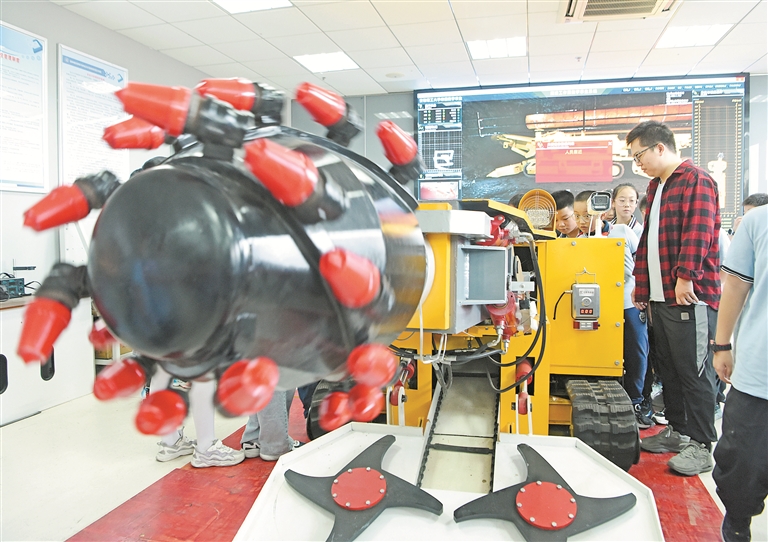
聚焦“十五五”规划建议|加快高水平科技自立自强
Xin Hua Wang· 2025-10-30 00:48
Group 1 - The core viewpoint emphasizes the importance of high-level technological self-reliance and strength as a strategic support for high-quality development, as outlined in the "14th Five-Year Plan" [1] - The proposal highlights that during the "14th Five-Year" period, China's comprehensive innovation capability improved from 14th to 10th place globally, with a 42% increase in the added value of high-tech manufacturing industries compared to the end of the "13th Five-Year" period [1] - Key core technologies are identified as crucial national assets, with a call for a new national system to drive breakthroughs in critical areas such as integrated circuits and advanced materials [1] Group 2 - The need for urgent integration of technological innovation and industrial innovation is emphasized, with measures proposed to enhance the role of enterprises in technological innovation and accelerate the application of major scientific achievements [2] - Talent is recognized as the primary resource, with plans to build a national strategic talent force to support technological innovation and industrial development [2] - The proposal aims to foster a collaborative educational approach to meet the demands of technological innovation and national strategic needs, enhancing China's technological strength [2]