品牌叙事

Search documents
山下有松「上山」,慢即是快|厚雪公司
36氪· 2025-11-25 15:17
Core Viewpoint - The article discusses the rise and growth of the Chinese brand Songmont, highlighting its unique positioning in the luxury market and its cultural roots, as well as its recent expansion into new product lines like fragrances and apparel [4][5][10]. Brand Growth and Market Position - Songmont has seen a significant increase in consumer interest, with online sales growing approximately 90% in the first three quarters of the year, while competitors like Gucci and MK experienced declines of 50% and 40% respectively [5][10]. - The brand's flagship store in Shanghai often has long queues, indicating strong consumer demand [4]. - Songmont has achieved top rankings in sales during major shopping events, such as being the number one in Tmall's bag and apparel category during the recent Double 11 shopping festival [4][30]. Cultural and Design Elements - The brand emphasizes its cultural heritage, drawing inspiration from traditional Chinese elements in its product designs, such as the "Eaves" series inspired by temple architecture [7][9]. - The design philosophy incorporates natural aesthetics and storytelling, which resonates with consumers seeking authenticity and cultural connection [10][12]. Product Expansion - Songmont has recently launched a fragrance line, "沉山," which features a unique blend of ingredients and aims to provide a natural scent experience [25][27]. - The brand has also expanded into apparel, maintaining its focus on casual and natural styles that reflect its core values [24][28]. Marketing and Content Strategy - The brand has successfully engaged consumers through content marketing, including a podcast series that features deep discussions on cultural topics, enhancing emotional connections with the audience [17][22]. - Collaborations with well-known figures, such as tennis star Li Na, have further elevated the brand's visibility and cultural relevance [19][21]. Future Outlook - Songmont aims to maintain a steady growth pace, focusing on quality and cultural resonance rather than aggressive expansion [32][34]. - The brand's strategy reflects a broader trend in the Chinese luxury market, where consumers are increasingly favoring local brands over international ones, reshaping the competitive landscape [10][12].


暴跌15%!穷鬼买不起,中产不买账,这家运动巨头要“卖股”了?
Xin Lang Cai Jing· 2025-09-18 06:35
Core Viewpoint - Decathlon, once a dominant player in the Chinese sports retail market, is experiencing a decline in popularity and profitability due to increased competition and a shift in consumer preferences towards brands like Lululemon and Salomon [3][5][15]. Group 1: Market Position and Strategy - Decathlon's initial success in China was driven by its "high quality, low price" strategy, which resonated with urban young professionals and families seeking affordable sports gear [5][7]. - The company has faced challenges as competitors have emerged with more targeted pricing strategies, eroding Decathlon's market share in the entry-level sports segment [3][15]. - In 2024, Decathlon's net profit fell by 15.5% to €787 million, raising concerns about its profitability amidst a changing market landscape [9][11]. Group 2: Competitive Landscape - Competitors like Lululemon and Camel have gained traction, with Lululemon becoming a staple for middle-class consumers, further complicating Decathlon's market position [15][19]. - Decathlon's attempts to shift towards higher-end products have not resonated with its core consumer base, which primarily values affordability [25][40]. - The brand's identity as a "value leader" is at risk as it struggles to balance price increases with maintaining quality and consumer trust [19][36]. Group 3: Consumer Perception and Brand Narrative - The brand's recent price hikes have led to consumer backlash, with many feeling betrayed as Decathlon's value proposition diminishes [19][38]. - Decathlon's marketing efforts have focused on sustainability, but this narrative has not effectively connected with its primary consumer demographic, which prioritizes value over environmental concerns [43][45]. - The company is attempting to revitalize its image by reintroducing affordable products and leveraging nostalgic marketing strategies, such as the "urea bag" campaign, to reconnect with consumers [50][55]. Group 4: Future Outlook - Decathlon is exploring options to sell approximately 30% of its Chinese subsidiary as part of a significant capital restructuring effort [37]. - The company aims to enhance product quality and align its offerings with consumer expectations to regain market share and consumer loyalty [40][58]. - There is a focus on optimizing the supply chain and deepening market penetration to better meet the evolving needs of Chinese consumers in the next 20 years [58][60].


穷鬼买不起,中产不买账,这家运动巨头要“卖股”了?
创业邦· 2025-09-18 03:09
Core Viewpoint - Decathlon, once a dominant player in the Chinese sports retail market, is facing significant challenges as it loses its appeal among consumers, particularly in the face of rising competition and changing consumer preferences [7][9][10]. Group 1: Market Position and Strategy - Decathlon initially gained popularity in China with its "high quality, low price" strategy, appealing to urban young professionals and families seeking affordable sports gear [11][14]. - The company's unique in-store experience allowed customers to try various sports equipment, enhancing its attractiveness [14]. - However, the low-profit margin associated with this strategy has led to a decline in net profit, which fell by 15.5% to €787 million in 2024 [16]. Group 2: Competitive Landscape - Competitors like Lululemon and Salomon have emerged, capturing market share with more targeted pricing strategies and appealing brand narratives [21][22]. - Lululemon, in particular, has positioned itself as a must-have brand for the middle class, showcasing a strong growth trajectory with a 94% increase in net profit to €300 million in Q2 2025 [16]. Group 3: Pricing and Consumer Perception - Decathlon's decision to raise prices in an attempt to improve profitability has led to consumer backlash, as many feel betrayed by the loss of the brand's core value proposition of affordability [18][20]. - The brand's shift towards a higher-end market has not resonated with its traditional consumer base, who still associate Decathlon with low-cost sports gear [35][36]. Group 4: Brand Narrative and Consumer Engagement - Decathlon's attempts to pivot towards a more premium offering have been met with skepticism, as consumers still view it as the "IKEA of sports" rather than a high-end brand [35][36]. - The brand's environmental messaging has not effectively connected with its core audience, who prioritize value and quality over sustainability narratives [60][62]. Group 5: Future Outlook - Despite current challenges, Decathlon is exploring ways to reconnect with its consumer base, including a return to its low-price strategy and leveraging its supply chain to offer affordable products [65][73]. - The company aims to deepen its understanding of the Chinese market and consumer needs to regain its position as a leading sports retailer [77][80].

刘强东的机巧
Tai Mei Ti A P P· 2025-06-19 07:01
Core Insights - Liu Qiangdong's recent internal speech reflects a strategic shift towards exporting domestic products, signaling a revival of JD's market presence after a period of stagnation [1] - The emphasis on supporting brand manufacturers rather than focusing solely on low-cost products marks a significant change in the e-commerce narrative, aiming to enhance the overall economic quality [1][2] - The ability to set the agenda and shift consumer perspectives from price sensitivity to value creation is a notable strength demonstrated in Liu's communication [2][3] Financial Performance - JD reported a revenue of 1.1 trillion yuan (approximately 154 billion USD) last year, with a profit of 40 billion yuan (around 5.6 billion USD), highlighting a contrast with competitors like Alibaba and Tencent [3] - The company has contributed over 100 billion yuan (about 14 billion USD) to employee social security benefits, showcasing a commitment to employee welfare while balancing profit motives [3] Employee Engagement - Liu's approach to addressing employee concerns through salary increases and acknowledging the challenges of cross-border e-commerce has fostered a sense of motivation among JD employees [4] - The leadership style is characterized by a blend of cleverness and sincerity, which resonates well with the workforce and enhances morale [4][5]

CEO锦囊·出海季|出海欧洲,新机会来了?
3 6 Ke· 2025-06-06 11:05
Core Insights - The European market presents both challenges and opportunities for Chinese companies looking to expand internationally, with a focus on understanding local characteristics and consumer behavior [3][5][9] Group 1: Market Opportunities - The European market is characterized as a large and high-quality market, with various sub-markets that require localized strategies for successful entry [3][4] - Platforms like TikTok are successfully establishing a presence in Europe due to their localized operational advantages, indicating a growing opportunity in e-commerce [4][5] - Different regions within Europe, such as Germany and Hungary, offer unique advantages for market entry, including strong industrial bases and favorable investment policies [5][7] Group 2: Consumer Behavior and Trends - European consumers are becoming more cautious and rational in their purchasing decisions, influenced by economic uncertainties and a shift away from materialism [9][10] - There is a growing trend towards environmentally conscious consumption, where consumers are willing to pay a premium for products that align with sustainability values [12][13] - The demand for high-quality, cost-effective products is prevalent, with consumers increasingly focused on functionality and value [10][11] Group 3: Market Entry Challenges - Entering the European market requires compliance with various regulations, including trademark registration, tax obligations, and product certifications [14][15] - The logistics and supply chain in Europe can be complex and costly, necessitating careful planning and consideration of transportation methods [14][16] - Cultural and linguistic differences across European countries pose additional challenges for market penetration and brand communication [8][15] Group 4: Branding and Marketing Strategies - Effective branding in Europe requires a deep understanding of local consumer preferences and values, with an emphasis on storytelling and brand positioning [17][18] - Companies should focus on product quality and functionality, especially in technology sectors, to compete effectively against local brands [18][19] - Utilizing flexible employment models can help companies manage costs and adapt to local labor regulations during the initial stages of market entry [19]

6月19日-20日,与吴晓波、王辉耀、津上俊哉、秦朔共答“贸易波动”下的出海考卷
吴晓波频道· 2025-05-12 00:30
Core Viewpoint - The article discusses the evolving landscape of Chinese enterprises going global, emphasizing the need for deeper integration into global supply chains and the importance of adapting to new economic realities amid ongoing U.S.-China trade tensions [3][4][8]. Group 1: Global Economic Context - The ongoing U.S.-China trade talks are seen as both a risk mitigation opportunity and a new round of strategic competition [5][6]. - The global supply chain is undergoing significant adjustments, and Chinese companies are at a pivotal point to redefine their roles in this new environment [3][4]. Group 2: Chinese Enterprises' Global Strategy - Chinese enterprises are encouraged to move beyond mere product exports to actively participate in global production, research, and sales, enhancing their competitive edge [15][19]. - The importance of technological innovation, particularly in AI, big data, and cloud computing, is highlighted as a key driver for enterprises going global [12][13]. Group 3: Sustainability and Brand Influence - Green and sustainable development are becoming critical considerations for Chinese companies as they expand internationally, showcasing their commitment to global environmental standards [16]. - The growing international brand influence of Chinese enterprises is noted, with efforts to participate in global governance and standard-setting [17][18]. Group 4: Challenges and Opportunities - The article identifies the need for Chinese companies to build a "true going global" capability, focusing on geographical, cognitive, and value chain dimensions [38][39]. - It emphasizes the importance of local integration and understanding cultural nuances to avoid pitfalls in foreign markets [41][43]. Group 5: Strategic Insights from Experts - Experts suggest that the current trade environment necessitates a strategic shift for Chinese companies, moving from cost-driven decisions to value-driven approaches [22][25]. - The article also warns against the pitfalls of assuming that domestic strategies will directly translate to success in international markets, advocating for a more nuanced understanding of local dynamics [46][48].

这一次,不要学海底捞
Hu Xiu· 2025-04-01 06:19
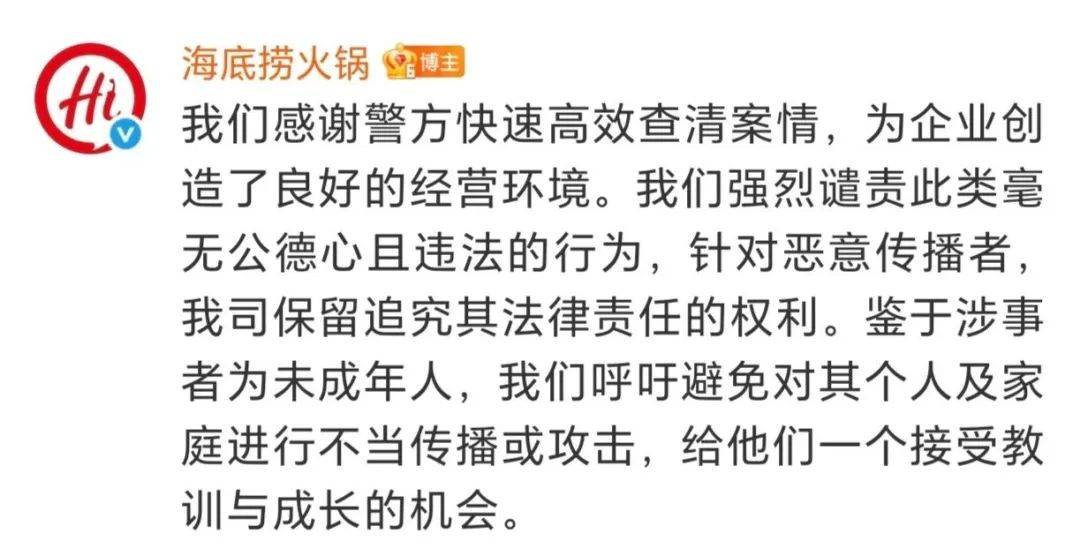
Core Viewpoint - The article discusses the crisis management strategies of Haidilao, emphasizing the importance of brand narrative and effective communication in handling public relations crises [4][10][36]. Group 1: Brand Narrative and Crisis Management - Haidilao's brand narrative includes principles such as "changing fate with both hands," "apprenticeship system," and "extreme pursuit of customer experience," which form a coherent structure for brand storytelling [3][4]. - The company faced a significant crisis in August 2017 when a serious hygiene issue at its Beijing store was exposed, leading to widespread media attention [5]. - Haidilao's response was swift, acknowledging the issue, issuing an apology, and committing to comprehensive reforms across all stores, including transparency in kitchen operations and enhanced internal management [6][7]. Group 2: Recent Controversies and Responses - A recent incident in February 2023 involved two minors misbehaving in a Haidilao restaurant, which sparked public outrage and raised questions about food safety and management practices [12][30]. - The company's initial response focused on giving minors a chance and threatened legal action against those who spread the video, which was perceived as a misjudgment of public expectations [13][29]. - Haidilao later offered full refunds and tenfold compensation to affected customers, indicating a sincere attempt to address the situation and restore trust [14][38]. Group 3: Public Perception and Communication Strategy - The article highlights the importance of understanding public sentiment and the potential pitfalls of labeling individuals as "malicious spreaders," which can alienate the audience [18][23]. - Effective crisis communication should focus on empathy, clear messaging, and maintaining trust, rather than merely reacting to social media trends [37][46]. - The article warns against the trend of treating crises as marketing opportunities, emphasizing that genuine crisis management should prioritize restoring organizational reputation and addressing structural flaws [39][59].