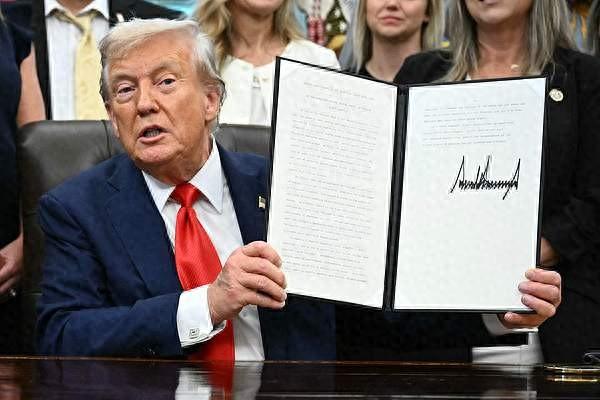
国际紧急经济权力法

Search documents
Countries and industries most exposed to Trump's IEEPA-based tariffs
Reuters· 2026-01-08 23:33
Core Point - The U.S. Supreme Court is preparing to issue rulings on the legality of tariffs imposed by President Donald Trump under the International Emergency Economic Powers Act [1] Group 1 - The rulings are expected to address significant legal questions regarding the authority of the President to impose tariffs without Congressional approval [1] - The outcome of these cases could have substantial implications for U.S. trade policy and international relations [1]


特朗普,突发警告!
券商中国· 2025-11-11 10:20
Group 1: Tariff Policy and Economic Impact - President Trump warned that if the U.S. Supreme Court rules against his comprehensive tariff policy, the country could face an economic and national security disaster, with potential refunds exceeding $2 trillion in tariffs collected [1][4][5] - Trump's administration plans to use tariff revenues to provide $2,000 to low- and middle-income Americans and to reduce national debt, indicating a shift in the initial view that tariff revenues would only be used for deficit reduction [4][5] - The Supreme Court's deliberation on the legality of tariffs imposed under the International Emergency Economic Powers Act (IEEPA) has raised concerns about the potential chaos in refunding tariffs deemed illegal, with over $100 billion at stake [5][6] Group 2: Trade Relations with India - Trump indicated that the U.S. is "very close" to reaching a trade agreement with India and plans to lower tariffs on Indian goods at some point [8][9] - The imposition of high tariffs on Indian exports has led to a significant decline in India's exports to the U.S., with a 20.3% drop in September, marking the largest monthly decline this year [10] - The recent optimism in U.S.-India trade relations comes after India reportedly reduced its purchases of Russian oil, which was a point of contention in negotiations [9][10] Group 3: Air Traffic Control and Government Operations - Trump mandated that all air traffic controllers must return to work immediately, threatening severe penalties for non-compliance, amid staffing shortages affecting flight operations [12][13] - The FAA reported significant delays and cancellations due to a shortage of air traffic control personnel, impacting approximately 250,000 passengers [14]
华尔街日报批特朗普关税“大规模敛财” 究竟在保护美国,还是掏空美国人的钱包?
Sou Hu Cai Jing· 2025-11-08 00:38
Core Viewpoint - The Trump tariffs, initially aimed at protecting American manufacturing, have evolved into a significant fiscal revenue mechanism, raising concerns about their legality and implications for U.S. economic policy [1][4]. Group 1: Tariff Revenue and Economic Impact - The Trump administration has expanded tariffs not only on China but also on Europe, Mexico, and Vietnam, framing them as measures for national security and fair competition, while effectively acting as an "invisible tax" on American consumers [3][5]. - If the current tariff structure remains in place until mid-next year, the U.S. government could generate between $750 billion to $1 trillion in revenue, marking the largest tax increase in nearly two decades [3][5]. - The American Employers Federation estimates that U.S. businesses will incur over $82 billion in additional costs due to tariffs in 2024, leading many small manufacturers to raise prices or reduce production [5]. Group 2: Legal and Constitutional Challenges - The legality of the tariffs is under scrutiny, as the U.S. Constitution grants Congress the power to levy taxes, and the Trump administration's use of "emergency economic powers" to impose tariffs may violate this principle [5][7]. - Supreme Court justices have expressed doubts about the constitutionality of the tariffs, suggesting that significant economic decisions should require explicit congressional authorization [5][7]. - If the courts determine that the tariffs are effectively taxes, it could trigger constitutional disputes and potentially require the government to refund up to $19.5 billion in collected revenue [5]. Group 3: Political and Diplomatic Implications - The perception of tariffs as a covert tax undermines the credibility of U.S. trade policy in international negotiations, as trade measures are increasingly viewed as revenue-generating tools rather than diplomatic instruments [6][7]. - The Trump administration faces a dilemma: maintaining that tariffs serve as trade tools necessitates proving their direct link to national security, while acknowledging their fiscal role risks being deemed unconstitutional [7]. - The situation illustrates a broader internal conflict regarding power, money, and constitutional limits, as tariffs transition from trade levers to fiscal instruments, complicating the administration's economic agenda [7].
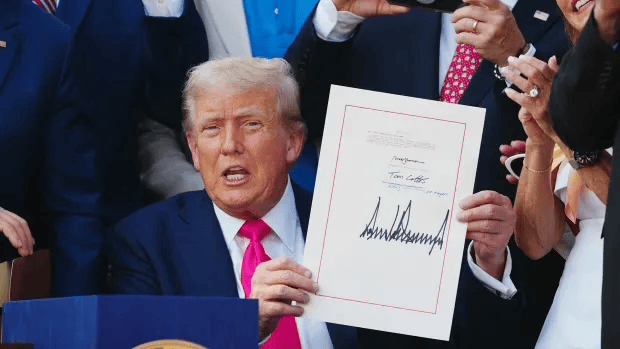
美国关税大案,最新进展!
Huan Qiu Shi Bao· 2025-11-06 11:49
Core Points - The U.S. Supreme Court is questioning the legality of the Biden administration's imposition of tariffs on numerous countries, focusing on whether this action exceeds presidential authority under the International Emergency Economic Powers Act (IEEPA) [1][2] - The case revolves around the interpretation of IEEPA, which allows the president to intervene in trade during emergencies, and whether this includes the power to impose tariffs [1][3] Summary by Sections Legal Framework - The core legal question is whether the IEEPA grants the president unlimited power to impose tariffs globally, with justices expressing skepticism about the necessity of such broad tariffs [3] - The argument presented by the defense is that the trade deficit constitutes an emergency, justifying the use of tariffs as a negotiation tool, despite the increased costs to American businesses and consumers being deemed an "accident" [2][4] Implications of the Ruling - Justices are concerned about the potential legal ramifications of a ruling in favor of the White House, questioning if it would set a precedent for expanding presidential powers at the expense of Congressional authority [4] - Even if the Supreme Court rules against the White House, alternative legal avenues for imposing tariffs remain available, such as provisions in the Trade Act of 1974 and the Tariff Act of 1930 [4][5] Stakeholder Reactions - The plaintiffs argue that if the White House seeks to impose tariffs through other legal means, they will continue to defend their interests [5]

美国最高法院听证会:特朗普大范围关税合法性面临质疑
第一财经· 2025-11-06 00:40
Core Viewpoint - The article discusses the ongoing Supreme Court hearing regarding the legality of tariffs imposed by the Trump administration, which could generate significant revenue for the U.S. over the next decade. The case raises questions about the balance of power between the President and Congress in terms of taxation and trade regulation [3][6][11]. Tariff Authorization - The hearing lasted nearly two and a half hours, with representatives from the government and opposing parties presenting their arguments. The Trump administration is the first to invoke the International Emergency Economic Powers Act (IEEPA) to impose tariffs [5][6]. - The government argues that tariffs are necessary to address trade deficits and negotiate trade agreements, while the Constitution grants Congress the power to levy taxes and tariffs [6][10]. Major Questions Doctrine - The Supreme Court has previously used the "major questions doctrine" to overturn significant policies from the Biden administration, requiring explicit legislative authorization for actions with substantial economic and political implications [8][9]. - The lower court ruled against Trump, stating that the imposition of tariffs lacked legal legitimacy under this doctrine [9]. Potential Outcomes - The Supreme Court's decision is expected to be closely divided, with conservative justices showing some support for Trump's position, while liberal justices express skepticism about the legality of the tariffs [11][12]. - If the Court rules against the tariffs, it could lead to complications, such as the need to refund tariffs already paid by U.S. importers, which have generated approximately $89 billion in revenue since February [11][12]. Market Reactions - Following the hearing, the probability of the Supreme Court supporting Trump's tariffs decreased significantly on prediction markets, indicating a growing belief that the justices may overturn the tariff policy [12]. Government's Position - Even if the Supreme Court rules the tariffs illegal, the U.S. government may continue to impose tariffs using other legal frameworks, according to Treasury Secretary Scott Bessent [13].

美国最高法院多名法官质疑特朗普关税政策
Xin Hua She· 2025-11-06 00:38
Core Points - The U.S. Supreme Court is questioning the legality of the Trump administration's comprehensive tariff policy, with several justices expressing skepticism about the use of a 50-year-old law to justify it [1][2] - The Trump administration invoked the International Emergency Economic Powers Act of 1977 to implement tariffs, a move that has faced legal challenges from affected U.S. businesses and states [1][3] - The Supreme Court's decision may take weeks or months, and even if the administration loses, it may still pursue tariffs under other legal frameworks [3] Group 1 - The Supreme Court consists of 9 justices, with 6 being conservative and 3 liberal, and a vote against the tariff policy could limit Trump's authority but not necessarily end it [2][3] - The administration's tariffs have been described as potentially "devastating" if the government loses the case, according to Trump's statements [1][3] - The current tariff policy includes a 10% minimum baseline tariff and higher rates for certain trade partners, including the least developed countries [1] Group 2 - The legal challenges to the tariff policy have already seen rulings against the Trump administration, indicating a contentious legal landscape [1][3] - The Treasury Secretary has indicated that the Supreme Court may uphold the current tariff policy, but alternative legal avenues will be sought if it is overturned [3]
特朗普关税命运几何?就连专家也看不清,只敢说“五五开”
Jin Shi Shu Ju· 2025-11-05 03:25
Core Points - The Supreme Court is set to hear arguments regarding the legality of President Trump's authority to impose tariffs, a case known as "Learning Resources Company v. Trump," which has generated significant uncertainty among legal and trade experts [2][3] - Predictions about the outcome are varied, with some experts suggesting a 50% to 65% chance that the Court will side with lower courts, ruling that the President lacks this power [2][3] - The case revolves around the International Emergency Economic Powers Act (IEEPA) of 1977, which allows the President to declare economic emergencies but does not explicitly mention tariffs as a remedy [2][3] Industry Implications - Trump's administration has utilized the IEEPA to justify a range of tariffs on global goods, citing issues from fentanyl to trade imbalances, leading to potential financial repercussions if the ruling is unfavorable [3][6] - The uncertainty surrounding the tariffs reflects broader concerns about the Republican Party's readiness to counter Trump's tariff strategy, especially after recent Senate votes to terminate tariffs on goods from Brazil and Canada [4][5] - The stakes of the Supreme Court's decision extend beyond trade policy, potentially establishing a precedent for the use of emergency powers to bypass Congress in governance [7]
美最高法院将听取关税辩论 特朗普:不会出席
Zhong Guo Xin Wen Wang· 2025-11-04 02:55
Core Points - The U.S. Supreme Court will review President Trump's comprehensive tariff policy on November 5, with Trump stating he will not attend the debate [1][4] - The case will determine the fate of many of Trump's tariff policies, which are defended under the International Emergency Economic Powers Act (IEEPA) [4][5] - This is the first time a U.S. president has imposed tariffs under this law, making the Supreme Court's decision unprecedented [5] Group 1 - The main issue at stake is whether Trump can use emergency powers to justify global tariffs, representing an unprecedented expansion of executive power [4][5] - The Supreme Court currently has a conservative majority of 6 to 3, which has previously supported Trump in significant cases [7] - Regardless of the court's ruling, it is anticipated that Trump's tariffs will not easily disappear due to the established multi-path tariff system [6][8] Group 2 - The IEEPA has been the legal basis for Trump's tariffs, similar to the law used by Nixon in 1971 to impose a temporary 10% tariff [4][5] - The ongoing tariff policies have disrupted supply chains for U.S. manufacturers, as highlighted by the experience of OTC Industrial Technologies [8]
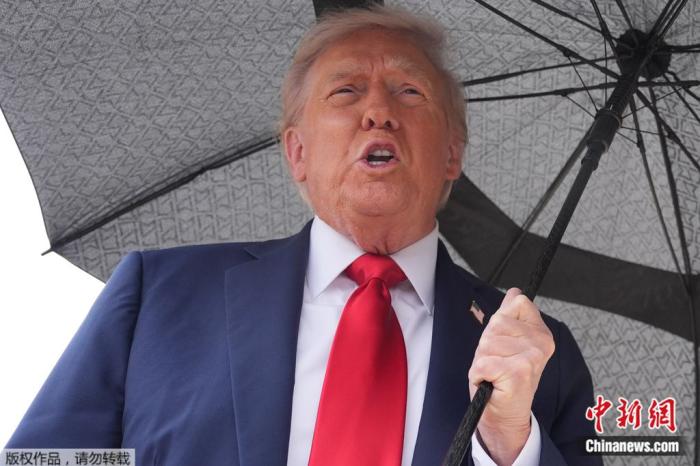
“对等关税”被裁定违法,特朗普称将上诉至美最高法院
Huan Qiu Shi Bao· 2025-08-31 22:49
Core Points - The U.S. government has been ruled illegal in its use of the International Emergency Economic Powers Act to impose tariffs, marking a significant setback for the aggressive trade policies of the Trump administration [1][3] - The ruling raises questions about the validity of previous trade agreements made with the U.S. [1][5] - The ruling was upheld by the Federal Circuit Court, which stated that the power to impose tariffs is a core authority of Congress, not the President [3][5] Summary by Sections Legal Ruling - The Federal Circuit Court maintained the previous ruling that the Trump administration's tariffs imposed under the International Emergency Economic Powers Act were illegal, with a vote of 7 to 4 [3] - The court emphasized that while the Act allows the President to take certain economic measures in emergencies, it does not grant the authority to impose tariffs through executive orders [3] Economic Impact - The ruling could have direct implications for the U.S. economy and may trigger reactions in global markets, as trade partners reassess the legal standing of U.S. tariffs [5] - The Trump administration collected approximately $107 billion in tariffs from February to July, a significant portion of which was based on the now-ruled illegal measures [4] Ongoing Trade Negotiations - The U.S. is still engaged in trade negotiations with multiple countries, including the UK, Vietnam, and the EU, but the legal uncertainty surrounding tariffs may complicate these discussions [6][7] - Japan's trade representative canceled a trip to the U.S. due to dissatisfaction with proposed U.S. tariffs, indicating potential friction in ongoing negotiations [7]
特朗普关税被判非法:专家称“印度肯定在庆祝”,贝森特都怕美国“遭报复”
Guan Cha Zhe Wang· 2025-08-31 13:01
Core Points - The U.S. Court of Appeals ruled that most of Trump's global tariff policies implemented under the International Emergency Economic Powers Act (IEEPA) are illegal, although current tariffs will remain in effect until October 14 to allow for an appeal [1][2][5] - Trump's administration expressed concerns that the ruling could jeopardize ongoing trade negotiations and provoke retaliation from other countries, particularly India, which has been subjected to a 50% tariff [1][6][10] Group 1: Legal Context - The IEEPA, enacted in 1977, grants the U.S. President significant powers to respond to national emergencies or major threats from abroad, but the court clarified that it does not explicitly authorize the imposition of tariffs [4][5] - The court's decision emphasized that the power to levy taxes, including tariffs, is constitutionally reserved for Congress, not the President [5][11] Group 2: Implications for Trade - The ruling could disrupt existing trade agreements and negotiations with key partners, as highlighted by concerns from U.S. Commerce Secretary and other officials about potential retaliatory measures from trade partners [7][10] - The decision may also impact the financial implications for the U.S. Treasury, as the government has collected approximately $159 billion in tariff revenue this year, more than double compared to the previous year [10][11] Group 3: Political Reactions - Trump criticized the ruling as politically motivated and warned that its implementation would lead to disastrous consequences for the U.S. economy [9][12] - The administration plans to appeal the decision, with expectations that the conservative majority in the Supreme Court may favor Trump's position [11][12]