关税政策

Search documents
继续“爽约”!美最高法院暂缓裁决特朗普关税案 最早2月20日见分晓
智通财经网· 2026-01-20 15:49
Core Viewpoint - The U.S. Supreme Court has not yet ruled on President Trump's tariff policy, indicating that legal challenges surrounding this significant economic measure will remain unresolved for at least another month [1]. Group 1: Supreme Court Proceedings - The Supreme Court is entering a four-week recess, with the next potential ruling on the tariff case expected around February 20 [1]. - During the November 5 court debates, a majority of justices expressed skepticism regarding Trump's authority to impose such tariffs under the International Emergency Economic Powers Act of 1977 [1]. Group 2: Implications of Potential Ruling - If the court rules against Trump, it could lead to over $130 billion in tariff refund claims and weaken his leverage to impose additional tariffs on European countries [1]. - Trump's "Liberation Day" tariff policy, introduced on April 2, imposes tariffs ranging from 10% to 50% on most imported goods, with additional tariffs on products from Canada, Mexico, and China justified by the need to combat fentanyl smuggling [1].
美国高院的关税裁决将至,特朗普频繁发声警告,他预感要输?
Hua Er Jie Jian Wen· 2025-12-17 02:29
Core Viewpoint - The fate of the Trump administration's signature tariff policy hinges on a critical ruling from the U.S. Supreme Court, with increasing indications that the government may lose the case, complicating potential remedial measures [1][2] Group 1: Legal Proceedings and Predictions - The Supreme Court is expected to rule in early January on whether the government has the authority to impose broad "reciprocal tariffs" under the International Emergency Economic Powers Act (IEEPA) [1][2] - Goldman Sachs reports that based on the questioning during oral arguments, the Court is "likely" to rule much of the tariffs imposed this year as illegal [2] - The two core cases under review challenge whether the President overstepped constitutional boundaries by using IEEPA to exercise Congress's exclusive taxing power [2] Group 2: Government Response and Internal Dynamics - There is a stark contrast in public statements within the White House, with President Trump expressing urgency and concern, while Treasury Secretary Mnuchin attempts to project confidence, suggesting backup plans exist [2] - Mnuchin acknowledges that overturning the tariffs could lead to a "fiscal disaster," yet he also claims the government has alternative revenue-raising options [2] Group 3: Alternative Legal Frameworks - Legal experts indicate that any alternative trade regulations to rebuild the tariff system would face significant legal and political hurdles [3] - The Trade Act of 1974 allows the President to impose tariffs for severe international balance of payments deficits, but it has limitations such as being non-discriminatory and having a short effective period [4] - The Tariff Act of 1930 permits tariffs against countries that discriminate against U.S. trade, but its legal application has never been tested in court, raising questions about necessary investigations [4] Group 4: Economic Implications - Goldman Sachs predicts that if the IEEPA tariffs are overturned, the risk leans towards lower tariff rates, with an expected decline of about 2 percentage points in effective tariff rates by the end of 2026 [5] - The government has collected approximately $130 billion in tariffs through IEEPA, with ongoing monthly increases of about $20 billion, leading to potential refund issues for companies [5] Group 5: Political and Diplomatic Consequences - A legal defeat could have severe political and diplomatic repercussions for the Trump administration, including challenges to the credibility of trade agreements made under the threat of IEEPA tariffs [6] - The credibility of government officials may be undermined if the predicted turmoil does not materialize following a ruling against the tariffs, complicating the political landscape ahead of the 2026 midterm elections [6]
致命漏洞被戳穿!特朗普关税违法实锤,要退万亿税,美国扛得住?
Sou Hu Cai Jing· 2025-11-22 08:07
Core Points - The Supreme Court hearing on November 5, 2025, posed significant challenges to Trump's tariff policies, with conservative justices questioning the legality of his actions [1][3] - The outcome of the hearing could lead to substantial financial implications for the U.S., potentially resulting in a refund of $750 billion to $1 trillion in tariffs [4][6] - The tariffs have adversely affected U.S. businesses, with companies reporting significant financial losses due to increased costs [6][8] Group 1: Legal and Political Implications - Chief Justice Roberts emphasized that the power to levy taxes belongs to Congress, not the President, highlighting the constitutional principle regarding taxation [3] - Justices appointed by Trump, including Gorsuch and Barrett, raised critical questions about the extent of presidential power in declaring emergencies to impose tariffs [3] - The hearing has shifted market expectations regarding the likelihood of Trump's tariff policies being upheld, dropping from 40% to 27% [3] Group 2: Economic Impact on Businesses - Companies like Learning Resources and Terry Precision Cycling reported significant financial losses due to tariffs, with the latter expecting a loss of $1.2 million by 2026 [4][6] - The tariffs have led to increased costs for major corporations, including Nike, which warned of a potential $1.5 billion loss due to tariffs [6][8] - The Senate passed a resolution to terminate Trump's global tariff policy, signaling a shift towards anti-tariff sentiment [6] Group 3: Global Trade Dynamics - The tariffs have prompted retaliatory measures from other countries, including Canada and Mexico, which have imposed their own tariffs on U.S. goods [8] - The WTO expressed concerns about the potential for a trade war to have catastrophic effects on the global economy, reminiscent of the 1930s [8] - Companies are adjusting their strategies to mitigate the impact of tariffs, with some committing to increased investments in the U.S. to secure tariff exemptions [8]


特朗普,突发警告!
券商中国· 2025-11-11 10:20
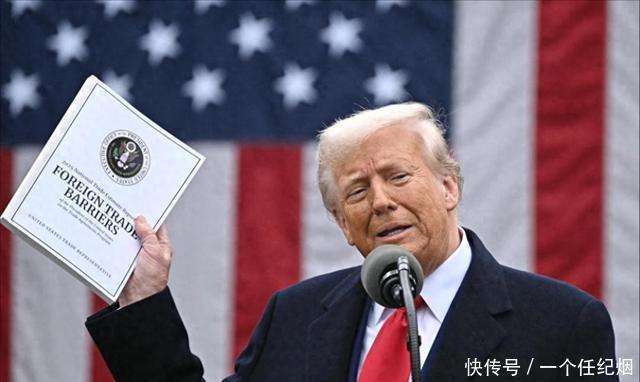
Group 1: Tariff Policy and Economic Impact - President Trump warned that if the U.S. Supreme Court rules against his comprehensive tariff policy, the country could face an economic and national security disaster, with potential refunds exceeding $2 trillion in tariffs collected [1][4][5] - Trump's administration plans to use tariff revenues to provide $2,000 to low- and middle-income Americans and to reduce national debt, indicating a shift in the initial view that tariff revenues would only be used for deficit reduction [4][5] - The Supreme Court's deliberation on the legality of tariffs imposed under the International Emergency Economic Powers Act (IEEPA) has raised concerns about the potential chaos in refunding tariffs deemed illegal, with over $100 billion at stake [5][6] Group 2: Trade Relations with India - Trump indicated that the U.S. is "very close" to reaching a trade agreement with India and plans to lower tariffs on Indian goods at some point [8][9] - The imposition of high tariffs on Indian exports has led to a significant decline in India's exports to the U.S., with a 20.3% drop in September, marking the largest monthly decline this year [10] - The recent optimism in U.S.-India trade relations comes after India reportedly reduced its purchases of Russian oil, which was a point of contention in negotiations [9][10] Group 3: Air Traffic Control and Government Operations - Trump mandated that all air traffic controllers must return to work immediately, threatening severe penalties for non-compliance, amid staffing shortages affecting flight operations [12][13] - The FAA reported significant delays and cancellations due to a shortage of air traffic control personnel, impacting approximately 250,000 passengers [14]
2026年度展望:备战中选,迎接双宽
Soochow Securities· 2025-11-09 05:56
Group 1: Midterm Election Insights - The 2026 midterm elections are crucial for Trump, as they will determine the political landscape and his ability to implement policies during his final years in office[1] - Historical data shows that the president's party typically loses an average of 25.7 seats in the House and 3.3 seats in the Senate during midterm elections, with a 36.36% chance of maintaining control after a sweep[11][12] - The significance of the 2026 midterms is heightened for Trump, as a loss could amplify political resistance during his remaining term[17] Group 2: Trade Policy Outlook - Trump's trade policy is expected to remain volatile, with potential for renewed tariff conflicts as a political strategy[25] - The U.S. Supreme Court may rule against Trump's use of IEEPA for imposing tariffs, prompting him to seek alternative legal frameworks for tariff implementation[26][29] - Tariff revenues have significantly increased, reaching approximately $174 billion in the first nine months of 2025, nearly tripling from the previous year[37] Group 3: Monetary Policy Expectations - The new Federal Reserve chair, expected to take office in May 2026, is anticipated to implement more aggressive rate cuts, with a total of at least four cuts projected by the end of next year[49][51] - The Fed's actions are likely to exceed market expectations and economic needs, resulting in lower interest rates and deteriorating credit conditions[38] - Trump's push for lower rates is driven by the need to stimulate the economy and alleviate fiscal pressures, especially in light of the projected $3.4 trillion deficit from the "Big Beautiful Plan" over the next decade[39][41]
美最高法院激辩关税政策是否合法
Huan Qiu Shi Bao· 2025-11-07 06:54
Core Viewpoint - The U.S. Supreme Court is questioning the legality of the federal government's large-scale tariff policies, which may have significant implications for the global economy and the current administration's authority [2][4]. Group 1: Legal Proceedings - The Supreme Court is reviewing an appeal from the federal government regarding the legality of tariffs imposed under the International Emergency Economic Powers Act of 1977, which has never been used for such purposes before [2][4]. - Five small businesses and twelve states filed lawsuits in April, challenging the legality of the tariff policies, with several courts previously ruling against the government's use of the Act for comprehensive tariffs [2][4]. Group 2: Government's Position - The U.S. Deputy Attorney General argued that tariffs are necessary to negotiate trade agreements and prevent aggressive trade retaliation from other nations, framing the situation as a potential economic and security disaster [3]. - The Chief Justice and other conservative justices expressed skepticism about the government's authority to impose tariffs, emphasizing that taxation is a core power of Congress [3][4]. Group 3: Potential Outcomes - If the Supreme Court rules against the government, it may have to cancel trade agreements and potentially refund importers, which could lead to significant economic repercussions [5]. - The government has alternative options to impose tariffs, such as using Section 301 of the Trade Act of 1974 to address perceived unfair trade practices [5]. Group 4: Economic Impact - Tariffs imposed under the International Emergency Economic Powers Act have generated an estimated $89 billion in revenue from February 4 to September 23 of this year [6]. - However, the economic costs of the tariff policies are substantial, negatively impacting consumers and productive enterprises, with a significant portion of the public attributing rising living costs to the government's actions [6].

拜登预言成真,让特朗普干满这4年,美国或许成为“世界老二”?
Sou Hu Cai Jing· 2025-10-22 07:09
Core Viewpoint - The article discusses the significant internal and external policy challenges faced by the United States under Trump's second term, highlighting the potential decline of America's global leadership status and the adverse effects of his policies on both the economy and international relations [1][3][16]. Economic Policy - Trump's administration implemented a 10% tariff on all imports and a 60% tariff on Chinese goods starting in April 2025, which has led to a rise in inflation from 3% to 4.5% [4]. - The tariff policy is projected to cost American consumers and businesses an additional $500 billion annually, with average household food expenses increasing by over $3,000 [4]. - Despite generating $118 billion in tariff revenue, this amount is negligible compared to the existing national debt of $17.75 trillion, raising concerns about long-term fiscal sustainability [8]. International Relations - Trump's foreign policy has been controversial, with criticisms regarding his treatment of allies and a perceived leniency towards Russia while adopting a hardline stance against China [7]. - The withdrawal from the Paris Climate Agreement and demands for increased defense spending from NATO allies have led to a weakening of U.S. influence, prompting European nations to seek independent defense strategies [7][10]. - China's Belt and Road Initiative has strengthened its influence in Africa and Asia, while Russia has solidified its position in the Middle East, further diminishing U.S. standing [7][10]. Domestic Issues - The mass deportation of illegal immigrants has created labor shortages in agriculture and construction, sectors heavily reliant on immigrant labor [11]. - Environmental deregulation has increased pollution levels, raising concerns about water quality and public health [11]. - The repeal of the Affordable Care Act has resulted in millions losing health insurance, exacerbating existing healthcare challenges, particularly for low-income populations [14]. Social Unrest - The polarization of American society has intensified, with rising racial tensions and frequent protests, leading to questions about the integrity of the legal system [13]. - Trump's actions following the Capitol riots, including pardoning rioters, have further fueled public distrust in democratic institutions [13].
商务部报告揭美所谓“对等关税”本质,敦促其遵守世贸组织规则
2 1 Shi Ji Jing Ji Bao Dao· 2025-10-20 11:37
Core Viewpoint - The report from the Ministry of Commerce highlights concerns over the United States' unilateral trade practices, which undermine the multilateral trading system and disrupt global supply chains [1][3][9]. Group 1: U.S. Trade Practices - The U.S. has implemented unilateral tariffs and trade measures under the guise of "America First," which have hindered the global economic recovery [3][4]. - The U.S. has been accused of abusing trade remedies and export controls, leading to increased trade barriers and unfair competition [3][5]. - The report emphasizes that the U.S. has become a destroyer of the multilateral trading system, engaging in unilateralism and manipulating industrial policies [3][4]. Group 2: Economic Impact - The report states that U.S. tariffs and trade policies could lead to a 1% reduction in global trade volume by 2025, equivalent to a loss of 4% in expected growth [8]. - New tariffs may increase annual household expenses in the U.S. by $2,500, with 92% of tariff costs ultimately borne by American consumers [8]. - The effective tariff rate in the U.S. has reached its highest level since the Smoot-Hawley Tariff Act of 1930, raising concerns about potential global economic recession [8]. Group 3: Call for Compliance - The report urges the U.S. to abandon its unilateral and protectionist measures, including the so-called "equivalent tariffs," and to adhere to WTO rules [8][9]. - It emphasizes the need for the U.S. to cooperate with other WTO members to enhance the multilateral trading system and promote a more predictable global economic environment [9].

美国法院裁定,特朗普破防,2100亿美元还没捂热,先吐出去一半
Sou Hu Cai Jing· 2025-09-14 04:43
Core Viewpoint - The recent ruling by the U.S. Court of Appeals against the global tariff policy implemented by the Trump administration poses significant challenges, potentially leading to the return of over $1 trillion in tariffs already paid by U.S. companies [1][4]. Group 1: Legal and Economic Implications - The court ruled that Trump's tariff policy, justified by a national emergency, lacks legal basis and requires substantial evidence by October 14, or the tariffs will be terminated [3]. - If the Supreme Court does not rule in favor of the Trump administration, the U.S. government may have to refund at least half of the $210 billion in tariffs collected, severely impacting the already fragile fiscal situation [1][4]. - The potential delay in the Supreme Court's decision could result in U.S. companies facing up to $1 trillion in tax burdens, leading to significant economic turmoil [4]. Group 2: Trade Negotiation Consequences - The loss of tariff revenue could weaken the U.S. government's position in trade negotiations with the EU, Japan, and other economies, as most agreements remain non-binding [5]. - Japan and the EU may take advantage of the situation to renegotiate trade terms, which could further complicate the Trump administration's trade strategy [6]. - Conversely, India may benefit from the disruption, as it seeks to strengthen ties with China and Russia while negotiating more favorable terms with the U.S. [6]. Group 3: Broader Trade Policy Issues - The tariff dispute highlights deeper issues within U.S. trade policy, revealing flaws in the Trump administration's trade strategy that may ultimately harm the U.S. economy [8]. - The unilateral trade policies are increasingly facing challenges in the context of a reshaping global economic landscape [8].
华尔街对特朗普关税“免疫”,市场缘何无视贸易战威胁再创新高?
Di Yi Cai Jing· 2025-07-18 11:15
Core Viewpoint - The market is currently waiting for clear economic data to confirm whether tariffs are significantly damaging the global or U.S. economy [1][5] Group 1: Market Reactions to Tariffs - Recent tariff policies from the U.S. government have led to only mild reactions in the financial markets, with the S&P 500 and Nasdaq indices reaching new closing highs [1] - The S&P 500 index has risen by 7.31% and the Nasdaq index by 8.32% since the beginning of the year [1] - The Chicago Board Options Exchange Volatility Index, known as the "fear index," has dropped over 18% in the past month [1] Group 2: Investor Sentiment and Expectations - Investors are experiencing "headline fatigue" regarding tariff announcements, as they perceive these announcements as negotiation tactics rather than firm policy commitments [4] - The market has formed a belief that President Trump's tariff announcements are often subject to change, leading to a phenomenon referred to as "Trump Always Retreats" (TACO) [3][4] - The market's response to tariffs has been muted, with significant fluctuations occurring only when tariffs are first announced or when they are delayed [3] Group 3: Economic Data and Impacts - Current economic data does not show clear negative impacts from tariffs, with some data indicating resilience in consumer spending and employment [5] - The Consumer Price Index (CPI) rose by 2.7% year-on-year in June, indicating that tariffs are increasing living costs, but this is still below the 3% level seen when Trump took office [5] - Retail sales increased by 0.6% month-on-month in June, exceeding expectations, while non-farm payrolls added 147,000 jobs, with an unemployment rate of 4.1% [5] Group 4: Future Outlook - If additional tariffs are implemented on August 1, it could lead to increased price pressures and a slowdown in real disposable income growth, impacting short-term consumption [6] - The core consumer price index rose by 0.7% year-on-year in June, the highest level in nearly two years, indicating that the impact of tariffs on inflation is becoming clearer [5][6]