存款利率下调

Search documents
部分银行上调存款利率
第一财经· 2025-12-05 11:47
Core Viewpoint - Recent adjustments in deposit interest rates by banks such as Hangzhou Bank indicate a strategic move to attract deposits, despite an overall trend of declining rates in the banking sector [1]. Group 1: Deposit Rate Adjustments - Hangzhou Bank has raised its deposit rates, with new funds for a 3-year term set at 1.9% for amounts starting from 200,000 yuan, while non-new funds for the same term are at 1.8% [1]. - For smaller deposits, the 3-year term rate is 1.75% for amounts starting from 50,000 yuan, with rates decreasing to 1.6% for 2-year terms and 1.5% for 1-year terms [1]. - Similar rate increases have been observed at Ningbo Bank and Shengjing Bank, suggesting a broader trend among certain banks to adjust rates [1]. Group 2: Industry Trends - The increase in deposit rates by some banks is viewed as a temporary measure aimed at boosting deposit inflows [1]. - Despite these isolated increases, the general trend in the banking industry remains towards lower deposit rates overall [1].




风向变了!银行集体下架5年期定存!对普通人的钱包有啥影响?
Sou Hu Cai Jing· 2025-12-02 01:43
Group 1 - Recent months have seen a trend of banks, including small and medium-sized banks as well as major state-owned banks, reducing their 5-year fixed deposit and large certificate of deposit products, with small banks leading the way with cuts of up to 80 basis points [1][2] - The current round of deposit rate cuts is primarily a decentralized adjustment by small banks and does not yet reflect a comprehensive reduction led by major state-owned banks [2] - The People's Bank of China (PBOC) is expected to lower interest rates in January to support the 2026 growth target, with indications that deposit rates may decrease before the Loan Prime Rate (LPR) [5][6] Group 2 - As deposit rates decline, some funds are likely to shift from low-yield deposits to equity markets, indicating a potential change in investment behavior [7] - The government is showing unprecedented support for the stock market, with the approval of the first batch of seven dual-innovation artificial intelligence ETFs set to launch on November 28 [8] - The reduction in deposit rates, with current rates at 0.95% for 1-year and 1.05% for 2-year deposits, is expected to encourage residents to invest in the stock market and index funds [10] Group 3 - The dual inflow of resident and institutional funds into the market signifies a significant shift in investment patterns, moving away from traditional bank deposits and real estate towards equity markets [11]







银行存款利率,或将下调?
Sou Hu Cai Jing· 2025-11-28 03:03
Core Viewpoint - The recent trend of declining deposit rates, particularly among small and medium-sized banks, is expected to lead to a nationwide reduction in deposit rates, influenced by central bank policies aimed at stimulating economic growth [2][4][6]. Group 1: Deposit Rate Changes - Small and medium-sized banks have led the recent reduction in deposit rates, with some banks reducing rates by up to 80 basis points [2]. - For instance, the Tongyu County Mengyin Village Bank has not only lowered rates for 1-year, 2-year, and 3-year deposits but has also eliminated 5-year fixed deposits [3]. - The current reductions in deposit rates are characterized as a decentralized approach among small and medium-sized banks, rather than a comprehensive reduction led by major state-owned banks [4]. Group 2: Central Bank Policies - The central bank is expected to lower interest rates further to achieve the 2026 economic growth target, with a potential LPR (Loan Prime Rate) cut anticipated in January [6]. - The central bank's third-quarter report emphasized the need to strengthen interest rate policy execution and supervision to lower banks' funding costs and promote a decrease in overall financing costs [7]. Group 3: Implications of Lower Deposit Rates - Lower deposit rates are significant not only for reducing banks' funding costs but also for guiding savings into the market [8]. - As deposit rates decline, some funds are likely to shift from low-yield deposits to equity markets, such as stocks [9]. - The government's unprecedented support for the stock market, including the approval of the first batch of seven AI-themed ETFs, indicates a strong commitment to stabilizing the market and promoting technology stocks as key investment assets [10]. Group 4: Investment Trends - The emergence of more ETFs suggests a shift in residents' investment preferences from individual stocks to ETFs, indicating a broader trend in investment behavior [11]. - Currently, the 1-year deposit rate for major state-owned banks has fallen to 0.95%, with the 2-year rate at 1.05%, and further declines are expected [11]. - The dual entry of both resident and institutional funds into the market signifies a significant change in investment patterns, moving away from traditional bank deposits and real estate towards index funds and equity markets [12].
五年期定存悄然“退场”
Jing Ji Wang· 2025-11-27 02:09
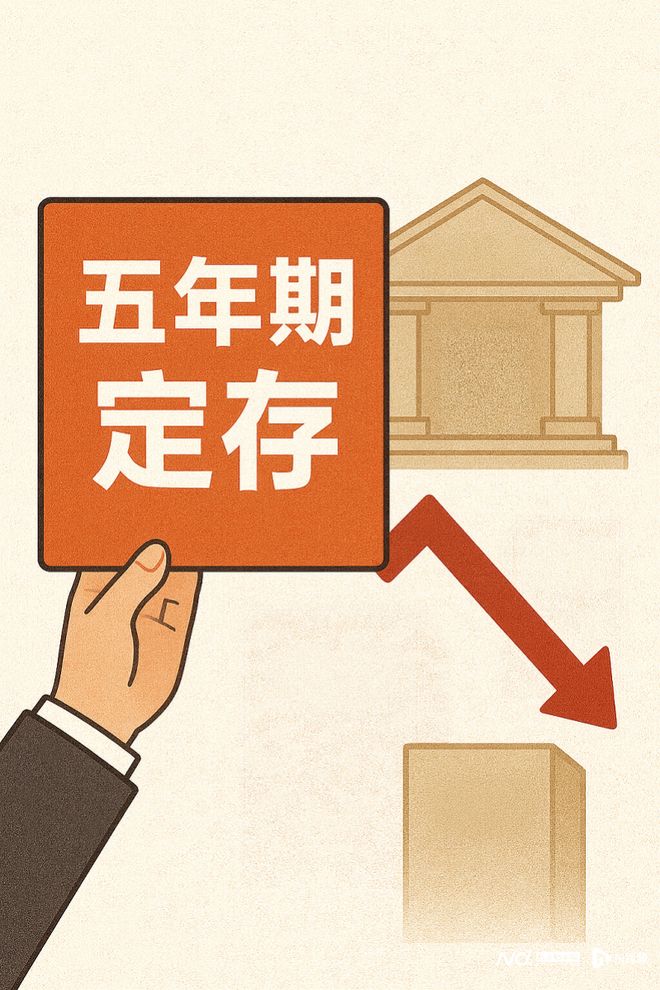
Core Viewpoint - The trend of five-year fixed deposits disappearing from banks' offerings indicates a shift in the banking sector towards optimizing liability structures and reducing costs in response to narrowing net interest margins [1][4][6]. Group 1: Changes in Deposit Products - Several small and medium-sized banks have recently removed five-year fixed deposit products and lowered interest rates across various terms to optimize their liability structures and reduce costs [2][4]. - Notably, banks such as SuShang Bank, HuaRui Bank, and XinAn Bank have been particularly active in adjusting their deposit offerings, with some banks completely omitting five-year fixed deposit rates from their listings [2][4]. - While major banks still offer five-year ordinary fixed deposit products, the interest rates for large fixed deposits have converged with those of ordinary deposits, diminishing the appeal of high-threshold large fixed deposits [3][4]. Group 2: Impact on Banking Sector - The adjustments reflect the banking industry's response to pressures from narrowing net interest margins, which have reached historical lows, with the current net interest margin at 1.42% [4][6]. - The dual impact of declining loan rates and rigid deposit costs has compelled banks to proactively manage their liability costs, with five-year fixed deposits being a primary target for cost reduction [4][6]. - Experts suggest that the trend of reducing high-cost deposit products may continue, as banks aim to stabilize their net interest margins and adapt to changing market conditions [5][6]. Group 3: Implications for Depositors - The gradual phase-out of five-year fixed deposits signals a shift away from traditional "passive interest" strategies, urging depositors to reconsider their asset allocation strategies [5][6]. - Depositors are encouraged to diversify their investments and consider various financial products, such as funds and bank wealth management products, to balance returns and liquidity [6][7]. - The current environment suggests that depositors should adapt to a more flexible and diversified approach to financial management, moving away from reliance on long-term high-interest savings [6][7].
五年期定存悄然“退场” 银行业高成本存款产品调整进行时
Shang Hai Zheng Quan Bao· 2025-11-26 18:26
Core Viewpoint - The recent adjustments by small and medium-sized banks to long-term fixed deposit products reflect the banking industry's efforts to optimize deposit structures and reduce liability costs amid narrowing net interest margins [2][5]. Group 1: Changes in Deposit Products - Many small and medium-sized banks have recently announced the removal of five-year fixed deposit products and have simultaneously lowered interest rates across various deposit terms [3][4]. - The adjustments are particularly pronounced among private banks and rural banks, with institutions like SuShang Bank and HuaRui Bank leading the changes [3]. - Major state-owned banks and several joint-stock banks are also tightening the supply of long-term deposit products, making five-year large-denomination certificates of deposit increasingly rare [3][4]. Group 2: Impact on Net Interest Margin - The banking sector is facing significant pressure on net interest margins, which have fallen to historical lows, currently at 1.42% as of the end of Q3 [5]. - The decline in net interest margins is attributed to both falling loan rates and the rigid costs associated with deposits, prompting banks to take proactive measures to manage costs [5]. - Small and medium-sized banks, with relatively weaker funding capabilities, are leading the way in removing five-year fixed deposit products to optimize their liability structures and reduce costs [5]. Group 3: Future Outlook for Depositors - The trend of reducing high-cost deposit products is expected to continue, with potential further declines in deposit rates as banks adjust to the current interest rate environment [6]. - Depositors are encouraged to shift their investment strategies away from traditional long-term high-interest savings models towards more flexible and diversified asset allocation strategies [6][7]. - Financial experts suggest that individuals should consider a mix of different deposit terms and explore other investment products such as funds and bank wealth management products to enhance expected returns [7].

银行存款调整!11月后,家里有50万存款的人,请做两手准备
Sou Hu Cai Jing· 2025-11-24 15:50
Core Viewpoint - The increasing enthusiasm of domestic residents for saving money is driven by concerns over unexpected events such as unemployment and illness, as well as future expenditures like children's education and home purchases [1] Group 1: Deposit Growth - In the first ten months of this year, China's RMB deposits increased by 23.32 trillion yuan, with household deposits rising by 15.71 trillion yuan, accounting for 67.3% of the total increase [1] Group 2: Declining Interest Rates - The interest rates on bank deposits are decreasing, with the one-year fixed deposit rate dropping from 2.25% to 1.35%, representing a decline of over 40% [5] - For a deposit of 500,000 yuan, the annual interest income has decreased from 11,250 yuan to 6,750 yuan, a reduction of 4,500 yuan [5] - The decline in interest income is attributed to three main factors: the central bank's intention to encourage spending and investment through lower interest rates, the reduction in loan rates to lower financing costs for businesses and homebuyers, and the widening of the interest rate spread to enhance bank performance and resilience against systemic financial risks [5] Group 3: Risk Management for Depositors - Depositors with savings exceeding 500,000 yuan are advised to consider placing their funds in joint-stock banks, which typically offer higher interest rates than state-owned banks while presenting lower risks than smaller banks [5] - It is recommended that depositors utilize three-year large-denomination time deposits in joint-stock banks to secure higher interest rates and lock in medium to long-term rates [5] - The central bank's 2015 Deposit Insurance Regulation ensures that deposits and interest up to 500,000 yuan are fully compensated within seven working days in the event of a bank failure [7] - Depositors should check for deposit insurance markings when choosing a bank and avoid placing all funds in a single bank, instead diversifying across 2-3 banks to mitigate risks [9] - It is crucial for depositors to distinguish between "deposits" and "wealth management products," as the latter may not be covered by the deposit insurance in case of bank failure [9]

Best money market account rates today, November 23, 2025 (best account provides 4.26% APY)
Yahoo Finance· 2025-11-23 11:00
Core Insights - The Federal Reserve has cut its target rate three times in 2024 and again in 2025, leading to a decline in deposit rates, including money market account (MMA) rates [1] - The national average MMA rate is currently at 0.59%, but some top accounts are offering rates of 4% APY and higher, prompting a recommendation to open accounts to take advantage of these rates [2] Group 1: Money Market Account Rates - The national average money market account rate is 0.59% according to the FDIC [2] - Some of the best accounts are offering rates of 4% APY and above, indicating a significant opportunity for higher earnings [2] - The importance of comparing MMA rates is emphasized due to the potential for rates to decrease further [1][2] Group 2: Interest Earnings - Interest earned from a money market account is determined by the annual percentage rate (APY) and the frequency of compounding, which is typically daily for MMAs [3] - A $1,000 deposit at the average rate of 0.59% would yield a total of $1,005.92 after one year, while a 4% APY would grow the balance to $1,040.81, illustrating the impact of higher rates [4] - Increasing the deposit amount significantly enhances earnings; for example, a $10,000 deposit at 4% APY would result in a total balance of $10,408.08 after one year, earning $408.08 in interest [5]
五年期定存正悄然退场?多家银行早已下架,利率倒挂显现
Nan Fang Du Shi Bao· 2025-11-15 10:20
Core Viewpoint - The cancellation of the five-year fixed deposit product by the Inner Mongolia Tuyuqi Mengyin Village Bank has sparked market attention, indicating a potential trend in the banking industry as many private and internet banks are also phasing out long-term fixed deposits due to declining interest rates and the phenomenon of interest rate inversion [1][4][5]. Group 1: Industry Trends - The Tuyuqi Mengyin Village Bank is the first commercial bank to announce the cancellation of the five-year fixed deposit product, which is not an isolated case as other banks like the Kundu Lun Mengyin Village Bank have also stopped offering this product [4]. - Several private and internet banks, including Citic Baixin Bank and Zhongguancun Bank, have also removed five-year fixed deposits from their offerings, with Zhongguancun Bank additionally discontinuing three-year fixed deposits [4][5]. - The trend of phasing out five-year fixed deposits is attributed to banks' need to respond to narrowing net interest margins, as loan rates are decreasing faster than deposit rates, leading to higher costs for long-term deposits [4][6]. Group 2: Interest Rate Adjustments - The Tuyuqi Mengyin Village Bank has not only canceled the five-year fixed deposit but has also lowered interest rates for various term deposits, with the one-year deposit rate reduced to 1.45%, the two-year to 1.55%, and the three-year to 1.85% [4]. - Major banks, including the "Big Four" state-owned banks, have seen significant declines in deposit rates this year, with the one-year fixed deposit rate dropping to 0.95% and the three-year rate to 1.25% [5]. - The phenomenon of interest rate inversion is evident, with banks like China Construction Bank offering a three-year fixed deposit rate of 1.55%, while the five-year rate is only 1.3% [5]. Group 3: Implications for Banking Sector - The reduction in deposit rates is expected to alleviate banks' funding costs and may open up space for future reductions in the Loan Prime Rate (LPR), which could enhance borrowing willingness among residents and businesses [6]. - The adjustment in deposit rates may lead to a "migration" of deposits, potentially directing more capital into the capital markets [6].
马云预言应验了?2025下半年手中有存款的人,或将面临3大现实?
Sou Hu Cai Jing· 2025-11-15 06:47
Group 1 - The core viewpoint of the article highlights the significant decline in the real estate market, with average housing prices dropping over 30% since 2021, aligning with predictions made by Jack Ma in 2018 about housing prices becoming very low [1] - In certain third and fourth-tier cities, housing can now be purchased for just tens of thousands to over a hundred thousand yuan, further validating Ma's earlier predictions [3] Group 2 - The current deposit market is characterized by three significant realities, the first being a continuous decline in deposit interest rates, with three-year fixed deposit rates dropping from 3.05% to 1.5%, resulting in a decrease of 1550 yuan in annual interest income for a 100,000 yuan deposit [5] - The second reality is the increasing risk of bank bankruptcies, with several small banks having declared bankruptcy since 2020, raising concerns about the safety of deposits in these institutions [7] - The third reality involves high risks associated with investments and entrepreneurship, as many individuals face significant losses in stock markets and funds, with some funds experiencing losses of up to 20% last year, leading to a general reluctance to invest or start new businesses [11]

存款利率又下滑,存5年不如存3年
2 1 Shi Ji Jing Ji Bao Dao· 2025-10-27 05:08
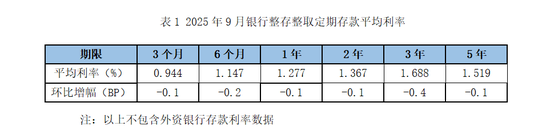
Group 1 - The average deposit rates for various terms have continued to decline, with the 3-month rate at 0.944%, 6-month at 1.147%, 1-year at 1.277%, 2-year at 1.367%, 3-year at 1.688%, and 5-year at 1.519% as of September 2025 [1][2] - The decline in deposit rates is attributed to ongoing pressure on net interest margins, which have decreased from 1.52% at the end of last year to 1.42% by the end of the second quarter of this year [3] - The phenomenon of inverted yield curves between short-term and long-term deposit rates remains significant, with the 3-year average rate exceeding the 5-year rate [3][4] Group 2 - The average rates for large-denomination certificates of deposit (CDs) have also shown a mixed trend, with the 3-month rate at 1.134%, 6-month at 1.318%, and 1-year at 1.394% [5][6] - The average expected middle yield for structured deposits has decreased to 1.59%, while the average expected maximum yield has increased to 2.09% [6][7] - The average term for structured deposits has increased across different types of banks, with foreign banks showing the longest average term of 405 days [6][7]