
实体经济融资

Search documents
新华社权威快报|5年来银行业保险业为实体经济提供新增资金170万亿元
Sou Hu Cai Jing· 2025-09-22 07:47
Core Viewpoint - The banking and insurance sectors have effectively played their role as the main financing channels for the real economy, providing an additional 170 trillion yuan in funding during the "14th Five-Year Plan" period, marking a significant enhancement in financial services [1][3]. Group 1: Funding and Financial Services - Over the past five years, the banking and insurance industries have provided 170 trillion yuan in new funding through various means such as credit, bonds, and equity [3]. - The average annual growth rates for loans in key areas are as follows: scientific and technological loans at 27.2%, medium to long-term loans for manufacturing at 21.7%, and infrastructure loans at 10.1% [3]. - The balance of inclusive loans for small and micro enterprises has reached 36 trillion yuan, which is 2.3 times that of the end of the "13th Five-Year Plan," with interest rates decreasing by 2 percentage points [3].


前8月我国人民币贷款增加13.46万亿元 实体经济综合融资成本明显下行
Ren Min Ri Bao· 2025-09-14 22:08
Group 1 - The core viewpoint of the articles highlights the significant growth in China's loan issuance and social financing, indicating a supportive monetary policy environment aimed at bolstering economic recovery [1][3][4] - As of the end of August, the total balance of loans in both domestic and foreign currencies reached 273.02 trillion yuan, with a year-on-year growth of 6.6%, while the balance of RMB loans was 269.1 trillion yuan, growing by 6.8% [1] - The structure of credit is improving, with inclusive small and micro loans reaching 35.20 trillion yuan, up 11.8% year-on-year, and medium to long-term loans for the manufacturing sector at 14.87 trillion yuan, increasing by 8.6% [1] Group 2 - The increase in corporate loans is supported by a recovery in production sentiment, particularly in the manufacturing sector, where new loans accounted for 53% of total corporate loans, a significant increase of 33 percentage points compared to the previous year [2] - Personal loans have also seen growth, driven by seasonal consumer demand and government policies aimed at stimulating consumption, particularly in the real estate sector [2] - The total social financing scale increased by 26.56 trillion yuan in the first eight months, which is 4.66 trillion yuan more than the same period last year, indicating strong support for the real economy [3] Group 3 - The broad money supply (M2) reached 331.98 trillion yuan, with a year-on-year growth of 8.8%, while the narrow money supply (M1) was 111.23 trillion yuan, growing by 6% [3] - The People's Bank of China has maintained a supportive monetary policy, with recent measures including interest rate cuts and reserve requirement ratio reductions to enhance financial support for key sectors [4] - Structural monetary policy tools have been fully implemented across various financial sectors, aiming to improve the effectiveness of financial support for priority areas [4]
8月重磅数据来了!刚刚,央行公布!
证券时报· 2025-09-12 09:57
Core Viewpoint - The article discusses the continuous narrowing of the "scissors difference" between M1 and M2, indicating an improvement in the liquidity and efficiency of funds in the Chinese economy, supported by robust monetary and fiscal policies [2][8]. Group 1: Monetary and Credit Data - As of the end of August, the increase in RMB loans for the first eight months reached 13.46 trillion yuan, with a loan growth rate of 6.8% [5]. - The social financing scale increased by 26.56 trillion yuan, with both social financing stock growth and M2 growth maintaining a high increase of 8.8% [3][5]. - The M1 growth rate was recorded at 6%, reflecting a 0.4 percentage point increase from the previous month, while M2 growth remained stable at 8.8% [8][9]. Group 2: Economic Support and Structural Optimization - The article emphasizes that the current financial support for the real economy is substantial, with both M2 and social financing growth rates remaining between 8% and 9% [3]. - It highlights the need for future monetary policy to focus on structural optimization while maintaining reasonable growth in total financial volume [11][12]. - The article suggests that structural monetary policy tools should continue to play a guiding role, enhancing financial institutions' ability to support key sectors [12]. Group 3: Investment and Consumption Trends - The narrowing of the M1 and M2 "scissors difference" is seen as a positive indicator for investment and consumption, reflecting increased market confidence [8][9]. - The article notes that the demand for loans has risen due to seasonal consumption patterns and government policies promoting consumption [5][6].
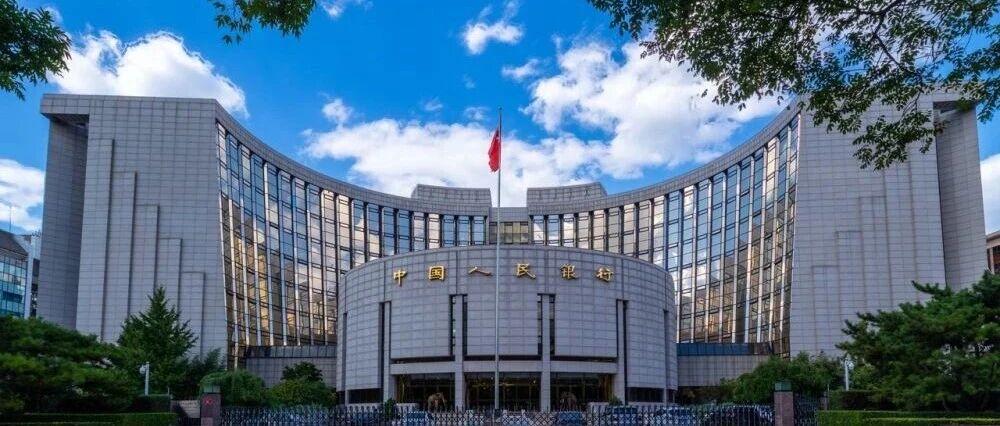
央行:2025年前八个月社会融资规模增量累计为26.56万亿元,比上年同期多4.66万亿元
Sou Hu Cai Jing· 2025-09-12 09:11
Core Insights - The People's Bank of China reported that the cumulative increase in social financing scale for the first eight months of 2025 reached 26.56 trillion yuan, an increase of 4.66 trillion yuan compared to the same period last year [1] Summary by Category Loans to the Real Economy - The increase in RMB loans to the real economy was 12.93 trillion yuan, which is a decrease of 4.851 billion yuan year-on-year [1] - Foreign currency loans to the real economy decreased by 816 million yuan, a year-on-year reduction of 767 million yuan [1] Other Financing Methods - Entrusted loans decreased by 855 million yuan, which is a year-on-year increase in the reduction of 307 million yuan [1] - Trust loans increased by 1.942 trillion yuan, but this is a decrease of 1.614 billion yuan year-on-year [1] - Undiscounted bank acceptance bills decreased by 223 million yuan, a year-on-year reduction of 2.566 billion yuan [1] Corporate Financing - Net financing through corporate bonds was 1.56 trillion yuan, a year-on-year decrease of 2.214 billion yuan [1] - Government bond net financing reached 10.27 trillion yuan, which is an increase of 4.63 trillion yuan year-on-year [1] - Non-financial corporate domestic stock financing amounted to 266.9 billion yuan, an increase of 109.3 billion yuan year-on-year [1]
多项金融数据增速保持在较高水平 更多信贷资源流向实体经济
Jing Ji Ri Bao· 2025-08-14 01:05
Group 1: Monetary Statistics - As of the end of July, the broad money supply (M2) reached 329.94 trillion yuan, reflecting a year-on-year growth of 8.8% [1] - The total social financing stock was 431.26 trillion yuan, with a year-on-year increase of 9% [1] - The balance of RMB loans stood at 268.51 trillion yuan, showing a year-on-year growth of 6.9% [1] Group 2: Seasonal Fluctuations and Credit Data - Seasonal fluctuations in credit data during June and July are influenced by financial institutions' reporting and corporate settlement periods [2] - July is typically a "small month" for credit, with manufacturing and construction PMI averages lower than in June [2] - The year-on-year growth of loan balances in July at 6.9% is still significantly above nominal economic growth, indicating stable credit support for the real economy [2] Group 3: Debt Replacement and Loan Growth - The impact of local government debt replacement on loan data is significant, with an estimated 4 trillion yuan in special bonds issued since November [3] - After adjusting for debt replacement effects, the year-on-year loan growth in July is close to 8%, indicating a robust level [3][5] - Long-term benefits of debt replacement include risk mitigation and financial stability, allowing more credit resources to flow into the real economy [3] Group 4: Money Circulation Efficiency - As of the end of July, the narrow money supply (M1) was 111.06 trillion yuan, with a year-on-year growth of 5.6% [4] - The narrowing gap between M1 and M2 growth rates indicates improved liquidity and efficiency in money circulation [4] - Factors influencing loan growth include economic structural transformation, diversified financing channels, and improved efficiency in special bond usage [4] Group 5: Financing Demand and Interest Rates - The analysis of credit growth should consider both quantity and quality, with a focus on targeted support for key sectors [7] - New corporate loan rates averaged around 3.2% and personal housing loan rates around 3.1%, both lower than the previous year [7] - The decline in financing costs has positively impacted business operations and investment decisions, with many companies now able to afford necessary upgrades [7][8] Group 6: Macroeconomic Policy and Future Outlook - The overall macroeconomic policy is more proactive, with accelerated government bond issuance and a focus on stabilizing employment and market expectations [8] - Continuous and stable macro policies are expected to support economic recovery and reasonable growth in effective credit demand [8]
7月末社会融资规模存量 同比增长9%
Jin Rong Shi Bao· 2025-08-14 01:00
Core Insights - The People's Bank of China reported that as of the end of July 2025, the total social financing scale was 431.26 trillion yuan, reflecting a year-on-year growth of 9% [1] Summary by Category Total Social Financing - As of July 2025, the total social financing scale was 431.26 trillion yuan, with a year-on-year increase of 9% [1] RMB Loans - The balance of RMB loans to the real economy was 264.79 trillion yuan, showing a year-on-year growth of 6.8% [1] Foreign Currency Loans - The balance of foreign currency loans to the real economy, converted to RMB, was 1.21 trillion yuan, which represents a year-on-year decline of 23.2% [1] Entrusted Loans - The balance of entrusted loans was 11.16 trillion yuan, reflecting a slight year-on-year decrease of 0.4% [1] Trust Loans - The balance of trust loans was 4.46 trillion yuan, indicating a year-on-year increase of 5.9% [1] Bank Acceptance Bills - The balance of undiscounted bank acceptance bills was 1.92 trillion yuan, showing a year-on-year decline of 10.4% [1] Corporate Bonds - The balance of corporate bonds was 33.39 trillion yuan, with a year-on-year growth of 3.8% [1] Government Bonds - The balance of government bonds was 89.99 trillion yuan, reflecting a significant year-on-year increase of 21.9% [1] Non-Financial Corporate Stocks - The balance of non-financial corporate stocks in the domestic market was 11.94 trillion yuan, showing a year-on-year increase of 3.2% [1] Structural Analysis - As of the end of July, RMB loans accounted for 61.4% of the total social financing scale, down 1.2 percentage points year-on-year [1] - Foreign currency loans accounted for 0.3%, down 0.1 percentage points year-on-year [1] - Entrusted loans accounted for 2.6%, down 0.2 percentage points year-on-year [1] - Trust loans accounted for 1%, down 0.1 percentage points year-on-year [1] - Undiscounted bank acceptance bills accounted for 0.4%, down 0.1 percentage points year-on-year [1] - Corporate bonds accounted for 7.7%, down 0.4 percentage points year-on-year [1] - Government bonds accounted for 20.9%, up 2.2 percentage points year-on-year [1] - Non-financial corporate stocks accounted for 2.8%, down 0.1 percentage points year-on-year [1]
金融政策精准发力 信贷结构持续优化
Sou Hu Cai Jing· 2025-08-13 23:14
Core Insights - The People's Bank of China (PBOC) reported stable growth in credit and improvements in its structure, indicating effective financial policies [1] Group 1: Financial Data Overview - As of the end of July, the balance of RMB loans reached 268.51 trillion yuan, a year-on-year increase of 6.9% [1] - The total social financing stock was 431.26 trillion yuan, growing by 9% year-on-year [1] - The broad money supply (M2) stood at 329.94 trillion yuan, with an 8.8% year-on-year increase [1] Group 2: Credit Structure and Allocation - In the first seven months, loans to enterprises increased by 11.63 trillion yuan, with medium and long-term loans accounting for nearly 60% of this amount [4] - By the end of July, inclusive small and micro loans reached 35.05 trillion yuan, up 11.8% year-on-year, while medium and long-term loans in the manufacturing sector were 14.79 trillion yuan, increasing by 8.5% [5] - The financial policies have been refined to support key sectors and weak links, enhancing the ability and willingness of financial institutions to provide quality credit [5][6] Group 3: Interest Rates and Financing Costs - Loan interest rates remain at historical lows, with new corporate loan rates around 3.2% and new personal housing loan rates at approximately 3.1%, down by about 45 and 30 basis points year-on-year, respectively [8] - The sustained low interest rates reflect a relatively abundant credit supply, indicating a high level of satisfaction in financing demand from the real economy [8]
频出实招精准服务实体经济 上半年交易所债市融资2.67万亿元
Xin Hua Wang· 2025-08-12 06:25
Group 1 - The core viewpoint of the articles highlights the continuous innovation in the exchange bond market this year, which has increased financing support for technology innovation and private enterprises, while also optimizing rules for high-quality development [1][2][4] - In the first half of the year, the total bond financing amount in the Shanghai and Shenzhen exchanges reached 2.67 trillion yuan, with corporate bonds accounting for 1.97 trillion yuan, asset-backed securities for 495 billion yuan, and local government bonds for 204.2 billion yuan [1] - The introduction of new bond varieties, such as technology innovation bonds and low-carbon transition bonds, aims to provide precise support for specific sectors, improving the financing environment for private enterprises [2][3] Group 2 - The exchange bond market has implemented various measures to enhance credit support and reduce costs for private enterprise bond financing, including a special support plan for private enterprise bonds and the exemption of transaction fees [4][5] - The introduction of foreign capital into the exchange bond market marks a significant step in China's capital market internationalization, which is expected to lower corporate financing costs and enhance corporate transparency and international brand image [6]
申万宏源助力武汉高科10亿元公司债券成功发行
申万宏源证券上海北京西路营业部· 2025-07-10 02:00
Group 1 - The core viewpoint of the article highlights the successful issuance of a non-public corporate bond by Wuhan Gaoke State-owned Holding Group Co., Ltd., with a scale of 1 billion yuan, a term of 3+2 years, and a coupon rate of 2.04%, achieving a subscription multiple of 4.21 times [1] - The issuer is a large state-owned holding group approved by the Wuhan municipal government, focusing on asset operation and management, high-tech industry investment, and technology park construction, playing a key role in the "Wuhan·China Optics Valley" initiative [1] - The successful bond issuance strengthens investor confidence in both China Optics Valley and Gaoke Group, providing substantial support for the issuer's development and strategic goals [1] Group 2 - The bond issuance further solidifies the strategic partnership between Shenwan Hongyuan and Gaoke Group, enhancing Shenwan Hongyuan's market influence in Hubei Province [2] - Shenwan Hongyuan aims to continue serving the real economy and expand its operations in the Central China region, facilitating high-quality financing for more entities to promote regional economic development [2]


金融监管总局局长李云泽:加力加劲加快加强推动既定政策落地见效、增量政策储备
Shang Hai Zheng Quan Bao· 2025-05-07 19:11
Group 1 - The overall financial operation is stable, with banks and insurance institutions conducting business orderly and major regulatory indicators remaining in a healthy range [1] - The Financial Regulatory Administration plans to introduce eight incremental policies to further consolidate the economic recovery, including financing systems compatible with new real estate development models and support for small and private enterprises [2][3] - The approval of "white list" loans by commercial banks has increased to 6.7 trillion yuan, supporting the construction and delivery of over 16 million residential units [2] Group 2 - A financing coordination mechanism has been established to address the financing difficulties of small and private enterprises, with over 67 million businesses visited and loans amounting to 12.6 trillion yuan issued [3] - Policies will be implemented to support foreign trade development, ensuring that banks fulfill lending policies and provide tailored services for businesses affected by tariffs [3] - The capital adequacy ratio of banks and the solvency ratio of insurance companies have shown a stable upward trend, with non-performing loan ratios decreasing by approximately 0.1 percentage points [4] Group 3 - The no-repayment renewal loan policy has provided 4.4 trillion yuan in renewed loans for small and micro enterprises since its expansion, effectively meeting their financing needs [5] - The insurance industry has paid out approximately 1 trillion yuan in claims in the first four months of the year, with over 10 trillion yuan accumulated in long-term reserves for pension and health insurance [5]